Yes, you can absolutely paint vinyl siding. More than that, it's often a smarter, more cost-effective choice than a full replacement. Thanks to modern paint technology from brands like Sherwin-Williams and Benjamin Moore, painting is a durable and beautiful way to refresh your home's exterior, boost its curb appeal, and protect your investment—all without the staggering cost of brand-new siding.
At Soca Services, we believe in providing clear, practical advice to help homeowners make the best decisions for their property. Let's explore how a professional paint job can transform your home.
Is Painting Vinyl Siding a Smart Move for Your Home?
For years, homeowners were told that painting vinyl was a bad idea. The old myth was that the paint would inevitably peel, crack, or even cause the siding to warp. That’s simply no longer true.
Significant advancements in paint formulation have changed the game completely. Today’s high-quality, vinyl-safe acrylic latex paints are specifically designed with the flexibility needed to adhere to vinyl as it expands and contracts with Toronto's fluctuating temperatures.
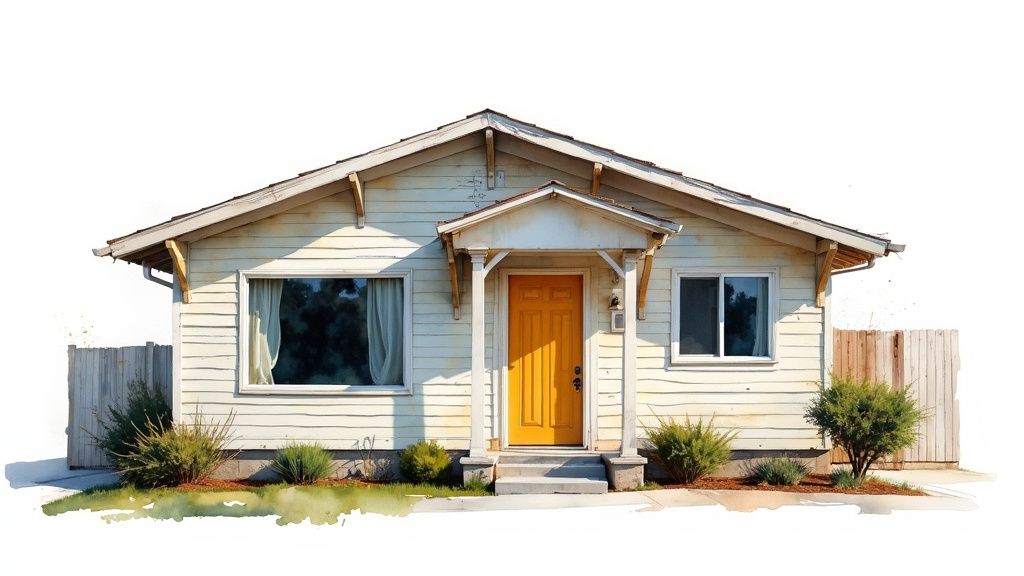
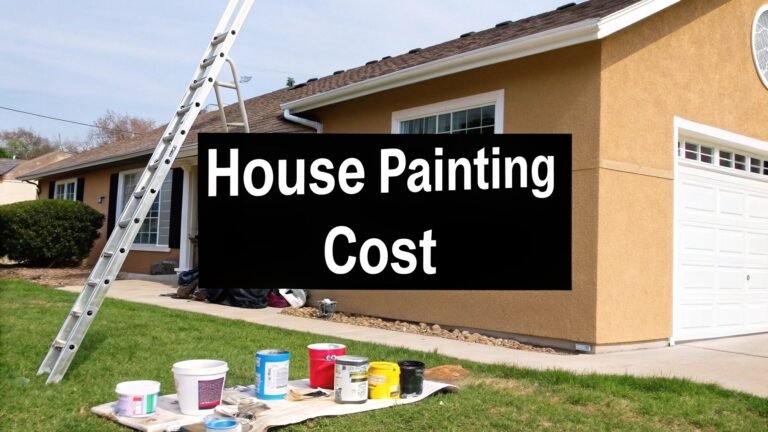
Alt text: Soca Services vinyl siding painting transforms a Toronto home with a fresh, modern color.
The Real Benefits of a Professional Paint Job
When you choose to paint your siding instead of replacing it, you're unlocking several clear advantages. It’s a decision that delivers both immediate visual impact and genuine long-term value.
Here's what you gain:
- Significant Cost Savings: Painting is dramatically more budget-friendly. A professional paint job from Soca Services can give you a factory-fresh finish for a fraction of the cost, freeing up your budget for other home improvement projects.
- Boosted Curb Appeal and Home Value: A new coat of paint in a modern colour instantly elevates your home’s entire look. This not only makes your property stand out in neighbourhoods across Vaughan and North York but can also increase its market value.
- Complete Colour Customization: You’re no longer stuck with the original factory colours. Painting opens up a world of possibilities, letting you personalize your home’s exterior to perfectly match your style and choose from thousands of wall colors.
- An Added Layer of Protection: A high-quality paint job does more than just look great. It adds a crucial protective barrier against UV rays, moisture, and general wear, which can help extend the life of your siding.
Choosing to paint your vinyl siding is more than just a cosmetic update; it's a strategic investment in your property. It allows you to achieve a dramatic transformation quickly and efficiently, making it one of the most impactful exterior upgrades you can make.
Painting vs. Replacing Siding: Making the Right Call
To help you decide, it’s useful to see a side-by-side comparison of the two options. While new siding is sometimes unavoidable, painting often comes out ahead.
Painting vs. Replacing Vinyl Siding: A Quick Comparison
| Factor | Painting Vinyl Siding | Replacing Vinyl Siding |
|---|---|---|
| Cost | Significantly lower initial investment. | Very high cost for materials and labour. |
| Timeline | Much faster, completed in days. | Weeks or longer, major construction project. |
| Disruption | Minimal disruption to your daily life. | Major disruption, noise, and debris. |
| Customization | Unlimited colour choices and finishes. | Limited to manufacturer’s available colours. |
| Eco-Impact | More sustainable, keeps existing materials out of landfills. | Creates significant construction waste. |
Ultimately, while new siding is the right call for materials that are failing or badly damaged, painting is the superior choice for siding that's structurally sound but just looks faded or dated. Replacement is a major construction project involving serious disruption, labour, and material costs. A professional paint job, on the other hand, is a much faster process with less mess and a quicker turnaround. It's an efficient way to get the look of new siding without the headache.
If you’re looking to learn more about exterior maintenance, understanding how to handle common issues is key. For more professional insights, you can read our guide on how to fix peeling paint.
Ready to see how we can transform your home's exterior? Contact Soca Services today for a free estimate.
The Foundation of a Flawless Finish: Proper Surface Preparation
A stunning paint job is only as good as the prep work underneath. When it comes to painting vinyl siding, this isn't just a suggestion; it's the single most critical phase for a finish that lasts. Rushing the prep is a surefire way to watch your hard work peel away in a year or two. Paint simply can't stick to a dirty, grimy, or unstable surface.
Think of your siding as a canvas. Over the years, it collects a stubborn film of dirt, pollen, mildew, and even a chalky residue as the vinyl ages. This buildup acts as a barrier, preventing new paint from getting a proper grip. A deep, thorough cleaning is absolutely non-negotiable.
For homeowners in Toronto and Vaughan, our wild weather makes this step even more crucial. You need a perfectly clean slate to get a durable finish that can stand up to our four distinct seasons.
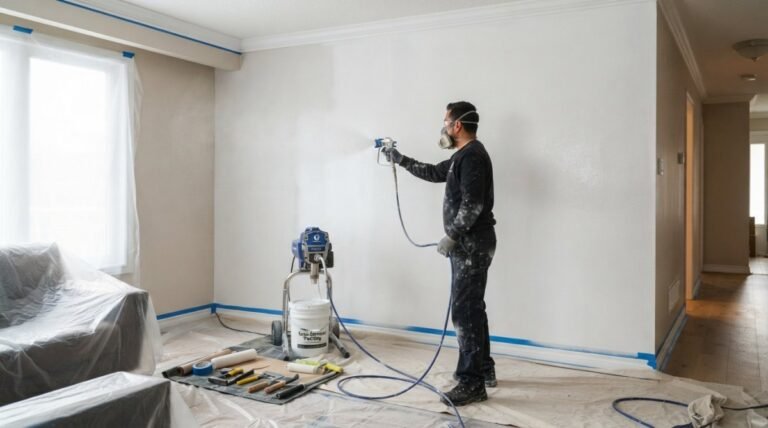
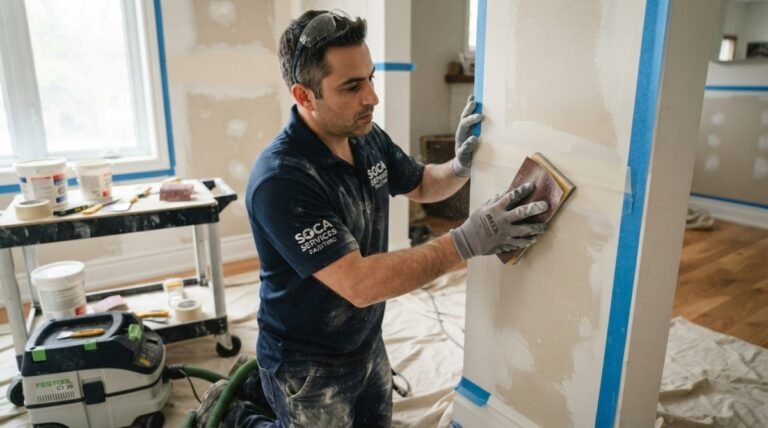
Alt text: Soca Services team applying paint to vinyl siding, demonstrating a professional surface treatment.
The Cleaning Process That Actually Works
While a pressure washer seems like the quickest solution, it’s a risky move. Too much pressure can blast water behind the siding panels—creating moisture problems—or even gouge the vinyl itself.
Our preferred method at Soca Services is far more controlled and effective. We use a simple mix of household cleaner, oxygen bleach, and water, applied with a soft-bristle brush, to cut through years of grime. This hands-on approach ensures every nook and cranny gets the attention it needs.
After a good scrub, we thoroughly rinse with a standard garden hose. It is essential to get all the cleaning residue off. Any leftover soap will interfere with paint adhesion just as much as the dirt you just washed away. Then, we let the siding dry completely. This can take at least 24 to 48 hours, depending on the humidity and weather, whether you're in North York or King City.
Tackling Minor Repairs and Imperfections
Once the siding is sparkling clean, it’s time for a close inspection. Our team examines the surface for any issues that could spoil the final look of your home painting project.
- Small Cracks or Holes: We fix these easily with a high-quality, paintable exterior caulk. We fill the gap, smooth it over, and let it cure fully.
- Loose Panels: We check that all siding panels are securely fastened. A loose panel will shift with temperature changes, which will crack your brand-new paint job right at the seams.
- Damaged Sections: If we find siding with significant damage like large cracks or warping, we recommend replacing those sections before painting to guarantee a uniform, long-lasting result.
The goal of preparation is to create a surface that is clean, dry, and solid. At Soca Services, we know every minute spent on proper cleaning and minor repairs pays off tenfold in the beauty and longevity of the finished project.
When a Light Sanding Makes Sense
For the most part, modern vinyl siding doesn’t need to be sanded. But if your siding is older, has a high-gloss finish, or still feels chalky after a good cleaning, a quick scuff-sanding can make all the difference.
We’re not talking about aggressively stripping the surface. The goal is to create a slightly rougher texture—what painters call a "tooth"—for the paint to grab onto. We use a fine-grit sanding block (a 220-grit is perfect) and lightly go over the surface to knock down the shine. Afterward, we wipe everything down with a damp cloth to remove every last bit of sanding dust.
For a deeper look into how our professional approach to prep work leads to a superior finish, check out our guide on why proper prep is the secret to a long-lasting exterior paint.
When you work with Soca Services, you can be confident this foundational step is handled with the precision and care it deserves. Contact Soca Services for a free estimate and let us build the perfect foundation for your home's amazing transformation.
Choosing the Right Paint and Tools for the Job
Once your siding is clean, dry, and ready for a fresh start, it’s time to pick your materials. The quality of your paint and tools will make or break the final result, impacting both how it looks and how long it lasts.
The most critical decision is the paint itself. You must use a paint specifically formulated as "vinyl-safe." This isn't just a marketing gimmick. These paints, typically 100% acrylic latex, contain special polymers that give them the flexibility to move with your siding. Vinyl naturally expands and contracts with Toronto’s temperature swings, and vinyl-safe paint moves right along with it. This prevents ugly peeling, chipping, and cracking down the road.
Why Brand Matters for Your Home Painting
Here at Soca Services, we consistently rely on industry leaders like Sherwin-Williams and Benjamin Moore for our exterior and interior painting work. Their vinyl-safe lines are backed by serious research and development, delivering top-tier adhesion and colour retention. They're engineered to grab onto the slick, non-porous surface of vinyl and hang on, giving you a finish that can stand up to our harsh Canadian weather for years. Using a standard exterior paint, even a good one, simply won't have the necessary flexibility.
The Critical Role of Light Reflective Value
Beyond the formula, you also need to pay close attention to a colour's Light Reflective Value (LRV). This is a simple scale from 0 (absolute black) to 100 (pure white) that tells you how much light a colour reflects. For vinyl siding, this number is a huge deal.
Vinyl panels are designed to handle a specific amount of heat. If you paint light-coloured siding with a dark, dramatic shade that has a low LRV, the panels will absorb far more solar heat than they were built for. This can cause the vinyl to expand too much, leading to warping, buckling, or distortion—damage that is often permanent.
The golden rule for preventing heat damage is this: choose a new paint colour with an LRV that is equal to or higher than your siding's original colour. Reputable paint manufacturers like Sherwin-Williams and Benjamin Moore list the LRV for every shade and even offer specific palettes of vinyl-safe colors that are guaranteed to keep your siding stable.
Selecting the Right Application Tools
With the perfect paint picked out, the next question is how to apply it. Your choice of tools directly affects the speed of the job and the quality of the finish. The two main paths are a paint sprayer or the classic brush-and-roller combo.
Deciding between these methods depends on your timeline, budget, and desired finish. Here's a quick breakdown of the pros and cons for each.
Paint Application Methods Pros and Cons
| Application Method | Pros | Cons |
|---|---|---|
| Paint Sprayer | – Incredibly fast coverage – Delivers a smooth, factory-like finish – Excellent for textured or grooved siding | – Requires extensive masking – Has a learning curve to avoid drips – Potential for overspray on windy days |
| Roller | – Good control over paint application – Minimal setup and cleanup – Inexpensive and readily available | – Much slower than spraying – Can leave lap marks on long panels – Difficult to get into tight grooves |
| Brush | – Best for precise "cutting in" – Total control for detail work – No risk of overspray | – Extremely slow for large areas – Prone to showing brush strokes – Impractical for an entire house |
Each tool has its place, and the best approach often involves a combination.
A paint sprayer is what professionals use, and for good reason. It lays down a fine, even coat that covers huge areas quickly and leaves a beautiful, uniform finish. The trade-off is the prep work—you must be meticulous with masking to protect windows and trim from overspray. For anyone thinking of going this route, we've covered the essentials in our guide to choosing the best paint sprayer for home use.
On the other hand, using a high-quality brush and roller is a perfectly good, if more time-consuming, method. A brush is essential for cutting in around edges and trim, and a good roller can cover the main flat surfaces. The real challenge is avoiding those dreaded lap marks where your roller strokes overlap on long panels of siding.
Our teams in North York and King City often use a hybrid technique for the ultimate professional result: we spray the paint for speed and even coverage, then immediately "back-brush" it with long, smooth strokes. This works the paint deep into the surface for unbeatable adhesion and smooths out any minor imperfections for a flawless look.
If you want to ensure your home gets the best materials and a professional-grade application, contact Soca Services for a free estimate. We’ll help you choose the perfect, safe colour and deliver a finish you'll be proud of for years to come.
How We Get a Flawless Finish Every Time
With your siding prepped and the right paint selected, we’ve reached the most satisfying part of the project: the application. This is where skill and technique turn a good paint job into a great one that looks like it came straight from the factory. At Soca Services, we follow a precise method to ensure every coat builds toward a durable, beautiful finish.
Interestingly, the first thing a professional does before opening a can of paint is check the weather forecast. When it comes to exterior painting—especially on vinyl—timing is everything.
Finding the Sweet Spot: Ideal Weather for Painting
Painting vinyl siding in the blazing sun is a recipe for disaster. The heat causes the paint to dry almost instantly, which leads to ugly brush marks and prevents it from bonding properly. On the other hand, high humidity can make drying times drag on forever, leaving your fresh paint vulnerable to dust and debris.
For the best results, our team always schedules painting days when we see:
- Moderate Temperatures: The ideal range is between 10°C and 30°C.
- Low to Moderate Humidity: This gives the paint the perfect amount of time to cure properly.
- No Direct Sunlight: We follow the shade around the house, making sure the siding is never hot to the touch when we apply paint.
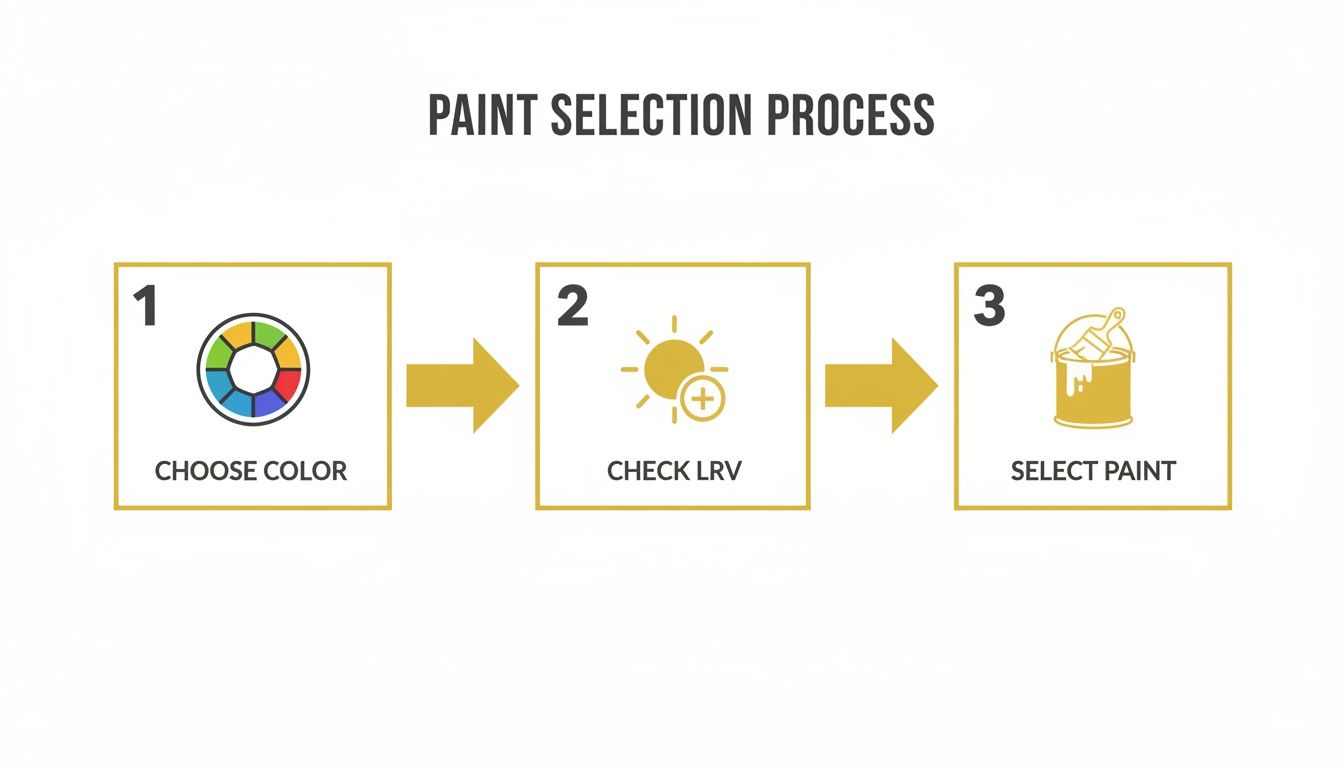
Alt text: Soca Services infographic on paint selection for vinyl siding, showing the 3-step process.
Nailing this sequence—choosing your colour, checking its LRV, and picking a top-tier vinyl-safe paint—is what sets you up for a successful and long-lasting finish.
Professional Application Techniques That Make a Difference
Once the weather cooperates, it’s time to paint. Our approach is systematic, focusing on an even application that promotes maximum adhesion. We always start at the highest point of a wall and work our way down, a simple trick that helps us manage any potential drips or runs.
One of the most critical techniques for a seamless look is maintaining a 'wet edge.' This means we always apply new paint so that it overlaps with the section just painted while it’s still wet. If you let an edge dry before painting the area next to it, you'll get noticeable lap marks that are almost impossible to hide later.
A professional paint job is built on thin, even coats. Two thin coats will always provide better durability, colour depth, and adhesion than one thick, heavy coat, which is prone to peeling and cracking.
The Power Duo: Spraying and Back-Brushing
For the absolute best finish and efficiency, a paint sprayer is our go-to tool. It lays down a perfectly uniform coat that gets into every nook, cranny, and texture of the siding. But just spraying isn't enough to get that professional quality.
The real secret is a technique called 'back-brushing' (or back-rolling). Right after one painter sprays an area, another follows immediately with a high-quality brush or roller to gently work the paint into the surface. This extra step is non-negotiable for us because it does two very important things:
- It forces the paint into the vinyl's microscopic pores, ensuring the strongest possible bond.
- It smooths out any inconsistencies from the sprayer, eliminating drips and creating that flawless, uniform finish.
This two-step method gives you the speed of a sprayer combined with the detailed precision of a brush. It’s how we deliver a result that looks fantastic and is built to last. For homeowners in Toronto and Vaughan thinking about this project, understanding these methods is key. If you're looking for a team that has perfected this process, our expert Toronto painters are here to help.
Achieving a professional-grade finish on vinyl siding takes patience and the right know-how. By controlling the environment and applying the paint methodically, you can ensure your home’s new look will stand the test of time.
Cost, Longevity, and Deciding Between DIY and a Pro
When you're thinking about painting your vinyl siding, two questions usually come to mind: "How much will this cost?" and "How long will it last?" Getting a straight answer to both is key to making a smart decision that genuinely improves your home's value.
Let's get into the real numbers and what you can realistically expect. It's crucial to weigh the upfront cost of supplies for a DIY job against the comprehensive value you get from hiring a professional crew like Soca Services, especially here in the competitive Toronto market.
Analyzing the Investment: DIY vs. Professional
The biggest draw for any DIY project is saving money. By doing the work yourself, you cut out the labour costs, which are the biggest part of any professional painting quote. But that doesn't mean your investment is zero.
A DIY vinyl siding paint job still means buying or renting a fair bit of gear:
- High-Quality Paint: You can't cut corners here. Premium vinyl-safe paints from trusted brands like Benjamin Moore or Sherwin-Williams are essential for a lasting finish.
- Cleaning Supplies: You’ll need a good cleaner, brushes, and possibly a power washer to properly prep the surface.
- Prep Materials: This covers everything from caulk for minor repairs to sandpaper and painter’s tape.
- Application Tools: To get a smooth, professional-looking finish, you'll need a quality sprayer, rollers, and brushes.
- Safety Equipment: Don't forget ladders or scaffolding to safely reach higher spots.
While the material-only cost is certainly lower, the true value of hiring a pro goes well beyond just applying paint. When you partner with a team like ours, you're investing in an efficient, warrantied result backed by years of experience. Our crews in Vaughan and North York arrive with industrial-grade equipment and a streamlined process that delivers a flawless finish in a fraction of the time it would take most homeowners.
The True Cost of Labour: What You're Really Paying For
When you see "labour" on a quote, it's not just paying someone to hold a brush. It's the expertise, precision, and efficiency that make the difference between an adequate job and a professional one. That investment covers meticulous surface prep, expert application to avoid lap marks, and a full cleanup when it's all done.
Hiring a professional isn't just about saving yourself a few weekends; it's about guaranteeing a high-quality, durable finish that protects your home and boosts its curb appeal for years. It’s an investment in peace of mind.
To put it in perspective, painting is a massive cost-saver compared to a full siding replacement. Professional painting gives you a way to completely refresh your home's exterior for a lower upfront cost and push that replacement further down the road. For more details on what to expect for local pricing, check out our guide on the cost to paint an exterior house in the Toronto area.
How Long Will a Professional Paint Job Last?
This is the million-dollar question, and the answer comes down to the quality of the work. When done right, a professionally applied coat of high-quality, vinyl-safe paint can realistically last up to 10 years. The lifespan of the new finish on your home, whether it’s in King City or right in Toronto, is directly tied to a few key factors that professionals are trained to master.
The longevity really hinges on:
- Meticulous Preparation: We can't say this enough. A perfectly clean and properly prepared surface is the absolute foundation for great paint adhesion and long-term durability.
- Premium Paint Selection: Using paints specifically formulated to handle vinyl's natural expansion and contraction is non-negotiable if you want to prevent peeling and cracking.
- Expert Application: Applying two thin, even coats with professional techniques ensures a stronger bond and a far more resilient finish that can stand up to our Canadian weather.
A DIY project, no matter how well-intentioned, can easily miss the mark in these critical areas. That can lead to premature paint failure, forcing you to do the whole job over again in just a few years. By investing in a professional service, you're paying for an outcome that maximizes the life of your new exterior, saving you money and headaches in the long run.
Answering Your Vinyl Siding Painting Questions
Even with a detailed guide, a few questions always pop up. To finish, we've put together some of the most common things clients ask us here in the Toronto area. This will give you that last bit of confidence before you get started.
How Long Does Paint on Vinyl Siding Really Last?
You can realistically expect a professional paint job on vinyl siding to last anywhere from 5 to 10 years. Where you land in that range depends on the quality of the vinyl-safe paint, how well the prep work was done, and our unique Toronto climate.
While some top-of-the-line paints might push that a bit further under perfect conditions, planning for a refresh within that 5 to 10 year window is a smart move. It ensures your home's exterior stays protected and looking sharp. Industry professionals in all sorts of climates see similar results, which shows how crucial the right materials and technique are. For a deeper dive, check out what specialists at DaBella have to say about paint longevity on vinyl siding. At Soca Services, our entire process is built to give homeowners across the GTA the most life out of their new paint.
Can I Paint My Vinyl Siding a Dark Colour?
We get this question all the time, and our advice is almost always the same: it's best to avoid colors that are dramatically darker than the original siding. Dark colors absorb a ton of heat from the sun—what we call having a low Light Reflective Value (LRV). All that extra heat can make the vinyl panels expand, warp, and even buckle for good.
To prevent this, major paint brands like Sherwin-Williams and Benjamin Moore have developed entire palettes of "vinyl-safe" colors. These are specifically formulated and tested to prevent heat-related damage. If you're absolutely set on a dark, dramatic look, you must use one of these specialty paints. Our team can walk you through the options to find a colour that’s not just beautiful, but safe for your home.
Key Takeaway: Always put the integrity of your siding first. Sticking with a vinyl-safe palette is the single best way to prevent expensive damage down the road.
What Are the Signs My Painted Siding Needs a Refresh?
It’s a good habit to walk around your house once a year and inspect the siding. You’re looking for a few tell-tale signs that the paint is starting to wear down:
- Fading: The colour looks dull, tired, or washed-out, especially on the sides that get the most sun.
- Peeling or Blistering: You can physically see the paint lifting, bubbling, or flaking away from the surface.
- Chalking: When you run your hand across the siding, a powdery residue comes off.
Any of these are clear signs that the paint's protective barrier is breaking down. Catching it early means an easier fix. If you spot these issues on your property in Vaughan or North York, that’s your cue to give Soca Services a call for a professional opinion.
Is It Better to Spray or Roll Paint on Vinyl Siding?
For a truly top-tier finish, the answer isn't one or the other—it's both. Using a professional paint sprayer is the best way to lay down a quick, even coat. It gets the paint into every nook and groove for that seamless look.
But the pro secret is in immediately going over the freshly sprayed section with a brush or roller. We call this "back-brushing" or "back-rolling." This simple step pushes the paint firmly into the surface for incredible adhesion and smooths out any hint of a drip or run. While a determined DIYer can get a respectable result with just a brush and roller, it's a much slower process, and avoiding lap marks on long siding panels is tough. Our hybrid method guarantees that flawless, factory-fresh finish every single time.
Ready to see how a new colour can completely transform your home? The expert team at Soca Services Painting has the skills and experience to deliver a stunning finish that protects your siding and seriously boosts your curb appeal. We’re proud to serve homeowners and businesses throughout Toronto, Vaughan, North York, and King City.
Get your free, no-obligation estimate from Soca Services Painting today!