

So, you're looking for the best information on what it'll cost to get your house painted in Toronto. Let's get right to it with an objective breakdown. On average, you can expect the cost to paint a house in Toronto and the GTA to be between $2,000 and $7,000 for the interior. If you're looking at the exterior, that range is typically $3,000 to $9,000.
Of course, these numbers are just a starting point, but they give you a solid idea of what to budget for a professional job in your area, whether you're in Toronto, Mississauga, or elsewhere in the GTA.
Your Quick Guide to House Painting Costs in Toronto
Trying to nail down the exact cost of painting your house can feel a bit like guesswork. You get a few quotes, and the prices can be all over the map, leaving you wondering what you’re actually paying for. Whether you're searching for painters "near me" in Toronto, Mississauga, or anywhere else in the GTA, the first step is always understanding the basics.
Think of any initial quote you receive as a ballpark figure, not the final number. A whole host of factors come into play, from the obvious—like the size of your home—to the less obvious, like the specific type of paint you choose. This guide is here to cut through the noise and give you a clear, objective look at what really goes into the price.
Baseline Painting Estimates in the GTA
To get you started, let's look at some typical cost ranges you'll likely see from the best professional painters in the area. These estimates are for standard homes and assume a professional crew is doing the work. Just remember, if your home has unique architectural details or needs a lot of prep work, these numbers will shift.
Here’s a table that breaks down the estimated costs for painting a house in our region, giving you a clearer picture of potential expenses.
Estimated House Painting Costs in Toronto & GTA
| Project Type | Average Cost Range | Key Considerations |
|---|---|---|
| Interior Painting | $2,000 – $7,000+ | The height of your walls, the detail in your trim, and the current condition of the surfaces all matter. |
| Exterior Painting | $3,000 – $9,000+ | What is your siding made of? How many storeys is your house? Can painters easily access all areas? |
These estimates give you a realistic snapshot of what a professional painting project involves. It's not just about slapping on a coat of paint.
A quality paint job is built on three pillars: meticulous prep work, high-quality materials, and the skilled labour needed to bring it all together. That's what you're investing in.
For a much deeper dive into all the variables at play, check out our complete guide on how much to paint a house. In the sections that follow, we'll unpack every little detail that influences your final quote, so you'll know exactly what to look for.
Decoding Your Interior Painting Quote
If you've ever gathered a few quotes for the same painting project, you've probably noticed the prices can be all over the map. One painter might quote a price that seems miles apart from another for the exact same room, leaving you wondering what could possibly justify the difference. The secret isn't in the room's floor space; it's in the details that seasoned painters in Toronto and the GTA know make or break a job.
The real cost isn't about square footage, but paintable surface area. This is the total of every wall, the ceiling, each window frame, and every inch of trim that needs a fresh coat. A room with soaring vaulted ceilings, for example, has a much larger paintable surface than one with standard eight-foot ceilings, which naturally means more paint and more time.
This is precisely why a detailed, transparent quote is your best friend. It goes beyond a simple "price per room" and breaks down the costs based on the unique features of your space.
The True Cost Drivers Beyond Square Footage
Think for a moment about a room's complexity. A simple, box-shaped bedroom is pretty straightforward to paint. But what about a living room with a bay window, detailed crown moulding, a fireplace mantle, and three different doorways? That kind of job demands a much higher level of skill, patience, and time.
Here are the features that really add to the paintable surface area and the hours needed:
- High Ceilings: Anything over the standard eight feet means more paint, more labour, and specialized gear like extension ladders or even scaffolding.
- Windows and Doors: Each one has to be meticulously taped off and painted around. This careful "cutting in" process takes a lot more time than just rolling a flat, empty wall.
- Intricate Trim and Moulding: Things like crown moulding, wainscotting, and detailed baseboards all require precise, steady brushwork, which can add hours to the project.
Beyond the room's architecture, the condition of your walls is probably the biggest wild card. A suspiciously cheap quote often makes the risky assumption that your walls are in perfect, ready-to-paint condition. In reality, that’s almost never true. Professional painters factor in the essential prep work that guarantees a beautiful, durable finish, like patching nail holes, fixing drywall dings, and sanding everything smooth.
A top-tier paint job is 90% preparation and 10% application. Skipping the prep to offer a lower price is the oldest trick in the book for low-bid painters, and it almost always results in a poor-quality finish that starts to fail long before it should.
The image below gives you a better idea of how different painting tasks are priced, showing the difference between painting broad wall surfaces and tackling the more detailed trim work.
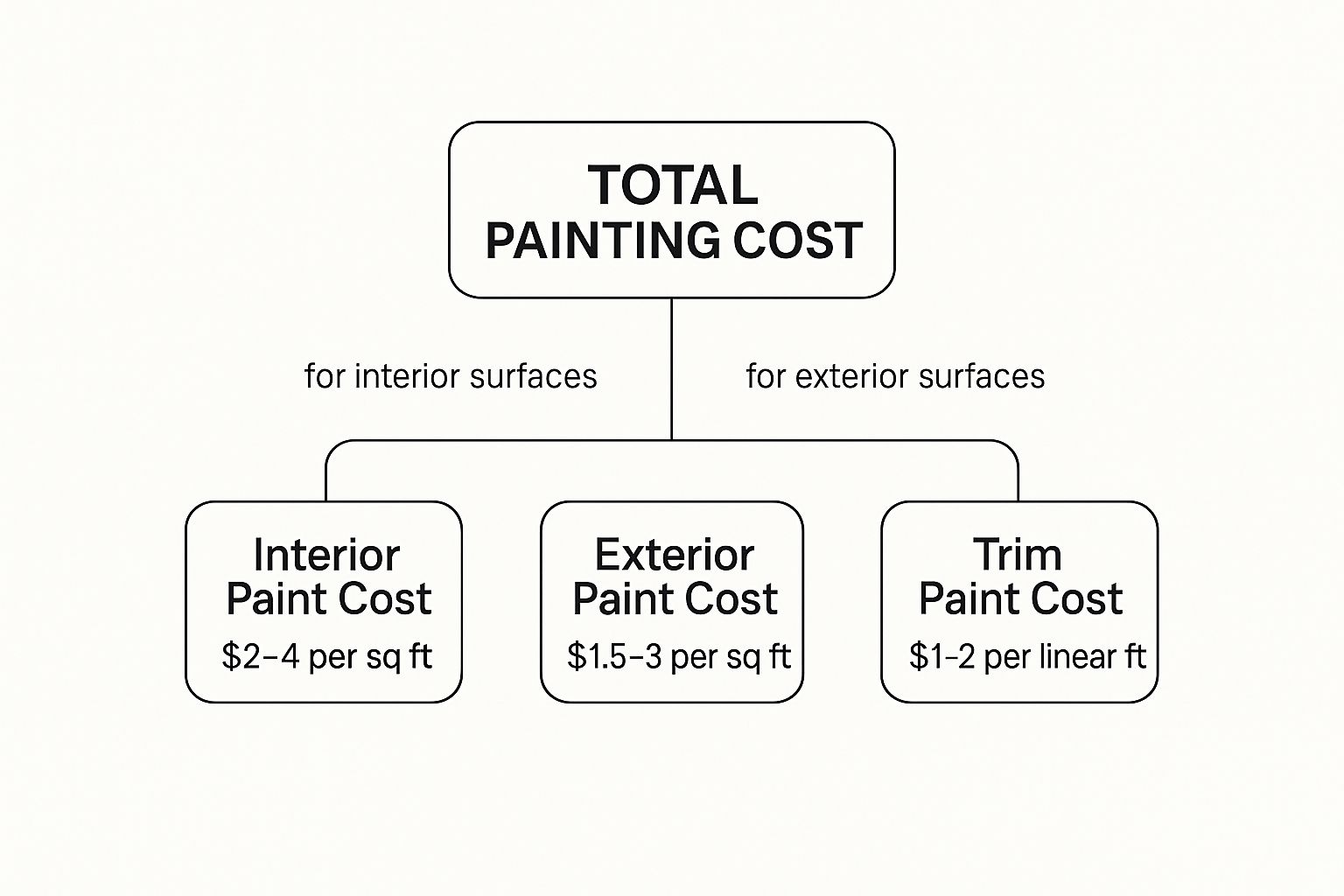
As you can see, interior walls are typically priced by the square foot, whereas trim is often calculated by the linear foot to reflect the different kind of labour involved. For a deeper dive, you can learn more about what goes into an interior painting cost estimate.
Ultimately, the best painters in Toronto or Mississauga will give you a quote that clearly lists these prep stages, so you're never left guessing what you're paying for. A quality result that stands the test of time is always worth it.
What Drives Exterior Painting Prices

When we move from the inside out, painting your home's exterior is a whole different ball game. The challenges are bigger, the stakes are higher, and the things that affect the final price tag get a lot more complicated. Unlike your interior walls, which are safe and sound, your home's exterior is the first line of defence against the wild and unpredictable GTA climate.
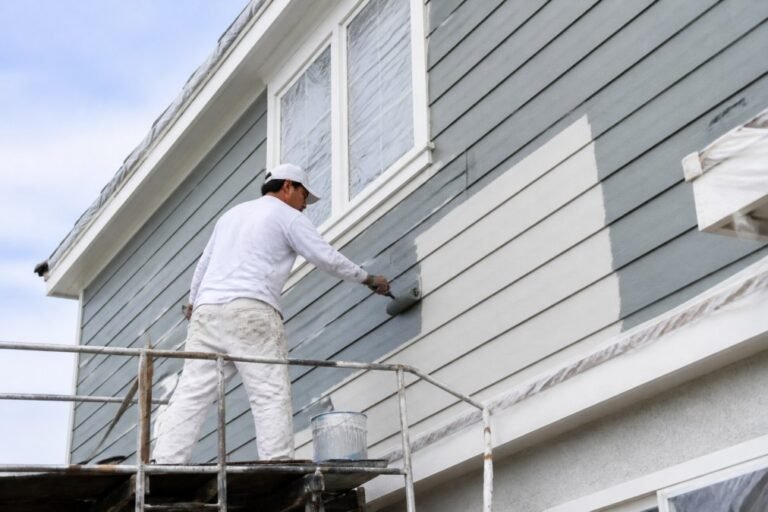
This means the material your home is built from—be it brick, vinyl, or stucco—is a massive factor in the final cost. Think of it this way: painting smooth vinyl siding is pretty straightforward, not all that different from rolling a clean interior wall. But tackling a textured stucco surface? That's a completely different beast, demanding special primers, way more paint to cover its porous texture, and a whole lot more elbow grease.
Every exterior material has its own set of quirks. A true professional painter knows how to adapt their technique for each one, ensuring the final finish doesn't just look good, but actually protects your home for years to come.
Architecture and Accessibility Challenges
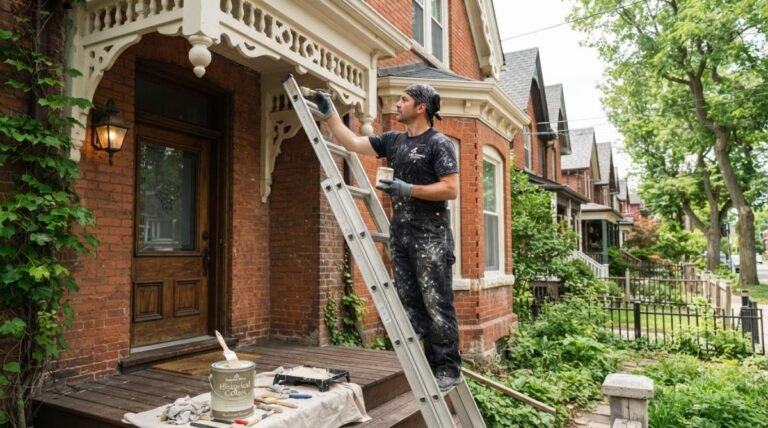
The shape and style of your home also play a huge part in the cost. A simple, one-storey bungalow in Mississauga with walls you can easily reach? That’s a fairly simple job. Now, picture a three-storey Victorian beauty in a tight Toronto neighbourhood, complete with ornate gables, dormers, and fiddly decorative trim. That's a much more complex and demanding project.
Complex architecture drives up the cost in a few key ways:
- Specialized Equipment: For tall homes or tricky angles, a simple ladder won't cut it. You're looking at scaffolding, boom lifts, or other specialized gear, and the rental and setup for that equipment adds a serious chunk to the budget.
- Labour Hours: Painting intricate trim work way up high is slow, meticulous work. It requires a steady hand and a lot more hours than slapping paint on a flat, easy-to-reach surface.
- Accessibility: Is your house perched on a steep hill? Are there fences, decks, or massive garden beds blocking access? These little obstacles can make the setup a real puzzle, adding to the labour time and the overall cost.
The more complex your home's design and the harder it is for painters to safely reach every surface, the more you can expect the labour portion of your quote to increase. This is where the skill of an experienced team truly shows.
Preparation and Climate Considerations
Finally, we have to talk about the current state of your home’s exterior and our lovely local climate. Before a single drop of fresh paint can be applied, a ton of prep work has to happen. Honestly, this is often the most labour-intensive part of the entire job, and it’s absolutely non-negotiable for a quality finish.
Key prep steps almost always include:
- Thorough Cleaning: Power washing is a must to blast away years of built-up dirt, grime, and mildew.
- Surface Repair: This means scraping and sanding off every last bit of loose or peeling paint to create a smooth, solid foundation for the new coat.
- Priming: A high-quality primer is essential. It's what helps the new paint grab on properly and last for years without blistering or peeling.
The unpredictable GTA weather also has its say. Exterior painting needs just the right temperature and humidity, which means our painting season is shorter than you'd think. This condensed window of opportunity creates high demand, which can definitely influence scheduling and pricing. For a deeper dive into local numbers, you can check out a detailed breakdown of the house painting cost in Toronto to get a better handle on these regional factors.
How Labour and Materials Shape Your Final Bill
When a painter hands you a quote, what you're really seeing is the sum of two parts: the cost of their skilled labour and the price of the paint and other materials. Getting a handle on how these two things work together is the key to understanding the real cost to paint your house. It’s what separates a quick, cheap cover-up from a professional finish that will look great for years.
The lion's share of any painting budget—typically 75-85% of the total cost—goes directly to labour. And that’s for good reason. You’re not just paying for someone to roll paint on a wall. You're paying for the painstaking prep work, the skilled application that avoids drips and streaks, and the thorough cleanup afterwards. Painters in Toronto and across the GTA will usually price their work in one of two ways: by the hour or as a flat rate for the whole project.
Breaking Down Painter Labour Rates
An hourly rate can look tempting on paper, but a flat-rate project cost gives you something much more valuable: certainty. A seasoned painter knows almost exactly how long a job will take, from prep to final coat, and they factor that expertise into their price. This protects you from unexpected costs if things take a bit longer and keeps the focus on getting the job done right, not just watching the clock.
Think about it this way: a highly experienced crew in Mississauga or Toronto is a well-oiled machine. They have the professional-grade tools, a proven process, and the kind of practiced skill that only comes with years on the job. They'll get a top-quality result finished much faster than a less experienced painter, which is why their rate is higher but often provides the best value in the long run.
When you hire a top-tier painter, you're investing in their efficiency and expertise, not just their time. Their ability to prep surfaces correctly and apply paint flawlessly is what guarantees a lasting result.
Choosing the Right Paint Quality and Finish
The other big piece of the puzzle is the paint itself. The gap between a basic contractor-grade paint and a premium can from brands like Benjamin Moore or Sherwin-Williams is huge, and not just in price. Premium paints give you better coverage (meaning fewer coats), are far more durable against scuffs and scratches, and deliver a richer, truer colour that won’t fade.
The sheen, or finish, you select also plays a role in the cost and the final look. A flat or matte finish is fantastic for hiding small imperfections on walls in low-traffic areas. On the other hand, a satin or semi-gloss finish has a slight shine, is much easier to clean, and stands up to wear and tear, making it perfect for trim, doors, and busy hallways.
To help you visualize the options, here’s a quick breakdown of different paint qualities and what you can expect to pay.
Paint Quality and Finish Cost Comparison
| Paint Quality/Finish | Average Cost per Gallon | Best Use Case | Durability |
|---|---|---|---|
| Contractor-Grade | $30 – $50 | Best for quick flips or rental properties where budget is the top priority. | Low |
| Premium Matte | $70 – $100 | Ideal for adult bedrooms and ceilings where a non-reflective finish is desired. | Medium |
| Premium Eggshell/Satin | $75 – $110 | Excellent for living rooms, hallways, and kids' rooms due to its washability. | High |
| Premium Semi-Gloss | $80 – $120 | The best choice for trim, doors, and bathrooms that face moisture and wear. | Very High |
As you can see, investing a little more per gallon for a premium, high-durability paint for the right areas of your home is almost always worth it for a finish that stands the test of time.
Finding the Best Painters in Toronto and Mississauga
Knowing what goes into the cost to paint a house is a great start, but it's only half the job. Now comes the real challenge: finding the right crew to bring your vision to life. The best painters aren't just the cheapest—they're the ones who deliver incredible value through skill, reliability, and professionalism.
In a massive market like the GTA, searching for the "best painters near me" can feel dizzying. But if you know what to look for, you can cut through the noise and find a team that will give you a beautiful, durable finish that justifies every penny. Think of this as your game plan for hiring a painter in Toronto or Mississauga.
Your Step-by-Step Vetting Process
First things first: never, ever go with the first quote you get. It’s essential to get detailed estimates from at least three different, well-regarded painting companies. Doing this gives you a clear picture of the going rate and helps you spot any red flags, like a price that seems too good to be true or one that’s way out of line.
When those estimates come in, look past the final number. A truly professional quote is a detailed breakdown, not a figure hastily written on the back of a card. It should clearly spell out:
- The Scope of Work: Which walls, ceilings, trim, and doors are included? Be specific.
- Preparation Details: Does it mention patching holes, sanding rough spots, and using primer? The prep work is what makes a paint job last.
- Materials Specified: The quote should name the brand and type of paint and primer being used.
- Total Cost and Payment Schedule: A transparent breakdown of all costs and a clear payment timeline.
If a quote feels vague, that’s your cue to be cautious. Ambiguity often leads to surprise charges or corners being cut later on.
Insurance and Reputation Are Non-Negotiable
Before a painter even steps foot in your home, you need to confirm two crucial things: WSIB clearance and liability insurance. Workplace Safety and Insurance Board (WSIB) coverage is vital—it protects you from liability if a painter gets hurt on your property. Liability insurance covers any accidental damage, whether it’s to your new sofa or your neighbour's fence.
Hiring a painter without proper insurance is a massive gamble. An accident could leave you on the hook for medical bills or property repairs, turning what should be an exciting update into a financial disaster.
Once you’ve confirmed they’re properly insured, it's time to do some digging. Check out online reviews on sites like Google, HomeStars, and Houzz. Look for a pattern of happy clients. It's also telling to see how a company handles the occasional negative review—do they respond professionally?
You’ll also want to see their portfolio. Photos of past projects are proof of their craftsmanship. If you’re not sure what top-tier work looks like, browsing a gallery from established Toronto painters can give you a solid baseline for quality.
Finally, have your questions ready. Ask about the experience of the crew who will actually be in your home, what the project timeline looks like, and how they handle cleanup at the end of each day. A seasoned professional will answer with confidence and clarity, leaving you feeling good about your decision.
Your House Painting Questions Answered
https://www.youtube.com/embed/5SzxpA9iGzk
Even after you've got a detailed quote in your hands, it’s natural to have a few more questions before you’re ready to sign on the dotted line. It's one thing to know the cost, but understanding the logistics—like how long it will all take and when to even start—is just as important for a smooth project.
Let's dive into some of the most common questions we hear from homeowners across Toronto and the GTA. Getting these details sorted out upfront helps everyone set the right expectations and ensures there are no surprises once the brushes come out.
How Long Will This Actually Take?
This is probably the number one question we get, and for good reason! You need to plan your life around the project. While every home is different, I can give you some solid ballpark estimates.
-
For Interior Jobs: If we're painting a few standard-sized rooms, say a living room and two bedrooms, we're typically looking at 2 to 4 days. The first day is almost always dedicated to careful prep—covering floors and furniture, taping off trim, and fixing any little dings or cracks. After that, it takes another two or three days for priming, applying the coats of paint, and a thorough cleanup.
-
For Exterior Jobs: Painting the outside of a house is a whole different ball game, mainly because we're at the mercy of the weather. For an average two-storey home in Mississauga or the surrounding area, you should plan for about 4 to 7 days. This assumes we get a decent stretch of cooperative weather.
These timelines are built around giving the paint enough time to dry and cure properly between coats. It’s a crucial step. Rushing it is a classic mistake that can cause the new paint to bubble or peel way sooner than it should.
When Is the Best Time to Paint My Exterior in the GTA?
For any exterior paint job in the Greater Toronto Area, timing is absolutely critical. Our climate gives us a fairly specific window of opportunity to get work done right so the paint can cure into a tough, protective shell.
The sweet spot for exterior painting around here is from late spring to early fall—think May through to the end of September. These months usually give us that perfect mix of moderate temperatures and lower humidity that paint loves.
We're always on the lookout for a solid block of days where the temperature will stay above 10°C, even overnight. If it gets too cold or damp, moisture can get trapped under the paint film, leading to ugly blisters and a failing paint job down the road.
You might think a hot summer week is ideal, but scorching heat can be just as bad. It can make the paint dry too fast on the surface before it has a chance to bond properly. The best painters know how to read the GTA's unpredictable weather and pick the perfect time to get started.
How Can I Save a Bit of Money on My Painting Project?
Everyone wants the best bang for their buck, and there are definitely some smart ways you can lower the cost to paint your house without cutting corners on quality. It really comes down to one thing: reducing the amount of labour time the pros have to spend on prep.
Here are a few practical ways you can help out:
- Do Some of the Heavy Lifting: Simply moving furniture into the centre of the room and taking down curtains or pictures from the walls can save a surprising amount of time.
- Tackle Minor Repairs: If you’re handy, patching up small nail holes or filling minor cracks before the crew arrives means they can get straight to the sanding and painting.
- Keep the Colour Similar: A drastic change, like going from a dark blue to a light beige, almost always needs an extra coat of primer and paint to get full coverage. Sticking with a similar shade is often a simpler job, which saves on both materials and labour.
By handling these smaller tasks, you let the professionals focus on their main job: giving you a beautiful, flawless finish. If you're looking for more tips on finding the right crew, check out our guide on what to look for in professional residential painting contractors in Toronto.



3 Comments