

When searching for the best paint for brick exterior, particularly for homes in Toronto and the GTA, the primary consideration is breathability. High-quality acrylic latex and mineral-based paints, like limewash, are specifically formulated to allow moisture to escape. This single characteristic is crucial for preventing peeling and damage caused by Canada's demanding weather conditions.
Choosing the Right Paint for Your Toronto Brick Home
Painting a brick exterior is a significant decision that impacts both curb appeal and the long-term protection of the masonry itself.
Brick is a porous material, meaning it needs to breathe. Applying a standard, non-permeable exterior paint effectively seals the surface, trapping moisture from rain, snow, and humidity inside. This trapped water is the leading cause of paint failure, leading to bubbling, peeling, and eventual brick degradation.
For homeowners in Toronto, Mississauga, or the surrounding GTA, selecting a "vapour-permeable" paint is essential. This type of paint ensures that any moisture absorbed by the brick can evaporate, preserving the integrity of both the paint finish and the structure of your home.
Understanding Your Paint Options
The two primary categories of breathable paint for brick are acrylic latex and mineral-based paints. Each offers distinct advantages and disadvantages based on the desired aesthetic and budget.
-
Breathable Acrylic Latex Paint: This is a common and effective choice. Modern formulas designed for masonry provide excellent adhesion, durability, and flexibility. This paint forms a protective, yet breathable, film that can withstand the freeze-thaw cycles common in Southern Ontario winters.
-
Mineral-Based Paints (Limewash & Silicate): For a more traditional, classic appearance, these paints are ideal. They penetrate the brick rather than forming a surface film. Limewash provides a timeless, matte finish that develops a unique patina over time. Silicate paints create a chemical bond with the brick, resulting in exceptional durability.
The following chart outlines key application details to help you plan your project.
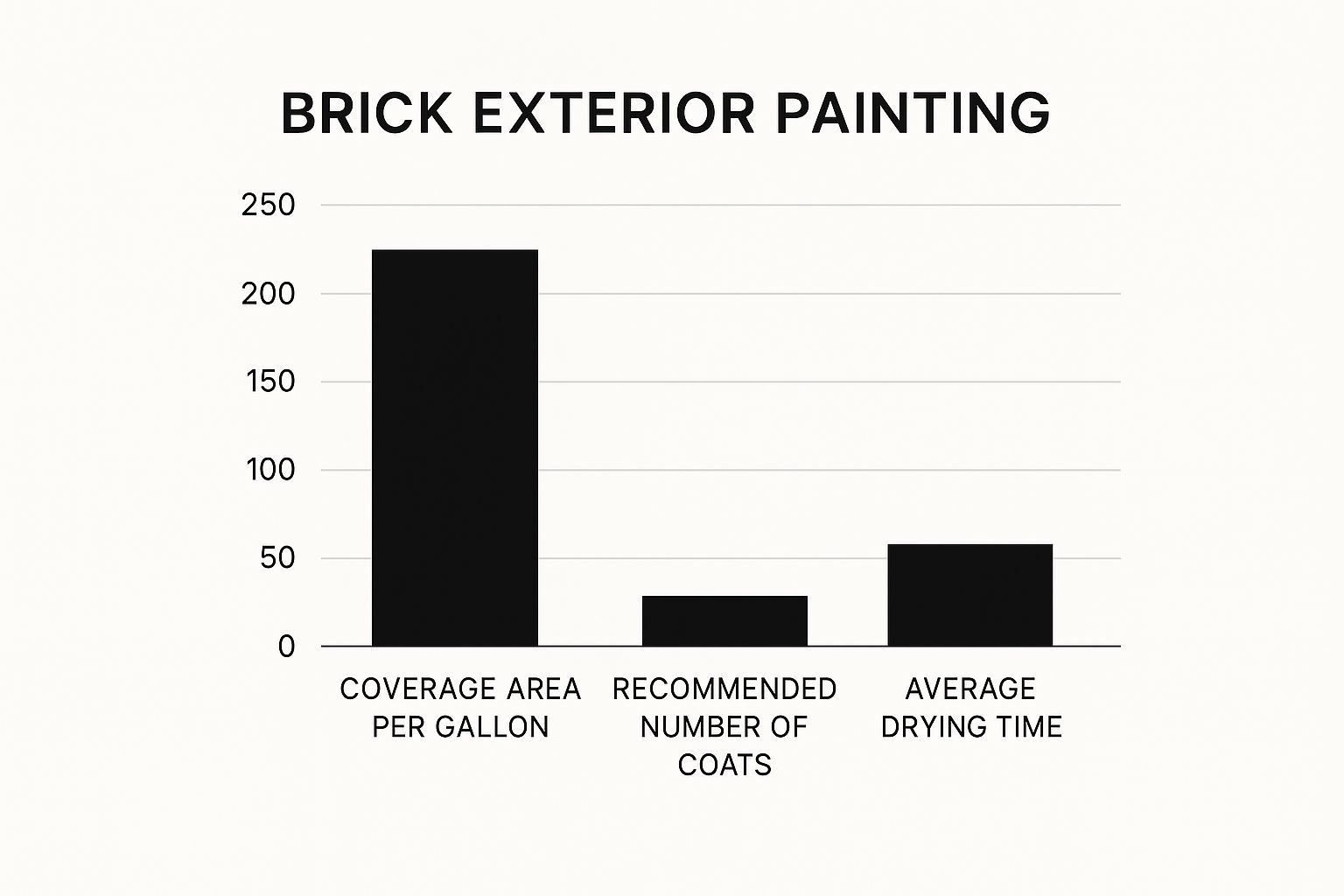
As shown, paints with higher coverage rates may require additional coats or longer drying times. These factors should be considered when planning your project timeline.
To further clarify the best option for your home, let's compare these paint types.
Comparing Top Paint Types for Brick Exteriors
This table breaks down the most popular choices to help you select the best paint for your home's exterior based on your specific needs and budget.
| Paint Type | Key Feature | Best For | Durability | Breathability | Typical Cost (GTA) |
|---|---|---|---|---|---|
| Acrylic Latex | Flexible, durable film | Modern homes; homeowners seeking a wide range of colour options and a uniform finish. | Very High | Good | $$ – $$$ |
| Limewash | Penetrates the brick | Historic homes or achieving a classic, mottled, Old World aesthetic that ages gracefully. | Moderate | Excellent | $$ – $$$ |
| Silicate Paint | Fuses with the brick | Maximum longevity and a natural, flat finish on unpainted, absorbent brick. | Excellent | Excellent | $$$ – $$$$ |
| Elastomeric | Thick, waterproof coating | Covering minor cracks, but often traps moisture and is not recommended for most brick homes. | High | Very Low | $$$ |
Ultimately, the best paint depends on your brick's condition, the aesthetic you want to achieve, and your maintenance preferences.
The best paint for brick exterior is chosen based on chemistry, not just colour. Selecting a product that is compatible with your brick's natural porosity is the key to a durable, long-lasting finish.
The optimal choice is specific to your property and vision. While these principles are critical for brick, similar logic applies to other masonry surfaces. For different materials, our guide on selecting the best paint for concrete walls may be useful. Proper research is a crucial step in protecting your investment.
The Essential Prep Work for a Flawless Finish
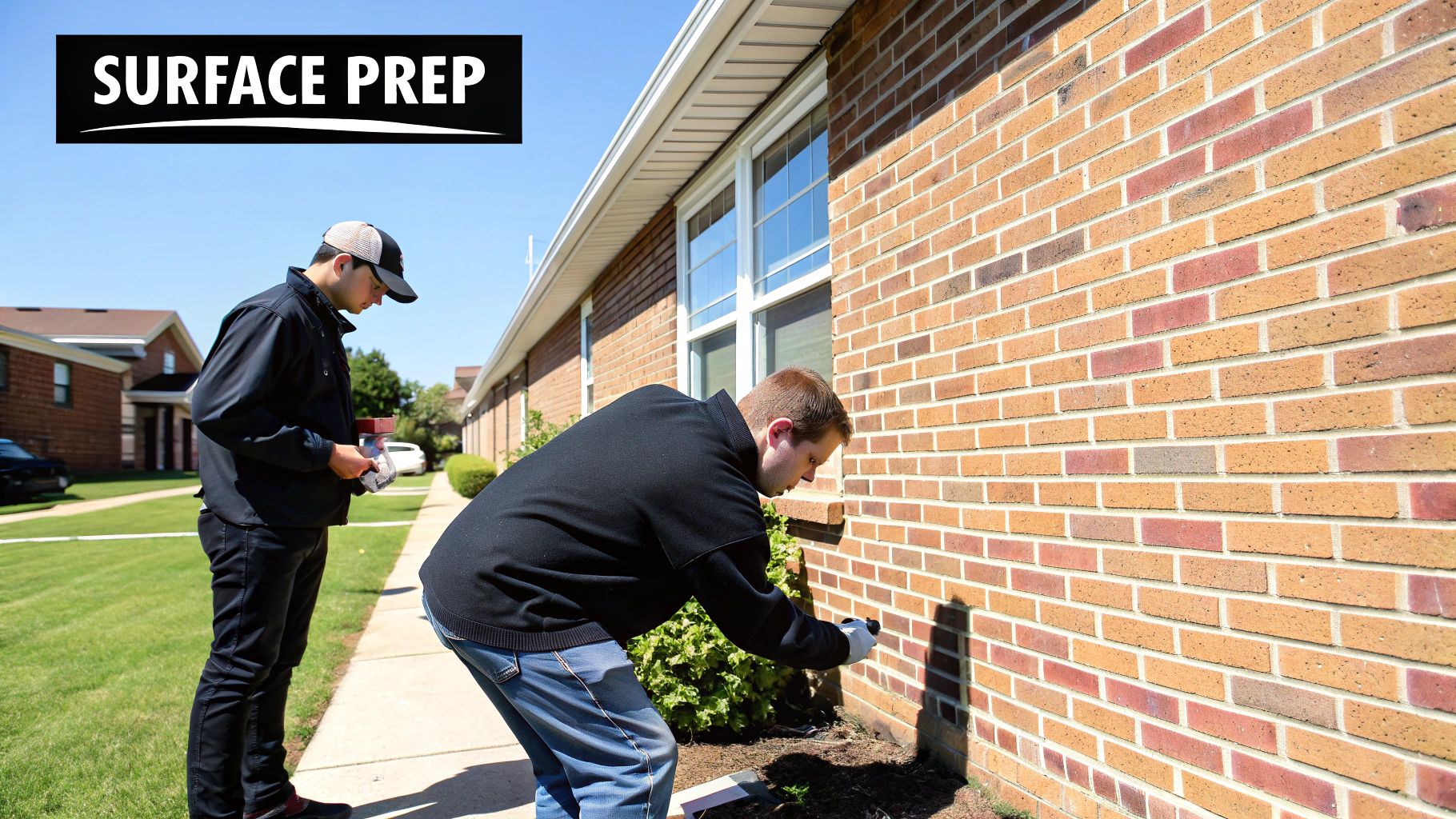
A superior paint finish is achieved through meticulous preparation. You can select the best paint for brick exterior, but applying it to a poorly prepared surface will lead to premature failure. Skipping this stage is the primary cause of bubbling and peeling, especially given the weather conditions in Toronto and Mississauga.
Brick surfaces accumulate dirt, mildew, and efflorescence (a chalky salt deposit) over time. Efflorescence is left behind as moisture evaporates from the brick and presents a significant challenge for paint adhesion. Painting directly over it will result in failure.
Starting with a Clean Slate
The first step is a thorough cleaning. For most homes in the GTA, a power washer is the most effective method for removing built-up grime and loose debris. This creates a clean, sound surface for primer and paint to adhere to.
A word of caution: power washing requires skill. Excessive pressure can damage mortar joints or the brick face itself, particularly on older, softer brick. This task is often best left to a professional who can adjust the pressure to suit your specific masonry, preventing costly damage.
Following the wash, the brick must dry completely. Trapping moisture beneath a layer of paint is a direct cause of blistering and peeling. In a humid Southern Ontario summer, this drying process can take several days. Patience at this stage is critical for a successful outcome.
Inspecting and Repairing the Mortar
Once the wall is clean and dry, it requires a detailed inspection. Look for crumbling mortar, cracks, or gaps between the bricks. These defects are entry points for water, which can lead to significant damage when it freezes, expands, and breaks the brick apart from within.
Repairing these joints is a process known as tuckpointing. It involves grinding out the damaged mortar and applying a new mix that matches the original in strength and colour. A properly tuckpointed wall is not only structurally sound but also provides the uniform surface necessary for a professional paint finish.
A detail-oriented approach to preparation is what differentiates a paint job that lasts five years from one that lasts fifteen. Every hour invested in cleaning and repairs contributes directly to the longevity of the final result.
Ignoring necessary repairs is a temporary fix. While paint may cover the flaws for a short time, the underlying issues will persist and eventually cause the paint to fail. Mastering the preparation phase is a crucial component we detail in our guide to exterior house painting.
After all repairs are complete and the new mortar has fully cured, the brick exterior is ready for primer. This diligence ensures your new paint job will look its best and protect your home for years to come.
Budgeting for Your Exterior Brick Painting Project
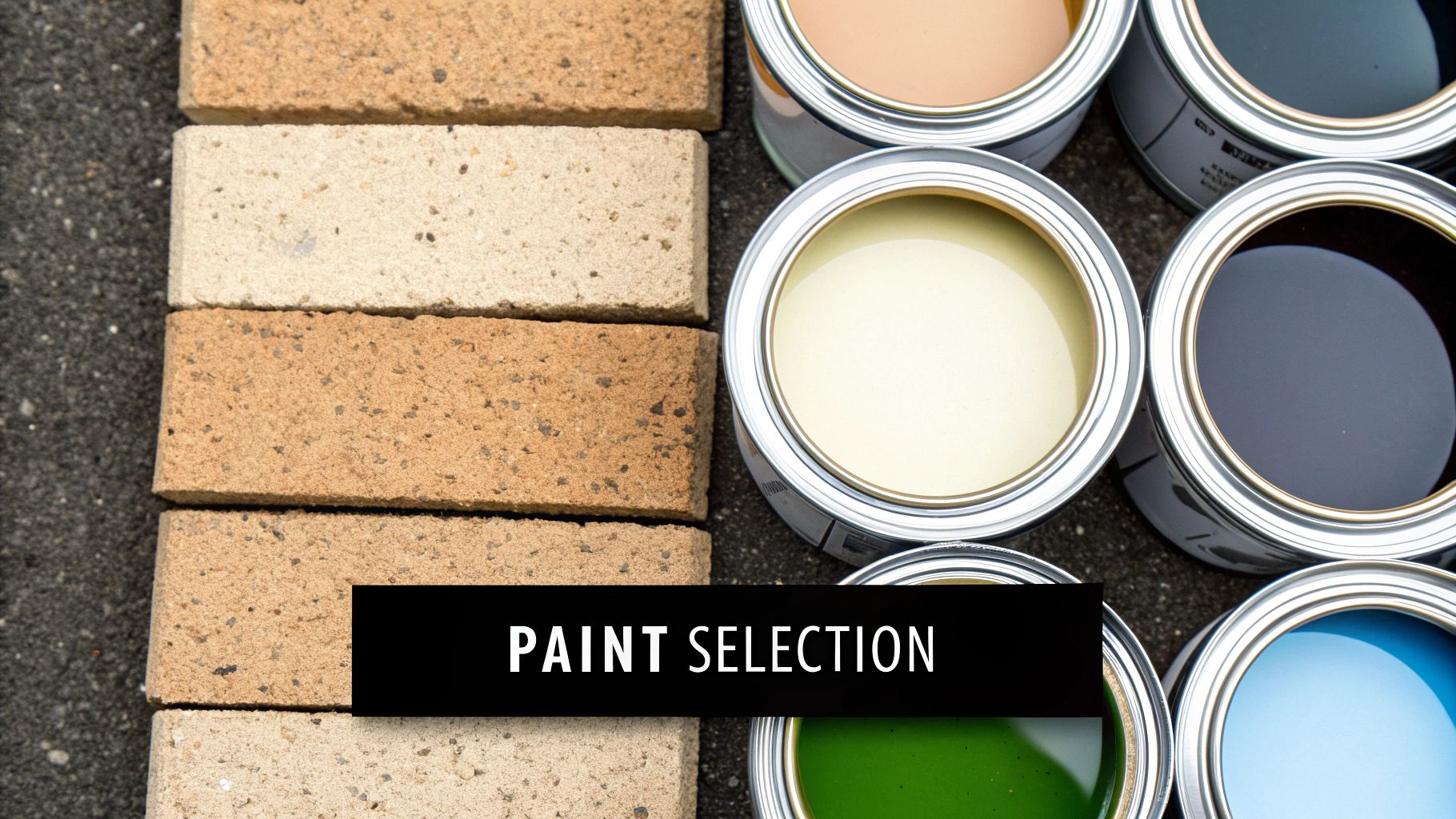
What is the typical cost to paint a brick home in Toronto or Mississauga? Understanding the budget involves more than the price of the paint for brick exterior. A professional quote reflects a detailed, multi-step process designed to achieve a durable and high-quality finish.
A professional estimate functions as a project roadmap, not just a price tag. It is a detailed calculation of all variables required to complete the job correctly, ensuring your home is protected and looks its best.
Key Factors Influencing Your Quote
When gathering quotes from painters in the GTA, it's important to understand the components of the price. The final cost is determined by several key factors that a professional will assess during an on-site evaluation.
-
Size and Complexity: The total square footage of the exterior is the baseline. However, architectural features like high gables, multiple storeys, or intricate trim require more time, specialized equipment, and precision, which increases labour costs.
-
Brick Condition and Repairs: The current state of your brick and mortar is a major consideration. If there are crumbling mortar joints or efflorescence, these issues must be addressed before painting. The extent of prep work, from power washing to extensive tuckpointing, will significantly impact the final budget.
-
Material and Labour Costs: High-quality, breathable paints have a higher upfront cost but provide superior durability and performance. Labour represents the other major expense, covering the crew's expertise, insurance, and the time required for a professional-grade finish.
An accurate quote can only be provided after an in-person inspection of your home. This allows a contractor to identify unique challenges and provide a transparent, itemized estimate for the entire project.
Understanding Real World Costs
Painting a brick home is a significant investment that enhances curb appeal and provides essential protection. As a general estimate, properly preparing and painting a standard 2,000-square-foot brick home can range from $4,000 to $8,000. Larger or more complex homes will naturally have a higher cost.
Surface preparation alone can add over $1,200 to the project total, underscoring its importance for a long-lasting result.
While these figures provide a general guideline, local market rates in areas like Mississauga and the GTA will influence the final cost. For a more detailed analysis of local pricing, please see our guide on the cost to paint an exterior house. Obtaining a detailed, local quote is the best first step.
Finding the Best Brick Painters in the GTA
Selecting the right paint for brick exterior is crucial, but hiring the right team to apply it is what ensures a professional, durable finish. For homeowners in Toronto, Mississauga, or anywhere in the GTA, a generic "painters near me" search is insufficient. You need a specialist with proven experience in masonry painting.
Hiring a professional is an investment in quality. An increasing number of homeowners are turning to experts for specialized surfaces like brick. In some major markets, professionally applied paint now accounts for over 63% of all paint used, indicating a growing understanding of the value of expert application. You can read more about the professional painting market share on ibisworld.com.
Not all painters are brick specialists. The best team for the job will have in-depth knowledge of breathable paints and the non-negotiable importance of meticulous prep work.
Vetting Potential Contractors
When you begin contacting contractors, a list of targeted questions will help you identify true experts. You need a contractor who understands your home's exterior as a complete system.
Here are the essential questions to ask every potential contractor:
- What is your experience painting brick in the GTA? They should provide a portfolio of recent, local brick projects.
- What specific paint products do you recommend for my house and why? The correct answer will focus on breathability and name specific high-quality acrylic or mineral-based paints.
- Can you describe your preparation process? A detailed response covering power washing, mortar inspection, potential tuckpointing, and adequate drying times is a positive indicator.
- Are you fully insured with WSIB coverage? Request to see documentation. This protects you from liability in case of an accident on your property.
Red Flags to Watch Out For
Recognizing warning signs of an unqualified contractor is as important as knowing what to look for. An unusually low price often indicates that corners are being cut, which can lead to higher costs in the long run.
A suspiciously low quote is often the most expensive one in the end. It is a telltale sign of cheap materials, skipped prep work, or a lack of proper insurance—all of which put your home at risk.
Be wary of high-pressure sales tactics or reluctance to provide local references. A true professional is confident in their work and transparent about their process. For more guidance, our article on finding residential painting contractors in Toronto offers additional tips.
Taking the time to find the best painter is the final step in ensuring your investment protects and beautifies your home for years.
Modernizing Your Home with Painted Brick
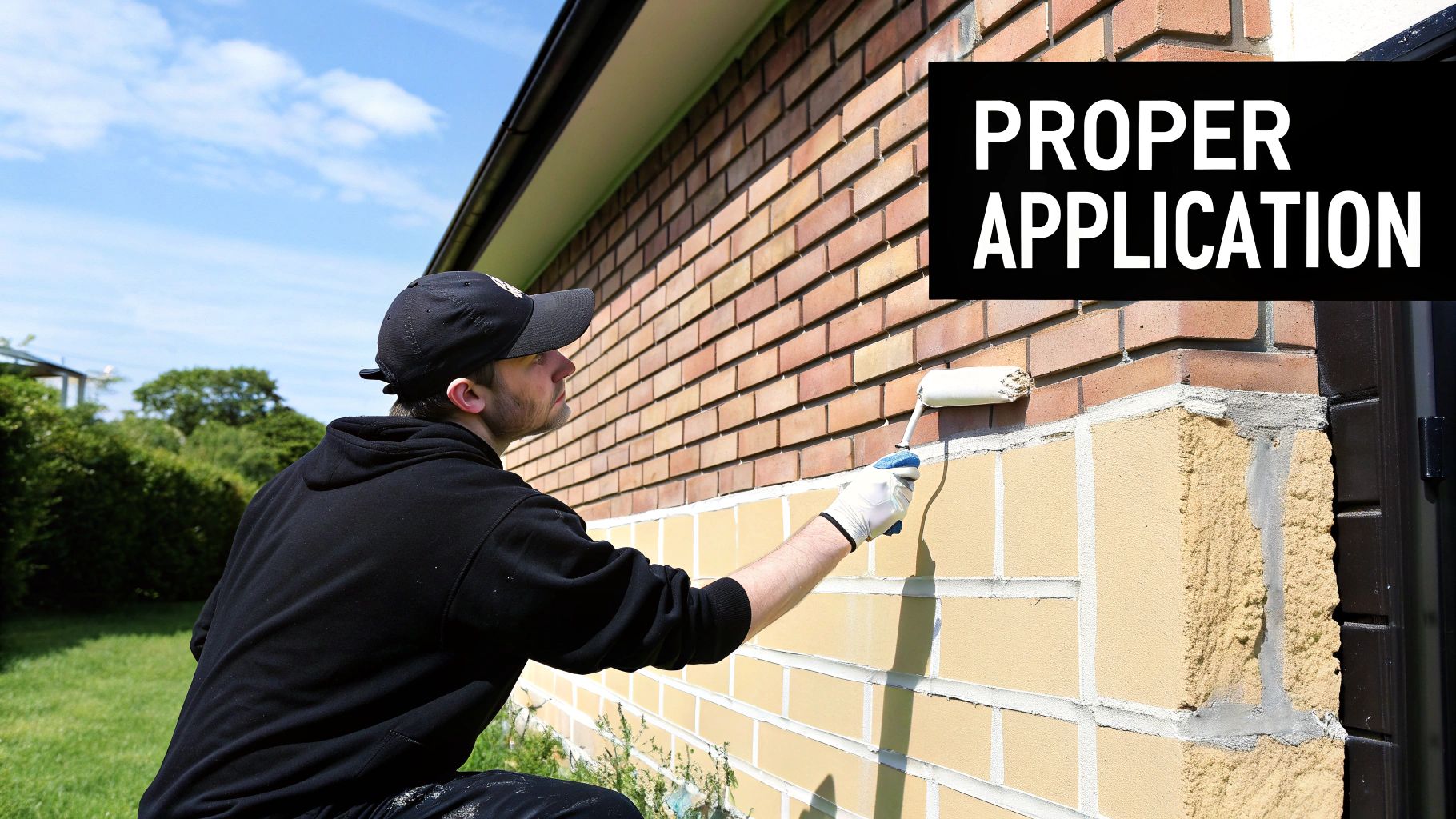
Applying a fresh coat of paint to your brick exterior is one of the most effective ways to modernize your home. Using the right paint for brick exterior can completely transform its appearance, providing an immediate update and a significant boost in curb appeal.
This is a strategic design choice to redefine your home's aesthetic. Modern architectural styles often feature clean, monochromatic finishes or high-contrast palettes. Painting your brick allows you to achieve this look, turning a dated facade into a sharp, contemporary statement.
The demand for durable and visually appealing exteriors is a significant trend. The global market for brick cladding systems, for example, was valued at approximately USD 248.9 billion in 2023, according to Grand View Research. This reflects a strong consumer desire for resilient and beautiful building exteriors.
Choosing Your Modern Aesthetic
A new colour scheme can completely alter your home's character. The objective is to choose a look that is both current and timeless. In Toronto and Mississauga, several popular approaches are trending:
- Crisp White: A classic choice that provides a fresh, clean aesthetic. White can make a home appear larger and creates an ideal backdrop for landscaping and dark trim.
- Dramatic Darks: For a bold, high-end look, deep greys, charcoals, and even black are increasingly popular. This style adds modern drama and pairs well with natural wood accents.
- Earthy Tones: Softer greys, warm beiges, and muted greens create a sophisticated, grounded look that integrates the home with its natural surroundings, suiting many GTA neighbourhoods.
Selecting the right shade is a critical part of the process. For inspiration on how different colours work together, see our guide on stunning exterior paint colour combinations.
The best modern paint jobs enhance a home's architectural lines and form. A well-chosen palette highlights structural details and creates a cohesive, intentional design.
Exploring an Alternative to Paint
For those who want to update the colour while preserving the natural brick texture, brick staining is an excellent alternative. Unlike paint, which forms an opaque film on the surface, a stain penetrates the pores of the brick.
This process changes the brick's colour internally, allowing the original texture and variations to remain visible. Stains are highly breathable and durable, making them a superb choice for a more subtle, organic transformation. Whether you choose the best paint or a high-quality stain, updating your brick is a guaranteed way to create a modern, standout home.
Common Questions About Painting Brick Exteriors
It is common to have questions when considering a project of this scale. Painting a brick home is a major decision, especially in a city like Toronto, so it is important to have all the necessary information. Here are answers to the most common questions from homeowners in the GTA.
Is It a Mistake to Paint a Brick Exterior?
Painting a brick exterior is only a mistake if it is done incorrectly. When a qualified professional uses the appropriate breathable paint—such as a high-quality acrylic latex or mineral-based product—and performs thorough surface preparation, painting is an excellent choice. It protects the brick from the elements and provides a significant aesthetic upgrade.
Problems arise when the wrong type of paint is used. A non-breathable paint traps moisture inside the brick, which leads to bubbling, peeling, and long-term masonry damage. The key to avoiding a mistake is to hire a professional who understands the specific requirements of brick in the Toronto climate.
How Long Does Exterior Brick Paint Last in Toronto?
A professionally applied paint job on a brick home in the GTA can be expected to last 10 to 20 years. This longevity is a direct result of meticulous prep work, the use of high-quality materials, and the skill of the application team. Local environmental factors, such as the amount of direct sun and precipitation, also play a role.
In contrast, a poorly prepared or rushed job can begin to fail in as little as three to five years. This highlights the importance of investing in a quality process from the outset.
A great paint job is a long-term investment in your home’s health and curb appeal. The longevity isn't just in the can; it’s in the skilled hands that apply it, from the initial power wash to the final brushstroke.
What Is the Difference Between Painting and Staining Brick?
The fundamental difference lies in how the product interacts with the brick surface. One covers the surface, while the other is absorbed into it.
- Painting: Creates a solid, opaque film that covers the brick. It completely hides the original colour and texture, resulting in a uniform, modern finish.
- Staining: Is absorbed directly into the brick's porous structure. It tints the brick from within, allowing the natural texture and subtle colour variations to remain visible.
Stains offer excellent breathability and durability, but because the finish is semi-transparent, the colour options are more limited and subtle. If the goal is a bold, solid colour change, paint is the best option. If you wish to change the hue while preserving the brick's character, a stain is the ideal choice.
Can You Paint Over Previously Painted Brick?
Yes, it is possible to paint over previously painted brick, but the success of the project depends entirely on preparation. Any existing paint that is peeling, bubbling, or chipping must be completely removed. This is typically achieved through a combination of scraping, sanding, and gentle power washing.
After removing all loose paint, the entire surface must be cleaned to eliminate dust and grime. If the existing paint is in sound condition, a thorough cleaning may be sufficient before applying new coats. A professional assessment is the only way to determine the correct preparation strategy for your specific home.
Ready to transform your home with a flawless, long-lasting finish? The experts at Soca Services Painting have the specialized knowledge to protect and beautify your brick exterior. Contact us today for a professional consultation!


5 Comments