Table of Contents
- What Is the Best Paint for Kitchen Cabinets? Top 5 Picks Compared
- Oil-Based vs. Water-Based Paint for Cabinets: Which Should You Choose?
- The Best Primer for Kitchen Cabinets and Surface Preparation Steps
- Kitchen Cabinet Painting Tools and How Long the Project Takes
Last Updated: September 16, 2026
What Is the Best Paint for Kitchen Cabinets? Top 5 Picks Compared
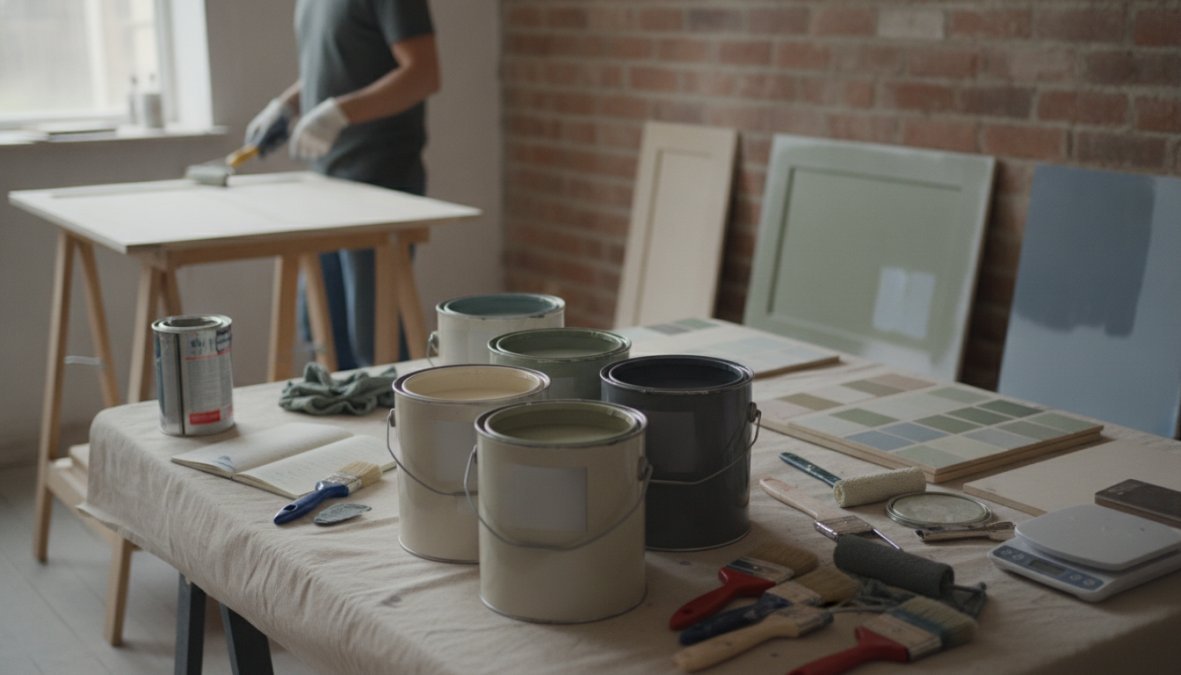
Choosing what is the best paint for kitchen cabinets is one of the most consequential decisions in any kitchen renovation, and most homeowners get it wrong by reaching for standard wall paint. This guide from Soca Services Painting breaks down the top five cabinet paints for 2026. The wrong paint chips, yellows, and fails within a year. The right one looks factory-fresh for a decade.
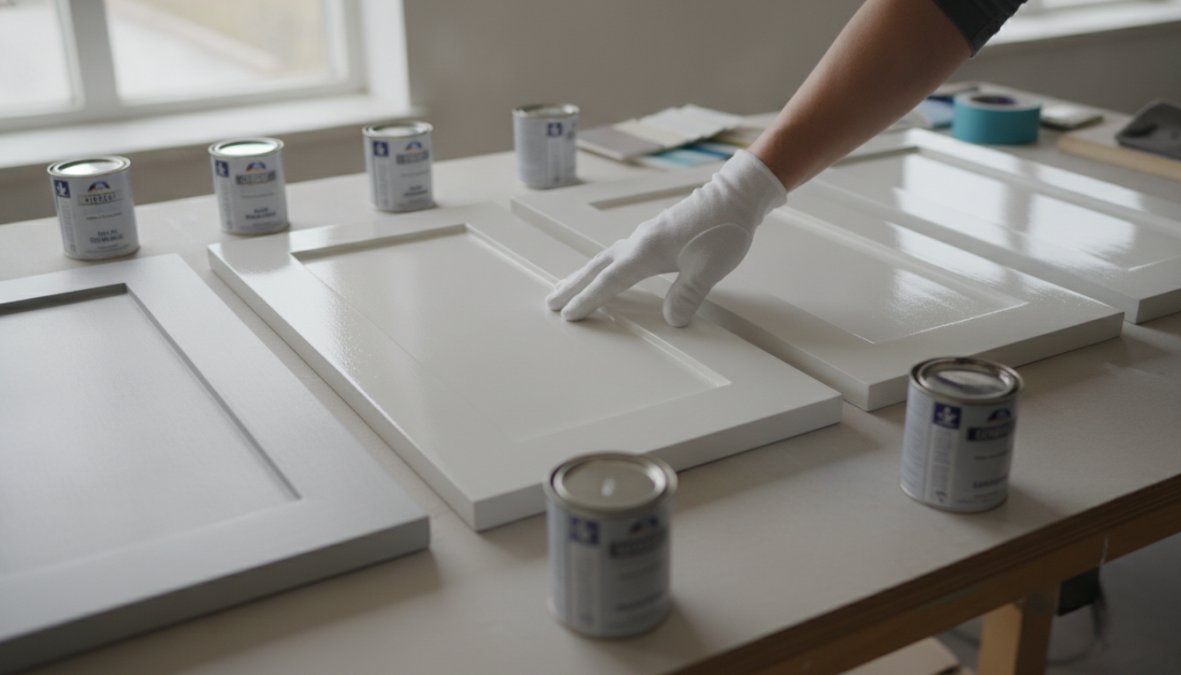
Cabinet doors and drawer fronts take more abuse than almost any surface in your home, touched hundreds of times a day, wiped with damp cloths, exposed to grease and steam. You need a topcoat engineered for that level of wear. The five picks below are ranked by durability, self-leveling performance, and real-world scrubbability.
Top 5 Cabinet Paints Compared
| Paint | Type | Best For | Finish Options | Approximate Price |
|---|---|---|---|---|
| Sherwin-Williams Emerald Urethane Trim Enamel | Waterborne urethane alkyd | High-use kitchen cabinets | Satin, Semi-gloss | ~$80-$130/gallon |
| Benjamin Moore Advance | Waterborne alkyd | Smooth brush-applied finish | Matte to High Gloss | Contact retailer |
| PPG Break-Through! | Waterborne acrylic enamel | Fast-turnaround projects | Satin, Semi-gloss | ~$130/gallon |
| Valspar Cabinet, Door & Trim Enamel | Oil-enriched waterborne enamel | Budget-conscious DIYers | Satin, Semi-gloss | ~$32-$65/gallon |
| Behr Premium Cabinet, Door & Trim Enamel | Water-based enamel | Readily available DIY option | Satin, Semi-gloss | Available at Home Depot |
1. Sherwin-Williams Emerald Urethane Trim Enamel is a strong professional-grade option for kitchen cabinets because of its durability, block resistance and self-leveling properties. Its urethane-modified alkyd formula delivers extreme durability, block resistance, and self-leveling that practically eliminates brush marks. Drawback: steep price and patience required between coats.
2. Benjamin Moore Advance is the go-to for DIYers wanting a factory finish by brush. Its water-dispersible alkyd resin levels beautifully and cures to a hard, scrubbable surface in over 3,500 colors. Plan for longer recoat times than pure acrylics.
3. PPG Break-Through! dries faster than anything else on this list and bonds aggressively to difficult substrates like laminate and previously painted surfaces. Fast dry time demands a carefully maintained wet edge to avoid lap marks.
4. Valspar Cabinet, Door & Trim Enamel offers the strongest performance-to-cost ratio on the list. Its oil-enriched formula resists brush marks and dries to a hard, scrubbable finish, drying time runs longer, but results are solid.
5. Behr Premium Cabinet, Door & Trim Enamel is the easiest to source, available at Home Depot locations across the GTA. Two-hour recoat time and outstanding block resistance are genuine advantages, but careful surface preparation is essential.
For Toronto homeowners, the best choice depends on the cabinet material, application method, desired finish, budget and curing time. Professional-grade waterborne alkyd and urethane-modified coatings are generally better suited to cabinetry than standard wall paint.
Oil-Based vs. Water-Based Paint for Cabinets: Which Should You Choose?
The debate between oil-based vs water-based paint for cabinets has largely been settled by modern chemistry. Traditional oil-based paint levels beautifully and cures rock-hard, but slow dry times (24+ hours between coats), strong solvent odors, yellowing on whites, and Ontario’s tightening VOC regulations make it increasingly impractical for residential use.
Modern waterborne alkyd and hybrid enamel formulas have closed the performance gap. Products like Benjamin Moore Advance and Sherwin-Williams Emerald Urethane Trim Enamel contain alkyd or urethane resins that mimic the self-leveling and curing behavior of traditional oils, while cleaning up with water, resisting yellowing, and emitting far fewer VOCs.
| Factor | Traditional Oil-Based | Waterborne Alkyd / Hybrid Enamel | Standard Latex |
|---|---|---|---|
| Durability | Excellent | Excellent | Moderate |
| Dry time | 24+ hours | 4-8 hours | 1-2 hours |
| VOC level | High | Low-Medium | Low |
| Yellowing | Yes (whites) | Minimal | No |
| Cleanup | Mineral spirits | Soap and water | Soap and water |
| Self-leveling | Excellent | Excellent | Poor-Moderate |
According to the EPA’s guidance on architectural coatings and VOC content, waterborne formulas consistently produce lower VOC emissions, making them the safer choice for indoor kitchen environments.
Never use standard interior latex paint on cabinet doors. Without the hardening resins found in cabinet-specific enamels, the surface will scratch, chip, and peel within months of regular use.
The Best Primer for Kitchen Cabinets and Surface Preparation Steps
Surface preparation is where cabinet painting projects succeed or fail. The best primer for kitchen cabinets is a bonding primer formulated for slick or previously painted surfaces, products like Zinsser Bulls Eye 1-2-3 or Sherwin-Williams Extreme Bond Primer. Skipping primer, or using the wrong one, is the single most common reason cabinet paint peels. Best primer for kitchen cabinets
Kitchen Cabinet Painting Tools and How Long the Project Takes
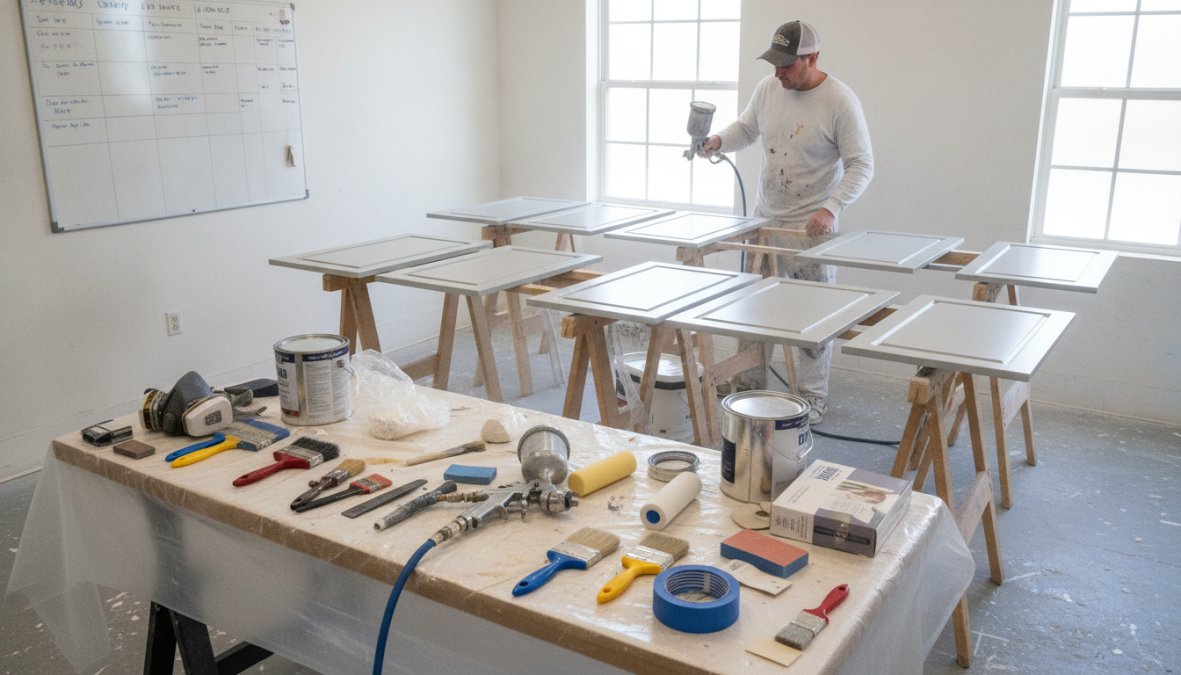
Spray gun: The gold standard for cabinet doors, an HVLP spray gun produces the smoothest finish with zero brush marks. Foam roller: The best DIY alternative; a 4-inch high-density foam roller on flat surfaces produces near-sprayed results. Use foam, not nap. Angled brush: Essential for edges, inside corners, and cabinet frames. Tack cloth: Non-negotiable between every sanding step. How to paint kitchen cabinets
Full curing for most waterborne alkyd paints runs 7-14 days, handle doors gently during this period. According to Sherwin-Williams technical data sheets for Emerald Urethane Trim Enamel, the product reaches full hardness after approximately 30 days.
Environmental and VOC Considerations for Toronto Homeowners
Waterborne alkyd and hybrid enamel paints produce substantially lower VOC emissions than traditional oil-based products, a meaningful factor for households with children, elderly residents, or anyone with respiratory sensitivities. Open windows, use fans to direct air outward, and allow fresh air to circulate for at least 24 hours after each coat.
Wood Species Compatibility: What Nobody Tells You
Oak’s open grain requires grain filler or multiple primer coats, without it, texture telegraphs through the topcoat regardless of how many coats you apply. Maple and birch are the easiest species to paint due to their tight, closed grain. MDF paints beautifully but is vulnerable to moisture at edges. Laminate requires a dedicated bonding primer, not a standard drywall primer, for reliable adhesion.
Long-Term Maintenance and Touch-Up
Keep a small sealed container of your topcoat paint after the project, touch-ups are inevitable, and having the exact paint on hand means a chip can be fixed in minutes. Clean with mild dish soap and a soft cloth; avoid abrasive scrubbers and wipe acidic spills promptly. As outlined in the Canadian Paint and Coatings Association’s homeowner maintenance guidance, regular gentle cleaning extends finish life significantly compared to infrequent heavy cleaning.
Repainting kitchen cabinets is one of the highest-impact home improvement projects available, but results depend entirely on product selection, preparation, and application technique. Soca Services Painting has spent over a decade delivering professional cabinet finishes across Toronto, specializing in spray-applied topcoats and precise surface preparation that produce results indistinguishable from factory-finished cabinetry. Get Your Free Estimate Today and see what a professional finish looks like in your kitchen.
Frequently Asked Questions
Is it better to paint or spray kitchen cabinets?
Spraying kitchen cabinets with a spray gun produces the smoothest, most factory-like finish by eliminating brush marks entirely, ideal for cabinet doors and drawer fronts. Brushing or rolling with a foam roller is more accessible for DIYers and works well with self-leveling paints like Benjamin Moore Advance or Sherwin-Williams Emerald Urethane. For the best paint for kitchen cabinets applied professionally, spraying is the preferred method among experienced painters in Toronto. Professional kitchen cabinet painting in Toronto
What type of paint is most durable for kitchen cabinets?
Waterborne alkyd and hybrid enamel paints, such as Sherwin-Williams Emerald Urethane Trim Enamel and Benjamin Moore Advance, are widely regarded as the most durable options for kitchen cabinets. These formulas cure to a hard, scrubbable surface that resists moisture, grease, and everyday wear in high-traffic areas. A urethane-modified alkyd topcoat offers excellent block resistance, preventing cabinet doors from sticking together after closing.
Do I need to prime kitchen cabinets before painting?
Yes, using the best primer for kitchen cabinets is a critical step. A bonding primer ensures proper adhesion, especially on previously painted, laminate, or naturally oily wood species like oak or maple. Skipping primer is one of the most common mistakes DIYers make, often leading to peeling within months. After degreasing and light sanding, apply a shellac-based or water-based bonding primer before your topcoat for a long-lasting finish. Best primer for kitchen cabinets
How long does it take to paint kitchen cabinets?
How long it takes to paint kitchen cabinets depends on the size of your kitchen and the paint chosen. A typical DIY project, including degreasing, sanding, priming, and two topcoats, takes 3 to 5 days to allow for proper curing time between coats. Professional painters using a spray gun and fast-drying products like PPG Break-Through! can often complete the same project in 1 to 2 days. Full cure to maximum hardness can take 2 to 4 weeks.
Can I use regular latex paint on kitchen cabinets?
Standard latex paint is generally not recommended as the best paint for kitchen cabinets. While it applies easily, it lacks the hardness and scrubbability needed to withstand daily kitchen use. Cabinet-specific enamels, including waterborne alkyd and hybrid formulas, cure to a much harder film that resists moisture, grease, and frequent wiping. If budget is a concern, Valspar Cabinet, Door & Trim Enamel offers a more durable oil-enriched waterborne formula at an accessible price point. How to paint kitchen cabinets