Table of Contents
- Cabinet Painting vs Replacing Cost Comparison: The Numbers Breakdown
- Average Cost to Paint Kitchen Cabinets (and What Affects the Price)
- Cabinet Refacing vs Painting Cost: The Middle-Ground Option Explained
- How Long Does Cabinet Painting Take vs Replacement Downtime
Last Updated: June 15, 2026
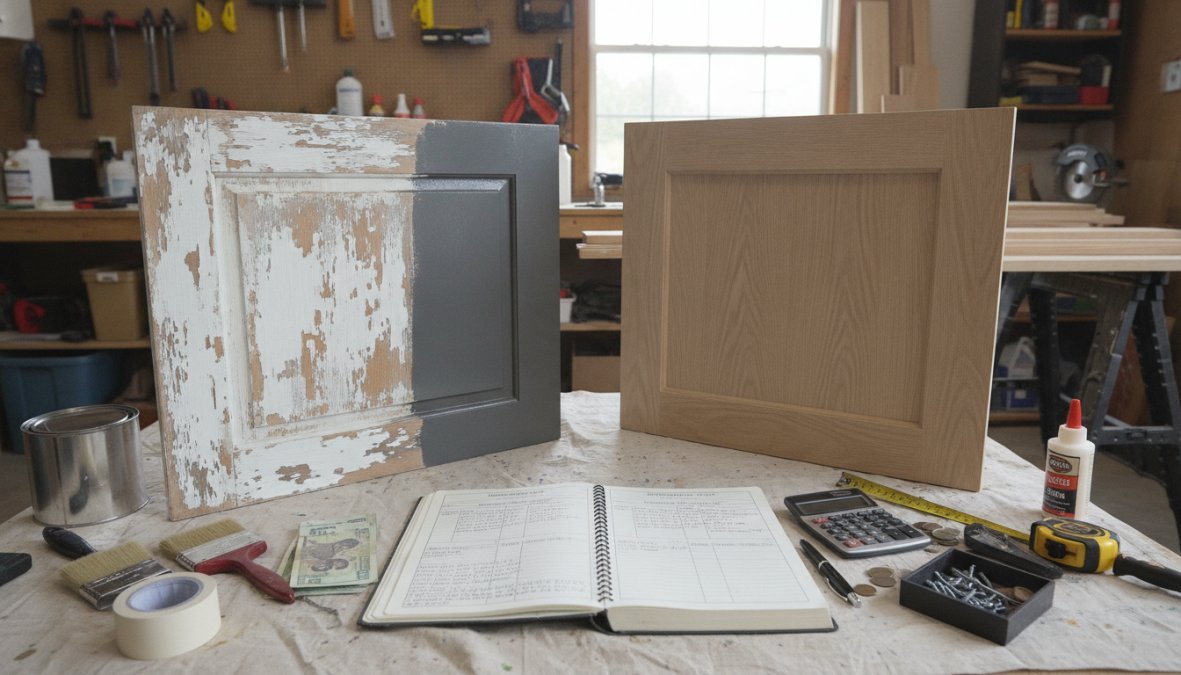
Making a smart cabinet painting vs replacing cost comparison is one of the most consequential decisions in any kitchen renovation. At Soca Services Painting, we work with Toronto homeowners every week who assume replacement is the only path to a fresh kitchen. The reality is that painting cabinets can deliver a near-identical visual result for a fraction of the replacement cost. Below, we break down the real numbers, the hidden trade-offs, and exactly when each option makes sense. Professional kitchen cabinet painting in Toronto
Cabinet Painting vs Replacing Cost Comparison: The Numbers Breakdown
Painting works on existing cabinet boxes and doors; replacement tears everything out and starts over. That distinction drives a dramatic cost gap.
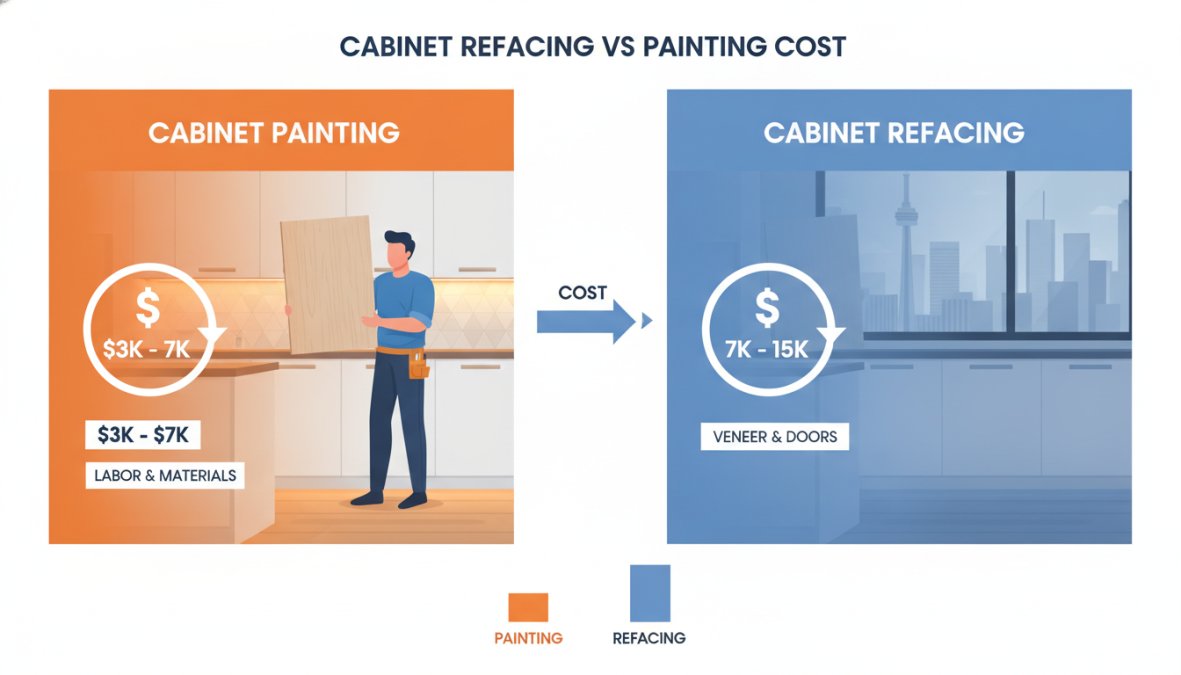
| Option | Typical Cost Range | Project Timeline | Kitchen Downtime |
|---|---|---|---|
| Professional cabinet painting | Lower cost tier | 3-5 days | 1-2 days |
| Cabinet refacing | Mid-range cost tier | 3-7 days | 2-4 days |
| Full cabinet replacement | Highest cost tier | 2-6 weeks | 2-6 weeks |
| DIY cabinet painting kit | Budget tier | 1-2 weekends | Intermittent |
Full replacement involves demolition, new cabinets, hardware, installation labor, and often countertop adjustments. Hidden costs, debris disposal, plumbing reconnections, and semi-custom cabinet lead times, can stretch a “simple” replacement into a months-long ordeal.
Never assume the cabinet boxes are in poor condition without a [professional assessment](/instant-painting-quote/). Replacing structurally sound boxes to address surface wear alone is one of the most common and costly mistakes homeowners make during a kitchen remodel.
Average Cost to Paint Kitchen Cabinets (and What Affects the Price)
The primary cost drivers for professional cabinet painting include:
- Number of cabinet doors and drawer fronts: Most contractors price per linear foot or per door, so larger kitchens cost proportionally more.
- Cabinet substrate: MDF requires specific primers to prevent grain raise; laminate needs adhesion-promoting prep before any top coat can bond properly.
- Current cabinet condition: Heavy wear, chipping finishes, or greasy buildup requires more prep work and adds labor costs.
- Paint quality and finish type: Waterborne alkyd paints and catalyzed lacquers outperform standard latex for durability but cost more per litre.
- Spray painting vs. brush-and-roll: Spray painting produces a smooth, factory-quality finish. Brush application shows texture in the final top coat.
According to the National Kitchen and Bath Association’s kitchen remodeling cost guidance, cabinet updates represent one of the highest-ROI investments in a kitchen renovation when existing boxes maintain structural integrity.
Ask any contractor whether they spray cabinet doors on-site or remove them for off-site spraying in a controlled environment. Off-site spraying eliminates dust contamination and produces a noticeably smoother top coat, especially important for high-gloss finishes.
Cabinet Refacing vs Painting Cost: The Middle-Ground Option Explained
Cabinet refacing replaces doors, drawer fronts, and hardware while keeping existing cabinet boxes, sitting between painting and full replacement on both cost and disruption.
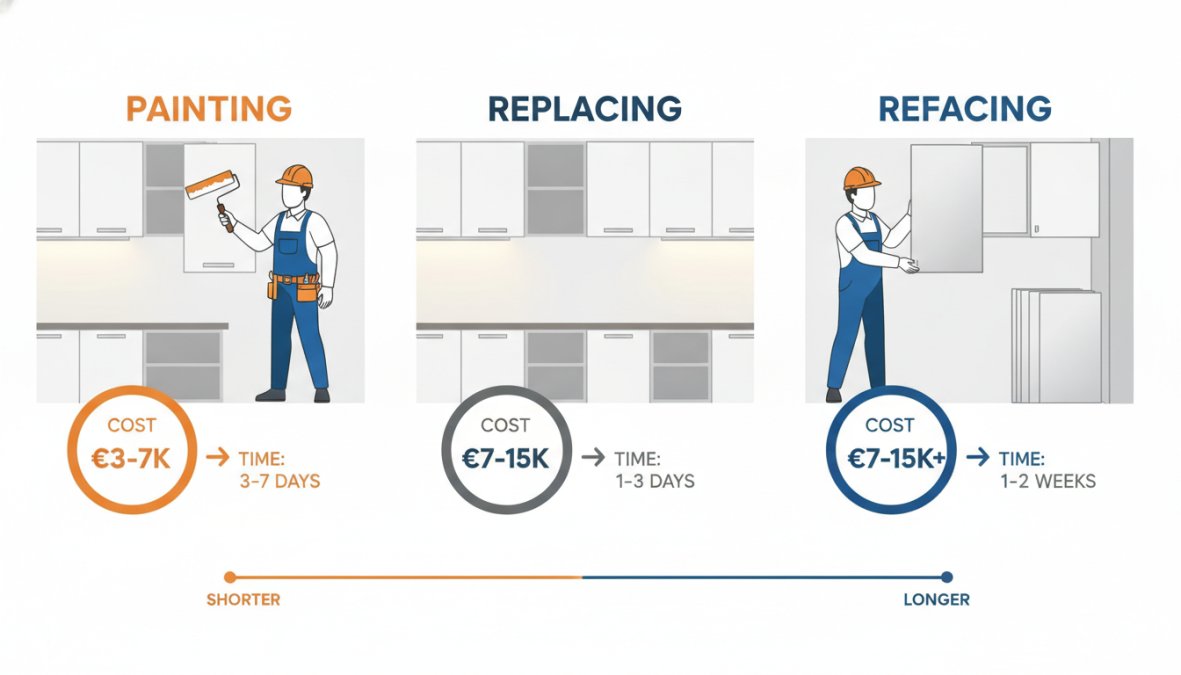
(/painting-cost-per-square-foot-canada/): The Middle-Ground Option Explained]
Refacing costs considerably more than painting but substantially less than full replacement, since it requires purchasing new doors, drawer fronts, and hardware plus installation labor.
Where refacing wins: the existing door style is genuinely outdated and a color change alone won’t satisfy, or the homeowner wants a new wood species appearance. Where painting wins: the door profile is still modern, or budget and timeline are the primary constraints.
Services like N-Hance Wood Refinishing’s professional cabinet refinishing process illustrate how professional-grade finishing systems bridge the gap between DIY results and full replacement quality. For a budget entry point, Rust-Oleum Cabinet Transformations kit overview is an option, though finish durability won’t match professional spray application.
How Long Does Cabinet Painting Take vs Replacement Downtime
Cabinet painting takes three to five days for a professional crew on a standard Toronto kitchen. Full cabinet replacement can take two to six weeks from demolition to final installation.
A typical professional cabinet painting timeline:
- Day 1: Remove doors, drawer fronts, and hardware; clean all surfaces; apply deglosser and sand
- Day 2: Apply primer to cabinet boxes and doors in a controlled environment
- Day 3: Sand primer coat; apply first top coat
- Day 4: Light sand; apply final top coat
- Day 5: Reinstall doors, drawers, and new hardware; final inspection
The kitchen remains largely functional throughout. Full replacement, by contrast, involves demolition debris, weeks of lead time for semi-custom cabinets, and countertop and plumbing disconnections. According to HGTV’s kitchen renovation planning resource, kitchen downtime is consistently one of the top frustrations homeowners report. Painting or refacing also preserves functional cabinet boxes from landfill, the clear eco-friendly choice.
For most kitchens with structurally sound cabinet boxes, professional cabinet painting delivers the most favorable combination of cost, timeline, and disruption. Replacement makes sense when the layout needs to change or the boxes themselves are damaged beyond repair.
DIY vs. Professional Cabinet Painting: A Practical Cost Analysis
DIY cabinet painting costs less in materials but demands far more time and skill than most homeowners anticipate. The Rust-Oleum Cabinet Transformations kit covers materials at a fraction of professional pricing, but the labor investment across two full weekends is substantial and the finish quality gap is real.
- DIY risks: Brush marks, inadequate adhesion on laminate, drips, and finishes that chip within a year
- Professional advantages: Spray-applied finishes, proper primer selection by substrate, controlled curing environments, and workmanship warranty
- The real cost of a failed DIY: Stripping a poorly applied finish and re-doing the work professionally costs more than hiring a professional from the start
Use tools like RealcostIQ Kitchen Cabinets Calculator to benchmark your kitchen before committing. Substrate matters: solid wood responds best to painting long-term; MDF requires specific primer to prevent edge swelling; laminate and melamine need proper adhesion prep or paint will peel within months. A properly applied catalyzed top coat resists chipping for many years, while a DIY latex finish on the same substrate may need repainting within two to three years, effectively doubling the true cost of the “cheaper” option.
Most Toronto homeowners facing a dated kitchen have more options than they realize. Full replacement is rarely the only path to a fresh, modern space, and the cost and disruption gap is larger than most guides acknowledge. Soca Services Painting has spent over a decade helping homeowners across Toronto achieve professional, durable results through expert spray painting and precise surface finishing, with a stress-free four-step process and detailed project proposals that remove the guesswork from budgeting. Get Your Free Estimate Today and see what a professional cabinet painting finish can do for your kitchen.
Frequently Asked Questions
How much does it cost to paint cabinets vs replace them?
In Toronto, professional cabinet painting typically costs significantly less than full replacement. Painting a standard kitchen runs roughly a fraction of the cost of installing new stock or custom cabinets, which must also factor in demolition, new hardware, and labor costs. Cabinet painting is widely considered the most budget-friendly option for a kitchen facelift when the cabinet boxes have good structural integrity and no major surface wear or damage.
Is it worth painting old kitchen cabinets?
Yes, in most cases, provided the cabinet substrate is solid wood, MDF, or stable plywood with no warping or delamination. If the cabinet boxes are structurally sound and you want an aesthetic upgrade without a full kitchen remodel, professional cabinet painting delivers strong ROI and can meaningfully boost resale value. Chipping and peeling on older surfaces should be addressed with proper prep work, sanding, and primer before applying a top coat.
What is cabinet refacing and how does its cost compare to painting?
Cabinet refacing involves replacing cabinet doors, drawer fronts, and hardware while keeping the existing cabinet boxes. It costs more than painting but less than full replacement, making it a strong middle-ground option. Refacing makes sense when you want new door styles or materials but the underlying cabinet substrate is still solid. For Toronto homeowners, cabinet refacing vs painting cost typically favors painting for pure budget savings, but refacing adds more visual transformation.
Can you DIY cabinet painting to save money, or should you hire a professional?
DIY cabinet painting using kits like Rust-Oleum Cabinet Transformations can reduce material costs significantly, but the labor investment is substantial. Achieving a professional finish requires careful prep work, sanding, primer, and a quality top coat. Without spray painting equipment and experience, DIY results often show brush marks and wear faster. For Toronto kitchens where resale value and durability matter, hiring a professional contractor typically delivers better long-term value despite the higher upfront labor costs.
How long do painted cabinets last compared to new ones?
Professionally painted cabinets with proper prep work, a quality primer, and a durable top coat can last 8 to 15 years before needing a refresh, comparable to the lifespan of many stock cabinets. Longevity depends heavily on the cabinet substrate, the paint system used, and daily wear and tear. Cabinet refinishing by an experienced contractor using spray painting techniques tends to outperform DIY finishes in both durability and resistance to chipping and peeling.