Table of Contents
- Commercial vs Residential Painting Requirements: Core Differences
- Commercial Painting vs Residential Painting Cost: What to Expect
- How Long Does Commercial Painting Take: Scheduling and Timelines
- Best Practices for Commercial Painting Projects: Professional Standards
Last Updated: June 30, 2026
Commercial vs Residential Painting Requirements: Core Differences
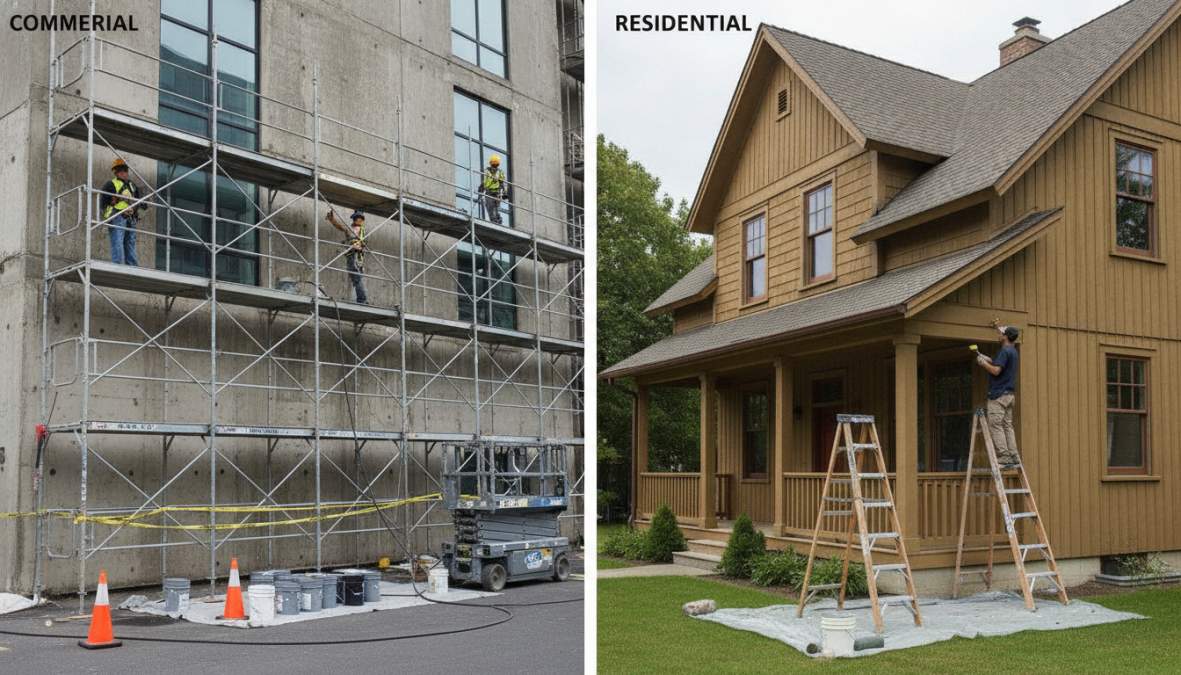
Understanding commercial vs residential painting requirements is essential for anyone planning a painting project in Toronto or surrounding areas. The differences extend beyond scope to include distinct materials, timelines, safety standards, and regulatory compliance that directly impact project success.
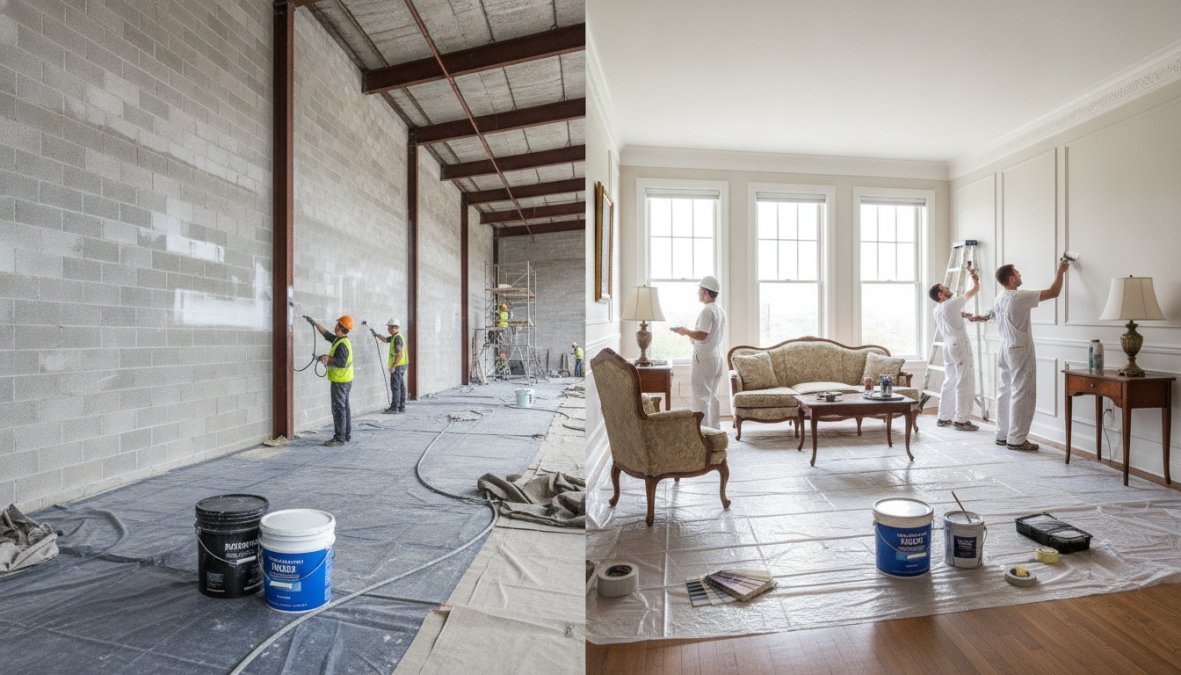
The core distinction comes down to scale, durability expectations, and regulatory oversight. Residential painting prioritizes aesthetic appeal and comfort, while commercial painting emphasizes durability, safety compliance, and functionality in high-traffic environments. A residential bedroom wall uses standard latex paint, but a commercial office hallway requires commercial-grade paint formulated to withstand constant foot traffic and cleaning cycles.
Surface preparation differs significantly. Residential projects involve standard drywall and wood trim requiring light sanding and patching. Commercial painting requires thorough substrate analysis, concrete, metal, and epoxy-coated surfaces demanding specialized preparation. Residential painters often use Benjamin Moore or Sherwin-Williams consumer lines, while commercial projects specify commercial-grade formulations with superior washability and durability ratings.
Safety regulations create another critical divide. Commercial projects must comply with OSHA standards and building codes. Residential projects follow simpler guidelines focused on interior air quality and basic safety protocols, requiring less extensive project management and regulatory documentation.
| Requirement | Residential | Commercial |
|---|---|---|
| Primary Focus | Aesthetic appeal and comfort | Durability and compliance |
| Paint Type | Standard interior/exterior latex | Commercial-grade, high-durability formulas |
| Surface Prep | Light sanding, patching, priming | Extensive substrate analysis, specialized primers |
| Safety Standards | Basic safety protocols | OSHA compliance, building codes |
| Project Timeline | 1-3 weeks typical | 2-8 weeks depending on scope |
| High-Traffic Areas | Not primary concern | Major design consideration |
Commercial Painting vs Residential Painting Cost: What to Expect
Commercial painting costs reflect the complexity of project management, specialized equipment requirements, regulatory compliance, and durability standards demanded by business environments. Residential projects typically charge by square footage or room with straightforward labor rates. Commercial projects use sophisticated estimation methods accounting for site logistics, crew scheduling, equipment rental, and extended timelines.
Commercial-grade paint costs more because it delivers superior washability and stain resistance. Commercial paint withstands 5-10 times more cleaning cycles than residential paint, justifying the higher material investment. Commercial projects often require epoxy coatings or industrial primers demanding expert application.
Project management overhead increases commercial costs significantly. Commercial painting requires detailed proposals, regulatory documentation, scheduling coordination with building management, and liability insurance. These requirements protect both contractor and client but add complexity residential projects avoid.
Commercial projects frequently include unexpected costs for surface remediation or structural repairs discovered during preparation. Budget 10-15% contingency for commercial work; 5% for residential projects.
How Long Does Commercial Painting Take: Scheduling and Timelines
Commercial painting timelines depend on project scope, surface condition, occupancy requirements, and regulatory factors. Residential projects typically complete in 1-3 weeks, while commercial painting spans 2-8 weeks, with large-scale industrial applications extending to several months.
Scheduling constraints define commercial timelines more than residential work. Many commercial clients require painting during evenings, weekends, or scheduled shutdowns to avoid disrupting operations. A retail location might schedule painting for midnight to 6 AM. These constraints require specialized project management and larger crews working in compressed timeframes.
Surface condition dramatically impacts duration. Poor existing paint requires 40-60% of total project time for substrate preparation. Commercial environments often have years of accumulated dirt and wear demanding thorough cleaning before paint application.
Regulatory compliance adds time to commercial projects. Permit acquisition, safety inspections, and documentation procedures can add 1-2 weeks to the overall timeline. Residential projects rarely encounter these administrative delays.
A 5,000-square-foot commercial office typically requires 3-4 weeks for complete interior painting, including surface preparation, primer application, finish coats, and curing time. Residential projects of equivalent size usually complete in 2-3 weeks.
Best Practices for Commercial Painting Projects: Professional Standards
Professional standards separate exceptional commercial painting from mediocre work that fails prematurely. Surface Preparation Excellence requires substrate analysis to identify existing coatings, adhesion issues, and necessary primer selection. Professional painters test surface porosity, check for moisture problems, and repair structural defects before paint application.
Material Selection demands expertise in commercial-grade products. Professional contractors specify paints formulated for specific environments: high-traffic areas need superior scuff resistance, wet environments require moisture-resistant formulations. Sherwin-Williams ProClassic and Benjamin Moore Advance represent industry standards for commercial interiors.
Project Management and Communication separate professional contractors from amateur operations. This includes detailed written proposals, clear scheduling agreements, daily progress updates, and transparent cost management. Professional project management minimizes surprises and protects client satisfaction.
Safety Protocols and Compliance are non-negotiable in commercial work. This means proper scaffolding, OSHA-compliant safety equipment, spill containment, and documented safety procedures. Professional commercial painters carry appropriate liability insurance and follow all local building codes.
Equipment and Application Techniques determine finish quality. Professional commercial painters use spray application systems for large surface areas, achieving uniform coverage impossible with brush and roller methods. Spray painting delivers superior results and faster project completion.
Many commercial painting failures result from inadequate primer selection. Using residential primer on commercial surfaces leads to adhesion failure, especially in high-moisture or high-traffic areas. Always specify primers matched to your substrate and final paint system.
| Best Practice | Residential Impact | Commercial Impact |
|---|---|---|
| Surface Preparation | Important for longevity | Critical for compliance and durability |
| Material Selection | Aesthetic and comfort | Safety, durability, and regulatory compliance |
| Project Management | Convenient scheduling | Essential for business continuity |
| Safety Protocols | Basic precautions | OSHA compliance and liability protection |
| Application Technique | Quality finish | Uniform coverage and faster completion |
Color Psychology in Commercial Spaces influences productivity, mood, and brand perception. Neutral tones like soft grays create professional atmospheres in offices, while retail environments might use accent colors that draw attention to merchandise. Professional painters understand how lighting conditions and surface finishes affect color perception.
Long-term Maintenance Contracts ensure your commercial investment remains protected. Periodic touch-ups, deep cleaning protocols, or scheduled inspections identify wear before it becomes visible.
Navigating commercial vs residential painting requirements demands expertise extending beyond basic painting skills. Professional commercial painting delivers durability, compliance, and aesthetic results that protect your facility investment for years. Contact Soca Services Painting to discuss your commercial or residential project and get a free estimate today.
Frequently Asked Questions
What is the main difference between commercial and residential painting requirements?
Commercial painting involves larger-scale projects with stricter safety codes, higher durability standards, and specialized equipment. Residential painting focuses on aesthetic detail and personal preferences in homes. Commercial projects require compliance with building codes, OSHA regulations, and often use commercial-grade, low-VOC paints designed for high-traffic areas. Residential work prioritizes finish quality and color psychology for living spaces.
How long does commercial painting take compared to residential projects?
Commercial painting timelines vary significantly based on project scope, office buildings may take weeks or months, while smaller commercial spaces take days. Residential projects typically complete in 1-3 weeks. Commercial work requires extended scheduling to minimize tenant disruption, coordinate with building management, and allow proper surface preparation and paint application techniques on larger substrates.
Do commercial painters use different paint than residential painters?
Yes. Commercial-grade paints offer superior washability, durability, and low-VOC formulations for high-traffic environments. Residential paints prioritize aesthetic appeal and ease of application. Commercial projects often use epoxy coatings for industrial spaces or specialized finishes for tenant improvements. Professional painters like Soca Services select paint based on the specific project requirements and substrate conditions.
What are the key safety requirements for commercial painting projects?
Commercial painting must comply with OSHA regulations, building codes, and site logistics requirements. Projects require proper scaffolding, fall protection, respiratory equipment, and insurance coverage. Contractors must follow regulatory compliance standards, maintain safety codes for high-traffic areas, and coordinate with property management. Professional commercial painters carry liability insurance and maintain certifications to ensure worker and client protection throughout the project.
This article was written using GrandRanker