

Trying to nail down the cost of an interior paint job can feel like guesswork, but we can give you a solid starting point. For most homes in Toronto and the GTA, you’re typically looking at a range of $2 to $6 per square foot.
So, what does that mean for your average 2,000-square-foot house? You can reasonably expect a professional paint job to land somewhere between $3,500 and $7,000. Think of this as your ballpark figure—a great place to start as you begin to budget for your home’s fresh new look. This guide provides an objective structure for understanding these costs.
Your Guide to Toronto Interior Painting Costs
Before you start searching for “the best painter near me,” it’s crucial to understand that the final price tag is about much more than just a few cans of paint and a day’s work. A professional quote is like a detailed recipe; every single ingredient, from the prep work to the type of paint, influences the final result.
The best painters in Toronto, Mississauga, and right across the GTA don’t just pull a number out of thin air. Their estimates are built on the unique details of your space. Getting a handle on these factors will empower you to compare quotes fairly and understand exactly what you’re paying for.
Key Price Influencers
When a painter walks into your home to give you an estimate, they’re mentally running through a checklist. These are the big-ticket items that have the most impact on your final bill:
- Project Scope: Is this a quick refresh for a single bedroom, or are you looking to paint the entire house? Larger projects often come with a better per-square-foot rate because painters can work more efficiently.
- Surface Condition: Are your walls pristine, or are they dotted with nail holes, dings, and cracks? Walls that need a lot of love require more prep work—think patching, sanding, and smoothing—which adds to the labour time and cost.
- Paint Quality: The paint itself is a major variable. Choosing a standard contractor-grade paint versus a high-end, durable finish can make a real difference in material costs. The same goes for specialty paints like low-VOC options.
- Job Complexity: It’s not just about rolling paint on four flat walls. Details like soaring ceilings, intricate crown moulding, multiple windows that need taping off, or a tricky accent wall all demand extra time, skill, and precision.
Understanding these variables is the key to getting a quote that’s both accurate and fair. A transparent estimate should always break down the costs for labour, materials, and prep, so there are no surprises when the final bill arrives.
To put it all in perspective, it helps to look at the numbers on a broader scale. While the median cost to paint that 2,000-square-foot home is about $3,500 to $7,000, it’s worth noting that labour typically accounts for around 70% of the total.
Opting for premium paints might add another $0.50 to $1 per square foot. And if your walls need significant repairs or a full coat of primer, that could easily add another 10-20% to the final cost.
Ever wondered why you can get two wildly different painting quotes for the very same room? It’s a common point of confusion, but the answer usually lies in the details—not just the final price tag. A proper, professional estimate is more than a number; it’s a game plan that lays out every single step needed to get a beautiful, long-lasting finish.
Think of it like this: the prep work is the foundation. You wouldn’t build a house on a shaky base, and you can’t get a flawless paint job over walls riddled with dings, nail holes, and rough patches. This prep phase is often what separates a quick, cheap job from a high-quality one, and it’s a huge factor in your interior house painting prices.
This infographic breaks down what painters are really looking at when they put together your quote.
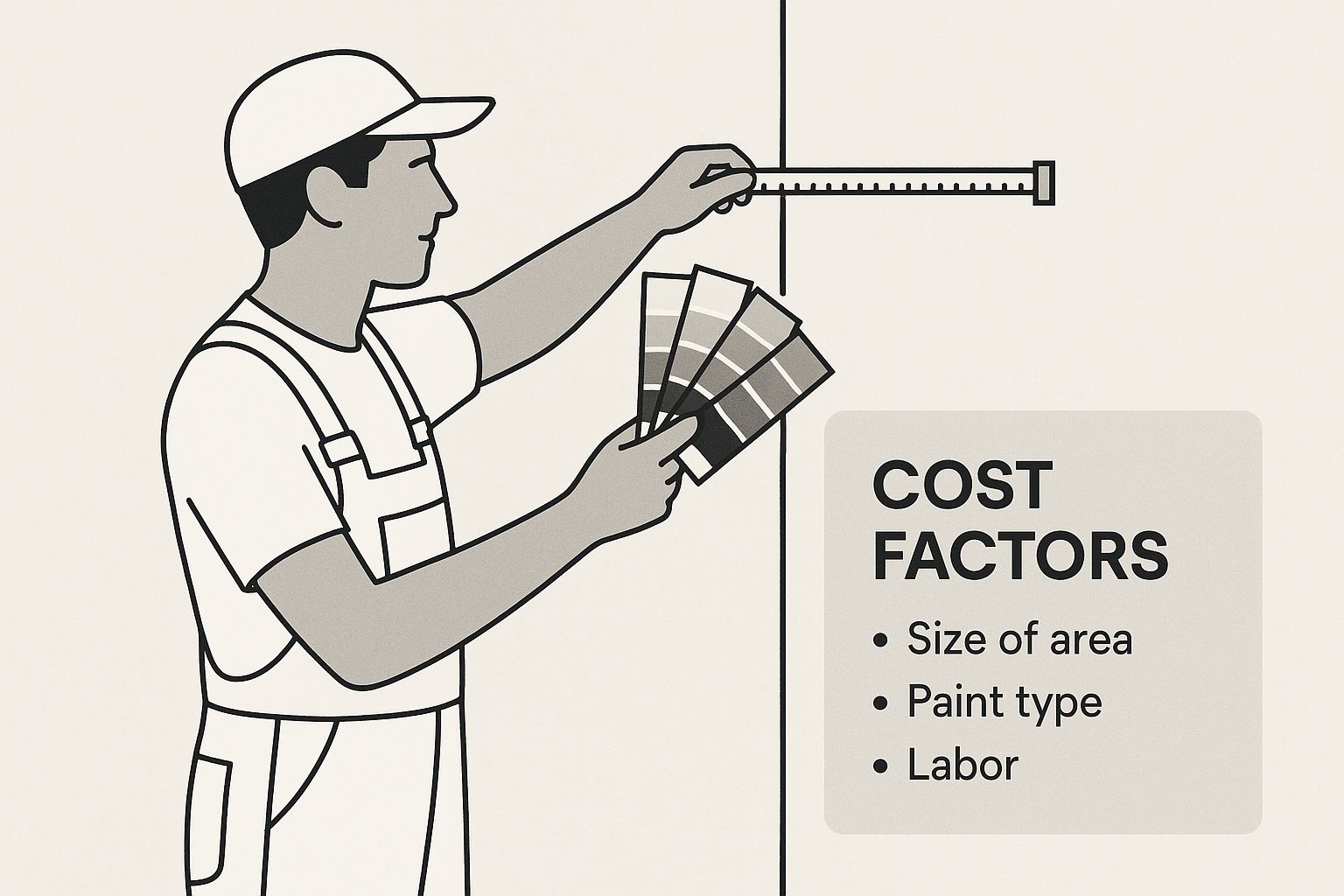
As you can see, the real costs are buried in the prep work and the overall complexity of the job. It’s all about the time and skill involved.
Surface Preparation: The Unseen Cost
Long before a brush even touches the paint, a ton of work is happening behind the scenes. This is where true craftsmanship shines and where a big chunk of your labour cost comes from.
- Patching and Repairing: A pro will go over every surface, meticulously filling nail holes, fixing dents from that time the sofa bumped the wall, and repairing any cracks in the drywall.
- Sanding for Smoothness: Once patched, every single repair is sanded down perfectly smooth. The goal is to make it blend in so completely that you’d never know there was a flaw there to begin with.
- Priming Where Necessary: Dealing with old stains, making a dramatic colour change, or painting fresh drywall? Primer is essential. It’s the key to getting that rich, even final colour and making sure the new paint sticks properly for years to come.
Skipping any of these steps is a shortcut to a bad finish. They are non-negotiable for a professional result and add directly to the hours your painter puts in.
Paint Quality: A Worthwhile Investment
The paint itself also plays a big role in the final bill. It can be tempting to save a few dollars by choosing a cheaper can, but premium paints deliver real-world benefits that more than justify the cost.
Higher-quality paint almost always gives you better coverage, which can mean fewer coats are needed to get the job done. It’s also formulated to be more durable, scuff-resistant, and washable, which keeps your walls looking fresh far longer.
For perspective, a standard gallon of contractor-grade paint might run you $30, while a premium, low-VOC (Volatile Organic Compounds) option could easily be $60 or more. If an average room needs two gallons, that choice alone can swing your material costs by $60 to $120.
Job Complexity: Architectural Details Matter
Finally, the unique character of your home has a direct impact on the quote. A simple, boxy room with standard eight-foot ceilings is one thing. But when you add architectural details, you add time and complexity.
Think about these common features that can increase the workload:
- Vaulted or High Ceilings: Anything beyond a standard height requires special equipment, like extension ladders or even scaffolding. That means more setup time and more careful work.
- Intricate Trim and Moulding: Crown moulding, detailed window frames, and elaborate baseboards all require extremely precise “cutting-in” with a brush. It’s a slow, meticulous process that takes serious skill.
- Accent Walls or Multiple Colours: Every time you switch colours in a room, you add more steps—more masking with tape, more cleaning of brushes, and more time spent creating those perfectly crisp lines.
Each one of these details adds hours to the clock, which in turn affects the final labour cost and the overall price of your project.
How Square Footage Shapes Your Painting Budget
For most people trying to get a handle on interior house painting prices, the most straightforward starting point is square footage. It’s a simple, reliable way to turn the size of your space—whether it’s a cozy Toronto condo or a larger home in Mississauga—into a rough budget.
Here in the GTA, most professional painters use a price-per-square-foot model to draft their initial estimates. It gives them a consistent way to figure out the time, labour, and materials a job will require. For a typical project, you can expect rates to land somewhere between $2 and $6 per square foot.
Of course, this range can shift based on factors like the condition of your walls or the quality of paint you choose. Still, it’s a solid number to anchor your budget. For a bit of perspective, interior house painting prices in California also hover between $2 and $6 per square foot as of 2024, which shows this is a pretty standard cost structure in other competitive markets. You can discover more insights about North American painting cost trends to see how prices compare elsewhere.
The Professional Painter’s Formula
Now, here’s something crucial to understand: when a pro talks about square footage, they aren’t just measuring your floor. They’re calculating the total paintable surface area of the walls themselves.
The formula they use is pretty straightforward: (Room Perimeter x Wall Height) – Area of Doors & Windows = Total Paintable Square Feet. This little detail explains why a quote for a small room with lots of windows might seem higher than you’d expect—it’s all about the surface area that needs paint, not the floor space you walk on.
Knowing this helps you make sense of different quotes. The best painters in the GTA will be totally transparent about how they arrive at their figures, and this formula is usually at the core of it.
To help you visualize this, here’s a quick breakdown of how these per-square-foot costs translate to different home sizes across Toronto and the GTA.
Estimated Painting Cost per Square Foot in Toronto & GTA
This table breaks down the average costs based on common home sizes, giving you a clearer budgeting tool for your project.
| Home Size (Square Feet) | Average Price per Square Foot (CAD) | Total Estimated Cost Range (CAD) |
|---|---|---|
| 1,000 | $2.50 – $6.00 | $2,500 – $6,000 |
| 1,500 | $2.25 – $5.50 | $3,375 – $8,250 |
| 2,000 | $2.00 – $5.00 | $4,000 – $10,000 |
| 2,500 | $2.00 – $4.75 | $5,000 – $11,875 |
| 3,000+ | $2.00 – $4.50 | $6,000 – $13,500+ |
As you can see, the price per square foot often decreases as the overall project size increases. This brings us to a key concept in painting costs.
Bigger Projects Can Mean Better Value
One of the neat things about hiring painters is how economies of scale can work in your favour. Think about it: a small job has fixed overhead costs like travel time and setup. But on a larger project, the crew becomes much more efficient, which often brings down the average price per square foot.
Let’s look at two common scenarios in the GTA:
- A 1,200 sq ft Downtown Toronto Condo: Painting a space like this will likely fall on the higher end of the per-square-foot range. Navigating condo logistics like parking, elevators, and smaller work areas just takes more time and effort.
- A 2,500 sq ft Mississauga House: A larger, open house often gets a better per-square-foot rate. Once the crew is on-site with all their gear, they can move smoothly from one room to the next, making the whole process more efficient.
This is exactly why painting your entire home at once is usually a smarter financial move than doing it room by room over a year. When you bundle the work, you’re almost always going to get more bang for your buck.
How the Type of Room Shapes Your Painting Quote
It’s a simple truth in painting: not all rooms are created equal. A straightforward, square bedroom is a world away from the challenges of a moisture-heavy bathroom or a kitchen packed with cabinetry. That’s why the best painters in Toronto and Mississauga don’t offer a flat rate; they price their work based on the unique demands of each and every space.
Getting a handle on these differences is the secret to building a realistic budget. The room itself determines the amount of labour involved, and just as importantly, the specific type of paint and materials needed to get a beautiful, lasting finish. A one-size-fits-all price just doesn’t work in the real world.
Why Kitchens and Bathrooms Carry a Higher Price Tag
Think of kitchens and bathrooms as the high-traffic zones of your home. They need a paint job tough enough to handle daily steam, moisture, and constant wipe-downs. This is exactly why they often cost more per square foot to paint than other areas in your GTA home.
For starters, painters need to use specialized products like moisture-resistant or mould-inhibiting paints, which cost more than your standard latex. On top of that, the prep work is far more detailed. Taping off every cabinet, countertop, backsplash, and vanity is a slow, careful process that demands real skill and patience, which adds to the labour costs.
Because these rooms are so complex—full of tight corners and obstacles to work around—they naturally take more time. Don’t be surprised if a quote for a bathroom or kitchen comes in 15-25% higher than for a bedroom of a similar size.
This extra investment upfront really does pay for itself. Using the right paint and primer means the finish won’t peel, bubble, or stain after a few months, saving you from the headache and expense of a premature repaint.
Pricing for Living Rooms and Hallways
Living rooms and hallways come with their own unique pricing factors. Got a living room with soaring vaulted ceilings? That means the crew will need scaffolding or tall ladders, which adds to the setup time and the overall difficulty of the job. The specialized gear and the extra safety precautions for working at height will definitely be reflected in the quote.
Hallways can be deceiving. They might seem simple, but they’re often full of doors, trim, and baseboards that all need to be meticulously “cut in” with a brush. Every single doorway, corner, and piece of trim adds to the total labour, making a long, narrow hallway surprisingly more work than a wide-open room.
Keep in mind that timing can also influence your final price. The painting business is seasonal, and the high demand during spring and summer can bump costs up by 10-15%. You can learn more about how seasonal demand affects contractor pricing to help plan your project for the best value.
At the end of the day, every room has its own story. When you break down your project on a room-by-room basis, you get a much clearer picture of where your money is going and can feel confident that every part of your home is getting the expert finish it deserves.
Getting the Best Painting Quotes in Toronto
Finding the right painter in a bustling market like Toronto isn’t just about hunting for the lowest price—it’s about finding the best value. The secret to a successful project is knowing how to get and compare detailed, professional quotes from the start.
Your game plan should always be to gather at least three different estimates from reputable local painters. This is the only way to get a real feel for the average interior house painting prices in the GTA for a job like yours, whether you’re right downtown or out in Mississauga.
A good place to start is a simple search for painters “near me,” but don’t stop there. Dig into their online presence. You want to see a portfolio showcasing recent work, and even more importantly, you need to read their customer reviews on independent sites. A pattern of positive feedback is a fantastic sign of reliability and quality work.
What a Professional Quote Must Include
A vague quote is a major red flag. The best painters will hand you a comprehensive document that breaks everything down, acting as a clear roadmap for your project. Don’t settle for anything less.
A proper, detailed quote should clearly outline:
- Labour Costs: This is usually the biggest chunk of the bill, so it needs to be spelled out.
- Material Costs: The estimate should specify the type and brand of paint and primer being used, along with the cost. No mysteries here.
- Scope of Work: It should detail every single surface being painted—walls, ceilings, trim, doors—and describe the prep work involved, from patching holes to sanding.
- Project Timeline: A true professional will give you an estimated start date and a realistic timeframe for getting the job done.
- Cleanup Process: The quote should confirm that the crew will protect your furniture and floors and clean up the entire site when they’re finished.
A truly professional quote is your best defence against unexpected costs. It protects both you and the contractor by setting clear expectations from the very beginning, ensuring there are no nasty surprises on the final invoice.
Labour is a huge part of any quote, and it’s heavily influenced by regional economics. For instance, in 2024, California’s minimum wage is $16 per hour, which is higher than the federal minimum. This directly pushes up the labour cost for painting projects there. You can read more about how labour rates affect home project costs to get a better sense of how these things work.
Red Flags to Watch Out For
As you look over the quotes, keep your eyes peeled for warning signs that could point to an unreliable or unprofessional contractor. Catching these early can save you a world of headaches later on.
Be wary of any painter who:
- Demands a Large Cash Deposit: A small, reasonable deposit is standard. A demand for a huge upfront cash payment is not.
- Provides a Vague or Verbal-Only Quote: Always, always insist on a detailed written estimate. A handshake deal is a recipe for disaster.
- Cannot Show Proof of Insurance: Any reputable painter will have liability insurance and should have no problem showing you their certificate.
- Pressures You for a Quick Decision: High-pressure sales tactics are a classic sign of someone you don’t want to work with. You need time to review your options properly.
Smart Ways to Save on Your Painting Project
Getting a great price on your interior paint job doesn’t mean you have to cut corners or sacrifice quality. With a bit of smart planning, you can bring down the cost of your project and still end up with a stunning, professional finish for your home in Toronto or Mississauga.
Do Some of the Legwork Yourself
One of the easiest wins? Tackle some of the simple prep work on your own. A painter’s quote is largely based on their time, and you can save them a good chunk of it by doing the things you can easily handle.
Before the crew arrives, move all the furniture out of the room, take down the curtains, and clear the walls of pictures and decor. Every hour you save the pros is money back in your pocket.
Be Strategic with Colour and Timing
The choices you make before a brush ever touches a wall can have a big impact on the final bill. Simplifying your colour palette is a fantastic way to keep costs in check.
Instead of a different colour for every room, consider picking one high-quality neutral shade for an entire floor or several connecting spaces. This little trick means less paint is wasted on half-used cans and the painters can work much faster without constantly stopping to wash brushes and swap colours.
Timing is everything, even in the painting world. Spring and summer are peak seasons, and painters are in high demand. If you can wait, scheduling your project for the off-season—think late fall or winter—can open up some real savings. You’ll often find that the best painters have more wiggle room in their schedules and sometimes offer more competitive rates.
Keep the Big Picture in Mind
At the end of the day, saving money is about making informed decisions that pay off now and later. While these tips can definitely help you manage your spending, it’s crucial to start with a realistic budget, especially in a market as busy as the GTA.
To put things in perspective, homeowners in other high-cost areas face similar challenges. For example, homeowners in California often need to budget between $4,000 and $8,000 for a standard interior paint job on a mid-sized home in 2024. Being prepared with a solid budget is the first step to a successful project. Learn more about regional painting price factors that might influence your own costs.
Got Questions About Painting Costs? We’ve Got Answers
Thinking about interior house painting prices often brings up a few last-minute questions. It’s totally normal. Getting the details straight is key to feeling confident about your project, especially when you’re planning work in Toronto or the GTA. Here are a few of the most common things we get asked.
Do Ceilings and Trim Come Standard in a Quote?
Great question. Usually, a basic quote is just for the walls. Things like ceilings, trim, baseboards, and doors are priced out separately.
Why? They’re a different beast altogether. They often need a different type of paint finish and involve a lot more detailed, careful brushwork, which takes time. Always double-check what’s covered in your estimate so there are no surprises down the line.
What if I Buy the Paint Myself? Will I Save Cash?
It sounds like a clever way to cut costs, but it can often backfire. Professional painters have access to trade discounts on top-tier paint that aren’t available to the public.
Even more important, they know precisely which products will give you the best, longest-lasting results. When painters supply the materials, they’re vouching for the quality of the entire job—from the paint can to the final coat.
Trusting your painter to supply the paint isn’t just easier; it guarantees a durable, professional-grade finish backed by their experience. It takes the guesswork out of the equation and delivers much better value in the long run.
So, How Long is This Going to Take?
The timeline really hinges on the size and complexity of the job. Painting a single bedroom might only take a day or two. But if you’re looking at painting a whole 2,000-square-foot house in Mississauga, you could be looking at a week or more.
That timeline includes all the essential prep work—the sanding, patching, and priming—plus applying multiple coats and letting them dry properly. Your painter should give you a realistic schedule right in the estimate.
Ready to get a clear, detailed quote for your home? Contact Soca Services for expert interior painting in the Toronto area. Visit us at https://www.socaservicespainting.com to schedule your free consultation.



3 Comments