A staircase can change the way a Thornhill home feels before a visitor notices the wall colours, flooring, or furniture. A child runs down worn treads, a pet skids on a glossy nosing, or a buyer pauses during a showing because the rail feels loose and the finish looks cracked. At that point, stair staining and painting Thornhill homeowners need isn't just a colour update. It involves traction, preparation, coating chemistry, durability, and resale presentation.
A proper assessment separates cosmetic wear from loose components, damaged wood, failing adhesion, and surfaces that need more than another coat. It also identifies whether staining, painting, or a combination will suit the existing staircase and the way the household uses it. This guide explains the practical decisions behind a professional stair project, from prep and product selection to curing, maintenance, and contractor screening.
Why Thornhill Homeowners Are Rethinking Their Stairs
In Thornhill, stairs endure more daily scrutiny than almost any interior surface. Children run them, guests see them from the entrance, and every step tests the finish. Worn treads can create a safety concern, while cracked coating and dulled railings make an otherwise cared-for home look neglected during a resale showing.
The entrance hall also connects the stair project to the rest of the property. If carpet removal exposes damaged edges, or the hallway finish no longer matches adjacent areas, the scope may include related interior work and an exterior-adjacent entry review. Homeowners comparing exterior house painters in Thornhill should still treat stair refinishing as a separate surface and preparation decision.
Many older Thornhill homes have oak staircases beneath layers of builder-grade polyurethane. That coating can yellow, craze, lose adhesion, or conceal the wood's character. A darker stain or fresh white paint will not correct loose components, damaged wood, or poor adhesion. Inspect the treads, risers, nosings, railings, balusters, and areas exposed during carpet removal before choosing a finish.
Safety comes before colour
Ontario guidance requires stair finishes to be wear-resistant, slip-resistant, and smooth or even. For treads and landings accessible to the public, it allows either a slip-resistant finish or strips projecting no more than 1 mm above the surface. Product selection, surface preparation, and application technique therefore affect how the stairs perform, not only how they look. Review the Ontario stair finish guidance before selecting a coating for a commercial, shared, or publicly accessible stairway.
Indoor air quality belongs in the same decision. Federal architectural-coating rules cover 53 coating categories, with limits ranging from 100 g/L to 800 g/L, and restrict products that exceed the applicable limit unless an exemption applies. The federal VOC regulations for architectural coatings are the relevant policy reference. Confirm the product category, ventilation plan, and cure schedule before work begins.
Practical rule: Select a stair finish for the surface, traffic, slip requirements, odour tolerance, and curing plan. Choose colour after those conditions are clear.
Thornhill's resale activity adds timing pressure. Local market reporting recorded 560 home sales in July 2026, 467 in March 2026, and 379 in February 2026 (Thornhill market reporting). Those figures show month-to-month movement, not a guaranteed premium from refinishing. They do explain why a visibly worn staircase can become a practical listing concern.
The project comes down to stain or paint, how far the scope should go, and which contractor can execute the work safely. Keep those decisions connected, because colour alone does not determine the finished staircase's performance.
Stain or Paint
Stain and paint solve different problems. Stain penetrates the prepared wood and leaves the grain visible, while paint forms an opaque film that creates a uniform surface and conceals imperfections. On original oak, that difference is permanent once the staircase has been painted, so owners of older or heritage-style Thornhill homes should test samples before committing.
A water-based stain system can showcase sound oak and typically produces a lower-VOC route than many traditional solvent-heavy alternatives. A well-maintained stained staircase may need recoating every five to eight years, depending on traffic and product selection. Paint gives more freedom with colour and works well for risers, stringers, and railings, but painted treads and nosings can chip or scuff sooner under concentrated foot traffic.
The trade-off in daily use
| Factor | Stain | Paint |
|---|---|---|
| Durability | Shows wood character and can be renewed with a compatible clear system when properly prepared. | Creates a hard visual block but can chip on tread edges and nosings. |
| Look | Warm, natural, and grain-forward. | Uniform, modern, and useful for hiding uneven or mismatched wood. |
| Maintenance | Wear can blend into the grain, but the clear topcoat still needs care. | Touch-ups are straightforward in principle, although colour matching and edge wear can remain visible. |
| VOC profile | Water-based stain and clear-coat systems can support a lower-emission approach. | The VOC profile depends on the primer, paint, and clear coat selected. |
| Best fit | Sound oak, traditional interiors, and owners who want the wood to remain visible. | Damaged, mismatched, or heavily patched surfaces and design-led interiors. |
Active households often benefit from stained treads with painted risers and stringers. Pets and children still create wear, but the grain can disguise minor marks better than a solid colour. A basement-suite conversion may call for a more uniform painted system if the stair components don't match, while a home being prepared for resale may need a restrained combination that coordinates with existing flooring rather than a dramatic colour experiment.
Why hybrid systems are popular
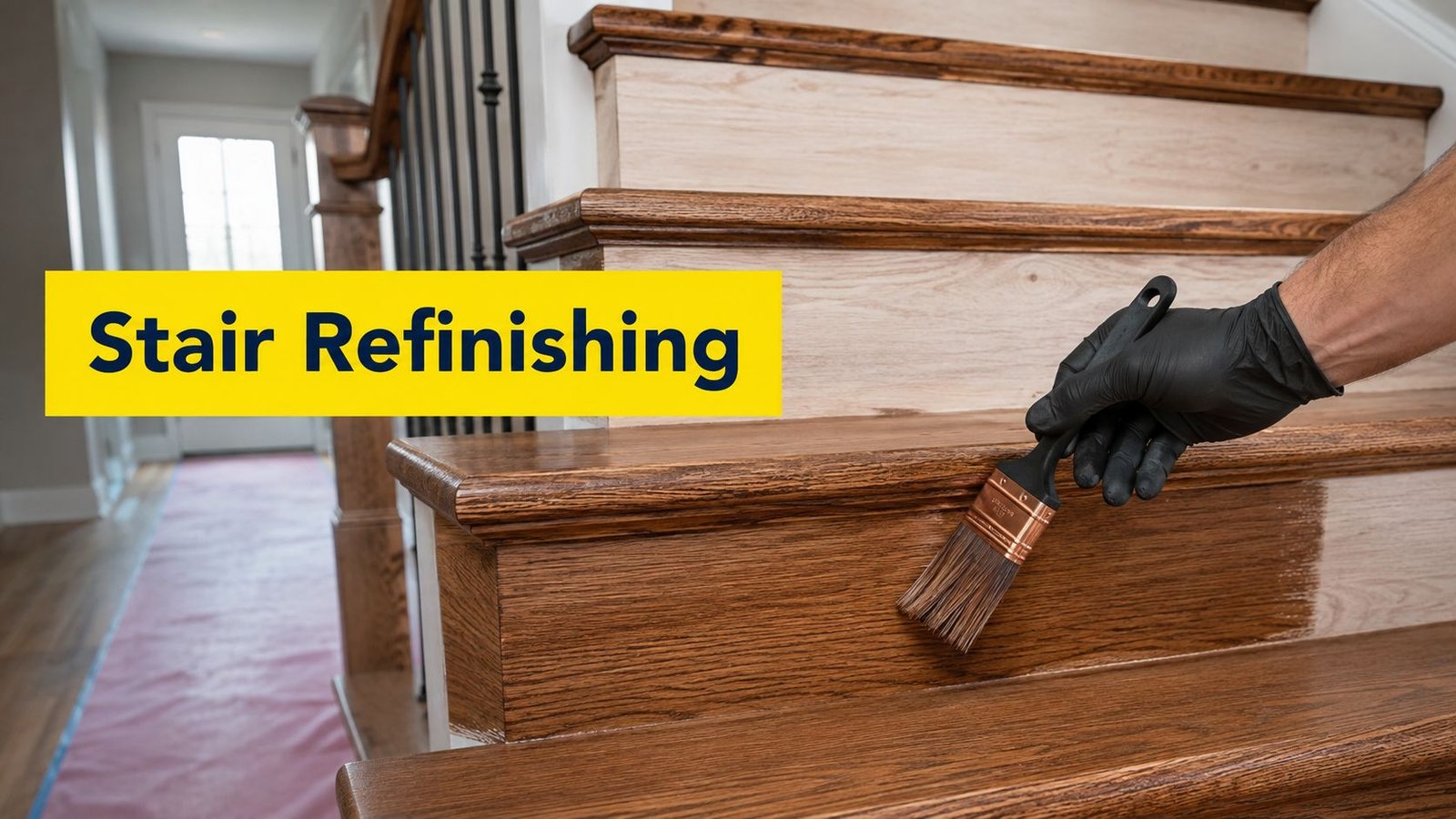
Stained treads with painted risers and stringers are now a common request in Thornhill stair refinishing because they balance wood visibility, current styling, and practical maintenance. The approach also lets the contractor select compatible, lower-emission products for separate surfaces instead of forcing one coating type across the entire staircase.
For wood-care fundamentals beyond the painting scope, the Richmond hardwood care advice offers useful context on protecting finished wood floors and stairs. Homeowners considering whether professional preparation is worthwhile can also review professional surface staining guidance before choosing a DIY shortcut.
Colour advice: Always approve a sample on the actual stair wood. A stain that looks balanced on a small board can read warmer, darker, or more uneven beside existing Thornhill flooring.
The Professional Stair Refinishing Process Step by Step
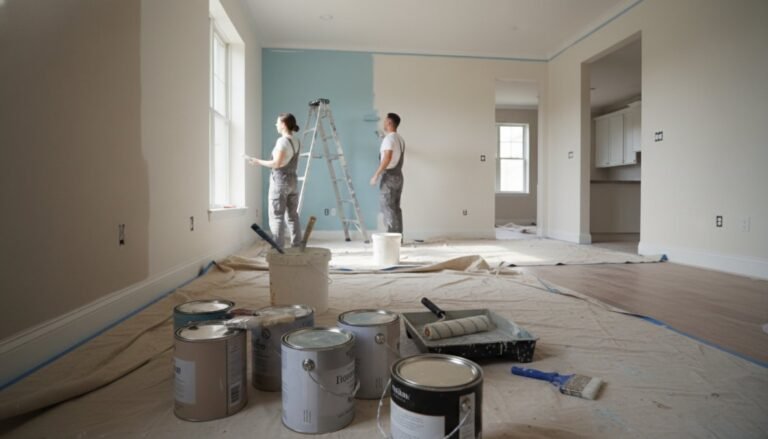
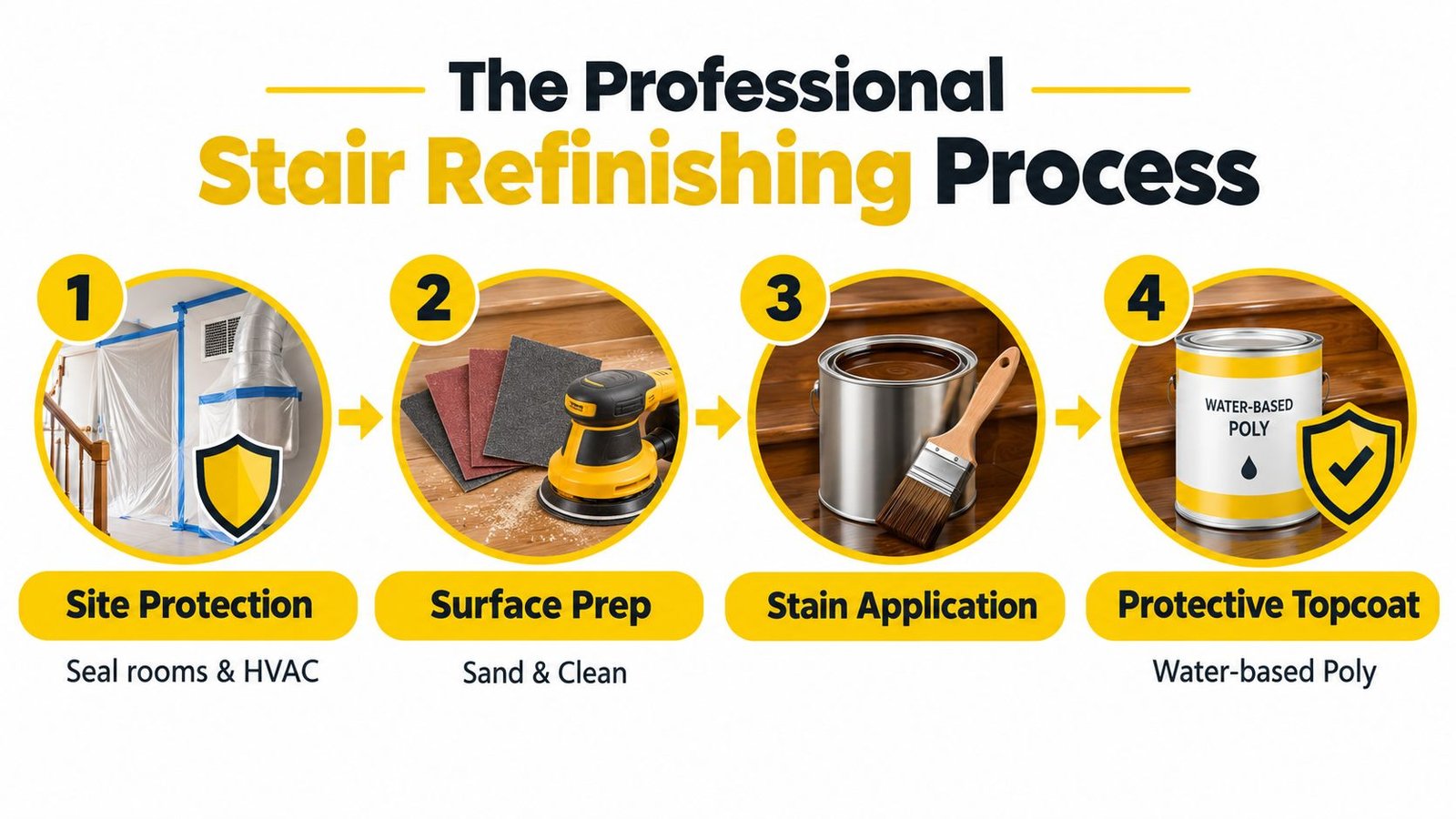
A durable stair finish starts with containment, not a paint can. The crew should protect adjacent flooring with canvas drop cloths, remove or relocate nearby furniture, and plan around occupants, pets, deliveries, and HVAC returns. Canvas is preferable to slippery plastic in active work areas, and occupied homes need a clear route for dust control and safe movement.
Preparation decides whether the coating holds
The contractor first identifies whether the visible stair surface is solid wood, veneer, a cap, or a previously painted component. Existing coating is removed from tread surfaces down to bare wood when staining is planned. A typical Toronto trade sequence uses progressively finer abrasives, starting around 60 grit, moving through 120 grit, and finishing around 180 grit, with hand-sanding around nosings, balusters, corners, and rail profiles.
Loose paint needs scraping. Glossy areas need scuff-sanding, and holes, cracks, dings, and dust need attention before primer or finish. The Toronto surface-preparation guide explains why cleaning, scraping, sanding, filling, and dust removal matter before coating.
Squeaks and movement should be assessed before cosmetic work begins. A finish won't correct an unstable tread. On blotch-prone oak, a compatible water-based conditioner can help the stain absorb more evenly, but a test area remains essential because every staircase has its own previous repairs and wear pattern.
Application and curing
For a combined system, crews commonly paint or stain risers before completing the tread finish, then address treads, handrails, and spindles in an order that protects finished surfaces. Stain should be worked into the wood evenly and back-brushed where necessary to prevent lap marks. When painting over varnish, the surface needs scuff-sanding and a suitable low-odour alkyd primer, because a latex primer may not withstand constant foot traffic and abrasion as well.
Water-based polyurethane typically dries in 4 to 6 hours, while oil-based polyurethane typically dries in 12 to 24 hours (wood stair finishing guidance). Dry to touch isn't the same as cured. A surface can feel dry within 24 to 48 hours yet still need five to seven days to reach full cure, and heavy household traffic during that period can mark or soften the coating.
Professional crews finish with an inspection, light buffing where appropriate, and a compatible protective topcoat. A low-VOC water-based polyurethane can reduce the lingering solvent odour associated with older oil-based products, while still requiring a realistic access plan.
Cost, Timeline, and Disruption for Thornhill Stair Projects
A phone quote rarely captures the full scope of stair refinishing. The final price depends on tread count, riser material, existing coating, spindle and baluster complexity, carpet-staple removal, repairs, access, and whether the staircase is straight, open-riser, or curved. A site assessment lets the contractor inspect adhesion and substrate condition instead of pricing from a photograph.
The following ranges are practical planning figures for the stated Thornhill scopes, not a substitute for a written quotation.
| Scope | Price Range (CAD) | Typical Duration | Notes |
|---|---|---|---|
| Basic stain-only, straight run | $1,100 to $1,800 | 3 to 4 working days | Assumes a 13 to 15 tread run with manageable preparation. |
| Full paint system | $1,600 to $2,800 | 3 to 4 working days | Includes primer and two topcoats, with prep affecting the final scope. |
| Open-riser or curved staircase | More than $3,200 | Depends on access and detail | Complex geometry, railings, and additional preparation can extend the work. |
What changes the estimate
A staircase with sound wood and limited components is simpler than one with failing varnish, patched treads, many spindles, or old carpet staples. Paint removal can add labour, and staining usually requires more careful substrate preparation because uneven sanding remains visible through the transparent finish.
The project also has a household cost that doesn't appear on an invoice. Stairs may be unavailable overnight, pets need another route or supervision, and deliveries or moving furniture can interfere with curing. Phased access, temporary barriers, and weekend scheduling can reduce disruption, but they can't eliminate the need to keep traffic off newly coated surfaces.
A useful planning benchmark is 3 to 4 working days on site, followed by a 24 to 72 hour light-use window and about 7 days for full cure. Water-based and oil-based products differ in their drying behaviour, so the contractor should provide written access instructions rather than saying the stairs are ready because they feel dry.
For broader interior scheduling, the Toronto interior painting timeline guide can help coordinate stair work with wall colours, trim, and other home painting tasks. A written scope should identify preparation, product system, coat count, access restrictions, cleanup, and any exclusions.
Maintenance That Keeps Stair Finishes Looking New
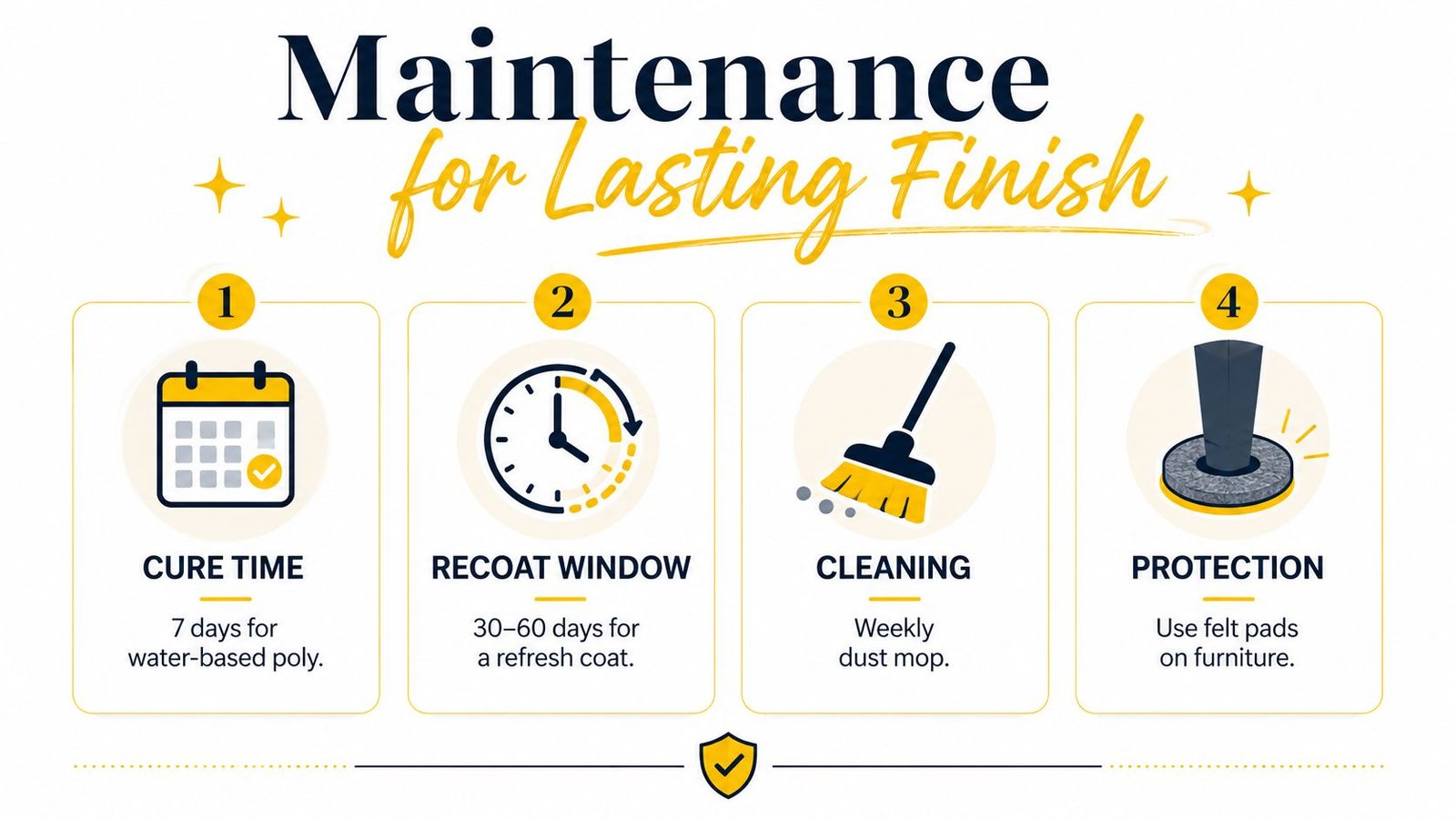
Stair maintenance depends on the finish chemistry and the traffic pattern. Water-based polyurethane typically needs 7 days to fully cure, with a 30 to 60 day recoat window for a refresh coat. Oil-modified finishes generally take 14 to 21 days to cure and may need 6 to 12 months before recoating without scuff-sanding.
A simple care routine
- Dust weekly: Use a dry microfibre mop or soft vacuum attachment to remove grit before it acts like abrasive powder under shoes.
- Clean monthly: Use a lightly damp microfibre cloth with a neutral-pH cleaner. Keep moisture controlled, especially around tread edges and joints.
- Avoid aggressive products: Steam mops, ammonia-based degreasers, and oil soaps can damage or alter the appearance of the coating. Oil soaps can permanently amber-shift water-white finishes.
- Protect contact points: Put felt pads on furniture that touches the bottom tread or nearby landing, and replace them when grit becomes embedded.
- Rotate runners: A runner near a south-facing stairwell can expose one area to more light than another. Rotation helps distribute fading.
Maintenance coat or full refinishing
A maintenance coat may be suitable when the finish still has sound adhesion but shows concentrated scuffing. Scuff clusters, visible white lines at nosings, and failed water beading are useful warning signs. If the coating is peeling, cracking through multiple layers, or lifting from the wood, a light refresh won't solve the underlying failure. The surface may need sanding and recoating, or removal down to a stable substrate.
Give the contractor the original product information if you have it. Incompatible coatings can create adhesion problems, and a professional should test a small area before applying a new system across every tread. Good cleaning habits won't replace proper preparation, but they can extend the useful appearance of a correctly finished staircase.
Choosing the Right Stair Painting Contractor in Thornhill
A stair contractor should be evaluated by process and documentation, not only by a portfolio of attractive finished photos. Ask for proof of at least $2 million in general liability coverage, a current WSIB clearance certificate where applicable, and a written description of who will perform the work. Confirm that the business serves Thornhill and the surrounding City of Vaughan area from a verifiable operating address rather than functioning only as a referral network.
Put the coating system in writing
The proposal should name the product family, sheen, primer, stain or paint, clear coat, and number of coats. If the contractor recommends Bona, DuraSeal, Sherwin-Williams, or Benjamin Moore products, ask which exact product is intended for each surface and whether the system is compatible with the existing coating.
A professional quote should also describe:
- Daily responsibility: Who is on site, and who supervises preparation and application?
- Dust containment: How will rooms, vents, HVAC returns, walls, and adjacent flooring be protected?
- Sample approval: Can you review a sample board or test patch on the actual stair wood?
- Adhesion concerns: What happens if a tread shows coating failure during the warranty period?
- Access planning: Which stairs are unavailable, and when can light use resume?
- Cleanup: Who removes masking, dust, debris, and temporary protection?
Cash-only demands, vague timelines, missing product names, and refusal to test a sample are warning signs. A contractor who can't explain the difference between dry time and full cure may also understate the disruption.
For additional background screening principles, Hand Vetted Co.'s contractor check provides a useful checklist for reviewing a service provider's identity and history. Homeowners can also compare questions in this guide to choosing a painting contractor before signing.
Soca Services Painting offers home painting and stair staining and painting services for Thornhill and other GTA communities, including Toronto, Vaughan, North York, and King City. The relevant question isn't whether a company can apply colour. It's whether the team can protect the home, prepare the substrate, select a compliant finish, and document the work clearly.
Before and After, Resale Timing, and Your Next Step
A refinished stair run should photograph as a clean architectural feature, not as a distracting repair. Dark-stained treads with crisp painted risers create contrast, white-oak visuals produce a lighter natural effect, and a bold painted balustrade can change the entry's character without replacing the staircase. The right result depends on the existing floor, light, railing profile, and how much of the original wood is worth preserving.

Thornhill's recorded sales movement makes presentation timing a practical consideration, but it doesn't turn every refinishing project into a guaranteed value increase. If you're listing within 12 months and the treads show obvious wear, a restrained refinish can remove a visible objection and help the staircase read cleanly in listing photographs. If you're planning a longer hold, waiting may make sense when the current finish remains sound and the household has no safety or adhesion concern.
Match the scope to the hold period
Use a smaller, coordinated update when the existing wood is solid and the listing date is close. Stained treads with neutral painted risers can present well without introducing a highly personal colour choice. For a longer-term renovation, the owner can take more time to compare wall colours, flooring, handrail stains, and lighting, then decide whether refinishing is enough or whether the railing and stair components also need replacement.
Buyers don't all respond to the same staircase. Some favour visible wood grain, others prefer an even painted system, and many want a finish that looks intentional rather than recently patched. A contractor should therefore show the proposed colour beside the adjacent floor and discuss how the coating will wear, not just recommend the most fashionable sample.
This video provides another visual reference for planning a stair transformation:
The practical next step is an on-site assessment. Ask for a written scope covering substrate preparation, stain or paint system, VOC-compliant product selection, protection, curing and access restrictions, cleanup, and warranty terms. That document gives homeowners, property managers, real estate sellers, and commercial clients a clear basis for comparing proposals.
Soca Services Painting provides professional stair staining, painting, surface preparation, and interior painting support for Thornhill-area homes and properties. Visit Soca Services Painting to arrange an on-site assessment and get a free estimate with a clear finish system, preparation plan, cure window, and scope of work.