

Table of Contents
- DIY Painting vs. Professional Contractors: Cost-Benefit Analysis
- Best Tools for DIY Painting and Tool Rental Economics
- How to Prep Walls for Painting: A Critical Preparation Step
- Hiring a Handyman for Painting: Budget-Friendly Middle Ground
Last Updated: July 11, 2026
When facing a major home painting project, exploring alternatives to hiring an expensive contractor can save thousands while delivering quality results. This guide breaks down your realistic options, from DIY to hybrid models, so you can make an informed decision matching your budget, timeline, and skill level.
DIY Painting vs. Professional Contractors: Cost-Benefit Analysis
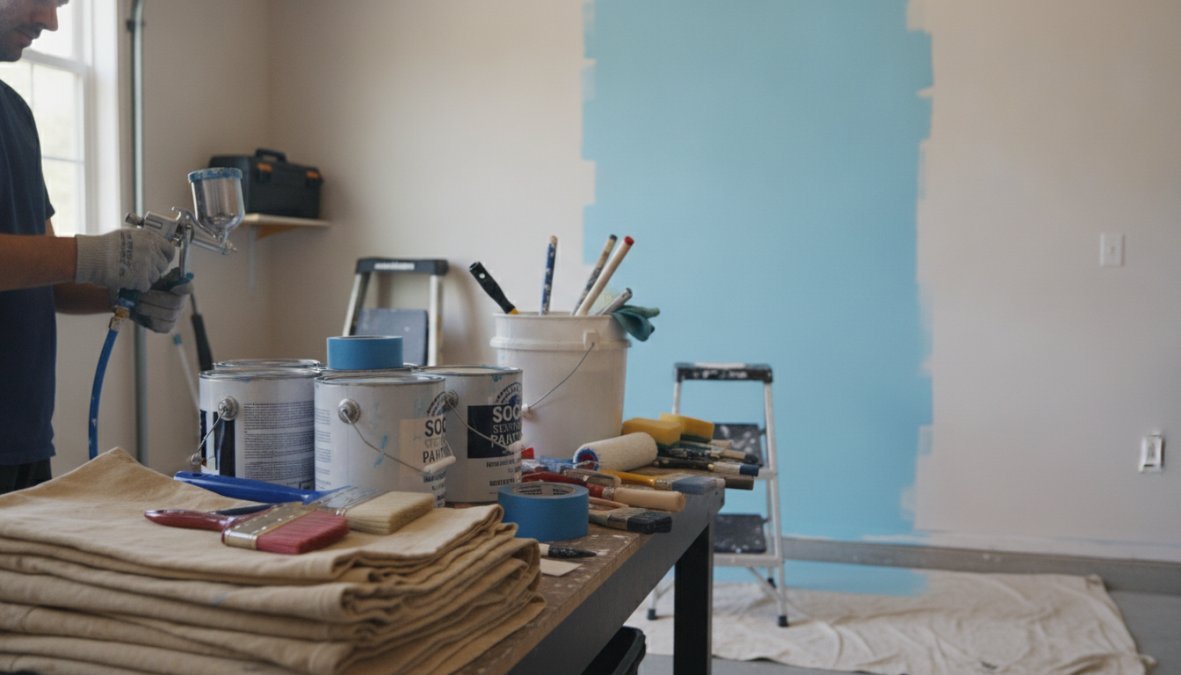
DIY eliminates labor costs, typically 50-70% of a professional project. However, a homeowner tackling a single bedroom spends 20-30 hours on prep, painting, and cleanup, while professionals complete it in 2-3 days. Professional painters understand how lighting affects color, how humidity impacts drying, and how to achieve smooth coverage without visible brush marks.
DIY mistakes, insufficient prep, uneven application, poor trim work, become permanent. Quality supplies cost more than budget alternatives, and renting specialized equipment adds expense. For straightforward interior walls with good existing surfaces, DIY can work. For exterior work, textured surfaces, or multi-room projects, complexity multiplies quickly.
Start with a small test area, like a closet, before committing to an entire room.
Best Tools for DIY Painting and Tool Rental Economics
The Wagner FLEXiO 5000 offers handheld spray painting for furniture and walls at reasonable cost. For larger projects, the Graco Magnum X5 delivers professional-grade speed, though it requires more setup knowledge. A quality extension pole like the Purdy Power Lock reduces ladder repositioning, while a Wooster Brush Q3211-2 produces crisp trim lines.
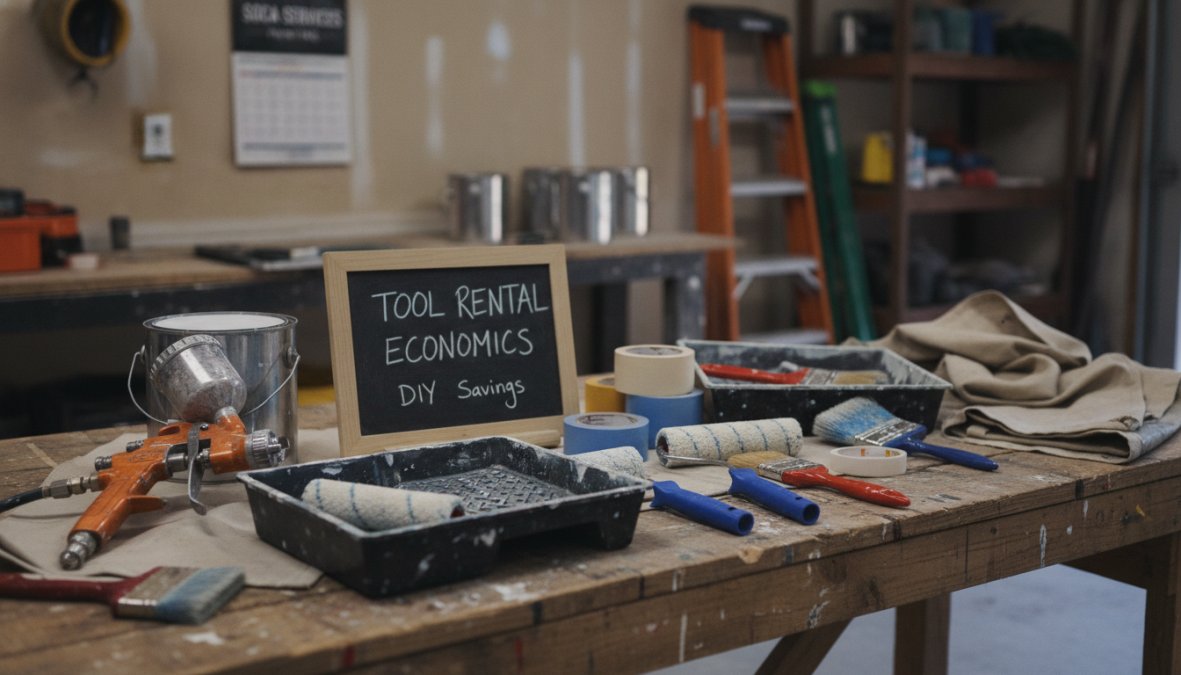
Renting equipment makes sense for single projects: professional airless sprayers rent for $50-80 daily versus $350-400 purchase. If you paint multiple projects yearly, ownership becomes cheaper after three to four rentals. Handheld sprayers cut application time by 60-70% compared to brushing and rolling, making rental costs negligible against time savings.
| Tool | Best For | Rental Cost | Purchase Cost | Learning Curve |
|---|---|---|---|---|
| Wagner FLEXiO 5000 | Small interior projects | $25-35/day | $180-220 | Low |
| Graco Magnum X5 | Large exteriors, multiple rooms | $40-60/day | $350-400 | Medium |
| Extension Pole | Ceilings, high walls | $10-15/day | $30-60 | Very Low |
| Wooster Angled Brush | Trim, detail work | $2-3/day | $10-15 | Low |
Professional painters use commercial spray systems and industrial-strength surface preparation tools that homeowners can’t easily replicate, which is why professional finishes look noticeably different.
How to Prep Walls for Painting: A Critical Preparation Step
Surface preparation determines whether paint lasts five years or fifteen. Proper prep includes filling holes with spackle, sanding rough spots, and cleaning away dust, grease, and mildew. For existing paint that’s peeling or chalky, it must be scraped or sanded away. Glossy finishes need deglosing to create tooth for new paint.
Primer seals stains, blocks tannin bleed-through, and ensures even coverage. Skipping primer to save money forces extra paint coats, negating savings. For dramatic color changes or stained surfaces, primer is non-negotiable.
Prep often takes longer than painting itself, a single bedroom might require 8-12 hours before the first coat touches the wall. This is where professionals earn their value through systematic, efficient techniques.
Painting over inadequate prep leads to peeling and adhesion failure within months. The cost of repainting far exceeds time saved by skipping prep.
Hiring a Handyman for Painting: Budget-Friendly Middle Ground
Handymen charge lower hourly rates than specialized painters, making them attractive for smaller projects. They excel at simple work, painting a single room with good surfaces or refreshing trim, but struggle with exterior work, textured surfaces, or complex color matching.
Most handymen operate with minimal insurance coverage. If damage occurs or injury happens, you may face personal liability. Professional painters carry liability insurance and typically warrant work for 1-3 years, addressing peeling or adhesion failure at no charge. Handymen rarely offer warranties.
Handymen work best for simple, low-risk projects. For precision, durability, or complex surface work, professional painters deliver better long-term value.
Hybrid Painting Models: Partial DIY Approaches
A hybrid approach splits work strategically: you handle simple tasks, professionals handle complex ones. The most practical model involves handling prep work yourself (filling, sanding, cleaning), then hiring professionals for painting and finishing. Prep is labor-intensive but low-skill; painting demands precision and technique.
Another option: hire professionals for prep and finishing while you apply basic coats. However, this requires honesty about skill level, as uneven primer application creates extra work for professionals.
Research indicates homeowners using hybrid approaches report higher satisfaction than full DIY while spending less than hiring professionals for entire projects.
Practical Considerations: Timeline, Quality, and Long-Term Value
Professional painting takes 3-7 days for full interior or exterior work. DIY projects stretch across weeks or months, competing with other obligations. If your time has value, professional services become economically rational.
Paint quality varies dramatically. Budget paints require extra coats and offer shorter durability. Premium paints from Sherwin-Williams or Benjamin Moore cover better, last longer, and resist fading. Professional painters use premium products, achieving economies of scale homeowners can’t match.
Fresh, professional-quality paint improves home resale value and buyer perception. Visible DIY flaws, uneven color, brush marks, poor trim, create negative impressions affecting negotiating power. For Toronto’s freeze-thaw cycles and humidity, professional-grade prep and application extend paint life significantly, reducing repainting frequency.
Professional painting works best for: exterior work, multi-room projects, textured or damaged surfaces, color changes requiring primer, and situations where your time is limited or valuable.
Choosing between DIY, handyman, and professional painting depends on budget, timeline, skill level, and project complexity. While alternatives to expensive contractors exist, true cost includes your time, tool investment, and finish quality. For homeowners seeking durability, professional finish quality, and stress-free execution, Soca Services Painting delivers clear value. Our detailed project proposals and commitment to precise finishes ensure your home looks brighter and fresher for years to come. Get your free estimate today and discover how professional painting transforms your space.
Frequently Asked Questions
What are the cheapest ways to get your house painted without hiring an expensive painting contractor?
The most affordable alternatives include DIY painting for small projects, hiring a handyman for basic interior work, renting professional equipment instead of buying, or exploring hybrid models where you handle prep work and a contractor applies the finish. Tool rental economics can save hundreds compared to purchasing equipment outright. For larger projects, getting multiple contractor quotes ensures competitive pricing. Each approach has trade-offs in quality, time, and long-term durability.
Is it worth painting your own house to save money, or should I hire a professional?
DIY painting works best for small, low-complexity projects like single rooms or accent walls, where your time investment justifies the savings. However, professional painters deliver superior finish quality, faster project completion, and better long-term durability, especially for exterior work or detailed surfaces. Consider your skill level, available time, and project scope. For complex projects requiring surface preparation expertise, hiring a painting contractor like Soca Services often provides better value despite higher upfront expense.
Can I hire a handyman instead of a painting contractor to save money?
Yes, hiring a handyman for painting can reduce labor costs compared to specialized painting contractors. However, handymen typically have less expertise in surface preparation, paint application techniques, and achieving professional finishes. Quality varies significantly, and liability insurance coverage may be limited. For interior painting of simple surfaces, a handyman may suffice. For exterior work, trim details, or durability-critical projects, a professional painting contractor ensures better results and warranty protection.
How does tool rental economics compare to hiring a professional painter?
Renting professional sprayers and equipment costs significantly less than purchasing, typically $30-60 per day versus $180-400 for ownership. However, rental costs plus paint supplies, materials, and your time investment can approach or exceed professional labor costs for larger projects. Additionally, professional painters bring expertise in equipment use, surface preparation, and achieving consistent finishes that DIY efforts often lack. For multi-room projects, professional painting frequently offers better value and superior durability.
This article was written using GrandRanker


One Comment