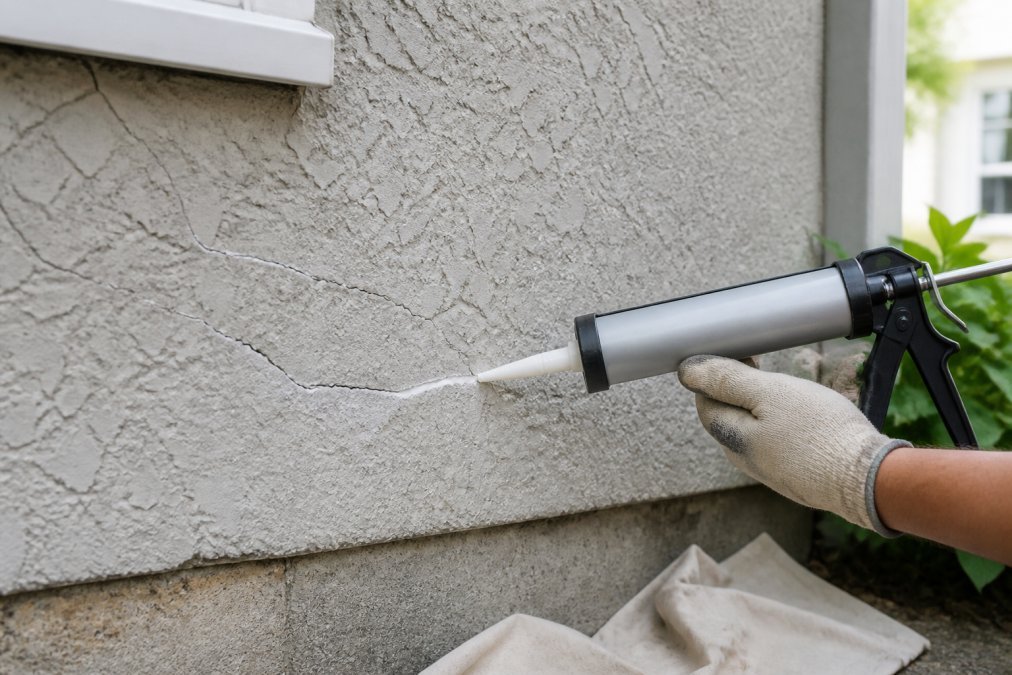
Table of Contents
- Assess the Crack Size and Depth
- Prepare the Surface and Choose the Best Exterior Crack Filler for Stucco
- Follow Your Exterior Painting Preparation Checklist
- When to Hire Professional Painters for Exterior Repairs
- Frequently Asked Questions
Last Updated: September 1, 2026
Assess the Crack Size and Depth
Before choosing a filler or sealant, understand what you’re dealing with. Cracks in exterior walls vary widely, and treating a hairline crack like a structural break wastes time and money.
Run your finger along the crack to feel its depth. Hairline cracks are barely visible and feel smooth; these surface-level issues stem from normal settling or minor temperature shifts. Wider cracks, anything you can fit a credit card into, signal something more serious. Look for cracks that are expanding, leaking water, or showing structural movement.
In Ontario’s climate, freeze-thaw cycles are brutal on exterior walls (National Research Council Canada). Water seeps into small cracks, freezes, expands, and pushes the crack wider each winter (peer-reviewed research on freeze-thaw damage). Shallow cracks need simple fillers, but deeper ones need flexible sealants that move with the wall as temperatures change.
Take a photo of the crack for your records. This documentation helps painters understand what needs repair and shows the problem’s progression.
Prepare the Surface and Choose the Best Exterior Crack Filler for Stucco
Your surface preparation determines whether the filler stays put or fails within months. A clean, properly prepared surface is non-negotiable.
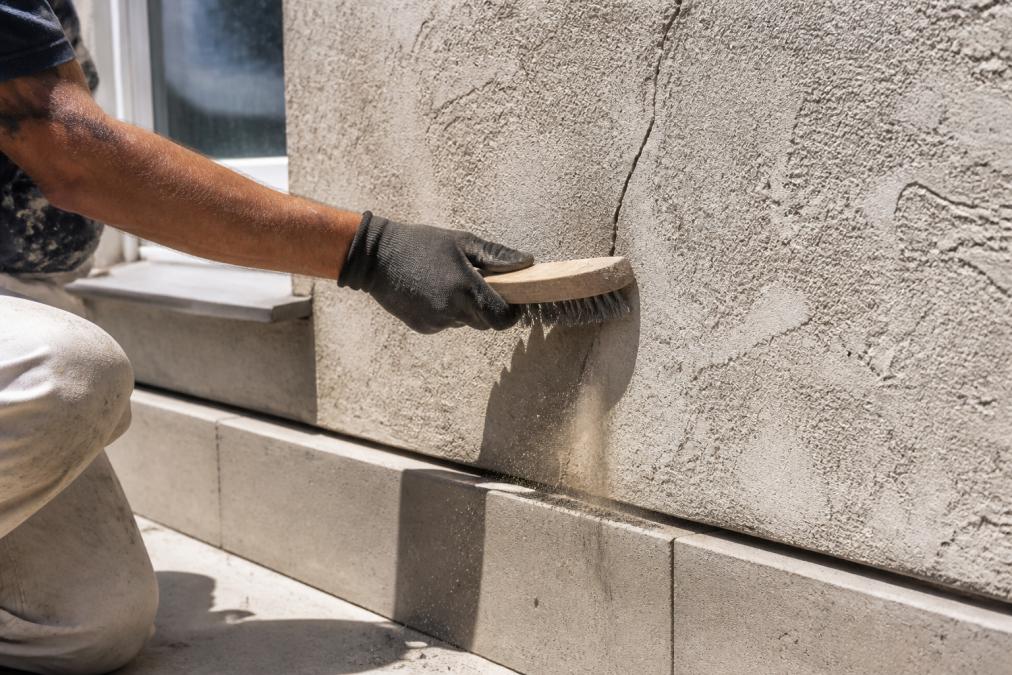
Remove all loose paint, dust, and debris from the crack using a wire brush to scrub away flaking paint and oxidized material. For deeper cracks, use a small chisel or scraper to dislodge stubborn debris. Blow out the crack with compressed air or vacuum out dust, you want bare substrate, not a dusty cavity that prevents adhesion.
If the crack is wider than a quarter-inch, widen it slightly with a chisel or grinder to create better surface area for the filler to grip. Undercut the edges slightly so the opening is wider at the bottom than the top, creating a mechanical lock that prevents the filler from popping out.
For stucco, a polyurethane sealant or paintable caulk works best, offering flexibility and resistance to moisture penetration, critical in Ontario winters. Apply the filler with a caulking gun, pushing it deep into the crack. Smooth it flush with the wall using a wet putty knife and feather the edges outward so the repair blends seamlessly. Let it cure fully before sanding or priming.
Exterior crack repair success depends on three things: clean substrate, appropriate filler choice, and proper application technique.
Follow Your Exterior Painting Preparation Checklist
Once the filler is cured, you’re ready to prep for paint. This step separates amateur repairs from professional-looking results.
Surface Preparation Checklist:
Get Your Free Estimate Today! →
- Sand the filled crack smooth with 120-grit sandpaper
- Feather the edges with 150-grit to blend seamlessly
- Clean away all dust with a damp cloth and let dry completely
- Inspect the repair for gaps or missed spots
- Apply exterior-grade primer to the patched area
- Allow primer to cure per manufacturer guidelines
- Apply two coats of quality exterior paint, allowing dry time between coats
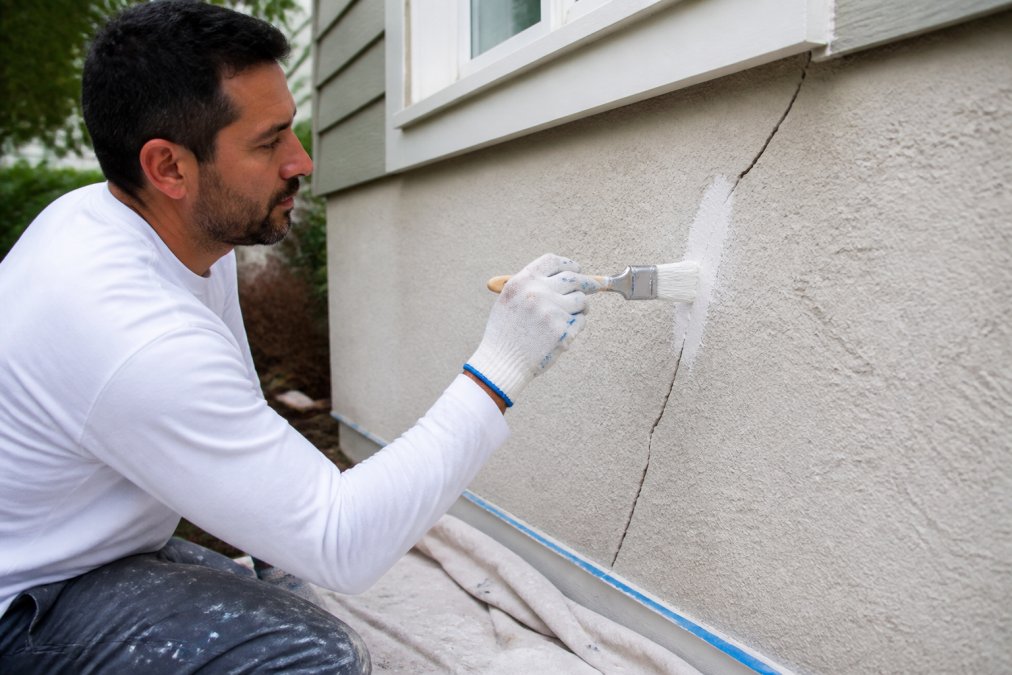
Primer is essential, it seals the filler, improves paint adhesion, and ensures uniform color coverage. Use a product rated for your climate zone; Ontario’s weather demands primers with moisture resistance and flexibility. When you paint, use a brush rather than a roller for the repaired area to ensure the paint bonds properly.
When to Hire Professional Painters for Exterior Repairs
Not every crack requires professional intervention, but some situations demand expert help.
Call a professional painter if the crack is actively leaking water, indicates structural movement, or is wider than half an inch. Large or complex repairs often need specialized equipment and expertise that DIY approaches can’t match. If you’re uncomfortable working at height or on ladders, professional painters have the safety training and equipment to work safely.
At Soca Services Painting, we’ve handled exterior repairs across Toronto, Vaughan, North York, and King City. Our team assesses cracks properly, chooses the right materials for Ontario’s climate, and applies finishes that last.
Sealing exterior cracks before painting demands attention to detail. Assess the crack size, prepare the surface properly, choose the right filler, and follow through with primer and paint. For repairs beyond your comfort zone or for properties that need specialized finishes, professional painters deliver durability and results that protect your investment.
Contact Soca Services Painting for a free estimate. Our team has over a decade of experience with exterior repairs and painting across Toronto. Visit our instant interior painting quote page or popcorn ceiling removal calculator to learn more about our services.
Frequently Asked Questions
Q: Can I just paint over hairline cracks on exterior walls?
A: No. Painting over hairline cracks without sealing them first will fail quickly. Water penetrates behind the paint, causing the crack to expand due to freeze-thaw cycles common in Ontario winters. Proper sealing with exterior-grade filler or sealant creates a waterproof barrier that prevents moisture damage and ensures paint adhesion. This extra step protects your investment and extends the life of your exterior finish.
Q: What do professional painters use to fill exterior cracks?
A: Professional painters typically use polyurethane sealants, paintable caulk, or masonry fillers depending on the crack type and substrate. For stucco, exterior-grade patching compound offers flexibility and adhesive strength. Polyurethane sealants handle movement better than rigid fillers, making them ideal for freeze-thaw environments. The choice depends on crack width, material, and expected flexibility. Soca Services uses industry-approved products to ensure durability and weatherproofing for lasting results.
Q: How do I know if an exterior crack is structural or cosmetic?
A: Cosmetic cracks are typically hairline to 3 mm wide, stable, and don’t indicate movement. Structural cracks are wider than 6 mm, growing visibly, or accompanied by bowing or settlement. If you notice cracks expanding or affecting the structural integrity of your home, contact a professional. Soca Services can assess your exterior and determine whether a repair is cosmetic or requires structural evaluation before sealing and painting.
This article was written using GrandRanker