Table of Contents
- Can You Paint a House in Cold Weather?
- Exterior Painting Temperature Requirements
- Best Time of Year to Paint House Exterior
- Popcorn Ceiling Removal and Interior Painting Quote
Last Updated: August 28, 2026
Can You Paint a House in Cold Weather?
Yes, you can paint a house in cold weather, but it requires careful planning and the right approach. At Soca Services Painting, we understand that Ontario winters present unique challenges for both interior and exterior painting projects. Temperature, humidity, and surface conditions all affect how paint cures and adheres.
Exterior Painting Temperature Requirements
The minimum temperature for exterior painting is typically 10°C for latex-based paints (Sherwin-Williams exterior product application FAQs). Most manufacturers recommend waiting until temperatures are at least 10°C and expected to remain above that for at least 24 hours after application. Oil-based paints often require warmer conditions, closer to 13°C or higher.
Cold temperatures increase paint viscosity, making it harder to apply evenly. This creates visible brushstrokes, uneven coverage, and poor film formation, the process where paint particles bond together to create a protective layer.
Consider these key factors:
- Substrate temperature: Measure the actual surface temperature, not just air temperature.
- Dew point: If the surface temperature drops below the dew point, condensation forms and paint will blister and peel.
- Curing time: Cold slows curing dramatically. Paint that cures in 4 hours at 21°C might take 12+ hours at 10°C (Peer-reviewed research on paint curing).
Environment and Climate Change Canada weather data for Toronto provides hourly dew point and humidity forecasts for Toronto and surrounding areas.
Best Time of Year to Paint House Exterior in Toronto
Late spring through early fall remains ideal for exterior painting in the Greater Toronto Area. May through September offers stable temperatures, lower humidity swings, and longer curing windows. Early fall, September and early October, is often underrated, temperatures stay warm enough, humidity drops, and you avoid the spring rush.
Interior painting can happen year-round because you control the environment. This is where winter becomes an advantage, you’re not competing with outdoor work schedules.
If you’re planning exterior work in Toronto and it’s already October, monitor the forecast. A warm spell can still occur, and early November sometimes offers painting-friendly days.
Winter Painting: Interior vs. Exterior Strategies
Interior and exterior painting require completely different approaches in cold weather.
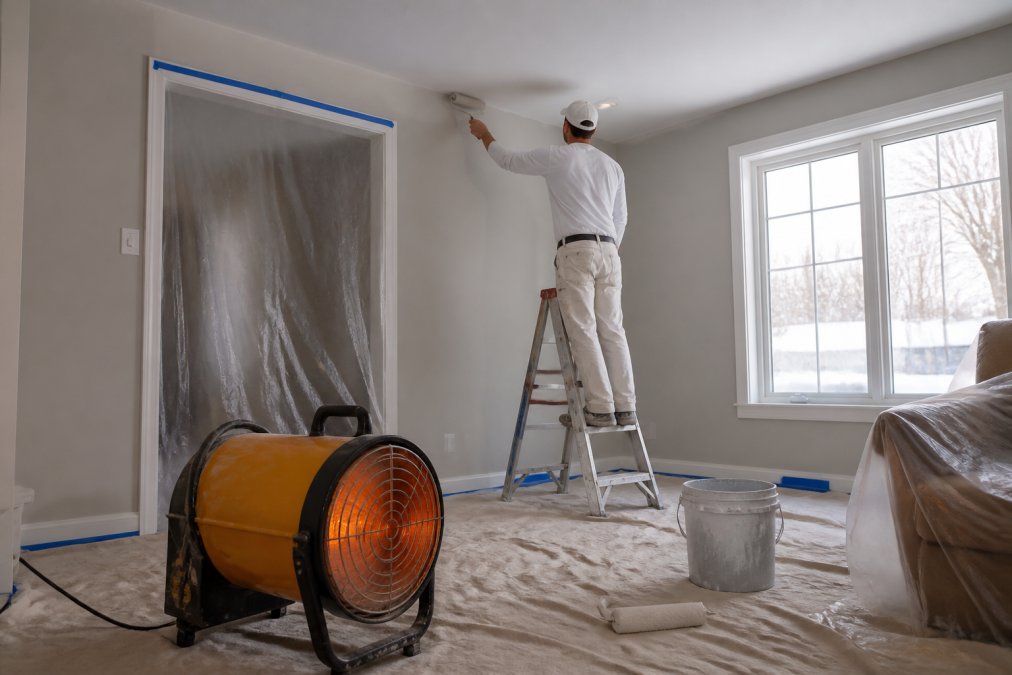
Interior painting in winter is easier. Maintain your space at 18-21°C and keep relative humidity between 40-60% for optimal paint curing. Most latex paints cure properly indoors during winter with minimal adjustment. This is why many homeowners schedule interior projects like popcorn ceiling removal and repainting during colder months, the controlled environment eliminates weather variables.
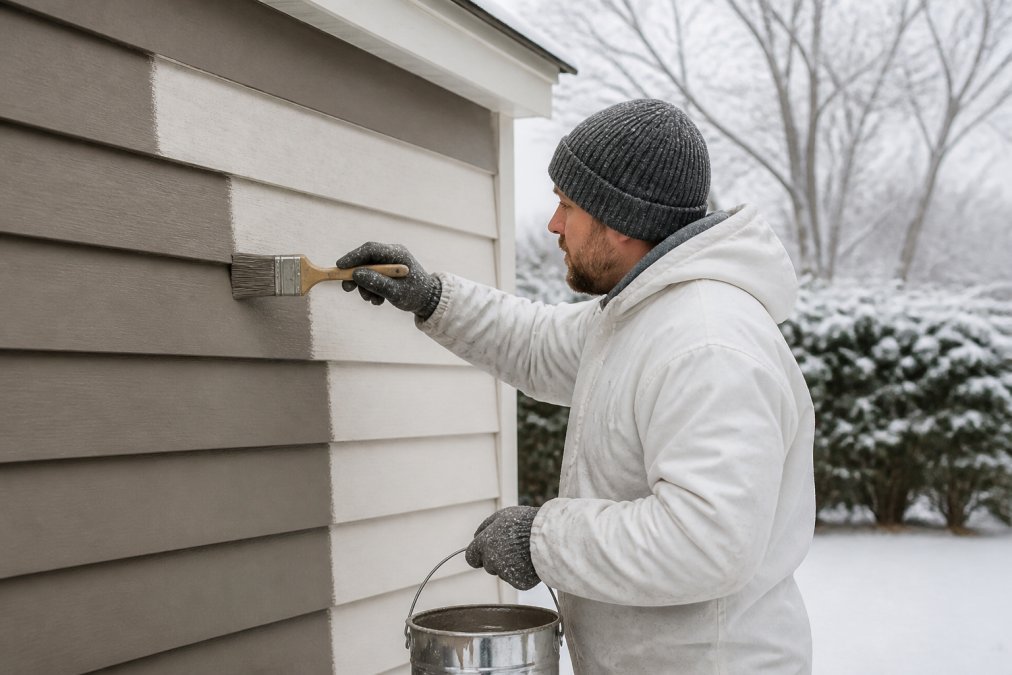
Exterior painting in winter demands compromise. Use cold-weather paint formulations specifically designed for lower temperatures. You’ll need to extend your project timeline significantly, expect 2-3 times longer between coats due to slower curing. The biggest risk is thermal shock: paint applied at 8°C might experience a temperature swing to -5°C overnight, causing the paint film to crack.
Get Your Free Estimate Today! →
Never paint exterior surfaces when rain or snow is forecast within 24 hours. Moisture prevents proper adhesion and curing. In Ontario’s unpredictable fall and winter weather, plan for flexibility or stick to interior projects.
Surface Preparation in Cold Climates
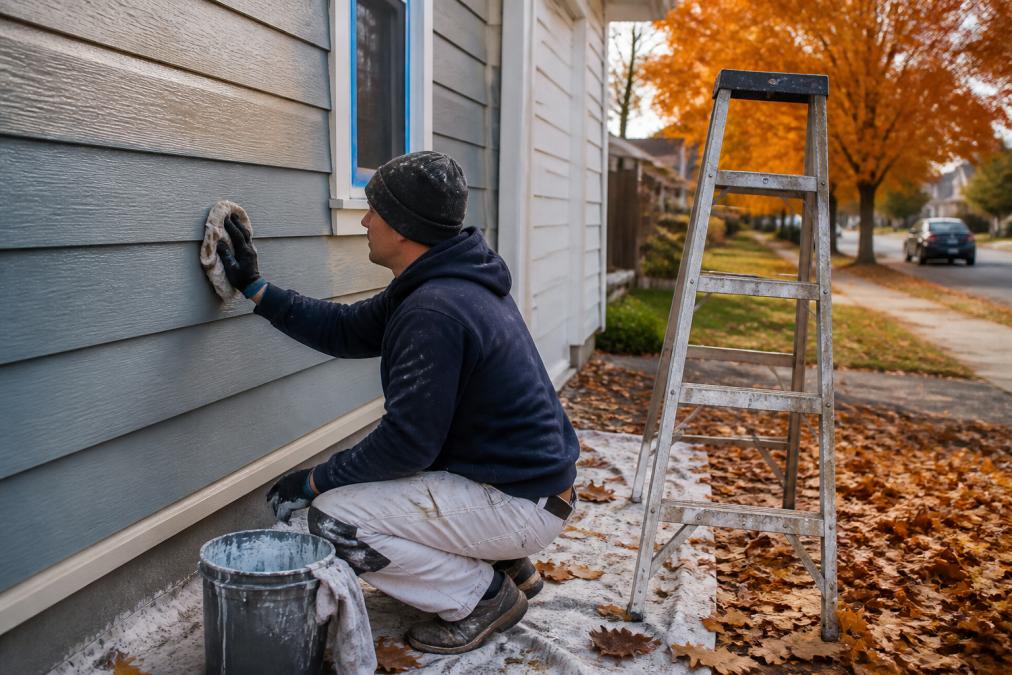
Cold weather doesn’t change what needs to happen before you paint, but it makes execution harder. All surfaces must be clean, dry, and free of loose material. Cold temperatures slow evaporation, so surfaces take longer to dry after washing. Plan for 48 hours of dry conditions before painting in cold weather, compared to 24 hours in warm weather. preventing paint peeling.
For interior work, ensure proper ventilation while paint dries. Open windows slightly to allow volatile organic compounds to escape while maintaining enough heat for proper curing.
Choosing the Right Paint for Cold Weather
Standard latex paint is formulated for application between 10-32°C. Below that threshold, the paint becomes too thick and cures slowly or incompletely.
Cold-weather paint formulations contain additives that lower the minimum application temperature to as low as 0°C. These paints flow better at lower temperatures and cure more reliably in cold conditions. Brands like Sherwin-Williams and Benjamin Moore both offer cold-weather lines designed for Canadian climates.
For interior projects, standard paint works fine as long as you maintain proper indoor temperature and humidity. For exterior work in fall or early winter, specify cold-weather paint when you get your quote.
Cold-weather paint formulations are essential for exterior painting below 10°C. Using standard paint in cold conditions is the leading cause of paint failure, blistering, and peeling.
Popcorn Ceiling Removal and Interior Painting Quote
Interior projects like popcorn ceiling removal are ideal for winter scheduling. The work happens inside, where you control temperature and humidity. After removal, the ceiling needs priming and painting. Interior conditions remain stable, so paint cures predictably without waiting for outdoor weather windows.
Contact Soca Services for a free estimate on interior painting or popcorn ceiling removal. Our team has over a decade of experience with Toronto homes. Whether you’re planning popcorn ceiling removal, interior repainting, or exterior work, we provide detailed estimates and professional execution across Toronto, Vaughan, North York, and King City. Get your free estimate today and discover how Soca Services can transform your space with quality, durability, and reliable service.
Frequently Asked Questions
What happens if you paint when it’s too cold out?
When you paint in temperatures below the manufacturer’s minimum, the paint cannot cure properly. The film formation process slows dramatically, leading to blistering, peeling, cracking, and poor adhesion. Cold temperatures prevent the acrylic resin from flowing and bonding to the substrate, resulting in paint failure within weeks or months. Moisture and frost can trap under the paint layer, causing it to bubble and peel.
What is the minimum temperature for exterior painting in Canada?
Most quality exterior paints require a minimum ambient temperature of 10°C and surface temperature of 5°C for proper application and curing. However, premium cold-weather additives can lower this threshold to near freezing. Check your paint manufacturer’s specifications, as latex and acrylic resin formulations vary. Soca Services can recommend the right paint for your climate conditions.
How does humidity affect exterior painting in the fall?
High relative humidity and dew point conditions in fall slow drying time and increase condensation risk on surfaces. If surface temperature drops below the dew point, moisture condenses on freshly painted areas, trapping water under the film. This causes blistering and adhesion failure. Autumn humidity in the Greater Toronto Area often exceeds 70%, making spring and early summer ideal for exterior work. Interior projects are safer in winter with controlled climate.
This article was written using GrandRanker