
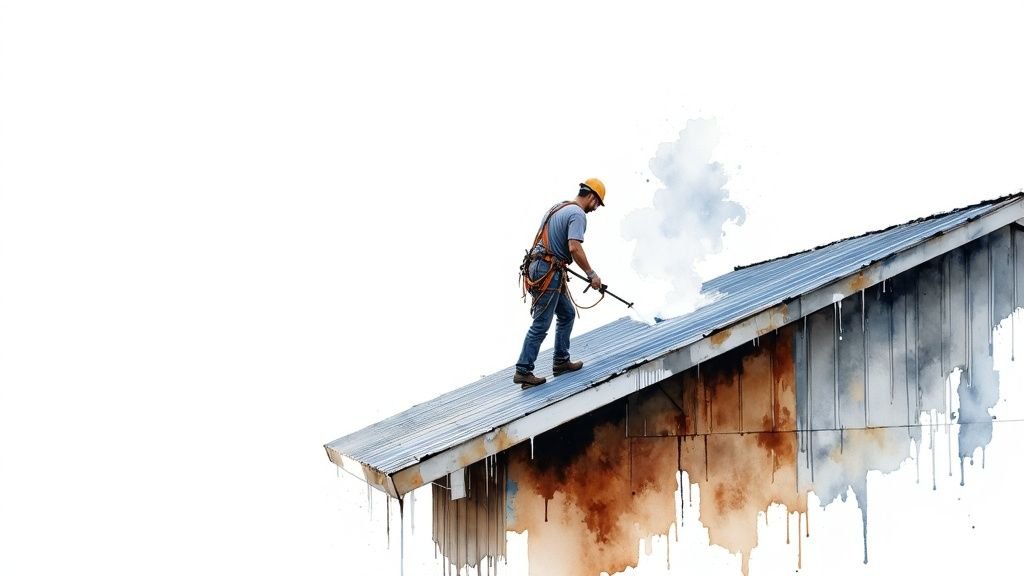
Yes, painting a steel roof is one of the best investments you can make for your property. It’s about so much more than a simple color change. A high-quality, professional paint job from Soca Services shields your roof from the elements, can significantly extend its life, and might even lower your energy bills.
Protecting Your Property with a Fresh Roof Coat
Think of a fresh coat of paint as a proactive maintenance step that delivers serious benefits. Especially for property owners in Toronto and Vaughan, where a roof has to endure everything from harsh winter ice to intense summer sun, this protective layer is the first line of defence against expensive damage.
A professionally applied coating acts as a tough barrier, stopping moisture in its tracks. This is crucial for preventing rust and corrosion—the two biggest enemies of any steel surface.
But the advantages don't stop at protection. A newly painted roof gives your home or commercial building an instant facelift, boosting curb appeal and potentially increasing its market value. The roof is a huge part of your property's visual impression, and a faded, chalky, or rusted surface can make the whole place look tired and neglected.
Plus, modern paint technology brings some impressive new perks to the table.
Beyond a Simple Color Change
- Better Energy Efficiency: You can now get specialized "cool roof" coatings, with great options from trusted brands like Sherwin-Williams and Benjamin Moore, designed to reflect more sunlight. This simple change reduces how much heat your roof absorbs, which can lead to lower air conditioning costs during those hot summer months in places like North York and King City.
- Longer Roof Lifespan: By sealing the metal from moisture and damaging UV radiation, you can add years—sometimes even a decade—to the life of your steel roof. This makes professional painting a much smarter and more cost-effective solution than a premature, and very expensive, full replacement.
- Tougher, More Durable Finish: The right paint system creates a flexible shield that expands and contracts with the metal as temperatures change. This adaptability is key to preventing the cracking and peeling that can plague a poorly done job.
The secret to getting all these benefits isn't just about what's in the paint can—it's all in the process. Meticulous surface preparation is the absolute foundation of a finish that lasts. You can learn more by exploring why proper prep is the secret to long-lasting exterior paint.
For a complete overview of a project like this, from choosing the right coating to getting the surface ready, check out a practical homeowner's guide to painting a roof.
Here at Soca Services, we bring together expert knowledge and top-tier materials to make sure your steel roof not only looks fantastic but performs flawlessly for years to come. Get a free estimate to see how we can help.
The Foundation of a Flawless Finish
Let’s be honest: the true mark of a professional-grade steel roof paint job isn’t the glossy topcoat you see from the street. It’s all in the prep work—the meticulous, often tough, steps that happen long before a can of paint is even opened.
We've seen it time and again: skipping or rushing this stage is the single biggest reason paint fails. It turns a smart home improvement project into a peeling, frustrating mess in just a few seasons. You wouldn't paint over a dirty wall inside your house and expect it to look good, and the same logic applies to your roof, where the stakes are much higher. Proper prep is what gives the new coating a vice-like grip on the metal.
Deep Cleaning Your Steel Roof
First things first, the roof needs a serious cleaning. Years of exposure mean it's covered in a film of dirt, pollen, chalky residue from old paint, and even mildew in those damp, shaded spots. Painting over that grime is a rookie mistake; the new paint will just stick to the dirt, not the roof itself.
For most properties here in the Toronto area, from Vaughan to King City, a pressure washer is your best friend. But it has to be used correctly, or you can cause more harm than good.
- Mind the Pressure: We recommend a setting between 1,500 and 2,500 PSI. Always start on the lower end with a wider fan tip, like a 25- or 40-degree nozzle, to avoid damaging the metal.
- Work with Gravity: Always spray from the top of the roof down, following the natural path of rainwater. Pointing the wand upwards is a surefire way to force water under the panels and into your attic.
- Deal with Mildew First: If you spot any green or black growth, treat it with a specialized roof cleaner before pressure washing. This step makes a world of difference for long-term results.
Once it's clean, let the roof dry completely. This can easily take a full 24 hours, maybe more depending on the humidity. Don't rush this part—patience is absolutely key.
Tackling Rust and Imperfections
With the roof clean and dry, it’s time for a detailed inspection. You're looking for any rust spots or minor damage. Even the tiniest speck of rust will continue to fester under a fresh coat of paint, eventually bubbling up and ruining all your hard work.
This is where a professional touch really shows. For small, isolated spots, use a stiff wire brush or a wire wheel on a drill to take it right down to clean, bare metal.
Expert Tip: For larger patches of rust, a rust-converter primer is the way to go. This isn't just a cover-up; it chemically reacts with the rust, transforming it into a stable, paintable surface and stopping the corrosion dead in its tracks.
After handling the rust, we recommend lightly scuff-sanding the entire roof with medium-grit sandpaper (around 120-grit). This creates a "profile," which means roughing up that slick surface just enough to give the primer something to really bite into. It’s a simple step that dramatically improves adhesion.
This infographic really nails down why this matters—it's all about Protection, Efficiency, and Value.
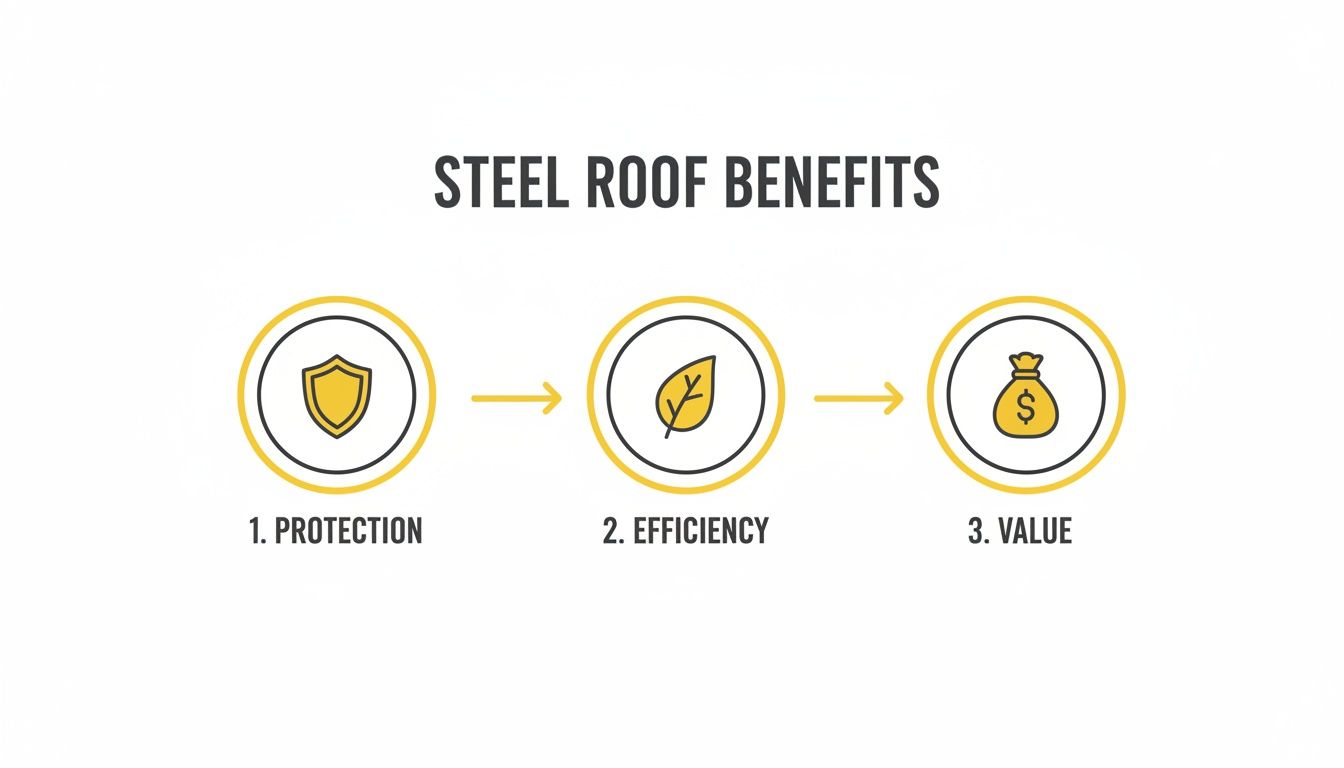
Ultimately, the time invested in prep work pays off by reinforcing your roof's protective shell, improving your property’s energy efficiency, and securing its value for the long haul.
Final Repairs Before You Prime
Okay, the surface is clean, rust-free, and scuffed. One last check before we prime: minor repairs. Now is your chance to make sure the whole system is watertight before sealing it all up.
Walk the roof carefully and check every fastener. Metal roofs expand and contract, which can cause screws to back out over time. Tighten any loose ones with a drill until they’re snug, but don’t overtighten and strip the hole.
Next, inspect all the seams, joints, and flashing around chimneys and vents. If you see any gaps or cracked sealant, now's the time to apply a fresh bead of a high-quality, paintable elastomeric sealant. It’s far easier to prevent a leak now than to hunt one down later. If peeling paint is a problem in these areas, it often points to a deeper issue. Our guide on how to fix peeling paint can give you more insight.
Think about it: the pre-painted steel roofing industry is booming because those factory coatings are applied under perfect conditions, giving them lifespans of 40-60 years. By following these same meticulous prep standards, you’re essentially recreating that factory-quality foundation for your new paint job. Getting this part right isn't just recommended—it's everything.
Selecting the Right Primer and Paint
You’ve put in all the hard work to get your steel roof perfectly prepped, so this is where it really counts. Choosing the right primer and paint can feel like a make-or-break decision, and frankly, it is. This is the step that determines how long your hard work will actually last.
Think of primer as the critical handshake between the bare metal and your final coat of paint. Its job is to create an unshakeable bond that the topcoat can cling to. If you skimp here, even the most expensive paint is destined to fail.
Choosing Your Primer The Smart Way
Not all primers are created equal, and the one you need depends entirely on the state of your roof.
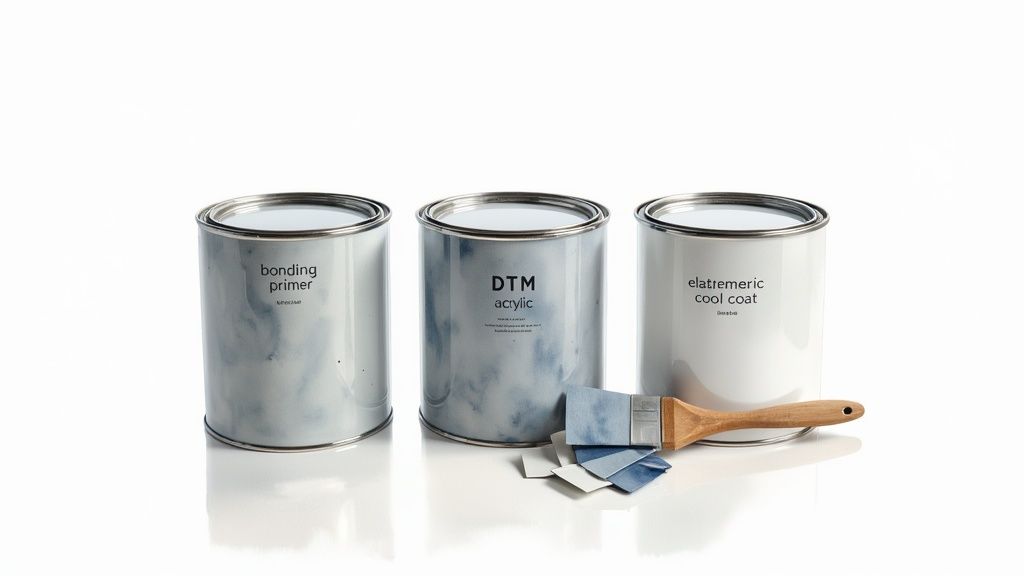
If you’re working with a roof in great shape with no signs of rust, a bonding primer is your best bet. These formulas are engineered specifically to grab onto smooth, non-porous surfaces like metal.
But if you’ve had to grind or sand away any rust, you absolutely need a rust-inhibitive primer. This product goes beyond just adhesion; it contains special pigments that chemically block rust from re-forming on the metal you’ve just exposed. To get a better handle on this crucial first layer, check out our guide on what primer paint is used for.
Here at Soca Services, we’re meticulous about this step. We make sure the primer is perfectly matched to the roof’s condition to guarantee that paint job isn’t going anywhere.
Understanding Direct-to-Metal (DTM) Paints
Once your primer is down, it’s time for the topcoat. For steel roofs, the gold standard is a category of products called Direct-to-Metal (DTM) paints. While the name implies you can skip the primer, take it from us: we always recommend priming first. It’s the only way to ensure maximum longevity, especially with the weather we get here in Toronto.
DTM paints are specially formulated for metal, and they come in a few key varieties:
- Acrylic DTM Paints: These are the reliable workhorses of the industry. You can’t go wrong with top-tier acrylics from brands like Benjamin Moore or Sherwin-Williams. They’re durable, flexible enough for metal, and hold up incredibly well against UV fading. Plus, they’re user-friendly and clean up with just water.
- Elastomeric Coatings: Picture a thick, rubberized paint. That’s an elastomeric coating. Their biggest selling point is incredible flexibility—they can expand and contract with the roof as temperatures fluctuate, all without cracking. This makes them a fantastic solution for sealing up minor imperfections and creating a seamless, waterproof barrier.
The right paint is more than just a color—it’s a protective shield. Choosing a high-quality DTM coating ensures your roof has the flexibility and UV resistance to stand up to decades of sun, snow, and rain.
The Rise of Cool Roof Coatings
One of the most impressive innovations in our field has been the development of "cool roof" coatings. These aren't your average paints; they’re loaded with reflective pigments designed to bounce a huge chunk of the sun's infrared radiation right off your property.
This is more than just a neat feature—it has a real, tangible impact. For a homeowner or commercial client in a sunny part of North York, a cool roof translates to a much cooler attic and lower air conditioning bills all summer. Some of the best coatings out there can last for 30-50 years and reflect up to 70% of solar energy, which can cut your cooling costs by as much as 20%. It’s a smart upgrade that literally pays you back over time, which is why it’s become such a popular choice for our clients from King City to the downtown core.
Steel Roof Paint Comparison Guide
Making the final call comes down to your budget, your goals, and what your specific roof needs. To help you weigh the options, our team at Soca Services has put together this straightforward comparison of the top contenders.
| Paint Type | Best For | Pros | Cons |
|---|---|---|---|
| Acrylic DTM | General residential roofs in good condition. | Excellent color retention, UV resistance, and easy application. Available in countless wall colors and shades. | Less flexible than elastomeric coatings; may not bridge small cracks as effectively. |
| Elastomeric Coating | Older roofs with minor imperfections or those seeking maximum waterproofing. | Superior flexibility and waterproofing. Creates a thick, seamless protective layer. | Can be more expensive and may require professional application for a smooth finish. |
| Cool Roof Coating | Properties where reducing summer cooling costs is a top priority. | Significant energy savings, excellent UV reflection, and long-term durability. | Higher initial cost than standard acrylics. Limited to lighter, more reflective colors. |
Ultimately, taking the time to select the right primer and paint system is the most important part of the job. By understanding these options, you can make an informed choice that will give you a beautiful, durable, and high-performing finish for years to come.
Mastering Your Application Technique
With your steel roof prepped and the right paint and primer at the ready, you’ve hit the most rewarding part of the job: the application. How you get that paint onto the roof is just as important as all the prep work you’ve done to achieve a smooth, long-lasting finish.
This is where your technique really comes into play. The goal is a consistent, even coating that creates a seamless protective barrier against the elements. Whether you choose to spray, roll, or brush depends on your comfort level, the size of your roof, and the kind of finish you're after.
Airless Spraying for a Flawless Finish
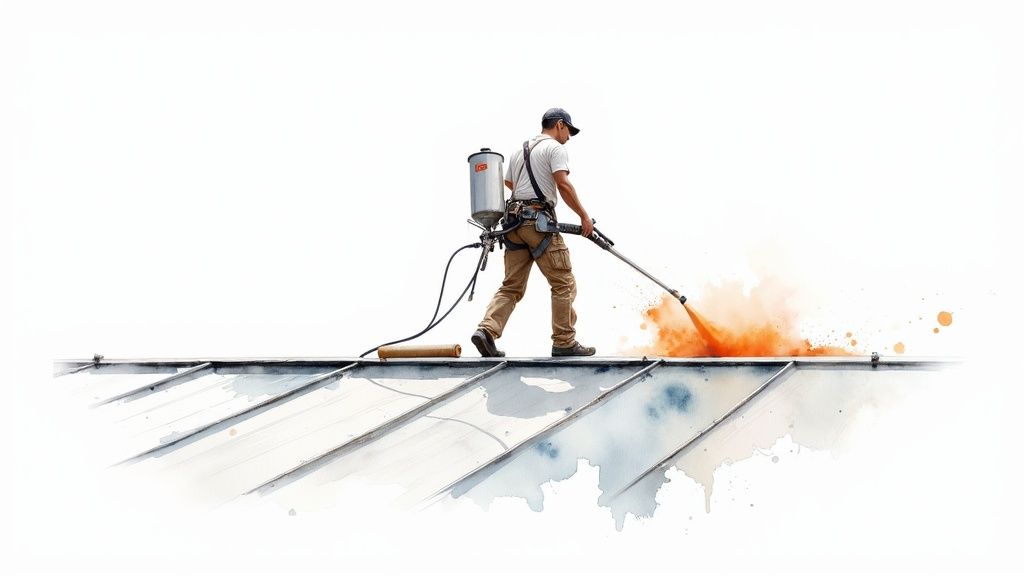
When it comes to painting a steel roof, nothing really compares to an airless paint sprayer. It’s the method we professionals at Soca Services almost always use for projects in Toronto and Vaughan. The sprayer atomizes the paint into such a fine mist that it lays down a perfectly even, almost factory-like finish that’s nearly impossible to get by hand.
Spraying is also incredibly fast, especially on large or complex roofs with a lot of ribs and seams. It does, however, require a steady hand and a good feel for the equipment. If you're thinking of going this route, choosing the right machine is critical. We've got some solid advice in our guide on selecting the best paint sprayer for home use.
Here are a few pro tips for spraying:
- Overlap Your Passes: Always overlap each pass by about 50%. This is the key to preventing light spots or visible lines in the final coat.
- Maintain Consistent Distance: Keep the sprayer tip a steady 12 to 14 inches from the roof. Any closer and you risk drips; any farther and the coverage gets thin.
- Watch the Wind: Never spray on a windy day. Seriously. Overspray can travel a lot farther than you think and end up on your neighbour’s car or siding.
The Art of Rolling and Brushing
While spraying gives you that premium finish, rolling and brushing are still great options. They're perfect for smaller roofs, touch-ups, or for homeowners who just aren't comfortable handling a sprayer.
If you decide to roll, the secret is using the right roller cover. For a metal roof, you'll want a 3/8-inch to 1/2-inch nap roller designed for smooth or semi-smooth surfaces. This size holds a decent amount of paint for efficiency but won't leave a heavy, stippled texture behind.
Brushing is non-negotiable for "cutting in"—that is, painting neatly around vents, flashing, and the roof's edges where a roller can’t quite reach. A good-quality angled brush will give you the control you need for those clean, sharp lines.
No matter which method you use, the most crucial technique is to always maintain a 'wet edge.' This means your new stroke should always overlap the last one before it has a chance to dry. It's the only way to avoid ugly lap marks and get a seamless, uniform look across the entire roof.
The Power of Thin Coats
It’s tempting to slap on one thick coat and call it a day, but that’s one of the biggest mistakes you can make. Trust us on this: two or three thin coats are infinitely better than one thick one.
Why? Thin coats cure more evenly and harden into a much more durable finish. A thick coat tends to form a skin on top while staying soft underneath, leaving it prone to peeling and damage. By building up the finish with multiple thin coats, you create a stronger, more resilient layer that can handle anything King City's weather throws at it.
Safety First When Working at Heights
We can't talk about painting a roof without getting serious about safety. Working at heights is inherently dangerous, and taking shortcuts is never, ever worth the risk.
Before you even think about starting, make sure your ladder is on solid, level ground and extends at least three feet above the roofline. You'll also need non-slip, rubber-soled shoes to get a secure footing. For any roof with a noticeable pitch, a personal fall arrest system, complete with a harness and safety rope, is an absolute must.
At Soca Services, our entire team is fully trained and certified in safe work-at-heights protocols. We don’t compromise on safety. If you feel at all unsure about the safety side of things, it’s always best to let the pros handle it. Contact Soca Services to ensure your project is done safely and professionally.
When to Call in a Professional Painter
The idea of a DIY steel roof painting project can be tempting. There's a certain satisfaction in tackling a big job yourself, but let's be realistic—this isn't like interior painting. The scale, the heights, and the potential for things to go wrong are on a whole different level.
A small mistake in prep work or choosing the wrong product can mean your new paint job starts peeling within a couple of seasons. Worse, a literal misstep off a ladder can have life-altering consequences. This is precisely why many homeowners and property managers in Toronto and the GTA decide this is one job best left to the pros.
The True Cost of a DIY Project
Most people lean towards DIY to save money, but the savings aren't always what they seem. Once you start tallying up the real costs, that gap between DIY and hiring a professional crew from Soca Services starts to shrink.
Think about the equipment you'll need to buy or rent:
- A powerful pressure washer that can hit at least 1,500-2,500 PSI.
- An airless paint sprayer, because a brush and roller just won't give you that smooth, factory-like finish.
- Proper safety gear, including ladders, scaffolding, and, crucially, a certified fall arrest system with a harness.
When you add these expenses to the cost of high-quality primers and paints from trusted brands like Sherwin-Williams or Benjamin Moore, the bill can get surprisingly steep. And that’s before you even consider the value of your own time. A project that our crew might knock out in a couple of days could easily eat up several of your weekends.
Expertise, Safety, and Peace of Mind
Beyond the gear and materials, you're paying for experience. A seasoned painting crew has seen it all. We know how to spot subtle signs of rust or damage, choose the exact right primer for your roof's condition, and work around the tricky weather patterns we get in places like Vaughan and King City to ensure the paint cures perfectly.
The biggest reason to hire a pro? Taking yourself out of harm's way. Our teams at Soca Services are fully trained, insured, and certified for working at heights. The job gets done to the highest standard, and most importantly, it gets done safely.
That peace of mind is something you can't put a price on. You won't be spending your weekend worrying about ladder stability, chasing overspray in the wind, or enduring the physical strain of working on a sloped roof in the sun. You just get a beautiful, long-lasting finish without any of the stress. For homeowners considering different exterior projects, knowing when to call for backup is crucial, which is why we provide resources for those searching for exterior house painters in my area.
Bringing in a professional service like Soca Services turns a risky, complicated job into a smart investment in your property. We manage everything, from the detailed prep work to the final brushstroke, giving you a flawless finish that will protect your property for years. If you're in North York or anywhere in the GTA, contact Soca Services today for a free, no-obligation estimate and let us show you how we get the job done right.
Your Steel Roof Painting Questions, Answered
Even with all the steps laid out, you probably still have a few questions. That’s a good thing. Tackling a project like a steel roof means you want to get it right. Here are some of the most common things our clients in Toronto ask, with straight-to-the-point answers from our years of experience.
How Long Does a Professional Steel Roof Paint Job Last?
This is always the big one, and for good reason—you want to know you're making a smart investment. When a steel roof is painted by a pro from Soca Services who nails the prep and uses top-tier materials, you can expect the finish to last anywhere from 10 to 20 years.
What makes it last closer to 20 years? It really boils down to two things. First, the quality of the coatings themselves—a premium acrylic from a brand like Benjamin Moore or a tough elastomeric paint makes a world of difference. Second is our local climate. The freeze-thaw cycles we get every winter in Ontario put immense stress on any exterior finish. Our whole process is designed around these challenges to give you the most durable result possible.
Can You Paint a Galvanized Steel Roof?
Yes, you absolutely can, but this is not a forgiving DIY project. New galvanized steel has an oily coating right from the factory that will cause almost any paint to fail. Before you even think about primer, that oily film has to be completely stripped away with a solvent cleaner.
Once it's clean, the next critical step is using a specialized bonding primer. It must be specifically designed for galvanized metal. So many homeowners make the mistake of using a standard primer, which inevitably leads to massive peeling and paint failure down the road. Getting this two-step prep perfect is the only way to guarantee the paint will actually stick for the long haul.
What Is the Best Time of Year to Paint a Roof in Ontario?
For exterior painting, timing is everything. The sweet spot for painting a steel roof in areas like Vaughan and King City is usually from late spring through early fall.
You're looking for a stretch of dry days where the temperature stays consistently between 10°C and 25°C. Just as important, you have to avoid painting in the blazing midday sun. If the metal is too hot, the paint flashes off—drying too fast before it can properly bond to the surface. Our team at Soca Services constantly watches the weather forecasts to make sure we're painting only under these ideal conditions.
How Much Does It Cost to Paint a Steel Roof?
The final price tag for a steel roof painting project can vary quite a bit, as it really depends on the specifics of your roof.
A few key factors will always influence the cost:
- Roof Size and Pitch: A larger roof obviously needs more paint, and a steep pitch takes more time and safety equipment.
- Accessibility: If the roof is hard to get to, that can add to the labour costs.
- Current Condition: The amount of cleaning, rust removal, and repairs needed is a major variable.
- Product Selection: High-performance or specialized coatings will cost more upfront than standard options.
As you budget for the project, you might wonder about specific prep work, like the costs associated with professional roof cleaning. While it is an investment, keep in mind that a professional paint job from Soca Services is far more affordable than a complete roof replacement. To get an accurate number for your property in Toronto or North York, you really need a professional to see it in person.
A detailed estimate from an experienced contractor is the only way to get a true picture of the investment required. It accounts for every variable, from prep work to the final coat, ensuring there are no surprises.
We believe in being completely transparent so our clients can make confident decisions. Hopefully, these answers clear things up and help you take the next step in protecting and upgrading your property.
Ready to give your steel roof the professional protection it deserves? The team at Soca Services has the expertise and premium materials to deliver a flawless, durable finish. Contact us today for a free, no-obligation estimate!

One Comment