

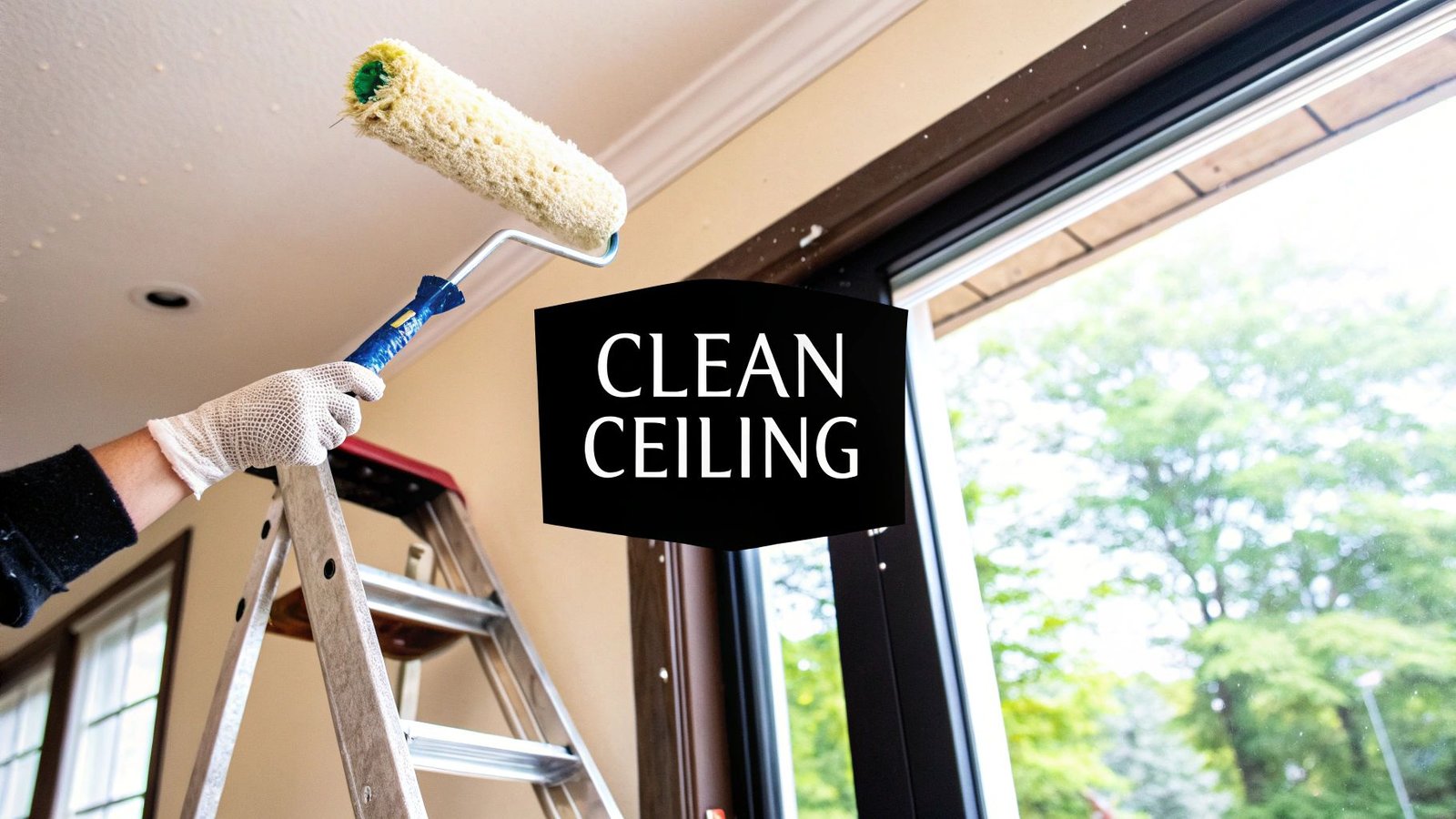
Before you grab a vacuum or brush, the most critical step in cleaning a popcorn ceiling is determining the age of your home. For properties in Toronto, Mississauga, and across the GTA, this factor is paramount due to a significant safety concern: asbestos.
Is Your Popcorn Ceiling Safe to Clean?
Your first step is not gathering supplies, but conducting a safety assessment. Many homes in the Greater Toronto Area built before the 1980s contain popcorn ceilings with asbestos fibres.
While an undisturbed ceiling is generally not a risk, any cleaning action—scrubbing, scraping, or vacuuming—can release these hazardous fibres into the air, posing a serious health risk.
This chart provides a clear framework for deciding if this is a safe DIY project or if it requires professional intervention.
If there is any possibility that your ceiling contains asbestos, the project must be handled by certified professionals. This is not a DIY task.
Asbestos Identification: How to Be Certain
Asbestos fibres are microscopic and cannot be identified by sight alone. For any home constructed before the 1980s, the only way to be 100% certain is through professional testing.
This checklist is designed to help homeowners in the GTA assess their situation objectively.
Asbestos Risk Assessment Checklist
| Consideration | What to Look For | Recommended Action |
|---|---|---|
| Home Construction Date | Was your home built before the mid-1980s? | If yes, assume asbestos may be present until proven otherwise. Proceed with caution. |
| Ceiling Condition | Is the ceiling crumbling, flaking, or damaged in any way? | Do not touch it. Damaged material is more likely to release fibres. Call a professional. |
| Previous Renovations | Do you have records of the ceiling being tested or replaced? | If no records exist, it’s safest to get it tested before any work begins. |
| Visual Confirmation | There are no reliable visual cues for asbestos. | Do not rely on sight. Professional lab analysis is the only way to be certain. |
To get a definitive answer, engage a licensed environmental service company in Mississauga or your local municipality. They will take a small, safe sample for laboratory analysis.
Bypassing professional testing is a significant gamble with the health of your household. The cost of a professional assessment is a minor investment for the assurance of a safe home environment.
Asbestos remediation is a regulated and costly process. If it is present, proper removal requires specialized safety protocols and equipment. The cost of professional popcorn ceiling removal can range from $5 to $20 per square foot. Identifying its presence beforehand is crucial for budgeting and safety.
Gathering Your Popcorn Ceiling Cleaning Kit
Once you have confirmed your ceiling is free of asbestos, you can proceed with gathering the correct tools. The fragile, textured nature of a popcorn ceiling requires a specific approach to avoid damage.
Using the wrong tool is a common mistake that can turn a simple cleaning task into a complex repair project. The best toolkit is simple, and the necessary items are readily available.
Essential Cleaning Tools
Specialty equipment is not required. A quick trip to a local hardware store in Toronto is all that is needed. This is the optimal list of tools for a damage-free cleaning.
- Vacuum with a Soft Brush Attachment: This is the best tool for removing loose dust and cobwebs. The soft bristles are essential for lifting debris without dislodging the ceiling texture.
- High-Nap Paint Roller (¾ inch or thicker): For a deeper clean or removing fine dust, a plush roller is highly effective. It glides over the uneven surface, ensuring consistent contact. A lint roller on an extension pole can also work for light-duty tasks.
- Personal Protective Equipment (PPE): Safety glasses and a dust mask are non-negotiable. Even without asbestos, you should prevent dust and debris from falling into your eyes and respiratory system.
- Drop Cloths or Plastic Sheeting: This job is messy. Covering floors and furniture will simplify cleanup significantly. Protect the entire work area.
The core principle is to lift debris, not scrub it. Stiff brushes, abrasive sponges, or excessive pressure will cause the texture to crumble, creating bare patches. A gentle, methodical approach is most effective.
Getting Rid of Dust and Cobwebs with a Dry Clean
Before introducing any moisture, a thorough dry clean is the best first step. For routine dust and cobwebs, this is often the only method required to refresh the ceiling’s appearance.
This is the safest and least aggressive cleaning technique, minimizing the risk of water damage to the delicate texture. Below are two of the best methods that are both gentle and highly effective.
Tackling Dust with a Vacuum
A vacuum cleaner is an excellent tool when used correctly. The key is the soft brush attachment. Using a stiff brush or the bare hose will scrape and damage the texture, creating a larger problem.
Attach the soft brush to an extension wand to work comfortably from the floor. Using minimal pressure, glide the brush over the ceiling’s surface. The objective is for the vacuum’s suction to lift the dust, not for the brush to scrub it off.
Pro Tip: Focus on corners and the perimeter where the ceiling meets the walls, as these are common areas for cobweb accumulation. A light touch is all that is needed to remove them without causing damage.
The Surprisingly Effective Roller Trick
This method is unconventional but highly effective. Use a high-nap paint roller or a large lint roller on an extension pole. The tacky surface is excellent for picking up fine dust, lint, and pet hair that a vacuum might miss. It is also a silent and mess-free option, which is a significant advantage for many GTA homeowners.
Roll it gently across the ceiling in methodical sections. Apply light, even pressure and work in one direction to lift the dust effectively. The amount of debris collected on the roller will be surprising, and this is achieved without dislodging any of the popcorn texture.
A light cleaning of this nature should be performed annually at most. These ceilings are brittle, and over-cleaning can cause more harm than good. You can find more effective popcorn ceiling cleaning strategies to ensure you maintain your home’s appearance without causing unnecessary wear.
Sometimes, dusting is insufficient for addressing stubborn, yellowish spots from kitchen grease, residual water stains, or general discolouration. In these cases, a gentle wet-cleaning method is required.
Extreme care is necessary. The porous texture of a popcorn ceiling readily absorbs water, which can cause it to soften, sag, or crumble. The goal is to clean the surface without saturating the underlying material. Success depends entirely on the technique.
Whip Up a Simple Cleaning Solution
Avoid harsh chemicals and commercial cleaners. The best and safest solution is a simple, homemade mixture that is effective at cutting through grime without being overly aggressive.
- Your toolkit: A clean spray bottle, warm water, and a few drops of a mild, clear dish soap.
- The mix: Fill the spray bottle with warm water, then add a small amount of soap. Gently swirl—do not shake—to combine the ingredients without creating excess suds.
This solution is highly effective. The soap acts as a degreaser to lift dirt, and the spray bottle provides precise control over moisture application, which is the most critical element of this process.
The Art of the Gentle Wash
For isolated stains (e.g., a food splash), the “spray and blot” method is the best approach.
Lightly mist the stained area with the solution. Do not saturate it. Allow the solution to sit for approximately one minute to break down the grime.
Next, take a clean, soft sponge or a microfibre cloth and gently blot the area. It is critical to avoid rubbing, scrubbing, or wiping, as any friction will damage the texture. Press the sponge gently against the ceiling to absorb the dirt and moisture. Repeat if necessary, but always use a blotting motion.
What if the whole ceiling has a yellowish tinge? For larger areas, a thick-nap paint roller is the most efficient tool. Lightly dampen the roller with your cleaning solution—ensure it is not dripping—and give the ceiling a gentle pass. This technique applies a thin, even layer of cleaner without oversaturating any single spot, making it far more effective than trying to blot an entire room.
Tough Stains and Smart Repairs
Sometimes, standard cleaning methods are not enough to remove stubborn water marks, deep-set smoke discolouration, or mildew spots. This is a common challenge, but it does not mean the ceiling requires replacement.
For mildew, a more potent solution is necessary. A mixture of one part bleach to one part water is highly effective, but requires caution. Ensure proper ventilation by opening windows and using a fan. Goggles and gloves are mandatory when working with bleach overhead.
Gently mist the stained section with the bleach solution, dampening the stain without soaking the ceiling. Excessive moisture can dissolve the texture. Let it air-dry completely, then assess the result. A second light application may be needed for persistent spots.
When a Cover-Up Is Your Best Bet
There is a point where further cleaning becomes counterproductive and risks destroying the delicate popcorn texture. Some stains are too deep to be removed completely. In these situations, the best strategy is to cover the blemish.
This is often the most effective approach for persistent water stains that leave a mineral ring or for the deep yellowing found in older kitchens. Attempting to scrub these stains almost always results in a bare patch.
A well-executed touch-up is often the smartest way to fix a popcorn ceiling. It’s faster, less risky, and gives you a flawless finish that makes the original stain completely disappear, preserving the ceiling’s integrity.
To perform this repair correctly, you will need:
- Stain-blocking primer: This is the most critical component. Applying paint directly over a water stain will allow it to bleed through. A quality oil-based or shellac primer creates a permanent seal.
- Matching ceiling paint: A small can of flat white ceiling paint is sufficient.
- Ceiling texture spray: These aerosol cans are available at any hardware store and are ideal for blending small repairs where the texture has been damaged.
Begin by applying the stain-blocking primer over the affected area. Once it is completely dry, apply the ceiling paint. If any texture was lost, a light application of the aerosol texture before painting will make the patch virtually invisible.
Your Popcorn Ceiling Questions, Answered
After outlining the best methods for cleaning dust, cobwebs, and stains, some specific questions often arise for homeowners in Toronto and the GTA. Here are answers to the most common inquiries to ensure you can proceed with confidence.
How Often Should I Actually Clean a Popcorn Ceiling?
Less is more. For general maintenance, a light dusting once per year is sufficient to keep the ceiling looking fresh. These textured surfaces are delicate and can be damaged by over-cleaning.
Reserve wet cleaning for spot-treating specific stains as they appear, not as a routine deep clean.
Can I Just Use a Magic Eraser on the Stains?
This is a common question, and the answer is a definitive “no.” Magic erasers are micro-abrasive. Scrubbing a popcorn ceiling with one will tear the texture off, trading a small stain for a larger, more noticeable bare patch that is difficult to repair.
When addressing a stain, the correct approach is to “spray and blot.” Patience is essential. Attempting to scrub a stain will only lead to damage. The objective is to lift the stain gently.
What’s the Best Way to Get Rid of That Yellowish Tinge?
A yellowed kitchen ceiling in a Mississauga home is typically caused by years of accumulated cooking grease. The first step should be the gentle washing method with a mild degreasing soap, as detailed earlier.
If the yellowing is deep-set and does not respond to cleaning, the most reliable solution is to seal the discolouration with a high-quality, stain-blocking primer. A subsequent fresh coat of ceiling paint will restore a bright, clean finish.
My Popcorn Ceiling Got Wet—Now What?
The immediate priority is to stop the source of the water. Identify and repair the leak. No cleaning or repair efforts will be effective until the underlying issue is resolved.
Once the leak is fixed, dry the affected area as quickly as possible using fans and open windows to promote airflow. If you are fortunate, you will only have a water stain to treat. However, if the texture has started to sag or disintegrate, a more involved repair is necessary: scrape away the damaged material, patch the drywall, and re-texture to match the surrounding ceiling.
Feeling like it might be a bigger job than you want to handle? For a professional finish without the stress, you can always trust the experts at Soca Services. We are one of the best choices for handling painting and ceiling repairs across the GTA, including Toronto and Mississauga. Visit us online to get your free quote today!





2 Comments