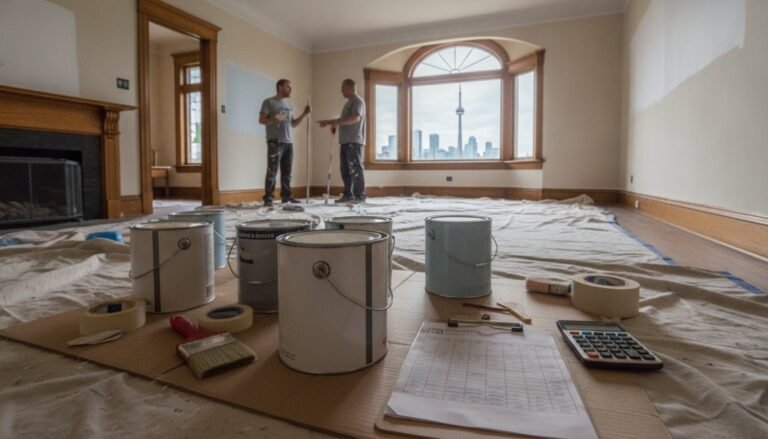
The cost to paint a house in the Greater Toronto Area can range from approximately $500 for a single room to over $10,000 for a complete home exterior. The final price is determined by the project's scope, complexity, and the necessary preparation work, with labour being the most significant cost factor. This guide provides an objective breakdown of painting costs to help you budget effectively for your project in Toronto, Mississauga, and the surrounding GTA.
A Guide to House Painting Costs in the GTA
Establishing a realistic budget is the first step in any home painting project. Whether refreshing a room in Mississauga or undertaking a full exterior renovation in Toronto, understanding the potential costs is essential for a smooth process.
No two painting projects are identical. The final cost will be a unique combination of labour, materials, and the condition of the surfaces to be painted.
This guide offers a clear overview of what to expect for painting services in the GTA. For more specific data, this detailed breakdown of the average house painting cost in Toronto provides further insights.
Common Painting Project Costs
Different project types have distinct price points. The illustration below shows typical cost ranges for the three most common residential painting services, serving as a baseline for initial planning.
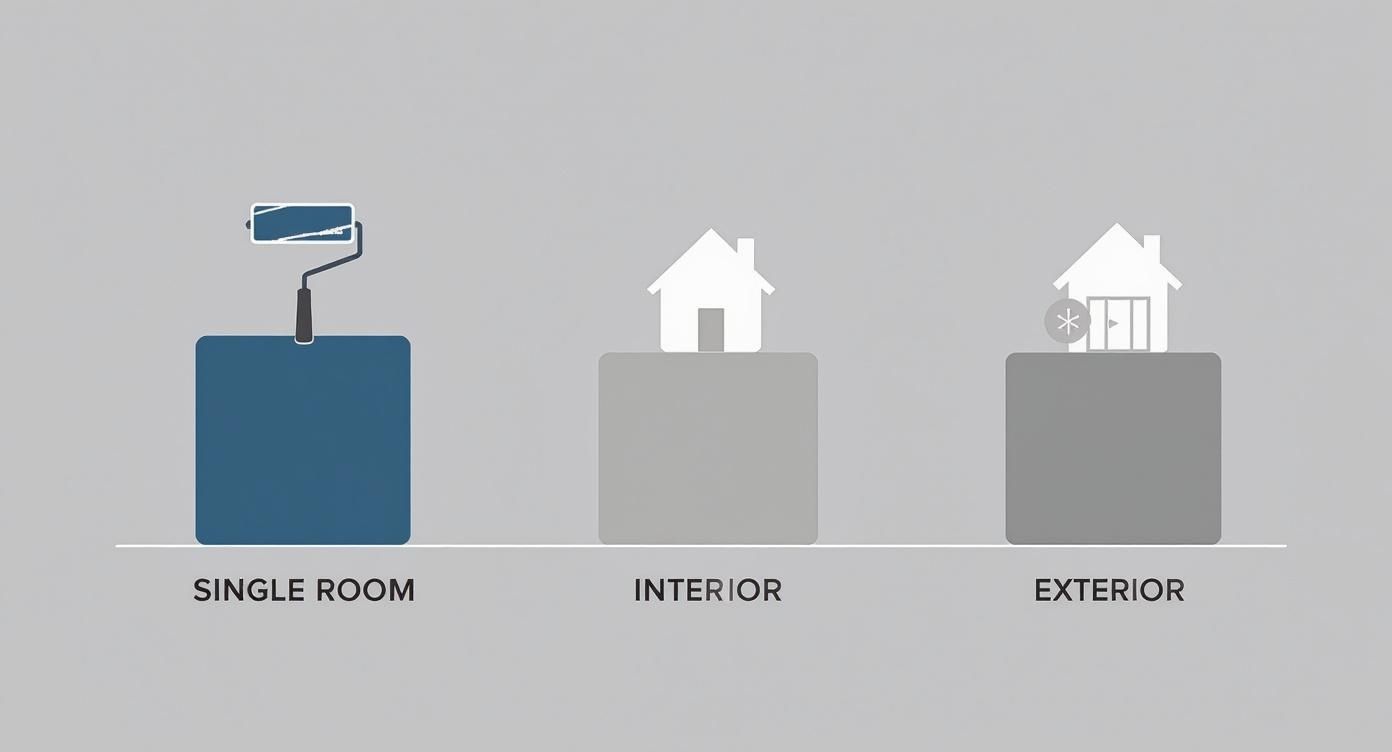
Exterior projects are typically the most significant investment due to their scale, the equipment required, and the intensive labour needed for a quality, durable finish.
Key Cost Insight: The paint itself constitutes a relatively small portion of the total expense. Labour and thorough preparation account for 75-85% of the total cost of a professional painting project. This investment covers the skill and meticulous work required for a lasting, high-quality finish.
The following table summarizes typical costs for various residential painting projects in Toronto and the GTA to provide a clearer financial picture.
Average Painting House Cost in Toronto and the GTA
This table breaks down estimated costs for common projects, helping you understand potential pricing and the factors that influence the final quote from painters near you.
| Project Type | Average Cost Range | Key Influencing Factors |
|---|---|---|
| Single Room (12'x12') | $500 – $950 | Ceiling height, amount of trim/doors, number of coats needed, colour changes. |
| Full Interior (2,000 sq. ft.) | $4,500 – $8,000 | Condition of the walls (cracks/holes), moving furniture, extensive trim and detail work. |
| Full Exterior (2,000 sq. ft.) | $6,000 – $12,000+ | Siding material (wood, brick, stucco), number of stories, accessibility, extent of prep work (scraping, sanding). |
These figures provide a solid baseline for budgeting. The best way to obtain a precise number is to schedule an in-person assessment with a professional painter.
Calculating Your Interior Painting Costs
Determining the cost to paint a house interior is more complex than a simple price-per-square-foot calculation. The final quote is a blend of your home's unique characteristics and project requirements.
The condition of your walls, ceiling height, and the intricacy of trim work are major cost drivers. A room with standard-height, flawless walls is a straightforward job. However, extensive drywall repairs, crack filling, or high vaulted ceilings require significantly more labour for painters in Toronto or Mississauga, which increases the final cost.
The Impact of Materials and Labour
The quality of paint and the chosen finish significantly impact both the upfront cost and the long-term durability of the job. Premium paints may have a higher initial cost but often provide superior coverage and washability, requiring fewer coats and lasting longer.
Here is a breakdown of how different paint finishes affect the project:
- Matte Finish: Ideal for hiding minor wall imperfections but is the least durable and difficult to clean. Best suited for low-traffic areas like formal dining rooms or ceilings.
- Eggshell/Satin Finish: The most popular choice for interior walls in the GTA. It offers a subtle sheen, is more durable than matte, and is easy to clean, making it perfect for living rooms, hallways, and bedrooms.
- Semi-Gloss/Gloss Finish: With high shine and maximum durability, this finish is typically used for trim, doors, and high-moisture areas like kitchens and bathrooms. Its reflective surface highlights imperfections, so flawless prep work is essential.
Professional labour rates reflect the meticulous work needed for a flawless finish. This includes protecting furniture and floors, preparing all surfaces, applying multiple coats with precision, and final cleanup. A complex job with detailed trim and multiple colours will have a higher painting house cost than a simple, single-colour room.
A professional painter's quote is a measure of time and skill. The more time required for patching, sanding, and cutting clean lines, the higher the labour cost—and the better the final result.
Regional Costs and Project Scope
While this guide focuses on local GTA rates, it is useful to consider other markets. In a high-demand area like California, the cost to paint a typical home's interior can range from $1,200 to $4,800. Professional painters there often charge $55 to $75 per hour, reflecting high labour costs and strong demand, similar to the dynamics in the Toronto market.
The scope of the project is a primary cost factor. Painting a single bedroom may take one or two days, whereas a full interior project can take a week or more, requiring a larger crew and more extensive coordination. To understand how these variables affect a quote, review our guide on the cost of interior house painting.
Understanding Exterior Painting Expenses
Painting a home's exterior is a fundamentally different and more complex task than interior painting. It involves creating a protective barrier against the Canadian elements, which requires working with weather, at heights, and using specialized materials. This complexity is why the painting house cost for an exterior project is significantly higher.
The primary factors impacting a painter's quote are the home's size and architectural style. A single-story bungalow is less expensive to paint than a three-story Victorian home with intricate trim, as the latter requires more time and specialized equipment like scaffolding or lifts for safe and proper execution.
The home's exterior material also plays a crucial role. Each surface type requires a specific preparation method and paint, affecting both labour and material costs.
Surface Materials And Preparation
Preparation is the most critical stage of an exterior painting project. The condition and type of your home's siding dictate the amount of prep work required, which is where a majority of labour hours are invested.
- Wood Siding: Often the most labour-intensive, requiring scraping of old paint, sanding for a smooth surface, and priming of bare wood to prevent moisture damage.
- Stucco or Brick: These surfaces require power washing to remove dirt and mildew. Cracks in stucco must be repaired, and brick may need a specialized masonry primer for proper paint adhesion.
- Vinyl or Aluminum Siding: Typically the easiest to prepare. A thorough cleaning is usually sufficient, but using a paint specifically formulated to bond to these surfaces is essential.
Inadequate preparation will lead to paint failure, such as peeling and cracking, within a couple of years.
Industry experts agree: an exterior paint job is only as good as its preparation. Approximately 80% of the work occurs before the finish coat is applied. Power washing, scraping, sanding, and priming are what ensure the paint protects your home for years.
Labour And Regional Cost Factors
For exterior projects, labour costs are directly related to job difficulty. Factors such as working around landscaping, masking windows, and the height of the walls all add time and require a higher skill level from a professional painting crew in Toronto.
For context, in a market like California, an average exterior paint job can cost between $3,000 and $10,000. Labour typically accounts for up to 80% of that total, driven by regulations and the high cost of licensed contractors.
A quality exterior paint job is a valuable investment in your home’s protection and curb appeal. It is one of the most effective and affordable ways to refresh your home's exterior. For a full analysis of these factors in the GTA, see our guide on the cost to paint an exterior house.
Hidden Costs That Can Inflate Your Final Quote
An initial painting quote typically covers basic paint and labour. However, the final painting house cost can include additional expenses that may not be immediately apparent.
The most common source of extra costs is extensive prep work. While a standard quote includes minor surface preparation, significant repairs are billed separately as they require specialized skills, materials, and additional time.
Upcharges for Major Prep Work
A flawless paint finish requires a flawless surface. Professional painters will quote separately for significant repairs to ensure a quality outcome.
Common prep tasks that increase the final bill include:
- Drywall and Plaster Repair: Fixing significant cracks, large dents, or holes to create a smooth, uniform surface for painting.
- Treating Water Stains: Sealing stains with a specialized primer to prevent them from bleeding through the new paint, which adds an extra step and cost.
- Stripping Wallpaper: A labour-intensive and messy process, particularly with older wallpaper, that is always quoted as a separate line item.
The more repair work your walls need, the higher the budget will be. This stage is non-negotiable for a professional result. Learn more about why proper prep is the secret to long-lasting exterior paint.
Logistical and Finishing Details
Other logistical tasks can also add to the labour hours and the final quote.
A professional crew allocates significant time to preparing the space, including moving heavy furniture, covering floors and fixtures, and taping edges. After painting, this process is reversed, and a thorough cleanup is performed. This time and care are factored into the cost.
Special requests such as accent walls with bold colours or high-gloss finishes for trim will also increase the quote. These details require more precision, time, and often additional coats of paint.
These "hidden" costs are not deceptive; they reflect the work required to deliver a high-quality, durable result. The best contractors are transparent about these potential charges. Be sure to ask what is included in your quote to ensure it covers the full scope of the project.
How to Hire the Best Painter in Toronto
Selecting the right painter is as critical as choosing the perfect paint colour. The quality of the finish, its longevity, and your overall experience depend on the contractor you hire. With many painters across Toronto and the GTA, from Mississauga to Scarborough, knowing how to vet professionals is key to protecting your investment and finding the best service near you.
This process should be treated like a job interview. You are hiring a skilled tradesperson to work on a valuable asset. Do your homework and avoid choosing a contractor based solely on the lowest price. An unusually low bid may indicate shortcuts in preparation, the use of low-quality materials, or a lack of proper insurance.
Vetting Your Painting Contractor
Before requesting a quote, verify the credentials of any potential painter. These steps will help you identify a true professional for your project.
Ensure any reputable painter can provide proof of:
- Comprehensive Liability Insurance: This protects your property from accidental damage. A minimum of $2 million in coverage is the professional standard in the GTA.
- WSIB Coverage: Workplace Safety and Insurance Board coverage is mandatory in Ontario. It protects you from liability if a worker is injured on your property.
- A Professional Portfolio: Request to see examples of their work, particularly projects similar to yours. Photos and testimonials are indicators of their skill level.
These are the minimum requirements for any painter you consider. You can find pre-vetted local professionals by searching for painters near you in Toronto through trusted directories.
A professional painter will readily provide proof of insurance and their business license. Evasiveness regarding these documents is a major red flag. The risk of hiring an uninsured contractor is too high.
Comparing Quotes and Checking References
After creating a shortlist of qualified painters, request detailed, written quotes from at least three different companies. A professional quote should be a comprehensive document breaking down the entire scope of work, not just a single number.
Look for itemized details on labour, specific materials, the prep work involved, and a project timeline. This transparency allows for an accurate comparison.
After receiving quotes, check their references. Speaking with past clients provides valuable insight into the painter's punctuality, communication, and problem-solving skills.
To help you analyze the details and make an informed decision, use a structured comparison method.
How to Compare Painting Quotes Effectively
This checklist will help you analyze each proposal to identify the best value and understand key differences.
| Checklist Item | Why It Matters | Red Flags to Watch For |
|---|---|---|
| Detailed Scope of Work | A clear breakdown of every step (prep, priming, painting) prevents surprises and shows the contractor has thoroughly assessed the job. | Vague descriptions like "prep and paint walls." No mention of specific surfaces, trim, or ceilings. |
| Itemized Material & Labour Costs | Transparency in pricing helps you understand what you're paying for. It separates the cost of paint from the cost of the work itself. | A single, lump-sum price with no breakdown. Unwillingness to explain how the total was calculated. |
| Specific Paint & Materials Listed | The quote should name the brand and product line of paint and primer. Quality materials directly impact the final look and durability. | Generic terms like "high-quality paint." Using low-grade, contractor-tier paints without your approval. |
| Proof of Insurance & WSIB | This is your protection against accidents and liability. A professional will often include copies or mention their coverage in the quote. | Hesitation or refusal to provide certificates. Claims of being "fully insured" without proof. |
| Clear Payment Schedule | A standard schedule (e.g., small deposit, progress payment, final balance upon completion) protects both parties. | Demands for a large upfront deposit (over 20% is a red flag). Vague or "cash-only" payment terms. |
| Written Warranty or Guarantee | A warranty on workmanship shows the painter stands behind their work. It should state what is covered and for how long (e.g., peeling, blistering). | No mention of a warranty, or a verbal promise that isn't in writing. |
Using this table to compare quotes will help you identify the best painter and ensure your project is managed professionally from start to finish.
A well-written quote is also a starting point for discussion. Knowing how to negotiate with contractors empowers you to ask the right questions and ensure the final agreement is fair and aligned with your expectations.
Common Questions About Painting Costs

Even with detailed information, it is common to have additional questions when planning a home painting project. This section addresses the most frequent inquiries from homeowners across Toronto, Mississauga, and the GTA about the painting house cost.
What Is the Average Cost to Paint a 2000 Sq Ft House Interior in Mississauga?
For a typical 2,000 square foot house in Mississauga, the interior painting cost generally falls between $4,500 and $8,000. This is a ballpark figure, as the final price depends on specific factors unique to your home.
An accurate quote requires an in-person estimate. The final cost will be influenced by:
- The condition of your walls: Surfaces with numerous dings, cracks, or holes require more extensive prep work than smooth, well-maintained walls.
- Ceiling height: Vaulted or high ceilings require more paint, time, and specialized equipment like ladders or scaffolding, increasing labour costs.
- Detail work: The amount of trim, including baseboards, crown moulding, and window casings, significantly impacts the labour required for a precise finish.
A professional painter will assess these variables during a walkthrough to provide a quote that reflects the actual work involved.
When Is the Best Time of Year to Paint a House Exterior in the GTA?
In the Greater Toronto Area, the optimal window for exterior painting is late spring through early fall. This period typically offers moderate temperatures and lower humidity, which are ideal conditions for the paint to cure properly and form a durable, protective finish against the Canadian winter.
While some contractors may offer off-season discounts, painting in cold or damp weather is risky. It can lead to poor adhesion, bubbling, and premature paint failure. Reputable painters in Toronto will advise waiting for suitable weather conditions.
Labour is the largest expense in any professional painting project, consistently making up 75-85% of the total cost. This isn't just for applying paint; it covers the meticulous and time-consuming prep work—cleaning, sanding, patching, and priming—that is essential for a high-quality, durable result.
What Is the Biggest Factor That Drives Up Painting Costs?
The single biggest factor is labour. As noted, the majority of your budget covers the time and skill of the painting crew. The most time-consuming aspect of their work is preparation.
A high-quality, long-lasting paint job is the result of thorough prep. Tasks like stripping wallpaper, extensive drywall repair, or scraping and sanding peeling exterior paint are labour-intensive. A home requiring significant preparation will always have a higher painting house cost than a well-maintained home of the same size.
Is Using a Primer Always Necessary Before Painting?
In nearly all professional painting scenarios, the answer is yes. Primer is a critical component of a quality paint job, serving as the foundation that ensures the final colour looks uniform and lasts longer.
Primer is essential when:
- Painting over new, unpainted drywall, which is highly absorbent.
- Making a dramatic colour change (e.g., from dark to light).
- Covering repaired patches or stains that could bleed through the topcoat.
- Painting glossy or slick surfaces where the new paint needs help adhering.
Priming creates a uniform, sealed surface for the topcoat, which improves adhesion and often reduces the number of finish coats needed, potentially saving money on paint. A detailed quote from the best painters will always specify where and why primer is being used.
Ready to get a clear, accurate, and transparent quote for your painting project? The experts at Soca Services Painting are here to help you transform your home with precision and care.