


Trying to nail down the cost of house painting interior work in the Greater Toronto Area can feel a bit like hitting a moving target. For objective budgeting, most homeowners in Toronto, Mississauga, and the surrounding GTA should plan for somewhere between $4 to $7 per square foot. This estimate is a solid, objective starting point that covers labour and high-quality materials for walls, ceilings, and trim.
Your Quick Guide to Interior Painting Costs in Toronto
Before we get into the details that can adjust your final quote, it helps to have a straightforward overview of what to expect. If you're searching for the "best painters near me" in Toronto or Mississauga, understanding how pricing is structured is the first step to making an informed decision.
Think of that initial $4 to $7 per square foot estimate as your baseline. It’s a foundational number that we’ll adjust once we factor in the unique needs of your home—things like the condition of your walls, the complexity of the job, and the specific paints you choose. This isn't just a number pulled from thin air; it’s a calculation based on real-world factors specific to the GTA market.
Breaking Down the Averages
To make this even clearer, let's look at some typical project scopes. The following figures represent what you can generally anticipate for a professional job in the GTA—the kind of quality finish that’s tough to achieve on your own.
- Small Room (e.g., Powder Room, Small Office): You're likely looking at $400 – $800.
- Standard Bedroom (12'x12'): This usually costs between $700 – $1,200.
- Large Room (e.g., Living Room, Master Bedroom): Expect a range from $1,000 – $2,500+.
- Entire Condo or Small House Interior (approx. 1,000 sq ft): This often falls between $4,000 – $7,000.
For context, let's compare our local market to broader averages. Nationally, the average cost for interior painting hovers around $2,022, which works out to about $2.75 per square foot for just the walls. This difference really shows how regional factors, especially the cost of skilled labour in a major centre like Toronto, play a big role in local pricing.
To give you a clearer picture, here’s a quick summary of what you might expect to pay for common painting projects in the GTA.
Average Interior Painting Costs in the GTA (Estimates)
This table provides an objective structure for typical project costs in Toronto and Mississauga, giving you a more detailed glance at potential budgets.
| Room or Project Scope | Average Size | Estimated Cost Range (CAD) |
|---|---|---|
| Powder Room or Small Bathroom | 30 – 50 sq ft | $400 – $800 |
| Standard Bedroom | 12'x12' (144 sq ft) | $700 – $1,200 |
| Master Bedroom | 14'x16' (224 sq ft) | $900 – $1,800 |
| Living Room | 16'x20' (320 sq ft) | $1,000 – $2,500+ |
| Kitchen | 150 – 300 sq ft | $800 – $2,000 |
| Entire 1,000 sq ft Condo | 1,000 sq ft | $4,000 – $7,000 |
Remember, these numbers are solid estimates to help you plan, but the final quote will always depend on the specifics of your space.
Keep in mind that these initial estimates are designed to provide a realistic starting point. The true cost of your project will depend on a variety of specific factors, from the amount of prep work required to the type of paint you select.
Ultimately, our goal is to take the mystery out of the cost of house painting interior projects. When you start with these realistic figures, you can build a sensible budget and have a much better handle on the detailed quotes you’ll get from professionals.
Deconstructing Your Painter's Quote
When you get a painting quote, it's easy to just see a single, big number. But a professional quote is so much more than the final price—it's a complete breakdown of all the work and value packed into your project. Getting a handle on its components is the first step to understanding the real cost of house painting interior work.
Think of it like this: every painting quote is made of two main ingredients: labour and materials. While you can't have one without the other, they definitely don't carry equal weight on the final bill. Here in the GTA, you'll quickly find that labour is the lion's share of the cost.
That’s because a truly great paint job isn't just about slapping a new colour on the wall. It's all about the painstaking preparation that happens long before a roller even touches a surface. This is where the skill of the best painters truly makes a difference.
The True Cost of Labour
Seeing the labour line item on a quote, you might assume it just covers the hours spent painting. Not even close. Labour typically makes up 70% to 85% of the entire project cost precisely because it includes a whole range of critical, time-consuming tasks.
A professional painter’s labour fee actually covers:
- Extensive Preparation: This is the most important part of the job. It means protecting your home by covering every inch of flooring and furniture, meticulously taping off all the trim and windows, and carefully removing hardware.
- Surface Repair: You can't get a flawless finish on a flawed wall. This step involves filling nail holes, patching any cracks in the drywall, and sanding everything perfectly smooth to create an ideal canvas.
- Priming: A coat of quality primer is non-negotiable. It ensures your new paint colour looks rich and true, stops old colours from bleeding through, and helps the new paint stick for years to come.
- Cleanup: Real pros leave your space cleaner than they found it. This means removing all their materials, pulling up all the tape, getting rid of debris, and finishing with a thorough vacuum or sweep.
This all-in approach is exactly why labour is your biggest investment. It's what separates a quick, sloppy paint job from a lasting, professional finish that looks amazing.
Why Quality Materials Matter
The other key piece of your quote is, of course, the materials—mostly, the paint itself. Even though it's a smaller slice of the total cost, the quality of paint you choose has a massive impact on how the job turns out and how long it lasts.
You'll generally find three tiers of paint quality:
- Contractor-Grade Paint: This is your basic, budget-friendly option. It's often used for new builds or quick rental touch-ups but just doesn't have the durability or coverage of better paints.
- Mid-Grade Paint: For most homes, this is the sweet spot. It offers a great balance of quality, durability, and price, with better coverage and washability than the cheap stuff.
- Premium Paint: It has the highest price per tin, but premium paint can actually save you money down the road. You often need fewer coats to get full coverage (saving on labour), it stands up to scuffs and bumps, and the colour stays true for years.
Choosing a premium paint might add a few hundred dollars to your material costs upfront, but its superior coverage can actually cut down on the labour hours needed. More importantly, its durability means you won't be calling a painter again for a long, long time, which is a significant long-term saving.
It's worth noting that this cost breakdown can shift depending on where you are. For example, professional painters in California often see labour making up 60-70% of the total bill, with materials accounting for the other 30-40%. Here in the GTA, learning how to read and compare different proposals is a crucial skill. For more local advice, our detailed guide on house painting quotes in Toronto offers a ton of helpful insights.
Key Factors That Influence Your Final Cost
Ever wonder why two rooms that look almost identical can get wildly different painting quotes? It’s because the final price tag is about so much more than just square footage. To really get a handle on the cost of house painting interior work, you need to start thinking like a pro and see the hidden details that drive the price up or down.
When a painter walks into your space, they're not just measuring walls. They're assessing the room's condition, its unique features, and the prep work needed to get a flawless finish. Let's break down the big-ticket items that painters in Toronto and Mississauga look at when they're putting together your estimate.
As the infographic below shows, it all boils down to two main things: labour and materials. We'll dig into what that really means for your budget.
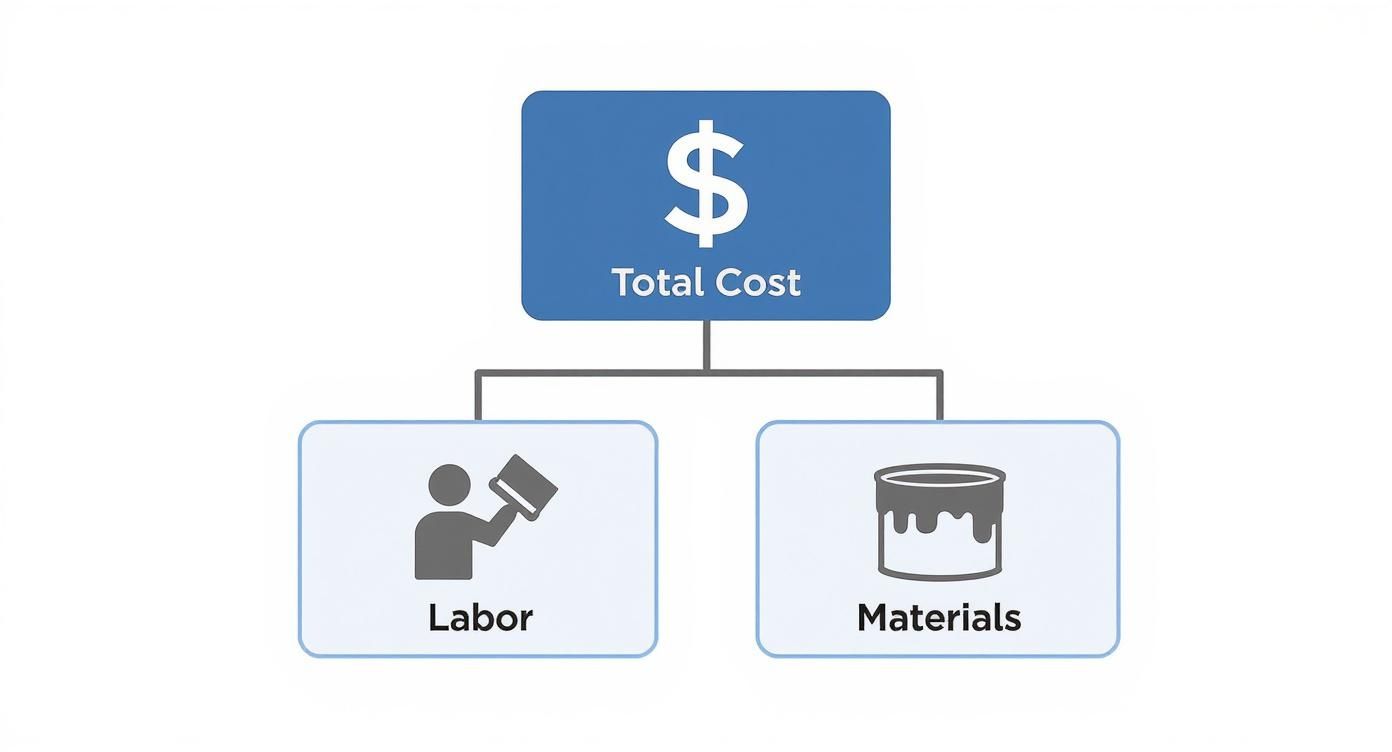
Think of your total cost as a direct result of the time and skill a project demands (labour) combined with the quality of the products used (materials).
Surface Condition and Prep Work
If there's one thing that can inflate your labour costs, it's the current state of your walls and ceilings. A painter can't just slap a new colour over damaged surfaces and call it a day—at least, not if you want it to look good and last. The real work, and where a huge chunk of the hours are spent, is in the preparation.
It’s like trying to build a house on a shaky foundation. If you don't fix the underlying problems first, everything you put on top will eventually fail.
Here’s what that prep phase usually involves:
- Drywall Repair: This is the basic stuff—filling old nail holes, patching dings from moving furniture, and fixing settlement cracks. But if you have more serious issues like water damage or big holes, that’s a whole other level. It might mean cutting out drywall, putting in a new piece, taping, mudding, and sanding it all down until it's invisible.
- Sanding and Smoothing: Little bumps and old paint drips might not seem like a big deal now, but they'll stick out like a sore thumb under a fresh coat of paint. Pros will meticulously sand everything down to get a perfectly uniform surface.
- Cleaning: You'd be surprised how much dust, grease, and grime builds up on walls, especially in kitchens. Paint simply won’t stick to a dirty surface, so a thorough cleaning is non-negotiable if you want to avoid peeling down the road.
A brand-new condo with pristine walls might need very little prep, keeping labour costs lean. On the other hand, a century home with layers of old paint and a lifetime of wear and tear will need a lot more TLC, which directly translates to a higher final bill.
Project Complexity and Architectural Details
A simple, boxy bedroom is one thing. A living room with a vaulted ceiling, crown moulding, and a wall of windows is another beast entirely. The more complex your space, the more time it takes to painstakingly cut in all the edges, tape off trim, and navigate around obstacles.
This is where you really see the difference between a rush job and true craftsmanship. Those perfectly crisp lines along the ceiling don't happen by accident; they take skill and, most importantly, time.
These features add to a project's complexity:
- Wall and Ceiling Height: Your standard 8-foot ceiling is no problem. But once you get to 10, 12, or even 20-foot ceilings, you're talking about special ladders, scaffolding, and extra safety measures. That all adds to the time and cost.
- Trim, Moulding, and Windows: Every single piece of detailed crown moulding, wainscoting, or baseboard adds to the job. Each window frame and door frame needs to be carefully prepped and painted around, which is a slow, meticulous process.
- Built-ins and Obstacles: Got a fireplace, built-in bookshelves, or custom cabinetry? Painters have to work around these things with precision, which takes a lot more time than painting a long, flat wall.
Colour Choices and Paint Quality
Finally, the paint itself plays a role in the final price—and not just because of the cost per can. The real impact often comes from the extra labour your choices create.
For instance, making a dramatic colour change is a big undertaking. Going from a deep, moody blue to a light and airy off-white will almost certainly require a high-quality primer and likely more than the standard two topcoats to get solid, even coverage. Every extra coat adds to both the material and labour lines on your invoice.
Choosing the right colour is also crucial to avoid common interior design regrets that you might have to live with for years.
The finish you choose matters, too. High-gloss paints are notoriously unforgiving; they highlight every tiny flaw on a wall. This means the prep work has to be absolutely perfect, pushing painters to spend even more time sanding and smoothing to get a glass-like finish. By understanding these factors, you can walk into a consultation with a much clearer picture of the true cost of house painting interior work and have a more productive chat with the best painters in the GTA.
Room by Room Painting Cost Estimates
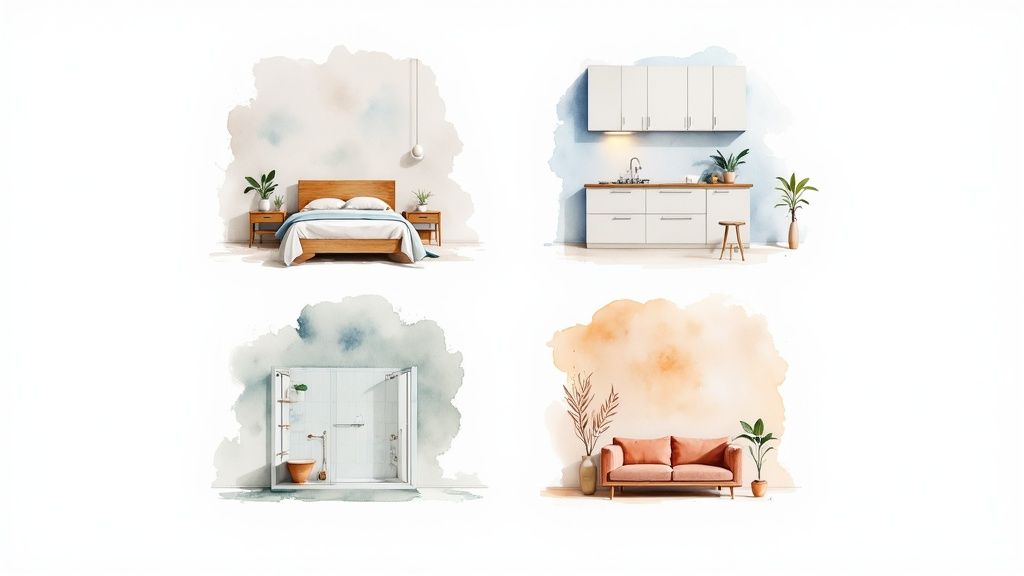
While broad-stroke estimates are a decent starting point, the real planning happens when you get down to the nitty-gritty of each room. The cost of house painting interior work is anything but one-size-fits-all. A simple, square bedroom in Mississauga will carry a much different price tag than a large kitchen with custom millwork in downtown Toronto.
Let's break down what you can realistically expect to budget for different rooms in a typical GTA home. Every space has its own quirks and challenges that influence both the hours a painter spends and the materials they need. Looking at things room by room helps you understand the why behind the numbers.
The Standard Bedroom Estimate
Bedrooms are often the most straightforward paint job in a house, which makes them a perfect baseline for understanding costs. Their structure is usually simple, rectangular spaces with standard-height ceilings and fewer obstacles to work around.
For a typical 12'x12' bedroom, homeowners in the GTA can expect the cost to land somewhere between $700 and $1,200. This estimate usually includes the full prep work, two coats of quality paint on the walls, and a fresh coat for the ceiling and trim. Of course, if your walls need significant repairs or you want to add a few accent colours, that number will shift.
It's also helpful to remember that a new coat of paint is often just one piece of a bigger puzzle. To see how painting fits into the broader financial picture of a complete refresh, checking out a guide on the cost to renovate a bedroom can give you a more holistic view.
The Living Room And Common Areas
Living rooms are the heart of the home, but their grander scale and architectural details often make them more complex to paint. These larger spaces frequently feature higher ceilings, more windows, and special touches like crown moulding or fireplace mantels that demand a meticulous hand.
For a standard living room around 16'x20', you should budget anywhere from $1,000 to $2,500, sometimes more.
So, what causes such a wide price range? A few things:
- Ceiling Height: Vaulted or two-storey ceilings are a major factor. They require scaffolding and a lot more time, which drives up labour costs significantly.
- Architectural Details: Intricate trim, multiple doorways, and large window frames mean more time spent on the painstaking "cutting in" process.
- Open-Concept Layouts: Painting an open-plan living area often means the job bleeds into adjoining hallways or dining rooms, naturally expanding the project's scope.
The investment in a professionally painted living area offers a substantial return, not just in aesthetics but in property value. It's the first impression guests have and a space where quality truly shows.
The Kitchen Painting Challenge
Kitchens might be smaller than living rooms, but they are often one of the most labour-intensive spaces for a painter. The sheer number of obstacles is the main culprit. Think about all the things to work around: cabinets, backsplashes, appliances, and light fixtures. There’s very little open wall space where a painter can just use a roller freely.
Professionals spend a huge chunk of their time carefully taping and cutting in around every single element. For a standard-sized kitchen, the cost typically falls between $800 and $2,000. The higher end of that scale usually reflects the extra time needed to work around complex cabinet layouts or ceilings dotted with pot lights.
On top of that, kitchens demand a durable, washable paint that can handle grease and moisture, which comes at a slightly higher price point. Getting a detailed breakdown of the cost to paint a room can shed even more light on these variables.
Bathroom Painting Considerations
Like kitchens, bathrooms pack a ton of complexity into a small footprint. Working around vanities, mirrors, showers, and toilets requires a steady, precise hand. The biggest cost driver here, however, is the type of paint you need.
Because of the constant high humidity, bathrooms require specialty paints formulated with mould and mildew inhibitors. This isn't a corner you want to cut. These premium paints are essential for a long-lasting finish and are priced higher than standard interior emulsions. For a small powder room or a standard full bathroom, the cost typically lands between $400 and $1,000.
GTA Cost Comparison by Room Type
To help you visualize these differences, here’s a quick comparison of what you might expect to pay for various rooms across the Greater Toronto Area. This table breaks down the typical costs and highlights the specific factors that influence the final price for each space.
| Room Type | Typical Dimensions | Estimated Cost Range (CAD) | Key Cost Factors |
|---|---|---|---|
| Bedroom | 12' x 12' | $700 – $1,200 | Generally straightforward; costs rise with accent walls or repairs. |
| Living Room | 16' x 20' | $1,000 – $2,500+ | High ceilings, crown moulding, and open-concept layouts increase complexity. |
| Kitchen | 10' x 15' | $800 – $2,000 | Labour-intensive due to cabinets, appliances, and detailed cutting-in. |
| Bathroom | 5' x 8' | $400 – $1,000 | Requires specialty mould-resistant paint; intricate work around fixtures. |
As you can see, the size of the room is just one part of the equation. The specific features and conditions of each space play a huge role in determining the final quote from a professional painter.
How to Find the Best Painter in the GTA
In a bustling market like Toronto or Mississauga, picking the right painter involves a lot more than just finding the lowest price. Think of it as an investment in your home. The best professionals ensure the job looks fantastic and lasts for years, saving you the expense of a do-over. If you are looking for painters "near me," finding the best value is key.
A suspiciously cheap quote can be a major red flag. It often points to corners being cut, whether with low-grade materials or a lack of proper insurance. Learning how to properly vet potential painters is the secret to protecting your home and making sure the cost of house painting interior work buys you real quality and peace of mind.
Vetting Contractors Like a Pro
The first step to finding the best painter is to look past their portfolio. Pictures are nice, but they don't tell the whole story about a contractor's reliability or professionalism. You need to dig a bit deeper. I always recommend starting with a shortlist of three or four reputable painting companies in your area.
Once you’ve got a few names, it’s time to check their credentials. A true professional will have no problem showing you proof of their qualifications; in fact, they’ll probably be proud to do so. This is your best defence against hiring someone who might leave you with a mess or, even worse, a worksite accident that you could be held liable for.
Don't just take their word for it—ask for the paperwork. A legitimate business will readily provide proof of insurance and WSIB coverage. If a contractor gets defensive or makes excuses, that's your cue to walk away.
This level of due diligence isn’t just a local quirk; it's a standard practice for protecting homeowners everywhere. For example, our counterparts in major U.S. markets face similar requirements. In Los Angeles, the California Contractors State License Board requires homeowners to verify a contractor's licence and insurance before any work starts. You can discover more insights on how homeowners there estimate painting costs and see how these standards work to protect them.
Insurance and WSIB: The Non-Negotiables
Here in Ontario, two documents are absolutely critical: liability insurance and Workplace Safety and Insurance Board (WSIB) coverage. These aren’t just nice-to-haves; they are essential protections for you, the homeowner.
-
Liability Insurance: This is what protects your property. If a painter accidentally spills a gallon of paint on your brand-new hardwood or damages a piece of furniture, their liability insurance covers the cost to fix or replace it. Without it, you could be stuck with the bill for their mistake.
-
WSIB Coverage: This is just as vital. It protects you in the unfortunate event that a worker gets injured on your property. If you hire a painter who isn't covered by WSIB and they fall off a ladder, you could find yourself financially responsible for their medical bills and lost wages. Always, always ask to see a current WSIB clearance certificate.
The Power of Multiple, Itemized Quotes
Never, ever accept the first quote that comes your way. The gold standard is to get at least three detailed, itemized quotes from different companies. This lets you compare more than just the bottom-line price; it gives you a clear picture of what each painter is actually proposing to do.
A vague quote with just a single total price is another red flag. A professional, transparent quote should break everything down for you, including:
- The specific rooms or areas to be painted
- A clear outline of the prep work (like drywall repair, sanding, and priming)
- The exact brand and type of paint and primer they plan to use
- How many coats of paint will be applied
- A clear split between labour and material costs
When you compare these detailed documents side-by-side, you can see exactly what your money is buying. You might discover that the cheapest quote skimps on prep work or uses bottom-shelf paint, which will only end up costing you more in the long run.
To get a head start, you can check out a list of vetted local painters who already meet these professional standards. By taking this structured approach, you can confidently hire a painter who will deliver a beautiful, long-lasting finish that’s worth every penny.
Common Questions About Interior Painting Costs
When you start thinking about a painting project, a lot of questions pop up. It’s completely normal. To help you get a clearer picture, we’ve put together answers to some of the most common questions we hear from homeowners across Toronto and Mississauga about interior painting costs.
How Much to Paint a 2000 Sq Ft House Interior in the GTA?
This is the big one. For a full interior repaint of a 2,000 sq ft house in the GTA, you should probably budget somewhere between $8,000 and $15,000+. It's a wide range, but this objective figure comes down to the specifics of your home.
That estimate generally includes all the essentials: walls, ceilings, trim, and doors. The lower end of that scale, around $8,000, usually applies to a straightforward job—think standard 8-foot ceilings, walls in pretty good shape, and quality mid-grade paints.
The price starts climbing toward that $15,000 mark (or even higher) when things get more complex. Factors that push the cost up include:
- High Ceilings: Anything over 10 feet, especially vaulted ceilings, requires more time, specialized equipment like taller ladders or scaffolding, and extra labour.
- Serious Prep Work: If your walls need a lot of love—like significant drywall repair, patching tons of nail holes, or sanding down old textures—that prep time adds up.
- Detailed Features: Ornate crown moulding, wainscoting, or lots of windows and frames mean more meticulous cutting-in, which is time-intensive work.
- Premium Paints: Opting for high-end or specialty finishes will naturally increase the material costs.
Because every home is unique, an itemized quote is the only way to get a truly accurate price. For a deeper dive into these numbers, check out our guide on the painting rate per square foot.
Is It Cheaper to Paint One Room or the Whole House?
On a per-room basis, it is almost always more cost-effective to paint your entire house at once. While the total bill is obviously larger for a whole-home project, the cost per room drops significantly.
Think about it from a painter's perspective. It’s all about workflow efficiency. When a crew is on-site for a multi-room job, they set up their equipment once. They prep and clean up in one go. They can move smoothly from one space to the next without the stop-and-start of separate, smaller jobs.
Many of the best painters in the GTA will offer a better rate for bigger projects precisely because of these efficiencies. When they can maximize their time on-site, those savings are often passed directly on to you.
Do I Need to Move Furniture Before Painters Arrive?
This is a great question, and the answer is usually a bit of both. Most professional painters will expect you to handle the smaller things—think picture frames, knick-knacks, lamps, and any fragile items. Getting those out of the way clears the path.
However, when it comes to the big, heavy stuff like sofas, beds, and dressers, the crew typically takes care of it. Their standard process is to move these larger pieces into the centre of the room and cover them meticulously with plastic sheeting to protect them from dust and paint.
It’s always a good idea to confirm this with your painter beforehand and get it in writing in the contract. Some companies might charge a little extra if they have to move an unusual amount of furniture, so clearing what you can yourself is a good way to keep the project on track and on budget.
Does the Choice of Paint Finish Affect the Price?
Yes, absolutely. The paint finish you select can influence both material and labour costs. Sheen has a direct impact on the price per gallon; high-gloss or semi-gloss paints are generally more expensive than their flat or matte counterparts.
The real difference, though, often comes down to labour. Glossy finishes are famously unforgiving. They reflect light in a way that highlights every single imperfection on a wall. A tiny bump or a slight texture that would be invisible with a matte paint will suddenly stand out like a sore thumb under a gloss.
This means your painter has to put in significantly more time and effort on surface preparation. To get that smooth, mirror-like finish, they'll need to meticulously patch, sand, and prime the walls to create a flawless canvas. That extra labour directly translates to a higher final cost for the job.
Ready to transform your home with a fresh coat of paint? The team at Soca Services Painting provides detailed, transparent quotes and exceptional craftsmanship for homeowners across the GTA. Get your free estimate today and let us bring your vision to life.


One Comment