


Let’s be honest, picking the right house interior painter is a huge deal. It’s arguably more important than the paint colour you’ve been agonizing over for weeks. This isn’t just about slapping some paint on a wall; it’s about finding the best professional in Toronto and the GTA who will completely transform your space.
Why the Painter Matters More Than the Paint
You can spend a fortune on the highest-quality paint, but if the person applying it cuts corners, you’ll be left with a mess. The real difference between a seasoned pro and a weekend warrior comes down to the details: the painstaking prep work, those razor-sharp cut-in lines along the ceiling, and the simple respect they show for your home.
The best house interior painter brings years of experience to the table, and that experience is what prevents common disasters like peeling paint, blotchy finishes, or that dreaded splatter on your floors and trim. They’re not just there to add colour; their objective is a flawless, durable finish that actually increases your home’s value.
Here’s something most people don’t realise: The best painter will spend as much as 70% of their time on preparation—sanding, patching, cleaning, and priming. That unseen work is the secret to a stunning, long-lasting result.
Think of it this way: the best paint in the world will fail on a poorly prepped surface. On the other hand, a skilled painter can make even a standard-grade paint look absolutely incredible.
So, whether you’re vetting painters for a big job in Mississauga or just need a refresh for your downtown Toronto condo, this objective guide will walk you through finding a craftsperson who gets it. We’ll give you the tools and knowledge you need to feel confident and in control, making sure you hire the absolute best person for your project in the GTA.
How to Find and Vet the Best Painters in the GTA

Finding a painter you can trust involves more than just a quick search for a “house interior painter near me.” The objective is to create a shortlist of 3-5 solid contenders. To do that, you need to tap into local sources where a company’s reputation is built on real-world results, not just search engine rankings.
Start where your neighbours are. Local Facebook groups for Toronto, Mississauga, or your specific neighbourhood are goldmines for honest feedback from people nearby. I also point clients toward Canadian-focused sites like HomeStars and Houzz, which are packed with detailed reviews and project photos from right here in the GTA.
These platforms are just your starting point. The real work is in the vetting. Don’t just look at the star ratings; dive into the comments. Look for patterns. Are people consistently mentioning the crew’s professionalism, how clean they kept the site, and their communication skills? Those are the details that separate a decent paint job from the best experience.
Digging Deeper Than Reviews
With a few names in hand, it’s time to play detective. A painter’s portfolio is their visual resume. Look past the pretty colours and focus on the craftsmanship. Are the lines razor-sharp where the wall meets the ceiling? Are the finishes on the trim perfectly smooth? High-quality, close-up photos are a sign of confidence; blurry, distant shots can hide sloppy work.
Next comes the non-negotiable part: checking their credentials. Any legitimate painter in Ontario must have:
- WSIB Coverage: This is your protection. If a painter gets injured on your property, WSIB (Workplace Safety and Insurance Board) coverage means you aren’t liable. Ask to see their clearance certificate.
- Liability Insurance: This covers accidental damage—think a spilled can of paint on your new hardwood or a ladder scuffing a wall. The industry standard is a minimum of $2 million in coverage.
Don’t ever feel awkward about asking for proof of WSIB coverage and liability insurance. The best professionals will have these documents ready to go and will be happy to share them. If they hesitate or make excuses, that’s a serious red flag. Walk away.
There’s a reason it’s so important to be thorough. The demand for skilled tradespeople is huge, and painting is a massive industry. To give you some perspective, the market for painters in a region like California is projected to hit around $6.0 billion by 2025, largely thanks to a bustling housing market. You can learn more about the scale of the painting industry and its economic footprint. With a market that large, your objective is to find the true professionals who stand out.
Cracking the Code: How to Read a Painting Quote Like a Pro
Getting a few quotes is easy. The tricky part is figuring out what they actually mean. A quote is much more than a price tag; it’s the blueprint for your project and your best defence against surprise costs later.
I’ve seen it time and time again: the cheapest quote is almost never the best deal. A shockingly low price usually means something important has been cut, whether it’s the painstaking prep work, the quality of the paint itself, or even essential insurance coverage. To properly compare quotes from different painters in Toronto or Mississauga, you have to make sure you’re comparing apples to apples.
Think of a good quote as a project roadmap. Vague lines like “paint two rooms” are a massive red flag. That kind of ambiguity is where hidden fees for “extras”—things that should have been standard—love to hide.
What a Rock-Solid Quote Looks Like
Any professional painter worth their salt will provide a quote that leaves no room for questions. You shouldn’t have to chase them down for details. The best crews in the GTA lay it all out for you from the get-go.
Here’s what you should demand to see in writing:
- The Nitty-Gritty on Prep Work: This is where great paint jobs are made or broken. The quote should explicitly mention filling nail holes, sanding scuffs, caulking gaps in trim, and applying the right primer.
- Paint and Materials by Name: A vague promise of “high-quality paint” isn’t good enough. It needs to list the brand, the specific product line, and the finish (e.g., Benjamin Moore Regal Select, Eggshell finish).
- A Crystal-Clear Scope: Every single surface getting a coat of paint should be listed—walls, ceilings, trim, doors, closets—along with how many coats are planned for each.
- Timeline and Labour Breakdown: You need a clear start and estimated completion date. Labour is the biggest chunk of the cost, so it should be clearly itemized. To get a feel for what’s reasonable, it helps to understand that painter wages can vary widely based on experience and the complexity of the job. You can see typical painter compensation rates to get a general idea of the labour market.
A quick word of advice: be wary of anyone pushing for a cash deal to “save you the tax” or using high-pressure sales tactics. The best painters will give you a detailed quote and the space to review it properly. The real value is in the quality of the work, not a rushed, cut-rate price.
Seeing how different painters present their quotes can be eye-opening. A detailed, transparent quote shows professionalism, while a vague one is often a sign of corners being cut.
Comparing House Interior Painter Quotes
| Feature | Painter A (Best Quote) | Painter B (Vague Quote) |
|---|---|---|
| Preparation | “Fill all nail holes, sand walls, caulk all baseboards and window trim, and apply one coat of primer to repaired areas.” | “Prep walls for painting.” |
| Paint Specified | “Benjamin Moore Aura, Eggshell finish on walls. Advance Semi-Gloss on trim. 2 coats on all surfaces.” | “Use high-quality paint. Two coats.” |
| Scope of Work | “Paint walls, ceilings, and trim in living room (12’x15′) and hallway (4’x10′). Includes 2 doors and 4 window frames.” | “Paint living room and hallway.” |
| Total Cost | “$2,850 + HST (Labour: $1,900, Materials: $950)” | “$2,100 (cash price)” |
As you can see, Painter A’s quote tells you exactly what you’re paying for, ensuring a professional result. Painter B’s quote is a gamble that could easily lead to extra charges and a disappointing finish.
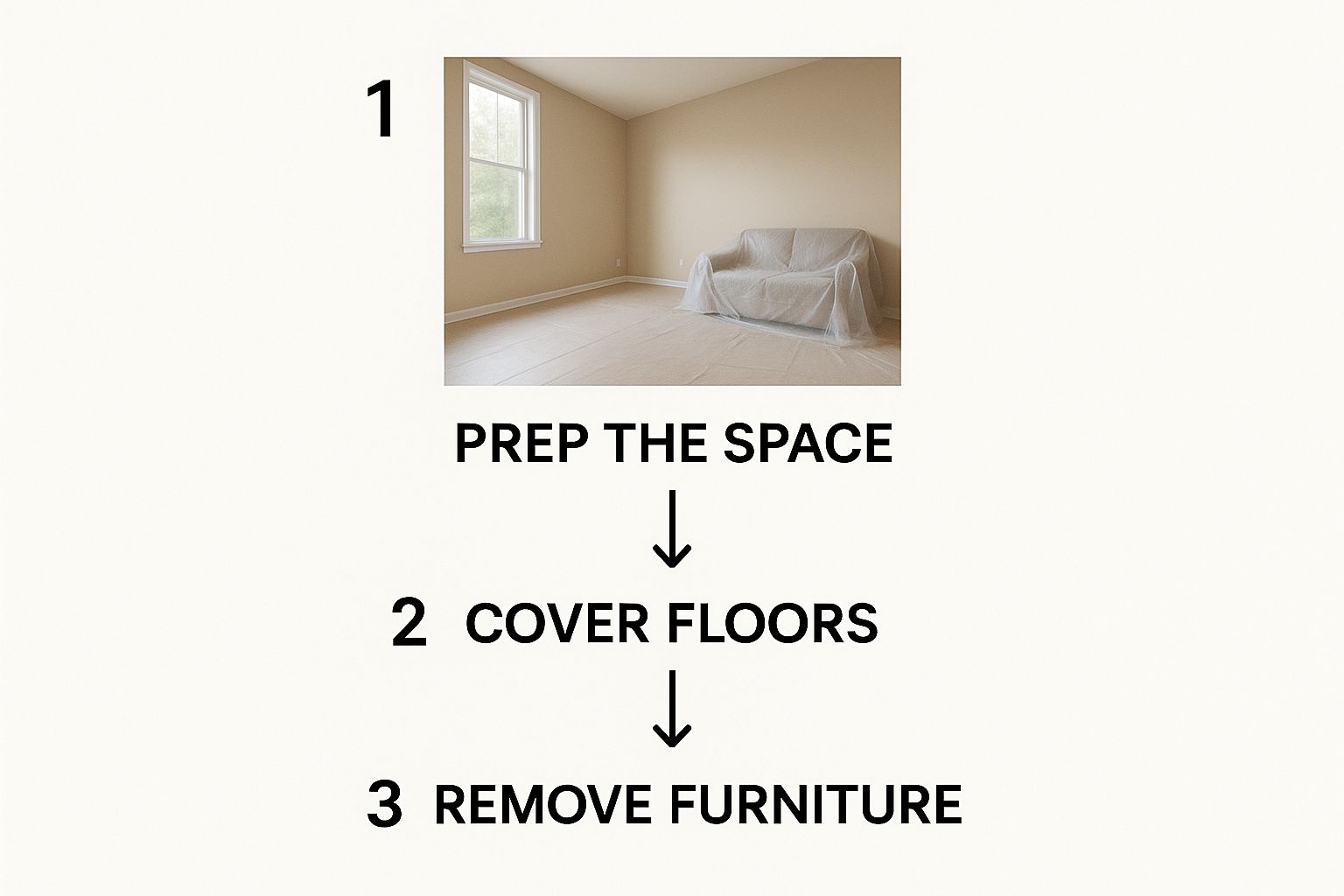
This image perfectly illustrates the foundational step every professional painter takes before a single can of paint is opened: meticulous preparation. It’s the non-negotiable first phase of any high-quality interior painting project.
Setting Your Project Up for Success
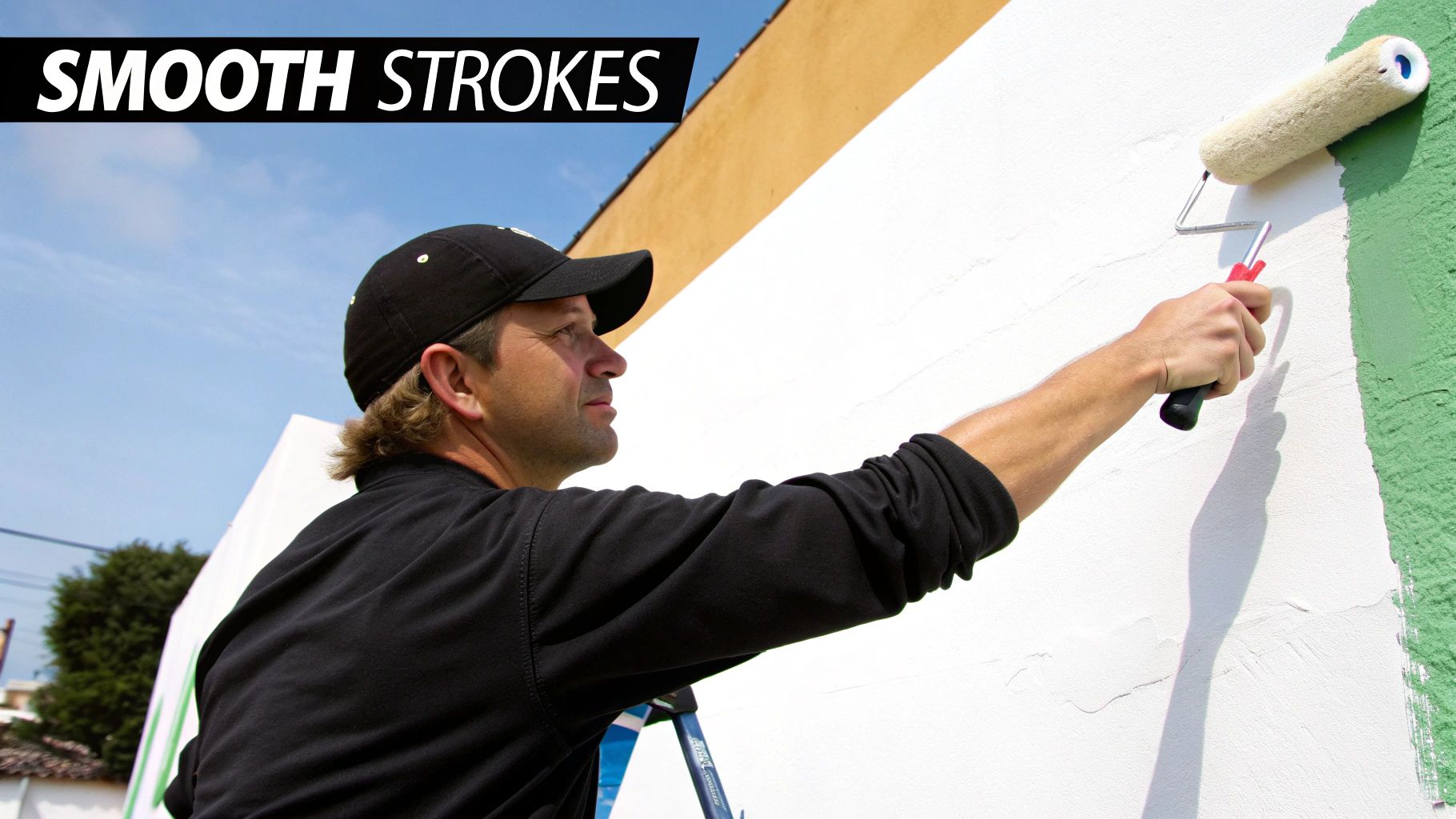
You’ve done the hard part and selected your house interior painter. Now, it’s a partnership. A little prep work on your end can make a world of difference, allowing the crew to hit the ground running and finish your project on time.
Think of it this way: your main objective is to create a clear, accessible workspace. You’re not expected to do the heavy lifting, but taking a few simple steps beforehand ensures a much smoother process for everyone.
Plus, getting your things out of the way is the best way to protect them. Professionals are always careful, but moving your own valuables out of the work zone gives you complete peace of mind.
Your Pre-Painting Checklist
Before the painters show up with their gear, it’s a great idea to run through a quick to-do list. This helps prevent any day-one delays and lets the team get straight to the prep and painting.
- Clear the Walls and Surfaces: Take down all your pictures, artwork, mirrors, and curtains. It’s also a good idea to clear off any shelves or mantels.
- Move Small Furniture: Your painters will likely handle the big, heavy pieces like sofas and beds. You can give them a huge head start by moving smaller items—think end tables, floor lamps, and dining chairs—into another room.
- Secure Valuables: Pack away any fragile heirlooms, electronics, or irreplaceable items. Find a safe spot for them in a room that isn’t on the painting schedule.
- Create a Staging Area: If you have the space, clearing a spot in the garage or a spare room gives the crew a dedicated place to keep their tools and supplies organized and out of the way.
Getting this stuff done ensures the team can focus entirely on what you hired them for: delivering that perfect, professional finish.
A quick chat before the first brushstroke is just as crucial as prepping the room. Confirm start times, figure out how the crew will get in if you’re out, and make a plan for your pets so they stay safe and stress-free.
This kind of open communication is key. It’s also helpful to be aware of the bigger picture influencing the industry, like the increasing demand for sustainable materials. For example, in competitive real estate markets like the GTA, homeowners often choose upgrades like low-VOC paints to boost their property’s value and appeal. You can dig deeper into how market conditions influence painting trends to see what’s popular right now.
Here’s the rewritten section, crafted to sound human-written, natural, and expert-driven.
From First Brushstroke to Final Walkthrough
So, your home is prepped and the crew has arrived. This is where the magic happens. A professional team doesn’t just start slapping paint on walls; there’s a method to the madness. They’ll typically start from the top down—ceilings first, then walls, and finally, the detailed work on trim and doors. This systematic approach is all about efficiency and getting those razor-sharp lines without drips.
While the project is in full swing, it’s best to give the painters their space. You hired a pro for a reason, so trust their process. Popping in for a quick chat at the end of the day is perfectly fine to see how things are progressing, but constantly looking over their shoulder can really slow things down.
Of course, if something catches your eye—maybe a colour looks a bit different in the evening light than you’d imagined—don’t hesitate to mention it. A good painter would much rather have a quick conversation and fix a small issue early on than deal with a bigger problem later. Clear communication is key.
The All-Important Final Walkthrough
The tarps are gone and the brushes are clean, but the job isn’t truly done until you’ve completed the final walkthrough. This is your moment to make sure everything is up to the standard you agreed upon. Whatever you do, don’t rush it.
I always recommend doing this during the day when the natural light is best. Grab a notepad or use your phone and go through everything with a fine-toothed comb. This is your last chance to spot any issues before you sign off and make that final payment.
Here’s what I tell my clients to look for:
- Coverage and Consistency: Stand back and look at the walls from different angles. You’re searching for any streaks, thin patches, or roller marks that break up the uniform colour.
- Clean Lines: Get up close and inspect the “cut-in” lines where the walls meet the ceiling, baseboards, and door frames. They should be crisp and straight, with no paint bleeding onto the trim.
- Trim and Doors: These high-traffic areas need a durable, smooth finish. Run your hand over them (once dry, of course!) and look for any drips, obvious brush strokes, or missed spots. Don’t forget to check the edges of doors.
- General Cleanliness: A true professional leaves the job site spotless. Check for any stray paint splatters on your floors, light fixtures, or window panes. They should leave your home looking better than when they found it.
A thorough final inspection is non-negotiable. It’s your quality control, confirming that the work meets your expectations and protecting your investment. This is what gives you the peace of mind to sign off on the project, whether your painter is in Toronto or Mississauga, and truly enjoy your newly transformed space.
Your Top Questions About Hiring Toronto Painters, Answered
When you’re looking to hire a painter for your home, a few questions always seem to pop up. Whether you’re in a downtown Toronto condo or a house in Mississauga, getting clear answers is the best way to feel good about your decision.
How Long Will This Actually Take?
This is probably the number one question we get. A good rule of thumb is that a single, standard bedroom will usually take 1-2 days from start to finish, and that includes all the prep work.
For a larger project, like a whole 2,000 sq ft house, you’re likely looking at 4-7 days. The best house interior painter will give you a specific timeline in their written quote after they’ve seen the space in person.
Can I Save Money By Buying My Own Paint?
It seems like a good way to cut costs, but buying the paint yourself is almost never a good idea. Professional painters get deep trade discounts on high-quality paints that you simply can’t find at a regular retail store.
Even more importantly, when the painter supplies the paint, they are on the hook for its performance. If something goes wrong with the finish, it’s their responsibility to fix it, not yours.
Getting a Proper Quote and Sorting Out the Details
It’s crucial to understand the difference between an estimate and a quote. An estimate is just a ballpark figure, maybe something you get over the phone. A quote, on the other hand, is a firm price that a painter provides after they’ve come to your home and assessed the job properly. Always, always get a detailed written quote.
And what about all your furniture? Most professional crews will move the heavy stuff—like couches and entertainment units—to the centre of the room and cover everything with plastic.
Make sure the plan for moving and covering furniture is spelled out in your quote. Getting this confirmed upfront is a sign of a true professional and makes sure there are no surprises on the first day of painting.
It’s a simple step that gets everyone on the same page and sets the stage for a project that runs smoothly from the get-go.
Ready to transform your space with a flawless, professional finish? Trust Soca Services, one of the best house interior painter teams in the GTA, to bring your vision to life with expert craftsmanship and attention to detail. Get your free, no-obligation quote today!




5 Comments