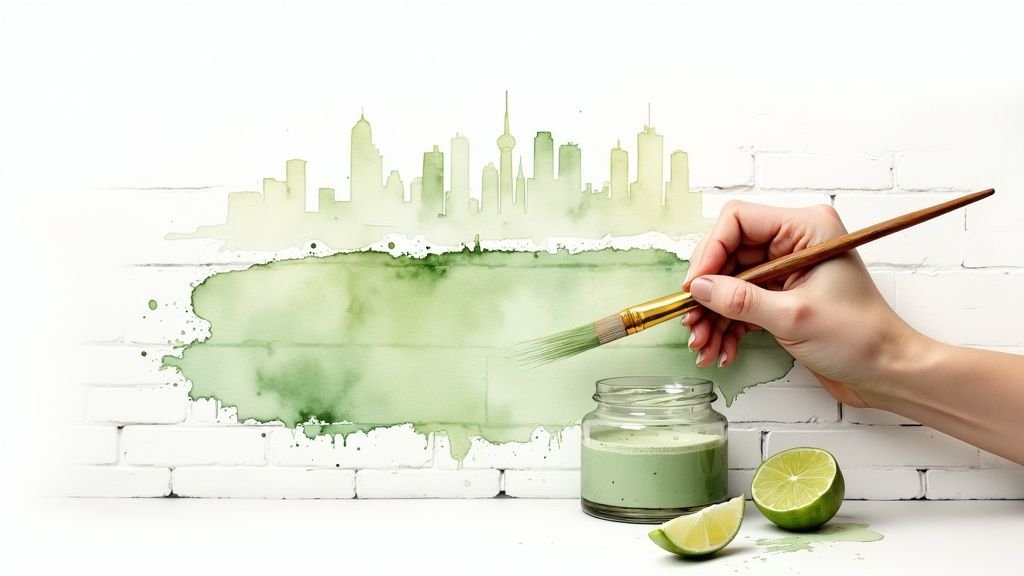
Limewash paint is a classic, timeless finish that’s made from slaked lime, water, and natural pigments. The result is a beautifully soft, suede-like texture filled with subtle shifts in tone. Unlike modern paints that just sit on top of your walls like a film, limewash actually soaks into porous surfaces. It becomes one with the wall, creating an organic look you just can't get anywhere else.
What Is Limewash Paint and Why Is It So Popular in the GTA?
Picture a wall that doesn't just display a colour, but also tells a story through its depth and movement. That’s the heart of what limewash paint does. It’s an age-old, mineral-based coating that’s been around for centuries, celebrated for the luminous, chalky matte finish it creates. Its magic lies in its chemistry; the paint reacts with carbon dioxide in the air, curing into a durable layer of limestone that is both stunning and practical.
This ancient technique is making a huge comeback, especially in style-conscious areas like Toronto and Mississauga. Homeowners throughout the GTA are turning away from flat, one-dimensional walls, looking instead for finishes that bring character and a sense of calm into their homes. The charm of limewash is its perfect imperfection—those subtle variations and soft brushstrokes that no conventional paint can replicate.
The Practical Appeal of Limewash
The growing popularity of limewash isn't just about its aesthetic. Its practical qualities make it one of the best choices for a healthy, dynamic home. A key difference from acrylic paints is that limewash is breathable, meaning it allows moisture to evaporate right through the wall. This is a massive plus for preventing problems like mould and mildew, particularly in older builds.
Its natural composition brings a few other great benefits:
- Eco-Friendly: Limewash is made from natural, non-toxic materials and has zero VOCs (volatile organic compounds), which is great for your indoor air quality.
- Unique Texture: The way it's applied, typically with a special cross-hatch brushstroke, gives it a soft, almost cloud-like effect with incredible depth.
- Durability: Limewash doesn’t peel. Instead, it ages gracefully, developing a beautiful patina over time that only enhances its character.
Choosing the Right Finish
Getting a feel for the unique properties of limewash is the first step in creating the look you want. Since it’s such a distinct type of paint, pairing your knowledge with a general guide to choosing paint colors can help round out your decision-making.
For those looking for local expertise to ensure a flawless project, finding the best professional is crucial. You can explore a detailed overview of limewash painting services in Toronto and the GTA to see exactly how this incredible finish can transform your space.
The Unique Advantages of Using Limewash in Your Home
When you choose limewash, you're getting so much more than its beautiful, chalky finish. For anyone in the Toronto area concerned about creating a healthy, high-quality home environment, the reasons to use it are compelling, starting with what it doesn't have.
Limewash is famous for being a completely zero-VOC (volatile organic compound) paint. That makes it one of the cleanest, safest options you can put on your walls, especially when it comes to your family's indoor air quality.
Unlike modern paints that essentially wrap your walls in a plastic-like film, limewash is naturally breathable. It works more like a high-tech fabric, allowing moisture vapour to easily pass through and escape instead of getting trapped. This is a huge plus, particularly in older homes near you that can struggle with dampness.
Practical and Protective Qualities
The benefits are baked right into the paint's chemistry. Limewash has a naturally high pH, which creates an alkaline surface where mould and mildew simply can't get a foothold. This alone makes it a fantastic choice for any room where you want to promote a healthier atmosphere.
It's also incredibly durable, but not in the way you might think. Because limewash penetrates into porous surfaces and hardens through a chemical reaction with the air, it becomes one with the wall. This means no peeling or chipping like you'd get from a typical latex paint.
Instead, limewash ages beautifully, developing a soft, mellowed patina over time that adds a ton of character to a space. Many people use this unique quality to create stunning feature wall designs that become the centrepiece of a room.
Comparing Limewash Paint and Conventional Paint
To really see the difference, it helps to put limewash side-by-side with the paints most of us are used to. They are fundamentally different products, from their ingredients to how they perform on your walls.
| Feature | Limewash Paint | Conventional Paint (Latex/Acrylic) |
|---|---|---|
| Composition | Made from slaked lime, water, and natural pigments. | Synthetic polymers (acrylic, vinyl), solvents, and chemical pigments. |
| VOCs | Zero-VOC, no harmful off-gassing. | Can contain low to high levels of VOCs, which are released into the air. |
| Finish | Soft, matte, with subtle tonal variations and texture. | Uniform, consistent colour with sheens from flat to high-gloss. |
| Breathability | Highly breathable, allows moisture to evaporate. | Forms a non-porous film, trapping moisture. |
| Durability | Penetrates the surface; doesn't peel or chip. Ages into a patina. | Forms a surface layer that can peel, chip, or blister over time. |
| Health | Naturally antibacterial and mould-resistant due to high pH. | Often includes chemical biocides to resist mould growth. |
This comparison makes it clear that limewash offers a completely different approach to finishing your walls—one that prioritizes natural materials and long-term performance.
A Healthier Alternative to Modern Paints
Looking back at the history of paint really highlights why limewash is such a great choice today. Its decline in North America directly coincided with the rise of synthetic paints in the early 20th century. By the 1930s, lead-based and then acrylic paints took over the market, bringing volatile organic compounds right into our homes.
This shift away from simple, natural materials had real health consequences. It stands in stark contrast to the non-toxic nature of limewash, which is made from just lime and water.
Choosing limewash is not just an aesthetic decision; it's an investment in a durable, breathable, and fundamentally healthier home environment. It offers a finish that is as practical as it is beautiful, standing the test of time in both style and substance.
Preparing Walls for a Perfect Limewash Finish
A truly beautiful limewash finish is achieved long before you ever dip a brush into the paint. The prep work is where the magic really happens. Getting the walls ready is the single most important step, ensuring the limewash can bond properly and create that signature, velvety texture.
Think of it this way: regular paint sits on top of a wall, but limewash becomes part of it. It needs to sink in. This means your walls have to be clean, solid, and—most importantly—porous. Whether you're working with brand new drywall in a Toronto condo or historic plaster in an older home, the principle is the same.
Start with a simple wash-down using mild soap and water to get rid of any dust or grime, then rinse it clean. Once it’s dry, it’s time to hunt for imperfections.
Addressing Surface Imperfections
Small flaws have a way of showing up under a limewash finish, so you'll want to address them now. Carefully fill any cracks, holes, or dents with a good quality filler.
Once your patches have cured, sand them completely smooth until you can't feel the transition between the patch and the wall. You're aiming for a seamless, uniform surface. For a deeper dive into this, our guide on how to prep walls for painting has some great tips that are just as useful here.
The Non-Negotiable Step: Mineral Primer
This is the step that makes or breaks a limewash project. If your walls have any kind of standard latex or acrylic paint on them—and most walls in Mississauga and the GTA do—you must use a special mineral-based primer.
A standard primer is designed to seal a surface, making it non-porous. That's the exact opposite of what you need. Limewash will just slide right off. A dedicated mineral primer, on the other hand, creates a micro-porous surface with the perfect amount of "tooth" for the limewash to grab onto.
Trying to apply limewash directly over your typical wall paint will only lead to heartache. The finish will look streaky, it won't cure properly, and it could easily flake or rub off. The mineral primer is your bridge; it turns a modern, sealed wall into a surface that acts like the old-school plaster or masonry limewash was born to bond with.
One solid coat of the right primer is all it takes. Consider it your insurance policy for a durable, authentic finish that will look incredible for years to come. Once that primer is on and fully dry, your canvas is finally ready.
How to Apply Limewash for an Artisanal Look
With your walls perfectly prepped, you've reached the most rewarding part of the job—the application. This is where the true character of limewash paint comes alive, transforming a flat surface into a wall with depth, movement, and that coveted artisanal feel. The secret isn't about perfection; it's about embracing a specific, rhythmic technique.
First, let's talk tools. Your most important piece of gear is a large, natural-bristle brush, often called a block brush. These brushes are ideal because they hold the watery limewash mixture well and are just stiff enough to create the signature textures. It's best to steer clear of synthetic brushes, as they can't produce the same organic, nuanced effect.
Once you have your brush, it's time to mix the limewash. You're aiming for a consistency similar to whole milk—thin enough to soak into the primed wall but pigmented enough to build colour. Always give it a good stir before you start and periodically as you work, since the lime and pigments have a tendency to settle.
Mastering the Limewash Brushstroke
The key to that soft, cloud-like finish is all in how you apply it. Forget everything you know about the straight, uniform strokes of traditional painting. With limewash, you'll be using a cross-hatch pattern or what some call "cloud" motions.
This infographic outlines the foundational prep work, which is critical for setting the stage for a beautiful limewash application.
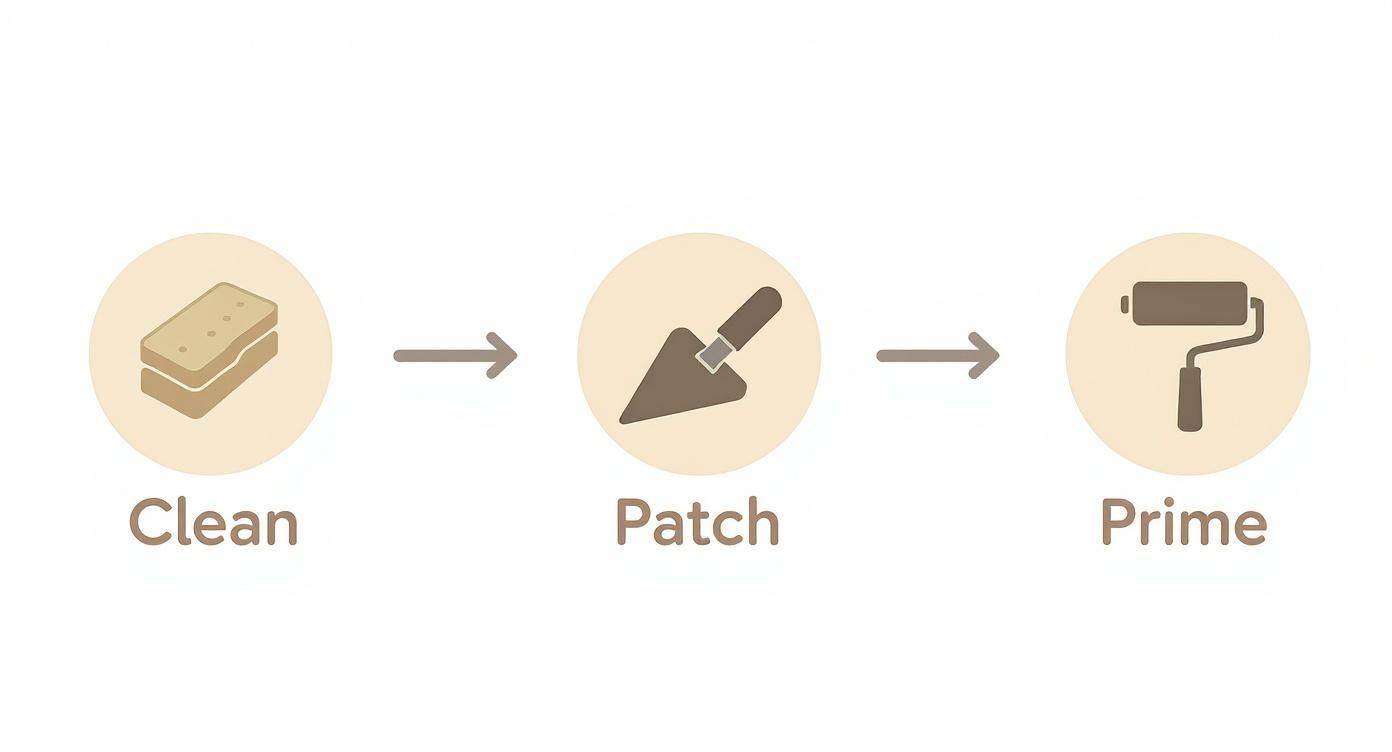
Each of these steps ensures the limewash can properly adhere and cure, which is essential for a durable, long-lasting finish.
To create the effect, work in small, manageable sections, making overlapping "X" shapes with your brush. Blend the edges as you go and always maintain a wet edge to avoid creating hard, visible lines where you stop and start. The goal here is to build up soft, mottled layers, not a solid block of colour. If you're new to decorative finishes, exploring other painting techniques for beginners can be a great way to get comfortable handling a brush.
Building Depth with Multiple Coats
When you put on that first coat of limewash, don't be alarmed. It's going to look translucent and maybe even a bit streaky. This is completely normal. The true colour and opacity only emerge as the paint cures and reacts with the air.
This is exactly why multiple thin coats are non-negotiable for achieving a rich, nuanced result. Most professionals recommend applying at least two to three thin coats to build up that lasting, velvety matte finish. The magic is in the chemistry: the limestone-based paint reacts with carbon dioxide in the air in a process called carbonation, which turns the lime into stable calcium carbonate. This reaction creates a remarkably durable, flexible, and breathable coating that helps regulate moisture in your walls.
A key piece of advice: Limewash dries significantly lighter than it looks when it's wet. Trust the process and let each coat dry completely before you judge the colour. A little patience is what creates the signature depth and movement that defines the whole limewash aesthetic.
Finding the Best Limewash Painters Near Me in Toronto and the GTA
Applying limewash is less of a painting job and more of an art form. Unlike a standard coat of latex paint, a genuine limewash finish demands a specific technique, the right tools, and an understanding of how the material cures. That’s why finding the best limewash painter in Toronto or Mississauga is about looking for an artisan, not just a general contractor.
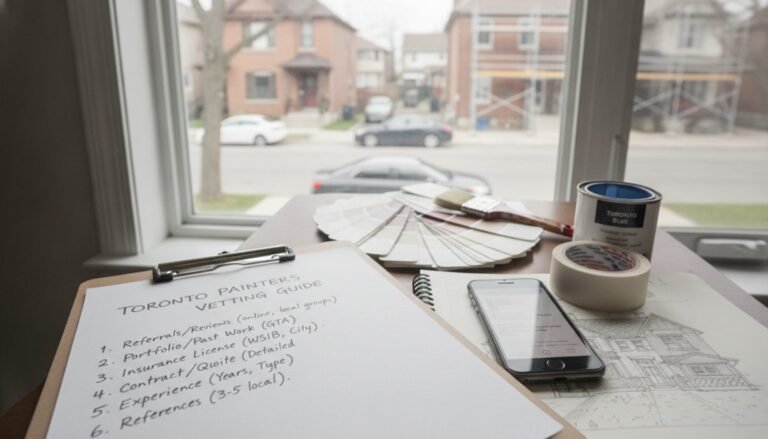
Your first step is to refine your search. Don't just google "painters near me." Get specific and look for professionals with a portfolio dedicated to limewash projects. Any painter can show you a flawlessly rolled wall, but a limewash specialist will have photos that highlight the soft, chalky texture and subtle depth that make this finish so unique. This visual evidence is your best clue to their expertise.
Vetting Potential Limewash Specialists
Once you have a shortlist of potential painters in the GTA, it’s time to dig a little deeper. You want to gauge their hands-on experience with this particular material. A true specialist will answer with confidence and detail, showing they know their craft far beyond a standard paint job.
Here are the best questions to ask:
- What’s your process for applying limewash over existing paint? A pro will immediately talk about using a specialized mineral primer. If they mention a standard primer—or worse, no primer at all—it's a massive red flag.
- Can I see some of your previous limewash work? Don't just glance at the photos; ask for close-ups. You're looking for those characteristic soft brushstrokes and the beautiful, subtle variations in colour.
- What kind of brush do you use for the application? An expert will mention a large, natural-bristle block brush. This is the essential tool for creating that signature cross-hatch or "cloudy" effect.
- How many coats do you usually apply? The right answer is almost always two to three thin coats. This is how they build depth and durability. If they say one coat, they likely don't have enough experience.
Hiring a painter without specific limewash experience is a big gamble. The application is unforgiving. Mistakes are not only obvious but can be costly and difficult to fix, often requiring you to prime the wall all over again and start from scratch.
By asking these targeted questions, you shift the conversation from a simple price quote to a meaningful discussion about technique. It helps you weed out the generalists and find a true artisan who appreciates the nuances of limewash paint. This is how you ensure you get the best, high-end finish you’re investing in.
To see what this level of craftsmanship looks like, you can browse the portfolios of established professional painters in Toronto who showcase this kind of specialized work.
Caring for and Maintaining Your Limewash Walls
Living with limewash paint is different from a standard painted wall. You need to treat it with a gentler hand, embracing its beautiful, organic character. Forget about aggressive scrubbing or harsh chemical cleaners—that's not how you care for this kind of finish.
Most of the time, a quick dusting with a soft, dry cloth is all it needs. If you notice a small smudge, try dabbing it gently with a lightly dampened cloth. Remember, dab, don't rub.
Handling Scuffs and Touch-Ups
Here’s where limewash really shines. One of its best features is how incredibly forgiving it is. Minor scuffs and marks don't spell disaster; in fact, they can often be blended away so seamlessly you’ll forget they were ever there.
Touching up a spot is surprisingly simple:
- First, mix a small amount of your leftover limewash. The goal is to get it to the exact same consistency you used for the original job.
- Next, grab a small brush and lightly feather the paint over the scuff, making sure to blend the edges into the surrounding wall.
- Finally, just let it cure. As it dries, the patch will meld perfectly with the existing finish, becoming virtually invisible.
The natural breathability of limewash is one of its most important qualities, a characteristic rooted in centuries of use. Unlike modern paints that create an impermeable film, limewash lets walls breathe. This allows them to manage moisture without trapping it, a quality that historically meant reapplications were common. You can explore the history of this breathable coating to get a fuller picture.
The most important thing for homeowners to understand is that limewash is meant to age gracefully. It will develop a unique patina over time, which is a celebrated part of its charm—not a defect.
This evolution is a feature, not a flaw. While limewash handles its own aging beautifully, if you encounter issues on other painted surfaces in your home, knowing how to fix peeling paint is always a handy skill to have.
Answering Your Limewash Questions
When you start looking into unique finishes like limewash paint, it’s natural to have a few questions. For homeowners in Toronto and Mississauga thinking about this beautiful, chalky look, getting the right answers is key to feeling good about your choice. Let's tackle some of the most common things people ask.
A big one we hear all the time is: can you put limewash on top of regular paint? The short answer is yes, but it’s not as simple as just rolling it on. Your standard latex or acrylic walls need a special mineral-based primer first. Think of this primer as a bridge—it gives the wall the right porous texture that limewash needs to grab onto and cure properly. Without it, you won't get that authentic, lasting finish.
Cost and Longevity in the GTA
Naturally, cost is another hot topic. Does hiring a professional for limewash in the GTA cost more than a standard paint job? Generally, it does. While the materials themselves can be a bit more expensive, the real difference is in the labour. Applying limewash is a craft; it involves multiple coats and a specific technique that takes more time and skill than your average painting project. It’s best to see it as an investment in a custom, artisanal wall finish.
Now, when it comes to durability, limewash is fascinating. It’s incredibly long-lasting and won’t peel or chip the way regular paints do. On the flip side, its soft, matte surface can be more susceptible to scuffs and stains, especially in high-traffic spots.
This is why it might not be the ideal pick for a busy entryway or right behind a stove where it could get splashed with grease. But here’s the beautiful part: touching up limewash is incredibly simple. Small marks can be dabbed on and blended right in, seamlessly becoming part of the wall's evolving, lived-in story.
Ready to bring the timeless elegance of limewash into your home? For expert application and a flawless finish, trust the specialists at Soca Services Painting. Discover our professional limewash services in Toronto and the GTA.