Table of Contents
-
Why Toronto Homeowners Trust Professional Fence Staining Services
-
How to Prepare Your Fence for Staining: The Professional Process
-
Best Fence Stain for Ontario’s Climate and How Long Results Last
Last Updated: June 3, 2026
Toronto homeowners searching for professional fence staining services toronto know the stakes: an untreated cedar fence in Ontario can show visible graying, cracking, and moisture damage within a single season. At Soca Services Painting, we’ve worked on hundreds of residential fences across Toronto, North York, Vaughan, and the broader GTA with consistent results: fences stained on a proper schedule last significantly longer and look better year-round. Below, we’ll show you what professional staining costs, how prep works, and which products hold up best against Ontario’s climate.
Here’s what most homeowners get wrong: they treat fence staining as cosmetic. It isn’t. Staining is a protective coating system. Skip it, and you’re looking at wood rot, structural instability, and premature fence replacement.
Why Toronto Homeowners Trust Professional Fence Staining Services
Professional fence staining applies a penetrating or film-forming protective coating to prevent moisture intrusion, UV fade, and biological decay, extending fence life and preserving curb appeal through Toronto’s harsh freeze-thaw cycles.
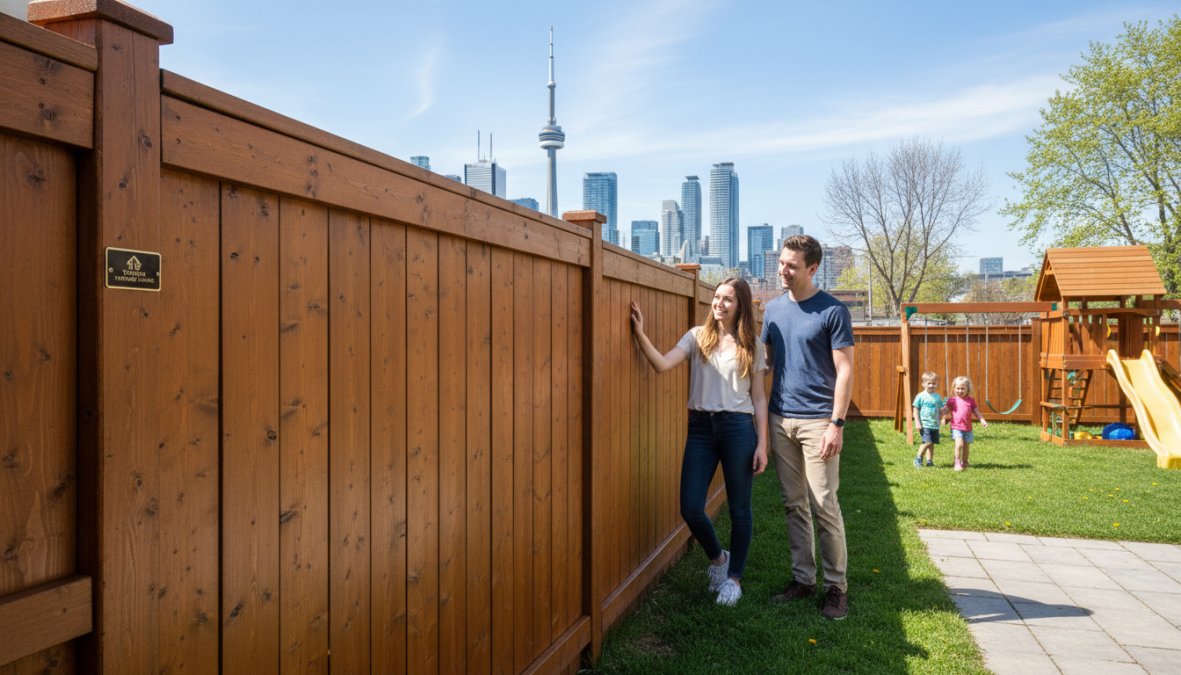
Toronto’s climate is punishing on exterior wood. Winters bring repeated freeze-thaw cycles that force moisture into wood grain; summers deliver intense UV that bleaches and dries surface fibers. According to the Canadian Wood Council’s guidance on exterior wood maintenance, untreated outdoor wood in Canadian conditions can begin surface checking and graying within 12 months.
Professional services bring three things DIY typically can’t match: proper surface preparation equipment, commercial-grade stain products, and application consistency. Spray application delivers even penetration that brush-only methods rarely achieve on rough-sawn cedar. Licensed and insured contractors also carry liability coverage, follow proper disposal protocols, and can warranty their work.
Fence Staining Cost in Toronto: What to Expect
Fence staining cost Toronto varies widely enough that a single number is misleading without context. Contractors price by linear foot or square footage: linear foot pricing typically runs around $10 per linear foot for standard cedar privacy fencing, with a minimum project charge commonly around $1,000.
The variables that move the price include:
-
Fence height and total surface area: A 6-foot privacy fence has roughly twice the surface area of a 3-foot picket fence at the same linear footage.
-
Wood condition: Fences requiring sanding, board replacement, or mildew treatment cost more than clean, stable ones.
-
Stain type: Semi-transparent oil-based stains typically cost more in materials than water-based solid stains.
-
Access and site complexity: Tight property lines, landscaping, or masking requirements add labor time.
A free estimate from a qualified Toronto contractor is the only reliable way to get an accurate number. Most reputable local services offer no-obligation quotes.
How to Prepare Your Fence for Staining: The Professional Process
Surface preparation is where professional fence staining services toronto earn their price. A stain applied to a dirty, weathered, or improperly dried surface will fail early regardless of product quality.
Step 1: Assessment and board inspection A professional evaluates the fence for rotted boards, loose fasteners, split pickets, and existing coating type. Structurally compromised boards get replaced before staining begins.
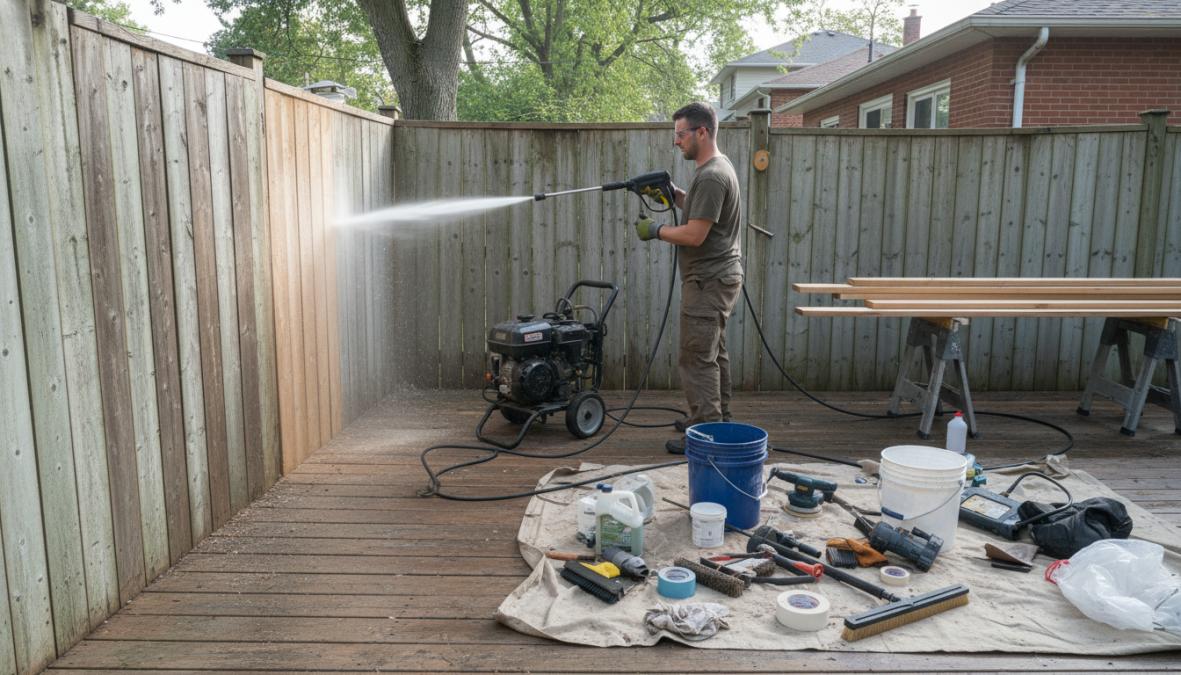
Step 2: Power washing Pressure washing removes surface dirt, mildew, algae, and loose coating. For cedar fencing, controlled pressure washing followed by a wood brightener solution opens the grain for optimal stain adhesion.
Step 3: Drying time Wood must reach acceptable moisture content before stain application, typically 24 to 48 hours after washing depending on Toronto weather conditions. This step is frequently skipped in rushed DIY projects.
Step 4: Sanding (when required) Rough-sawn cedar or fences with raised grain benefit from light sanding to smooth the surface and improve adhesion.
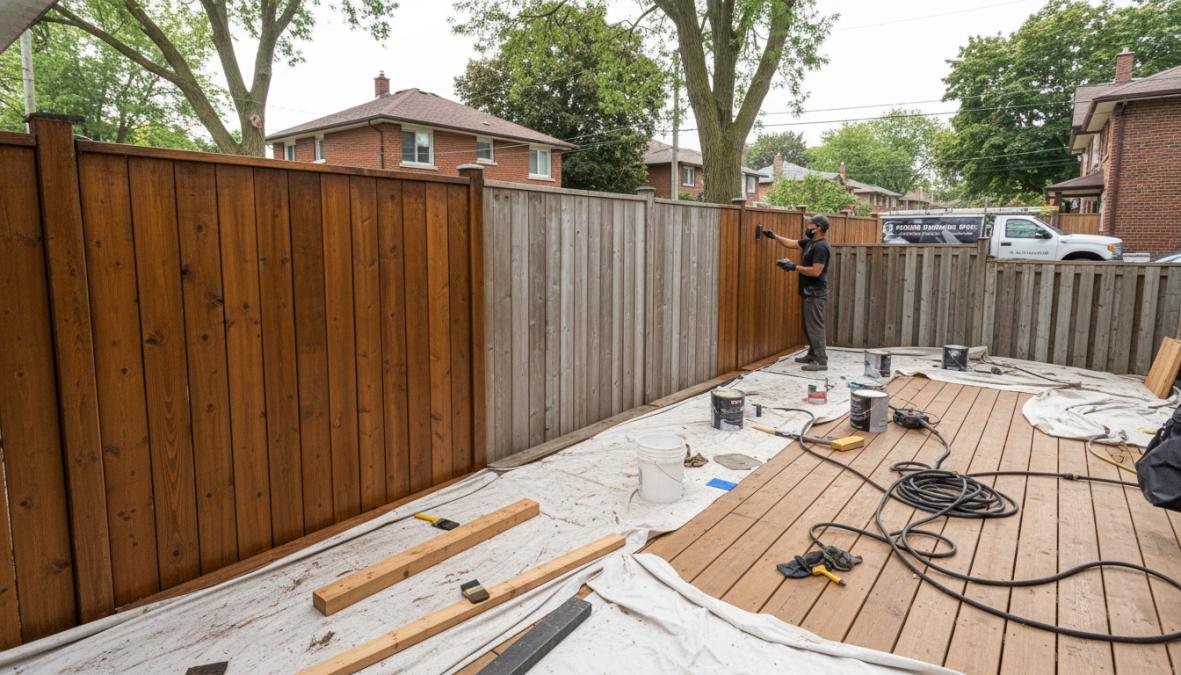
Step 5: Masking and protection Professional crews protect surrounding grass, garden beds, and hardscaping before application. Overspray can damage plants and permanently stain concrete.
Step 6: Primer application (for certain products) Some stain systems, particularly solid-color products on bare or heavily weathered wood, perform better with a primer coat.
Step 7: Stain application Spray application is standard for large fence runs, delivering consistent film thickness and penetrating board gaps and rough grain. Back-brushing after spraying works the product deeper into the wood surface.
According to the Paint Quality Institute’s guidance on exterior wood coatings, proper surface preparation accounts for the majority of a coating’s long-term performance. The product matters, but prep matters more.
Best Fence Stain for Ontario’s Climate and How Long Results Last
Ontario’s climate demands a stain system built for extremes: sub-zero winters, humid summers, significant UV exposure, and repeated freeze-thaw stress. Not every product on the shelf is up to that task.
|
Stain Type |
Best For |
Durability in Ontario |
Drying Time |
Re-coat Interval |
|---|---|---|---|---|
|
Semi-transparent oil-based |
New or lightly weathered cedar |
3-5 years |
24-48 hours |
2-4 years |
|
Solid latex stain |
Older, weathered, or gray wood |
4-6 years |
4-6 hours |
3-5 years |
|
Semi-solid water-based |
Mid-condition fencing |
3-4 years |
2-4 hours |
2-3 years |
|
Clear sealer |
New wood, temporary protection |
1-2 years |
1-2 hours |
Annually |
Oil-based semi-transparent stains penetrate deeply into wood grain, providing excellent weather resistance and a natural appearance. They’re the preferred choice for new cedar in good condition, though they require longer drying time and shouldn’t be applied below 10°C or in direct hot sun. Water-based solid stains offer better UV fade resistance and easier cleanup, but sit on the surface as a film, an advantage on weathered fencing, though they risk peeling if applied over moisture or incompatible coatings.
For how long does fence staining last in Ontario: a professionally applied semi-transparent oil stain on clean cedar typically holds for three to five years before re-coating. Solid latex products can extend that to five or six years in sheltered locations. South-facing fences with full sun exposure will need attention sooner.
As documented in Natural Resources Canada’s guidance on wood durability and exterior coatings, cedar is among the most naturally durable softwoods in Ontario, but its longevity depends heavily on consistent surface protection.
The best fence stain for Ontario climate isn’t one specific brand, it’s the right product category matched to your fence’s condition, applied over properly prepared wood. Darker stain tones absorb more UV and can accelerate surface breakdown; lighter semi-transparent tones reflect more UV and tend to show less fading. According to Canada Mortgage and Housing Corporation’s research on home exterior maintenance and resale value, exterior maintenance has a measurable positive effect on residential property value and buyer perception.
Plan for a professional re-coat every two to four years for oil-based products, and inspect annually for early signs of water beading failure, surface graying, or cracking. Catching the re-coat window before wood deteriorates keeps preparation costs low and extends the fence’s overall service life.
Toronto’s wooden fences take a beating from Ontario’s weather, and the difference between a fence that lasts twenty years and one that needs replacing in ten often comes down to consistent, professional maintenance. Soca Services Painting brings over a decade of experience in exterior surface staining, a structured four-step service process, and a commitment to detailed project proposals so homeowners know exactly what they’re getting before work begins. Get Your Free Estimate Today and protect your fence with a finish that holds up through everything Ontario’s climate delivers.
Frequently Asked Questions
How much does professional fence staining cost in Toronto?
Fence staining costs in Toronto typically range from $7 to $40 per square foot depending on fence size, wood type, condition, and the level of surface preparation required. Some contractors price by linear foot, with rates starting around $10 per linear foot. A minimum project charge of around $1,000 is common. Getting a detailed, itemized estimate from a licensed and insured local contractor is the best way to get an accurate number for your specific project.
Is it worth hiring a professional to stain my fence?
For most Toronto homeowners, professional fence staining delivers better long-term value than DIY. Professionals bring proper surface preparation equipment like power washers and sanders, commercial-grade stains with superior UV fade and weather resistance, and the expertise to apply primer and coatings evenly. Mistakes in DIY application — such as skipping prep or using the wrong product — can lead to peeling within a season, costing more to fix than the original professional service would have.
What type of stain is best for Toronto's weather?
Toronto's climate — with freezing winters, humid summers, and significant UV exposure — demands stains with strong weather resistance and adhesion. Semi-transparent or solid oil-based stains are popular for deep wood penetration and durability. High-quality latex stains like Benjamin Moore Arborcoat are also widely used for their flexibility in freeze-thaw cycles. For cedar fences, an oil-based penetrating stain is often the best fence stain for Ontario climate conditions, as it protects against moisture and UV fade simultaneously.
How often should you stain a fence in Toronto's climate?
In Toronto, most wood fences benefit from restaining every 2 to 4 years, depending on sun exposure, wood species, and the quality of the original stain applied. Fences on south-facing sides of properties tend to fade faster due to UV exposure. Semi-transparent stains typically need reapplication sooner than solid stains. Annual visual inspections — looking for cracking, graying, or water absorption — help you catch the right time before significant wood degradation occurs and more costly restoration is needed.
How do I prepare my fence for professional staining?
Professional fence staining preparation typically includes power washing to remove dirt, mold, and old loose stain, followed by sanding to smooth rough grain and open the wood pores for better stain adhesion. Any damaged boards are repaired or replaced, and gaps are filled with exterior caulking. The fence must be fully dry — usually 24 to 48 hours after washing — before stain or primer application begins. Skipping these steps is the most common reason fence staining fails prematurely.