Table of Contents
- 7 Clear Signs You Need Exterior House Painting Right Now
- How Often to Paint Your Exterior House in Toronto’s Climate
- Exterior House Painting Preparation Steps That Prevent Early Failure
- Cost of Exterior House Painting: Premium vs. Budget Paint Compared
Last Updated: June 10, 2026
Your home’s exterior paint does more than improve curb appeal. Knowing the signs you need exterior house painting can protect your siding, trim, and structural wood from moisture damage that compounds quickly in Toronto’s climate. At Soca Services Painting, we’ve inspected hundreds of Toronto homes and seen how homeowners miss early warning signs until a simple repaint becomes a costly repair. Waiting until paint looks "really bad" is the most expensive mistake you can make.
7 Clear Signs You Need Exterior House Painting Right Now
Exterior paint failure follows a predictable sequence. Catching it early saves significant time and money.
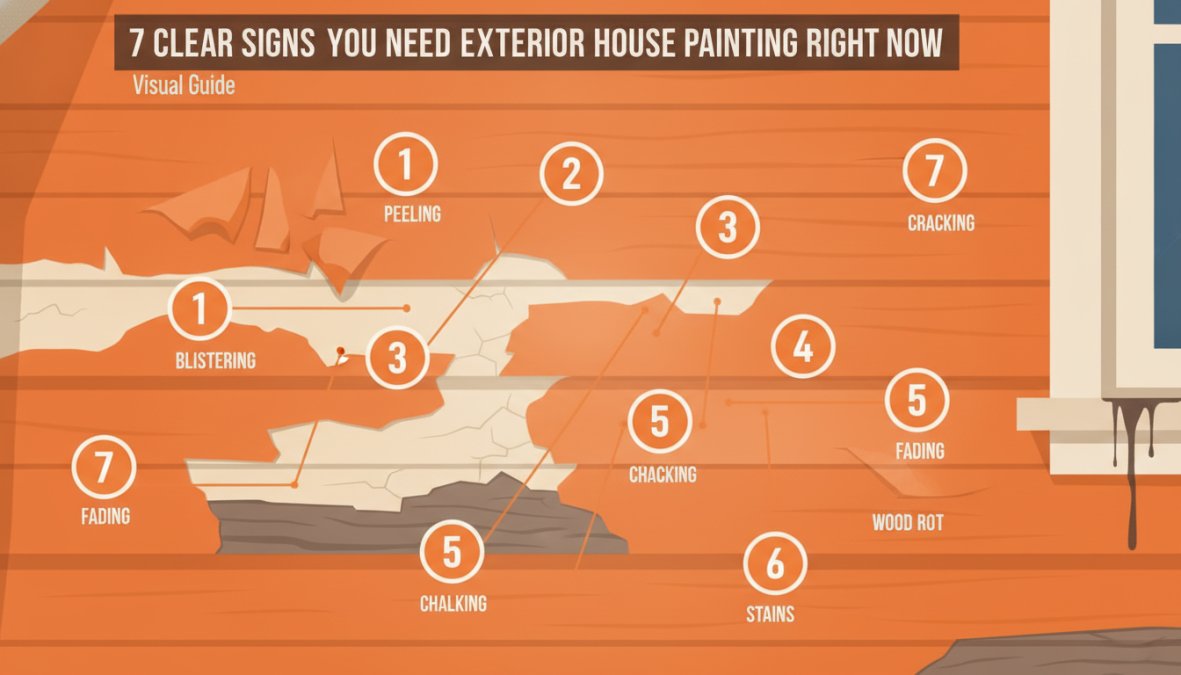
1. Peeling and Flaking Paint
Once the coating separates from the substrate, moisture enters wood directly. Left untreated, this leads to rot within one to two seasons in Ontario’s wet spring and fall conditions.
2. Blistering or Bubbling
Moisture or heat trapped beneath the paint film causes blistering, most often on south- and west-facing walls. Blisters that pop leave raw substrate exposed to freeze-thaw damage.
3. Chalking
Run your hand along the siding. A white, powdery residue means the binder has broken down from UV exposure and the coating no longer protects the surface.
4. Fading and Discolouration
Significant fading signals that the paint’s UV resistance is exhausted, particularly common with lower-quality acrylic latex formulas lacking advanced fade-resistant binders.
5. Cracking and Checking
Fine hairline cracks following the wood grain are called "checking." Wider cracks allow water infiltration and are a direct pathway for freeze-thaw damage to split the wood beneath.
6. Mould, Mildew, or Staining
Dark streaks or fuzzy patches indicate a moisture problem first, cosmetic problem second. Coatings without mildew resistance will allow regrowth after cleaning unless the root cause is addressed.
7. Visible Bare Wood or Rust Stains
Bare wood absorbs moisture immediately. Rust stains below metal fixtures indicate water tracking down the surface, accelerating substrate deterioration beneath the paint line.
Never paint over mould or mildew without treating the surface first. Trapping active biological growth under a new coat guarantees premature failure, usually within one season.
How Often to Paint Your Exterior House in Toronto’s Climate
Most Toronto homeowners should repaint every five to seven years, depending on siding material, paint quality, and sun exposure. Toronto’s freeze-thaw cycle is the key challenge: from November through March, surface temperatures cross freezing multiple times per week, expanding water in micro-cracks with each cycle. According to Canada Mortgage and Housing Corporation’s guidance on exterior maintenance, moisture management is the primary factor in exterior cladding durability across Canadian climates. Toronto’s Lake Ontario micro-climate also produces higher relative humidity in fall, meaning homes in the Beaches or Lakeshore neighbourhoods typically see more humidity-driven paint failure than those in North York or Vaughan.
Repainting intervals by siding material:
| Siding Type | Typical Interval | Key Risk Factor |
|---|---|---|
| Wood clapboard | 4-6 years | Moisture absorption, rot |
| Vinyl siding | 10-15 years | Chalking, fading |
| Fibre cement | 10-15 years | Cracking at joints |
| Stucco | 5-7 years | Cracking, efflorescence |
| Brick (painted) | 8-10 years | Moisture trapping |
Exterior House Painting Preparation Steps That Prevent Early Failure
Preparation is where most exterior painting projects succeed or fail. A new coat applied over a compromised substrate will fail faster than the original paint it replaced.
Step 1: Moisture Testing
Wood siding should read below 15% moisture before painting. Professional tools like the Protimeter Surveymaster detect hidden moisture behind siding, especially valuable on Toronto homes that have experienced ice damming or roof leaks.
Step 2: Pressure Washing
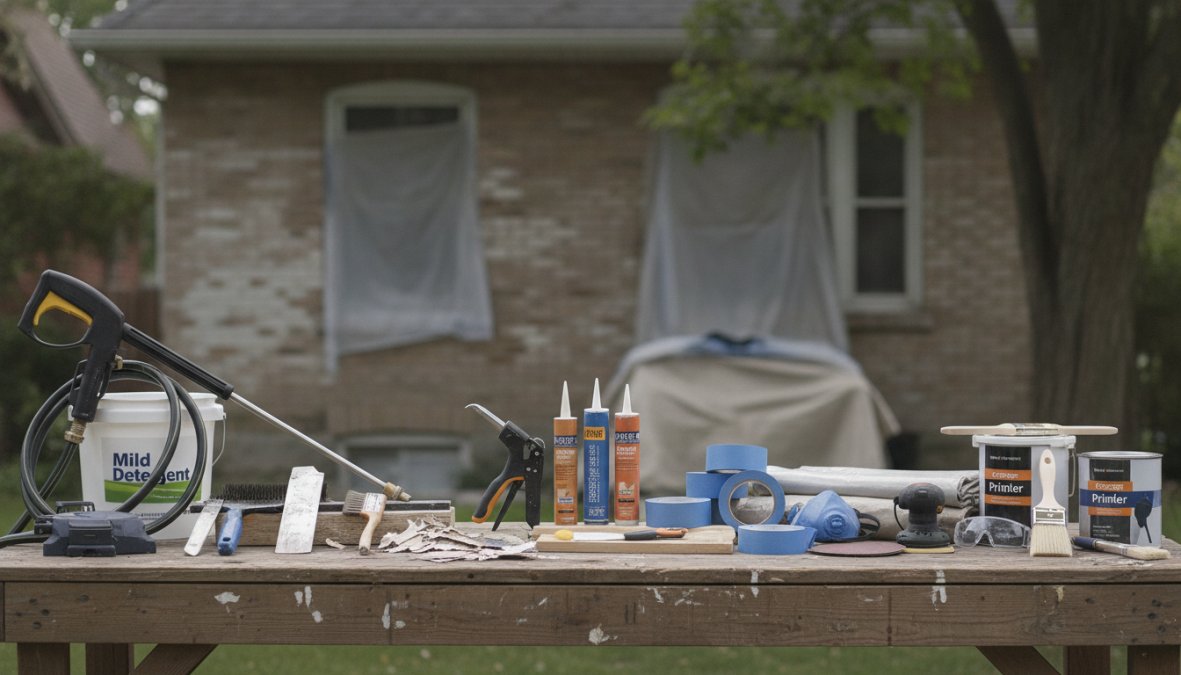
Pressure washing removes chalking, mould, mildew, dirt, and loose paint. Allow 48 to 72 hours drying time before proceeding.
Step 3: Scraping and Sanding
Remove all loose and flaking paint mechanically. Feather edges with 80-grit sandpaper to eliminate ridges that telegraph through the finish coat. Skipping this step is the single most common cause of premature peeling.
Step 4: Caulking and Repairs
Seal all penetrations, window surrounds, door frames, and siding joints with paintable exterior-grade caulk. Replace rotted wood before priming, painting over rot is a delay, not a repair.
Step 5: Priming
On bare wood, use a stain-blocking oil-based or shellac primer to prevent tannin bleed. According to Paint Quality Institute’s exterior painting guidelines, proper priming can extend finish coat life by two to three years.
Step 6: Application Conditions
Apply exterior paint when ambient temperature is between 10°C and 29°C and relative humidity is below 70%. Avoid direct midday sun, which causes the film to dry too quickly and prevents proper film formation.
Check the forecast for 48 hours after application. Rain or temperatures below 4°C before the film fully cures can cause adhesion failure even if conditions were perfect at application.
Cost of Exterior House Painting: Premium vs. Budget Paint Compared
Paint is where homeowners most often try to cut costs, and it’s consistently the wrong place to do it.
Premium options like Benjamin Moore Aura Exterior use proprietary Color Lock technology for superior fade resistance and carry a lifetime limited warranty. Sherwin-Williams Duration offers strong adhesion on wood and fibre cement. Both maintain flexibility through freeze-thaw cycles.
Mid-range options like Valspar Duramax combine paint and primer with a wide application temperature range, extending the painting season into early spring and late fall at approximately $55 per gallon.
Budget coatings use lower-quality binders that become brittle faster in cold weather, leading to earlier cracking and peeling. Short-term savings are reliably offset by earlier repainting.
According to Natural Resources Canada’s guide to home energy and maintenance costs, proper exterior maintenance including painting is one of the highest-return investments for Canadian homeowners in preventing structural repair costs.
Paint quality comparison:
| Paint Tier | Approx. Cost/Gallon | Expected Lifespan | Best For |
|---|---|---|---|
| Premium (Aura, Duration) | $90-$100 | 10-15 years | All siding types, harsh climates |
| Mid-range (Valspar Duramax) | $55 | 7-10 years | DIY projects, moderate exposure |
| Budget (commodity brands) | $25-$35 | 3-5 years | Low-exposure surfaces only |
A note on VOC levels: Most premium water-based exterior coatings now offer low-VOC versions with no performance compromise, important for urban Toronto properties with households with children or respiratory sensitivities.
Upgrading from budget to premium paint adds relatively little to overall project cost while potentially doubling the interval before the next repaint.
The real cost of exterior house painting is not the price per gallon. It is the total cost over time, including labour for repaints you avoid by choosing quality materials and doing preparation correctly the first time.
Exterior paint failure rarely announces itself dramatically. By the time most homeowners notice the signs, the substrate has already absorbed damage. Soca Services Painting has spent over a decade helping Toronto, North York, and Vaughan homeowners catch these problems early. If your home is showing any of the warning signs covered here, get a professional assessment before the next freeze-thaw season compounds the damage. Get Your Free Estimate Today from Soca Services Painting and protect your home with a high-quality finish built for Ontario’s climate.
Frequently Asked Questions
How often should you paint the exterior of your house?
Most homes need exterior repainting every 5 to 10 years, but Toronto's harsh freeze-thaw cycles can shorten that window to 5 to 7 years. The right interval depends on your siding material, wood siding typically needs repainting every 3 to 7 years, while stucco and fibre cement can last closer to 10 years. Choosing a high-durability acrylic latex paint with strong UV and moisture resistance can extend the time between coats.
What are the most common signs of failing exterior paint?
The clearest signs you need exterior house painting include peeling or blistering paint, chalking residue that rubs off on your hand, visible fading or discolouration from UV exposure, mildew or dark staining on siding, and cracked or flaking areas near windows and trim. Any of these signals that your exterior coating has lost adhesion or moisture resistance, leaving the substrate vulnerable to rot and structural damage if left untreated.
Does peeling paint mean I need to repaint the whole house?
Not always, localized peeling in one or two areas can sometimes be spot-primed and repainted. However, if peeling is widespread or caused by moisture infiltrating the substrate, a full repaint is usually the smarter investment. Patching over systemic moisture damage without proper surface preparation will cause the new paint to fail quickly. A professional inspection can determine whether a full repaint or targeted repair is the right approach for your home.
What is the cost of exterior house painting in Toronto?
The cost of exterior house painting in Toronto varies based on home size, siding material, and paint quality. A standard detached home typically ranges from $3,000 to $8,000 or more for a full professional repaint. Premium paints like Benjamin Moore Aura or Sherwin-Williams Duration cost more per gallon but offer better durability and longer intervals between repaints, making them a strong cost-benefit choice over budget options that may need replacing in just a few years.
What happens if you don't repaint your house exterior?
Neglecting the signs you need exterior house painting leads to progressive damage. Once the protective film fails, moisture penetrates the substrate, causing wood rot, mildew growth, and structural deterioration. In Toronto's climate, repeated freeze-thaw cycles accelerate this process significantly. What starts as a cosmetic issue, fading or peeling, can become a costly structural repair. Repainting proactively is far less expensive than replacing rotted siding, trim, or sheathing.
This article was written using GrandRanker