
Painting your home’s interior is one of the highest-return upgrades you can make — but only when it’s done right. The wrong prep, the wrong finish, or a rushed timeline leaves you with a job that starts peeling within a few years. This guide cuts through the noise and gives you what you actually need to plan a successful project in Toronto or the broader GTA.
What Interior Painting Actually Involves
Interior painting is far more than rolling colour onto walls. A professional job involves surface assessment, filling and sanding, priming, multiple paint coats, careful cutting-in along trim and ceilings, and cleanup. On a whole-home project, the prep phase can easily consume 30–40% of the total labour hours.
Here’s what a professional crew actually does before a single finish coat goes on:
Surface inspection: Every wall is checked for cracks, nail holes, water stains, peeling, and loose material. In older Toronto homes — think the Annex, Leslieville, Roncesvalles — this step often reveals hairline plaster cracks or sections where old paint layers are lifting. These issues need to be resolved before painting, not painted over.
Furniture protection and masking: Furniture is moved to the centre of the room or removed entirely. Drop sheets go down on floors. Trim, baseboards, light switches, and outlet covers are carefully masked or removed. This protects your home and speeds up the actual painting by eliminating the need to cut in slowly around every obstacle.
Patching and priming: Holes and cracks are filled and sanded smooth. Any patched area gets spot-primed before the finish coat — skip this and you’ll see dull patches showing through the colour. Stains from water damage or smoke require a shellac-based stain-blocking primer; standard latex primer won’t stop them from bleeding through.
Two finish coats: Most professional jobs include two full coats of finish paint with adequate dry time between them. One coat rarely covers evenly, especially over a colour change. Choosing the right paint product makes a real difference at this stage — premium paints with higher solid content cover better and hold colour longer.
Cleanup and touch-ups: Drop sheets come up, tape is pulled before the paint fully cures (so it doesn’t tear the finish), and the crew does a final walk-through to catch any misses. Good painters leave your home the way they found it — often cleaner.
Choosing the Right Paint and Finish for Each Room
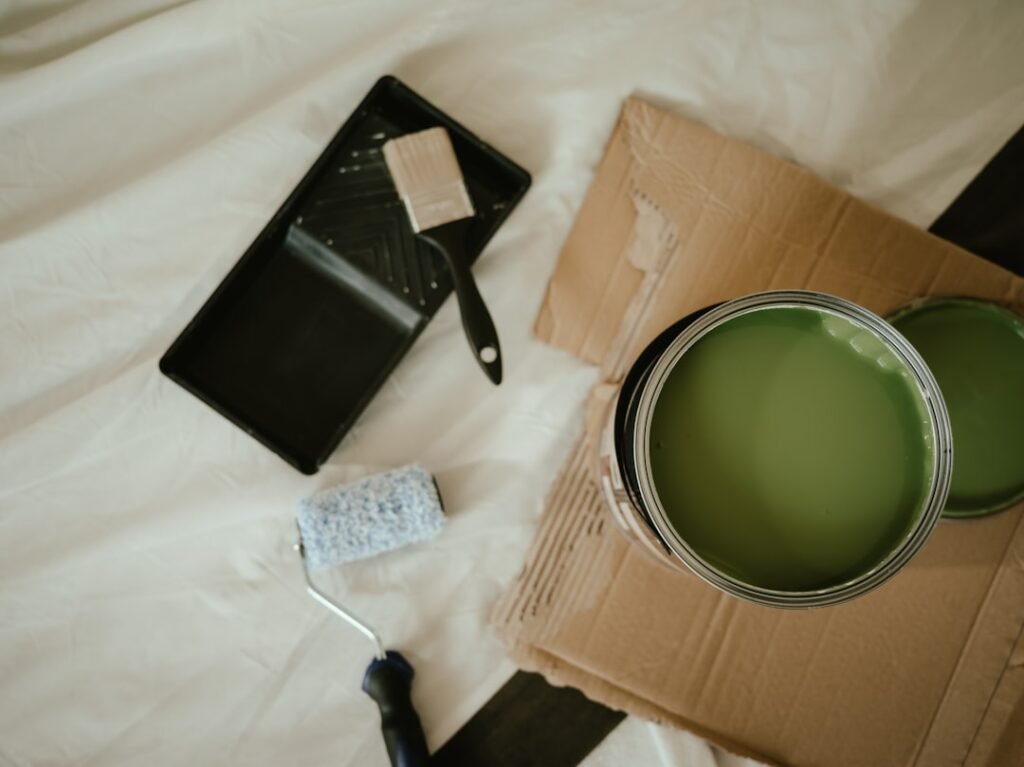
Finish (sheen level) matters more than most homeowners realize. For most GTA homes, a premium acrylic latex in an eggshell or satin finish is the right starting point — it offers washability with just enough sheen. But the right call varies by room, wall condition, and how the space is used.
Here’s the practical breakdown, including which product lines from Benjamin Moore, Sherwin-Williams, and Behr perform well in each space:
| Room | Recommended Finish | Why | Product Examples |
|---|---|---|---|
| Living Room / Dining Room | Matte or Eggshell | Low-traffic; matte hides wall imperfections and looks rich in natural light. Eggshell if you want light washability. | Benjamin Moore Regal Select Matte; Sherwin-Williams Emerald Matte; Behr Premium Plus Eggshell |
| Bedrooms | Matte or Eggshell | Low wear; matte creates a calm, soft finish and conceals patches from nail holes and repairs. | Benjamin Moore Aura Matte; Sherwin-Williams Cashmere Low Lustre; Behr Marquee Matte |
| Kitchen (walls) | Satin | Higher humidity and grease exposure require a wipeable finish that resists moisture without showing every imperfection. | Sherwin-Williams Duration Home Satin; Benjamin Moore Ben Satin; Behr Marquee Satin |
| Bathrooms | Satin or Semi-Gloss | High moisture demands a mould-resistant, scrubbable finish. Semi-gloss on trim and shower surrounds. | Benjamin Moore Aura Bath & Spa; Sherwin-Williams Emerald Interior Satin; Behr Premium Plus Semi-Gloss |
| Hallways & High-Traffic Areas | Eggshell or Satin | Frequent scuffs and handprints require something that cleans without wearing out quickly. | Benjamin Moore Scuff-X Eggshell; Sherwin-Williams SuperPaint Satin; Behr Marquee Eggshell |
| Trim, Doors & Baseboards | Semi-Gloss or Gloss | Hard surfaces take abuse — semi-gloss is durable, chip-resistant, and easy to wipe down. | Benjamin Moore Advance Semi-Gloss; Sherwin-Williams Emerald Urethane Trim Enamel; Behr Alkyd Semi-Gloss |
| Ceilings | Flat / Ceiling White | Flat hides roller texture and reflects light evenly. Ceiling paint is formulated to minimize spatter and drips. | Benjamin Moore Waterborne Ceiling White; Sherwin-Williams Eminence Ceiling Paint; Behr Premium Ceiling White |
A note on older Toronto homes with plaster walls: matte finishes are your friend. Plaster walls develop subtle waves and texture over decades. Satin and semi-gloss catch raking light and show every bump and patch. Matte absorbs light and hides those imperfections far more forgivingly. Once plaster walls are properly patched and primed, any finish will adhere — but matte consistently delivers the cleanest result in century homes.
Prep Work: Why It Matters More Than the Paint Itself
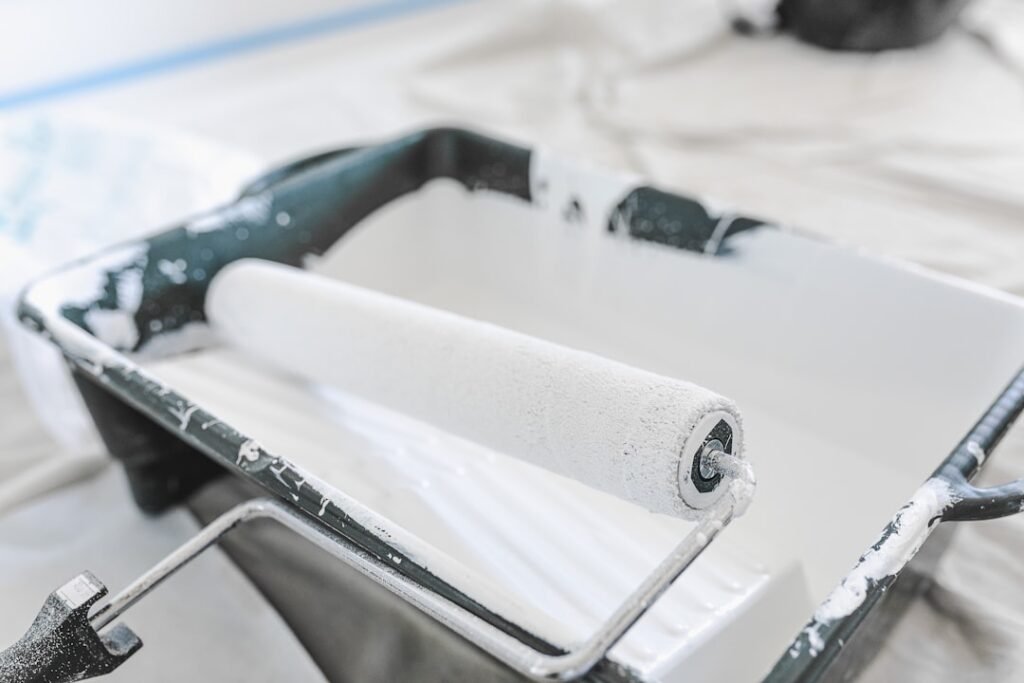
The single biggest difference between a job that lasts a decade and one that starts peeling in two years is prep. The right primer and surface preparation are non-negotiable — and this is where older Toronto homes require specific attention.
Standard Drywall Prep (Most post-1980 GTA Homes)
Most homes built after 1980 in North York, Scarborough, Mississauga, Vaughan, and Markham have standard drywall. The prep process is relatively straightforward: fill nail holes and dings with spackling compound, sand smooth, spot-prime all patches, then apply finish coats. The key step DIYers most often skip is priming patched areas — paint over an unprimed patch and you’ll see a dull “flash” through the colour every time light hits the wall at an angle.
Plaster Walls in Older Toronto Homes
Pre-1960 homes in neighbourhoods like the Annex, Roncesvalles, Leslieville, Cabbagetown, and Forest Hill are mostly plaster. Plaster is harder and denser than drywall, but it’s also more brittle — and it behaves very differently under prep tools. A few things to know:
Tap before you paint. Walk the walls and tap with your knuckles. A hollow sound means the plaster is separating from the lath underneath. That section needs professional repair before any painting begins — painting over loose plaster just delays an inevitable failure.
Use the right products. Don’t use drywall joint compound to fill plaster cracks — it doesn’t grip plaster well and will eventually crack again. Use a plaster-specific patching compound or paintable caulk for hairline cracks. For the primer coat, a plaster-bonding primer (or an oil-based primer, which offers superior stain-blocking and moisture sealing) is the right call on older surfaces.
Sand gently. Use 120–150 grit sandpaper on plaster, and work by hand rather than with a power sander. Power sanding generates enormous dust and can vibrate plaster loose in ways you won’t notice until weeks later.
Lead paint awareness. In Toronto homes built before 1978, there’s a reasonable chance that older paint layers contain lead. If you’re sanding or disturbing old paint in a pre-1978 home, test with a lead test kit before proceeding. Professional painters should follow proper safety protocols for lead management — this is a step that DIYers commonly overlook.
Budget accordingly: plaster prep typically takes 20–30% more time than comparable drywall prep, which affects both the timeline and the cost of any professional quote.
Condo-Specific Prep Considerations
Downtown Toronto condos — especially those built in the 1960s through 1980s — often have drywall, but quality varies considerably. Water damage from balcony doors or bathroom moisture is common. Inspect carefully before quoting or starting any project. Many condo buildings also require low-VOC paints to protect air quality in shared hallways and neighbouring units. If you’re hiring a painter for a condo, confirm they’re familiar with your building’s rules around working hours, elevator bookings, and corridor protection.
How Long Does Interior Painting Take?
Most single-room jobs take one day for a professional crew. A full home is typically 3–7 business days, depending on size, the number of colours, trim complexity, and how much prep is required. Here are realistic ranges for common GTA projects.
Single room (bedroom or office): 1 day for walls only; 1.5–2 days if ceilings and trim are included.
Main floor (open-concept living/dining/kitchen): 2–3 days for walls and ceilings; add another day for extensive trim work or a colour change from dark to light.
Full interior of a 1,200 sq ft home: 4–6 days including prep. A home with significant plaster repairs or many accent colours will be on the longer end.
Full interior of a 2,000+ sq ft, two-storey detached: 6–10 days. Multi-floor homes have considerably more cutting-in work around stairwells, hallways, and architectural details.
Condo (1-bedroom, 500–700 sq ft): 1–2 days for a straightforward repaint. Add half a day if the unit hasn’t been painted in 10+ years and needs significant patching.
These timelines assume a professional crew of two painters working a standard day. A single DIY painter working weekends should realistically plan for 2–3x longer on the same project — and that’s assuming no significant wall repairs.
Drying time between coats also matters. Most premium latex paints need a minimum of 2–4 hours between coats in normal indoor conditions, though a light 220-grit sand between coats (a step professionals use that most DIYers skip) significantly improves the final smoothness of the finish.
What Interior Painting Costs in the GTA (2026)

The honest answer: interior painting in the GTA typically runs between $2.00 and $3.00 CAD per square foot for walls alone, with full-scope jobs (walls, ceilings, trim, and doors) climbing to $4.70 per square foot or higher — before HST. Labour makes up 70–80% of the total bill; materials account for the rest.
Here’s what those numbers look like for common GTA project types:
| Project Type | Estimated Cost (CAD, before HST) | Notes |
|---|---|---|
| Single room (walls only) | $300 – $800 | Bedroom or office; price rises with room size and ceiling height |
| Single room (walls + ceiling + trim) | $600 – $1,400 | Complete room refresh; higher for rooms with detailed moulding |
| 1,000 sq ft condo (full interior) | $2,000 – $4,500 | Lower end for empty units; upper end for furnished or with repairs |
| 1,200 sq ft home (walls only) | $3,000 – $5,000 | Standard two-coat, professional finish |
| 1,200 sq ft home (full interior) | $4,500 – $7,000 | Includes ceilings, trim, doors; more with plaster prep |
| 2,000 sq ft home (full interior) | $7,000 – $9,500+ | Two-storey detached; higher with extensive repairs or accent colours |
| Trim/baseboards only | $1 – $3 per linear ft | Labour-intensive; adds significantly to whole-home quotes |
A few factors push projects toward the higher end of these ranges in the GTA specifically:
Downtown Toronto and condo logistics: Elevator bookings, restricted working hours, mandatory parking costs, and corridor protection add overhead to any downtown project. Expect quotes from downtown Toronto and Markham to run 10–15% higher than comparable work in Brampton, Mississauga, or outer Scarborough.
Plaster walls and extensive repairs: If your walls need significant patching, prep costs can increase the total project by 20–30%. Get this itemized in your quote — reputable painters will break out labour, materials, and prep separately.
Going from dark to light colours: A dramatic colour change requires additional coats and sometimes a tinted primer, adding both material and labour cost.
Don’t forget: all of these figures are subject to Ontario’s 13% HST on top.
For a deeper look at how these numbers are built and what to ask for in a detailed quote, our house painting cost guide for the Toronto area walks through the full breakdown.
DIY vs. Hiring Professional Painters: The Real Trade-Offs
DIY makes sense for small, simple jobs on walls in good condition. Professional painters are worth it for larger projects, complex surfaces, tight timelines, or any home where the finish quality matters. Here’s the honest comparison.
When DIY Works
If you’re repainting a single bedroom in good shape — no significant wall damage, similar colour to what’s existing — DIY is genuinely manageable. You’ll spend roughly $150–$300 on quality paint, primer, brushes, a roller, tray, and painter’s tape. The result won’t be professional-grade, but it can look respectable with patience and the right technique. Key tips: don’t skip the primer on patched areas, use quality tools (cheap rollers leave heavy texture), and pull the tape while the second coat is still slightly tacky, not after it has fully cured.
When Professionals Are Worth It
A professional crew will complete the same job significantly faster and with a noticeably higher-quality finish. The trade-off is cost — but consider the full picture:
Time: A two-painter professional crew can complete in one day what a solo DIYer might stretch over three weekends. For anyone with a busy schedule, the time savings alone often justify the cost.
Finish quality: Clean lines at ceiling edges, consistent sheen across large walls, no roller lap marks — these come from technique developed over years on the job. Professionals cut in freehand at speed, while DIYers typically need tape on every edge. Even with tape, getting a truly crisp line takes practice.
Older homes and plaster: If your home has plaster walls, water stains, loose sections, or multiple layers of old paint, a professional assessment at the start prevents expensive mistakes. Plaster that looks paintable sometimes isn’t — and applying finish paint over an unstable substrate means redoing the work within a couple of years.
Condos: In a condo environment, access logistics, building rules, and the need to protect shared corridors and elevators make professional painters particularly valuable. Condo boards typically require low-VOC paint to keep odours out of neighbouring units and hallways. Many buildings also have sealed window systems, so professionals bring equipment to maintain proper air circulation during the job. A DIY painter who hasn’t navigated these requirements often finds out the hard way — from a building manager or unhappy neighbour.
Warranty and accountability: A reputable painting contractor backs their work. If something fails within the warranty period — peeling, colour inconsistency, missed patches — they come back and fix it. DIY has no such backstop.
What to Ask Before Hiring
Before signing with any GTA painting contractor, make sure you have answers to these questions:
Does the quote itemize labour, materials, and prep separately? A professional quote should list everything — no lump sums that make it impossible to understand what you’re paying for.
Is the crew covered by liability insurance and WSIB? This protects you if anything is damaged or if a worker is injured on your property.
What paint brand and product line are they using? If a quote uses a budget-tier paint, the price comparison with a premium-paint quote isn’t apples-to-apples.
What does “prep” include in the quote? Make sure crack filling, priming, and surface repairs are explicitly included rather than assumed.
At Soca Services Painting, we’ve been working in Toronto and across the GTA for over 10 years. Every project starts with a transparent, itemized quote — so you know exactly what’s included before work begins. We handle everything from condo painting in downtown Toronto to full home repaints in older neighbourhoods where plaster prep is part of the job. See our condo and apartment painting services or browse our full range of residential painting services.
Frequently Asked Questions
Ready to Refresh Your Space?
Whether you’re repainting a single room, tackling a full home before listing it, or refreshing a condo unit that hasn’t seen new paint in years — getting a clear, detailed quote is the right first step. At Soca Services Painting, we offer free in-home estimates with no obligation and no pressure. We’ll assess your walls, talk through your colour choices, and give you a transparent breakdown of what the job actually involves. Serving Toronto, Mississauga, Vaughan, Richmond Hill, Markham, Scarborough, and the broader GTA — reach out today to book your free estimate.
Frequently Asked Questions
How much does interior painting cost per square foot in the GTA in 2026?
For walls only, most GTA homeowners pay between $2.00 and $3.00 CAD per square foot. A full-scope job that includes ceilings, trim, and doors typically runs $4.00 to $4.70 per square foot or higher, before HST. Labour makes up 70–80% of the total cost. Downtown Toronto and condo projects often run 10–15% more due to access logistics and parking overhead.
Do I need to prime before painting interior walls in an older Toronto home?
Yes, almost always. Older Toronto homes with plaster walls need a bonding primer or oil-based primer before finish coats, especially over patched areas, stains, or previously glossy surfaces. Painting over an unprimed patch causes visible dull spots through the colour. In homes built before 1978, test for lead paint before sanding or disturbing old surfaces.
What paint finish is best for a bathroom or kitchen in a GTA home?
For bathrooms, use a satin or semi-gloss finish with a mould-resistant formula — Benjamin Moore Aura Bath & Spa and Sherwin-Williams Emerald Interior Satin are both strong choices. For kitchen walls, satin is the right call: it handles moisture and grease, wipes clean easily, and doesn’t show imperfections as harshly as semi-gloss.
Are there special rules for painting a condo in Toronto?
Yes. Most Toronto condo buildings require low-VOC paints to avoid odours in shared hallways and neighbouring units. You’ll typically need to book the elevator in advance, follow noise restrictions on working hours, and protect common area floors and walls. Professional painters who work in condos regularly are familiar with these requirements — DIY painters often find out about them only after causing a problem.
How long does a professional interior painting job take in the GTA?
A single room typically takes one day for a two-person professional crew, or 1.5–2 days if ceilings and trim are included. A full home interior (1,200–1,500 sq ft) usually runs 4–6 days. Larger two-storey homes can take 6–10 days, especially when plaster repairs or multiple accent colours are involved. DIY timelines are typically 2–3x longer for the same scope of work.