Table of Contents
- Why Toronto Weather Demands the Right Exterior Paint
- Top-Rated Exterior Paints for Toronto Weather: Brand Comparison
- Acrylic vs Oil-Based Exterior Paint for Canadian Weather
- Best Time to Paint Your House Exterior in Toronto and How to Prepare
Last Updated: June 9, 2026
Toronto’s climate is brutal on exterior paint. Temperatures swing from -20°C in January to 35°C in July, freeze-thaw cycles crack poorly chosen coatings, and summer humidity breeds mildew. Choosing the best exterior paint for toronto weather directly determines how long your finish lasts before peeling, chalking, or fading. This guide from Soca Services Painting breaks down which products hold up, which fail, and what you need to know before picking up a brush or calling a contractor.
Why Toronto Weather Demands the Right Exterior Paint
Toronto’s freeze-thaw cycles can occur dozens of times per season. Every time moisture penetrates a paint film and freezes, it expands, creating micro-cracks that admit more moisture and cause larger failures. Rigid coatings, including many oil-based formulas, cannot flex with substrate movement and fail within two to three seasons.
Humidity is the second major factor. According to Environment and Climate Change Canada’s climate data for Ontario, Toronto averages over 800mm of precipitation annually, with summer humidity routinely above 70%. UV exposure compounds the problem: south-facing walls receive intense summer sun that breaks down binder chemistry, causing chalking and fading.
The right exterior paint for Toronto needs four things: flexibility to survive freeze-thaw cycles, strong moisture and mildew resistance, UV stability, and adhesion that holds across wide temperature swings.
Never apply exterior paint when the surface temperature is below 10°C or the ambient temperature is forecast to drop below 5°C within 24 hours. Applying paint too late in the season is one of the most common causes of premature peeling on Toronto homes.
Top-Rated Exterior Paints for Toronto Weather: Brand Comparison
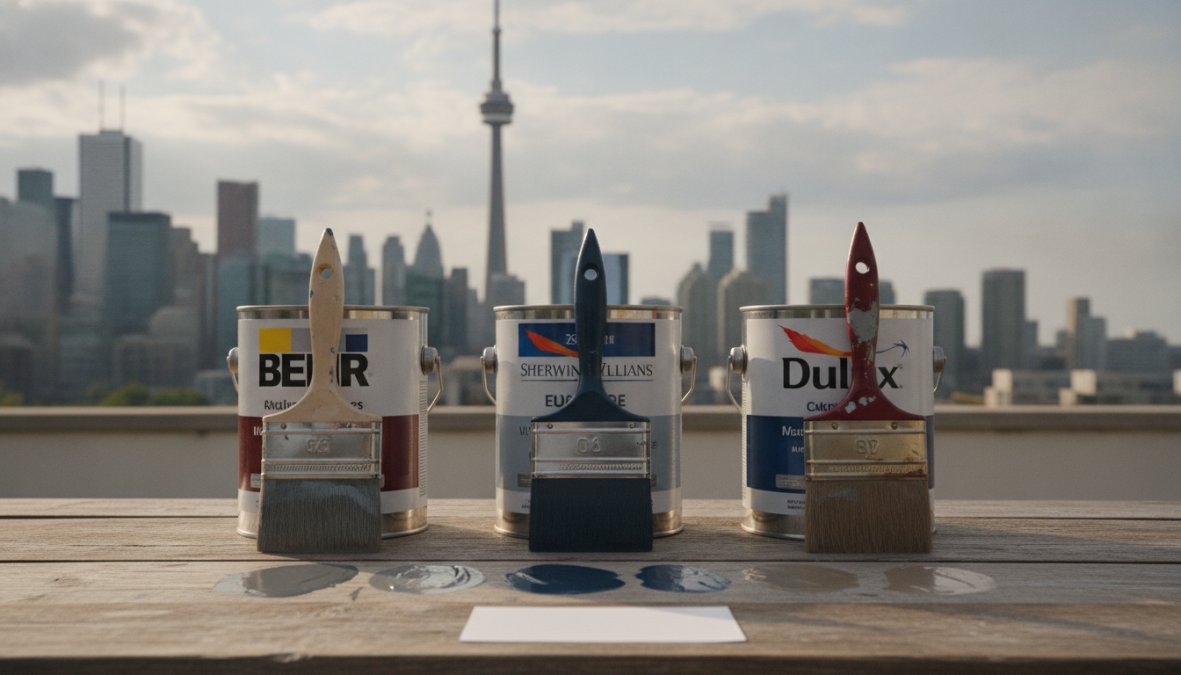
The best exterior paint for toronto weather shares one trait: a 100% acrylic latex binder. Acrylic latex remains flexible at low temperatures, resists moisture penetration, and releases water vapor from the substrate, preventing blistering.
| Product | Binder Type | Low-Temp Application | Key Technology | Best For |
|---|---|---|---|---|
| Benjamin Moore Aura Exterior | 100% Acrylic | Down to 1.7°C | Color Lock | Color retention, extreme temp swings |
| Benjamin Moore Element Guard | 100% Acrylic | Standard | Moisture barrier resin | High humidity, rain exposure |
| Sherwin-Williams Duration | 100% Acrylic | Standard | PermaLast thick film | Long-term durability, fewer repaints |
| Sherwin-Williams Resilience | 100% Acrylic Latex | Standard | MoistureGuard | Late-season painting, rain risk |
| Behr Dynasty Exterior | 100% Acrylic | Low-temp capable | 10-yr fade warranty | Fade protection, fast rain resistance |
| Dulux Weatherguard | 100% Acrylic | Yes | FlexShield 365 | Canadian climate, seasonal swings |
| PPG Weather King | 100% Acrylic Latex | Down to 2°C | Dirt/mildew resistance | General repaints, versatile substrate |
1. Benjamin Moore Aura Exterior
The top pick for Toronto homeowners wanting maximum color retention. Color Lock technology delivers exceptional fade resistance, and the formula applies down to 1.7°C, extending the painting season into late October. The premium price is offset by longer intervals between repaints.
2. Sherwin-Williams Duration Exterior Acrylic Coating
Duration’s PermaLast technology builds a thicker film, improving resistance to blistering, peeling, and cracking, and it is self-priming on properly prepared surfaces. Key caveat: thorough surface preparation is essential, the thick film can trap moisture if applied over inadequately cleaned or sanded surfaces.
3. Dulux Weatherguard
The most Toronto-relevant product on the list. Formulated specifically for Canadian climate conditions, FlexShield 365 technology maintains film flexibility from winter cold through summer heat. A strong first choice for homeowners in North York, Vaughan, or King City where winters are slightly harsher than downtown.
4. Sherwin-Williams Resilience Exterior Acrylic Latex
MoistureGuard technology makes the film moisture-resistant within two hours of application, a genuine advantage during Toronto’s spring and fall painting windows, where afternoon rain showers are common.
5. Behr Dynasty Exterior
Offers a 10-year color fade protection warranty and rain resistance within 60 minutes. The warranty is conditional on specific color palettes, so confirm your chosen color qualifies before committing.
For wood siding, prioritize high moisture vapor permeability, the film needs to let moisture escape rather than trap it. Benjamin Moore Aura and Dulux Weatherguard both handle this well. For vinyl siding, stick to lighter colors regardless of brand; dark colors can absorb enough heat to cause warping.
Acrylic vs Oil-Based Exterior Paint for Canadian Weather
The acrylic vs oil-based question is effectively settled for Canadian climates: 100% acrylic latex wins for outdoor applications in Ontario. Oil-based and alkyd paints form a harder, more rigid film that cannot flex with freeze-thaw substrate movement, leading to cracking within two to three winters. According to the Paint Quality Institute’s guidance on exterior paint selection, acrylic latex outperforms alkyds in adhesion, color retention, and freeze-thaw resistance in cold climates.
One scenario still favors alkyd: bare or weathered cedar or redwood with significant tannin bleed. Apply an oil-based primer to seal the substrate, let it cure fully, then topcoat with premium acrylic latex.
Modern acrylic latex formulas have also made significant progress on VOC levels. Benjamin Moore Aura Exterior and Sherwin-Williams Duration both offer low-VOC options meeting current Ontario environmental guidelines outlined by the Ontario Ministry of the Environment’s guidance on VOC regulations for architectural coatings.
For exterior painting in Toronto and Ontario, always choose a 100% acrylic latex topcoat. Reserve oil-based products for primers on bare wood substrates only. The flexibility of acrylic binders is non-negotiable in a climate with aggressive freeze-thaw cycles.
Best Time to Paint Your House Exterior in Toronto and How to Prepare
The best time to paint your house exterior in Toronto is late May through mid-September, with July through early September being optimal. Fall painting is viable through mid-October with low-temperature-rated products, Benjamin Moore Aura, PPG Weather King, and Behr Dynasty all apply near freezing, but you need at least 48 hours above 5°C after application for proper curing.
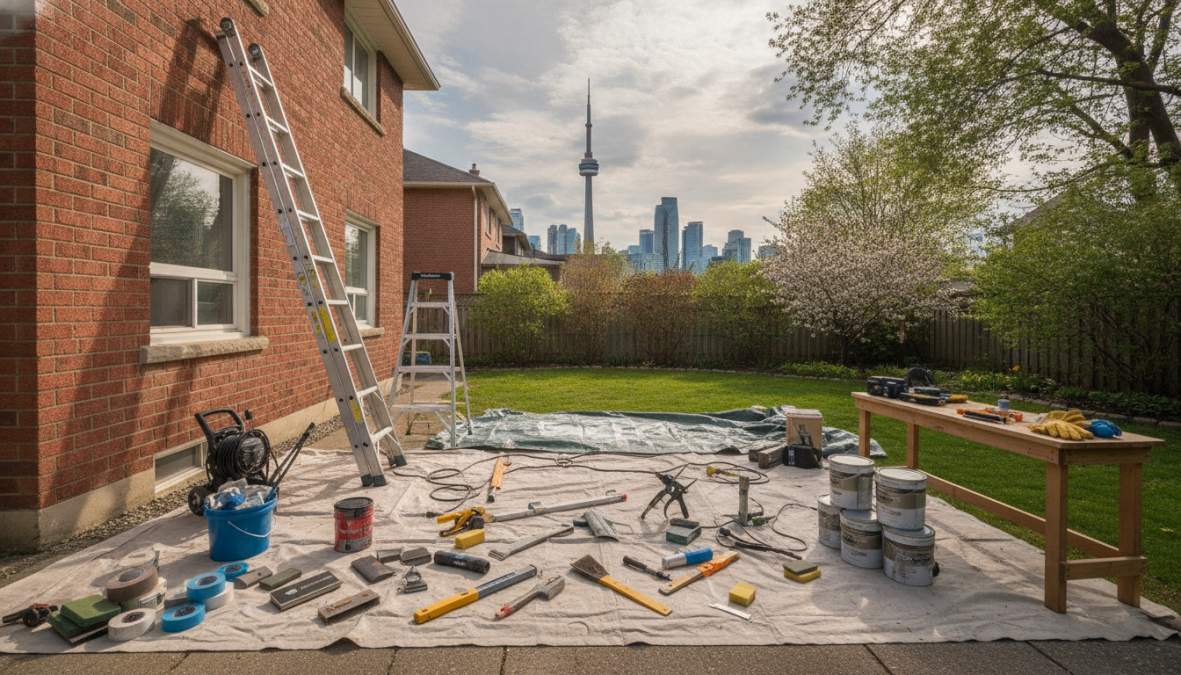
How to prepare exterior walls for painting in Toronto:
-
Inspect the substrate. Check for rot, loose caulking, and failed paint. Address structural issues first, paint cannot fix rot, and painting over failing old paint is the most common cause of premature failure.
-
Power wash the surface. Remove dirt, mildew, and chalking residue using a mildewcide solution on any biological growth. Allow at least 48 hours to dry in warm weather, longer in cool conditions.
-
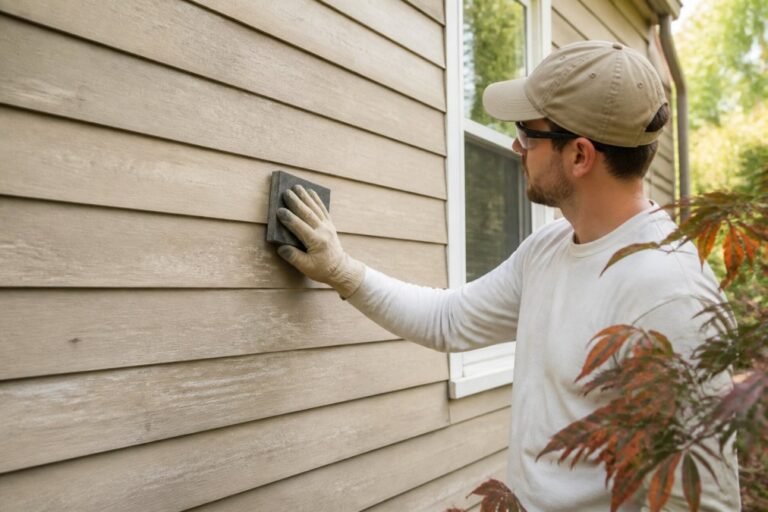
Scrape and sand. Remove all loose and peeling paint down to a firm edge. Feather edges with sandpaper to prevent visible ridges under the new coat.
-
Repair and caulk. Fill cracks with exterior-grade paintable caulk rated for seasonal movement. Allow full cure before painting.
-
Prime bare surfaces. Bare wood, repaired areas, and stained surfaces require a primer coat matched to the substrate and topcoat chemistry.
-
Check conditions before you start. Direct sun on a dark surface can raise surface temperature well above ambient, causing paint to dry too fast and leave brush marks. Paint in shade or during cooler parts of the day.
A common mistake is painting too late in the season without checking the technical data sheet. Each product has specific minimum application temperature and curing time requirements, ignoring those numbers by even a few degrees can produce a finish that looks fine initially but fails by the following spring. The Canada Mortgage and Housing Corporation’s homeowner guide to exterior maintenance provides useful guidance on maintenance cycles for Ontario homes.
Toronto’s climate does not forgive shortcuts in paint selection or surface preparation. Choosing the right acrylic latex formula, preparing the surface properly, and painting within the right seasonal window are the three decisions that determine whether your exterior finish lasts five years or fifteen. Soca Services Painting brings over a decade of Toronto-specific experience to every project, with a stress-free 4-step process, detailed project proposals, and finishes that hold up through Ontario winters. Get Your Free Estimate Today and find out what the right paint and preparation can do for your home’s curb appeal.
Frequently Asked Questions
What is the best time of year to paint the exterior of a house in Toronto?
The best time to paint a house exterior in Toronto is typically late spring through early fall, May to September, when ambient temperatures consistently stay between 10°C and 30°C. Avoid painting when surface temperatures drop below 10°C, as proper film formation requires adequate warmth. Some premium acrylic latex paints like Benjamin Moore Aura and PPG Weather King can be applied as low as 1.7°C-2°C, which can extend your painting season into early October if conditions are stable.
Is acrylic or oil-based paint better for Canadian weather?
For Canadian weather, 100% acrylic latex paint is generally the better choice. Acrylic binders remain flexible through freeze-thaw cycles, which is critical in Toronto's climate. Oil-based (alkyd) paints become brittle over time and are more prone to cracking and peeling as temperatures swing. Acrylics also dry faster, have lower VOC levels, and offer excellent adhesion and moisture resistance. Alkyds may still be preferred for specific substrates like bare metal trim, but for siding, acrylic latex is the professional standard.
How often should you repaint your house exterior in Toronto?
Most Toronto homes need exterior repainting every 7 to 10 years, though this depends on the paint quality, siding material, and sun exposure. South- and west-facing walls take more UV exposure and may show fading or chalking sooner. Premium paints like Sherwin-Williams Duration or Benjamin Moore Aura can extend intervals closer to 10 years. Wood siding typically needs repainting more frequently than fiber cement or vinyl. Regular inspection for blistering, peeling, or mildew growth can help you catch issues before they require costly repairs.
What type of paint is best for exterior wood siding in Toronto?
For exterior wood siding in Toronto, a 100% acrylic latex paint with a quality primer is the recommended approach. Wood expands and contracts significantly with Toronto's seasonal temperature swings, so flexibility in the paint's binder is essential to prevent cracking and peeling. Products like Benjamin Moore Aura or Sherwin-Williams Duration are well-suited for wood substrates. Always check the technical data sheet for the recommended primer and application temperature range to ensure proper adhesion and long-term durability on your specific wood substrate.
Can you paint a house exterior in Toronto in the fall?
Yes, you can paint a house exterior in Toronto in early fall, typically September and into early October, as long as daytime temperatures remain above 10°C and overnight temperatures don't drop near freezing during the curing time. Choose paints with low-temperature application ratings, such as Sherwin-Williams Resilience or PPG Weather King, which resist early moisture exposure. Always check the technical data sheet for minimum application and ambient temperature requirements, and avoid painting if rain is forecast within a few hours of application.
This article was written using GrandRanker