Table of Contents
- How Long Does Interior Painting Take? Room-by-Room Breakdown
- Factors Affecting Interior Painting Duration You Should Know
- Interior Painting Preparation Time and How Long to Wait Between Coats
- Professional vs. DIY Painting Time: Which Is Right for Your Project?
Last Updated: June 13, 2026
How Long Does Interior Painting Take? Room-by-Room Breakdown
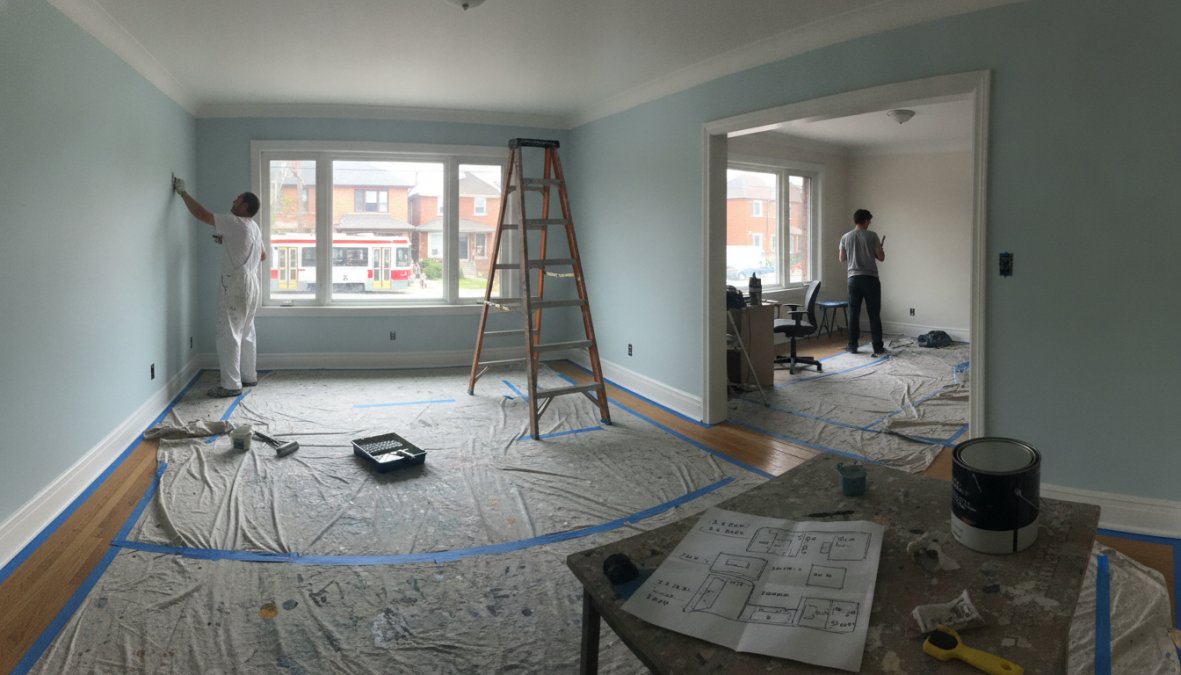
The honest answer: it depends on far more variables than most guides admit. At Soca Services Painting, we’ve completed hundreds of interior projects across Toronto, North York, Vaughan, and King City. A single bedroom refresh might wrap in a day; a full multi-story home could run a week or more. The key thing to understand: paint application is actually the fastest part. Prep work, primer, drying time between coats, and trim detail consistently consume more hours than rolling walls.
(/best-interior-paint-brands-canada/)ing Take? Room-by-Room Breakdown]
Here’s a practical room-by-room breakdown for a standard two-coat job with basic prep:
| Room | DIY Estimate | Professional Estimate |
|---|---|---|
| Small bedroom (10×10 ft) | 6-8 hours | 3-4 hours |
| Average bedroom (12×12 ft) | 8-10 hours | 4-5 hours |
| Living room (16×20 ft) | 12-16 hours | 6-8 hours |
| Kitchen | 10-14 hours | 5-7 hours |
| Bathroom | 4-6 hours | 2-3 hours |
| Full average-sized home | 4-7 days | 2-4 days |
These estimates assume standard 8-9 ft ceilings and walls in reasonable condition. A common mistake is planning around painting time alone, factor in furniture removal, masking, and drying windows before committing to a schedule.
For a single-story home in good condition, a professional crew can typically complete the full interior in 2-3 days. Build in at least one extra day as a buffer for touch-ups and curing time.
Factors Affecting Interior Painting Duration You Should Know
Several variables determine how long a project actually runs.
1. Square footage and room count
More space means more surface. Stairwells and hallways add disproportionate time due to cut-in work and awkward roller angles.
2. Wall condition
This is the single biggest wildcard. Older Toronto homes with hairline cracks, nail pops, or water stains require surface repair before a single coat goes on. Skipping this step ruins the finish.
3. Number of coats required
Most quality jobs require two coats. Dramatic color changes, dark navy to white, often need three. According to Sherwin-Williams painting guides, a quality primer over dark or stained surfaces reduces finish coats needed and improves adhesion.
4. Paint type and quality
Higher-quality paints require fewer coats. Flat and matte finishes apply faster than semi-gloss or high-gloss, which demand more careful application.
5. Ceiling height
Anything above 10 ft requires scaffolding or specialized equipment, slowing the pace considerably.
6. Number of painters on the crew
A solo painter on a full house takes 5-7 days. A two-person crew cuts that roughly in half.
Never skip furniture removal and proper masking to save time. Cutting corners on prep leads to paint on floors, trim, and fixtures that takes far longer to clean up than the prep would have taken.
Interior Painting Preparation Time and How Long to Wait Between Coats
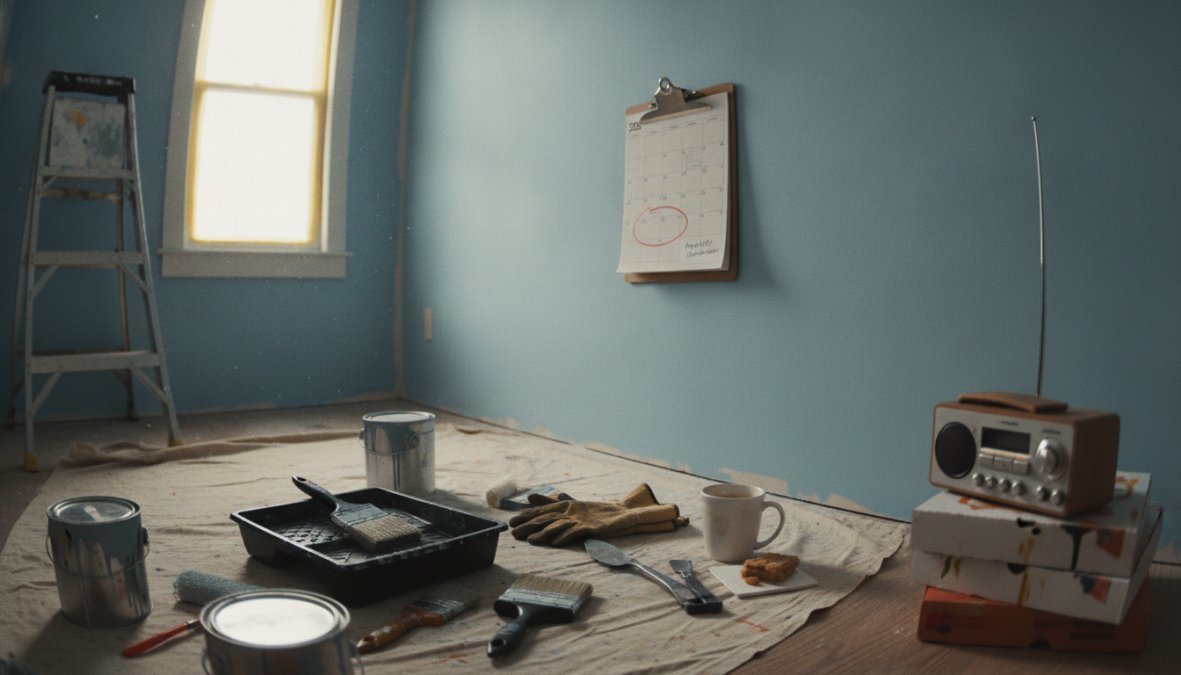
Preparation typically accounts for 30-40% of total project hours on any well-executed paint job.
A thorough prep sequence:
- Furniture removal and room clearing – Move furniture out or to center and cover with drop cloths (30-60 minutes per room)
- Surface cleaning – Wipe down walls to remove dust and grease; kitchens need degreasing before paint adheres (30-45 minutes per room)
- Surface repair – Fill holes and cracks, sand smooth once dry (1-3 hours depending on condition)
- Painter’s tape application – Mask trim, window frames, outlets, and ceiling edges (45-90 minutes per room)
- Primer application – Required for new drywall, stain-blocking, or significant color changes (add 2-4 hours plus drying time)
How long to wait between coats of paint:
- Latex/water-based paints: minimum 2-4 hours between coats
- Oil-based paints: 6-8 hours minimum, often overnight
- Primer: typically 1-3 hours before the first finish coat
Humidity and temperature matter. Toronto’s humid summers slow drying; dry winter indoor air speeds it up. According to Benjamin Moore’s professional painting resources, applying a second coat before the first has fully dried leads to peeling, streaking, and uneven sheen requiring sanding and repainting.
Drying time vs. curing time: a distinction most guides skip
- Drying time is when paint feels dry to the touch, typically 1-4 hours for latex.
- Curing time is when paint reaches full hardness, 2-4 weeks for latex.
You can repaint after drying time, but avoid scrubbing walls or placing furniture against them until fully cured. Washing walls too soon leaves permanent marks.
Interior painting preparation time and proper drying windows between coats are non-negotiable for a durable finish. Rushing either step is the most common reason homeowners end up repainting within a year.
Professional vs. DIY Painting Time: Which Is Right for Your Project?
The gap is larger than most people expect, and it’s not just about speed.
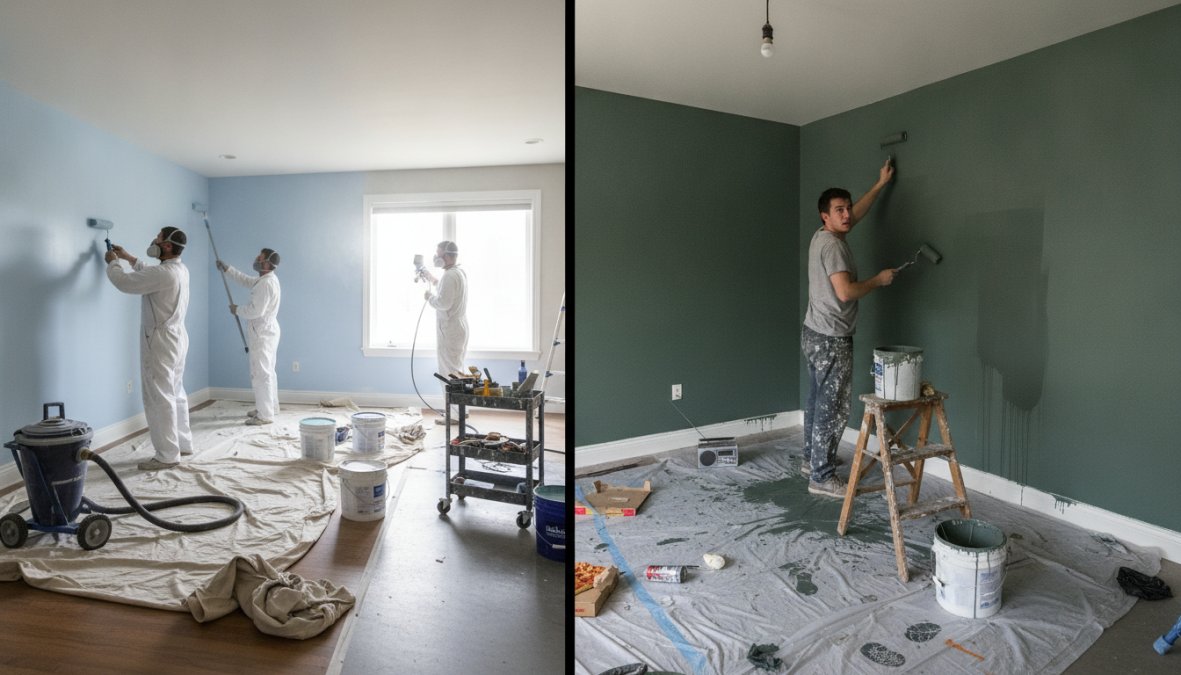
A professional painter completes an average-sized room in 4-5 hours. Most DIYers take 8-12 hours for the same room, spread across a weekend. The difference comes from tool quality, technique efficiency, and experience with cut-in work along trim and molding.
Where DIY painting makes sense:
- Small, simple rooms with good wall condition
- Single-color refreshes staying close to the existing color
- Budget-constrained projects where labor cost is the primary concern
Where professional painters deliver clear value:
- Full home interiors where disruption needs to be minimized
- Significant color changes requiring multiple coats and primer
- Homes with detailed trim, high ceilings, stairwells, or complex layouts
- New builds where finish quality directly affects home value
The honest trade-off: DIY saves on labor but extends disruption significantly, 3-4 weekends versus a professional crew finishing in 2-3 days. As documented in HomeAdvisor’s guide to interior painting costs, professional interior painting consistently ranks among the highest-ROI home renovation investments when measured against resale value.
The spray painting advantage
Professional spray equipment covers large surfaces faster with a more uniform finish than roller application, particularly effective on new drywall, ceilings, and cabinetry. It requires proper masking and experience to avoid overspray, placing it firmly in professional territory.
For homeowners near Toronto, Vaughan, or North York searching for reliable painters near me, the real question isn’t just time, it’s whether finish quality and reduced disruption justify the investment. For most full-home projects, the answer is yes.
Planning an interior painting project in Toronto is harder than it looks, especially with older homes that need surface repair before a brush touches the wall. Soca Services Painting brings over a decade of experience to residential and commercial projects across the GTA, offering a simple 4-step process, detailed project proposals, and spray painting expertise that keeps timelines tight and finish quality high. Get Your Free Estimate Today and find out exactly how long your specific project will take.
Frequently Asked Questions
How long does it take to paint a 12×12 room?
A 12×12 room typically takes a single professional painter around 4 to 6 hours to complete, including cut-in work along trim and molding, roller application, and two coats of paint. For a DIY painter, the same room may take a full day or spread across two days once you factor in prep work, furniture removal, applying painter's tape, and waiting for each coat to dry properly before applying the next.
How long should you wait between coats of paint?
Most interior latex paints are dry to the touch within 1 to 2 hours, but you should wait at least 2 to 4 hours between coats for proper adhesion and finish quality. Oil-based paints require longer, often 6 to 8 hours or more. Keep in mind that drying time and curing time are different: paint may feel dry in hours but can take 2 to 4 weeks to fully cure and harden, which matters before moving furniture back.
Why does interior painting take so long?
Interior painting takes longer than most homeowners expect because the actual painting is only part of the process. Prep work, including surface repair, sanding, priming, and applying painter's tape, can take as long as the painting itself. Add in drying time between coats, the number of coats required based on wall condition and paint color, furniture removal, and clean-up, and a paint project timeline adds up quickly, especially in larger or older homes.
How long does paint take to dry before you can move furniture back?
You can typically move light furniture back into a room 24 hours after the final coat, but for full protection you should wait at least 2 weeks for the paint to cure completely. Moving heavy furniture too soon can scuff or dent the finish, especially with flat or matte paints. Professional painters will advise you on the specific drying and curing time based on the paint type and finish used in your home.
Does painting a room take more than one day?
For a DIY painter, yes, most rooms take more than one day once you account for interior painting preparation time, multiple coats, and drying time between coats. A professional painter or paint crew can often complete an average-sized room in a single day because of their labor efficiency, proper tools, and experience with cut-in and roller application techniques. Complex rooms with high ceiling height or significant surface repair may take longer even for professionals.
This article was written using GrandRanker