Table of Contents
- Toronto Winters and Exterior Paint: What You’re Up Against
- Signs of Exterior Paint Failure to Watch For
- Best Exterior Paint for Cold Weather and Hiring Professional Painters in Toronto
- Frequently Asked Questions
Last Updated: September 11, 2026
Toronto Winters and Exterior Paint: What You’re Up Against
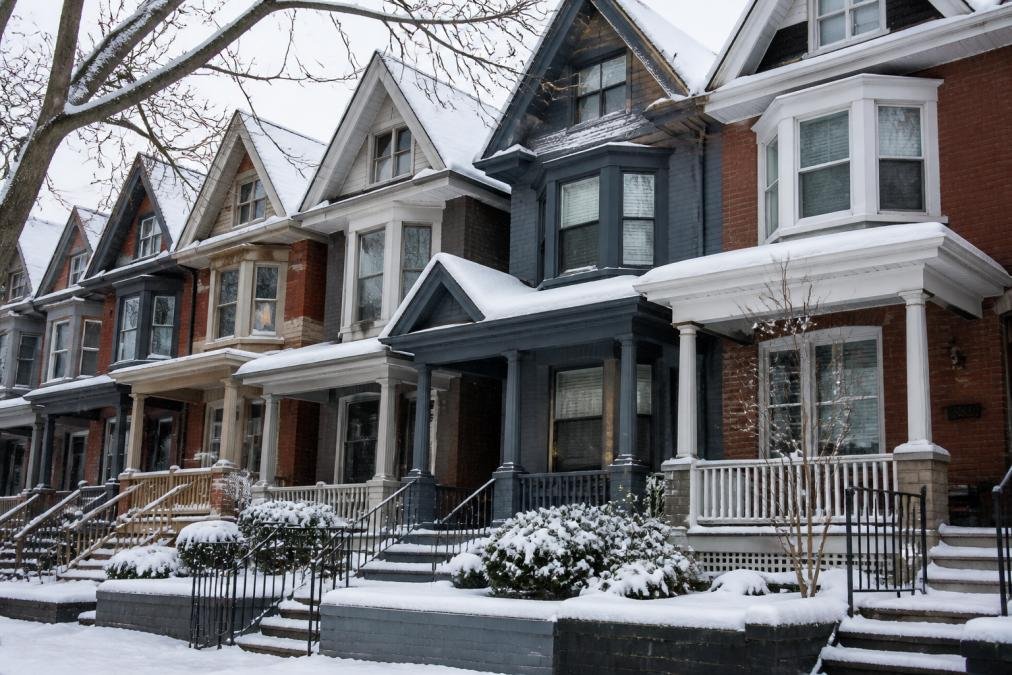
Toronto winters punish exterior paint with freeze-thaw cycles, lake-effect moisture, and sudden temperature drops, so paint that survived a mild season can fail fast.
How to maintain exterior paint in Toronto winters starts with understanding the enemy: water seeps into cracks, freezes, expands, then thaws, breaking down adhesion from underneath.
At Soca Services Painting, we’ve spent over a decade watching Ontario climate stress hit siding, trim, and doors, homes near the lake and in older Toronto neighborhoods take the hardest hits.
The most expensive mistake is repainting in late fall near freezing. Paint that can’t cure traps moisture, and the first hard freeze peels it off in sheets by spring.
Signs of Exterior Paint Failure to Watch For
Toronto winters don’t damage every surface the same way. Catching symptoms early, ideally in a spring assessment right after the thaw, is the difference between a touch-up and a full repaint.
What each symptom actually means
- Blistering: moisture trapped under the film from painting over a damp substrate in late fall.
- Peeling: adhesion failure from freeze-thaw cycles lifting the coating.
- Cracking and crazing: thermal contraction on south- and west-facing walls.
- Chalking: UV breakdown of the binder.
- Mildew and dark staining: condensation on shaded north walls and under eaves.
- Efflorescence (white powder): moisture migrating through masonry.
How winter hits different materials in Toronto
- Wood siding and trim: expands and contracts most, showing cracking and paint loss first.
- Stucco: porous, holding moisture longer; watch hairline cracks widen after freeze-thaw.
- Vinyl siding: paint adhesion fails at overlaps and fasteners.
- Brick and masonry: trapped moisture causes peeling in sheets.
- Metal railings and flashing: condensation and road-salt splash accelerate rust creep.
The tape test, and when to call a pro
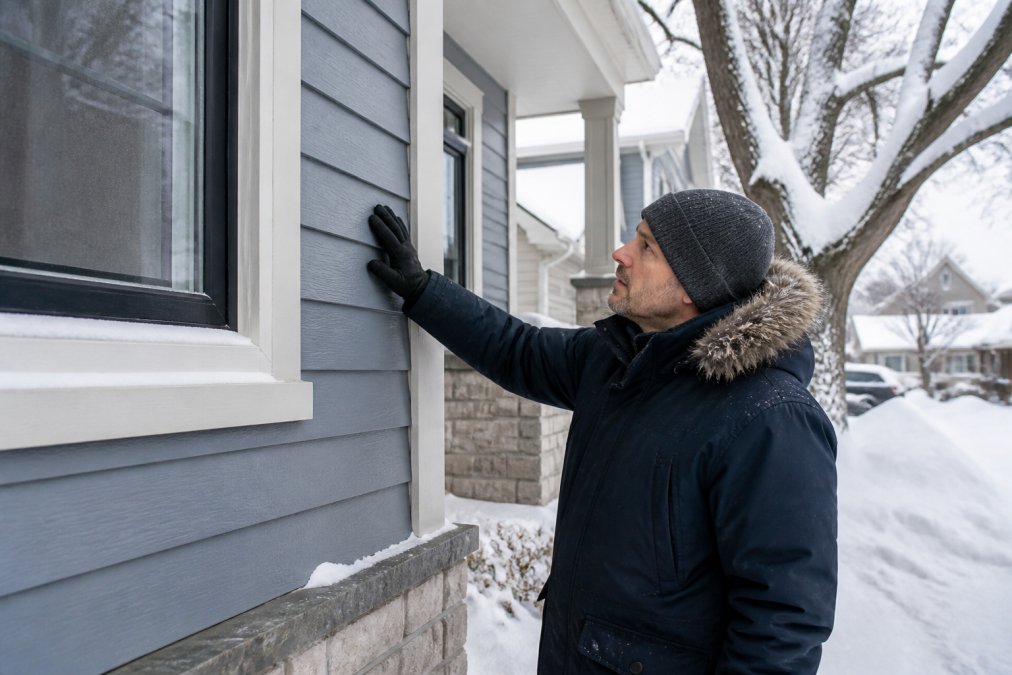
Press strong tape onto painted area, pull straight off. If paint lifts, adhesion is failing and a spot repair won’t hold.
A homeowner can handle small touch-ups on a dry, mild day. Call a professional for peeling across more than a small patch, blistering that returns after repair, soft or crumbling substrate, or moisture from inside the wall, these need preparation, not just paint. Contact Soca Services for a free estimate and we’ll tell you honestly whether you’re looking at a touch-up or a repaint.
Best Exterior Paint for Cold Weather and Hiring Professional Painters in Toronto
The best exterior paint for cold weather is a 100% acrylic latex for low-temperature application, paired with a quality primer and flexible topcoat (paint.org). Sherwin-Williams and Benjamin Moore make lines for Canadian climates, look for products labeled for application down to around 4°C to 10°C, and read the product data sheet.
The conditions that actually matter
Paint cares about the surface, not the calendar. Three numbers decide whether a coat cures or fails:
- Ambient temperature: most exterior acrylics need roughly 10°C or warmer (paint.org).
- Dew point: the surface must be at least 3°C above the dew point, or condensation forms under the film (paint.org).
- Curing window: the coating needs dry conditions through its full cure time.
A warm late-October afternoon can tempt a quick repaint, then a hard freeze overnight means the paint never cures and peels in sheets by March.
Toronto micro-climates change the equation
Toronto isn’t one climate. Homes near Lake Ontario face higher humidity and salt-laden air that accelerate paint degradation:
- Lakeshore and downtown Toronto: more condensation, mildew pressure, and faster chalking.
- North York and Vaughan: colder overnight lows and stronger freeze-thaw swings that stress adhesion.
- King City and the northern suburbs: longer winters and later springs, so the safe painting window is shorter.
If you’re unsure which category your home falls into, have a professional assess it before you buy paint.
DIY vs. professional: where the line sits
A homeowner can safely wash mildewed areas, scrape loose paint and spot-prime small areas on a dry, mild day, and store leftover paint indoors away from freezing temperatures. Call a professional when the substrate is soft, chalky, or crumbling; peeling covers a large area or keeps returning; the work involves heights, ladders, or detailed trim; or the paint is still under warranty, improper prep or application can void it.
Why professional painters in Toronto make the difference
Hiring professional painters in Toronto pays off because the job is about reading conditions, not just rolling paint. Pros track the forecast, measure dew point and surface temperature, prep the substrate, and store paint correctly through winter.
At Soca Services Painting, we’ve spent over a decade working on Toronto, Vaughan, North York, and King City homes, planning exterior work around the climate. If you’re weighing a spring repaint or fall touch-up, get a free estimate and we’ll tell you what your home needs, and when.
If you’re planning interior work while the exterior waits for warmer weather, try our popcorn ceiling removal calculator and instant interior painting quote tools to scope the job before you call.
Frequently Asked Questions
What temperature is too cold for exterior painting in Toronto?
Most exterior paints need an ambient temperature of at least 10°C to cure properly. In Toronto winters, temperatures often drop below this threshold, which prevents paint from forming a durable bond. If you must paint in cold weather, choose a paint formulated for low temperatures and check the label for its minimum application temperature. For best results, schedule exterior painting between late spring and early fall.
How does Toronto’s freeze-thaw cycle affect exterior paint?
Toronto’s frequent freeze-thaw cycles cause moisture to seep into small cracks in the paint film. When that moisture freezes, it expands and pushes the paint away from the substrate, leading to peeling, blistering, and cracking. Over time, this cycle accelerates paint failure. Proper surface preparation and a flexible, weather-resistant topcoat help your exterior coating withstand these cycles.
Can I touch up exterior paint during a Toronto winter?
Spot repairs in winter are risky because cold temperatures prevent proper curing and adhesion. If you spot minor damage, wait for a mild day above 10°C and use a paint designed for cold-weather application. For larger areas, it’s best to wait until spring. Contact Soca Services for a professional assessment and to schedule your exterior painting project when conditions are right.
Toronto winters don’t forgive rushed prep work or the wrong coating. Soca Services Painting brings over a decade of experience, a simple 4-step process, and detailed project proposals so you know exactly what’s included before work begins. Contact Soca Services for a free estimate and keep your exterior paint holding strong through every thaw.