You've chosen the colour, checked the forecast, and planned the work for a clear Toronto weekend. Then the fresh paint starts to blister on the sun-facing wall, or it remains soft after nightfall. The problem may not be the product or the painter. It may be the exterior painting temperature, measured in the wrong place or for too short a period.
For homeowners, property managers, contractors, and commercial owners across Toronto, Vaughan, North York, and King City, successful home painting depends on more than the afternoon air temperature. The wall's surface temperature, humidity, dew point, overnight lows, sun exposure, and rain forecast all affect how the coating bonds and cures. A professional crew checks those conditions together so the finish has a better chance of remaining smooth, durable, and properly adhered.
Why Exterior Painting Temperature Matters More Than You Think
A Toronto homeowner might schedule exterior painting after seeing a warm, sunny forecast. The air feels comfortable, the siding looks dry, and the project seems ready to begin. Yet a wall in direct sun can become much hotter than the surrounding air, while a shaded wall may remain cool and damp. If the coating dries too quickly on one elevation and too slowly on another, the finished colour and texture can vary across the same home.
Paint needs time to spread, bond, and form a continuous film. Excessive heat can remove water from latex or acrylic paint before the coating levels properly. Cold conditions can slow curing, especially when temperatures fall overnight. Humidity and condensation create another problem by keeping moisture near the surface while the coating is trying to set.
Practical rule: A clear afternoon isn't automatically a safe painting day. The wall and the next night matter as much as the forecast high.
The commonly used California guidance for exterior work places air temperature in a 50°F to 85°F range, with surface temperatures below 90°F and no rain forecast for at least 24 hours. Benjamin Moore's exterior temperature guidance reflects the broader principle that manufacturers set application limits for both the air and the coating surface. Toronto painters apply the same thinking to a different climate, where warm summer afternoons, cool evenings, shaded walls, and humidity can all affect the result.
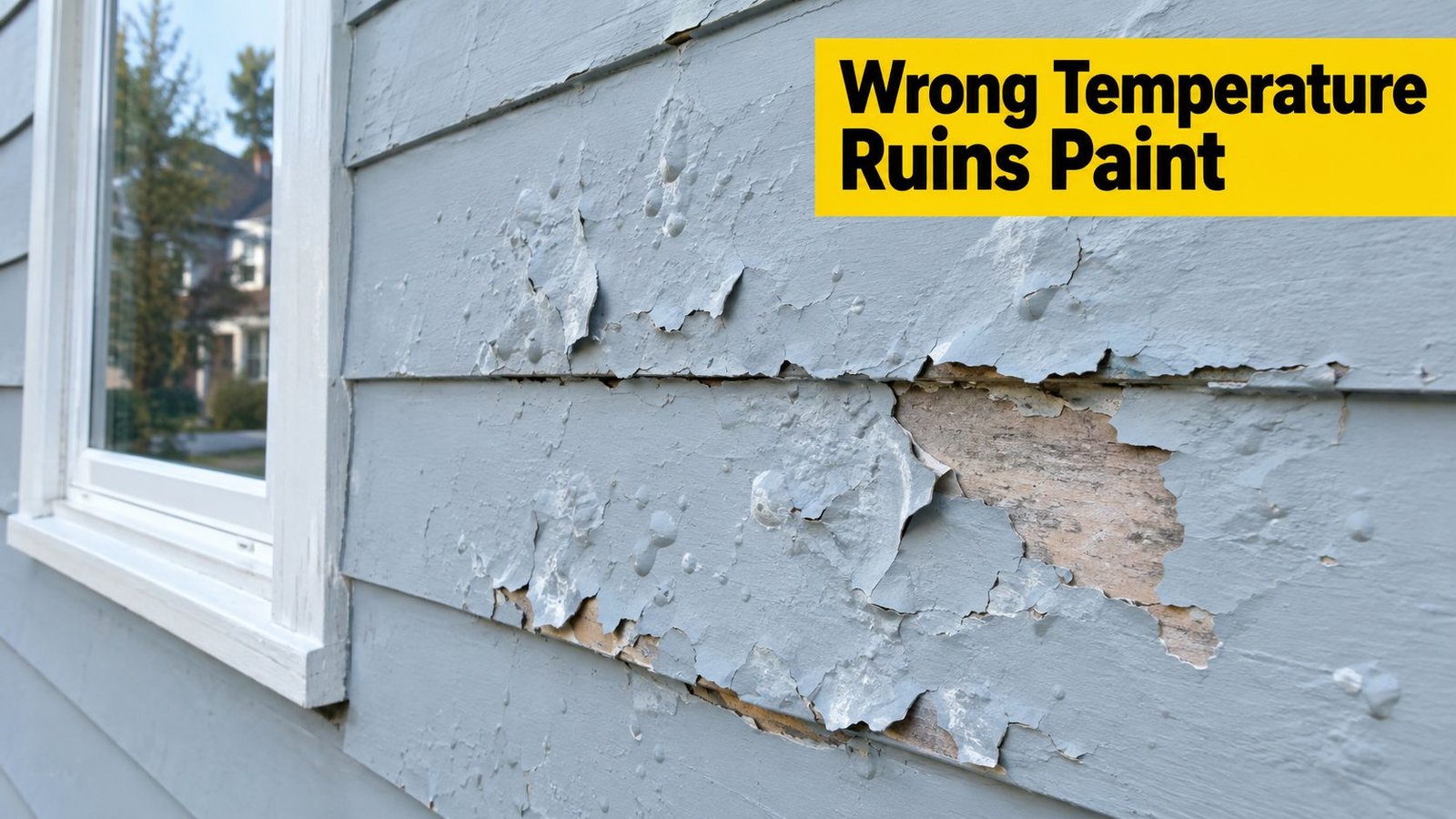
Paint failure can appear as peeling, cracking, bubbling, blistering, lap marks, or uneven sheen. Sometimes the defect develops quickly. Sometimes weak adhesion stays hidden until the wall experiences moisture and seasonal movement.
Soca Services approaches exterior work as a timing and preparation problem, not a colour application. Homeowners can also protect the result with routine maintenance, including the practices described in this guide to maintaining exterior paint through Toronto winters.
Ideal Temperature and Humidity Ranges for Exterior Painting
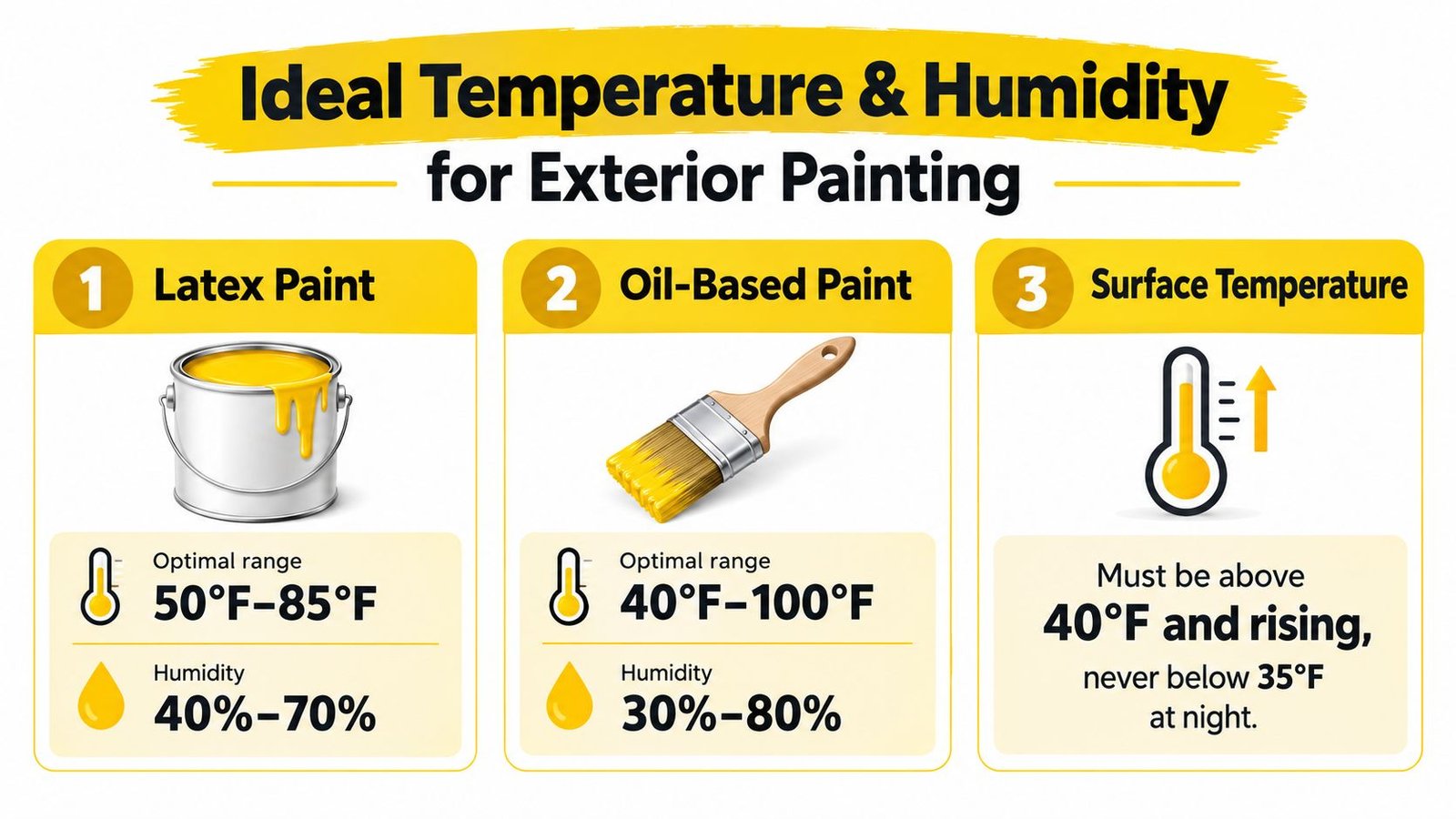
The safest starting point is the paint manufacturer's label, followed by a reading of the actual wall. For many latex and acrylic exterior systems, the practical target is 50°F to 85°F for air temperature, while the surface should remain below 90°F and the forecast should stay dry for at least 24 hours. Benjamin Moore's temperature recommendations explain why a product's permitted range matters during application and curing.
A Canadian HVAC and painting FAQ places the ideal range for most latex paints at 10°C to 25°C, with a minimum near 5°C. It identifies 40% to 60% humidity as the preferred band and warns that humidity above 70% can interfere with drying. Randalls' guidance on painting in humid or cold weather provides useful context for Toronto homeowners who are comparing a warm forecast with damp outdoor conditions.
Think of curing as the paint building a flexible skin. If the coating loses moisture too quickly, the skin can form before the material underneath has levelled and bonded. If the air and surface stay too cool, the paint may remain soft and take longer to develop its intended hardness.
How the main conditions work together
- Air temperature affects the general drying environment, but it doesn't tell you how hot a dark or sunlit wall has become.
- Surface temperature determines the conditions where the brush or roller deposits the coating.
- Humidity controls how readily moisture leaves the film. Damp air slows drying.
- Overnight temperature matters because the coating may still be curing after the crew leaves.
- Rain and condensation can disturb the surface before the film has set.
Oil-based products have different limits, but they still require careful planning. The Canadian guidance cited above places oil-based paints in a best-use range from 5°C to 32°C, with a minimum near 0°C, while latex products generally need warmer conditions. Always follow the specific Sherwin-Williams or Benjamin Moore product data rather than transferring one product's range to another.
Material also changes the preparation process. A homeowner working with fibre cement siding can review this practical paint fibre cement siding guide for substrate-specific considerations. For broader seasonal planning in Canada, Soca Services also outlines the best time of year to paint an exterior.
How Heat Cold and Humidity Affect Paint Adhesion and Finish
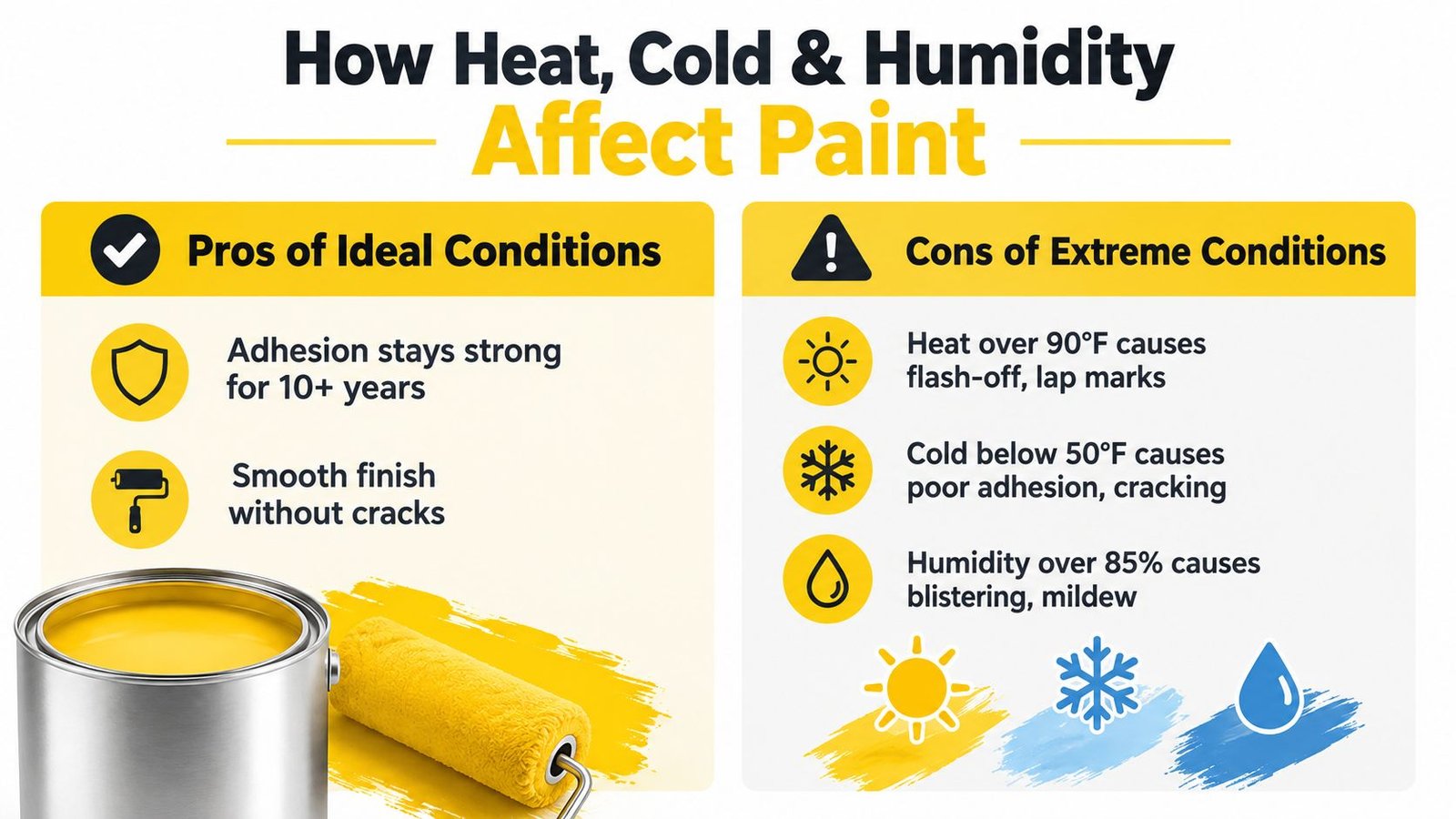
Heat and cold don't create the same failure. Each one changes the paint film in a different way, which is why a single “good painting temperature” doesn't answer every job-site question.
On a hot wall, water or solvent can flash off rapidly. The paint loses open time, so the painter has less opportunity to maintain a wet edge. That can produce lap marks, uneven sheen, visible overlap lines, and poor film formation. Direct sun makes the problem worse because the substrate can become much hotter than the air.
Cold creates the opposite challenge. The coating dries slowly, and a nighttime temperature drop can interrupt the process before the paint has properly coalesced. Some modern low-temperature coatings expand the workable shoulder-season window, but the product label remains the deciding authority.
Three common failure mechanisms
Heat can make acrylic or latex paint feel dry before it has formed a sound film. This is especially risky on dark colours and exposed elevations that absorb sunlight.
Cold can leave the coating vulnerable while it remains soft. Traditional latex-based paints may need temperatures above 60°F to cure properly, as described in the technical application guidance from Facade Colorizer.
Humidity slows moisture release and can increase the risk of blistering, adhesion problems, and mildew-related concerns. A Toronto guide cites Benjamin Moore's requirement for a surface temperature of at least 10°C, along with no rain for 24 to 48 hours after application. It also warns that July and August humidity in Toronto can reach 70% to 80%, conditions that raise the risk of blistering and adhesion failure. See this Toronto exterior painting timing guide for the local application context.
Warning signs include:
- Lap marks: The painter couldn't keep adjoining sections wet enough to blend.
- Blisters or bubbles: Moisture or heat disrupted the developing film.
- Peeling: The coating failed to bond firmly to the substrate.
- Cracking: The film dried or cured under unsuitable conditions and lost flexibility.
- Uneven sheen: Different wall temperatures changed the rate of drying across the elevation.
The practical lesson is simple. A summer day can fail because of excessive heat just as easily as a cool day can fail because of slow curing.
For a visual explanation of the relationship between conditions and paint performance, watch this overview before choosing a date:
Homeowners dealing with bubbling after a damp spell can also review Soca Services' explanation of why exterior paint bubbles in humid weather.
Air Temperature Versus Surface Temperature and Overnight Lows
The number shown in a weather app describes the air, not the wall. A pale wall in shade may remain relatively cool, while a dark south-facing wall can heat quickly under direct sun. That difference changes how the coating spreads and how long the painter has to maintain a wet edge.
Dew point adds another layer. When a surface cools near the dew point, condensation can form even if the wall looked dry earlier. A professional assessment therefore considers the wall's condition, humidity, dew point, and overnight forecast rather than relying on a single midday reading.
Painting Condition Check Before You Start
| Condition to Check | Safe Range for Premium Acrylics | Why It Matters |
|---|---|---|
| Air temperature | Follow the product label, with many acrylic systems targeted around 50°F to 85°F | Supports predictable application and curing |
| Surface temperature | Below 90°F for the California-style operating window, with the product's own minimum respected | Prevents sun-heated walls from forcing premature drying |
| Overnight low | Keep the wall and air within the product's curing limits after application | Gives the film time to coalesce and set |
| Humidity | Prefer 40% to 60%, while humidity above 70% can interfere with drying | Helps moisture leave the coating at a controlled rate |
| Rain forecast | No rain for at least 24 hours, with some products requiring 24 to 48 hours | Protects the uncured film from water damage |
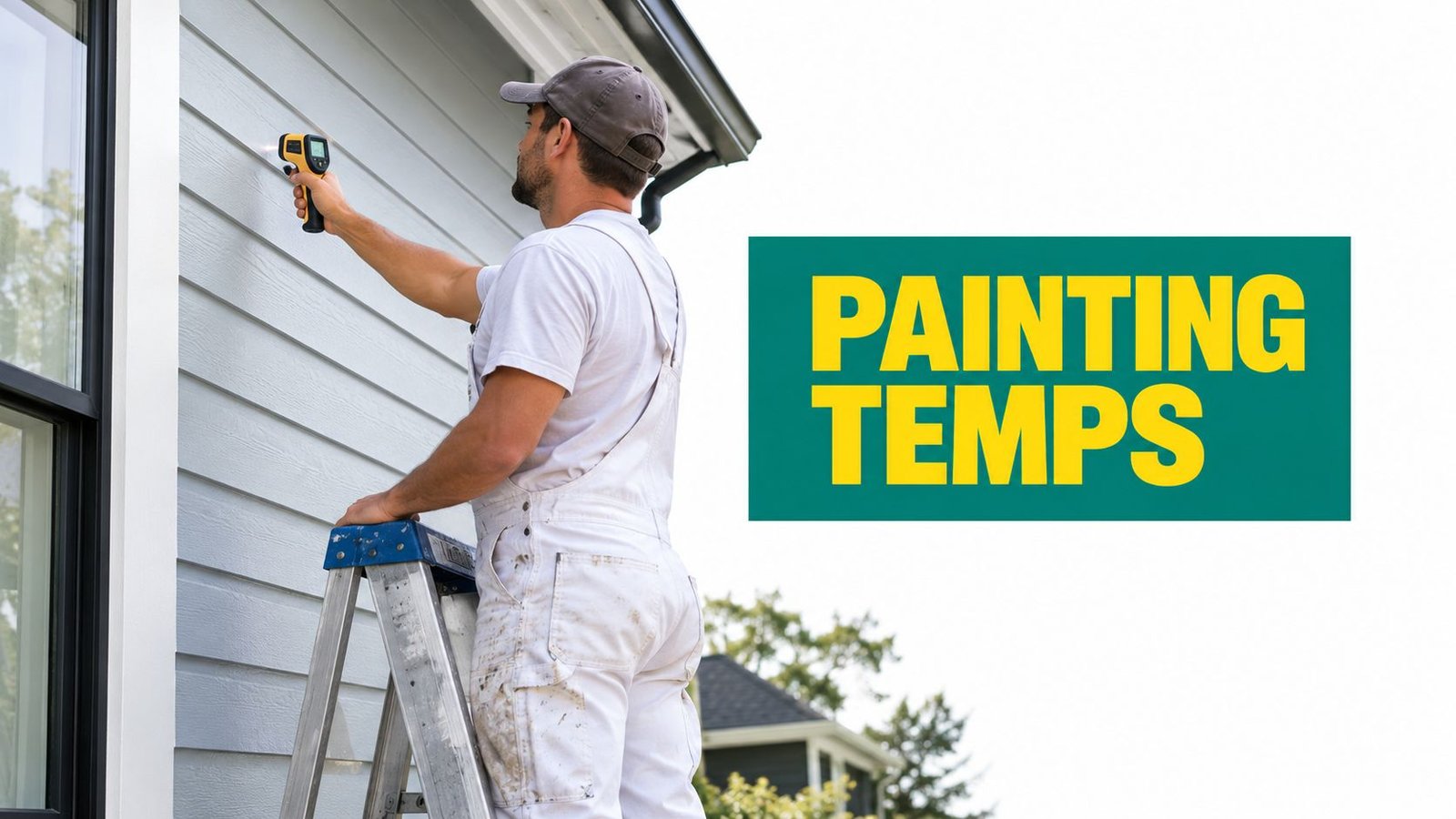
A crew can use an infrared thermometer to compare shaded and sun-exposed elevations. The reading should be taken on the actual substrate, not only on a nearby railing or in the open air. Check again as the sun moves, particularly on dark siding, trim, and masonry.
For cool-weather projects, review the cold-weather exterior painting guide and confirm the product's minimum temperature for both application and curing. If the wall is damp, the forecast is unstable, or the next night falls outside the coating's requirements, postponing the work is usually safer than trying to make the schedule fit.
Best Seasons and Daily Timing for Exterior Painting in Toronto
Toronto's most reliable exterior painting windows usually arrive from late spring through early fall, but the calendar alone doesn't guarantee suitable conditions. A mild coastal climate can support painting through much of the year in California, while Toronto crews must account for stronger seasonal swings, damp mornings, hot summer surfaces, and cooler nights.
In the GTA, the same day can behave differently in Toronto, Vaughan, North York, and King City. A shaded north wall may be ready later than a sunny south wall. A property surrounded by paving, glass, or dense urban surfaces can hold more heat than an open suburban site.
Seasonal planning
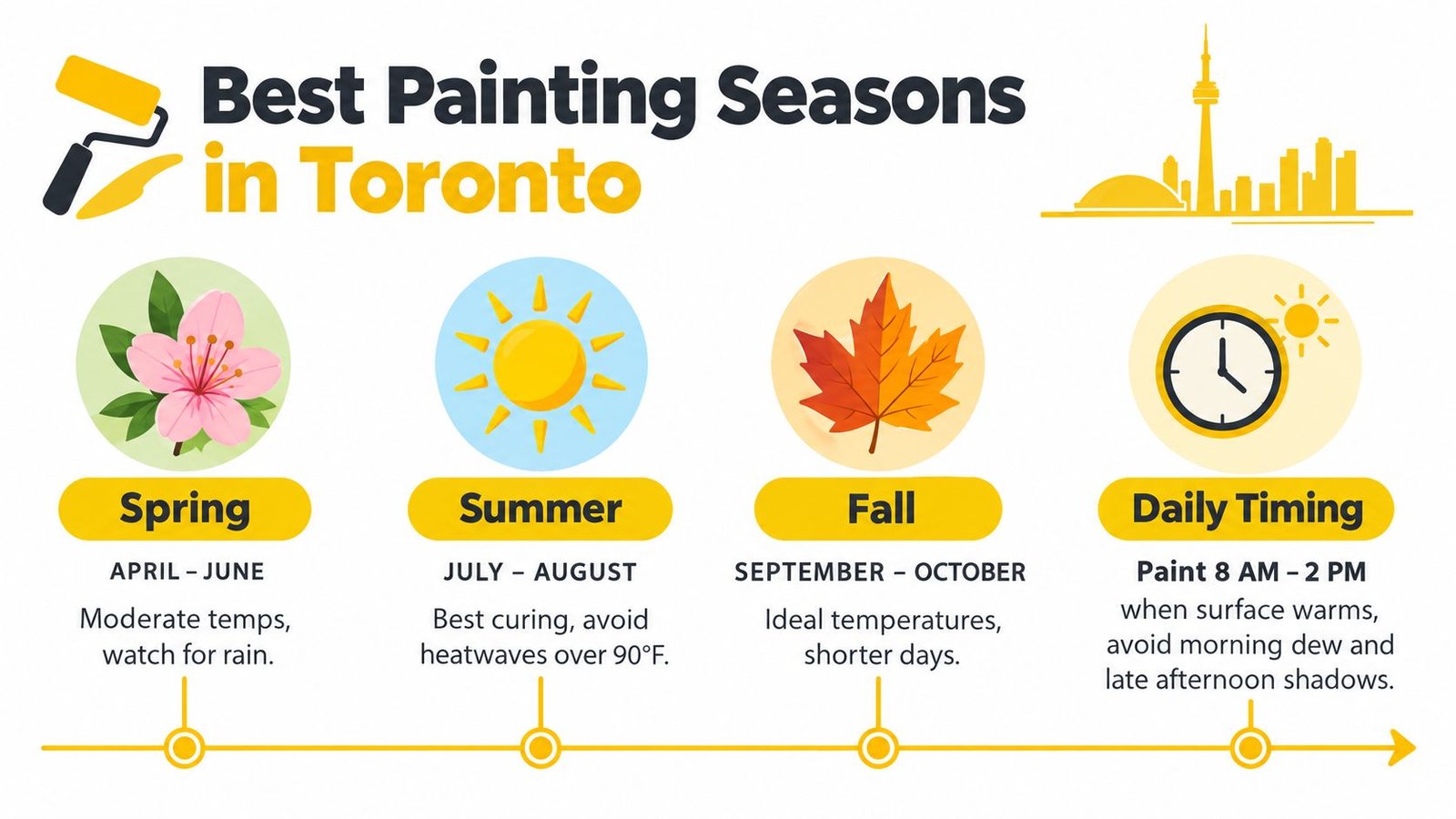
Late spring often provides manageable temperatures, but morning dew and rain still require attention. Start after surfaces have dried and confirm that the forecast remains suitable through the curing period.
Summer can offer good curing conditions, yet July and August humidity can reach 70% to 80% in Toronto, according to Shaq's Toronto painting guidance. Heat waves and sun-exposed walls can become the bigger risk, particularly with dark colours, large facades, and fast-moving commercial work.
Early fall often brings comfortable application temperatures, but shorter days and cooler evenings reduce the time available for the coating to settle. Crews need to finish early enough to avoid late-day shade and overnight cooling.
Shoulder-season work may be possible with a coating specifically designed for lower temperatures. Product selection must come before scheduling, not after.
Daily timing
Morning can be useful once dew has evaporated, especially on walls that receive strong afternoon sun. Mid-morning through early afternoon often gives the surface time to warm while leaving a reasonable curing period before evening. Avoid applying to a wall that is still cold and shaded, or to one that has become excessively hot under direct sunlight.
For a large home or commercial property, plan by elevation. A crew may work on the shaded side first, then move around the building as the sun changes. That approach helps keep the substrate within the product's working range instead of treating every wall as though it has the same temperature.
Contractor Best Practices That Ensure Lasting Professional Results
A durable finish comes from a controlled process. Temperature planning matters, but it can't compensate for loose paint, contaminated siding, unsealed gaps, or a damp substrate. Professional exterior painting combines preparation, measurement, product selection, and disciplined application.
Preparation comes before the forecast
The crew should inspect the substrate for peeling, chalking, mildew, damaged caulking, and areas that hold moisture. Scraping, sanding, washing, and spot priming create a stable base for the finish coat. Moisture testing is especially important where siding, trim, masonry, or previous coatings show signs of water exposure.
The surface also needs a direct temperature check. An infrared thermometer helps identify a sun-heated wall that looks acceptable according to the air forecast. A moisture meter can reveal dampness that isn't visible to the eye.
Product choice and application control
Sherwin-Williams and Benjamin Moore offer exterior systems with different temperature requirements, sheen options, and substrate recommendations. The team should match the primer and finish to the existing surface, the chosen colour, and the expected weather rather than treating every project as interchangeable.
Application generally works best during a stable daytime window, often from mid-morning into the afternoon after dew has cleared. Painters should maintain a wet edge, avoid overworking paint as it begins to set, and adjust their sequence for sun and shade. Dark wall colours deserve extra caution because they can absorb more heat and shorten working time.
Quality check: The coating isn't finished when the brush leaves the wall. The team should protect the fresh film through the manufacturer's required curing period.
Fresh paint needs protection from rain, condensation, freezing conditions, and excessive heat after application. Many exterior products require a dry period of 24 to 48 hours, so the crew should review the forecast beyond the final coat instead of stopping at the project completion time.
Soca Services Painting provides exterior and interior painting services in Toronto with a process built around preparation, product selection, and weather-aware application. Property managers and commercial clients can use the same approach to coordinate access, tenant communication, and work sequencing without sacrificing finish quality.
Plan Your Exterior Painting Project With Confidence
The safest exterior painting temperature isn't one isolated number. It's a combination of a suitable air range, a manageable wall surface, controlled humidity, a dry forecast, and overnight conditions that support curing.
For many acrylic and latex systems, start by checking the 50°F to 85°F air range, then confirm that the surface stays below the applicable maximum. Treat humidity above 70% as a warning sign, and remember that preferred humidity may be closer to 40% to 60%. Check the wall itself, watch the dew point, and review the next 24 to 48 hours rather than relying on a single sunny afternoon.
Toronto's summer heat can create just as much trouble as cold weather, particularly on dark, exposed facades. Late spring, early fall, and carefully selected summer mornings can work well when the product and site conditions match. Vaughan, North York, King City, and central Toronto properties may each need a different sequence because shade, wind, paving, and building orientation change surface behaviour.
Timing is as important as wall colours, primer, and finish selection. If you want a durable result without guessing at the forecast, Contact Soca Services for a professional assessment, Get a free estimate, or Learn more on our website before choosing your project date.
Soca Services Painting offers professional exterior and home painting for Toronto and GTA properties, with weather-aware planning, careful preparation, and product selection suited to the surface. Visit Soca Services Painting to arrange an estimate and plan your exterior work around the temperature, surface, and curing conditions that protect the finish.