Table of Contents
- Best Weather for Staining a Fence: Temperature and Timing
- How Long to Wait After Rain to Stain Fence
- Best Time of Year to Stain Fence in Toronto
- How to Prepare Fence for Staining: Surface Readiness
Last Updated: August 20, 2026
Best Weather for Staining a Fence: Temperature and Timing
Getting the weather right is the difference between a fence stain that lasts five years and one that fails in two. The best weather for staining a fence requires temperatures between 15°C and 25°C, humidity below 85%, and no rain in the forecast for at least 48 hours after application. The wood surface temperature matters more than the air temperature; a fence in direct morning sun can be 10 degrees warmer than the ambient air, which changes how the stain absorbs and cures.
At Soca Services Painting, we’ve spent over a decade helping Toronto homeowners navigate these conditions. The difference between a professional-quality finish and a patchy, peeling mess often comes down to timing.
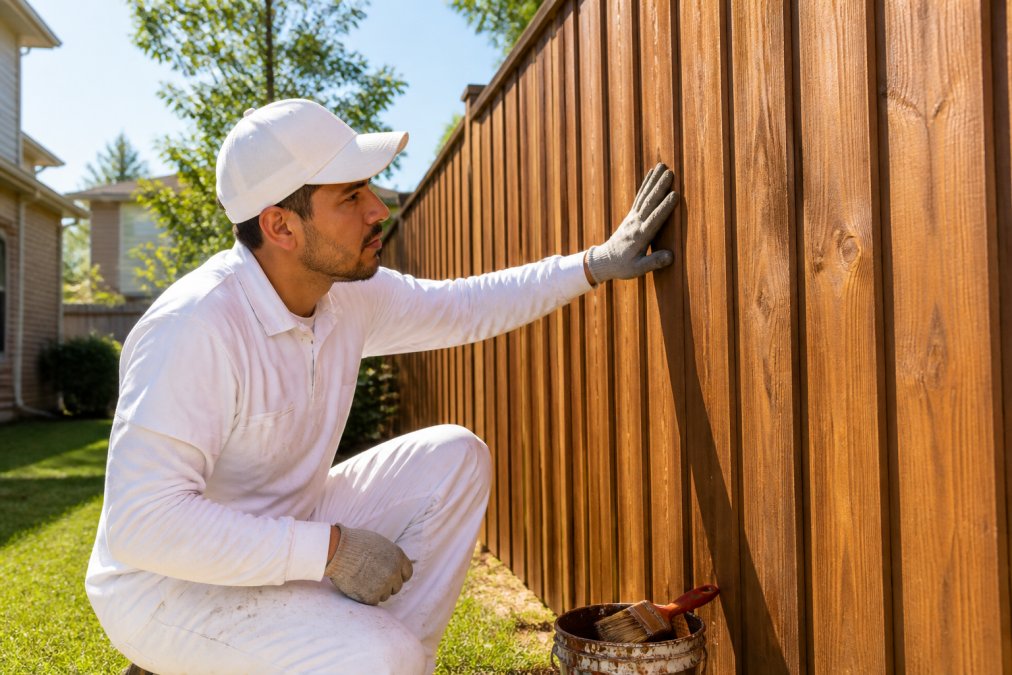
Temperature is your starting point. Most stain products perform best between 15°C and 25°C. Below 15°C, the stain penetrates slowly and cures unevenly. Above 25°C, especially in direct sun, the stain dries too quickly on the surface without penetrating the wood grain properly, leaving a thin, fragile coating.
Humidity levels control how the wood accepts the stain. Wood absorbs moisture from the air. When humidity is above 85%, the wood fibers swell and the stain struggles to penetrate, causing surface adhesion problems and potential peeling within months. Check the relative humidity forecast on Environment Canada’s weather service. Aim for 50-75% humidity for optimal staining conditions.
Dew point is the hidden factor. This is the temperature at which moisture condenses on surfaces. If you apply stain when the dew point is close to the surface temperature, condensation will form as the sun sets, ruining your finish. Apply stain when the surface temperature is at least 3°C above the forecasted dew point.
Rain timing matters more than you’d think. Wait at least 48 hours after rain before staining. A moisture meter should read below 20% before you start. Pressure-treated wood often holds moisture longer, sometimes requiring 72 hours or more after rain.
How Long to Wait After Rain to Stain Fence
After rain stops, the fence isn’t ready to stain immediately. The wood absorbs water, and that moisture needs to evaporate before the stain can penetrate effectively.
Wait a minimum of 48 hours after the last rainfall. In cooler weather or high humidity, add another 24 hours. The wood surface should feel dry to the touch, but the interior fibers matter more. If you stain over wet wood, the stain sits on the surface and peels within weeks.
Test the wood moisture content before you proceed. A digital wood moisture meter is worth the investment. Readings below 20% are safe for most stains. Above 20%, and you’re risking adhesion failure. This is especially critical for pressure-treated wood, which is often wetter than natural wood when freshly installed.
Post-rain drying time varies by season. In summer with full sun and low humidity, 48 hours may be enough. In spring or fall with cooler temperatures and overcast skies, expect 72 hours. Winter staining is generally not recommended, as drying times stretch to weeks and frost risk increases significantly.
Watch the weather forecast for the next rain event. Plan your staining for a window of at least 5-7 days without rain. A single unexpected shower during the curing period can ruin the finish. Check Environment Canada’s detailed forecast for precipitation probability over the full week.
Many homeowners rush the post-rain timeline and pay for it later. If you’re unsure, wait another day. The extra delay costs nothing. A failed stain job costs time and money to redo.
Best Time of Year to Stain Fence in Toronto
Timing your fence staining project by season makes a huge difference in the outcome and durability of the finish.
Late spring (May-early June) is ideal for Toronto. Temperatures are warming, humidity is moderate, and the risk of unexpected cold snaps has passed. The wood has had time to dry from winter moisture, and you’ll have a long window of stable weather ahead.
Early fall (September-early October) is your second-best window. Temperatures are still warm enough for proper curing, humidity drops as summer heat fades, and you have weeks before frost risk rises. Early fall is often overlooked but excellent for fence staining. sealcoating your driveway.
Avoid winter staining entirely. Temperatures below 10°C slow curing dramatically. Frost risk means the stain may freeze before it sets properly. Winter moisture and salt spray create adhesion problems.
Get Your Free Estimate Today! →
Summer staining requires caution. High temperatures and intense UV exposure can cause the stain to dry too fast, leaving lap marks and uneven penetration. Start before 10 a.m. when the fence is still in shade.
The best time to stain your fence in Toronto is late May through early June, when temperatures are stable, humidity is moderate, and you have weeks of predictable weather ahead.
How to Prepare Fence for Staining: Surface Readiness
The fence surface is where success or failure is decided. Even perfect weather won’t save a poorly prepared fence.
Clean the fence thoroughly. Dirt, algae, and mildew block stain penetration. Use a pressure washer at low pressure (below 2000 PSI) to avoid damaging the wood. For stubborn growth, apply a wood cleaner first and let it sit for 15 minutes before rinsing. Allow the fence to dry completely, at least 48-72 hours in dry conditions.
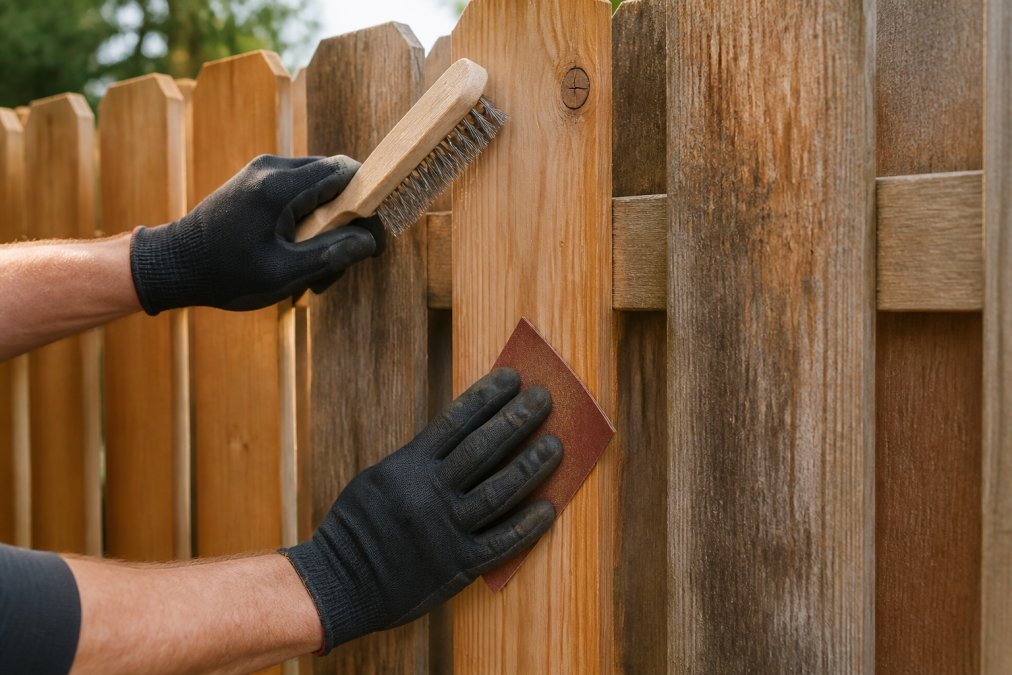
Sand the surface if needed. If the fence is weathered or has a previous stain, light sanding opens the wood pores for better absorption. Use 80-120 grit sandpaper. You don’t need to strip the old finish completely unless it’s peeling or flaking.
Check for rot or damage. Press a screwdriver into the wood at several points. If it sinks in easily, the wood is compromised and won’t hold stain properly. Replace rotted boards before staining.
Test stain adhesion on a hidden area. Apply stain to an inconspicuous section and let it cure for 48 hours. Check if it adheres properly and matches your color expectations. This test run catches problems before you commit to the full fence.
Choose the right stain product for your situation. Water-based stains dry faster and clean up easily, making them ideal for DIY projects. Oil-based stains penetrate deeper and enhance wood grain, but require longer drying times. For Toronto’s climate, water-based products work well because they handle temperature swings better than oil-based alternatives.
Consider pressure-treated vs. natural wood. Pressure-treated wood requires extra drying time after cleaning, often 72 hours or more, because the treatment process forces moisture deep into the fibers. Natural wood dries faster and accepts stain more readily.
Protect surrounding areas. Cover plants, concrete, and siding before you start. Stain is difficult to remove once it dries. Lay drop cloths or plastic sheeting on the ground and tape off any areas you don’t want stained.
Getting the best weather for staining a fence means checking temperature, humidity, and dew point before you start, not just looking at the forecast. The fence staining process requires patience: proper surface preparation, correct moisture levels, and stable weather conditions all working together. If you’re uncertain about any step, or if your fence needs professional assessment before staining, Soca Services Painting offers detailed project proposals and expert guidance for Toronto homeowners. Contact Soca Services for a free estimate and let our team handle the technical details so your fence finish lasts.
Frequently Asked Questions
What temperature is best for staining a fence?
The ideal temperature range for staining a fence is between 15°C and 25°C. At these temperatures, the stain penetrates evenly into the wood grain, cures properly, and adheres well to the surface. Temperatures below 10°C slow curing, while extreme heat above 30°C can cause the stain to dry too quickly, leading to uneven application and poor adhesion. Always check the specific product instructions, as some water-based stains like Benjamin Moore Woodluxe can be applied as low as 4.5°C.
How long after rain should I wait to stain my fence?
Wait at least 48 to 72 hours after rain before staining. This allows the wood to dry thoroughly and reduces moisture content to acceptable levels (ideally below 20%). Use a digital moisture meter to verify the wood is ready. Surface temperature also matters; if the wood is still cool from rain, dew may form overnight, adding moisture back to the surface. Check the weather forecast to ensure no rain is predicted during and after application.
Is spring or fall the best time to stain a fence in Toronto?
Both spring and fall offer excellent conditions for fence staining in Toronto. Spring provides warming temperatures and longer daylight hours, while fall offers cooler, more stable humidity levels that prevent rapid drying. Avoid summer’s extreme heat and winter’s frost risk. Late April through May and September through October are typically ideal. Plan around Toronto’s unpredictable spring rains and ensure adequate drying time between coats.
Does humidity affect fence staining, and how do I check it?
Yes, humidity significantly affects stain adhesion and drying. Relative humidity between 40% and 70% is optimal. High humidity (above 75%) slows drying and can trap moisture in the wood, while very low humidity (below 30%) can cause the stain to dry too fast and crack. Check Environment Canada’s weather forecast for humidity and dew point data. If dew point is close to or above the wood’s surface temperature, moisture will condense on the surface; wait for conditions to improve before applying stain.
This article was written using GrandRanker