Table of Contents
- What Are the Key Benefits of Spray Painting Home Interiors?
- Spray Painting vs. Roller Interior Application: Which Is Right for You?
- Interior Spray Painting Preparation: Setting Up for Success
- How Long Does Interior Paint Last After Spray Application?
Last Updated: July 28, 2026
What Are the Key Benefits of Spray Painting Home Interiors?
Spray painting delivers faster coverage, superior finish quality, and professional results that traditional rolling methods struggle to match. At Soca Services Painting, we’ve spent over a decade helping Toronto, Vaughan, and North York homeowners and commercial clients discover why spray application has become the preferred choice.
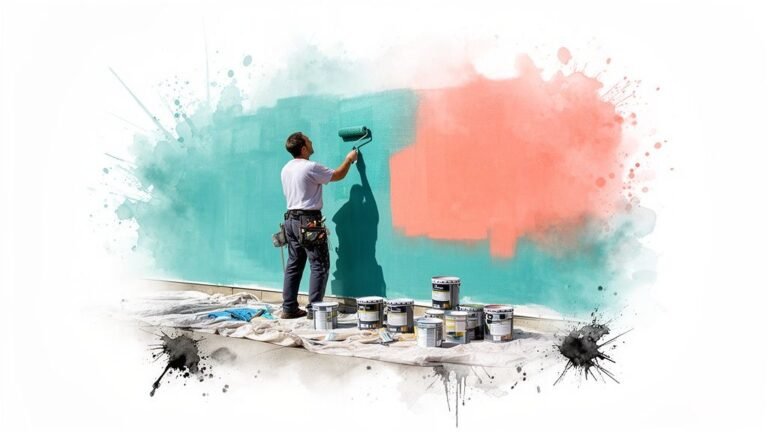
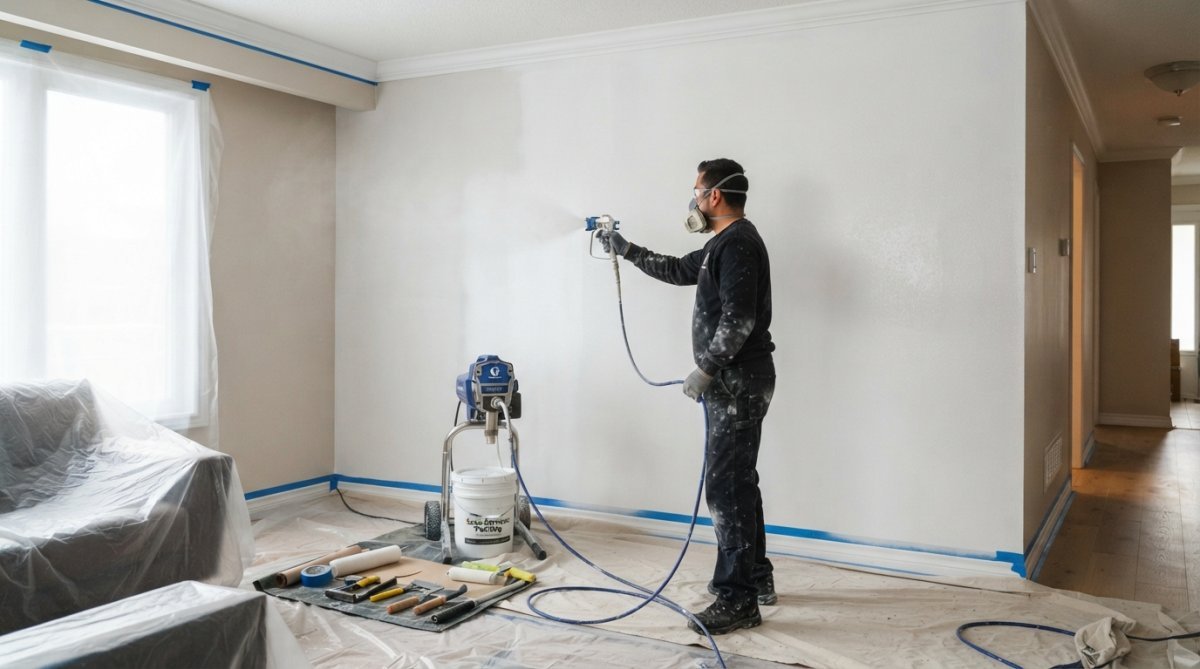
Spray painting applies a fine mist of atomized paint that settles evenly across every surface, eliminating brush marks, roller stippling, and uneven coverage. The result is a smooth, uniform finish that looks professionally executed because it is.
Speed matters when managing a busy household. Spray painting covers large wall areas in a fraction of the time, what takes eight hours with a roller might take three to four hours with an airless sprayer, depending on room size and prep complexity.
The real advantage is consistency. A paint sprayer applies the same thickness across every square inch, something even experienced rollers struggle to achieve. This uniform application means better paint durability and a finish that ages gracefully.
Spray Painting vs. Roller Interior Application: Which Is Right for You?
Both methods have legitimate applications, but they excel in different scenarios.
| Method | Coverage Speed | Finish Quality | Prep Intensity | Best For |
|---|---|---|---|---|
| Spray Painting | 3-4 hours per room | Smooth, uniform | Extensive masking | Large open areas, smooth walls |
| Roller Application | 6-8 hours per room | Textured appearance | Moderate masking | Textured surfaces, detailed trim work |
Roller application remains standard for many painters because it’s forgiving and requires less setup. For homeowners with tight budgets or properties with significant trim work, rolling often makes practical sense.
Spray painting demands respect for preparation. Masking requirements are substantial, you’ll need to protect flooring, furniture, fixtures, and trim with drop cloths and painter’s tape. Professionals understand that 60% of spray painting success comes before the trigger is ever pulled.
However, spray application delivers even coverage that roller methods cannot replicate on large, open surfaces. Interior walls painted with an airless sprayer display a glass-smooth finish that’s particularly striking in living rooms and bedrooms. The paint adheres more uniformly, extending the time before repainting becomes necessary.
Spray painting wins for large, open wall areas and smooth finishes. Rolling wins for detailed trim work and textured surfaces. Many professional painters use both methods on the same project, spraying walls and rolling trim.
Interior Spray Painting Preparation: Setting Up for Success
Preparation separates professional results from mediocre outcomes. Without proper setup, spray painting produces excessive overspray and uneven coverage.
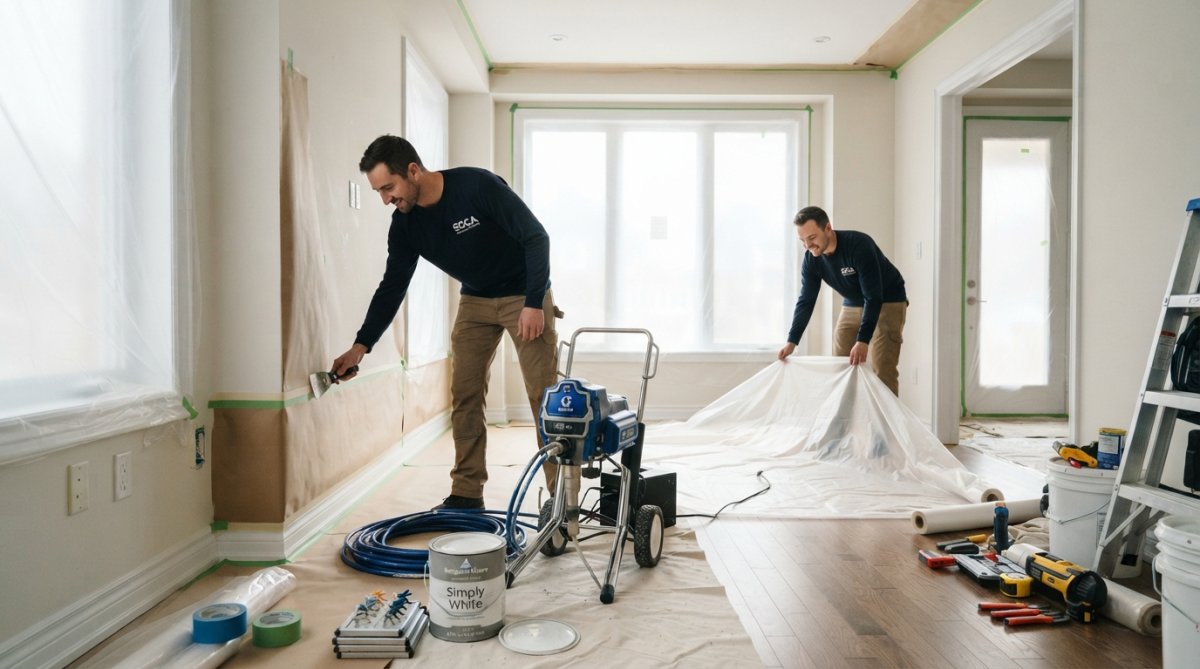
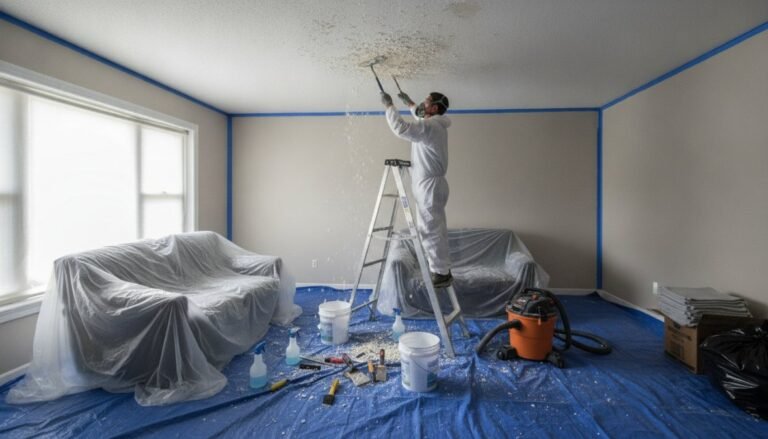
Clear the room of furniture or move everything to the center and cover it with plastic sheeting. Remove outlet covers, switch plates, and light fixtures when possible. Soca Services Painting always removes these items because it’s faster and safer than painting around them.
Inspect walls for damage. Fill holes with spackle, sand smooth, and prime any bare spots. This prevents paint from absorbing unevenly into patched areas. For Toronto homes with older plaster walls, this prep work becomes even more critical, uneven surfaces telegraph through paint and undermine finish quality.
Use quality painter’s tape along the ceiling line, baseboard, and around all trim. Cheap tape allows paint to seep underneath and creates ragged edges. For windows and doors, mask frames carefully. Many painters use plastic sheeting taped to the tape, creating a sealed barrier that stops overspray.
Lay canvas drop cloths across the entire floor, they don’t slide around like plastic. Open windows and position fans to move air out of the space. Cross-ventilation is ideal for interior painting.
Inadequate masking is the number-one reason spray-painted interiors look amateur. Paint particles travel farther than expected. Budget 2-3 hours for masking a typical bedroom. This investment determines whether your finish looks professional or sloppy.
How Long Does Interior Paint Last After Spray Application?
Paint longevity depends on application quality, environmental conditions, and the paint product itself. Spray-applied paint that’s properly prepared typically lasts 5-7 years in high-traffic areas and 7-10 years in bedrooms and low-traffic spaces.
This timeline assumes Benjamin Moore or Sherwin-Williams quality paint applied in a single, even coat over properly primed surfaces. Budget paint products fade faster, often requiring repainting within 3-4 years.
Toronto’s climate, with cold, dry winters and humid summers, creates stress on paint films. Bathrooms and kitchens experience moisture exposure that accelerates degradation. In these spaces, expect repainting every 4-5 years.
Spray application actually extends paint life compared to rolling. The uniform film thickness achieved with a sprayer resists cracking and peeling better than the variable thickness of rolled paint. When paint is applied evenly, it expands and contracts uniformly with temperature changes, reducing stress on the film.
Quality primer matters enormously. A quality primer creates a stable base that allows topcoat paint to perform at its best. Skipping primer undermines longevity, regardless of application expertise.
For homeowners planning to sell, fresh interior painting, especially spray-applied finishes in main living areas, adds visible appeal. Popcorn ceiling removal combined with fresh spray-painted walls transforms dated interiors into move-in-ready spaces. This combination is particularly effective in older Toronto properties where popcorn ceilings and worn wall finishes date the home visually.
The difference between a painted room and a professionally finished room comes down to preparation, technique, and attention to detail. Spray painting delivers superior results when executed correctly, but it demands respect for masking, ventilation, and surface prep. Contact Soca Services Painting for a free estimate and discover how spray painting can refresh your interior spaces with a smooth, professional finish that lasts. Our team handles everything from popcorn ceiling removal to final paint application, ensuring your project is stress-free and your results exceed expectations. Get Your Free Estimate Today!
Frequently Asked Questions
Is spray painting interior walls better than rolling in Canada?
Spray painting delivers a smoother, more uniform finish faster than rolling, especially on large wall areas and textured surfaces. However, it requires more extensive masking and preparation. For complex layouts with trim work, rolling may be more practical. Professional spray painting eliminates roller marks and provides superior coverage, making it ideal for high-traffic areas and rooms where finish quality matters most. Contact Soca Services for a free estimate to determine the best approach for your space.
How long does spray-applied interior paint typically last?
Quality spray-applied interior paint generally lasts 5-10 years, depending on paint type, room conditions, and maintenance. Latex paint in low-traffic areas may last longer, while oil-based finishes offer superior durability in kitchens and bathrooms. High-humidity environments and direct sunlight can reduce longevity. Professional application ensures proper adhesion and thickness, extending paint life significantly compared to DIY efforts. Regular cleaning and touch-ups maintain appearance and protection.
What is the hidden cost of spray painting interiors, overspray and cleanup?
Spray painting produces overspray and atomized paint particles that settle on unmasked surfaces, requiring thorough cleanup. Post-project cleanup can take 4-8 hours depending on room size and masking coverage. Professional contractors use drop cloths, plastic sheeting, and proper ventilation to minimize cleanup demands. While DIY spray painting may seem cost-effective, the time spent masking, protecting fixtures, and cleaning often exceeds the labor savings. Professional crews handle this efficiently, reducing your stress and ensuring your home is ready to enjoy immediately after completion.
Can I spray paint kitchen cabinets, and will the finish hold up?
Yes, spray painting kitchen cabinets delivers a durable, professional finish when done correctly. Proper surface preparation, primer selection, and quality cabinet-grade paint are essential for longevity in high-moisture, high-use environments. Spray application avoids brush marks and provides even coverage on cabinet doors and frames. A well-executed spray finish resists chipping and moisture damage better than rolled applications. Soca Services specializes in cabinet spray painting across Toronto, ensuring your kitchen refresh looks fresh and lasts for years.
This article was written using GrandRanker