Table of Contents
- Understanding Heritage Designation and the Ontario Heritage Act
- Permit Requirements for Painting Heritage Homes in Ontario
- Heritage Home Exterior Paint Colors Ontario: Choosing Era-Sensitive Palettes
- Lead Paint Removal and Safety for Heritage Homes Ontario
Last Updated: July 27, 2026
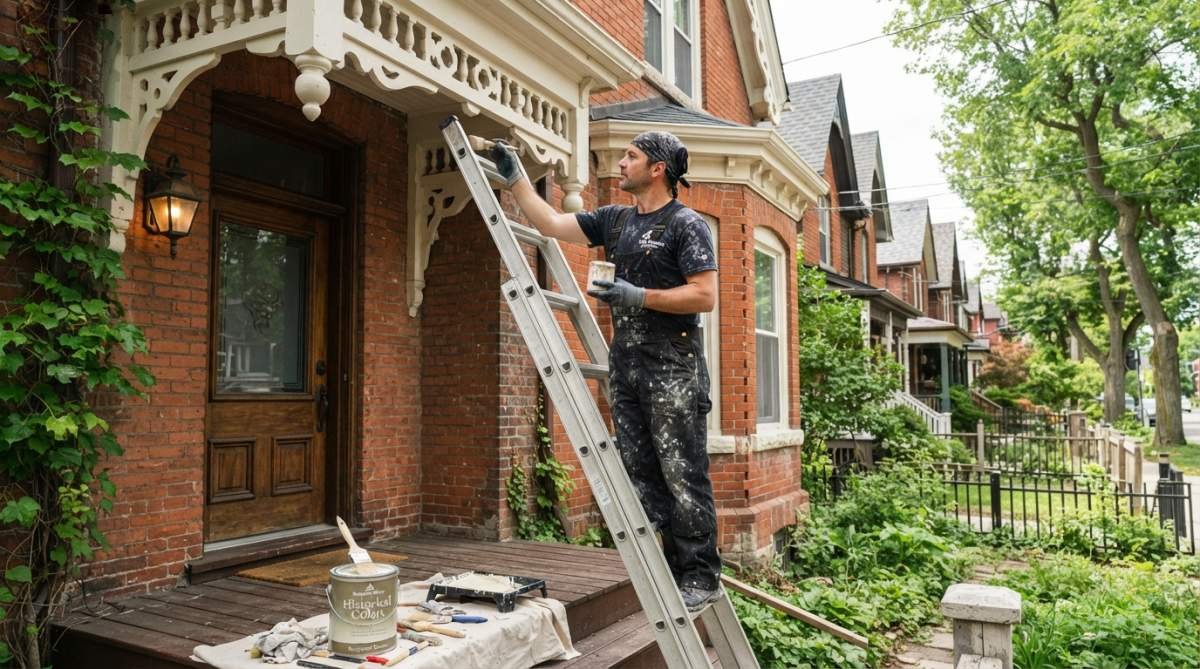
Painting heritage homes in Ontario requires a specialized approach that balances modern durability with historical authenticity. Whether you’re updating a Victorian mansion in Toronto, a century home in Vaughan, or a character property in North York, understanding the regulatory landscape and restoration best practices is essential. At Soca Services Painting, we’ve worked extensively with heritage properties across the Greater Toronto Area, and we know these projects demand more than standard residential painting.
Understanding Heritage Designation and the Ontario Heritage Act
A property designated under the Ontario Heritage Act receives legal protection that extends to its exterior appearance, including paint colors and surface treatments. This means you cannot simply repaint your heritage home any color you choose, the municipality has authority over aesthetic decisions that affect the property’s historical character.
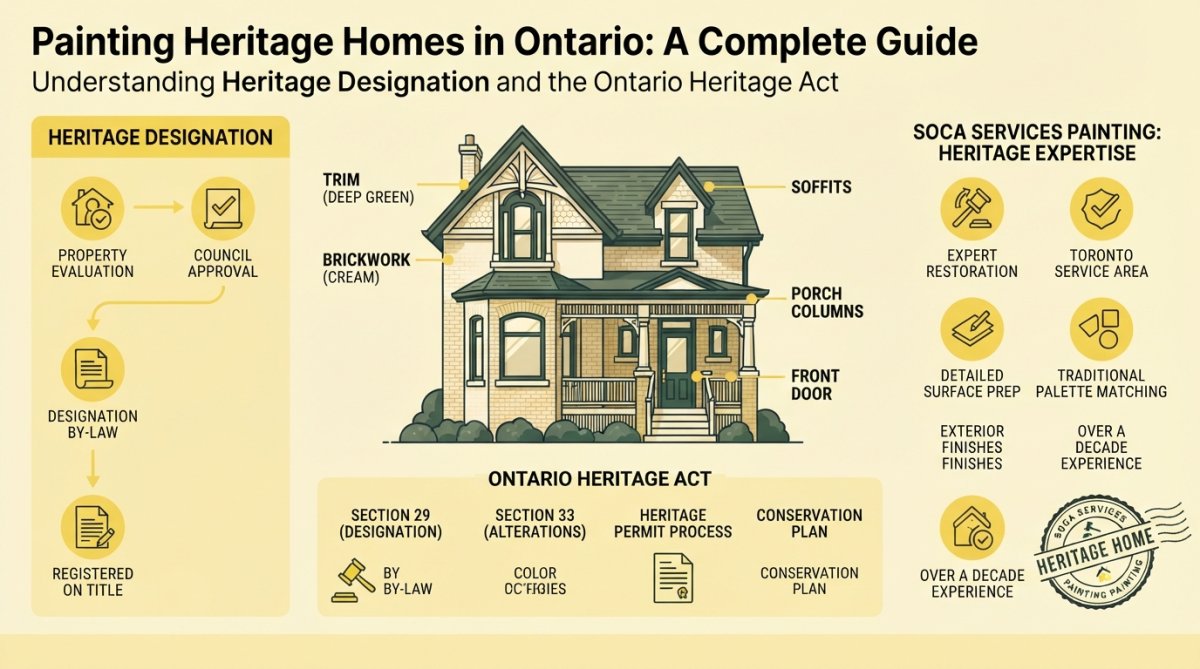
Heritage designation affects painting in three key ways: it restricts color choices to palettes appropriate to the home’s era and architectural style, it may prohibit certain modern finishes or synthetic materials that would be historically inaccurate, and it requires documentation and approval before work begins. You can check whether your property is designated by contacting your municipal building department or heritage conservation office in Toronto, Vaughan, North York, or your specific municipality.
Check your property deed or contact your local heritage office to confirm designation status. Many homeowners discover their property is heritage-designated only when planning renovations.
Permit Requirements for Painting Heritage Homes in Ontario
Painting a heritage home in Ontario typically requires a heritage permit before work begins. In Toronto, the Heritage Preservation Services division reviews exterior paint applications for designated properties. In Vaughan, North York, and other municipalities, the process varies but follows similar principles.
The heritage permit application process generally involves:
-
Prepare a detailed project proposal with paint color samples, specific areas being painted, and justification for your color choices based on historical research or architectural standards.
-
Submit the application to your municipal heritage department with supporting documentation, including paint swatches and product specifications.
-
Wait for heritage committee review, typically taking 4-8 weeks.
-
Receive approval or conditional approval. The committee may approve your plan, request modifications, or deny the application if colors or methods don’t align with heritage guidelines.
-
Obtain your permit and proceed with painting once approved.
For interior painting of heritage homes, permit requirements are usually less stringent. However, exterior painting almost always requires a heritage permit if the property is designated.
Starting exterior painting work on a designated heritage property without a permit can result in fines, orders to repaint, and legal complications. Obtain a permit upfront to avoid costly remediation.
Heritage Home Exterior Paint Colors Ontario: Choosing Era-Sensitive Palettes
Selecting the right paint color for a heritage home means understanding the architectural period, the home’s original finishes, and the aesthetic standards of the era in which it was built. Victorian homes (1880s-1900s) traditionally featured deeper, richer colors like forest green, burgundy, slate blue, and cream. Edwardian properties (1900-1920) often used softer, more muted palettes with earth tones and pastels. Arts and Crafts homes (1905-1930) favored natural wood finishes combined with warm, earthy paint colors on trim and accents.
(/best-exterior-paint-for-toronto-weather/)ing]
Paint manufacturers like Benjamin Moore and Sherwin-Williams offer heritage color collections specifically designed for period homes. Benjamin Moore’s "Historic Color Collection" includes hues researched from actual heritage properties, while Sherwin-Williams provides period-appropriate options with historical documentation.
When choosing colors, consider:
-
Original color evidence: If your home retains traces of original paint under layers of modern finishes, scrape samples and have them analyzed by heritage conservators.
-
Architectural style: Research homes of the same period and style in your area. Drive through heritage neighborhoods in Toronto, Vaughan, or North York to see what colors were typical.
-
Surrounding context: Heritage conservation districts often have color guidelines. Your color should complement neighboring properties while remaining true to your home’s character.
-
Material authenticity: Brick, stone, and wood siding each require different approaches. Painting over original brick is controversial, many heritage experts recommend leaving masonry unpainted if it was originally exposed.
Soca Services Painting has guided countless homeowners through heritage color selection, ensuring the right color respects the home’s history and meets municipal approval standards.
Lead Paint Removal and Safety for Heritage Homes Ontario
Heritage homes built before 1978 frequently contain lead-based paint, which poses serious health risks during removal or renovation. Lead paint abatement is not just a safety concern, it’s a legal requirement in Ontario when disturbing lead-containing surfaces.
Why lead paint is a concern in heritage homes:
Lead was widely used in exterior and interior paints until the 1970s because it improved durability, coverage, and color vibrancy. Heritage homes painted multiple times over decades likely have multiple layers of lead paint. When these layers are scraped, sanded, or disturbed, lead particles become airborne.
Ontario regulations for lead paint:
Ontario’s Health Protection and Promotion Act (HPPA) and workplace safety regulations require that lead-containing paint be handled by trained professionals using containment and safe work practices. Homeowners cannot legally perform lead paint removal themselves.
Safe lead paint abatement process:
-
Testing: A certified lead inspector tests paint and dust samples to confirm lead presence.
-
Containment: Work areas are sealed with plastic sheeting and negative air pressure systems to prevent lead dust from escaping.
-
Removal method selection: Professionals may use wet sanding, chemical stripping, or encapsulation depending on the surface and lead concentration.
-
Disposal: Lead-contaminated materials are disposed of according to Ontario waste regulations at approved facilities.
-
Post-abatement clearance: After work, the area is tested again to confirm lead levels are safe.
Lead paint in heritage homes is a serious health hazard. Always hire certified professionals for assessment and removal. Your family’s health depends on it.
Surface Preparation for Century Homes: Substrate Integrity and Durability
Proper surface preparation is the difference between a paint job that lasts decades and one that fails within a few years. Century homes present unique challenges, old wood siding may be soft or damaged, masonry substrates may be porous or deteriorating, and previous paint layers may be incompatible with modern coatings.
Assessment and repair:
Thoroughly inspect all exterior surfaces for rotted wood, loose or missing mortar in masonry, peeling paint, and structural damage. Any compromised substrate must be repaired before painting, which might include replacing rotted boards, repointing brick or stone, or patching cracks in masonry.
Cleaning:
Heritage surfaces require gentle cleaning to remove dirt, algae, and loose paint without damaging the substrate. Low-pressure washing (below 1500 PSI), soft-bristle brushing, or chemical cleaning is safer than aggressive pressure washing.
Paint removal:
Removing multiple layers of old paint is labor-intensive but necessary for proper adhesion of new coatings. Methods include scraping, sanding, chemical stripping, or media blasting. Soca Services Painting uses equipment and techniques appropriate to each heritage surface.
Priming:
Heritage substrates often require specialized primers designed for old masonry, wood, or previously painted surfaces. A quality primer ensures new paint adheres properly and provides protection against moisture infiltration.
| Substrate Type | Preparation Steps | Expected Duration |
|---|---|---|
| Wood siding | Repair damage, scrape/sand, prime | 1-2 weeks |
| Masonry (brick/stone) | Clean, repoint mortar, prime | 2-3 weeks |
| Previously painted surfaces | Remove old paint, repair, prime | 1-3 weeks |
Finding Qualified Heritage Contractors in Toronto and the Greater Toronto Area
Not every painter has experience with heritage homes. The specialized knowledge required, understanding heritage regulations, working with period-appropriate materials, managing lead paint safely, and respecting architectural character, makes contractor selection critical.
What to look for in a heritage painting contractor:
-
Heritage experience: Ask for references from previous heritage projects. Can they speak knowledgeably about era-sensitive colors and materials?
-
Regulatory knowledge: Do they understand the Ontario Heritage Act and local municipal requirements? Can they navigate the permit process?
-
Lead certification: If your home was built before 1978, the contractor should be certified in lead-safe work practices.
-
Material expertise: Can they recommend appropriate primers, paints, and finishes for heritage substrates?
-
Insurance and licensing: Verify they carry liability insurance and are properly licensed in your municipality.
-
Detailed proposals: A qualified contractor provides written estimates that break down labor, materials, timeline, and special considerations for your property.
Soca Services Painting brings over a decade of residential and commercial painting experience to every project, with particular expertise in heritage properties across Toronto, Vaughan, North York, and surrounding areas. Our team understands the regulatory landscape, sources quality materials appropriate to heritage homes, and delivers precise finishes that honor your property’s character.
Painting a heritage home in Ontario is an investment in preservation and property value. The regulatory requirements, material choices, and technical expertise required make this a project where professional guidance is essential. Soca Services Painting combines heritage expertise with quality craftsmanship to deliver results that respect your home’s history while ensuring durability and aesthetic appeal. Contact Soca Services Painting today for a free estimate and consultation on your heritage home painting project. Our team will assess your property, explain the permit process, recommend era-appropriate colors, and develop a detailed plan that meets municipal standards. Get started with professional heritage painting that preserves what makes your Toronto-area home special.
Frequently Asked Questions
Do I need a permit to paint a heritage home in Ontario?
Yes, in most cases. If your home is designated under the Ontario Heritage Act or located in a Heritage Conservation District, you'll need a permit for exterior painting and significant interior work. Contact your municipal building department to confirm your property's status. Permits ensure your painting work complies with heritage guidelines and protects your property's architectural character. Soca Services can guide you through the process.
What paint colors are appropriate for heritage homes in Ontario?
Era-sensitive colors depend on your home's architectural style and period. Victorian homes typically featured deeper jewel tones, while Georgian properties favored softer, muted palettes. Research your home's original colors through historical records, paint analysis, or heritage society resources. Professional color consultation ensures your heritage home exterior paint colors in Ontario align with historical accuracy while meeting modern durability standards. Soca Services offers color guidance for period-appropriate finishes.
How do I safely handle lead paint removal on heritage homes?
Lead paint removal for heritage homes in Ontario requires professional assessment and lead-safe abatement practices. Have the paint tested by a certified lab before disturbing it. Hire licensed contractors trained in lead-safe removal who follow provincial guidelines. Containment, proper disposal, and worker protection are essential. Never sand or scrape lead paint yourself. Soca Services follows eco-friendly and lead-safe practices to protect your family and preserve your home's integrity.
What factors affect the cost to paint an old house in Ontario?
Cost to paint old house Ontario depends on surface condition, lead paint abatement needs, permit requirements, property size, and material type (brick, wood, siding). Heritage homes often require more preparation due to substrate integrity concerns and specialized surface treatments. Additional factors include architectural complexity and climate-resilient coating choices. Get a detailed written estimate from qualified contractors. Soca Services provides transparent estimates with no surprise charges, contact us for a free quote.
This article was written using GrandRanker