Painting your outdoor wood is about more than just a fresh look—it's a critical act of preservation. Here in Toronto, we know our weather can be tough. A high-quality paint job is the best shield you can give your deck, fence, or pergola against moisture, UV damage, and those wild temperature swings.
Without that protective layer, wood can start to rot, warp, and fall apart surprisingly quickly, leading to repairs that are far more expensive than a coat of paint. At Soca Services, our goal is to provide homeowners, property managers, and commercial clients with a finish that not only looks fantastic but also delivers lasting protection.
Why Painting Your Outdoor Wood is a Smart Investment
Think about it: your home's exterior wood is constantly under assault. Rain, snow, and the intense summer sun all work together to break down wood fibres, creating the perfect opening for moisture and decay. A professional approach to painting isn't just cosmetic; it's your most effective line of defence.
At Soca Services, we've seen it time and time again—a properly executed paint job can dramatically extend the life of any outdoor structure. This isn't just about slapping on a new colour. It's about building a durable, weatherproof barrier that protects the integrity of your investment.
The Dangers of Unprotected Wood
Leaving wood exposed, or with a failing paint job, is asking for trouble, especially in our climate. You're essentially up against a cascade of potential problems:
- Moisture Intrusion: Wood is like a sponge; it soaks up water. This causes it to swell and then shrink as it dries, leading to ugly cracks and splits.
- Rot and Decay: Once moisture gets in and stays, it's a breeding ground for fungi and mould. Before you know it, the wood is rotting from the inside out.
- UV Damage: The sun’s rays are relentless. They break down lignin, the natural glue holding wood fibres together, causing the surface to turn grey, brittle, and weathered.
- Insect Infestations: Damaged, damp wood is an open invitation for pests like carpenter ants and termites, which can cause serious structural damage.
A well-maintained exterior doesn’t just boost curb appeal—it actively prevents costly structural repairs down the road. It's best to think of a professional paint job from Soca Services as essential maintenance, not just a decorative touch.
Beyond Aesthetics: The Protective Power of Paint
A top-tier paint system does so much more than just look good. It's a multi-layered defence that actively fights back against everything the environment throws at it. This is precisely why our teams in Vaughan and North York are so meticulous about preparation and only use premium products from brands like Sherwin-Williams and Benjamin Moore.
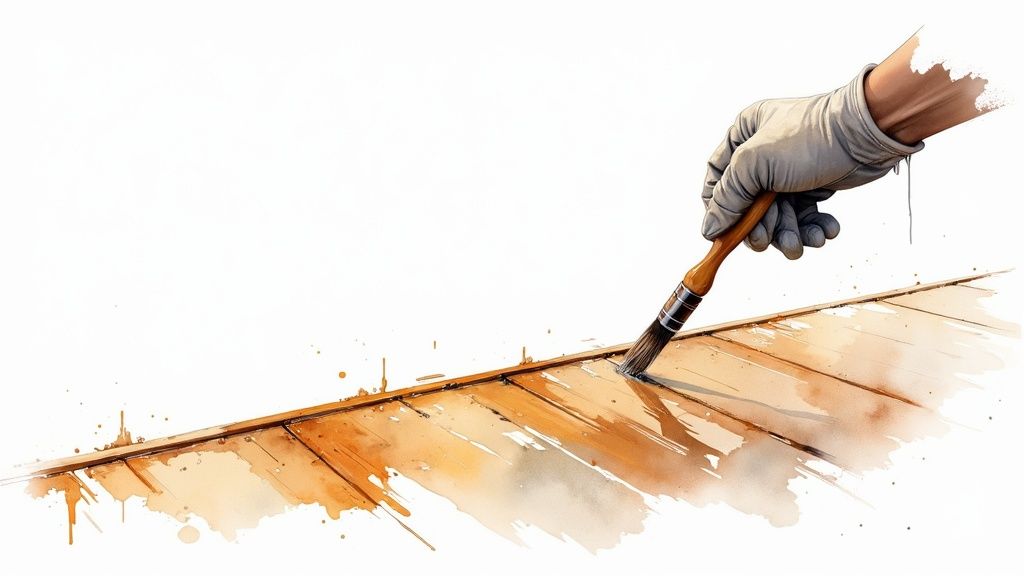
When applied correctly, paint creates a flexible film that can expand and contract with the wood as temperatures fluctuate, which stops the finish from cracking and peeling. Plus, many modern exterior paints are formulated with additives that resist mould, mildew, and UV fading, keeping your fence or deck looking great for years.
For a deeper dive into how these coatings work, check out our guide on painted wood waterproofing.
Ultimately, investing in a professional service for painting outdoor wood is an investment in your property's long-term health and value. Contact Soca Services today for a free estimate and let our experts give you a durable, beautiful finish that truly lasts.
Choosing the Right Paint and Primer for a Durable Finish
Picking the right products for painting outdoor wood is probably the single most important decision you'll make. Think of your paint and primer as a complete system—a protective shield that will stand up to the elements and keep your wood looking great for years to come. It’s easy to get lost in the paint aisle, but the choice really boils down to two main contenders: acrylic latex and oil-based paints.
For our projects across Toronto and the GTA, we almost always reach for a premium 100% acrylic latex paint. Why? In a word: flexibility. Our Canadian climate is tough, swinging from humid summer heat to deep winter freezes. Acrylic latex is engineered to expand and contract right along with the wood as temperatures change, which means it’s far less likely to crack, peel, and fail.
This ability to flex is a game-changer for exterior wood like decks, fences, and siding, which are always on the move. On top of that, modern acrylics have fantastic colour retention and hold up beautifully against UV rays, so your paint job won't look faded and tired after just a couple of seasons.
Latex vs. Oil: A Professional's Take
For years, oil-based (or alkyd) paints were the go-to for durability, but modern acrylic latex formulas have really pulled ahead for most exterior wood projects. Oil-based paints cure to a hard, rigid shell. While that sounds tough, it can become brittle over time, leading to cracking when the wood underneath naturally shifts. They also have a tendency to yellow and chalk when exposed to a lot of direct sunlight.
That said, oil-based products still have their place. They can offer incredible adhesion, especially over chalky or heavily pre-painted surfaces, and can level out to a beautiful, glass-like finish. The trade-offs? The cleanup is a pain (you'll need mineral spirits), and the strong odour and higher VOCs (volatile organic compounds) are a big turn-off for many homeowners.
Key Takeaway: For the vast majority of outdoor wood painting jobs in our region, a high-quality acrylic latex paint from a trusted brand like Sherwin-Williams or Benjamin Moore delivers the best mix of durability, flexibility, and long-term performance.
Paint Type Comparison For Outdoor Wood
To give you a clearer picture, it’s helpful to see the two main paint types side-by-side. This comparison breaks down the key differences that matter most for an exterior wood project.
| Feature | Acrylic Latex Paint | Oil-Based Paint |
|---|---|---|
| Flexibility | Excellent; expands and contracts with wood. | Poor; can become brittle and crack. |
| Durability | High; resists cracking and peeling. | Good; creates a hard, durable shell. |
| Colour Retention | Excellent; resists UV fading. | Fair; can yellow or chalk over time. |
| Cleanup | Easy; soap and water cleanup. | Difficult; requires mineral spirits. |
| Drying Time | Fast; typically recoatable in a few hours. | Slow; often requires 24 hours between coats. |
| VOCs | Low; less odour and better for the environment. | High; strong odour and more environmental impact. |
Ultimately, choosing a premium acrylic latex is often the smartest long-term investment for a finish that will last.
The Unsung Hero: The Right Primer
Whatever you do, don't underestimate the power of a good primer. It’s the foundation of your entire paint job, ensuring your topcoat sticks properly and gives you that uniform, professional-looking finish. Skipping this step, especially on new or problematic wood, is just asking for trouble down the line.
Priming is absolutely non-negotiable for a few critical reasons:
- It Boosts Adhesion: Primer essentially gives the paint something to grab onto, which is your best defence against peeling.
- It Blocks Stains: Some woods, like cedar and redwood, are rich in natural oils called tannins. These oils can bleed right through your paint, leaving ugly brown or yellow stains. A good stain-blocking primer is formulated specifically to seal them in.
- It Creates a Uniform Surface: Primer helps hide small imperfections and ensures your final colour looks rich and even, not blotchy.
When you're aiming for a truly durable outdoor finish, it helps to understand the specialty options available. For projects where moisture is a major concern, it’s worth reading A Practical Guide to Waterproof Paint to see if it’s the right fit.
The entire coatings industry is shifting, with a growing demand for high-performance products. In fact, the industrial wood coatings market—which directly impacts the quality of products available for our homes—is expected to grow significantly, with a major push toward more eco-friendly, low-VOC options. For homeowners, this is great news, as it means better and safer products are hitting the shelves all the time. For a deeper dive into our top product recommendations, check out our guide on the best exterior wood paints for your next project.
Getting this part right is what separates an average DIY job from a professional result that truly lasts. If you're in King City or North York and want some expert advice, give Soca Services a call for a free estimate. We’re happy to help you choose the perfect products for your home.
Getting the Prep Work Right is Everything
Ask any seasoned painter what the secret to a great exterior paint job is, and you won’t hear them talk about the final coat. The real make-or-break work happens long before a brush ever touches the paint. A truly durable, beautiful finish is about 80% preparation, and it's this phase where we pour our energy to guarantee a result that actually lasts. Skipping or rushing here is the single biggest reason DIY paint jobs start to fail within a year or two.
This isn’t just about a quick clean-up. It's about creating a perfectly sound surface that the primer and paint can grip onto for dear life. Proper prep is your best insurance for maximum adhesion, preventing the ugly peeling and bubbling that can plague a poorly done job. It's the difference between a fence that looks good for a summer and one that protects your Toronto-area home for years to come.
Cleaning the Surface and Tackling Old Paint
First things first: you have to give the wood a serious clean. Outdoor wood is a magnet for dirt, mildew, pollen, and general grime. Painting over that layer is like building a house on sand—it’s just not going to hold. For most projects, a careful power wash is the fastest way to blast away years of build-up.
But "careful" is the key word. Too much pressure can easily gouge the wood, sending water deep into the grain and creating a whole new set of problems. Our advice? We start with a wide-angle tip, like 40 degrees, and keep the nozzle a good foot or two away from the wood. The goal is to clean it, not carve it.
Once the surface is clean, it's time to deal with any old, failing paint.
- Scrape It Off: Grab a sharp paint scraper or a 5-in-1 tool and get to work on any loose, cracked, or peeling paint. You need to be firm but controlled to avoid digging into the wood itself.
- Feather the Edges: After scraping, you'll have noticeable ridges where the old paint stops and bare wood begins. Don't worry about those just yet; we'll smooth them out completely during the sanding phase for a seamless look.
For really stubborn patches or multiple layers of caked-on paint, you may need to bring in something stronger. Our guide on how to use a paint remover on wood covers more advanced techniques for those tough situations.
Patience is a Virtue: After washing and scraping, the wood needs to dry. And we mean completely dry. Painting over even slightly damp wood traps that moisture, which will fight its way out and cause blistering and peeling down the line. Depending on the humidity in Vaughan or North York, this could take anywhere from 24 to 72 hours. Do not rush this part.
Sanding for That Perfect Bond
Sanding is the step everyone wants to skip, but it’s what separates an amateur finish from a professional one. It does two critical things: it smooths out any lingering imperfections and, more importantly, it scuffs up the surface just enough to give the primer something to really grab onto.
For most exterior projects like decks or fences, starting with 80-grit sandpaper is usually perfect. It’s coarse enough to knock down any remaining wood fibres and feather out the edges of that old paint. If you want a particularly smooth finish, you can follow up with a quick pass using 120-grit sandpaper. An orbital sander will save your arms on large, flat areas, but you’ll still need to do corners and tight spots by hand. Always finish by wiping away every last bit of sanding dust with a tack cloth or a damp rag.
Repairing Flaws for a Flawless Finish
Now that the surface is clean, dry, and smooth, it’s time to play detective. This is your last chance to spot and fix any imperfections that will absolutely show through the final paint job.
Scan the wood for cracks, holes, or dings. We fill them with a high-quality, paintable exterior wood filler. We always overfill the spot slightly with a putty knife because most fillers shrink a bit as they dry. Once it’s fully cured, we just sand it flush with the surrounding surface. The repair will be invisible.
The simple infographic below shows how these critical prep steps create the foundation for the priming and painting to come.
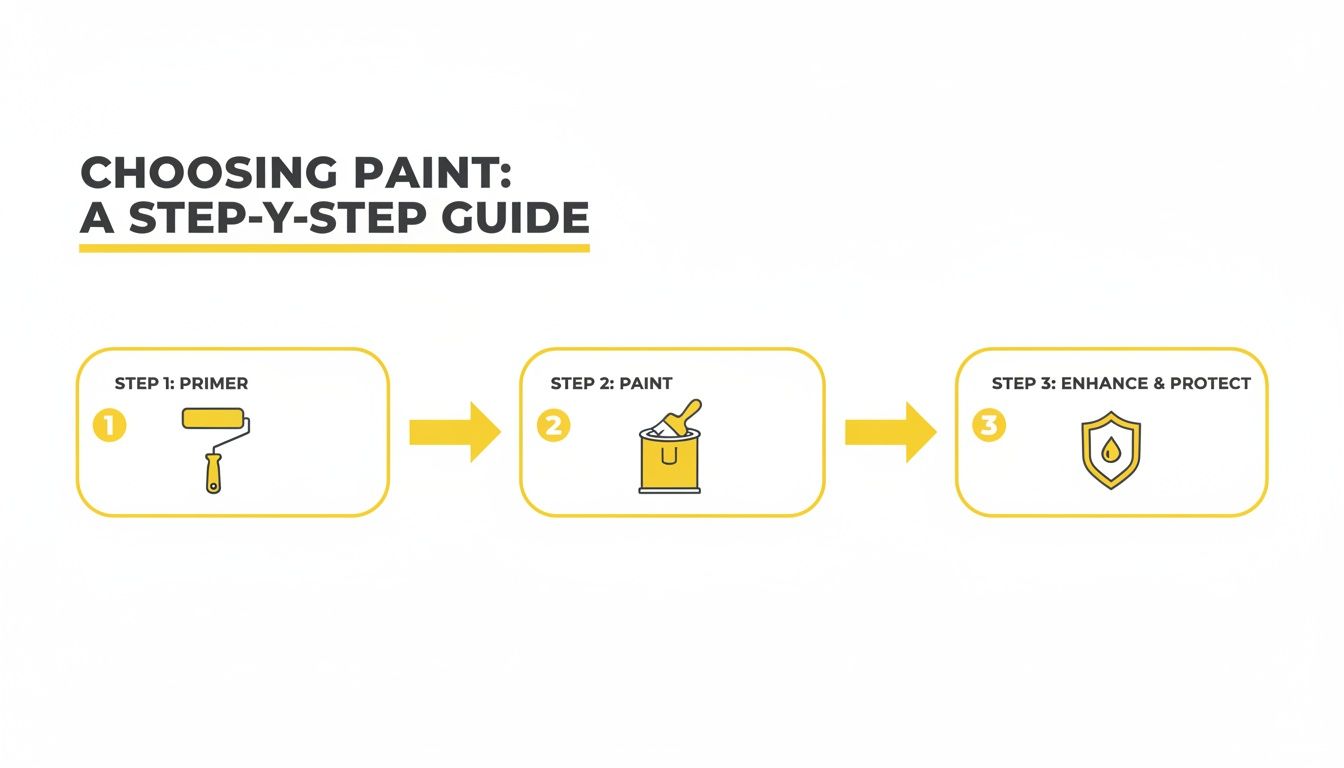
This just reinforces that priming is the essential bridge between a well-prepped surface and a durable topcoat.
Finally, we turn our attention to the gaps and joints. Using a top-notch, paintable exterior caulk to seal any gaps where wood meets another material—think around window trim or along corner boards—not only gives you those clean, professional lines but also adds a crucial weatherproof seal against water and drafts.
Taking the time to get these prep steps right is exactly how we deliver professional-grade results on every project, from King City to downtown Toronto. It might feel tedious, but it's the only way to guarantee a finish that will truly stand the test of time.
Mastering Professional Application Techniques
With all your prep work behind you, it's time for the rewarding part. This is where your meticulous effort pays off, turning a clean, prepped surface into a beautifully finished and protected piece of your home. Applying primer and paint is more than just slapping on some colour; it’s about building a durable, resilient shield against the elements, one layer at a time.
The first coat—your primer—is arguably the most important. It’s the critical link between the wood and your final paint. The secret to a great primer coat is consistency. We aim for a thin, even layer that covers every inch of the surface, leaving behind no drips or heavy spots. Get this right, and your topcoat will adhere perfectly, giving you that rich, uniform colour you're after.
Choosing Your Tools for the Job
The right tools can be the difference between a frustrating job and a fantastic finish. Different parts of your project will call for different applicators, and knowing what to grab and when is a true mark of experience.
- Brushes for Precision: A good quality, angled sash brush is essential for "cutting in." This is what you'll use to create those crisp, clean lines along edges, trim, and other detailed areas where a roller just can't reach.
- Rollers for Speed: When you’re tackling large, flat surfaces like a deck floor or a solid fence, a roller is your best bet for efficiency. For most wood surfaces, a 1/4-inch or 3/8-inch nap roller will lay down a smooth, consistent coat in a fraction of the time it would take with a brush.
- Sprayers for Ultimate Efficiency: For a massive project like an entire fence or large sections of wood siding, nothing beats a paint sprayer for speed and a flawless, almost factory-like finish. Just be aware, they come with a steep learning curve and require very careful masking to avoid overspray.
If you want to dive deeper into which tool is right for you, our guide on selecting paint brushes and rollers has all the details you’ll need.
The Art of the Wet Edge
Ever seen a paint job with ugly, visible lines where one painted section overlaps another? Those are called lap marks, and they happen when you paint over an edge that has already started to dry. The professional technique to avoid this is simple: always maintain a wet edge.
This just means you need to blend each new stroke or roller pass back into the previous one while it's still wet. Work in small, manageable sections, usually from top to bottom, and keep that leading edge wet as you move along. This technique is what creates a seamless, uniform finish that looks polished and intentional.
Pro Tip: Always follow the direction of the wood grain with your brush or roller. It doesn't just look more natural; it helps the paint penetrate the wood’s texture for a stronger bond.
The importance of these techniques is understood across the entire professional painting industry. To give you some perspective, in a place like California, the painters industry consists of over 31,000 businesses, a huge number of which focus on protecting exteriors from UV and moisture damage. It really highlights how critical proper application is for getting results that last.
Weather Is Your Painting Partner (or Enemy)
When you're painting outside, you are completely at the mercy of the weather. One bad call can undo hours of hard work. Here in the Toronto area, where conditions can change on a dime, checking the forecast isn't just a good idea—it's essential.
Here’s what you need to look for:
- Ideal Temperature: Most exterior paints perform best between 10°C and 30°C. If it's too cold, the paint won't cure properly, leaving you with a weak finish. Too hot, and the paint can dry too quickly, causing ugly brush marks and preventing it from bonding correctly.
- Humidity Matters: High humidity is the enemy of drying paint. We try to avoid painting if the humidity is creeping above 70-80%. The moisture in the air slows everything down and can mess with how the paint film forms.
- No Rain on the Radar: This might seem obvious, but you'd be surprised. You need a solid 24-hour window of dry weather after your final coat goes on. A surprise shower can wash away fresh paint and completely ruin your finish.
These principles aren't just for homes. Applying a protective coating in tough environments is a universal challenge. For example, learning how to paint a boat involves many of the same considerations for withstanding moisture and temperature swings.
By mastering these application techniques and working with the weather, not against it, you can achieve a finish that looks incredible and provides the durable protection your outdoor wood deserves. Of course, if you're in Vaughan or King City and would rather leave it to the pros, contact Soca Services for a free estimate. We'll handle everything to ensure a flawless, long-lasting result.
Why Hiring a Professional Painter Is a Smart Investment
Taking on a DIY project can be a really rewarding experience, but painting outdoor wood is one of those jobs where the difference between an amateur and a pro is stark. It’s about more than just slapping on a coat of paint; a small mistake in the prep work or choosing the wrong product can mean a peeling, cracking mess after just one tough Toronto winter.
It helps to think of a professional paint job as an investment, not just another household expense. A flawless, durable finish doesn't just make your home look great—it actively protects its value by preventing rot, warping, and all the other headaches moisture can cause. You're not just painting; you're preserving your property for the long haul.
The Hidden Costs of a DIY Paint Job
Going the DIY route looks like a money-saver on the surface, but the hidden costs can sneak up on you. First, there's the investment in proper tools. A good power washer, a reliable sander, quality scrapers, brushes, and rollers—it all adds up. Then you have to consider your time. Proper prep work alone can easily eat up an entire weekend, sometimes more.
The biggest risk, however, is simply inexperience.
- Improper Preparation: This is the number one reason paint fails. If you don't clean, sand, or let the wood dry properly, you're almost guaranteeing a peeling finish down the line.
- Wrong Product Choice: Using a primer or paint that isn't suited for our local climate can leave your wood defenceless against harsh UV rays and relentless moisture.
- The Dreaded Redo: When a paint job fails, you often have to strip everything off and start from square one. That means double the work, double the cost, and a whole lot of frustration.
The Soca Services Advantage
Hiring a professional team like Soca Services takes all that risk off your plate. We bring years of hands-on experience and a meticulous process to every single project, from a deck in North York to a fence in King City. Our value isn't just in the final look, but in the quality, efficiency, and a guarantee that stands behind our work.
When you work with us, you're getting so much more than just a coat of paint. You’re getting a complete service built for longevity.
Our team comes equipped with professional-grade tools that deliver a far superior finish in a fraction of the time it takes for a DIY job. We manage all the painstaking prep work, apply premium products from trusted names like Sherwin-Williams and Benjamin Moore with proven techniques, and oversee the project from start to finish.
This attention to detail ensures your new paint job doesn't just look beautiful—it provides a tough, weather-resistant barrier that will last for years. You save yourself the time and stress, and you get the peace of mind that comes with a solid workmanship guarantee. The demand for these kinds of durable finishes is huge; explosive growth in home renovations has pushed the national market for exterior wood coatings to $2 billion in revenue. You can learn more about the strong consumer demand for durable wood finishes and see why quality matters.
Protect Your Investment with a Professional Finish
At the end of the day, a professional paint job is about getting a result that lasts. It’s about avoiding that sinking feeling when you see your hard work peeling away after just one season. By investing in an expert team, you make sure the job is done right the first time, with the best materials and techniques for our unique GTA climate. If you're looking for the right crew, you might find our guide on searching for exterior house painters in my area helpful.
Ready to see the difference a pro can make? Contact Soca Services today for a free, no-obligation estimate. Let us show you how a quality paint job can protect and beautify your home for years to come.
Got Questions About Painting Outdoor Wood? We've Got Answers
Even after walking through the whole process, you might still have a few things you're wondering about. That's perfectly normal. Here are some of the most common questions we get from homeowners all over the Greater Toronto Area, from the suburbs of Vaughan right down to North York. Let’s clear things up so you can move forward with confidence.
How Often Should I Be Repainting My Outdoor Wood?
This is probably the number one question we're asked, and the honest answer is: it depends. A really well-done, professional paint job using top-tier products from a brand like Sherwin-Williams can easily last 5 to 10 years.
But, the real world throws a lot at our homes. A deck floor, for example, gets pounded by foot traffic, furniture, and relentless sun. You might find it needs a fresh coat every 2 to 4 years to stay in top shape. On the flip side, vertical surfaces like fences and siding aren't holding water or being walked on, so they'll usually hold up much longer. The best advice? Give your outdoor wood a quick look-over each spring. If you spot fading, cracking, or a chalky film, it's time to plan a touch-up before small issues become big headaches.
Paint or Stain for a Deck? Which One Is Better?
Ah, the classic debate. Choosing between paint and stain really boils down to the look you want and how much upkeep you're willing to do.
- Paint lays down a thick, protective film right on top of the wood. It’s your best bet for UV protection and offers an endless spectrum of wall colors, perfect for a bold new look. The downside? When it fails, it peels and chips, which means a lot of scraping is in your future before you can repaint.
- Stain, on the other hand, soaks into the wood fibres. It colors the wood while letting the natural grain show through (this is especially true for semi-transparent options). Stains tend to fade gracefully over time instead of peeling, making reapplication much less of a chore. Solid stains are a great middle-ground, giving you a paint-like appearance but with the penetrating benefits of a stain.
Here's a pro tip: For a beautiful new deck, most people lean towards a stain to show off that gorgeous wood. But for an older deck with some battle scars, paint is a lifesaver. It creates a flawless, uniform finish that hides imperfections and gives you maximum protection.
Do I Really Need to Use a Primer?
Yes. A thousand times, yes. We can't say this enough: primer is non-negotiable for a professional, durable finish on outdoor wood.
Think of it as the critical foundation. It seals the raw wood, stops tannins from bleeding through on woods like cedar and redwood, and, most importantly, it gives the paint something to grab onto. Skipping the primer is like building a house with no foundation—it might look fine for a little while, but it's guaranteed to fail much sooner than it should. Always invest in a high-quality exterior primer designed specifically for wood. You’ll thank yourself later.
Can I Paint Over Pressure-Treated Wood?
You absolutely can, but the key here is patience. Brand new pressure-treated wood is full of moisture and the chemicals from the treatment process. If you jump the gun and paint it right away, you're just trapping all that moisture underneath. Before you know it, you'll have bubbles and paint peeling off in huge sheets.
The industry best practice is to let new pressure-treated wood dry and "weather" for at least three to six months. A quick way to check is the "sprinkle test." Just splash a bit of water on the surface. If it beads up, it's not ready yet. If it soaks right in, the wood is thirsty enough to absorb primer and paint. When it's finally time, make sure you're using products specifically made for pressure-treated lumber.
Tackling an outdoor wood painting project can feel like a big job, but getting it right means your home will not only look fantastic but also be protected for years to come. If you'd rather have a guaranteed professional result without the hassle, Soca Services Painting is here to help.
Contact Soca Services for a free, no-obligation estimate today!