A finished basement is a valuable asset, especially in the competitive Toronto and Mississauga real estate markets. However, the wrong paint colour can leave this crucial space feeling dark, damp, and uninviting. The challenge lies in combating limited natural light and lower ceilings to create an area that feels like a natural extension of your home. This guide explores the 8 best paint colours for basement projects, providing an objective structure to help you select shades that not only brighten your space but also align with its intended purpose—from a cozy family room to a sophisticated home office.
Before diving into specific colours, proper preparation is key to a successful project. Basements can be prone to moisture and odours, so a fresh coat of paint should be the final step after addressing any underlying issues. It’s crucial to prepare your basement by ensuring it’s a pleasant and healthy environment, which includes taking steps to eliminate musty smells for a truly fresh start.
We’ll offer expert insights tailored for homeowners across the Greater Toronto Area (GTA), ensuring your renovation is a success. Here are the top colours that will transform your lower level.
1. Warm Gray with Accent Lighting
Warm gray is a sophisticated and highly versatile choice that addresses the unique challenges of below-grade spaces. Unlike cool grays, which can feel sterile in a room with limited natural light, warm grays contain subtle beige or taupe undertones. This warmth counteracts the inherently cool, sometimes damp atmosphere of a basement, creating a welcoming and comfortable environment. Colours like Benjamin Moore’s Revere Pewter and Sherwin-Williams’ Agreeable Gray are among the best paint colours for a basement because they provide a bright, neutral backdrop without feeling stark. This “greige” family of colours is a designer favourite for its ability to adapt to various lighting conditions, making it an ideal foundation for any basement transformation.
Why It Works for Basements
The primary benefit of a warm gray is its ability to reflect light effectively while adding a touch of modern elegance. This makes it an excellent choice for creating a functional and stylish space, whether it’s a family room, home office, or entertainment area. We’ve seen this succeed in numerous residential basements across the GTA, from modern home offices in Toronto to cozy family rooms in Mississauga, where Agreeable Gray serves as the foundation for a bright, inviting lower level.
Implementation Tips for a Flawless Finish
To maximize the impact of this colour choice, strategic planning is essential. Proper lighting and finish selection will elevate the final look from standard to exceptional.
- Integrate Lighting First: Before painting, install your desired lighting. Recessed pot lights or modern track lighting will highlight the warm undertones and ensure the colour reads correctly day and night.
- Select the Right Sheen: A satin or eggshell finish offers a soft lustre that is both durable and easy to clean. For walls in moisture-prone areas, a semi-gloss finish provides enhanced resistance.
- Create Crisp Contrast: Pair warm gray walls with a crisp, bright white trim (like Chantilly Lace OC-65) to create sharp, clean lines that make the wall colour pop and define the space.
- Consider the Ceiling: Painting the ceiling a lighter shade of the same warm gray, or a flat bright white, will create an illusion of height and make the entire room feel more spacious and open.
Expert Insight: The success of a warm gray hinges on its interaction with light. Swatch your chosen colour on different walls and observe it at various times of the day with your intended artificial lighting turned on. This ensures you see its true character before committing. To get the best results, you may want to learn more about the specifics of painting a basement in the GTA.
2. Deep Navy Blue for Sophisticated Spaces
Contrary to the belief that basements must be painted light colours, a deep navy blue can transform a lower level into an elegant, cocoon-like retreat. This bold choice is ideal for creating dedicated zones like media rooms, home theatres, or sophisticated lounges. Dark, saturated colours like Benjamin Moore’s Hale Navy or Sherwin-Williams’ Naval absorb light, which minimizes glare on screens and fosters a sense of intimacy and psychological warmth. Instead of trying to fight the basement’s natural lack of light, this approach embraces it, creating a purposeful and high-end atmosphere. This makes deep navy one of the best paint colours for a basement when the goal is mood and sophistication over sheer brightness.
Why It Works for Basements
A deep navy works by establishing a distinct, luxurious character that feels intentional rather than compensatory. It’s a powerful choice for spaces designed for entertainment and relaxation, where a cozy, enveloping feel is a key feature. We have seen this strategy used to great effect in upscale home theatres near Toronto and in sophisticated basement lounges in the GTA, where Hale Navy creates an immersive experience that separates the space from the rest of the home. This colour turns a potential design challenge into a dramatic and memorable feature.
Implementation Tips for a Flawless Finish
Executing a dark colour scheme requires careful planning to avoid making the space feel cavernous. The right lighting, contrast, and application techniques are crucial for success.
- Amplify Your Lighting: A dark colour requires significantly more artificial light. Plan for three to four times the typical amount of lighting, using a mix of recessed, accent, and task lights to create layers and prevent shadows.
- Prime for Deep Colour: Use a high-quality, tinted primer before painting. A grey-tinted primer will help you achieve a rich, even navy finish with fewer coats, saving time and paint.
- Balance with Light Elements: Pair navy walls with a bright white ceiling and light-coloured flooring or a large area rug. This contrast prevents the room from feeling heavy and adds visual height.
- Incorporate Metallic Accents: Elevate the look with metallic finishes. Brass light fixtures, gold-framed art, or chrome details will pop against the dark blue backdrop, adding a touch of glamour and reflecting light around the room.
Expert Insight: When using a colour as bold as navy, always test it first. Paint a large swatch on a key wall, or even an entire accent wall, and live with it for a few days. Observe how it changes with your planned lighting to ensure it delivers the sophisticated mood you are aiming for without overwhelming the space.
3. Soft White or Off-White for Maximum Brightness
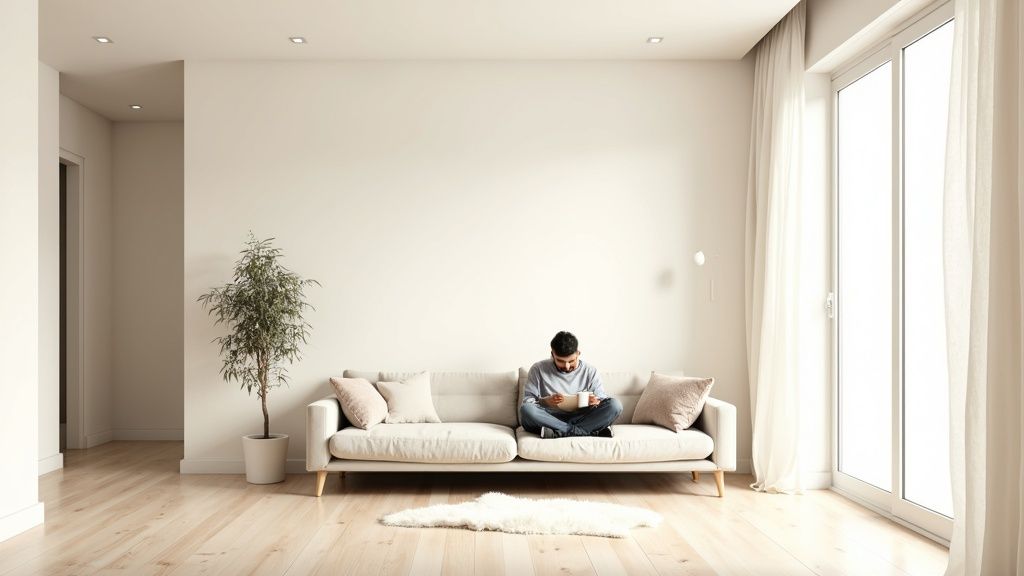
Soft white or off-white is a classic and powerful choice for transforming a basement into a bright, airy, and expansive-feeling space. Unlike stark, pure whites that can appear clinical, soft whites like Benjamin Moore’s Cloud White or Sherwin-Williams’ Alabaster have subtle warm or cool undertones. These nuances prevent the harshness often associated with pure white, creating an inviting glow that maximizes both natural and artificial light. This makes it one of the best paint colours for a basement, as it reflects light to make the area feel larger and more open.
Why It Works for Basements
The primary advantage of using a soft white is its unparalleled light-reflective quality, which is crucial in a typically dim, below-grade environment. This approach is fundamental to minimalist and Scandinavian design movements, which prioritize brightness and simplicity. We have seen this colour strategy succeed in numerous projects across the GTA, from modern basement guest suites in upscale Toronto homes to bright, contemporary family rooms in Mississauga, where a soft white foundation makes the lower level feel less like a basement and more like a main floor.
Implementation Tips for a Flawless Finish
To achieve a sophisticated and welcoming white space, the right application and complementary elements are key. Careful planning will ensure the result is warm and inviting, not cold and sterile.
- Choose the Right Sheen: A satin or semi-gloss finish is ideal for basement walls. These sheens are durable, easy to clean, and have a slight lustre that helps reflect light more effectively than a flat finish.
- Add Warmth and Colour: Prevent the space from feeling monotonous by introducing colour and texture through furnishings, artwork, textiles, and area rugs. A neutral canvas allows these decorative elements to stand out.
- Create Subtle Contrast: Paint the ceiling a slightly different shade of white, or use a crisp white trim against off-white walls to create gentle definition and depth without overwhelming the space.
- Install Lighting First: Your lighting will significantly impact how the white paint appears. Install all planned fixtures, from pot lights to lamps, before you paint to ensure you choose an undertone that works with your artificial light.
Expert Insight: The secret to a successful white basement is in the undertones and the finish. Always test large swatches of your chosen off-white on different walls to see how it reacts to your basement’s unique lighting conditions. A white that looks perfect online can appear yellow or grey in a low-light setting. To dive deeper into these nuances, you can find more information about the best colour for a basement.
4. Warm Beige or Tan for Cozy Living Spaces
Warm beige and tan tones create an undeniably inviting and homey atmosphere, making them an excellent choice for turning a basement into a true living space. Unlike stark whites or cool neutrals, colours like Sherwin-Williams’ Accessible Beige or Benjamin Moore’s Balanced Beige bring an earthy, comforting quality that counteracts the subterranean feel of a lower level. These shades bridge the gap between warm and neutral, infusing the room with a sense of comfort and stability without overwhelming the space or absorbing too much light. This makes them one of the best paint colours for a basement intended as a family den, playroom, or cozy entertainment area.
Why It Works for Basements
The core strength of warm beige is its ability to make a space feel both bright and exceptionally comfortable. This colour family excels at creating a welcoming retreat, transforming a potentially cold, concrete area into a soft, relaxing environment. We often recommend these tones for suburban family homes across the GTA, from traditional recreation rooms in Mississauga to rustic-styled basement lounges near Toronto, where homeowners want to establish a cozy, lived-in feel. Accessible Beige, in particular, has proven its worth as a top-selling neutral that provides a sophisticated yet comfortable backdrop for any decor style.
Implementation Tips for a Flawless Finish
To make a warm beige or tan truly shine, it’s crucial to layer textures and balance the warmth with contrasting elements.
- Install Warm Lighting: Use LED bulbs with a warm colour temperature (around 2700K) to enhance the golden, cozy undertones of the beige paint and create an intimate ambiance.
- Add Textural Elements: Prevent a beige room from feeling flat by introducing texture. Consider a feature wall with natural wood accents, a stone veneer fireplace surround, or plush textiles like wool throws and linen cushions.
- Create Sharp Contrast: Pair warm beige walls with a crisp, clean white trim to create a defined, polished look. For a richer, more traditional aesthetic, dark wood trim offers a beautiful, grounded contrast.
- Deepen the Accent: Use a slightly deeper shade of the same beige or tan on an accent wall. This technique adds depth and visual interest without disrupting the room’s harmonious colour scheme.
Expert Insight: The foundation of a lasting, beautiful paint job is proper wall preparation. A warm beige can sometimes highlight imperfections if the surface isn’t smooth. Using a high-quality primer will ensure even colour absorption and a flawless finish. You can learn more about the best paint primers for walls to guarantee your project’s success.
5. Moody Forest Green for Trendy Retreats
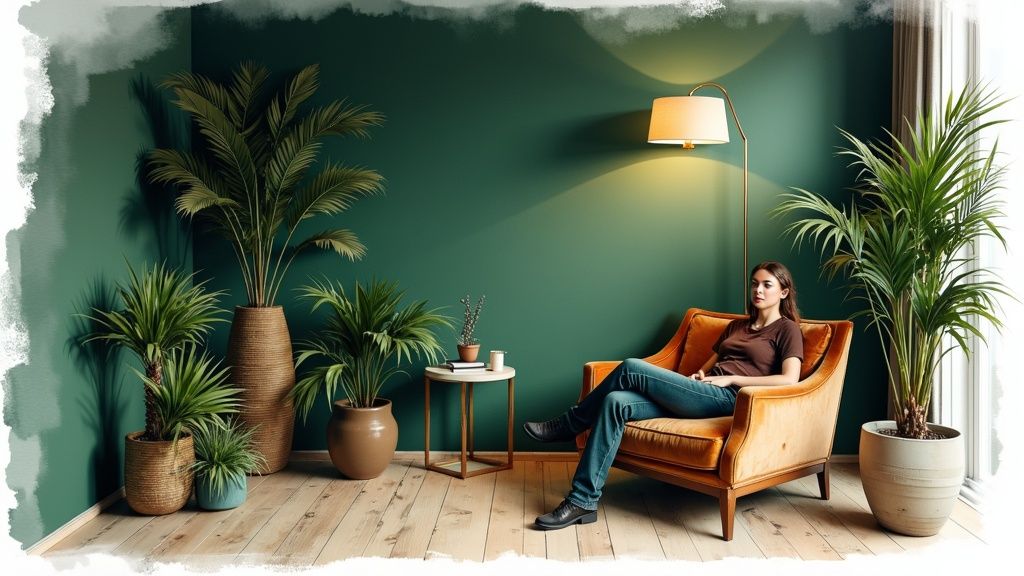
For those looking to create a distinctive, luxurious retreat, a deep forest green is an exceptionally bold and on-trend choice. Unlike conventional lighter shades, moody greens like Benjamin Moore’s Calico Green or Sherwin-Williams’ Urbane Green bring a sense of depth, sophistication, and connection to nature into a below-grade space. This trending colour family transforms a standard basement into an intentional destination, such as a wellness room, a modern library, or a sophisticated lounge, by enveloping the space in organic warmth and contemporary style.
Why It Works for Basements
The success of a dark, moody colour in a basement lies in its ability to create a cozy, intimate atmosphere that feels deliberate and high-end. Instead of fighting the lack of natural light, it embraces it to craft a unique ambiance. This colour is one of the best paint colours for a basement when the goal is to design a specific experience, not just a utilitarian room. We have seen this succeed in luxury home spas near Toronto and modern library nooks in Mississauga, where a dark green backdrop makes the space feel like a purposeful, stylish escape.
Implementation Tips for a Flawless Finish
Executing a dark colour palette requires careful planning to avoid making the space feel cavernous. The right balance of light, contrast, and texture is crucial for a polished, professional look.
- Amplify Lighting: A moody colour demands more than standard illumination. Triple your planned artificial lighting with a mix of ambient, task, and accent lights to highlight the colour’s richness and keep the room functional.
- Balance with Lightness: Create sharp contrast by pairing deep green walls with a bright white ceiling and crisp white trim. This prevents the colour from overwhelming the space and adds architectural definition.
- Introduce Warm Accents: Metallic accents like brass or gold add a touch of glamour and reflect light beautifully against the dark backdrop. Warm wood tones in flooring or furniture also complement the green’s natural feel.
- Embrace Natural Elements: Enhance the organic theme by incorporating live plants and materials like leather, linen, and stone to add texture and reinforce the connection to nature.
Expert Insight: Deep colours are heavily influenced by their environment and can look different on various surfaces, such as drywall versus concrete. Always test a large swatch in your basement with your intended lighting. If you’re working with masonry, it’s vital to choose the right product; you can find specialized information on the best paint for concrete walls to ensure a durable and beautiful finish.
6. Soft Greige (Gray-Beige Blend) for Modern Transitional Spaces
Soft greige is the quintessential modern neutral, expertly blending the cool sophistication of gray with the inviting warmth of beige. This balanced hybrid creates a colour that is both contemporary and timeless, making it an exceptional choice for transitional basement designs that bridge classic and modern aesthetics. Popular options like Benjamin Moore’s Edgecomb Gray or Sherwin-Williams’ Accessible Beige offer a versatile foundation that feels current without being overtly trendy. As one of the best paint colours for a basement, greige provides subtle warmth that prevents the space from feeling cold or clinical, a common pitfall in below-grade rooms.
Why It Works for Basements
The core strength of greige is its remarkable adaptability to different lighting conditions and decor styles. It can read slightly warmer or cooler depending on the light, making it a dynamic backdrop that enhances any basement function, from a polished home office to a comfortable family room. We’ve seen this colour used to great effect in modern basement office spaces in urban centres and transitional family rooms in the GTA, where it provides a sophisticated yet welcoming atmosphere. This versatility solidifies its reputation among designers in the GTA as a go-to for creating bright, elegant lower levels.
Implementation Tips for a Flawless Finish
To truly harness the chameleon-like quality of greige, careful testing and strategic pairing are key. These steps will ensure the colour reads exactly as you envision.
- Test with Large Swatches: Order large paint samples or paint 2’x3′ swatches on multiple walls. Observe them for a few days at different times to see how natural and artificial light affect the undertones.
- Balance with a Bright Ceiling: A crisp, flat white ceiling will create a sense of openness and prevent the greige from feeling heavy, making the entire basement feel taller and more expansive.
- Pair with Mixed Metals: Greige’s balanced undertones work beautifully with a variety of metallic finishes. Combine brushed nickel, matte black, and warm brass fixtures for a curated, high-end look.
- Embrace Colourful Accents: Use greige as a neutral canvas for both warm and cool accent colours. Navy blues, deep greens, or even terracotta tones can be introduced through textiles and decor to add personality.
Expert Insight: The undertone is everything with greige. A colour that looks perfectly neutral in the store can pull unexpected pink, green, or violet undertones in your basement’s specific lighting. Thoroughly testing samples in the actual space is the most critical step to achieving the perfect modern transitional look.
7. Charcoal Gray for Bold Industrial Aesthetic
For homeowners aiming for a dramatic, contemporary look, charcoal gray is a bold and sophisticated choice. Far from making a space feel small, a deep shade like Sherwin-Williams’ Iron Ore or Benjamin Moore’s Thunder Gray creates a perception of depth and an enveloping, cozy atmosphere. This darker neutral works exceptionally well for basements intended as home theatres, man caves, creative studios, or modern lounges, offering a strong personality while remaining versatile enough to pair with various decor styles. It establishes an industrial-chic foundation that is both modern and timeless.
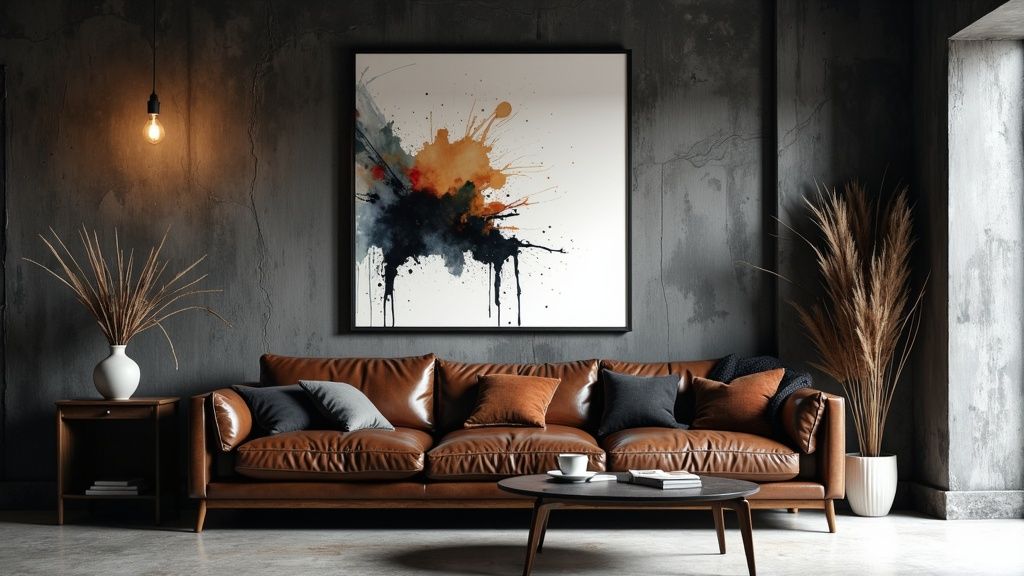
Why It Works for Basements
Charcoal gray excels at making a basement feel intentional and stylish rather than just a functional afterthought. Its dark, moody quality minimizes visual clutter, allowing architectural details, artwork, and furniture to become the focal points. This colour is a standout among the best paint colours for a basement because it absorbs light, reducing screen glare in home cinemas and creating an intimate setting for entertaining. We have seen this colour used to great effect in modern home galleries and industrial-style entertainment spaces throughout Toronto and the GTA, where it provides a stunning, high-impact backdrop.
Implementation Tips for a Flawless Finish
A dark colour like charcoal requires careful planning to prevent the space from feeling cavernous. The right combination of lighting, texture, and accent materials is key to a successful execution.
- Prioritize a Layered Lighting Plan: This colour choice is entirely dependent on excellent lighting. Combine ambient pot lights with accent track lighting to highlight artwork and task lighting like floor lamps to create warm, inviting pools of light.
- Keep the Ceiling Bright: Paint the ceiling a crisp, flat white or a very light gray. This technique creates a strong visual contrast that lifts the room and prevents the dark walls from feeling oppressive, giving the illusion of more height.
- Incorporate Warm Textures: Balance the cool, industrial feel of charcoal by introducing warm elements. Think about a leather sofa, wood furniture, plush rugs, or warm metals like brass and copper in your fixtures and decor.
- Pair with Industrial Materials: Enhance the aesthetic by pairing charcoal walls with materials like stainless steel, exposed concrete, or glass. These elements complement the colour and reinforce the modern, industrial vibe.
Expert Insight: The key to a successful charcoal gray basement is balance. Use this deep colour to create a cozy, dramatic shell, then strategically layer in bright lighting, reflective surfaces, and warm textures. This contrast prevents the room from feeling dark and instead makes it feel curated and luxurious. To explore more daring colour schemes, you can learn more about unique basement paint options.
8. Soft Pale Yellow for Cheerful Optimistic Spaces
A soft pale yellow is an excellent choice for infusing a naturally dark basement with a sense of sunshine and optimism. Unlike saturated yellows that can feel overwhelming, gentle pale shades like Benjamin Moore’s Pale Moon or Sherwin-Williams’ Sunbeam Yellow mimic the soft glow of natural light. This makes them one of the best paint colours for a basement playroom, craft area, or family space where you want to foster a cheerful, energetic atmosphere. These muted tones provide warmth and light without appearing garish, making the lower level feel brighter and more connected to the outdoors.
Why It Works for Basements
The primary advantage of a soft yellow is its psychological impact; it can instantly make a space feel happier and more inviting. This is particularly effective in basements, which can often feel disconnected and somber. We have implemented this colour palette in numerous family-oriented projects, such as transforming a dim basement in a Mississauga home into a vibrant children’s playroom and designing a cheerful hobby room for a client in Toronto. The colour creates an uplifting backdrop that encourages creativity and activity, making it ideal for spaces dedicated to family fun.
Implementation Tips for a Flawless Finish
To achieve a balanced and sophisticated look with pale yellow, careful implementation is key. The right pairings and application will ensure the colour feels intentional and stylish.
- Choose Muted Tones: Opt for yellows with soft, creamy undertones rather than bright, lemon-like hues. This prevents the colour from becoming too intense, especially under artificial lighting.
- Pair with Crisp White: Use a clean, bright white for trim, doors, and ceilings. This pairing creates a fresh, airy feel and keeps the yellow from dominating the space.
- Add Natural Wood Accents: Incorporate light wood furniture, shelving, or flooring to complement the warmth of the yellow and add a touch of organic, grounding texture.
- Designate Specific Zones: Reserve this colour for active spaces like playrooms or craft areas. It is generally less suitable for basement bedrooms or formal lounges where a more tranquil colour scheme is preferred.
Expert Insight: Yellow paint is notoriously sensitive to its surroundings and lighting. Always test a large swatch on multiple walls before committing. Observe how the colour changes throughout the day with both natural and artificial light to ensure it casts the warm, positive glow you envision for your space.
8-Color Basement Paint Comparison
| Style | Complexity 🔄 | Prep & Resources ⚡ | Expected Outcome ⭐ | Ideal Use Cases 📊 | Key Advantages 💡 |
|---|---|---|---|---|---|
| Warm Gray with Accent Lighting | Medium — moderate prep; may need multiple coats | Medium — quality primer, satin/semi-gloss, improved lighting recommended | ⭐⭐⭐⭐ — Bright, sophisticated, welcoming | Recreation rooms, offices, guest suites | Neutral pairs broadly; hides wear; ages well; paint ceiling slightly lighter |
| Deep Navy Blue for Sophisticated Spaces | High — demanding lighting plan; primer often required | High — shellac/high-quality primer, multiple coats, 3–4× lighting | ⭐⭐⭐⭐ — Cinematic, intimate, luxurious | Home theaters, media rooms, sophisticated lounges | Dramatic backdrop; hides imperfections; pairs with metallic accents |
| Soft White or Off-White for Maximum Brightness | Low — straightforward application but needs good wall prep | Medium — quality paint, semi-gloss/satin for cleanability, adequate fixtures | ⭐⭐⭐⭐⭐ — Maximum brightness; space appears larger and airier | Guest suites, family rooms, fitness/yoga studios | Maximizes light; highly versatile; add warmer ceiling and colorful accents |
| Warm Beige or Tan for Cozy Living Spaces | Low–Medium — simple application; styling important to avoid dated look | Low — standard primer, warm 2700K lighting recommended | ⭐⭐⭐ — Cozy, homey, comfortable | Family rooms, playrooms, traditional/transitional spaces | Warm, natural feel; complements wood; use contrasting trim and texture |
| Moody Forest Green for Trendy Retreats | High — requires color matching and ample lighting; test large areas | High — quality primer, strong lighting, coordination with natural materials | ⭐⭐⭐⭐ — Sophisticated, spa-like, biophilic | Wellness rooms, libraries, modern lounges | On-trend; connects to nature; enhances luxe feel with brass and plants |
| Soft Greige (Gray-Beige Blend) for Modern Transitional Spaces | Medium — undertone selection critical; test under various light | Medium — large samples, mixed-metal accents, standard primer | ⭐⭐⭐⭐ — Modern, versatile neutral with subtle depth | Transitional family rooms, offices, guest suites | Balances warm/cool; versatile across styles; ages gracefully |
| Charcoal Gray for Bold Industrial Aesthetic | High — needs strong lighting and confident décor choices | High — top-quality paint, accent lighting, lighter ceiling recommended | ⭐⭐⭐ — Dramatic, moody, industrial | Man caves, creative studios, galleries | Strong statement color; excellent at hiding stains; pairs with warm metals |
| Soft Pale Yellow for Cheerful Optimistic Spaces | Medium — undertone selection crucial to avoid muddiness | Low–Medium — standard paint, white trim, sample testing | ⭐⭐⭐ — Uplifting, sunny, cheerful | Playrooms, craft rooms, casual family spaces | Creates warmth and optimism; pairs well with natural wood; choose muted shades |
Your Next Step to a Brighter Basement in Toronto
Transforming your basement from a dark, underutilised area into a vibrant, functional living space begins with a single, crucial decision: the paint colour. As we’ve explored, the best paint colours for basement applications are not a one-size-fits-all solution. Your choice must be a deliberate one, guided by an objective structure that considers the unique characteristics of your space, its intended purpose, and the specific atmosphere you wish to cultivate.
The journey through warm greys, deep navy blues, and soft whites has shown that colour is a powerful tool. It can manipulate perceptions of light, create distinct zones for work and play, and infuse personality into a room that often lacks it. Whether you’re aiming for the bright, expansive feel of an off-white in a family room or the sophisticated, moody ambiance of a forest green for a home theatre, the right hue sets the entire stage.
Key Takeaways for Your Basement Project
Mastering your basement’s aesthetic hinges on a few core principles. Before you make your final selection, revisit these essential takeaways:
- Lighting is Paramount: Always test your paint samples in your basement’s specific lighting conditions. The way a soft greige or pale yellow looks under natural light versus artificial light can be dramatically different. Observe the swatches at various times of day.
- Function Dictates Colour: The purpose of the space should be your primary guide. A cheerful yellow might be perfect for a children’s playroom but less suitable for a sleek, industrial-style home gym where a charcoal grey would feel more appropriate.
- Embrace the Sheen: The paint’s finish is just as important as its colour. An eggshell or satin finish offers durability and a slight sheen that helps reflect light, making it a practical and popular choice for basement walls.
- Strategic Accent Walls: Don’t underestimate the power of a single, bold wall. Using a deep navy or charcoal on one wall can add depth and create a sophisticated focal point without overwhelming the entire space.
By applying these insights, you move beyond simply picking a colour you like and start designing a space that is both beautiful and highly functional. This strategic approach ensures your investment in a basement renovation, whether you are near downtown Toronto or in surrounding areas like Mississauga and the broader GTA, yields maximum impact and long-term satisfaction. The right colour will not only enhance your daily enjoyment but also significantly boost your property’s overall value.
Ready to bring your vision to life with a flawless, professional finish? Choosing from the best paint colours for your basement is the first step, but expert application is what ensures a stunning and lasting result. For homeowners across the GTA looking for premium quality and unmatched expertise, contact the team at Soca Services Painting for a professional consultation today.