Table of Contents
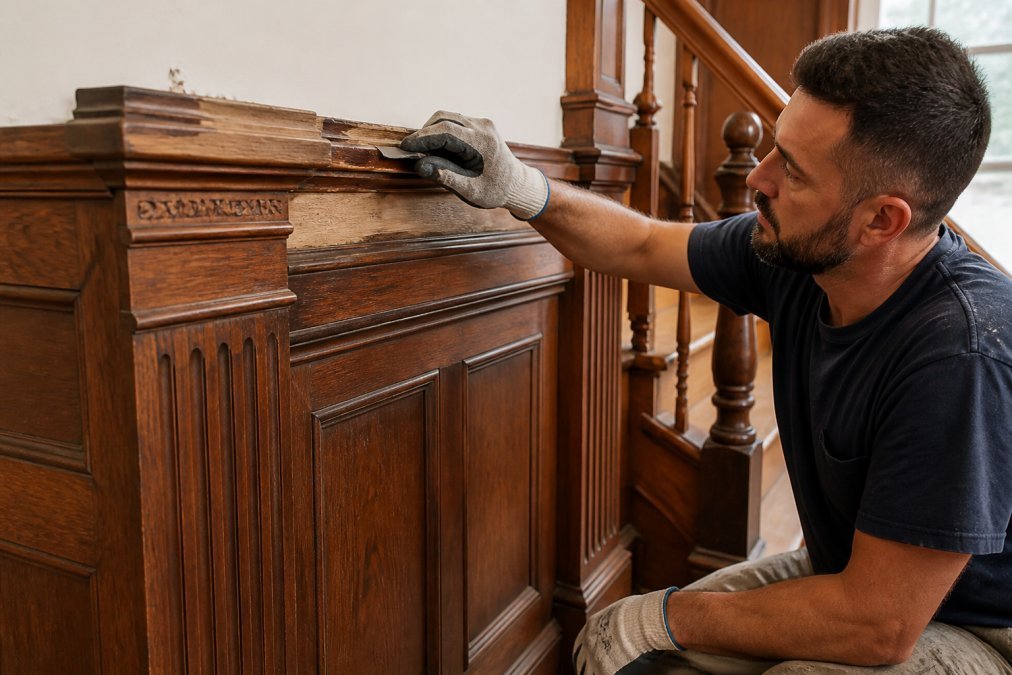
- The Real Value of Restoring Historic Home Woodwork
- Best Wood Restoration Products and Techniques
- Painting vs. Staining Historic Woodwork: Which Approach Wins?
- When Restoration Makes Financial Sense
Last Updated: August 12, 2026
The Real Value of Restoring Historic Home Woodwork
When you own a heritage property in Toronto, the question isn’t just whether you can restore historic home woodwork, it’s whether you should. The answer depends on three factors: structural integrity, financial return, and your personal commitment to preserving architectural character.
Historic woodwork tells a story. Original trim, baseboards, doors, and window frames represent the craftsmanship of an earlier era and contribute significantly to a home’s resale value and aesthetic appeal. Properties with well-maintained original woodwork command higher prices than those with gutted interiors, but the financial case only works if you approach restoration strategically. Half-measures or amateur refinishing will cost you more in the long run than doing the work properly from the start.
This guide from Soca Services Painting breaks down when restoration makes financial sense, which techniques preserve architectural integrity, and how professional finishing transforms deteriorated woodwork into a genuine asset.
Restoring historic home woodwork is worth it when structural deterioration threatens the home’s integrity, when the wood species and original craftsmanship add measurable resale value, and when you commit to long-term maintenance. It’s not worth it if you’re simply trying to save money compared to replacement, or if damage is so severe that repair costs exceed the value added.
Best Wood Restoration Products and Techniques
The market for wood restoration products has evolved significantly, offering homeowners specialized epoxy systems, wood consolidators, and period-appropriate finishes that preserve structural integrity while maintaining historical authenticity.
Abatron LiquidWood & WoodEpox Kit stands out for severe structural damage. LiquidWood penetrates rotted wood and hardens it from within, restoring structural strength. WoodEpox fills missing wood areas with putty that cures solid and can be sanded and finished like original wood. This system works for window frames, decorative columns, and trim where wood rot has compromised the material but the overall structure remains salvageable.
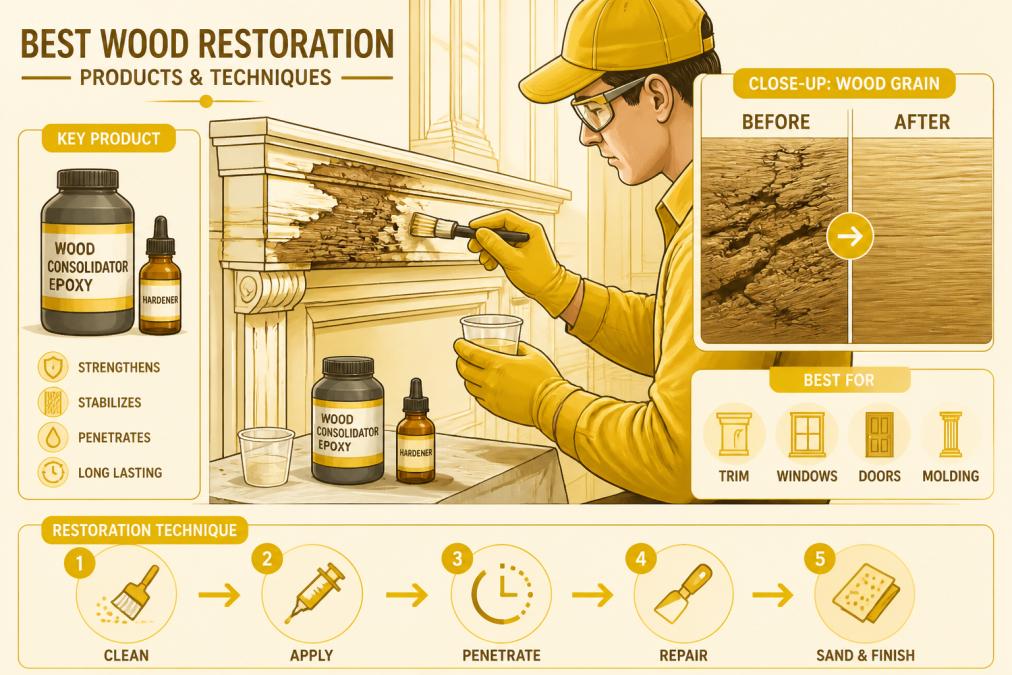
Perma-Chink M-Balm Epoxy Wood Consolidator penetrates deeply into spongy, porous wood and cures it solid without adding bulk. This works well for wood beginning to deteriorate but without large voids, making it ideal for staged restoration where you stabilize first, then fill.
For surface preparation, BEHR PREMIUM Wood Stain & Finish Stripper removes old, failing finishes from exterior woodwork without harsh chemicals. CIRCA 1850 Super D-Solver Gel Stripper offers a gentler alternative for fine furniture and interior trim, preserving antique joinery.
Timber Pro Coatings provides eco-friendly, durable finishes specifically formulated for protecting restored woodwork. Homestead House Milk Paint, a Canadian manufacturer, offers historically accurate colors and finishes that respect architectural character while meeting modern durability standards.
Proper surface preparation determines whether new coatings adhere and last. Budget 30-40% of your restoration timeline for preparation work before applying final finishes.
Painting vs. Staining Historic Woodwork: Which Approach Wins?
This choice defines the entire aesthetic outcome and influences long-term maintenance demands. The decision hinges on three factors: original finish type, wood species, and the home’s architectural period.
Painted woodwork was standard in many heritage homes, particularly on interior trim, doors, and lower-quality wood species. Paint provides superior protection against moisture and UV damage, making it ideal for exterior exposure. Multiple paint layers create a protective barrier that extends the wood’s lifespan significantly.
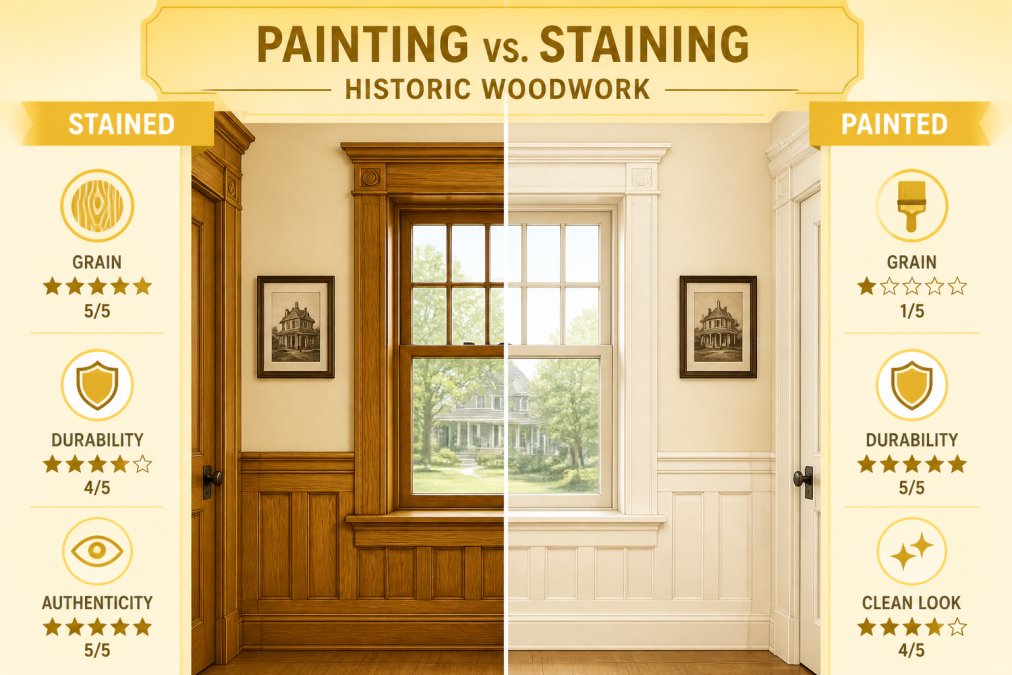
Stained finishes celebrate wood grain and showcase high-quality wood species like oak, walnut, or cherry. However, stain offers less protection than paint and requires more frequent recoating, typically every 3-5 years for exterior wood, to maintain water resistance and UV protection.
The architectural period matters. Victorian and Edwardian homes often featured painted trim with high-gloss finishes. Craftsman homes showcased natural wood finishes that celebrated grain and joinery. Choosing the wrong finish type diminishes historical authenticity and can reduce resale value.
Get Your Free Estimate Today! →
Professional application using products formulated for Canadian climate conditions, like Benjamin Moore’s exterior lines, is essential to avoid premature failure in Toronto, Vaughan, North York, and the Greater Toronto Area.
If your home originally had painted trim, don’t stain it to save money. If it originally featured stained woodwork, painting over it typically reduces resale value. Match the original finish type whenever possible to respect architectural integrity and preserve the home’s character.
When Restoration Makes Financial Sense
Restoring historic home woodwork is worth it when three conditions align: structural necessity, market value, and personal commitment to maintenance.
Structural necessity is the clearest justification. If wood rot threatens the integrity of window frames, door jambs, or structural trim, restoration is essential. Ignoring deterioration allows rot to spread, compromising the home’s envelope and inviting moisture damage far beyond the visible woodwork.
Market value is measurable but market-specific. Heritage homes in Toronto’s Distillery District, Rosedale, and similar neighborhoods command premiums for authentic original woodwork. Research comparable sales in your specific neighborhood to understand whether restoration adds measurable value.
Long-term maintenance commitment is the factor many homeowners underestimate. Restored woodwork demands ongoing care. Painted trim requires repainting every 5-7 years. Stained woodwork needs recoating every 3-5 years for exterior applications. If you’re unwilling to maintain these intervals, restoration won’t deliver its intended benefit.
The decision also depends on timeline. If you’re planning to sell within 2-3 years, restoration may not recover its full cost. If you’re staying long-term, restoration becomes a lifestyle choice that enhances your daily experience and preserves your home’s character.
Restoring historic home woodwork requires expertise and precision that separates quality results from costly mistakes. Soca Services Painting brings over a decade of experience in detailed surface restoration and finishing for heritage properties across Toronto, Vaughan, North York, and the Greater Toronto Area. Whether you’re consolidating deteriorated trim, choosing between paint and stain finishes, or planning a comprehensive restoration project, our team understands the architectural character of heritage homes and delivers professional results that preserve your property’s value. Contact Soca Services today for a free estimate on your woodwork restoration project.
Frequently Asked Questions
Does restoring original woodwork increase property value?
Yes, restoring historic woodwork typically increases resale value by preserving architectural character and structural integrity. Heritage homes with original, well-maintained woodwork command higher appraisals than those with replaced or neglected trim. The key is professional restoration that maintains period-appropriate finishes and structural soundness. Buyers of heritage properties specifically value authentic original craftsmanship, making restoration a solid long-term investment.
What are the best wood restoration products for deteriorated trim?
Top products include Abatron LiquidWood & WoodEpox Kit for severe rot, Perma-Chink M-Balm for wood consolidation, and BEHR Premium Wood Stain & Finish Stripper for surface preparation. For finishing, Timber Pro Coatings and Homestead House Milk Paint offer durable, eco-friendly options that preserve historic aesthetics. Choose based on deterioration severity: epoxy systems for structural damage, consolidators for spongy wood, and quality finishes for protection and appearance.
When should I restore versus replace historic woodwork?
Restore if the wood has structural integrity, original craftsmanship worth preserving, and deterioration limited to surface or minor rot. Replace only when wood rot penetrates deeply, structural integrity is compromised, or restoration costs exceed 60-70% of replacement. Professional assessment is critical. For heritage properties, restoration almost always preserves more value and maintains architectural character than replacement with modern materials.
What's the difference between painting and staining historic woodwork?
Painting covers wood grain and allows you to modernize color while hiding imperfections; staining highlights natural wood beauty and grain patterns, ideal for showcasing original craftsmanship. Staining typically lasts 3-5 years on exterior wood and requires more frequent maintenance. Painting offers longer durability (5-7 years) and better protection from moisture and UV damage. For heritage homes, staining preserves historic authenticity, while painting allows flexibility in period-appropriate color choices.
How do I know if my historic wood trim is worth saving?
Check for original craftsmanship, hand-planed surfaces, period-specific joinery, and wood species typical of the era. Tap the wood: solid sounds indicate good structural integrity, hollow sounds suggest rot. If the wood is original to the home, structurally sound beneath surface damage, and features quality construction, restoration is worthwhile. Consult a heritage preservation specialist or professional painter experienced with historic homes to assess whether restoration or replacement makes sense for your property.
This article was written using GrandRanker