You've got three quotes for repainting your Vaughan home. One looks almost too cheap, another sits in the middle, and the premium proposal is detailed enough to make you wonder whether you're paying for paint or paperwork. The problem isn't choosing the lowest, middle, or highest number. It's figuring out what each painter will do before the first roller touches your wall.
That decision matters in Vaughan because homes vary widely. An older Thornhill bungalow may have plaster walls that need careful repairs, while a newer Kleinburg build may bring high ceilings, extensive trim, and open-concept spaces that demand different equipment and scheduling. A reliable painting contractor accounts for those realities. A rushed one hides them inside a vague quote.
Why Hiring the Right Painter Matters More Than You Think
You approve a low quote, then discover it covers one coat, light patching, and little protection for your floors or cabinetry. The number looked competitive because important work was left out. A reliable quote spells out preparation, materials, labour, cleanup, and inspection before the crew arrives.
Hiring professional painters in Vaughan controls those risks. Peeling paint often begins with poor cleaning, an unsuitable coating, or moisture left unaddressed. Scratched hardwood points to weak floor protection and careless masking. Delays usually come from incomplete preparation, unclear access requirements, or crews booked without enough time for the job.
Practical rule: Compare the work included in each quote before comparing the price.
Vaughan homes create different painting challenges
A plaster wall in an established Thornhill property requires a different approach from fresh drywall in a newer subdivision. Plaster may need gentle filling, spot priming, and careful sanding so repairs do not show through the finish. Newer homes can include high stairwells, tall foyers, detailed millwork, and long wall runs that require extension tools, scaffolding, or extra setup.
Exterior surfaces create the same pricing issue. Brick, stucco, cedar, aluminum, vinyl, soffits, fascia, and previously painted trim each call for different cleaning, preparation, primers, and coatings. A contractor who prices every exterior as one standard surface is either simplifying the work too heavily or preparing to add details as change orders.
Vaughan's labour market also affects what a credible quote should contain. Current local labour rates, covered in the cost section below, reflect a skilled-trades market where experience, specialization, and project type influence labour value. A quote far below comparable proposals deserves a scope review, not automatic approval. Ask which preparation steps, crew hours, equipment, and protection measures have been excluded.
VOC compliance adds another local decision. The coating must suit the room, ventilation, and intended use while meeting applicable requirements. A painter should identify the product being proposed and explain why it fits the substrate. Cutting material costs with an unsuitable coating can create odour, adhesion, or durability problems that cost more to correct.
Quality is a process, not a paint brand
Benjamin Moore and Sherwin-Williams offer strong product lines, but premium paint cannot rescue a dirty wall, damp substrate, loose caulking, or rushed second coat. Durable work follows a sequence: inspect, clean, repair, sand, prime where needed, apply the correct coating, and inspect the finish.
Soca Services Painting gives homeowners a useful benchmark for evaluating a contractor: transparent pricing, proper preparation, clear communication, and accountability from the initial walkthrough through final inspection. Those standards apply to homes, rental properties, renovation projects, and commercial spaces.
For a broader checklist, homeowners can compare painting contractors London and examine scope, credentials, preparation, communication, and closeout procedures. The location differs, but the evaluation principles transfer well. Review these benefits of hiring professional painters before deciding whether a lower quote represents lower total cost.
How to Vet Professional Painters in Vaughan
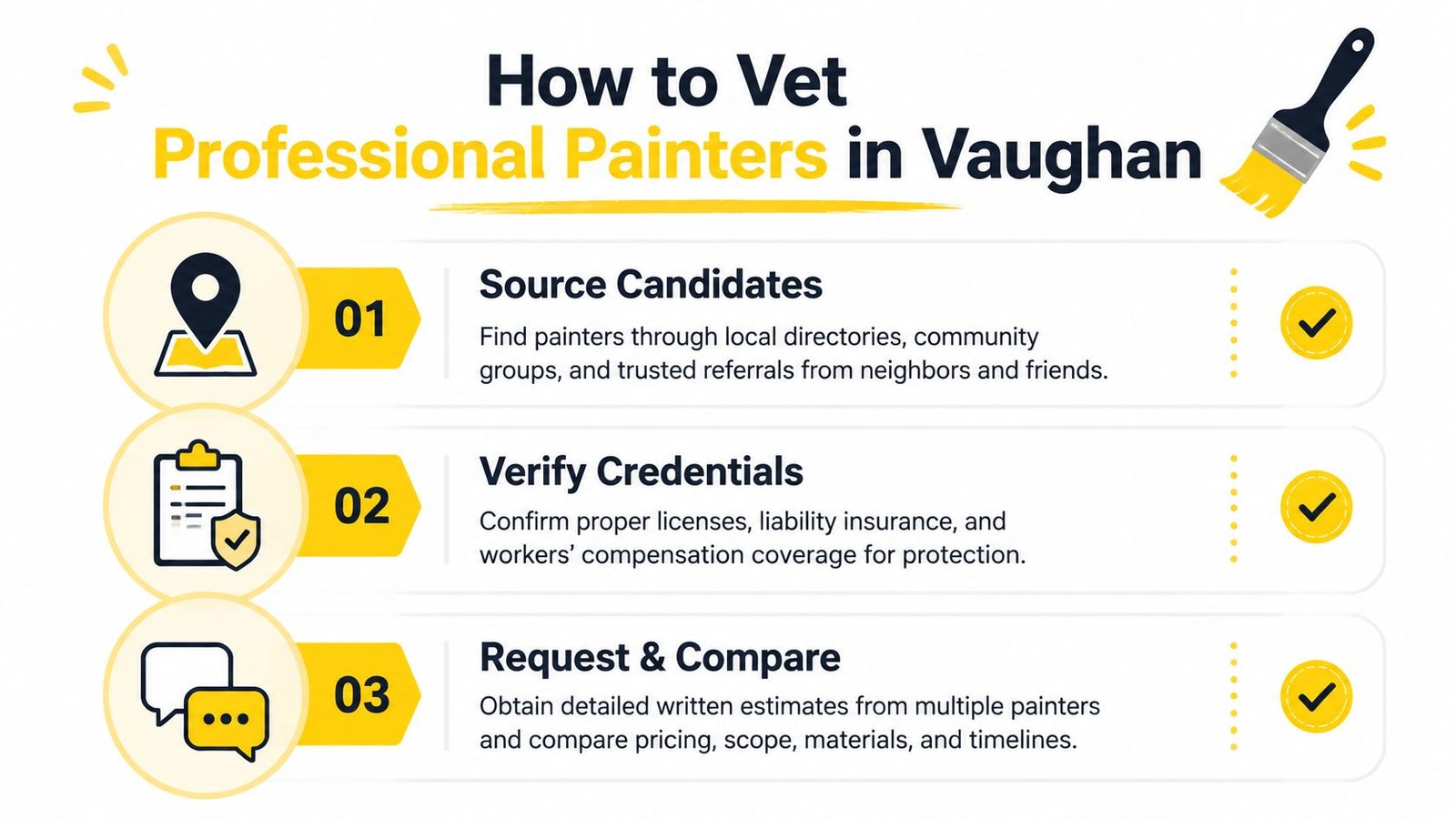
Start with a shortlist, not a single recommendation. Ask neighbours, property managers, renovation contractors, and local real estate contacts who they've hired. Search verified review platforms and local directories, then look beyond the star rating. Recent comments should mention preparation, punctuality, cleanliness, communication, and how the company handled touch-ups.
A painter who has many reviews but no clear information about who performs the work deserves questions. So does a contractor whose portfolio shows only finished walls with no difficult surfaces, trim, repairs, or exterior details.
Ask questions that reveal how the company operates
During the first consultation, ask direct questions. You're not being difficult. You're finding out whether the contractor understands the job beyond the visible colour change.
Ask how long the business has operated, whether the crew consists of employees or subcontractors, and who will supervise the work. Request proof of WSIB coverage and liability insurance, including the applicable limits. A legitimate contractor should be comfortable explaining how those protections apply to your property.
Then ask what the written quote includes:
- Surface preparation: Does the scope cover washing, scraping, sanding, caulking, drywall repairs, and spot priming?
- Paint system: Which brand and product line will the crew use, and is the coating appropriate for the room or substrate?
- Coats and coverage: Does the proposal state how many coats are included and what happens if the existing colour requires additional coverage?
- Protection and cleanup: Who moves furniture, removes outlet covers, protects flooring, and handles final cleanup?
- Schedule and access: What could delay the work, and who will communicate changes?
- Warranty and touch-ups: What documentation will you receive, and how does the company handle defects after completion?
Credentials matter, but paperwork should support a clear process. Verify the company's Business Number registration and HST compliance where applicable. Manufacturer training or certifications from brands such as Benjamin Moore or Sherwin-Williams can provide useful evidence of product familiarity, but they don't replace references and a detailed scope.
Know the difference between a painting company and a casual handyman
A casual operator may be perfectly capable of painting a small room. A larger or more demanding project needs stronger coordination. A professional painting company should be able to explain crew roles, supervision, protection procedures, preparation standards, and final inspection.
Look for:
- Dedicated crews that arrive with the right tools, ladders, drop cloths, sanders, brushes, rollers, and masking materials.
- A project contact who can answer questions instead of leaving you to coordinate individual workers.
- Written warranty documentation that explains what the company covers and what maintenance remains your responsibility.
- A preparation protocol that addresses surface condition rather than treating every wall as ready to paint.
- A closeout process with a punch list, touch-ups, and confirmation that the agreed scope is complete.
Red flags are straightforward. Be cautious with cash-only deals, missing contracts, vague timelines, unusually large deposits, and contractors who won't provide references from recent Vaughan projects. If the painter says preparation is “included” but won't describe it, assume the word means very little.
Before signing, collect the written estimate, contract, insurance details, WSIB confirmation, payment schedule, product information, colour selections, schedule, change-order procedure, warranty terms, and contact details for recent references. You can also use this guide to choose the right painting contractor before committing.
Understanding Painting Costs and Labour Rates in Vaughan
A low quote can look attractive until you discover that wall repairs, extra coats, access, or cleanup were never included. In Vaughan, compare the work behind the number, not just the number itself. Contractors may charge by room, square foot, day rate, or a labour-and-material breakdown. Any method can work if the proposal clearly defines the scope.
A small bedroom with sound drywall and little trim is straightforward. A Vaughan home with plaster repairs, tall ceilings, dark-to-light colour changes, numerous doors, or damaged baseboards demands more preparation and application time. Premium paint affects material costs, but labour is often the larger variable. VOC-compliant product choices can also affect the specification, especially where ventilation, odour, or occupied rooms matter. Ask which products are proposed and why they suit the space.
Local employment postings show the labour pressure behind professional quotes. Full-time painter roles in Vaughan list about C$41 to C$44 per hour, while other local postings show ranges around C$26 and annual compensation of approximately C$55,000 to C$80,000, according to Vaughan painter labour listings. These figures are wages, not homeowner prices. They still make one point clear: a legitimate quote must cover supervision, insurance, preparation, equipment, travel, materials, and business overhead, not only the painter's time.
North American occupational data lists 215,910 employed workers in construction and maintenance painting, with a mean annual wage of about US$52,110 and a median annual wage of about US$47,700, as reported in this construction and maintenance painter benchmark. Vaughan competes within the Greater Toronto Area market, so unusually cheap labour deserves close examination.
Read the scope before judging the number
Use the following tiers as a comparison framework, not a promise that every home will fit them.
| Quote Component | Low-Tier ($1,500–$2,500) | Mid-Tier ($3,000–$5,000) | High-Tier ($5,500–$8,000+) |
|---|---|---|---|
| Preparation | Basic filling and limited sanding | More complete patching, sanding, and caulking | Detailed repairs, extensive sanding, priming, and substrate-specific preparation |
| Materials | Standard paint and limited accessories | Better product selection and clearer material allowance | Premium systems, specialty primers, and higher protection standards |
| Labour | Small crew or narrow scope | Organised crew with defined work areas | Detailed execution for complex layouts, trim, ceilings, or demanding finishes |
| Coats | May require clarification | Usually stated in the proposal | Clearly defined coverage and finish expectations |
| Protection | Basic masking and floor covering | Broader furniture and surface protection | Careful protection for hardwood, millwork, fixtures, and occupied spaces |
| Closeout | Basic cleanup | Cleanup and minor touch-ups | Documented inspection, punch-list work, and warranty information |
Use this guide to review painting rates per square foot and check whether the estimate separates labour, materials, preparation, access, cleanup, taxes, and exclusions. Soca Services Painting's quoting approach provides a useful comparison model because it shows how scope can be made clearer instead of leaving homeowners to guess what a low figure omits.
One local estimate places many whole-home interior repainting projects in Vaughan around $3,000 to $9,000, depending on the project, as outlined in this Vaughan interior painting cost guide. Treat that range as context, not a fixed price. Home type, ceiling height, trim complexity, wall condition, VOC requirements, and substrate preparation can move the quote substantially.
A cheap quote isn't a bargain if it turns preparation, extra coats, or repairs into your problem.
Preparing Your Home for a Professional Paint Job
Preparation starts before the crew arrives. Homeowners should remove wall art, mirrors, and fragile items, then place furniture in the centre of the room if it can't leave the space. Secure pets in a separate area, arrange access to washrooms and water, and tell the crew about alarm systems, delicate fixtures, or rooms that must remain available.
The painting team should handle the work that protects the finish and the property. That commonly includes placing drop cloths, masking floors and fixed surfaces, removing outlet and switch covers, cleaning walls, sanding repairs, and completing minor drywall patching. Confirm the division of labour in writing because “move furniture” can mean very different things to different contractors.

Preparation checklist by room
A bedroom is usually easier to stage than an open-concept main floor. A standard 12 by 14 bedroom may take roughly one to two days, while an open-concept main floor can stretch to four or five days, depending on the condition and scope. Those planning expectations come from the requested project guidance, so treat them as practical estimates rather than guarantees.
Bedrooms and offices need clear walls, protected floors, and access around closets, desks, and window trim. Remove artwork and curtains before the crew begins. If the existing colour is strong or the walls have visible repairs, ask whether primer or additional coverage is included.
Living rooms and open-concept areas require more careful staging. Large furniture may need to leave the room, especially when the crew needs to work around stairs, built-ins, fireplaces, or high ceilings. Confirm how the contractor will protect hardwood, stone, cabinetry, and lighting.
Kitchens and bathrooms demand cleaning before painting because grease, soap residue, and moisture interfere with adhesion. Ask whether the crew will remove hardware, mask fixtures, and apply a coating suited to the room's cleaning and humidity demands.
Finished basements deserve extra attention. Humidity-related drywall concerns, previous seepage, or musty surfaces should be addressed before painting. A contractor who rolls over staining may deliver a clean appearance that doesn't last.
Older Vaughan homes can create another safety issue. Popcorn ceilings in pre-1990 builds may require asbestos testing before disturbance. Older painted surfaces can also contain lead-based layers. Federal guidance notes that Canada's Lead Risk Reduction Regulation limits lead in most consumer paint to 90 mg/kg, or 90 ppm, but existing layers in older homes may require containment and specialized cleanup during renovation, as explained in this Canadian lead and architectural coatings consultation.
Don't accept paint over dirt
A contractor who skips cleaning is cutting the job at its foundation. Dust, grease, chalking, and loose material prevent reliable adhesion and can create premature peeling or uneven sheen. Proper preparation may feel slow because much of it disappears beneath the finish, but that hidden work determines whether the final coat looks uniform.
For additional wall preparation guidance, see how to prepare walls for painting. Ask the crew to identify repairs before painting begins, not after the colour exposes them under changing light.
Interior Versus Exterior Painting Decisions for Vaughan Homes
Interior and exterior painting should never share the same product assumptions or schedule. Interiors offer more control over temperature and moisture, while exteriors must contend with exposure, substrate movement, rain, sunlight, and seasonal changes.
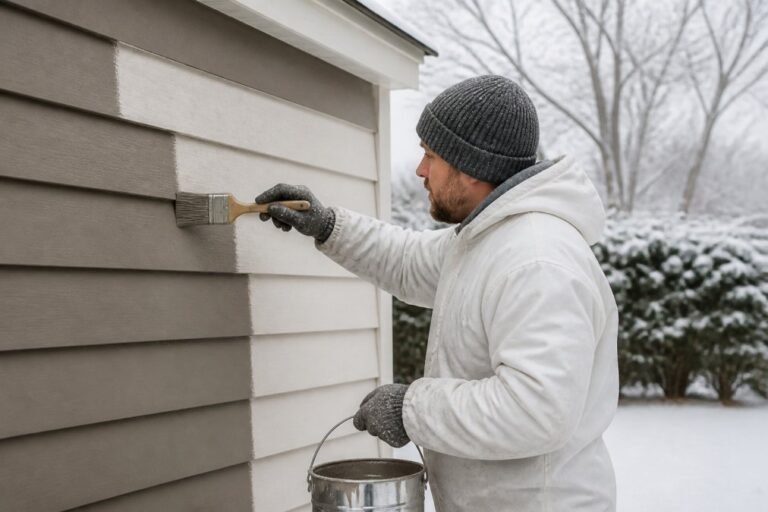
Exterior work generally needs a dependable warm-weather window, commonly from late May through early October, when temperatures remain consistently above 10°C and humidity supports curing. The exact schedule still depends on the product label, surface temperature, weather forecast, shade, and overnight conditions. A contractor who paints through unsuitable weather may leave you with slow curing, poor adhesion, or visible finish problems.
Vaughan's neighbourhoods also contain a wide material mix. Older Woodbridge homes may have cedar siding that needs careful cleaning and priming. Newer developments near Kleinburg may feature stucco, while aluminum and vinyl cladding require compatible primers and coatings. Brick homes may need only trim, soffit, and fascia work rather than full wall painting, which changes both the scope and the value calculation.
Product compliance belongs in the hiring decision
Canada's architectural-coatings rules cover 53 coating categories, with maximum VOC limits ranging from 100 g/L to 800 g/L, as explained in this federal architectural coatings regulation. The rules can apply at the time of application, so thinning must be accounted for before the coating is used.
The practical lesson is simple. Don't assume that because a product is sold in Canada, it's suitable for every job. A professional should select the product category, verify the label, match the coating to the substrate, and plan specialty work around restrictions. Federal compliance guidance also provides Ontario-region contacts, which reinforces that Vaughan contractors operate within national requirements.
Low-VOC and zero-VOC options can be sensible choices for interior projects, particularly in tightly sealed modern homes, but the contractor still needs to match the finish to cleaning demands, sheen, substrate, and expected wear. Product selection should serve the room, not just the marketing label.
| Factor | Interior Painting | Exterior Painting |
|---|---|---|
| Main concern | Finish quality, cleanability, odour, and indoor air considerations | Weather exposure, adhesion, moisture, and substrate movement |
| Best scheduling advantage | Winter can offer better contractor availability and pricing | A stable warm-weather window is essential |
| Typical substrates | Drywall, plaster, wood trim, doors, cabinetry | Brick, stucco, cedar, aluminum, vinyl, soffit, fascia, and wood |
| Preparation focus | Cleaning, patching, sanding, caulking, and stain blocking | Washing, scraping, repairs, mildew treatment, priming, and access |
| Product decision | Sheen, VOC profile, washability, and colour coverage | Exterior durability, substrate compatibility, and weather resistance |
| Quote questions | Coats, repairs, trim details, protection, and occupied-room cleanup | Surface condition, access equipment, weather delays, and warranty |
Temperature and humidity affect interior results too. Common manufacturer guidance for interior latex and acrylic paints places the usable range around 15°C to 25°C, with indoor humidity ideally below 60%, according to this painting temperature and humidity guidance. Poor conditions can slow drying, increase brush marks, and affect curing.
Soca Services can be evaluated on the same basis as any responsible Vaughan painting contractor: whether its team discusses colour consultation, substrate type, exposure, product selection, and seasonal timing before quoting. For exterior planning in the Toronto area, this guide to exterior house painting costs offers additional context.
Use this decision matrix:
- Urgent exterior deterioration: Address peeling, exposed material, or moisture entry before cosmetic interior work.
- Preparing to sell: Prioritise clean, neutral interior surfaces when they're visibly worn, then assess exterior trim and entry areas.
- Limited budget: Choose the rooms or exterior elements with the greatest visual and protective need, rather than spreading the budget thinly.
- Seasonal constraint: Schedule exterior work within a suitable weather window and use interior work for periods when outdoor conditions are unreliable.
- Luxury or custom home: Plan around substrate, height, trim, and finish expectations instead of choosing a contractor from a basic room rate.
Inspecting the Finished Work and Ensuring Lasting Quality
Don't release the final payment after a quick glance at the walls. Paint can look acceptable from the centre of a room while revealing missed edges, inconsistent sheen, drips, or rough repairs under direct light.
Use three passes. The first is broad and visual. The second is close and detailed. The third tests the surface and confirms that the practical parts of the project work as agreed.
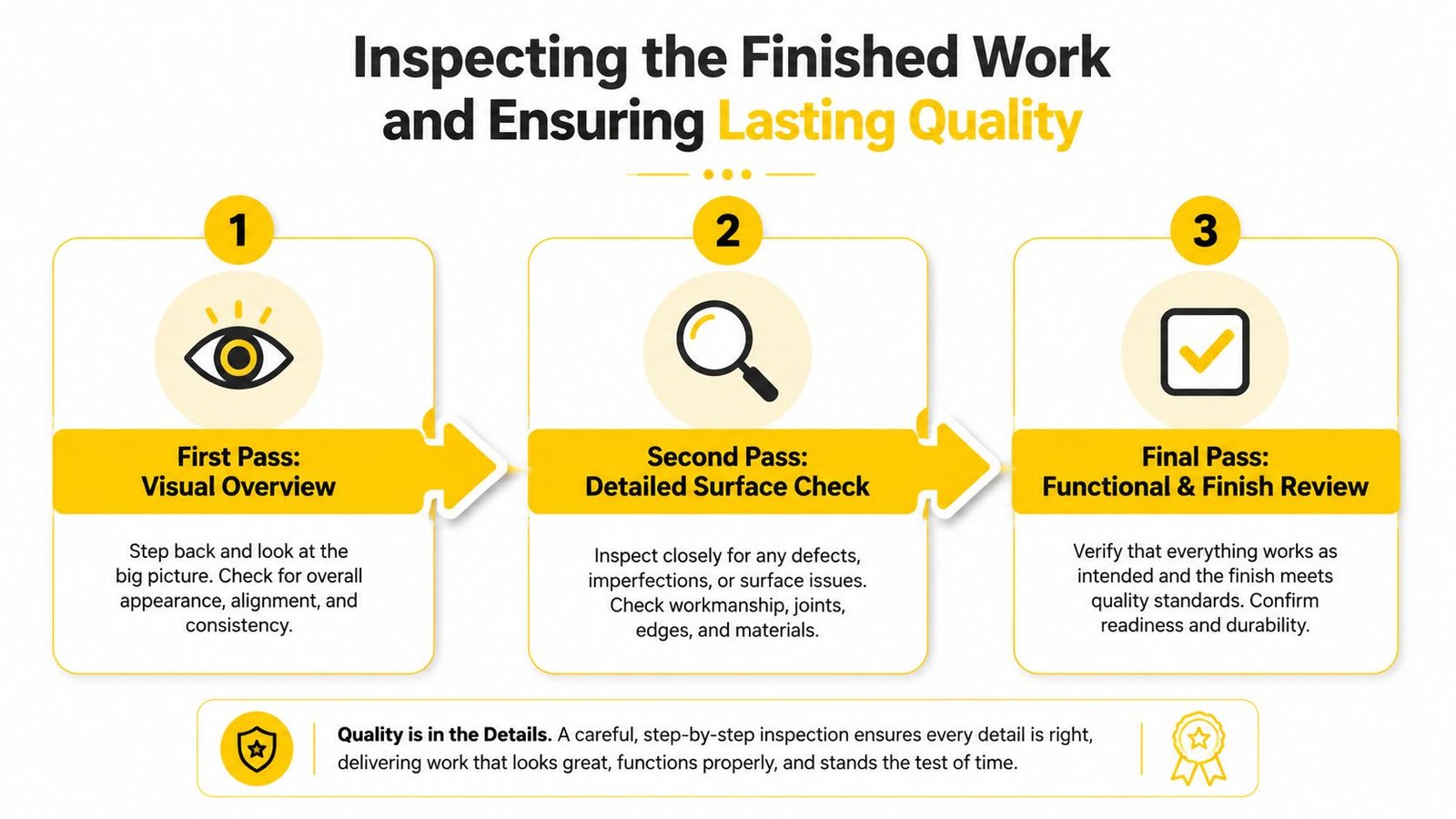
First pass visual overview
Walk through the rooms in natural light, then turn on the artificial lighting. Look for uneven sheen, missed patches, roller lines, flashing, colour inconsistencies, and visible differences between repaired areas and surrounding walls.
Check the broad surfaces first. A wall may need touch-up work even if the colour appears correct, especially where the old coating or repair compound absorbs paint differently.
Second pass detail inspection
Move closer to the areas that expose workmanship:
- Ceiling cut lines: The wall colour should meet the ceiling cleanly without a wavy edge or visible bleed.
- Trim edges: Baseboards, crown moulding, casings, and door frames should have consistent coverage and sharp transitions.
- Windows and doors: Check corners, hinges, jambs, and areas behind handles.
- Hardware and flooring: Look for paint on hinges, switch plates, handles, hardwood, tile, and flooring edges.
- Caulking: Trim joints should be properly filled where the agreed scope included caulking.
Confirm the number of coats promised in the contract. If the proposal specifies two full coats, inspect for thin coverage rather than assuming a second pass happened because the room looks fresh.
Final pass surface and function review
Run your hand lightly over smooth surfaces where appropriate. You're checking for drips, raised debris, rough patches, brush marks, and poorly sanded repairs. Don't press hard or rub a newly cured finish aggressively.
Open doors, operate windows, replace outlet covers, and check that fixtures and hardware work without sticking. Photograph any concern with a timestamp and send a concise written punch list to the contractor. Raise issues within the warranty window and keep the original quote, product details, and completion notes together.
A professional closeout should include touch-ups for agreed deficiencies, not an argument about whether the project is “close enough.” Soca Services' standard should be judged by that principle: a clear walkthrough, documented punch-list items, and completion of reasonable touch-ups before the job is considered finished.
Maintain the result by cleaning painted surfaces with suitable products, storing labelled touch-up paint away from extreme temperatures, and watching high-contact areas such as hallways, doors, stairwells, and kitchen walls. Schedule professional recoating when the finish shows broad wear, adhesion failure, or repeated touch-up needs rather than waiting for the substrate to deteriorate.
For sector context, Canadian paint and coating manufacturing generated about $2.7 billion in revenues in 2023, while a Canadian coatings association report estimates the broader sector supports roughly 82,856 jobs and $19.5 billion in total economic output, according to this Canadian paint and coatings industry profile. Those figures don't set your project price, but they underline why disciplined material control, surface preparation, scheduling, and finish verification matter. Recoats and callbacks consume labour and materials that a careful process could have protected.
Soca Services Painting helps homeowners, property managers, and commercial clients plan interior and exterior painting with clear scope, surface preparation, product selection, and final quality checks. Visit Soca Services Painting to request a free estimate for your Vaughan, Toronto, North York, or King City project.