You're probably looking at a fascia board, a peeling window surround, or a sun-faded front elevation and wondering if a premium exterior paint line can hold up in the GTA. The short answer is yes, but only if the product matches the substrate, the weather window, and the prep work. Benjamin Moore exterior paint earns its reputation in Toronto, Vaughan, North York, and King City because the brand gives you real technical choices, not just a colour chip and a promise.
Choosing the Right Benjamin Moore Exterior Paint Line
A paint line that works on a sheltered porch in Vaughan can behave differently on a south-facing wall in Toronto. Wind exposure, brick movement, wood trim, stucco repairs, and winter freeze-thaw all affect how well a coating holds up, so the product has to match the surface and the job, not just the colour.
Aura, Regal Select, and ben each solve a different problem
Aura Exterior is the line I reach for when the finish has to hold its colour and look clean for a long time. Benjamin Moore lists Color Lock technology, Flat, Low Lustre, Satin, and Soft Gloss sheens, coverage of about 350 to 400 sq ft per gallon per coat, touch dry in 1 hour, recoat in 4 hours, and full cure in 30 days (Aura Exterior product details). That profile suits prominent façades, dark trims, and homes where the exterior gets hard sun, wind, and regular cleaning.
Regal Select Exterior is the middle-ground premium line, and it fits a lot of mixed-surface work in the GTA. Its technical sheet describes a premium quality, high build, self-priming, 100% acrylic latex coating with advanced mildew and stain resistance, and it is suited to wood, fibre cement, cedar shake, vinyl, aluminium siding, unglazed brick, concrete, stucco, cinder block, and primed metal (Regal Select technical sheet). That kind of versatility helps when one elevation combines trim, cladding, and masonry, because each material moves and absorbs differently.
ben Exterior is the practical choice for tighter weather windows. Benjamin Moore states that it can be applied at 35°F and becomes rain resistant 90 to 120 minutes after application (ben Exterior sell sheet). In Southern Ontario, that extra flexibility can keep a job on schedule when the forecast shifts and the crew still needs workable conditions.
Practical rule: choose the coating by exposure, substrate, and timing. A premium line only performs like a premium line when the product matches the building and the weather window.
| Benjamin Moore Exterior Product Comparison | Best For | Key Feature | Recoat Time |
|---|---|---|---|
| Aura Exterior | High-visibility homes and colour-critical projects | Color Lock technology | 4 hours |
| Regal Select Exterior | Mixed substrates and premium repaint work | High build, self-priming acrylic latex | 4 hours |
| ben Exterior | Cooler-weather scheduling and faster rain resistance | Application at 35°F, rain resistant in 90 to 120 minutes | Not specified in the verified data |
Sheen choice changes the result more than most people expect
Sheen affects how the exterior reads in real light. Flat softens patching and texture changes, low lustre is usually the safest all-purpose finish for siding, and satin or soft gloss can make trim, fascia, soffits, and casings look sharper. The wrong sheen can expose repairs, flashing lines, and substrate flaws that a flatter finish would hide.
For homeowners comparing Benjamin Moore vs Sherwin-Williams, the comparison is not only about brand preference. It is about how the coating, sheen, substrate, and labour work together on the actual house, and that breakdown is covered in this Benjamin Moore vs Sherwin-Williams guide.
Professional Surface Preparation and Priming
A durable exterior finish starts with cleaning, not with colour selection. Toronto and Vaughan homes often show a mix of chalking, mildew, old caulking, and spot failures around trim, which means the coating choice can be right while the surface is still wrong.
Start with substrate condition, not the paint can
Benjamin Moore's exterior guidance says wood should have moisture content below 15% before painting, and surfaces should be clean, dry, and free of chalk, mildew, and loose paint (Benjamin Moore exterior painting guidance). That moisture check is especially important on older GTA homes after rain, snowmelt, or pressure washing.
A premium coating will not correct a weak surface. If the old film is powdery, the new coat can bond to residue instead of the substrate, and that usually shows up later as peeling, early wear, or uneven sheen. Before wash-downs and prep start, the Pine Country window cleaning pre painting pressure resource is a useful reminder that cleaning has to be done carefully, with the right pressure and enough dry time before paint goes on.
Use primer where the surface demands it
Benjamin Moore's Regal Select Exterior is self-priming on many jobs, but self-priming does not mean every substrate can be skipped. It means the coating can handle a broader range of prepared surfaces without a separate primer coat, provided the existing surface is sound and the prep is done properly.
A self-priming paint is not a shortcut for rotten wood, exposed patching, or bare spots that need sealing.
Where the surface is chalky, porous, or repaired, a dedicated primer still earns its place. Primer seals porous areas, helps hold down uneven absorption, and gives the finish coat a better base. If you want a clearer breakdown of when primer is doing real work, this guide on what primer paint is used for explains the role it plays in an exterior system.
Professional prep checklist that prevents common failures
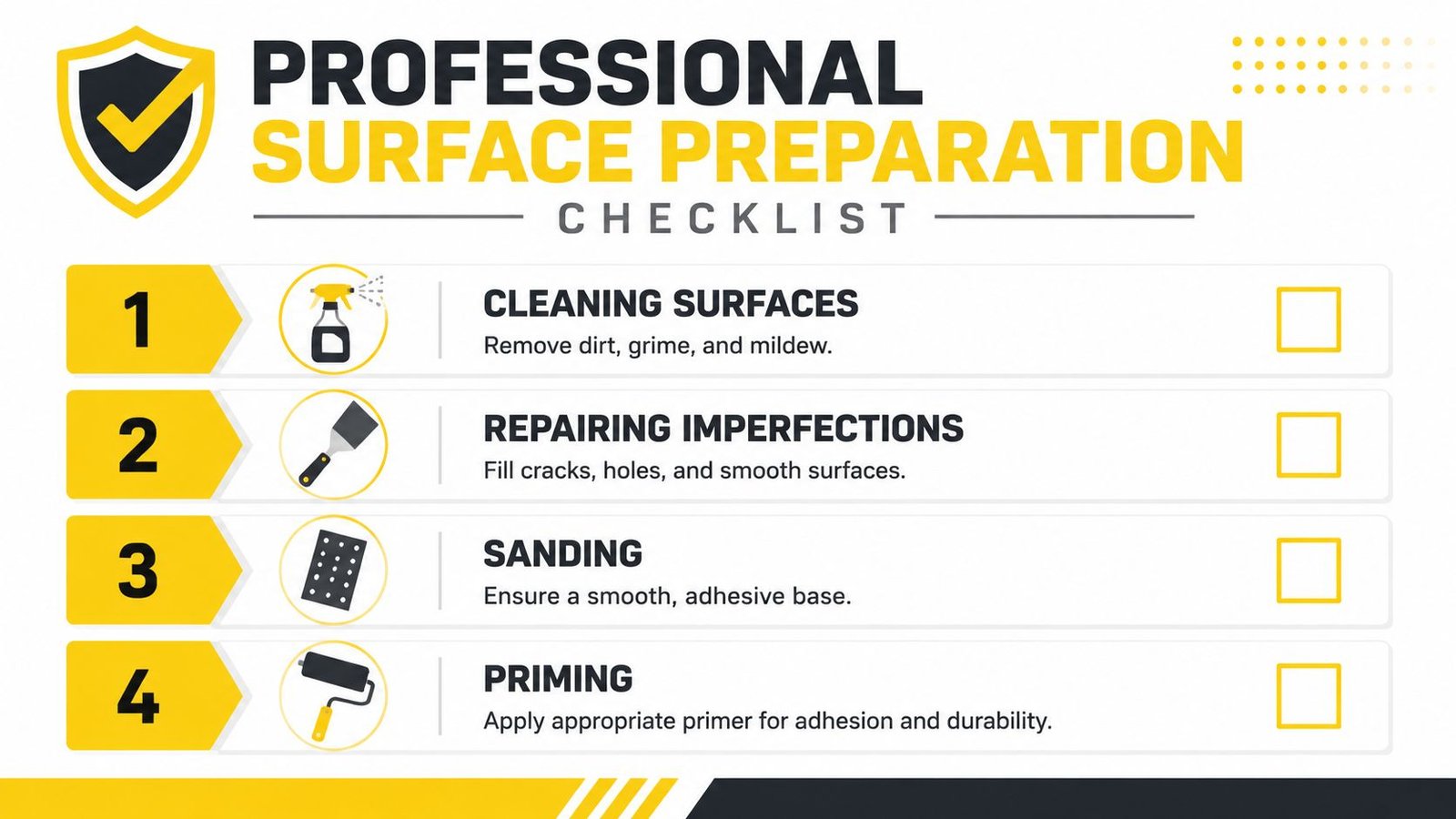
Use this order on most exterior repaints:
- Clean the surface thoroughly, because dirt and mildew block adhesion.
- Remove loose material, then sand edges so failures do not telegraph through the finish.
- Repair and caulk where needed, especially on trim joints and end grain.
- Prime repaired or vulnerable areas, then apply the finish coats only when the substrate is ready.
That sequence matters even more on older Canadian homes because freeze-thaw movement punishes weak edges first. Sheen choice changes the result significantly, and prep quality decides whether the finish holds up or starts showing defects early. If the prep is rushed, the best paint in the world will not save the job.
Mastering Application Techniques and Temperature Limits
On a GTA exterior, the coating choice only gets you part of the way. The application window, film build, and the wall itself decide whether the finish holds up through Toronto humidity, Vaughan sun exposure, and the freeze-thaw cycles that punish weak work.
Check the wall, not just the weather app
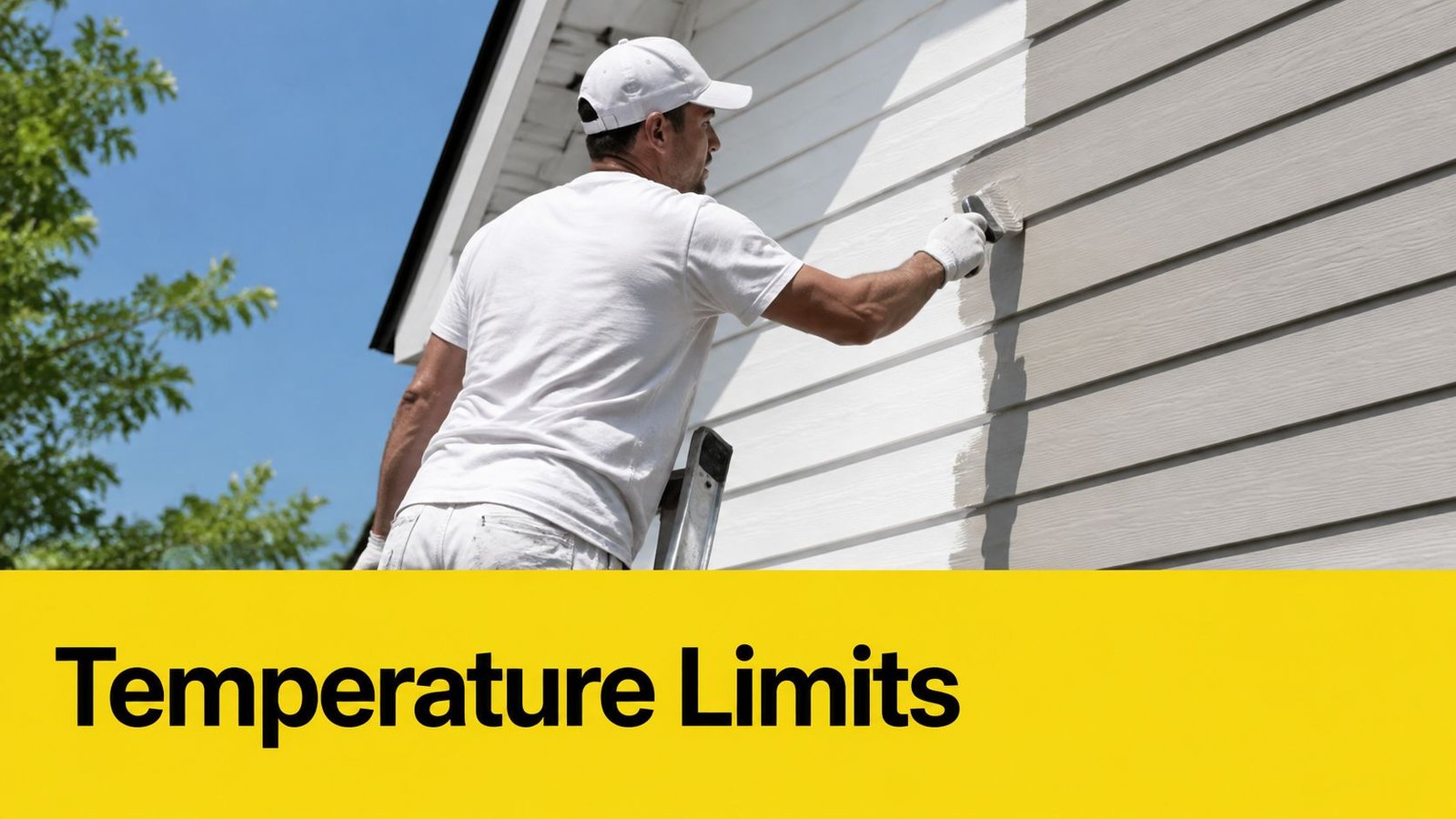
Benjamin Moore's Regal Select Exterior should not be applied when air and surface temperatures are below 40°F (4.4°C) (Regal Select technical sheet). Element Guard is published for 35 to 100°F application temperatures, with 1 hour to touch and 4 hours to recoat (Element Guard technical data sheet). Those specs matter because a product that works well on one siding profile or exposure may not suit another.
I see the same error on a lot of exterior jobs, the crew checks the air temperature and ignores the surface. A south-facing wall can run warmer than the forecast, while a shaded side stays cold and holds moisture longer. Benjamin Moore's exterior prep guidance also says wood should be dry and below 15% moisture before coating, so the substrate has to be ready before the first brush or roller touches it.
Apply top down and keep the film build honest
Benjamin Moore recommends painting top down and using two coats of premium exterior paint. That order controls drips and lap marks, especially on taller façades where the lower areas are still visible while the upper work is setting.
The coating has to be applied at the right thickness, too. Regal Select Exterior Moorgard Low Lustre W103 is listed at 43% volume solids, 300 to 400 sq. ft. per gallon, 2.0 mil dry film at the recommended thickness, 2 hours to touch, 4 hours to recoat, and 38.9 g/L VOC (W103 technical sheet). Those specs point to a moderate build, not a heavy one-pass cover-up, and that matters on siding that already has movement, patching, or mixed absorption.
Brush, roller, or sprayer
Tool choice should match the surface. A brush still gives the best control on lap siding overlaps, trim edges, and irregular details. A roller lays down an even field coat on flatter siding, and a sprayer makes sense when access, masking, and setup justify the extra preparation.
If you are comparing methods, this spray painting vs brush painting guide breaks down the trade-offs clearly. On exterior work, the wrong tool does more than slow the crew down. It can leave texture issues, dry edges, and overspray problems that show every time the sun changes angle on the wall.
A simple field rule for GTA exteriors
Paint the shaded side first, then work around the house with the sun.
That approach helps keep the coating from flashing off too fast on hot exposures and gives a more even final appearance. On a large exterior, that one scheduling choice can decide whether the finish reads clean from the curb or shows unevenness up close.
Navigating Toronto Weather and Seasonal Timing
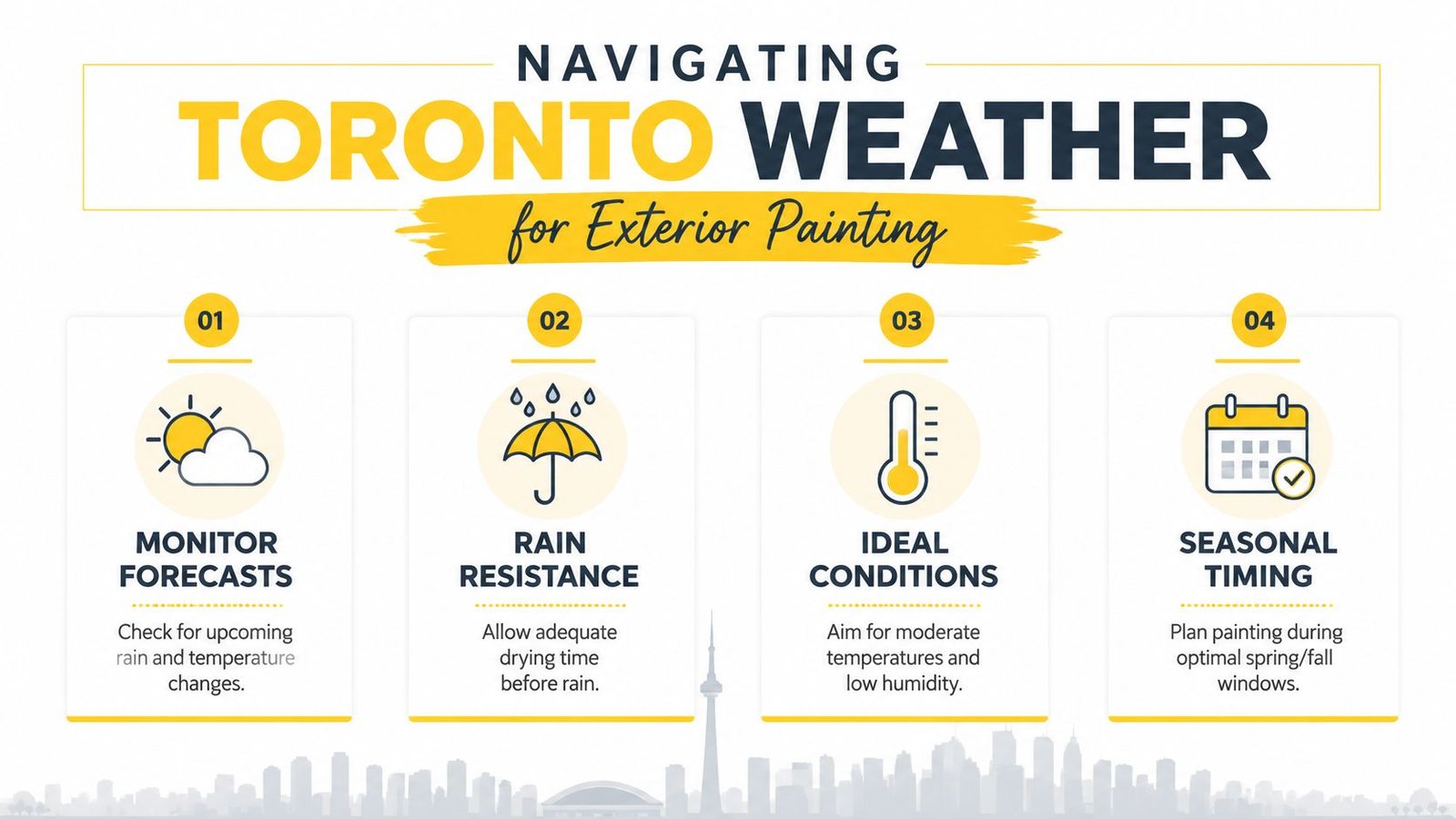
On a Toronto or Vaughan exterior, the schedule is part of the coating system. A clear morning can turn into a wet afternoon, and a wall that looked ready at breakfast may be too hot, too damp, or too exposed by lunch. That is why timing has to match the weather, the substrate, and the product, not just the calendar.
Rain resistance helps, but it is not a free pass
Benjamin Moore says ben exterior paint becomes rain resistant 90 to 120 minutes after application and can be applied in temperatures as low as 35°F (ben Exterior sell sheet). That gives contractors some room in spring and fall, but it does not remove the need to protect the job from changing conditions.
Rain resistance is only one stage of the process. A coating can resist moisture before it has fully hardened, so a light shower is less of a threat than a prolonged soaking, but neither should be part of the plan. On GTA jobs, I treat that window as a buffer, not permission to push the day too far.
Don't chase the sun
A wall that is already hot can make the paint set too fast. That is where lap marks, poor blending, and uneven sheen show up, especially once the sun swings across the face of the house. South and west exposures in North York and Vaughan are the usual trouble spots because they change temperature and light so quickly over the day.
Benjamin Moore's exterior guidance stresses sampling and choosing colour in outdoor light, because surroundings, architecture, and exposure change how a finish reads outside (Benjamin Moore exterior colour guidance). The same principle applies to timing. If one side is baking in direct sun and another is still cool, the house is not in a stable condition for clean application.
Respect the recoat window
Regal Select Exterior and Element Guard both call for a 4 hour recoat interval. That schedule matters because the second coat needs the first coat to be in the right stage of cure, not just dry to the touch.
If you recoat too early, the first layer can shift or soften under the second. If you wait too long and the weather turns against you, the next pass may not blend as evenly. Either problem can leave roller lines, lap differences, or a weaker finish than the product should be capable of delivering.
Weather rule of thumb: plan the work around the longest dry stretch you can confidently hold, not the best hour of the morning.
For homeowners and contractors who want a practical planning framework, this GTA exterior painting planning guide is a useful place to start before you set a start date.
Long-Term Maintenance and Professional Value
A premium exterior finish pays you back only if you keep an eye on it. Annual inspection, timely touch-ups, and proper application are what protect the finish in the first place, especially on homes that face strong sun, moisture, road grit, and seasonal movement.
Maintenance is simple when the original system was done right
Benjamin Moore's premium exterior lines are built around specific spread rates, drying windows, and temperature limits, which means maintenance should follow the same logic used on installation. If you keep the product records, you can match touch-ups more accurately and avoid patchwork repairs that stand out in daylight.
The practical habit is straightforward. Walk the home once a year, look for mildew, chalking, open joints, and worn edges around trim and eaves, then address small failures before they spread. That approach fits the same prep-first mindset covered in this guide to why proper prep is the secret to long-lasting exterior paint.
Why professional application holds value
Professional painters don't just apply colour, they manage thickness, timing, masking, access, and exposure. That matters because a coating like Regal Select or Aura is designed to perform within a specific film build and recoat pattern, and those results are harder to achieve when the job is squeezed between weather changes or rushed by inexperience.
This is also where the quality of the labour shows up months later. You can buy a premium product, but if it goes on too thin, too heavy, or on a damp substrate, the finish won't look or last the way it should. That's why the best results usually come from treating the job as a system, not as a product purchase.
Good exterior work protects more than the wall
A house with clean, intact trim and consistent sheen looks maintained, not merely painted. That matters for resale presentation, tenant appeal, and the day-to-day feel of the property. It's the same reason people planning decks sometimes start with a tool like ai deck design, because the visual plan and the material plan should support each other instead of competing.
For Toronto, Vaughan, North York, and King City homeowners, value is durability with fewer surprises. Premium exterior paint is worth the spend when the prep is right, the product matches the substrate, and the application is handled by people who respect the weather and the schedule.
If you're planning an exterior repaint in Toronto, Vaughan, North York, or King City, Soca Services Painting can help you choose the right Benjamin Moore system, prepare the surfaces properly, and finish the job for long-term durability. Visit Soca Services Painting to get a free estimate and talk through your next home painting or commercial exterior project with a team that knows how to handle GTA weather and substrates.