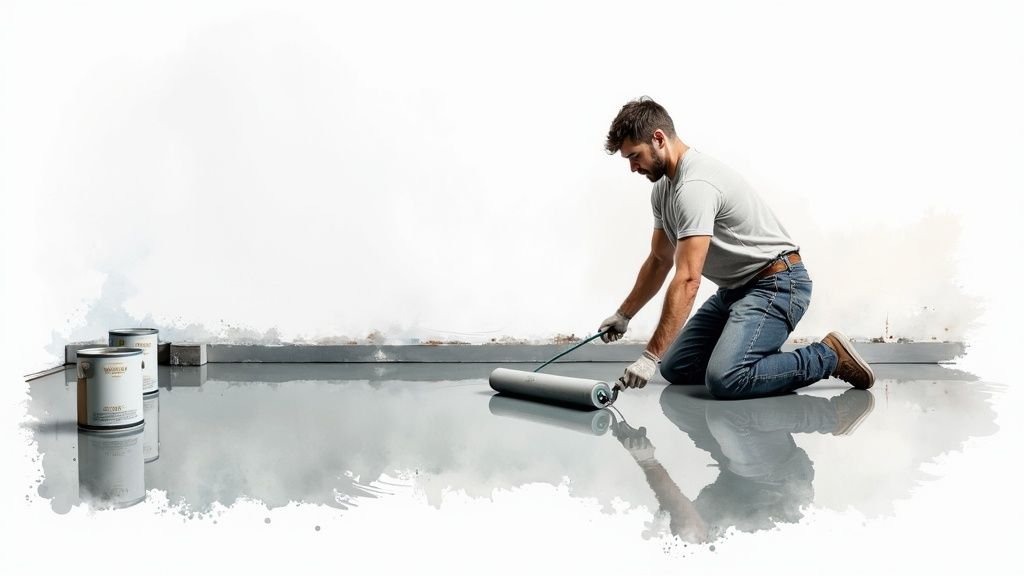
When it comes to painting a basement cement floor, picking the right product is about much more than just the colour. You need a solution that can stand up to the unique challenges of a below-grade space, like persistent dampness and regular foot traffic. Your goal is a finish that is not only beautiful but incredibly durable.
For most residential basements, a high-quality one-part epoxy paint or a dedicated acrylic latex floor paint hits the sweet spot. These products deliver a tough, durable finish that resists scuffs and moisture without the complexity of industrial-grade coatings, giving you professional results that last.
Transforming Your Basement From the Ground Up
The right finish on a basement floor can completely change the character of a space. It’s often the first step in converting a cold, concrete slab into a warm, functional living area. Whether you're a homeowner in Toronto planning a new family room or a property manager in Vaughan looking to upgrade a rental, choosing the correct paint is the cornerstone of a successful project. At Soca Services, we believe in doing it right the first time. Let's walk through the options so you can start with confidence.
Understanding Your Paint Options
Basement floors have a tough job. They face potential moisture from below and the wear and tear of daily life from above. Because of this, your number one priority should be finding a product with excellent adhesion and long-term durability. As you start looking, you'll find a few key players in the concrete floor paint game.
To make things clearer, here's a quick rundown of the most common types of paint you'll be considering for your basement floor.
Quick Comparison of Basement Floor Paint Types
| Paint Type | Best For | Durability | Application Difficulty |
|---|---|---|---|
| Epoxy Paint | High-traffic areas, workshops, garages | Excellent | Moderate to High |
| Acrylic/Latex | Living areas, playrooms, light-traffic zones | Good | Easy |
| Elastomeric | Cracked or uneven floors needing flexibility | Very Good | Moderate |
Each of these has its place, and the best choice really depends on how you plan to use your basement.
- Epoxy Paints: These are the heavyweights of floor coatings. Known for creating a hard, thick, and incredibly resilient surface, epoxies are fantastic for high-traffic zones. They resist moisture, stains, and chemicals, which is why you see them in garages and commercial spaces so often.
- Acrylic and Latex Floor Paints: Don't underestimate these modern formulas. They're much more user-friendly than epoxies, with easier application and simple soap-and-water cleanup. Brands like Sherwin-Williams and Benjamin Moore have developed high-quality acrylic floor paints that offer more than enough durability for most residential basement living spaces.
- Specialty Coatings: In some cases, you might need something more specific. For floors with minor hairline cracks, durable and flexible elastomeric coatings can be a great solution, as they can stretch and move with the concrete, helping to hide imperfections.
The logic behind choosing a floor coating isn't all that different from picking the right paint for your walls. It all comes down to matching the paint's strengths to your specific environment and needs.
For homeowners in King City or North York, getting a professional opinion can save you a lot of guesswork. At Soca Services, we don't just recommend a product; we analyze your floor's current condition and how you plan to use the space to suggest a complete paint system. This ensures your newly finished floor looks great and lasts for years to come. Contact Soca Services today for a free estimate.
Comparing the Top Concrete Paint Options and Brands
Walking into the paint aisle can be overwhelming. When you’re staring down a wall of cans, how do you choose the right paint for a cement floor in a basement? The truth is, not all coatings are created equal, especially for a tricky below-grade environment.
Your best choice depends on what you’re using the space for, your budget, and just how bulletproof you need that finish to be. Let's walk through the main contenders so you can make a smart call for your property, whether it's a bustling family room in North York or a simple utility space in Vaughan.
Two-Part Epoxy Systems: The Durability Champion
If you’re looking for the absolute toughest, most resilient finish you can get, two-part epoxy is king. This isn't just paint. It’s a chemical system where you mix a resin and a hardener, kicking off a reaction that creates an incredibly thick, hard, and durable surface. You’re essentially creating a brand-new, non-porous layer right on top of your old concrete.
- Unmatched Toughness: This coating shrugs off abrasion, impacts, chemicals, and stains like nothing else. It’s our top recommendation for workshops, home gyms, or kids' playrooms where the floor is going to take a beating.
- A Superior Moisture Barrier: When applied correctly by a professional, an epoxy system forms a seamless, waterproof shield. This is a massive advantage in Toronto basements, which are often prone to dampness.
- A Truly Professional Finish: The high-gloss, seamless look can completely transform a basement, elevating it from a forgotten utility area into a polished, finished living space.
But all that performance comes with a higher level of complexity. The application is far more unforgiving than rolling on a can of regular paint. Surface preparation has to be perfect, and you're on the clock the second those two parts are mixed. This is exactly why bringing in a professional team like Soca Services makes all the difference in achieving a flawless, long-lasting result.
One-Part Epoxy Paints: The DIY-Friendly Powerhouse
Want a big upgrade from standard floor paint but aren't quite ready to tackle a complex two-part system? One-part epoxy paint is your answer. These are essentially water-based paints that come pre-mixed and fortified with epoxy resins, giving you a solid boost in durability and adhesion in a much simpler package.
For most residential basements—think family rooms, laundry areas, and general living spaces with moderate foot traffic—these products strike a perfect balance between performance and practicality.
Soca Services' Pro Tip: We often point our clients toward premium one-part epoxy paints from trusted brands like Sherwin-Williams or Benjamin Moore. Their modern formulas offer fantastic resistance to scuffing and moisture, giving you a durable finish that really holds up in typical basement conditions.
Acrylic Latex Floor Paints: The Versatile and Accessible Option
Modern acrylic latex floor paints have come a long way. The formulas designed specifically for floors are breathable. This is a crucial feature for concrete slabs, as it allows tiny amounts of moisture vapour to escape without causing the paint to bubble up and peel off.
While it won't have the brute strength of an epoxy, a high-quality acrylic latex is perfectly suitable for lower-traffic zones like a storage room or a home office. The biggest draws here are how easy it is to apply, the low odour, and the simple soap-and-water cleanup. For property managers needing a fast, budget-friendly refresh between tenants, this is often the smartest choice.
Concrete Stains: The Natural and Rustic Choice
Maybe you like the look of concrete but just want to add a splash of colour and personality. If that’s the case, a concrete stain is a fantastic alternative. Unlike paint, which sits on top of the surface, stains soak into the concrete's pores, creating a translucent, almost watercolour-like effect.
- Because the colour is in the concrete, it won't chip or peel.
- It delivers a unique, high-end look that can be anything from subtle earth tones to bold, vibrant colours.
- You’ll definitely need a sealer topcoat to protect it from stains and daily wear.
The Elephant in the Room: Moisture
Here’s the bottom line: no matter which product you pick, its success comes down to one thing—moisture. Concrete is like a sponge, and it can pull moisture up from the ground. This is, without a doubt, the number one reason floor coatings fail.
If you skip testing and just paint over a damp floor, you’re setting yourself up for costly repairs down the line. At Soca Services, our first step is always a thorough assessment of your floor's condition, which includes professional moisture testing. It’s the only way to be sure we’re recommending a system that is engineered to last.
For a deeper dive into product specifics, check out our guide on basement paint options. Ready to get a professional opinion for your space in King City or Toronto? Contact Soca Services for a free, detailed estimate today!
How to Prep Your Concrete Floor for a Flawless Finish
Let me share a hard-earned truth from our years of painting basements in Toronto: the secret to a durable, professional-looking floor isn't in the final coat of paint. It all comes down to the prep work.
We've seen it time and time again. In fact, 90% of paint failures—think peeling, bubbling, and flaking—are a direct result of cutting corners in these early stages. Getting the surface perfectly clean, dry, and ready for paint is non-negotiable if you want a finish that lasts. This is where professional expertise really pays off.
This infographic breaks down our approach, showing the essential journey from a dirty, unprepared floor to a beautifully finished one.
As you can see, painting is the quickest part. The real effort—and the key to success—is in the cleaning and preparation.
Start With a Deep and Thorough Cleaning
Your basement floor has probably seen its share of action. We’re talking about everything from renovation dust and greasy spills to tracked-in grime and maybe even old, flaking paint. All of it has to go. Trying to paint over contaminants is like building a house on sand; it's just not going to hold up.
First, give the floor a good sweep and vacuum up all the loose debris. Then, it's time to get serious. A heavy-duty degreaser and a stiff-bristled brush are needed to scrub out any oil or grease spots, which are notorious for killing paint adhesion. For general dirt, a powerful concrete cleaner works wonders. Once the scrubbing is done, the entire floor must be rinsed with clean water and allowed to dry completely.
The All-Important Moisture Test
Before you even think about cracking open a can of paint, you have to check for moisture. Concrete is porous, and water vapour pushing up from the ground will lift any coating right off the floor. This is a common headache in basements across Vaughan and North York.
Here’s a simple but reliable test you can do yourself:
- Cut a 2×2 foot square of plastic sheeting.
- Tape it down securely on all four sides to a clean spot in the middle of the floor.
- Let it sit for at least 24 hours.
- After a day, carefully peel it back. Look for any condensation on the plastic or a darker, damp-looking patch on the concrete.
If you find moisture, you've got a problem that paint alone can't fix. Running one of the best dehumidifiers for basements is a great first step, as it helps dry out the air and the slab.
Expert Tip: If you have significant moisture, you need to address the root cause. This could mean looking into foundation sealing or improving the drainage around your home's exterior before you move forward with any interior painting. At Soca Services, we can help identify these issues before we begin.
Etching for Maximum Grip
Think of a smooth, new concrete floor like a pane of glass—paint has nothing to hold onto. Etching is the process of roughing up the surface on a microscopic level, creating thousands of tiny anchors for the paint to grab. This step is absolutely critical for creating a strong, lasting bond.
You’ve got two main options here:
- Chemical Etching: This method uses an acid or a safer, modern concrete etcher to open the pores of the concrete. It demands serious safety precautions, including full protective gear and great ventilation.
- Mechanical Etching: This is the go-to for most professionals. We use a floor grinder fitted with a diamond-abrasive disc to physically grind the surface. It’s a cleaner, more controlled process that creates the ideal profile for high-performance coatings like two-part epoxies.
Repairing Cracks and Imperfections
With the floor clean, dry, and properly profiled, it's time to deal with any damage. Carefully inspect the entire surface for cracks, pits, or any spalling (flaking spots).
Use a high-quality concrete patching compound or an epoxy crack filler for the repairs. After the patch has fully cured, we sand it to blend it in perfectly with the surrounding floor.
This step is what gives you that seamless, uniform look, preventing blemishes from showing through your new floor paint. This is also where a good primer makes a huge difference, as it seals the patches and creates a consistent base. If you want to learn more, check out our guide on what primer paint is used for to see how it sets the stage for a flawless topcoat.
Proper preparation is a lot of work, but it's the only way to guarantee a beautiful, long-lasting result. If this all sounds a bit overwhelming, the team at Soca Services has the tools and expertise to handle it for you. Contact Soca Services for a free estimate and let us build the right foundation for your basement floor transformation.
The Painting and Application Process: Bringing Your Floor to Life
You’ve put in the hard work—the cleaning, the patching, the profiling. Now for the satisfying part: applying the paint. This is where all that careful prep pays off and your vision for the space starts to take shape. As professionals, we know that the application technique is every bit as important as the quality of the paint you choose.
Let's break down how a professional painter approaches this stage to guarantee a flawless, durable finish for any Toronto basement.
Don't Skip the Primer
One of the most common DIY mistakes is jumping straight to the topcoat. A quality primer is the unsung hero of a lasting paint job; it's the critical bond between the raw concrete and your final colour.
For a porous surface like concrete, primer performs a few essential tasks:
- It seals the concrete. This stops the topcoat from soaking in unevenly, which is the secret to getting a uniform colour and sheen across the entire floor.
- It blocks stains. If any old rust or oil spots have seeped into the concrete, primer prevents them from bleeding through and ruining your new paint job.
- It boosts adhesion. Primer creates a tenacious grip, giving the topcoat a much better surface to cling to than bare concrete ever could.
For basement floors, we almost always use an epoxy or bonding primer. These are specifically engineered to lock onto concrete, creating the ideal foundation for high-performance floor paints.
Choosing Your Application Tools
When it's time to lay down the paint, you’re looking at two main methods: a classic roller or a modern sprayer. Each has its place, and the right choice depends on the specifics of your project.
The Go-To Method: Using a Roller
For most residential basements, a high-quality 3/8-inch nap roller is the perfect tool for the job. It gives you fantastic control and allows you to apply a thick, even layer of paint. The trick to avoiding lap marks is to always maintain a wet edge, which means you overlap each new pass of the roller onto the still-wet paint from the previous one. To dive deeper into choosing the right tools, check out our guide on paint brushes and rollers.
The High-Efficiency Option: Using a Sprayer
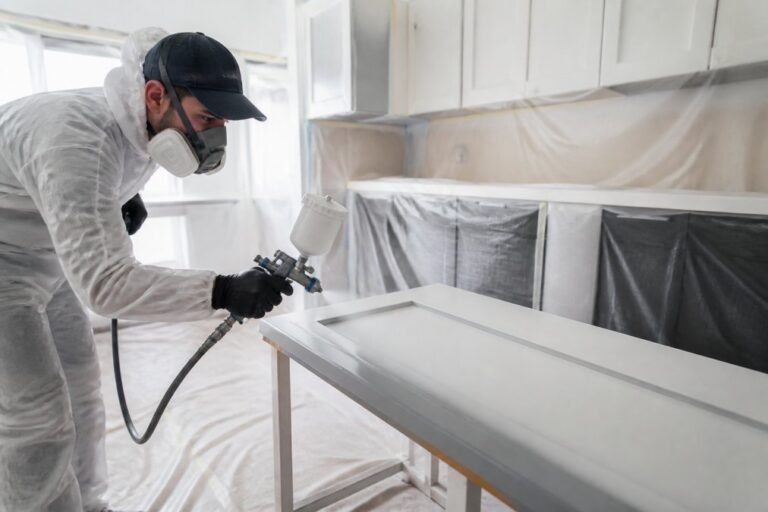
For a large, wide-open basement—think commercial properties or sprawling homes in King City—an airless sprayer can be a game-changer. It lays down a perfectly smooth, factory-like finish with zero roller marks. The trade-off? It requires extensive prep work to mask off walls and anything else you don't want covered in overspray.
From our years of experience, we can tell you that two coats of a quality floor paint is the absolute minimum for lasting results. The first coat establishes the base, and the second builds the rich colour and durable protective layer that will stand up to daily life.
Understanding Drying vs. Curing
Here’s where patience becomes your most important tool. It’s vital to understand the difference between a floor that is "dry" and one that is fully "cured." They are not the same thing.
- Drying Time: This is simply how long it takes for the solvents to evaporate, making the paint feel dry to the touch. This can take anywhere from 4 to 8 hours.
- Curing Time: This is the much longer chemical process where the paint’s molecules cross-link to achieve maximum hardness and durability. A full cure can take anywhere from 7 to 30 days.
While you can usually walk on the floor with socks after 24 hours, hold off on moving furniture back for at least 72 hours. Rushing this step is a sure-fire way to end up with scuffs and scratches. Throughout the process, keep the air moving with fans to aid drying and curing, and to maintain good air quality.
Keeping Your Newly Painted Basement Floor Looking Its Best
The paint is dry, the fumes have cleared, and your basement floor looks incredible. You've completed the transformation, but there's one last piece to the puzzle: keeping it that way. The key to making that beautiful finish last for years is all about simple, consistent care.
The good news? Maintaining a professionally painted concrete floor is surprisingly easy. When Soca Services applies a high-quality finish, we create a tough, non-porous surface. This means dirt and spills sit on top instead of soaking in, making cleanup a breeze compared to that old, dusty concrete.
The Simple Routine for a Clean Floor
You don't need a complicated cleaning schedule. Just a bit of regular attention will prevent the grit and grime that can slowly wear down the paint's sheen.
Here’s all it really takes:
- Sweep or Dust Mop: A quick pass with a soft-bristle broom or a microfibre mop is your best friend. It gets rid of the dust and debris that can act like fine sandpaper underfoot.
- Damp Mop as Needed: When it needs a proper wash, a damp mop and a pH-neutral cleaner are all you need. Avoid harsh chemicals, as they are the enemy of a painted floor.
Stay away from acidic cleaners like vinegar or aggressive degreasers. Over time, they can damage the protective topcoat. Gentle, pH-neutral soaps are the way to go.
Smart Ways to Prevent Scratches and Damage
While the coatings we use are incredibly durable, they aren't bulletproof. A few simple precautions, especially in high-traffic parts of your Toronto home, will make a world of difference in preventing scuffs and chips.
Think of it as floor insurance:
- Use Furniture Pads: Stick felt pads on the bottom of everything—chairs, tables, couches, you name it. This is the single most effective way to stop scratches before they start.
- Place Mats and Rugs Strategically: In areas that get a lot of foot traffic, like the bottom of the stairs or a kids' play zone, an area rug or a runner will take the daily abuse so your floor doesn't have to.
- Lift, Don't Drag: When moving furniture or a heavy box, always lift it. Dragging is how you get deep, ugly gouges that are a pain to fix.
- Keep Pet Nails Trimmed: If you have a four-legged family member, keeping their nails trimmed will cut down on surface scratches.
At Soca Services, we rely on premium products from industry leaders like Sherwin-Williams and Benjamin Moore. These coatings are engineered for exceptional hardness and durability, which gives your floor a built-in advantage against everyday wear and makes maintenance that much easier.
How to Handle Small Touch-Ups
Even with the best care, life happens. A dropped tool or a shifted piece of furniture might cause a small chip or scratch. Don't worry, these minor blemishes are usually a straightforward fix. We always recommend keeping a small, tightly sealed jar of the leftover paint and jotting down the exact wall colors or floor paint name.
Here’s how to tackle a small chip:
- Clean the Spot: Gently wash the area with a bit of mild soap and water, then let it dry thoroughly.
- Feather the Edges: Lightly sand the edges of the chip with fine-grit sandpaper (a 220-grit works well). This little step is the secret to helping the new paint blend in smoothly.
- Apply the Paint: Use a small artist’s brush to dab a thin coat of paint over the spot. Let it dry, and if it still looks a bit thin, add a second coat.
Following these simple tips will add years to the life of your painted basement floor. If you're in Vaughan or North York and ready for a flooring solution that looks great and is easy to live with, contact Soca Services for a free, no-obligation estimate.
Budgeting Your Project and When to Hire a Pro
Every home project comes down to two key things: time and money. When you're looking at that concrete basement floor, you have to decide whether to tackle it yourself or bring in a professional team. Let's look at the costs so you can make the right call for your Toronto-area property.
The DIY Cost Breakdown
Going the DIY route looks like the cheapest option on paper, but you have to account for everything. You're trading your time and sweat for a lower upfront cost.
Here’s a realistic look at what you'll be buying:
- The Paint: A solid one-part epoxy or a good acrylic floor paint from a trusted brand will set you back $60 to $100 per gallon. Don't compromise on quality here.
- The Supplies: This is where costs can add up. You'll need rollers, brushes, trays, painter's tape, cleaning agents, an etching solution, and patching compound.
- Tool Rentals: If your floor is sealed or has old, stubborn paint, you might need to rent a floor grinder. This can be a significant and often unexpected expense.
- Your Time: This is the hidden cost. Properly prepping, painting, and cleaning up a basement floor is a full weekend job, at minimum.
The biggest risk with DIY is cutting corners on the prep work. If you don't get that surface perfectly clean and profiled, you’ll be looking at peeling paint in a year, forcing you to spend more money and another weekend fixing it.
The Professional Investment
Hiring a professional painting service like Soca Services is about more than just convenience—it's an investment in getting the job done right the first time. The upfront cost is higher, but you’re paying for expertise, efficiency, and a durable finish that lasts. For a broader sense of what professional work entails, check out our guide on the cost of painting a house interior.
So what should you expect? Professional concrete floor coating projects typically fall between $2.32 and $4.17 per square foot, including both labour and materials. For a standard 1,000 sq ft basement, that puts the project in the $2,320 to $4,170 range, before factoring in any major repairs or extensive surface grinding.
When you hire Soca Services, you're not just paying for paint on a floor. You're investing in our professional expertise to properly test for moisture, etch the surface for maximum adhesion, and apply a flawless, durable finish that stands the test of time.
When to Call in the Pros
The choice between DIY and hiring a pro often comes down to the condition of your floor and your own comfort level. Ask yourself a few honest questions:
- Is the floor in rough shape, full of cracks, or covered in old, flaking paint?
- Do you suspect you have moisture problems coming up through the concrete?
- Are you planning to use a more complex two-part epoxy system that requires precise mixing and application?
- Do you realistically have the time, patience, and tools for all the heavy-duty prep work?
If you answered "yes" to any of those, calling a professional is almost always the smarter, more reliable choice. For homeowners and property managers in Toronto, Vaughan, and King City, we're here to provide a seamless experience from start to finish.
Contact Soca Services today for a free, no-obligation estimate, and let us give your basement floor the durable, beautiful finish it deserves.
Your Basement Floor Painting Questions, Answered
Even with the best guide, a few questions always pop up. Over the years, we've helped countless homeowners in Toronto and the GTA tackle their basement floors, and we've heard just about every question there is. Here are the answers to some of the most common ones we get.
How Long Does Painted Concrete Last in a Basement?
This really boils down to three key factors: how well the surface was prepared, the quality of paint used, and how much traffic the floor sees.
A professionally applied, high-quality two-part epoxy system can look great for a very long time, often 10 to 20 years, even in a busy workshop or playroom. On the other hand, if you use a standard acrylic latex paint in a laundry room or storage area, you might be looking at 2 to 5 years before it starts to show scuffs and wear.
If there's one thing to take away, it's this: meticulous preparation is the absolute best thing you can do to get the most life out of your painted floor.
Can I Paint Over a Previously Painted Basement Floor?
Absolutely, but only if the old paint is still holding on strong.
You'll need to attack any peeling, flaking, or bubbling spots with a scraper and sandpaper until they're gone. After that, the entire floor needs a good cleaning and then a light sanding to rough it up. This "scuffing" gives the new paint something to grab onto.
A word of caution: if you’re changing paint systems, like putting an epoxy coating over an old latex paint, you'll need a specific bonding primer to make sure it sticks properly.
For projects in North York or King City, it's always a good idea to get an expert opinion. Contact Soca Services, and we can take a look and figure out the right way to prep and paint over your existing floor for a finish that lasts.
What’s the Best Way to Fix a Damp Basement Floor Before Painting?
Painting over a damp floor is just asking for trouble. The paint will bubble and peel in no time. Your first job is to play detective and figure out where the moisture is coming from.
This might mean sealing cracks in the foundation, making sure your eavestroughs and downspouts are directing water far away from the house, or just running a good dehumidifier to tackle condensation.
Once you've stopped the water at its source, the concrete has to be completely dry. We're talking bone-dry. Only then should you apply a quality waterproof sealing primer. This acts as a final barrier against any minor moisture vapour trying to push through, giving your top coat a solid, dry foundation.
Ready to turn that drab concrete into a durable, finished space? The team at Soca Services Painting has the hands-on experience to manage everything from moisture tests and tough prep work to a flawless final coat. We deliver beautiful, long-lasting results every time. Get your free, no-obligation estimate today!