You've found the colour you want, moved the furniture away from the walls, and started comparing quotes from residential painting contractors in Brampton. One contractor promises a quick repaint at an unusually low price. Another spends more time asking about peeling paint, moisture, repairs, trim, and who will be working inside your home. That difference in approach matters more than the colour card.
A durable finish comes from decisions made before the first roller is loaded. Brampton's active renovation market, seasonal weather, changing labour and material costs, and varied housing stock all create technical and contractual risks that a basic quote may not reveal. This guide explains how to choose a professional painter, assess a fair price, prevent preparation failures, and decide when premium coatings make practical sense.
Why Finding the Right Painter Matters in Brampton Right Now
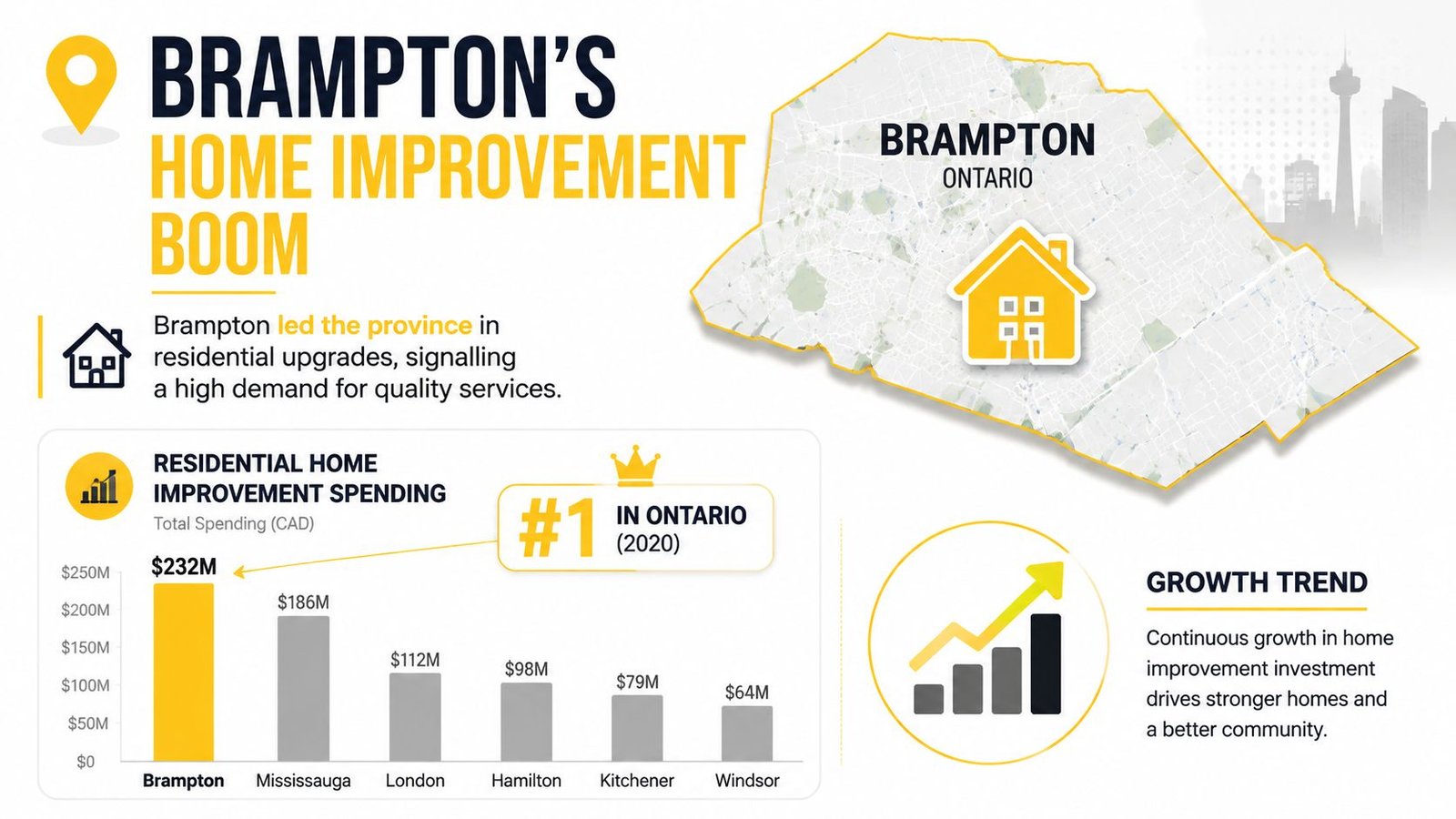
Brampton has a particularly active home improvement market. The Ontario tax assessment agency identified Brampton as the province's top municipality for home improvements in 2020, with 5,716 residential home-improvement permits, a 70% increase from 2019. The same report recorded 5,549 renovations and additions permits, equal to 3.78% of all residential properties in the city. You can review the underlying market reference at Renovate Index.
That volume creates opportunity for homeowners. A busy market can support painters with experience in occupied homes, additions, rental turnovers, basements, condos, and exterior maintenance. It also creates risk because high demand attracts operators who compete mainly on speed and price rather than preparation, documentation, and accountability.
Demand changes the hiring decision
A painter working through a steady stream of interior refreshes may understand how quickly a home can move from repair work to colour application. That doesn't mean every busy contractor is suitable for your project. The relevant question is whether the company has a repeatable process for the exact surfaces and conditions in your home.
A detached house with patched drywall needs a different approach from a condo with strict elevator rules, a rental unit requiring fast turnover, or an exterior with chalking siding. A contractor who only discusses wall colour before inspecting the substrate hasn't gathered enough information to price or plan the work responsibly.
Brampton homeowners should also consider the broader service area. A company serving Brampton, Toronto, Vaughan, North York, and King City may have experience with different property types, but distance can affect scheduling, supervision, and follow-up. A local presence can be useful, but location alone doesn't prove quality. Practical guidance on this subject is available in the benefits of hiring local painting companies.
Practical rule: A contractor's preparation process should be more detailed than the colour discussion.
Cheap work usually hides a decision
A low quote may reflect a smaller scope, fewer preparation hours, cheaper materials, or subcontracted labour. None of those choices automatically makes the contractor dishonest, but each one needs to be visible in writing. Problems begin when homeowners compare totals without comparing what each contractor will do.
Ask whether the quote includes washing, deglazing, scraping, crack repair, caulking, sanding, priming, protection of floors and fixtures, two-coat application where required, and final cleanup. Ask who supplies the paint and whether the quoted product is a specific line from Sherwin-Williams, Benjamin Moore, or another manufacturer.
Ontario's renovation market is large and persistent, but costs can move with timing, labour availability, and materials. Brampton's permit activity tells you there's substantial demand for competent trades. It doesn't remove the need to verify insurance, references, scope, and technical competence. The painter who explains limitations before starting is often safer than the one who promises everything immediately.
How to Research and Vet Painting Contractors in Brampton
Search results are only a starting point. A professional-looking website, polished vehicle, or impressive gallery doesn't establish who will enter your home, how the surfaces will be prepared, or whether the quoted crew has the required coverage. Vetting begins when you ask for evidence that connects the company to recent, comparable work.
Start with a shortlist of contractors who clearly serve Brampton and nearby communities, including Toronto, Vaughan, North York, and King City. Then narrow it using direct questions rather than online appearance.
Ask for documents before discussing a deposit
A credible contractor should be able to provide current proof of liability insurance and workers' compensation coverage, including WSIB documentation where applicable. These documents matter because painting involves ladders, tools, solvents, wet floors, and work around personal property. If a worker is injured or paint damages your home, unclear coverage can create a dispute about responsibility.
Homeowners who want a clearer explanation of risk can review this practical resource on protecting your property with a bonded contractor. Bonding and insurance aren't interchangeable, so ask the contractor to explain exactly what each document covers and whether the policy applies to your address and project.
Request references from recent jobs that resemble yours. A contractor who painted a vacant new build may not have the same process as one handling furniture, pets, children, occupied rooms, or delicate finishes. Ask the reference how the contractor handled dust, schedule changes, repairs, cleanup, and touch-ups.
Inspect the process, not only the portfolio
A portfolio shows finished surfaces under selected lighting. It rarely shows the walls before work began or the condition after regular cleaning. Ask the contractor to describe a recent failure or difficult repair and how the crew corrected it. Someone with real field experience can usually explain what caused the problem, whether it involved moisture, contamination, movement, poor adhesion, or an unsuitable coating.
Look for specific preparation language. Strong answers may include:
- Moisture testing: The contractor explains when a moisture meter is used and what happens if readings are too high.
- Surface cleaning: The crew identifies grease, smoke residue, dust, mildew, or chalking as conditions that require cleaning before coating.
- Adhesion preparation: Glossy or previously coated surfaces may need deglazing, abrasion, or a bonding primer.
- Primer selection: The company distinguishes between spot priming repairs and full priming where the substrate has widespread deterioration.
- Product identification: The quote names a paint line rather than saying only “premium paint.”
You can also use how to find reliable painters in Toronto as a broader vetting reference, then apply the same questions to Brampton contractors.
Soca Services Painting is one option for homeowners, property managers, renovation companies, and commercial clients who need defined painting and related services in the area. The key is still comparison. Ask every contractor the same questions, record the answers, and choose the company whose process matches the condition of your property rather than the company with the shortest promise.
Understanding Painting Quotes and Fair Pricing in Ontario
A painting quote becomes useful only when it describes the work behind the number. Interior painting in Ontario is commonly priced around CAD $2–$5 per square foot, but that range is only a starting point. The relevant cost drivers include preparation complexity, trim, doors, ceilings, repairs, colour changes, access, protection, and whether the crew is local or subcontracted. The pricing reference is discussed in this Ontario renovation cost guide.
Two homes with similar floor areas can require very different labour. One may have clean, previously painted walls that need minor filling. Another may have dark colours, nicotine residue, damaged drywall, glossy trim, failing caulking, or ceilings that require extensive masking and repair. A per-square-foot figure can't reveal those differences unless the contractor has inspected the rooms and documented the assumptions.
Read the scope before comparing totals
The quote should identify rooms, surfaces, preparation, products, coats, repairs, exclusions, cleanup, and payment terms. It should also clarify whether the contractor will remove and reinstall doors, hardware, switch plates, blinds, and other fixtures. If the homeowner must move furniture or arrange access, that responsibility belongs in the agreement.
Statistics Canada has tracked homeowner repair and renovation spending since 1987, and its historical survey tables show that Ontario households have long spent heavily on upkeep. The same source reports that Ontario was the only province with a quarterly decline in residential renovation costs in Q1 2025, down 0.3%, after a 0.5% rise in Q4 2024. Those figures appear in Statistics Canada's renovation expenditure material. For a painting quote, the practical lesson is simple. Current bids should account for present labour and material conditions rather than relying on an old price remembered from a previous project.
What a fair quote should show
| Cost Component | Low-Quality Quote Includes | Comprehensive Quote Includes |
|---|---|---|
| Surface preparation | Basic “prep” with no detail | Cleaning, scraping, filling, sanding, caulking, and defined repairs |
| Primer | Primer only if the painter decides later | Product type and areas requiring spot or full priming |
| Paint | A vague brand or generic “premium” description | Named manufacturer and product line, such as Sherwin-Williams or Benjamin Moore |
| Trim, doors, and ceilings | Walls only unless added later | Each surface listed with its finish and preparation requirements |
| Protection and cleanup | Minimal masking and uncertain cleanup | Floor, furniture, fixture protection and final site cleanup |
| Labour | Unclear crew arrangement | Who performs the work, including any subcontracting |
| Warranty and changes | Verbal promises | Written warranty terms and a process for approved changes |
A rock-bottom bid often excludes the work that determines appearance and service life. The contractor may then present repairs, priming, or additional coats as surprises. Review how to compare professional painting service quotes in Toronto before selecting a quote, and compare scope line by line.
Fair pricing isn't the lowest total. It's the price that makes the work visible, assigns responsibility, and gives both sides a clear record if the substrate reveals an unexpected problem.
The Hidden Preparation Steps That Prevent Painting Failures
Paint doesn't fail because a wall disliked the colour. It fails because the coating couldn't bond to the surface, the substrate contained too much moisture, contaminants remained under the film, or the contractor applied the product in unsuitable conditions. Brampton's humid summers and cold winters make environmental checks especially important for exterior work, garages, basements, additions, and areas affected by temperature changes.
Government and MPI-aligned specifications call for electronic moisture-meter testing before coating. Maximum moisture thresholds are 12% for concrete, masonry, plaster, and gypsum, and 15% for wood. Work should pause until readings fall within the appropriate limit, as outlined in the government painting specification.
The preparation sequence matters
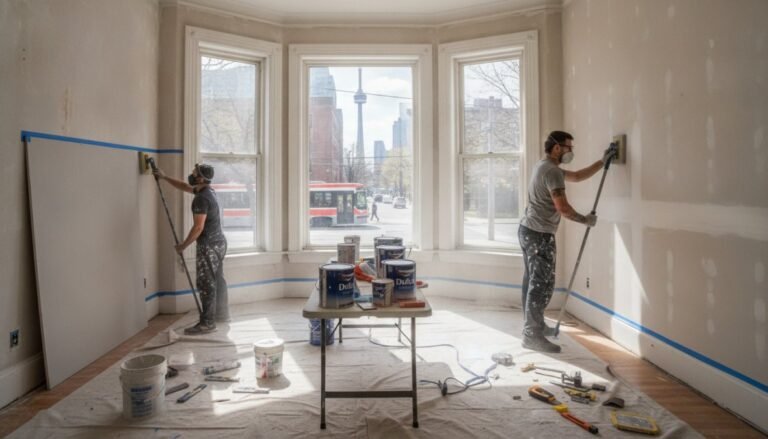
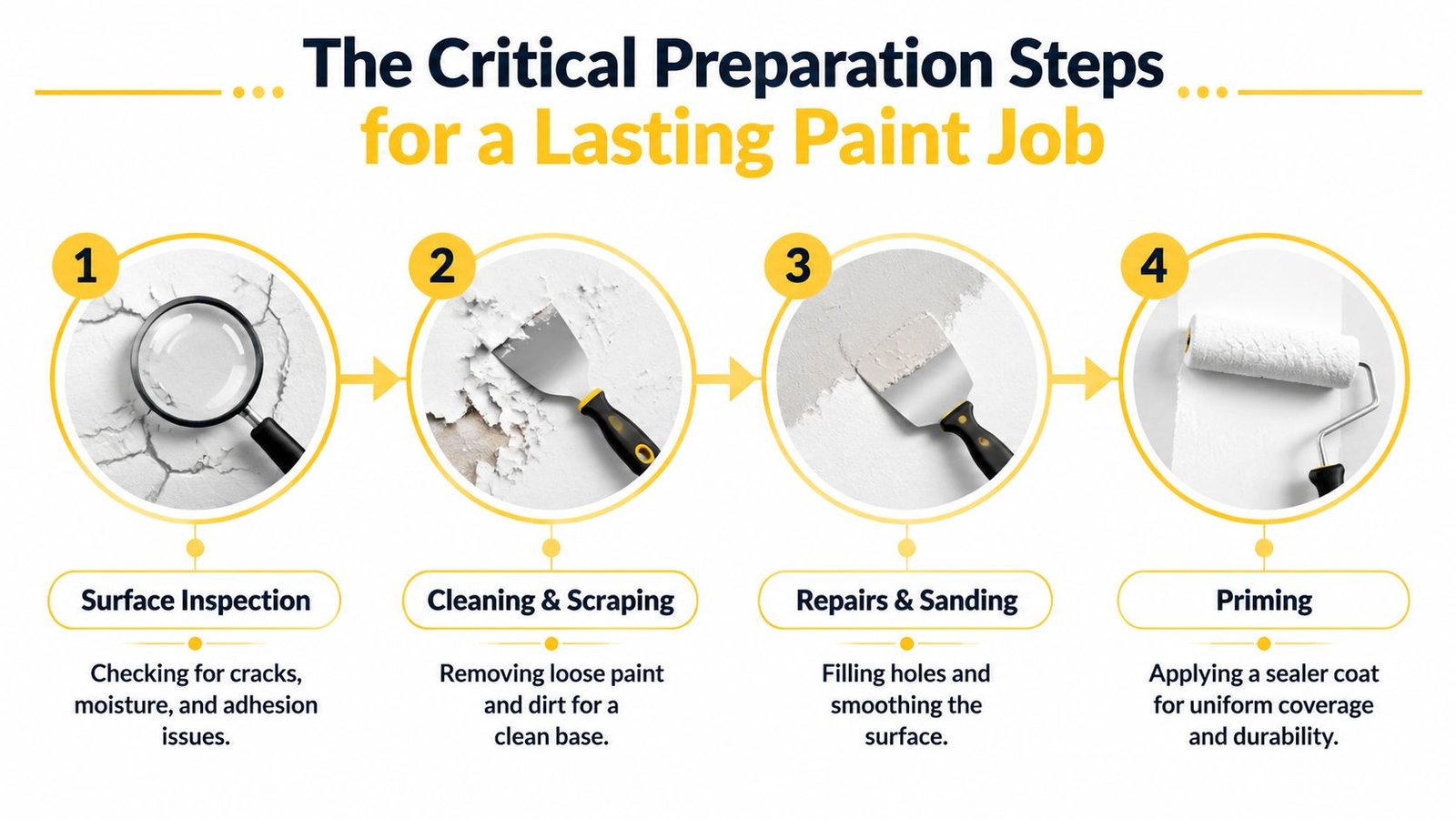
A reliable sequence starts with inspection, not sanding at random. The contractor should identify loose paint, cracks, nail pops, stains, efflorescence, mildew, glossy areas, failing caulk, and signs of movement. Each condition affects the choice of cleaner, filler, primer, and finish.
The practical workflow is:
- Clean and decontaminate. Remove dust, grease, smoke residue, mildew, and loose material. A coating can't form a dependable bond over contamination.
- Repair defects. Fill holes, repair cracks, replace failing caulk, and sand repairs until the surface is smooth enough for the intended sheen.
- Prime according to deterioration. Small isolated repairs may need touch-up primer. Multiple damaged areas may call for spot priming. Widespread deterioration or a changed substrate may justify full priming.
- Confirm moisture and conditions. Test the surface and verify air temperature, surface temperature, humidity, and dew-point separation before finish coats.
A contractor who says “we'll prime everything” isn't necessarily giving the best answer. Full priming can be appropriate, but unnecessary priming adds labour and material. The better question is whether the recommendation matches the substrate.
Weather controls are part of the job
Public-sector painting specifications make environmental limits explicit. One specification prohibits work when relative humidity exceeds 85% or when the air or surface temperature is within 3°C of the dew point. Another requires a minimum application temperature of 8°C, as shown in this Alberta public-sector painting specification.
These limits don't mean every interior room requires the same scheduling decision, but they do show why a contractor should measure rather than guess. Open windows, heaters, dehumidifiers, and fans can change conditions, but they shouldn't be used to hide an unsuitable substrate or force a coating to dry before it can level properly.
This preparation demonstration provides useful visual context:
Ask residential painting contractors in Brampton whether they carry a calibrated moisture meter and whether they'll stop work when humidity or substrate readings are unsuitable. A painter who treats those questions as interference may be prioritizing production over the finish you're paying for. More practical preparation guidance is available through surface preparation advice for painting in Toronto.
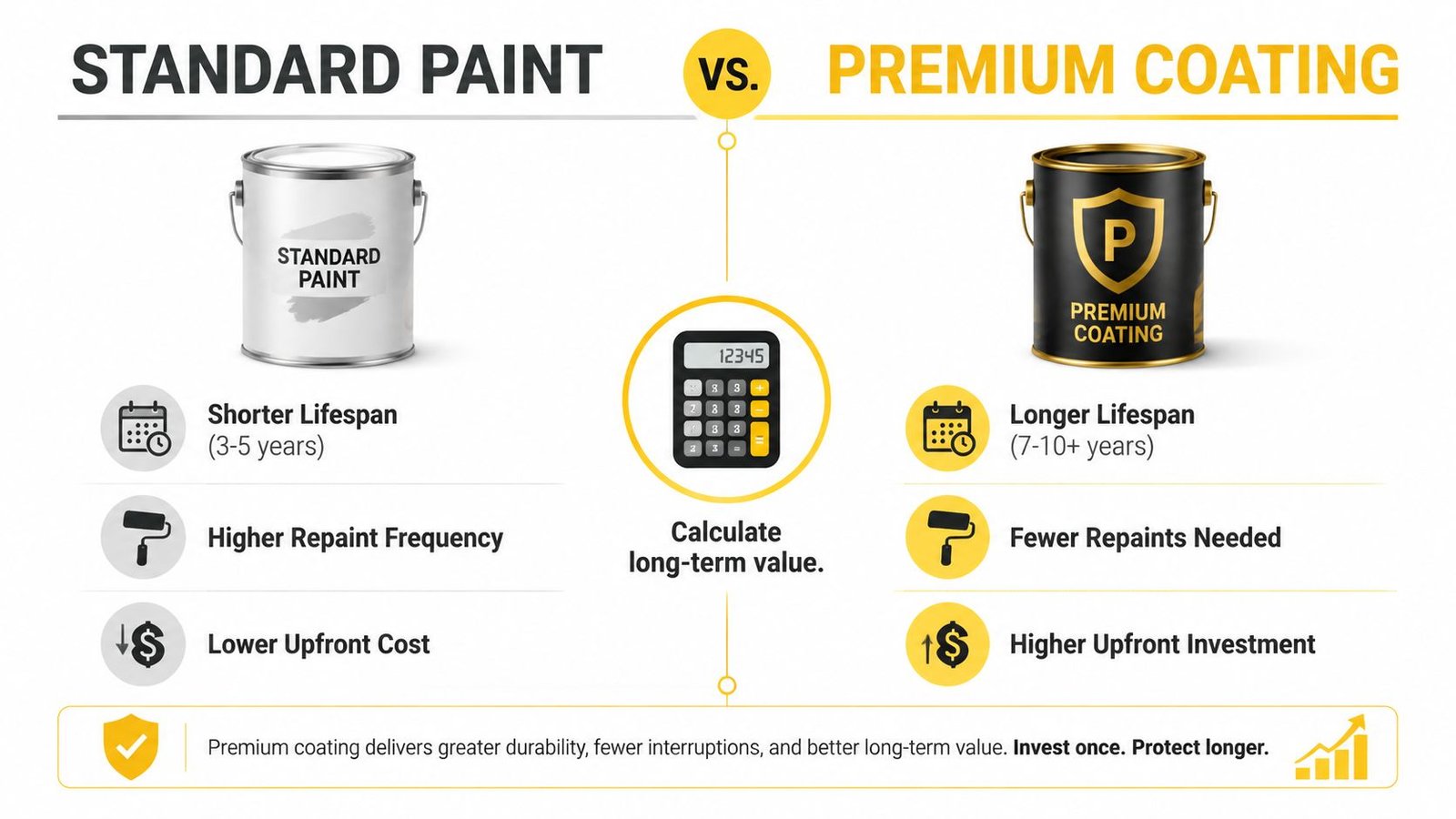
Standard Paints Versus Premium Coatings What Homeowners Should Know
The useful comparison isn't “cheap paint versus expensive paint.” It's whether the coating's performance matches the room, the substrate, the cleaning demands, and how long you expect to stay in the property. A standard product may be sensible for a quick rental turnover or a low-contact room. A more durable coating can make better financial sense in hallways, kitchens, children's rooms, stairwells, busy offices, and other areas that receive regular contact.
Premium products typically use more advanced binder and resin systems, but the label doesn't replace preparation. A premium coating applied over grease, damp drywall, powdery plaster, or glossy trim can still peel or blister. A properly prepared surface with an appropriate standard product may outperform a premium product used carelessly.
Match the coating to the use
For a quiet bedroom, the main priorities may be colour accuracy, smooth application, and an appropriate sheen. For a busy hallway, washability and resistance to burnishing may matter more. Exterior siding and trim face ultraviolet exposure, rain, frost, expansion, and contraction, so flexibility and substrate compatibility deserve attention.
Product selection should also account for indoor air quality and regulatory compliance. Canada's federal VOC Concentration Limits for Architectural Coatings Regulations set maximum VOC concentration limits for 53 categories of architectural coatings. The rules also prohibit manufacturing or importing a covered coating above its category limit unless it's diluted exactly as instructed and labelled accordingly, as set out in the full federal regulation.
That means “low odour” and “eco-friendly” should be discussed precisely. Ask which product line the contractor proposes, what surface it suits, and how the manufacturer's instructions affect application.
Calculate lifecycle value honestly
Paying more upfront only makes sense when the product addresses a real demand. A durable washable finish may reduce repair and repainting pressure in an active home. A premium exterior coating may be appropriate where exposure and substrate movement make failure costly. For a property manager, reduced disruption can matter as much as the paint itself.
Don't accept unsupported promises about a guaranteed service life. The useful comparison is based on your conditions:
- High traffic: Prioritize cleanability and resistance to repeated contact.
- Moisture-prone areas: Correct the moisture source first, then choose a compatible system.
- Exterior surfaces: Confirm that the product suits the siding, trim, masonry, or wood.
- Condos and mixed-use properties: Consider odour, access, ventilation, and building rules.
- Long-term ownership: Compare the initial price with preparation quality, repair demands, and likely repaint disruption.
Brampton-focused guidance often treats climate and colour as the main decision points, but finish durability deserves equal attention. Local service information on Brampton painting reflects that homeowners are weighing standard repainting against longer-life options. The right answer depends on the surface and use, not on the word “premium” alone.
Final Checklist Before Signing and Starting Your Painting Project
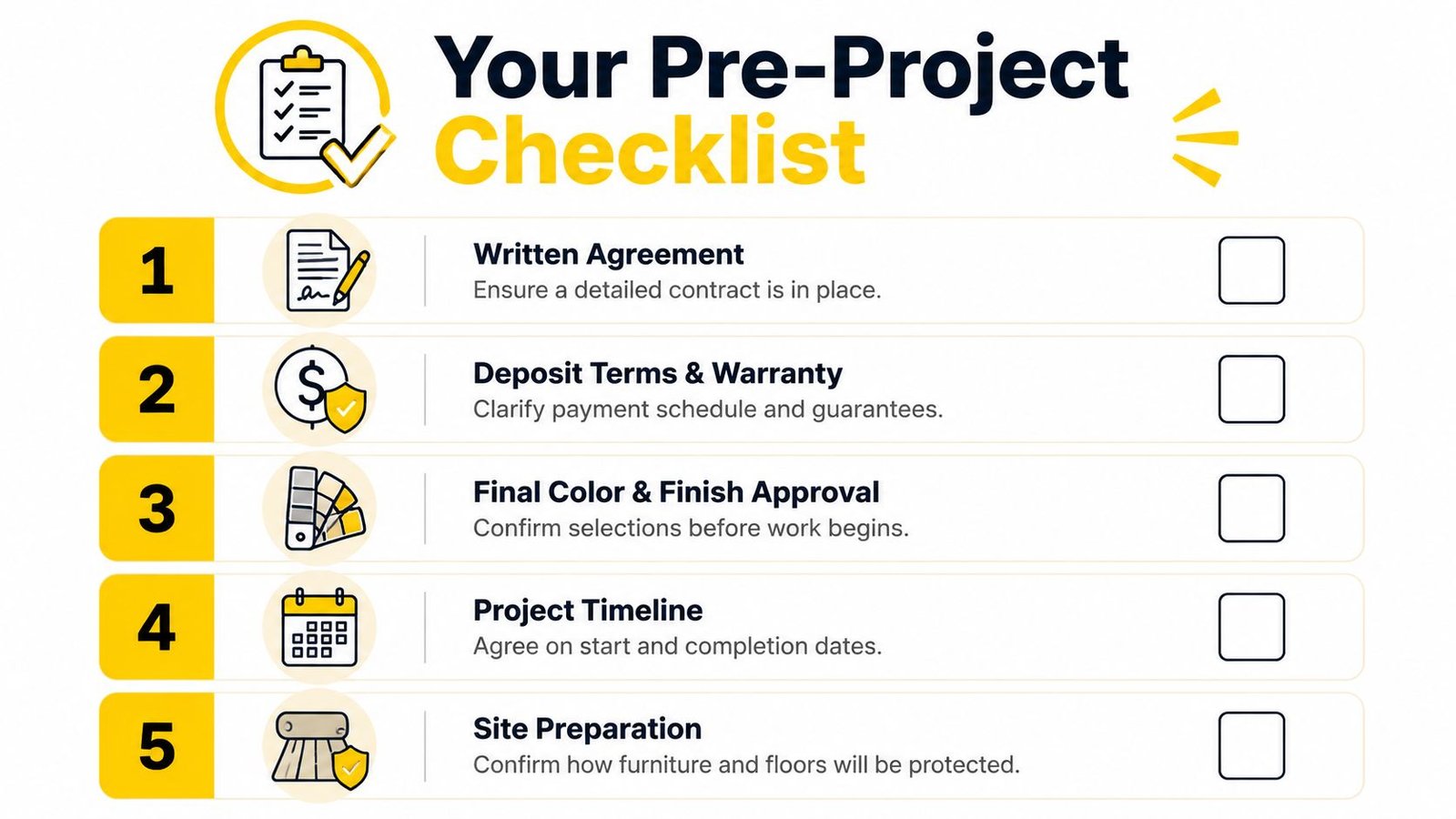
A clear contract protects the homeowner before the first drop cloth reaches the floor. It should describe the rooms, surfaces, colours, sheens, preparation, products, coats, repairs, exclusions, cleanup, payment schedule, and warranty terms. If the contractor has inspected only part of the property, the agreement should explain how newly discovered conditions will be handled.
Confirm the commercial details
Before signing, review these points in plain language:
- Written agreement: Make sure the scope identifies every room and surface, including trim, doors, ceilings, closets, railings, and accent walls.
- Payment terms: Confirm the deposit, progress payments, final payment, and approval process for changes. Avoid paying the full balance before the work starts.
- Insurance and coverage: Ask for current liability insurance and workers' compensation documentation, and confirm the coverage applies to the project.
- Warranty: Read what the warranty covers, what it excludes, and how you must report a defect.
- Products: Record the manufacturer, product line, colour, sheen, and primer where specified. Keep leftover labelled paint for future touch-ups.
- Crew responsibility: Ask whether employees or subcontractors will perform the work, who supervises them, and who handles callbacks.
- Schedule: Put the expected start and completion dates in writing, along with notice requirements for delays.
A quote that says “paint house, two coats” leaves too much room for disagreement. A proper agreement states whether the contractor will repair minor drywall damage, how much repair is included, and what happens when damage exceeds that allowance. Review how to avoid surprise charges in a painting contract before you approve the scope.
Prepare the home and the people in it
Job-day coordination affects both quality and safety. Decide who will move furniture, where supplies can be stored, which rooms remain accessible, and how floors, counters, appliances, and built-ins will be protected. Discuss parking, entry codes, pets, children, ventilation, work hours, alarm systems, and building access before the crew arrives.
Colour and sheen should receive a final written approval. Wall colours can look different under daylight, warm bulbs, and existing furnishings. If you're changing from a dark colour to a light one, ask how the contractor will address coverage and whether additional preparation or coats are included.
During the final walkthrough, inspect cut lines, corners, trim transitions, doors, repaired areas, and cleanup. Look at the work in normal room lighting, not only under bright temporary lamps. Record outstanding touch-ups before releasing the final payment, and make sure the contractor confirms when those items will be completed.
For homeowners and property managers comparing residential painting contractors Brampton, this checklist separates a professional engagement from an informal promise. Soca Services Painting offers residential and commercial painting services for clients who want a defined process covering consultation, colour selection, preparation, application, and final review. Contact Soca Services, request a free estimate, and ask for a written scope that reflects the actual condition of your property.
Contact Soca Services Painting for professional home painting, interior painting, and commercial painting support in Brampton and surrounding areas, including Toronto, Vaughan, North York, and King City. Get a free estimate and discuss your wall colours, Sherwin-Williams or Benjamin Moore product options, preparation requirements, and project schedule with a team focused on a clean, durable finish.