
Table of Contents
- How to Compare Professional Painting Service Quotes in Toronto
- Average Cost of Interior Painting in Toronto by Square Footage
- Red Flags to Watch for in Painting Quotes
- Essential Questions to Ask Painting Contractors Before You Hire
- Conclusion
Last Updated: June 1, 2026
Most Toronto homeowners get three quotes and pick the lowest number. That is the single most common mistake made when you compare professional painting service quotes toronto. At Soca Services Painting, we have spent over a decade watching clients make this error, and the result is almost always the same: a disappointing finish, unexpected costs, or a contractor who disappears mid-project. Below, we break down exactly what separates a trustworthy quote from a risky one, what things actually cost, and how to ask the right questions before signing anything.
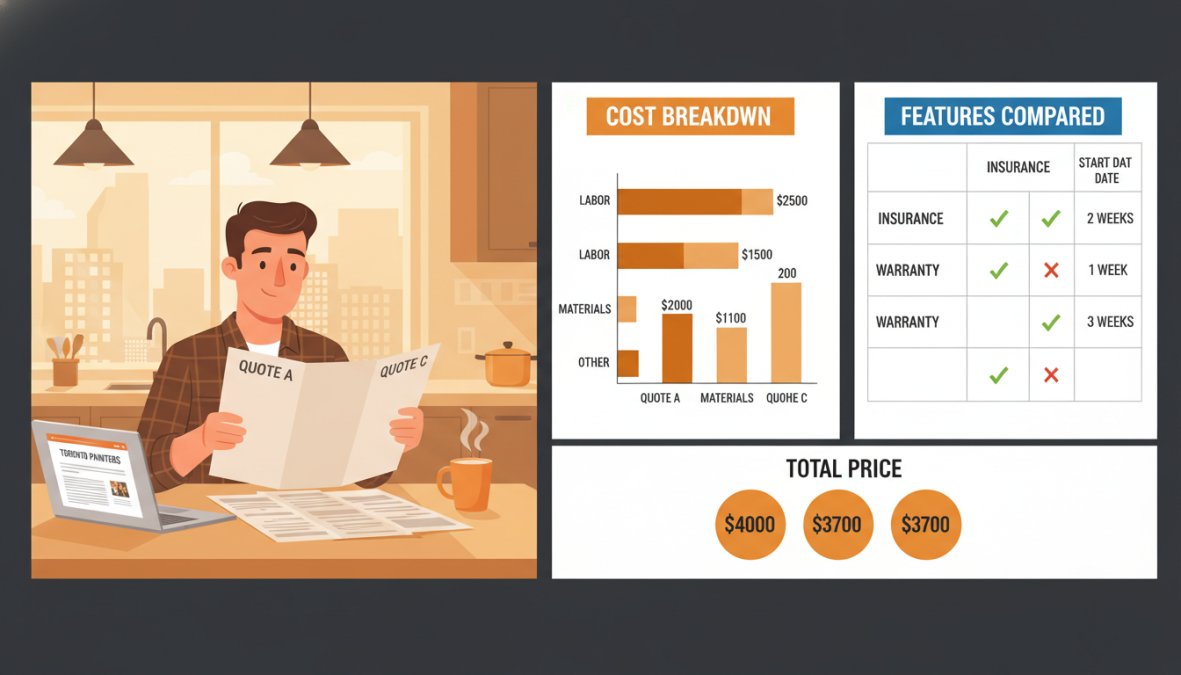
How to Compare Professional Painting Service Quotes in Toronto
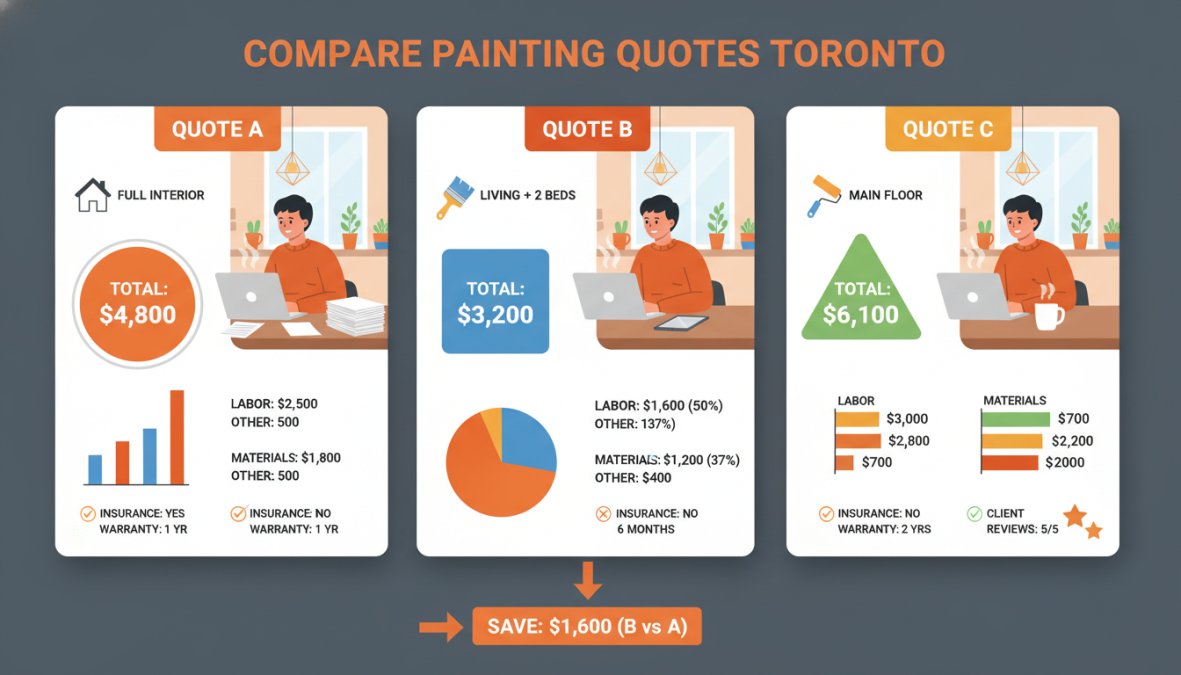
A professional painting quote is a written document that itemizes every cost, material, and scope of work for your project. It should not be a single number on a napkin. When you compare professional painting service quotes toronto, you are really evaluating three things: scope clarity, material quality, and contractor accountability.
What a Detailed Quote Should Include
Every quote from a legitimate painting contractor in Toronto should cover the following:
- Scope of work: Which rooms, surfaces, or exterior areas are included
- Surface preparation: Caulking, drywall repair, sanding, and priming steps
- Paint brand and product: Specific lines from brands like Sherwin-Williams or Benjamin Moore, including sheen level
- Number of coats: Two coats is standard for most interior painting jobs
- Labor breakdown: Hours or day rates per painter
- Timeline: Start date, estimated completion, and daily work hours
- Cleanup and protection: How furniture, floors, and trim and molding will be protected
- Workmanship warranty: Length and what it covers
- Insurance confirmation: Proof of liability and WSIB coverage
A quote missing any of these items is incomplete. According to HomeStars cost guide for Toronto painting projects, homeowners who receive itemized quotes report significantly fewer disputes and cost overruns than those who accept lump-sum figures.
DIY vs. Professional Painters: An Honest Comparison
The DIY route looks appealing until you factor in the full picture. Renting equipment, buying premium paints, and spending two weekends on prep alone erases most of the apparent savings. More importantly, a flawed finish on walls or a poorly prepped exterior surface will need repainting sooner, doubling the real cost.
Professional painters bring proper surface preparation, the right tools for spray painting and detail work, and a flawless finish that holds up over time. For large-scale residential painting or any exterior painting project, the gap in quality is not subtle. That said, for a single accent wall or a small touch-up job, a capable DIYer can manage the work reasonably well.
The honest answer: hire professionals for anything involving ceilings, exterior siding, cabinet painting, or spaces larger than one room.
Ask any painting contractor to show you their WSIB clearance certificate and liability insurance certificate before the project starts. A licensed and insured contractor will have these documents ready within 24 hours of your request.
Average Cost of Interior Painting in Toronto by Square Footage
Most Toronto painting directories offer a ‘free estimate’ button and nothing else. That forces homeowners to book three calls just to understand whether a project is a $800 job or an $8,000 job. The ranges below are grounded in what professional painting contractors in Toronto typically charge based on project type, surface condition, and material grade. Use them to sanity-check quotes before you sign anything, not as a substitute for a written proposal.
Interior Painting Cost Ranges (Toronto, 2025-2026)
| Project Type | Typical Scope | Estimated Range (CAD) | Key Cost Drivers |
|---|---|---|---|
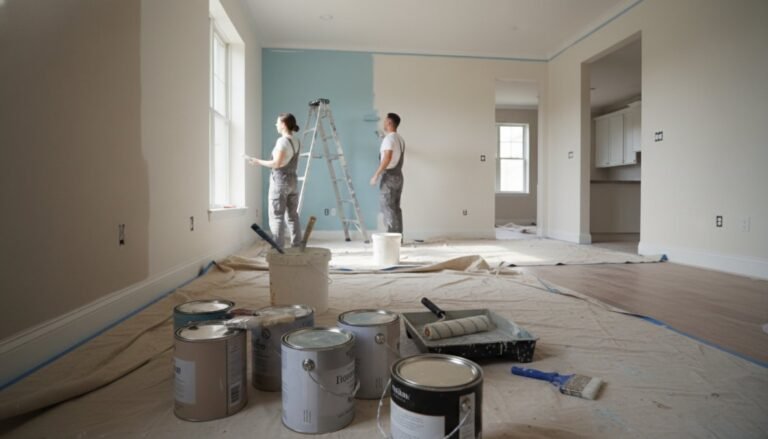
| Single room repaint | 150-200 sq ft walls | $350 – $700 | Ceiling height, patch repairs, number of coats |
| Main floor interior | 800-1,200 sq ft | $2,000 – $4,500 | Open-concept vs. room count, trim included |
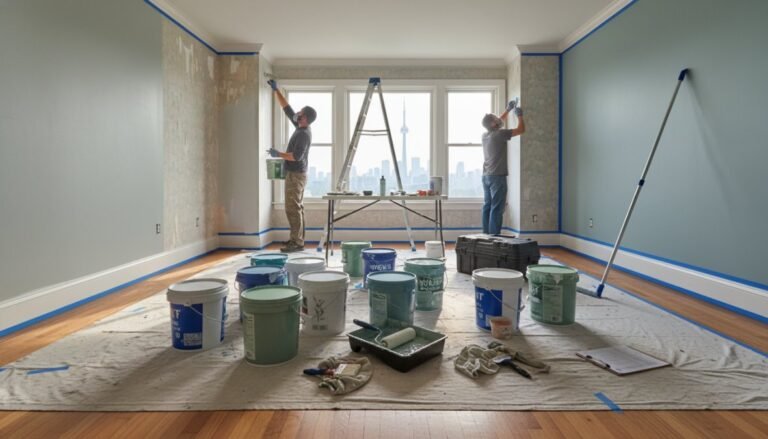
| Whole-home interior repaint | 2,000-3,000 sq ft | $5,500 – $12,000 | Stories, surface condition, paint grade |
| Cabinet painting (kitchen) | 20-30 linear ft of doors | $1,500 – $3,500 | Spray vs. brush, deglossing, number of coats |
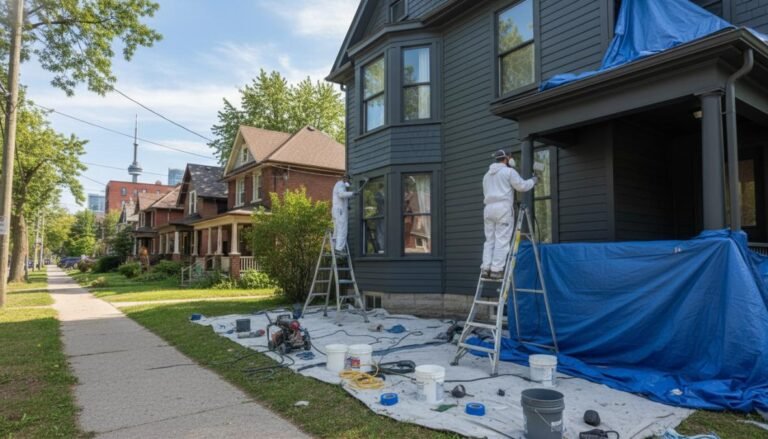
| Exterior repaint (detached home) | Full siding + trim | $4,000 – $10,000 | Siding material, storey count, prep condition |
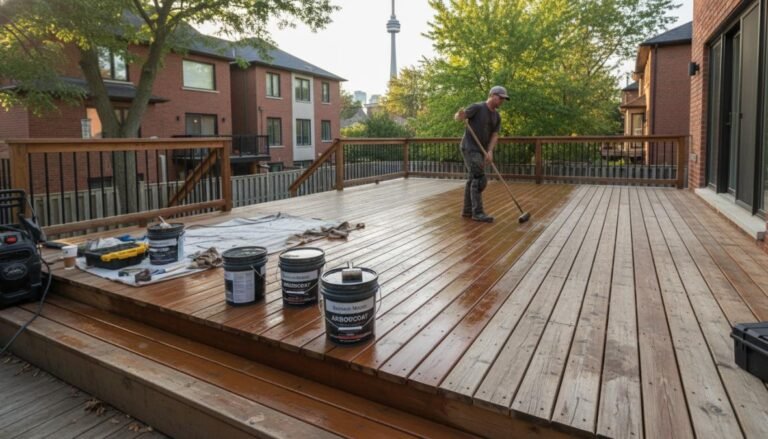
| Deck staining | 200-400 sq ft deck | $600 – $1,800 | Strip vs. maintenance coat, wood condition |
How to read these ranges: The low end assumes good existing surface condition, standard ceiling heights (8-9 ft), and a mid-grade paint like Sherwin-Williams SuperPaint or Benjamin Moore Regal Select. The high end reflects poor surface condition requiring significant patching, ceilings above 10 ft, premium paint lines such as Benjamin Moore Aura or Sherwin-Williams Emerald, and full trim and molding inclusion.
What Drives Cost Up, and What Drives It Down
Understanding the levers behind a quote helps you evaluate whether a contractor is cutting corners or legitimately offering efficiency.
Factors that push a quote toward the high end:
- Surface preparation needs: Cracked drywall, water stains, peeling paint, or unpainted new drywall all require extra labor before a brush touches the wall. Prep work routinely accounts for 30-40% of total labor on a quality job.
- Ceiling height above 9 ft: Anything requiring scaffolding or extension ladders adds time and equipment cost.
- Dark-to-light or saturated color changes: Going from a deep charcoal to a warm white may require a tinted primer coat plus three finish coats instead of two.
- Premium paint products: A gallon of Benjamin Moore Aura costs roughly twice what a builder-grade paint costs. The durability difference is real, but it shows up in the quote.
- Trim, doors, and ceilings included: Many quotes are walls-only. Adding trim and molding, doors, and ceilings to a whole-home project can increase the total by 25-40%.
Factors that legitimately reduce cost (without cutting corners):
- Rooms already in good condition with minimal patching needed
- Staying within a similar color family (light over light, dark over dark)
- Scheduling during a contractor’s slower season (typically November through February in Toronto)
- Bundling multiple rooms or floors into a single mobilization
Why Quotes Below the Low End Are a Warning Sign
A quote that comes in significantly below the low end of the applicable range almost always reflects one of four things: unlicensed labor without WSIB coverage, skipped priming or surface preparation, a single thin coat instead of two, or a low-grade paint that will require repainting within two to three years. The apparent savings evaporate quickly when the job needs to be redone.
According to Canadian Home Builders’ Association guidance on renovation costs, surface preparation is the single largest determinant of how long a paint job lasts. Contractors who omit it from their quote are not offering a deal, they are shifting the cost of failure onto you.
Exterior Painting, Cabinet Refinishing, and Deck Staining Costs
Exterior painting in Toronto carries additional complexity compared to interior work. Ontario’s freeze-thaw cycles stress painted surfaces more aggressively than in most Canadian cities, which means proper caulking, priming, and exterior-grade paint selection are not optional steps, they are what separates a five-year finish from a two-year one. A credible exterior quote will explicitly name the surface cleaning method (pressure washing vs. hand washing), specify caulking around all windows and penetrations, and identify the exact exterior-grade product being used, such as Sherwin-Williams Duration or Benjamin Moore Aura Exterior.
Cabinet painting and refinishing is the most technique-sensitive service in residential painting. Spray application is the professional standard for cabinet doors because it eliminates brush marks and delivers a factory-smooth finish. Any quote that does not mention spray application, surface deglossing, and a dedicated curing period before reinstallation should prompt follow-up questions. Brush-applied cabinet finishes are not wrong, but they produce a visibly different result and should be priced and disclosed accordingly.
Deck staining cost depends almost entirely on the current condition of the wood. A deck receiving a maintenance coat over a sound existing stain is a straightforward job. A deck that needs sanding, cleaning, and a full strip of old failing stain before new product can be applied is a significantly larger project. No honest painting estimate for deck work can be produced without a site visit to assess the wood.
When comparing quotes, ask each contractor to specify the paint brand, product line, and sheen level they are pricing. Two quotes for the same room can differ by $400 simply because one contractor is pricing Benjamin Moore Aura and the other is pricing a builder-grade product. Neither is dishonest, but they are not comparable numbers.
Red Flags to Watch for in Painting Quotes
Most problems with painting contractors in Toronto are visible in the quote itself, if you know what to look for.
Watch for these warning signs:
- No written quote at all: A verbal agreement is not enforceable and leaves you with no recourse
- Unusually low pricing: Prices well below the market range for your project type almost always mean skipped preparation, cheap paint, or unlicensed workers
- No mention of surface preparation: Prep work is what makes paint last; a quote that skips it is cutting a critical corner
- No insurance details: Any legitimate painting company in Toronto will be licensed and insured; if they hesitate to provide documentation, walk away
- Vague scope: Phrases like "paint the main floor" without room-by-room detail leave room for disputes
- Large upfront deposits: A reasonable deposit is normal, but demanding more than half the total cost before work begins is a red flag
- No workmanship warranty: Reputable painting contractors stand behind their work; no warranty means no accountability
A useful cross-reference tool is Better Business Bureau Toronto contractor directory, which lets you verify a company’s complaint history and accreditation status before committing to a quote.
Never pay the full amount before work is complete. A payment schedule tied to project milestones protects you if the contractor fails to finish or the quality falls short of what was promised.
Essential Questions to Ask Painting Contractors Before You Hire
A checklist of questions is only useful if you know what a good answer sounds like versus a deflection. Most Toronto homeowners ask the right questions and then accept vague answers because they do not know what to listen for. This section gives you both the question and the standard a credible contractor should meet.
Question 1: Are you licensed and insured, and can you provide current certificates?
What you are looking for: Two separate documents, a Certificate of Insurance showing general liability coverage (minimum $2 million is common for residential contractors in Ontario) and a WSIB Clearance Certificate confirming the contractor is in good standing with the Workplace Safety and Insurance Board.
What a good answer sounds like: ‘Yes, I can email you both documents today.’ A legitimate contractor keeps these current and accessible because they need them for commercial bids and larger residential projects.
Red flag: Any hesitation, a promise to ‘get it to you later,’ or an explanation of why they technically do not need it. In Ontario, contractors working on residential properties are required to carry WSIB coverage or hold an independent operator exemption, ask which applies and verify it.
Question 2: Who will actually be on-site, your own employees or subcontractors?
What you are looking for: Clarity on who enters your home and who is accountable for the work quality. Many painting companies quote the job and then subcontract it to a crew they have never worked with before.
What a good answer sounds like: Either ‘Our own trained employees’ (preferable) or an honest explanation of how they vet and supervise subcontractors, including whether those subcontractors carry their own insurance.
Why it matters: If a subcontractor damages your property or is injured on-site, the liability chain becomes complicated quickly. Knowing in advance lets you ask the right follow-up questions about coverage.
Question 3: What surface preparation steps are included in this quote?
What you are looking for: A specific list, not a general assurance. Preparation for a standard interior repaint should include cleaning walls, filling nail holes and minor cracks, sanding rough areas, and applying primer where needed. For exterior work, add pressure washing, caulking around windows and penetrations, and scraping any failing paint.
What a good answer sounds like: A contractor who walks through the prep steps without prompting and explains why each one matters for the specific surfaces in your project.
Red flag: ‘We do full prep’ with no elaboration. Ask them to define it. Prep work is where corners get cut invisibly, you will not see the skipped step until the paint starts peeling 18 months later.
Question 4: Which specific paint products and finishes will you use, and why?
What you are looking for: A brand name, a product line, and a sheen level for each surface type, not just ‘premium paint.’ For example: Benjamin Moore Regal Select Eggshell for walls, Benjamin Moore Advance Semi-Gloss for trim and doors.
What a good answer sounds like: A contractor who can explain why they chose that product for your specific situation. A painter recommending Sherwin-Williams Emerald for a bathroom is making a different choice than one recommending Duration Exterior for your siding, both are defensible, but the reasoning should be clear.
Why it matters: Paint brand and product line directly affect durability, washability, and how the finish holds up in high-humidity or high-traffic areas. Two quotes for the same room using different paint lines are not equivalent prices.
Question 5: What does your workmanship warranty cover, and for how long?
What you are looking for: A written warranty, not a verbal promise. Reputable painting contractors in Toronto typically offer one to two years on workmanship, meaning if paint peels, bubbles, or fails in a way attributable to application error rather than normal wear, they return to fix it at no charge.
What a good answer sounds like: A clear statement of what is covered (peeling, bubbling, missed spots), what is excluded (damage from moisture intrusion, normal wear in high-traffic areas), and the process for making a warranty claim.
Red flag: ‘We stand behind our work’ with no written documentation. A warranty that is not in the contract does not exist.
Question 6: How do you handle color consultation, and what is your process if I want to change a color mid-project?
What you are looking for: An understanding of whether color consultation is included, what happens if you decide the color looks wrong once it is on the wall, and whether there is a cost for additional coats required by a color change.
Why it matters: Color decisions made from a small paint chip often look different at full scale under your home’s lighting. A contractor who has a clear process for handling this, including whether they apply a sample area before committing to the full room, is demonstrating professional experience.
Question 7: Can you provide references from similar projects completed in the past 12 months?
What you are looking for: Two or three references from projects comparable in scope to yours, not a general list of happy customers. If you are hiring for exterior painting, ask for exterior references. If you are hiring for cabinet refinishing, ask specifically for cabinet references.
What a good answer sounds like: A contractor who offers references without being asked, or who responds immediately with specific names and contact information.
Red flag: References that are more than two years old, references who cannot speak to the specific type of work you are hiring for, or a contractor who directs you only to online reviews rather than direct contact.
Before calling references, look up the contractor on [Better Business Bureau Toronto contractor directory](https://www.bbb.org) and [HomeStars contractor reviews for Toronto](https://www.homestars.com). Cross-referencing what references say with the public review record gives you a more complete picture than either source alone.
Using These Questions to Compare Contractors Side by Side
After meeting with two or three contractors, score each one on how specifically they answered these questions. A contractor who gives vague answers during the sales conversation will not become more precise once the job starts. The quality of communication before the contract is the best available predictor of the quality of communication during the project.
According to Houzz guide to hiring local painting professionals, homeowners who ask contractors about their preparation process and material selection before hiring report higher satisfaction with the final result than those who focus solely on price. The questions above are designed to surface that information efficiently, without requiring you to be an expert in the painting trade.
Why Soca Services Painting Stands Out in Toronto
Choosing the right painting contractor in Toronto comes down to trust, transparency, and track record. Soca Services Painting brings over ten years of experience delivering residential and commercial painting across Toronto, Vaughan, North York, and King City. The company’s 4-step process covers consultation, detailed project proposal, execution, and final walkthrough, so clients know exactly what to expect at every stage.
The specialization in spray painting and precise finishes sets Soca Services Painting apart for cabinet painting, trim and molding work, and any project where a flawless finish is non-negotiable. Every project begins with a detailed written proposal that covers scope, materials, timeline, and workmanship warranty, giving clients the transparency that generic painting contractors rarely provide. With a 5.0 aggregate rating across 28 client reviews, the track record speaks to consistent customer satisfaction.
For homeowners searching for painting contractors near me in Toronto, the combination of detailed project proposals, licensed and insured status, and a stress-free service experience makes Soca Services Painting a strong first call.
Frequently Asked Questions
What should be included in a professional painting quote in Toronto?
A complete painting contractor quote template should include a detailed scope of work, the number of coats, specific paint brands and finishes, surface preparation steps like caulking and drywall repair, labour and material costs broken out separately, project timeline, proof of licensing and insurance, and a workmanship warranty. Vague or verbal quotes are a common red flag, always request a written, itemized proposal before committing to any residential or commercial painting service.
How much does interior painting cost in Toronto?
The average cost of interior painting in Toronto typically ranges from $1.50 to $4.00 per square foot for labour, depending on surface complexity, number of rooms, ceiling height, and finish type. A standard 1,000 sq ft condo may cost between $1,500 and $4,000. Factors like trim and molding, drywall repair, and premium paint selections can increase the total. Always get at least three quotes to compare professional painting service quotes in Toronto before deciding.
Why do painting quotes vary so much between contractors in Toronto?
Quote variations when you compare professional painting service quotes in Toronto often come down to differences in surface preparation standards, paint quality (premium vs. budget brands), crew experience, insurance coverage, and warranty terms. A lower quote may skip critical steps like priming or caulking, leading to a poor finish. A higher quote from a licensed and insured painting company often reflects better materials, project management, and a guaranteed flawless finish.
What questions should I ask a painting contractor before hiring?
Key questions to ask painting contractors include: Are you licensed and insured with WSIB coverage? Do you provide a written, itemized quote? What paint brands and finishes do you use? How do you handle surface preparation? What does your workmanship warranty cover? How long will the project take? Asking these questions helps you evaluate professionalism, compare quotes accurately, and avoid contractors who cut corners on residential or commercial painting projects.
Should I get multiple quotes for painting my home in Toronto?
Yes, getting at least three quotes is strongly recommended. Comparing multiple professional painting service quotes in Toronto helps you understand fair market pricing, identify red flags like suspiciously low bids, and assess each company's communication and professionalism. Use a consistent painting contractor quote template when requesting estimates so you are comparing identical scopes of work, including prep, coats, paint type, and cleanup, rather than apples-to-oranges pricing.
Sorting through multiple painting quotes without a clear framework wastes time and increases the risk of hiring the wrong contractor. Soca Services Painting addresses this directly with detailed project proposals that itemize every aspect of your job, over a decade of residential and commercial experience, and a 4-step process designed to eliminate surprises. Get your free estimate today and see what a properly structured painting quote actually looks like.
This article was written using GrandRanker