If you're looking for the best painter in Toronto, it's crucial to understand the vast and competitive market. Whether you're refreshing a room in a Mississauga condo or undertaking a major commercial project downtown, a structured approach is essential. This guide offers an objective framework for moving beyond a simple "painter near me" search to find the top professional for your specific painting job in the Greater Toronto Area (GTA).
Navigating the GTA's Diverse Painting Scene
Toronto’s painting industry is a direct reflection of its dynamic development and robust housing market. This isn't just a group of tradespeople; it's a significant component of the city's construction and renovation sector. To provide objective context, Ontario's paint manufacturing industry—which supplies local painters—is valued at approximately $1.5 billion. This represents over half (53.9%) of the province's GDP for that entire manufacturing category, as detailed in this full industry analysis about paint manufacturing in Ontario.
For property owners, this thriving market means extensive choice. The key is to strategically match a painter's specialty to your project's requirements. For example, the skills needed for intricate trim work in a Rosedale heritage home differ significantly from those required to paint a large industrial warehouse in Brampton.
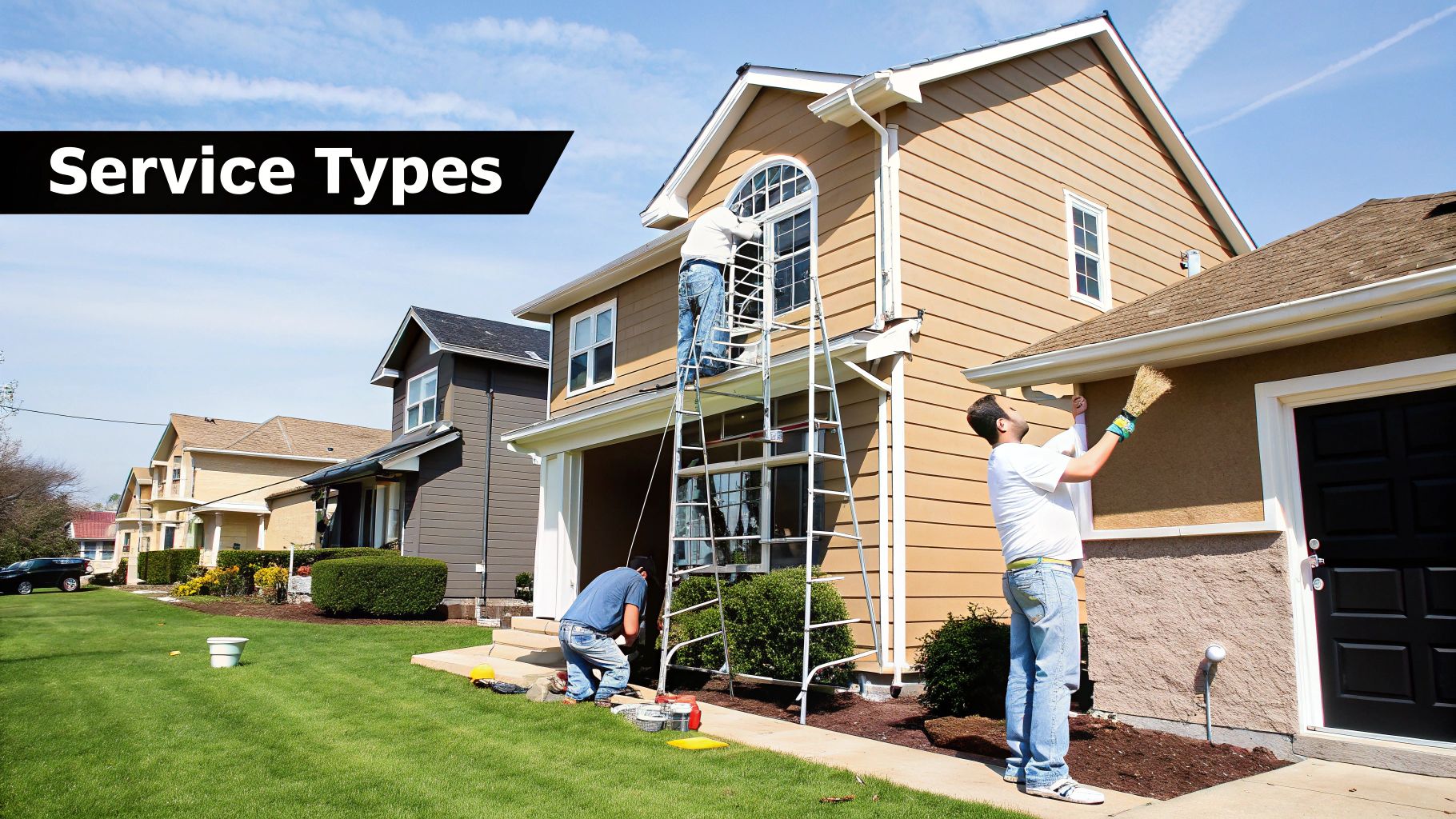
Distinguishing Between Service Types
Before initiating your search, it's important to define the type of painter you need. The skills, equipment, and materials vary substantially depending on the job.
A residential painter specializes in achieving a perfect finish within a home, focusing on protecting furniture and flooring. A commercial painter, conversely, is a logistics specialist, managing large crews, using heavy-duty coatings, and adhering to strict deadlines and safety protocols.
To clarify these distinctions, the following table compares the main types of painting services available across the GTA.
Comparing Painting Services Across the GTA
| Service Type | Best For | Typical Project Scope | Key Skills to Look For |
|---|---|---|---|
| Residential Painting | Homeowners, condo dwellers, landlords | Interior rooms, exterior siding, decks, fences, kitchens | Attention to detail, clean work habits, colour consulting |
| Commercial Painting | Businesses, property managers, retail stores | Offices, warehouses, retail spaces, apartment buildings | Project management, efficiency, knowledge of durable coatings |
| Specialized Services | Projects with unique requirements | Cabinet refinishing, epoxy floors, heritage restoration | Mastery of specific techniques, specialized equipment |
This table provides a structured starting point for refining your search, saving considerable time by focusing on the correct category from the outset.
The image below offers a snapshot of the Toronto painting market, detailing the number of companies, the residential vs. commercial split, and industry growth.
As shown, the industry is healthy and expanding. Residential projects constitute the majority of the work, which aligns with Toronto's active home renovation market.
Objective Recommendation: Hire a specialist. A painter claiming to "do it all" may lack the specific expertise required for your project. Focus on professionals whose portfolios align directly with your needs.
Understanding these distinctions from the beginning creates a more efficient process. You will ask more targeted questions, better evaluate portfolios, and ultimately select a painter whose expertise matches your vision for the best possible finish.
How to Find and Vet the Best Toronto Painters
Finding the best painters in Toronto begins online but is best accomplished through reliable channels. A basic Google search is merely a starting point; the critical work involves vetting the professionals you will trust with your property.
The objective is to create a shortlist of highly-qualified painters who can deliver top-quality results, whether your project is in downtown Toronto, a house in Mississauga, or anywhere across the GTA.
Sourcing Painters Beyond a Basic Search
Relying solely on top search engine results can be unreliable. A more effective strategy involves tapping into networks where a standard of quality is pre-established. This method helps eliminate inexperienced or less-than-reputable painters from the start.
Here are objective methods for finding top-tier professionals:
- Request Referrals: Word-of-mouth remains a powerful tool. Consult with friends, family, or colleagues in the GTA who have recently completed painting projects. Inquire about the entire process, from the initial quote to the final cleanup.
- Consult Local Trade Groups: Organizations like the Building Industry and Land Development Association (BILD) maintain member directories. Painters affiliated with such associations are typically more established and adhere to industry standards.
- Network with Other Trades: If you have worked with a reputable electrician or plumber in the Toronto area, ask for recommendations. Skilled tradespeople often network and will only recommend others who meet their professional standards.
At this stage, the goal is not to find a single painter but to compile a list of three to five strong candidates. This provides sufficient options for comparison during the vetting process.
The Critical Vetting Process
With a shortlist compiled, the investigation phase begins. This is where you differentiate true professionals by verifying credentials, scrutinizing their work, and asking strategic questions.
A painter's portfolio is the first point of review, but it requires a critical eye. It is about more than just aesthetically pleasing photos of finished rooms.
An effective portfolio showcases more than the final product. Look for before-and-after images, close-ups of detail work like cut-in lines, and examples of challenging projects. This demonstrates transparency and proves their capability to handle complex work.
After reviewing their work, it is time to verify their credentials. This is a non-negotiable step that ensures you are dealing with a legitimate business and protects your interests.
Verifying Credentials and Reading Between the Lines
Never accept a painter's claims at face value. It is essential to see proof of their qualifications and research online feedback to understand past client experiences.
-
Confirm Licensing and Insurance. This is critical. Request a copy of their business licence and proof of liability insurance. A professional will provide these documents readily. You must also confirm they have Workplace Safety and Insurance Board (WSIB) coverage. This is mandatory in Ontario and protects you from liability if a worker is injured on your property.
-
Read Online Reviews Critically. Look beyond the overall star rating. Analyze recent reviews on platforms like Google, HomeStars, and Yelp. Identify patterns in feedback regarding punctuality, cleanliness, and communication. Also, observe how the painter responds to negative reviews, as this reflects their professionalism.
-
Check References. A painter confident in their work will provide references from recent clients without hesitation. When you contact these references, ask specific questions: "Did they arrive on time each day?" "How were unexpected issues addressed?" "Was the final cleanup thorough?"
Following a structured approach like this removes the guesswork from finding the right person for your painting job in Toronto Ontario. It transforms a potentially frustrating search into a methodical evaluation.
For specialized tasks like cabinet painting, finding a contractor with that specific expertise is paramount. For more information, refer to our guide to finding the best cabinet painter in Toronto.
Getting Accurate and Transparent Painting Quotes

Once you have a shortlist of painters, the quoting stage reveals their professionalism. A quote is more than a price; a high-quality quote is a detailed project plan. Getting this part right is the most effective way to avoid unexpected costs and ensure you receive genuine value.
To obtain comparable estimates, provide each painter with identical, precise information. Vague project descriptions will result in vague quotes. Be explicit about the rooms, the surfaces to be painted (walls, trim, ceilings), and any pre-existing issues like drywall cracks or water stains that require remediation.
Providing the Right Project Details
Assume the role of project director. The clarity of your instructions directly impacts the final outcome. Organize your project details before scheduling a walkthrough. This ensures every quote is based on the same scope, facilitating a direct, apples-to-apples comparison.
A well-prepared client typically receives a better, more accurate quote. Use this checklist:
- The Full Scope: List all rooms and surfaces. Specify if ceilings, trim, baseboards, and doors are included.
- Surface Condition: Note all imperfections—nail holes, stress cracks, peeling paint. These require preparation, which is a significant component of the labour cost.
- Colour Choices: If colours are selected, provide the details. If not, state that a colour consultation may be needed, which could be a separate line item.
- Your Timeline: Communicate your ideal start and completion dates. This allows the painter to check their availability.
This level of organization signals to the contractor that you are a serious client who respects their professional process, often resulting in a more detailed and accurate quote.
Deconstructing a Professional Painting Quote
A professional quote should be a document of complete clarity, leaving no room for ambiguity. A single price written on a business card is a significant red flag. The best painters in Toronto and the GTA provide detailed breakdowns that protect both parties.
A proper quote for any painting job in the Toronto area should always include these components:
- Itemized Cost Breakdown: Labour and materials should be listed as separate line items, showing exactly how your money is allocated.
- Specific Material Details: The quote must specify the brand and type of paint and primer to be used (e.g., Benjamin Moore Aura, Sherwin-Williams Emerald). Vague terms like "high-quality paint" are unacceptable.
- Detailed Scope of Work: The document must explicitly list all included prep work, such as sanding, filling holes, and caulking. It should also specify the number of coats of paint.
- Clear Exclusions: A good quote also clarifies what is not included. This might be moving heavy furniture or performing extensive drywall repairs, preventing future misunderstandings.
A quote that only provides a final price without a breakdown is a risk. The details reveal a painter’s commitment to transparency and quality, distinguishing a professional from a liability.
Comparing Quotes Beyond the Bottom Line
With three or more detailed quotes, resist the impulse to select the cheapest option. A suspiciously low bid often indicates that corners are being cut—on preparation, material quality, or by using uninsured labour. The objective is to compare the value each quote represents.
The Canadian paints and coatings market was valued at approximately USD 8.7 billion in 2023 and is growing, driven by a busy construction sector. This ensures a wide availability of excellent materials, and top-tier contractors will specify which ones they use.
Pay close attention to the paint brands listed. A painter quoting premium products is investing in the project's durability and finish. Also, evaluate the thoroughness of the proposed prep work. Preparation constitutes up to 80% of the job and is the most critical factor in the final appearance and longevity of the paint. For a more detailed analysis of costs, see our guide on how much it costs to paint a house in Toronto and the GTA.
Ultimately, the best quote is not necessarily the lowest. It is the one that is most transparent, details high-quality materials, and is provided by a painter who has been professional and communicative from the initial contact.
Gauging a Painter's Professionalism and Expertise

An excellent paint job encompasses more than the application of colour; it includes the entire client experience, from the initial consultation to the final walkthrough. When hiring for painting jobs in Toronto Ontario, identifying signs of true professionalism during the initial meeting is paramount.
You are not merely getting a quote; you are auditioning a partner for a home improvement project. A true professional arrives on time, listens to your requirements, and asks insightful questions. They will inspect surfaces closely, identifying issues you may have overlooked, such as old plaster cracks or moisture signs that must be addressed before painting.
What to Look for During the Consultation
The initial meeting is the best opportunity to assess a painter's capabilities. Their professionalism will be evident. A contractor who rushes the walkthrough or provides vague answers is a major red flag.
The best painters in the GTA act as problem-solvers. They may suggest a specific sheen for a high-traffic hallway in your Mississauga home to increase durability or recommend an exterior paint formulated to withstand Toronto's harsh winters. This insight demonstrates an investment in the quality and longevity of their work.
A painter’s communication style is a direct reflection of their work ethic. Clear, prompt, and respectful communication during the quoting process is a strong indicator of a smooth and professional project experience.
Observe the thoroughness of their site assessment. A professional will methodically examine every surface, note necessary repairs, and explain their plan to protect your furniture and floors. They should be able to describe their entire process, from prep work to the final coat, with confidence.
The Real Secret to a High-Quality Finish
The foundation of a flawless paint job is not the final coat of paint; it is the preparation work. This is where the distinction between an amateur and an expert is most apparent. Proper prep work can account for up to 80% of the labour and is the basis for a stunning, long-lasting finish.
A detailed discussion about their preparation process is essential. Any professional should address the following:
- Surface Preparation: This includes thoroughly cleaning walls to remove dust and grease, sanding uneven areas, filling nail holes, and repairing all cracks in drywall or plaster.
- Protecting Your Property: They must explain precisely how they will cover floors, furniture, and fixtures to protect them from dust and paint.
- Priming: An experienced painter knows that different surfaces require different primers. They will explain their choice, whether it is to block a dark colour, seal a stain, or promote adhesion on a slick surface.
They should also be able to discuss the tools they use. The right equipment significantly impacts the final quality, a topic covered in our guide on professional paint brushes and rollers.
Talking Modern and Eco-Friendly Materials
The Canadian paint and supplies market is projected to reach revenues of approximately US$3.80 billion, with growth driven by demand for healthier, sustainable options. This trend means any competent painter is knowledgeable about modern materials.
Inquire about their experience with low-VOC (Volatile Organic Compound) and zero-VOC paints. These eco-friendly products improve indoor air quality and are becoming the standard in many Toronto homes.
When a painter can confidently discuss these products, it shows they are current with industry best practices and are committed to the health and safety of your home. This is a key differentiator between a good painter and the best painter for the job.
Finalizing Your Hire and Signing the Contract
After completing your research and vetting process, you have selected a painter. This is a critical stage where you must secure a detailed, professional contract. This document transforms verbal agreements into a legally-binding agreement that protects both you and the contractor.
Treating this final step with diligence ensures the project begins with clarity and mutual respect, establishing a clear roadmap and eliminating ambiguities.
The Anatomy of a Rock-Solid Painting Contract
A professional contract for a painting job in the Toronto area—whether for a downtown condo or a large Mississauga home—must be explicit. Vague language and verbal agreements invite future complications. Before signing, ensure the document contains all essential components.
The contract serves as the official project playbook.
A proper contract must include:
- Full Scope of Work: This section needs to be highly specific, listing every task from the rooms and surfaces to be painted (walls, ceilings, trim) to detailed prep work (sanding, filling holes, caulking).
- Materials Specification: The contract must specify the brand, product line, and colours of paint and primer to be used (e.g., "Benjamin Moore Aura, Eggshell finish, in colour 'Chantilly Lace'").
- Project Timeline: It should include a firm start date and a projected completion date. A professional timeline indicates a well-developed work plan.
- Total Cost and Payment Schedule: The contract must state the total price, including HST, and detail the payment schedule—the deposit amount (typically 10-20%), any progress payments, and the final balance due upon satisfactory completion.
A contract is your project's most important safety net. If a painter is hesitant to put all terms in writing or provides a vague, one-page document, consider it a major red flag.
Reviewing the Fine Print Before You Sign
Take time to read every line of the contract carefully. Pay close attention to clauses that may seem minor but can have a significant impact if unforeseen circumstances arise.
The contract should address potential "what-ifs." The best painters in the GTA provide contracts that already have contingency plans.
Key clauses to verify:
- Change Order Process: If you decide to add work, the contract should outline a clear process for documenting changes in writing and approving any additional costs before the work is performed.
- Warranty or Guarantee: A typical warranty might cover workmanship for one to two years, protecting against issues like peeling or blistering due to poor application.
- Cleanup and Site Conditions: The agreement must state that the crew is responsible for daily and final cleanup, leaving your home in its original condition, except for the new paint.
- Liability and Insurance: The contract should reaffirm that the company carries full liability insurance and WSIB coverage for its team.
Setting Expectations for a Smooth Project
With a signed contract, the final step is to establish a clear communication plan. Agree on how and when you will receive updates—a daily text, a brief morning meeting. This upfront agreement minimizes anxiety and ensures a smooth workflow.
Clarifying these final details ensures your project begins correctly, with all parties aligned. This level of professionalism is what distinguishes an average painter from the best. To learn more, see our guide on finding the top Toronto painters and the best local experts in the GTA.
Answering Your Top Questions About Hiring Painters in Toronto
When preparing to hire a professional painter, several key questions consistently arise. This is normal. Obtaining clear answers ensures you select the right team for your project, whether you are located in downtown Toronto, Mississauga, or elsewhere in the GTA.
Here are answers to the most common questions from homeowners to help you make an informed decision.
How Much Should a Professional Painting Job Actually Cost?
This is a primary concern for most clients. Painting costs in the GTA vary based on the project size, wall condition, and selected paint type.
As a general estimate, painting a standard 12×12 foot room typically costs between $450 and $900. This price usually includes minor prep work, two coats of quality paint on the walls, labour, and materials. This should be considered a starting point.
The final cost can be influenced by several factors:
- Heavy-Duty Prep: If walls require more than light sanding, such as significant crack repairs, drywall patching, or wallpaper removal, the additional labour will increase the cost.
- The Details: Painting trim, ceilings, and doors involves meticulous work and will be quoted separately.
- Paint Choice: Selecting a premium, specialized, or eco-friendly paint will increase the material cost.
The only way to determine the precise cost for your project is to obtain several detailed quotes. For a comprehensive breakdown, consult our guide on the best house painting costs in Toronto for 2024.
What’s a Realistic Timeline for My Project?
Understanding the project duration helps you plan accordingly. While each job is unique, professional crews in Toronto generally follow reliable timelines.
A single, average-sized room can often be completed (prepped, painted, and cleaned) within one to two days. A larger project, such as painting the entire interior of a house, will likely take a week or more. The schedule depends on the total scope, the crew size, and the paint's required drying time between coats.
A true professional will provide a clear, written timeline in their contract, outlining a start date and an estimated completion date to ensure all parties are aligned from day one.
Do I Need to Move All the Furniture Myself?
This practical detail should be clarified during the consultation, as policies vary by company.
Most professional painting crews in the GTA will handle large furniture items. They will move sofas, beds, and tables to the center of the room and cover them with plastic.
However, clients are typically expected to clear smaller, personal items beforehand, including:
- Artwork and photos from walls
- Decorative items and knick-knacks
- Lamps and small electronics
- Items on shelves or tabletops
Handling these items yourself accelerates the crew's prep work and ensures the safety of your belongings.
Is It Cheaper If I Supply My Own Paint?
While it may seem cost-effective, purchasing your own paint rarely results in savings. Professional painters receive trade discounts on materials that are not available to the general public.
Beyond cost, letting your painter supply the materials leverages their expertise. They have years of experience with different products and know which ones provide the best coverage, durability, and finish for various surfaces.
Trusting your painter to select the appropriate materials is one of the most reliable ways to ensure a high-quality outcome for your painting job in Toronto.
At Soca Services, we are committed to clear communication and delivering the best results on every project. If you are searching for top-tier painting services in Toronto and the GTA, we are here to help. Get your free estimate today.