

Thinking about a fresh coat of paint for your home’s exterior? One of the first questions on your mind is, “What’s the cost to paint an exterior house near me?” In Toronto and the Greater Toronto Area (GTA), including Mississauga, you can generally expect the cost to paint an exterior house to fall somewhere between $4,000 and $8,000.
Of course, a smaller bungalow under 1,500 sq. ft. will be on the lower end of that scale, while a large, multi-story home will naturally cost more. This price isn’t just for a couple of buckets of paint; it covers the skilled labour, top-tier materials, and all the critical prep work needed for a finish that looks great and actually lasts. Our objective is to provide the best value for your investment.
Your Guide to Toronto & GTA Exterior Painting Costs
Getting a handle on the potential investment is the first real step in planning your home’s new look. Every house has its own quirks and needs, but having a solid price range in mind helps you set a realistic budget and make sense of the quotes you’ll get from the best painting contractors across the GTA, from Mississauga to Scarborough.
Think of this guide as your starting point. While rates can shift, these numbers give you a reliable baseline for what Toronto and GTA homeowners are paying right now. To give you some context, other major markets often see an average cost of around $3,178, with prices ranging anywhere from $1.50 to $4.00 per square foot. The biggest chunk of that is almost always labour, which can run from $25 to $100 per hour for each painter on the crew.
Estimated Exterior Painting Costs in the GTA by Home Size
To bring things closer to home, here’s a quick breakdown of what you might expect to pay based on typical home sizes you’d find around Toronto, Mississauga, and the wider GTA. This table gives you a ballpark figure to work with before we get into the nitty-gritty details that can push the final price up or down.
| Home Size (Square Feet) | Average Cost Range (CAD) |
|---|---|
| Small (Under 1,500 sq. ft.) | $4,000 – $5,500 |
| Medium (1,500 – 2,500 sq. ft.) | $5,500 – $7,000 |
| Large (Over 2,500 sq. ft.) | $7,000 – $8,500+ |
As you can see, the square footage of your home is the biggest single factor driving the total cost. It’s a straightforward equation: more surface area means more paint and more time. Our professional painting teams are equipped to tackle jobs of any size, ensuring that whether your home is big or small, the quality of the finish is always top-notch.
What Really Drives Your Painting Quote
It can be baffling to see two quotes for the same job that are thousands of dollars apart. The final cost to paint an exterior house is shaped by a lot more than just its square footage. When professional painters in Toronto and the GTA put together an estimate, they’re looking at a whole range of variables that directly impact the labour, materials, and time needed to get the job done right. This objective structure ensures a fair and accurate price.
A simple size chart can give you a ballpark idea, but it’s only the beginning of the story.
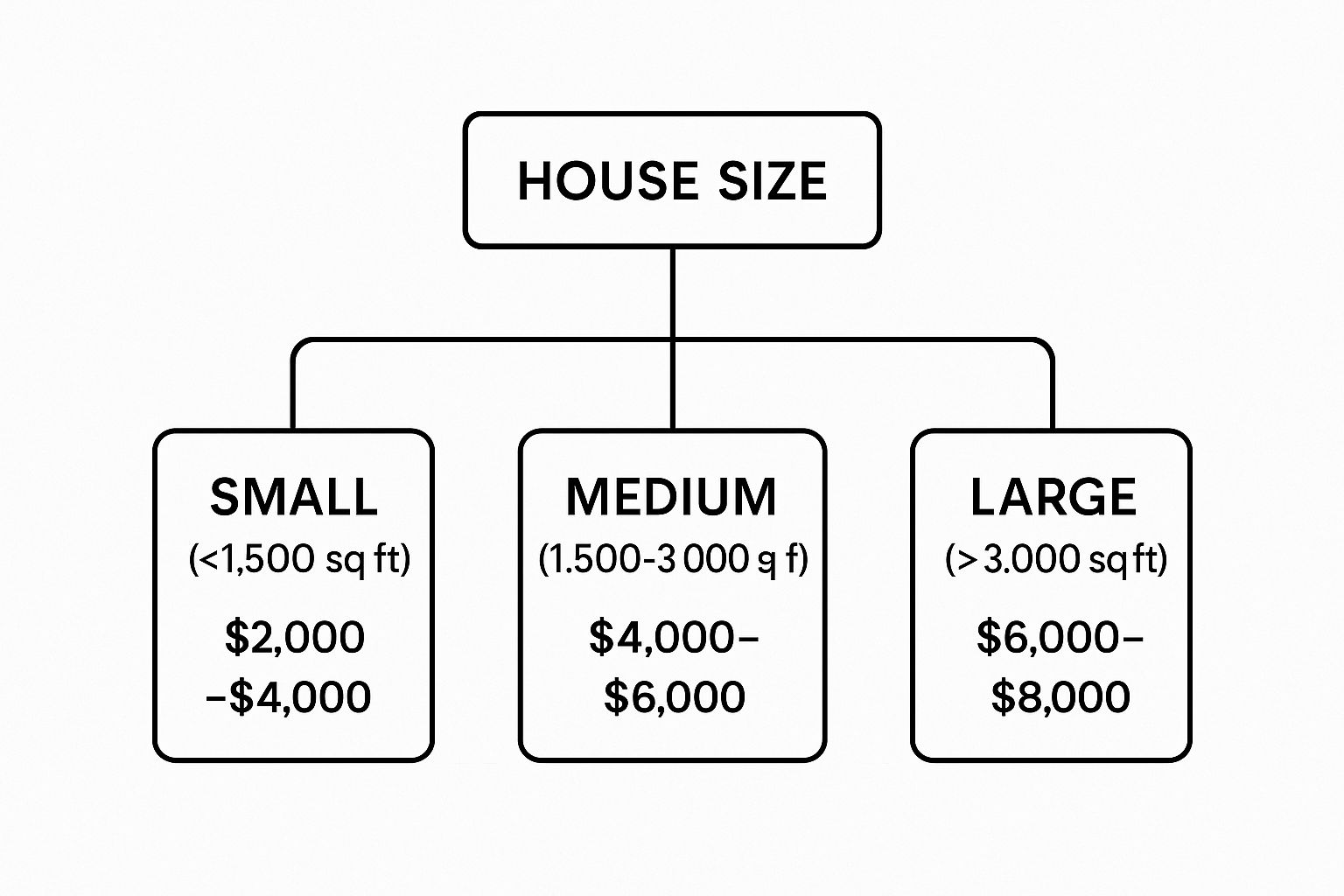
While this visual shows a clear link between a home’s size and the price tag, it’s not the whole picture. You could have two homes with the exact same footprint, but their painting quotes could be wildly different once you dig into the details.
The Impact of Siding Material
What your house is made of is a huge factor. Different materials need completely different approaches to preparation and painting, which directly affects the time and effort involved. It’s like cooking—you wouldn’t use the same method for a delicate piece of fish as you would for a thick steak. The same logic applies to your home’s exterior.
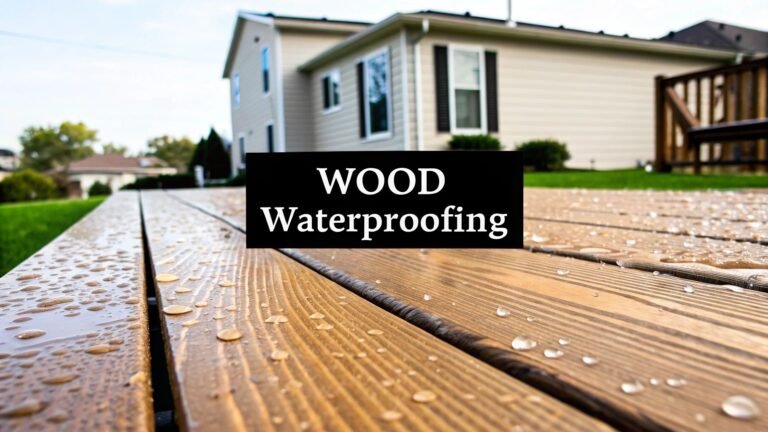
- Wood Siding: This one usually takes the most prep. We’re talking scraping old, flaky paint, sanding down rough patches, and priming any bare wood so it doesn’t soak up moisture. All that hands-on labour adds up.
- Vinyl Siding: While it’s easier to clean, vinyl needs special primers and paints that can flex and bond properly. The wrong paint can cause it to peel or even warp from the sun’s heat.
- Stucco or Brick: These materials are porous, so they need a deep clean to get rid of any dirt or mildew. They also act like a sponge, soaking up more paint. This often means we need to use more product, sometimes a specific masonry paint, to get a solid, even finish.
The type of siding is a major piece of the puzzle because it dictates how many hours are spent on prep work—and that’s a big chunk of any professional painter’s quote.
Your Home’s Current Condition
A painter’s first walkthrough is critical. If your home has paint that’s peeling, cracking, or bubbling, you can’t just slap a new coat over it. All that failing paint has to be scraped and sanded away to create a smooth, solid foundation for the new paint to grab onto.
A new paint job is only as good as the surface it’s applied to. Cutting corners on prep is the fastest way to guarantee your new paint will fail in a year or two, wasting every dollar you spent.
On top of that, we’re also looking for underlying issues. Things like rotted wood trim or damaged siding have to be repaired or replaced before a single drop of paint is applied. While this repair work adds to the labour cost, it’s absolutely essential for a durable, professional result. A well-maintained home will always be cheaper to repaint than one that’s been neglected. You can see how our professional teams handle various home conditions to deliver that flawless look.
Architectural Complexity and Accessibility
Finally, the style of your home plays a surprisingly big part in the cost. A simple, one-storey bungalow is straightforward to paint. A three-storey Victorian with ornate trim, multiple dormers, and dozens of window frames? That’s a different beast entirely.
More complex designs require:
- More detailed work: All that cutting-in around windows, doors, and decorative gingerbread has to be done carefully by hand.
- Specialized equipment: Taller homes often require scaffolding or aerial lifts to work safely and effectively. The rental and setup for this equipment adds to the project cost.
- Increased labour time: Painting long, flat walls is quick. Navigating tricky angles, gables, and heights takes much more time and skill.
As a rule of thumb, a two-storey home can easily cost 50% more to paint than a single-storey home of the exact same square footage. These factors of complexity and height are universal. For example, they’re the same reasons why a project in California might range from $2.00 to $5.00 per square foot—the more complex the job, the higher the price.
Breaking Down Labour and Material Expenses
When you get a quote for an exterior paint job, it’s easy to see it as just one big number. But to really understand the value behind the price, you need to look at what’s inside. Every professional estimate breaks down into two key parts: labour and materials. This objective structure helps you see exactly what you’re paying for.
It’s a common misconception that the paint is the most expensive part. In reality, skilled labour is by far the biggest driver of the cost. You can expect about 70% to 80% of your total bill to cover the time and expertise of the painting crew. This isn’t just for slapping on a fresh coat; it’s for all the critical work that happens before a single brushstroke of the final colour is applied.
The Real Value of Professional Labour
Think of it this way: a great paint job is 80% prep, 20% painting. That prep work is where the real skill and effort lie, and it’s what makes the difference between a finish that lasts a decade and one that starts peeling in a year or two.
This is what that labour investment actually pays for:
- Serious Cleaning: Power washing away all the built-up dirt, mildew, and grime so the new paint has a clean surface to stick to.
- Scraping and Sanding: Meticulously removing any old, failing paint. You have to get down to a solid, stable surface for the new coat to have any chance of lasting.
- Essential Repairs: This means filling small cracks, patching holes, and re-caulking around all your windows and doors to create a perfect, moisture-proof seal.
- Strategic Priming: Applying a quality primer to any bare wood or repaired areas. This step is crucial for ensuring the colour looks even and the paint adheres properly.
This is the painstaking, detailed work that truly protects your home from the harsh Greater Toronto Area weather. Our professional crews are trained to handle this crucial stage with the attention it deserves.
It’s More Than Just Cans of Paint
While labour takes the lion’s share, materials still make up the remaining 20% to 30% of the project cost. And this is not a place to cut corners. The quality of the products used is just as important as the skill of the person applying them.
Investing in premium materials is like cooking with high-quality ingredients. The final result doesn’t just look better—it performs better and lasts longer, protecting your home and your investment for years to come.
The “materials” line on your quote covers a lot more than just the paint itself. It’s an entire toolkit of supplies needed to do the job right.
This includes things like:
- High-Performance Primers: Specifically chosen for the type of surface being painted, whether it’s wood, stucco, or vinyl.
- Durable Caulking: Using a flexible, long-lasting sealant that can withstand temperature changes without cracking.
- Protective Supplies: All the painter’s tape, plastic sheeting, and drop cloths needed to keep your windows, light fixtures, and landscaping clean and paint-free.
- Specialty Equipment: For multi-storey homes, this might include the cost of renting scaffolding or a lift to get the job done safely and efficiently.
When you see how labour and materials work together, it becomes clear that a quality paint job is about much more than just a new colour. It’s a comprehensive service that protects and beautifies your home.
How Your GTA Neighbourhood Changes the Painting Price Tag
Ever wonder if the cost to paint an exterior house is the same in downtown Toronto as it is out in Mississauga? The short answer is: not really. While the big-ticket items like paint and prep work are pretty standard, your specific spot in the Greater Toronto Area (GTA) can definitely nudge the final price up or down.
It’s not just about the square footage of your home. A painter’s quote has to account for the real-world challenges of getting the job done in your particular neighbourhood. Think about it: a crew working in a tight, busy urban centre faces a completely different set of logistical headaches than one working in a wide-open suburb.
Why Your Postal Code Plays a Role
Getting a handle on these regional differences helps you build a smarter budget and gives you a better lens for comparing quotes. A painter isn’t just charging for their time on the ladder; their price reflects their total cost of doing business, and location is a huge part of that.
Let’s break down how different parts of the GTA can impact the numbers:
- Downtown Toronto Core: Here, contractors have to price in the “hassle factor.” They’re often dealing with navigating heavy traffic, hunting for parking for their work vans, and figuring out how to get equipment to your home with limited access. Those little delays and extra costs really add up over a project that spans several days.
- Established Suburbs (like Mississauga or Vaughan): Things are often more straightforward in these areas. Parking is easier and access is simpler. Still, local demand and the number of skilled painters available can cause labour rates to vary from one suburb to the next.
- Outer GTA Regions (like Brampton or Ajax): You might find lower overhead costs here, but don’t be surprised if travel time gets factored into the quote. If a highly-rated crew is based closer to the city, they’ll need to account for the time and fuel spent getting to and from your home.
It’s a lot like real estate—just as property values shift from one part of the GTA to another, so do the costs of running a business. A painter’s quote will always mirror the local economic reality, from gas prices to the cost of a business license.
Labour Rates and Business Overheads
The single biggest local factor? The cost of skilled labour. An experienced painter’s wages can vary across the GTA, influenced by the local cost of living and simple supply and demand. A painting company’s own expenses—things like their workshop rent, vehicle insurance, and disposal fees—also change depending on the municipality, and those costs are always built into their pricing.
This isn’t just a Toronto thing; you see it in every major city. Take Los Angeles, for example, where a typical exterior paint job can run anywhere from $5,047 to $6,712. As detailed in this overview of painting costs on HomeYou.com, factors like having a two-storey home or complex siding can make that price swing even more. The key is to find a local crew that not only offers a fair price but truly understands the unique challenges of working in your neck of the woods.
An Example Cost Breakdown for a Toronto Home

General price ranges are a good start, but seeing the numbers in action makes everything click. To really understand how the cost to paint an exterior house is calculated, let’s walk through a realistic quote for a pretty standard home: a 2,000 sq. ft., two-storey house in a Toronto suburb like Mississauga.
For this example, we’ll assume the house has wood siding and is in decent shape. It needs the usual prep work, but nothing out of the ordinary. A professional contractor doesn’t just pull a number out of thin air; their quote is built with an objective structure, adding up every single step of the job, from the initial pressure wash right down to the final cleanup.
Labour Hours: The Foundation of Your Quote
Here’s the thing about a great paint job: most of what you’re paying for is the time and skill of the crew. It’s all in the labour. For a home of this size, a professional team of two or three painters would likely map out their time something like this:
- Surface Preparation (20-25 hours): This is where the magic really happens, and you can’t rush it. This includes a thorough pressure wash, scraping away any old, flaky paint, a light sanding on rough spots, and re-caulking windows and doors to create a perfect seal.
- Painting (30-35 hours): This is the main event. It covers applying one coat of high-quality primer on any bare spots, followed by two full, even coats of premium exterior paint. This time also includes all the meticulous “cutting in” around trim, windows, and soffits.
- Setup and Cleanup (5-8 hours): It’s not just about painting. This block of time is for carefully masking windows, laying down drop cloths to protect your garden and walkways, and then a complete cleanup and removal of all materials when the job is done.
All in, the total estimated labour comes to about 55-68 hours. If we use a blended rate of $65 per hour per painter (a typical industry rate), the labour total lands between $3,575 and $4,420.
Material and Equipment Costs
Next up, we have to factor in all the materials needed to do the job right. This is one area you never want to skimp. Using the best products is what ensures your home’s new finish will stand up to our Canadian weather for years to come.
A professional quote isn’t just a number; it’s a transparent breakdown of the value you’re receiving. It shows the investment in skilled labour and quality materials needed to protect and beautify your home properly.
Here’s a rough idea of where the rest of the budget goes:
- Premium Exterior Paint: You’d need about 15 gallons for two solid coats, which would run approximately $1,200.
- Primer and Caulking: A high-adhesion primer and durable, flexible sealant will add about $250.
- Supplies: This is all the small stuff that adds up—tape, plastic sheeting, rollers, and quality brushes, totalling around $150.
- Equipment Rental: For a two-storey home, you need ladders and possibly scaffolding for safety and a perfect finish. This might add another $200.
Putting It All Together: A Sample Quote
Now, let’s combine all those elements to build a clear, itemized quote. Seeing it broken down like this helps you understand exactly where your money is going and the full scope of the project. At Soca Services Painting, our crews believe in this level of detail to make sure every client feels fully informed and confident.
To give you a concrete visual, here’s what a typical quote for our example home might look like.
Sample Cost Breakdown for a 2,000 sq. ft. House in Mississauga
| Cost Item | Description | Estimated Cost (CAD) |
|---|---|---|
| Labour | Approx. 62 hours for prep, painting, & cleanup | $4,030 |
| Paint | 15 gallons of premium exterior paint | $1,200 |
| Supplies | Primer, caulking, masking materials, etc. | $400 |
| Equipment | Scaffolding/ladder rental and setup | $200 |
| Contingency (5%) | For unforeseen minor repairs | $290 |
| Estimated Total | $6,120 |
This table shows a realistic total estimate of $6,120. The small contingency is a smart practice, covering any small surprises like a piece of rotted trim that needs replacing, ensuring the project stays on track without unexpected costs.
Choosing the Best Painting Contractor Near You
Picking a new paint colour is the fun part, but it’s the contractor you hire that really makes or breaks the final result. A great paint job is a major investment, and the quality of the crew is every bit as important as the quality of the paint they use.
Think of it this way: you’re hiring a team to protect and boost your home’s value. That means looking past the bottom-line price and really digging into who you’re letting work on your property. It’s less like shopping and more like conducting a job interview for a really important role.
Vetting Painters in Toronto and the GTA
Before you even think about signing a contract, it’s time to do some homework. A bit of due diligence upfront can save you a world of headaches—and money—down the road. When you’re looking for the best painters near you in Toronto, Mississauga, or anywhere in the GTA, focus on a few key things.
First, cover the absolute must-haves:
- Proof of Insurance: Don’t just take their word for it. Ask to see a certificate of liability insurance. This is what protects your home from any accidental damage while they’re working.
- WSIB Coverage: This is a big one. The company must have Workplace Safety and Insurance Board (WSIB) coverage. It’s mandatory in Ontario and protects you from liability if a painter gets injured on your property.
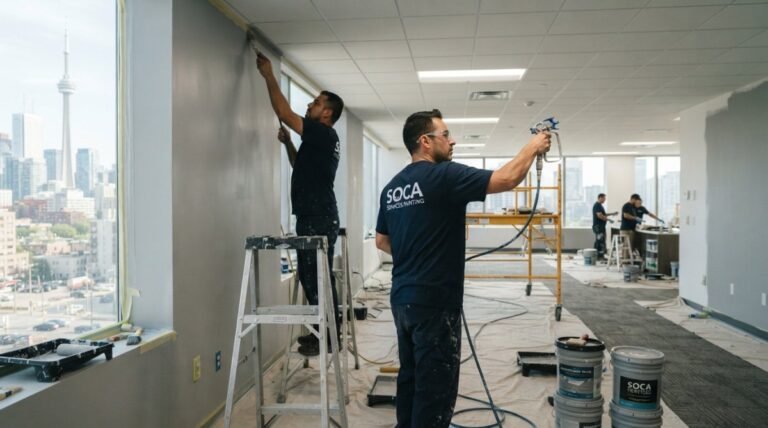
- Portfolio of Local Work: A reputable company will be proud to show you their work. Ask to see photos of recent projects in your area. Seeing evidence of their standards, like images of our dedicated painting vehicles, shows a level of professionalism and experience you can trust.
Making an Informed Decision
Once you’ve confirmed a contractor has their papers in order, the next step is to look closely at their process and their price. A cardinal rule of home improvement is to never, ever go with the first quote you get.
Getting at least three detailed, written quotes is the single best way to compare services and pricing objectively. A vague, one-line estimate is a red flag; a professional quote should break down labour, materials, and prep work clearly.
This lets you compare apples to apples and see exactly where your money is going.
Finally, read online reviews with a sharp eye. Look for consistent themes in customer feedback. What do people say about their communication? Were they on time? And more importantly, how did the company respond if a problem came up? Taking this well-rounded approach will give you the confidence you need to hire the best contractor for the job.
Got Questions About Exterior Painting Costs? We’ve Got Answers.
When you’re thinking about a big project like painting your house, a lot of questions pop up. It’s completely normal. If you’re in Toronto, Mississauga, or anywhere in the GTA, you’re probably wondering about the same things as your neighbours. Let’s clear up some of the most common questions so you can plan your project with confidence.
How Long Will This Actually Take?
For a typical home around here, you can expect a professional crew to be at your house for about four to six days.
Of course, this isn’t set in stone. A larger, more complex house will take longer, and we’re always at the mercy of the weather. A big chunk of that time—often the first day or two—is spent purely on prep work. This is the non-negotiable stuff like power washing, scraping old paint, and sanding surfaces smooth.
When Is the Best Time of Year to Paint in Ontario?
You’ll want to book your painters for sometime between late spring and early fall. Think May through September. That’s our sweet spot here in Ontario for getting the job done right.
Why? It all comes down to the weather. Paint is picky.
- The Right Temperature: Paint applies and cures best when it’s between 10°C and 30°C. Too cold, and it won’t bond properly; too hot, and it dries too fast.
- Low Humidity: We need to avoid those super sticky summer days. High humidity traps moisture under the paint film, which is a recipe for ugly blistering and peeling down the road.
- No Rain in Sight: A solid forecast with a few dry days in a row is essential. This gives the paint enough time to dry and cure into a hard, protective shell.
Hitting this ideal window is the key to making sure the paint job doesn’t just look good on day one, but that it actually lasts for years to come.
Will Painting My House Actually Increase Its Value?
Without a doubt. A fresh coat of paint is one of the smartest, most affordable ways to seriously boost your home’s curb appeal and, yes, its market value.
Think of it from a buyer’s perspective. A crisp, clean exterior immediately says, “this home is well-maintained.” It’s an investment that can add 5% to 10% to your selling price. In a hot market like Toronto, that first impression makes all the difference.
Ready to transform your home with a stunning, long-lasting finish? The expert team at Soca Services provides detailed quotes and exceptional craftsmanship for homeowners across the GTA. Get your free, no-obligation estimate today!







7 Comments