You've just finished painting, and the room looks incredible. The only problem? That overpowering "new paint" smell is sticking around, giving you a headache. The best way to get rid of that odour is a two-pronged attack: powerful ventilation to move stale air out and effective absorption to trap the fumes left behind. This objective is rooted in understanding the cause: Volatile Organic Compounds (VOCs).
The faster you can get fresh air moving and capture those airborne compounds, the quicker your space will feel like home again. This guide provides the best methods for homeowners in Toronto, Mississauga, and across the GTA.
Why That New Paint Smell Lingers in Toronto Homes

That distinct "fresh paint" smell is more than a passing nuisance; it's the signature of a chemical process called off-gassing. As paint dries and cures, it steadily releases VOCs into your home's air. These invisible fumes are the culprit behind the odour you're trying to eliminate.
Understanding this process is the first step to clearing the air. The smell isn't just an afterthought—it's the paint actively releasing chemicals as it hardens. Depending on the paint type and room conditions, off-gassing can last from a few days to several weeks.
The Role of Paint Type and VOCs
Not all paints are created equal when it comes to smell. The concentration of VOCs varies dramatically, directly impacting odour strength and duration.
- Oil-Based Paints: These are known for durability but are packed with VOCs, producing a potent, sharp odour that can linger. Their slow curing process means they off-gas for a much longer period.
- Latex (Water-Based) Paints: The standard choice for most interior jobs in Toronto, latex paints have far lower VOC levels. They have a smell, but it's typically milder and fades significantly faster than fumes from oil-based paints.
- Low-VOC and Zero-VOC Paints: These are the best options to avoid odour issues from the start. Formulated to release very few, if any, VOCs, they are ideal for anyone with sensitivities or for rooms without great airflow.
GTA Climate Challenges
Living in Toronto and the GTA adds another layer to the challenge. Our distinct seasons and weather patterns can worsen paint smells by affecting the curing process.
A humid Toronto summer slows down evaporation, meaning paint takes longer to dry and cure. This extends the off-gassing period, and the damp air can trap fumes inside, making the smell feel more intense.
Conversely, a cold Mississauga winter presents its own problems. With windows sealed tight against the cold, VOCs have nowhere to escape. They get trapped inside, often circulating through your HVAC system, which prolongs the issue. This makes a solid plan for ventilation and odour removal critical for any project near you.
Smart Prep Before You Pick Up a Brush
The best way to handle paint smells is to stop them from getting out of hand in the first place. A little foresight before opening a can saves you from headaches. It all starts with choosing the right product.
Paint technology has advanced significantly. When shopping at stores in Toronto or Mississauga, look for paints labelled low-VOC or zero-VOC. These formulas are designed to release far fewer volatile organic compounds, the main culprits behind that overpowering paint smell.
Decoding Paint Can Labels
Knowing what you're buying is half the battle. While Canada has its own rules, leading standards often come from places with strict air quality regulations.
For context, a paint is typically 'low VOC' if it has less than 50 grams per litre (g/L) of these compounds. To be 'zero VOC,' it must be under 5 g/L. This is crucial for minimizing indoor air pollution. You can learn more about how VOC regulations impact paint from ACGOV.
A pro tip: remember that tint added at the store can introduce its own VOCs. Always check the details for the final mixed product. Making a smart choice at the hardware store is your first and most effective defense against overwhelming fumes.
Setting Up Your Space for Success
Room preparation is as critical as the paint itself. The objective is twofold: contain fumes in your work area and give them an easy escape route.
Before you start painting, take a few minutes to set up your zone properly:
- Seal Off the Room: Use painter's tape and plastic sheeting to cover doorways. A crucial step is blocking off air vents to prevent fumes from circulating through your HVAC system.
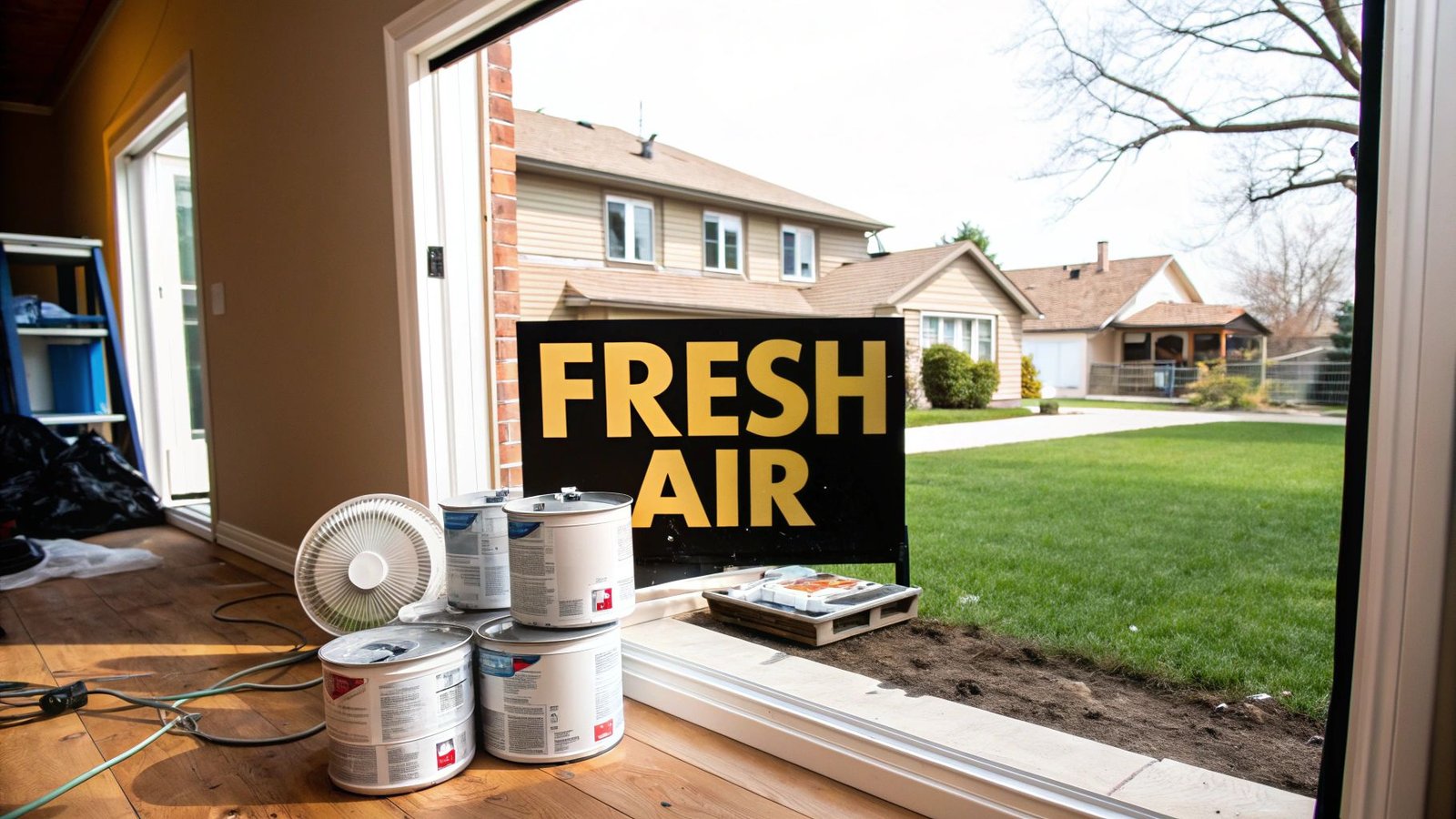
- Create a Ventilation Path: A good cross-breeze is your best ally. Place a box fan in an open window, facing outwards, to push stale air out. Crack a window in another part of the house to help pull fresh air in.
- Move or Cover Furniture: This prevents paint splatters and controls odour. Fabrics and upholstery absorb paint fumes and can hold onto the smell for weeks.
By putting in this prep work, you aren't just making cleanup easier. You're actively managing your home's air quality. This simple game plan helps ensure that when you’re done painting, the smell is done, too.
Proven Methods to Clear the Air Fast
Once the last brushstroke is on the wall, it's time to reclaim your room from lingering fumes. Effective air clearing involves strategic ventilation and purification. These are the best moves for quickly improving your home’s air quality.
The cornerstone of fast odour removal is creating strong, consistent airflow. The objective is to physically push VOC-filled air out of your home and pull fresh air in. A proper cross-breeze is the best way to speed this up.
Engineer a Powerful Cross-Breeze
To get an effective cross-breeze, you need an entry point for fresh air and an exit point for stale air. It’s a simple push-pull system that clears a room in record time.
Here's the trick: place a box fan in the window of the painted room, positioned to blow air outwards. This fan acts as an exhaust, actively pulling fume-heavy air out.
Next, open a window in a different room—ideally on the opposite side of your home—to create an intake for fresh air. This setup creates a current that systematically flushes the entire area.
Keep in mind, even after the strong smell is gone, the paint is still curing and off-gassing. For example, low-VOC latex paints can take up to three days or more to fully cure. It is best to wait at least 72 hours before spending significant time in a freshly painted room, a critical step for protecting kids, pets, or anyone with sensitivities. You can learn more about the impact of paint fumes and safe practices on elgatopainting.com.
Choosing the Right Tools for the Job
Ventilation is your number one tool, but sometimes you need another layer of defense, especially during a frigid Toronto winter. This is where air purifiers are invaluable.
However, not just any air purifier will work. The secret is the filter inside.
An air purifier is only effective against paint odours if it has an activated carbon filter. Standard HEPA filters are fantastic for particles like dust and pollen, but they do nothing to stop the gaseous VOCs causing the smell. Activated carbon traps and absorbs these gas molecules, pulling them out of the air.
For a project in a Toronto or Mississauga home in January, this method is a game-changer. You can run an air purifier with a carbon filter 24/7 while opening windows for short, 15-20 minute bursts. This approach clears the air without freezing your home, making year-round painting in the GTA practical.
5 Natural Odour Absorbers from Your Kitchen
Even with good ventilation, a stubborn paint smell can linger. Before using a chemical air freshener that only masks the problem, look in your kitchen pantry. Many everyday items can absorb and neutralize lingering fumes.
This is a go-to, chemical-free strategy for clearing the last traces of that "new paint" smell. Many household staples are porous, making them brilliant at trapping airborne molecules responsible for the odour. This simple, effective trick is reliable for any job, from a Mississauga condo to a larger commercial space in the GTA.
The Power of Baking Soda and Activated Charcoal
Let's start with the classics. Baking soda (sodium bicarbonate) is a legendary deodorizer. It's fantastic at absorbing odours, including paint fumes. The easiest method is to pour a generous amount into a few shallow bowls and place them around the room.
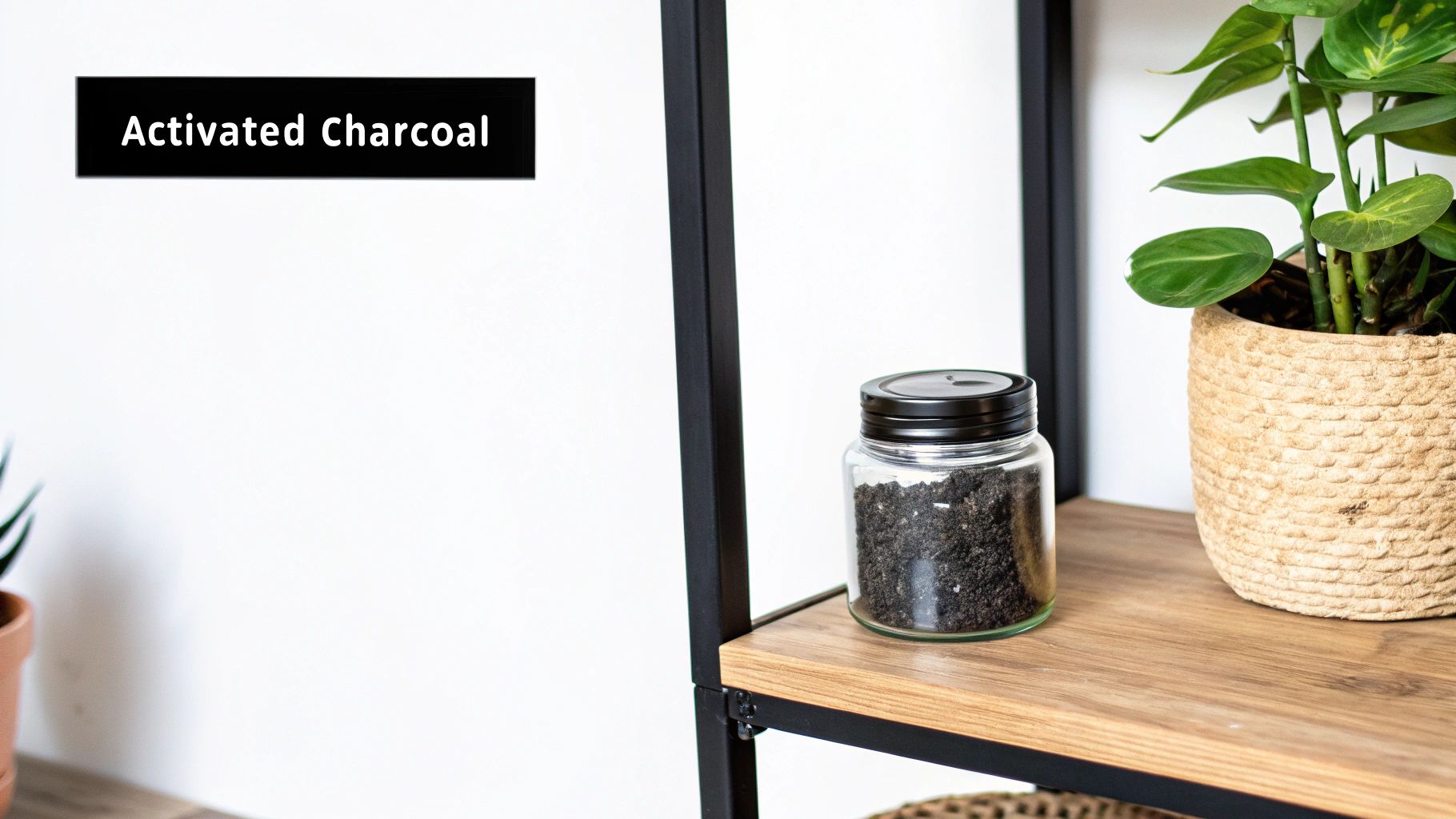
For something with more muscle, use activated charcoal. This isn't for your barbecue. Activated charcoal is treated to create a massive surface area with millions of tiny pores, making it a super-absorber for VOCs. You can find it in mesh bags at pet stores or online.
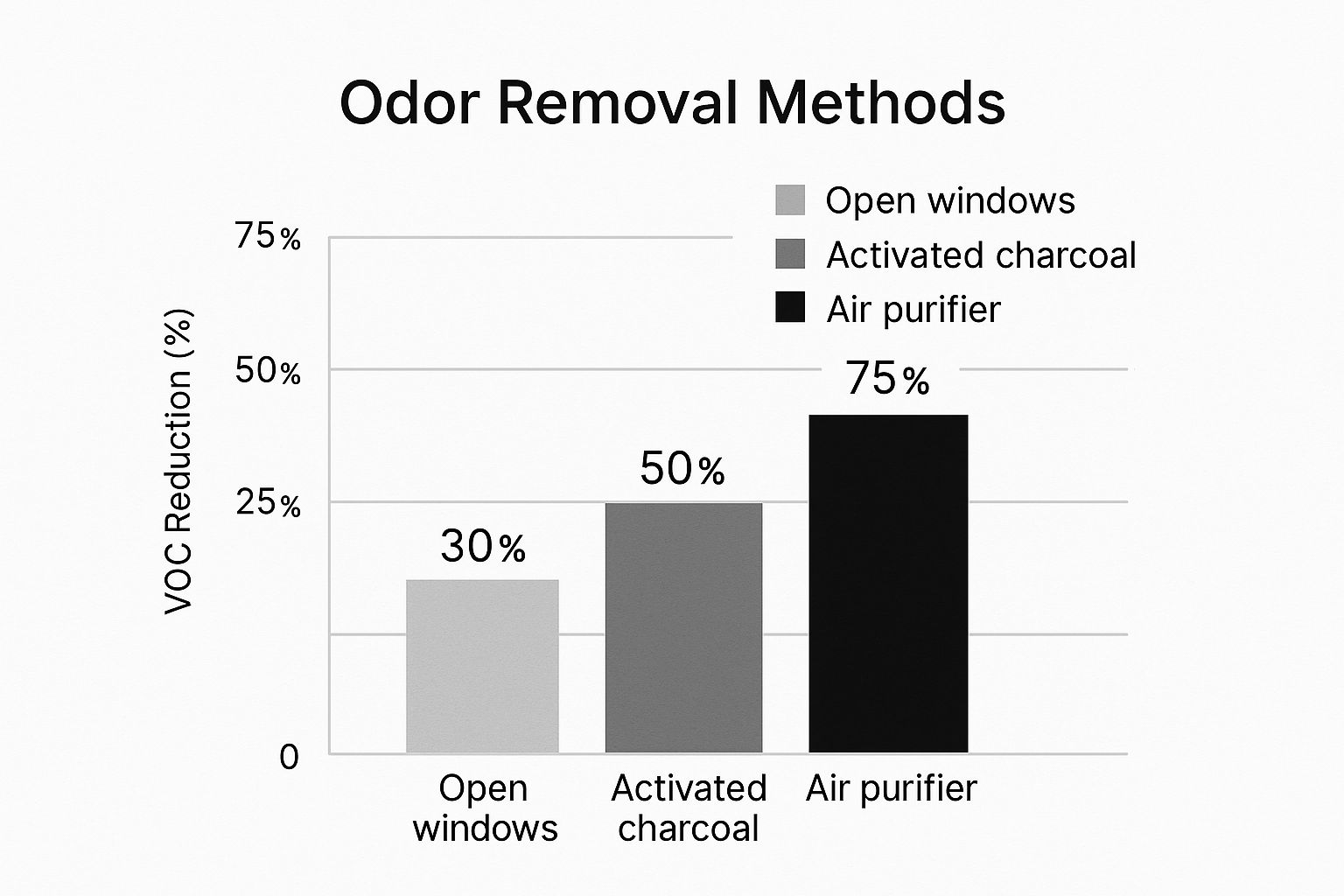
As you can see, ventilation alone helps, but combining it with a powerful absorber like activated charcoal or an air purifier tackles VOC levels much more effectively.
Surprising Solutions from the Pantry
Beyond the usual suspects, a few other common kitchen items are surprisingly effective at removing paint odours.
- Coffee Grounds: Fresh or used, coffee grounds are fantastic at absorbing odours. Place bowls of dry grounds around the room to soak up paint fumes, leaving a faint coffee scent.
- Onions: This old painter's trick really works. Cut a large onion in half, place the halves cut-side-up in shallow dishes, and set them at opposite ends of the room. The onion’s compounds help neutralize aldehydes in paint fumes.
- White Vinegar: Placing a few bowls of white vinegar around the room can do wonders. The acetic acid in vinegar is great at neutralizing airborne odour molecules.
When dealing with lingering paint fumes, choosing the right natural absorber can make all the difference. Here’s a quick comparison to help you select the best pantry staple for your needs.
Effectiveness of Natural Odour Absorbers
| Absorber | How It Works | Best For | Pro Tip |
|---|---|---|---|
| Baking Soda | Absorbs and neutralizes acidic odour molecules. | Mild to moderate odours; safe for use around pets and kids. | Sprinkle it on carpets overnight before vacuuming to pull out settled odours. |
| Activated Charcoal | Traps a wide range of VOCs in its highly porous surface. | Strong, persistent chemical smells from oil-based paints. | Buy it in breathable pouches to hang in closets or place on shelves. |
| Coffee Grounds | Porous grounds absorb odours and release a pleasant scent. | Masking and absorbing moderate paint smells. | Use dry, used grounds to avoid a damp smell. They are just as effective. |
| Onions | Sulphur compounds neutralize aldehydes in paint fumes. | Fresh, strong paint odours during the first 24-48 hours. | Slice the onion to maximize the exposed surface area for faster absorption. |
| White Vinegar | Acetic acid neutralizes alkaline odour molecules in the air. | General-purpose odour absorption. | The vinegar smell dissipates quickly once the bowls are removed, taking the paint smell with it. |
Each option brings something unique. The key is to match the absorber to the intensity of the smell.
A crucial tip for any of these methods is to maximize the surface area. Spreading the baking soda, coffee, or charcoal out in a shallow dish is always better than putting it in a deep bowl. More surface area means more contact with the air, allowing the material to trap odours much faster.
For a real-world scenario in a Toronto home, you can speed up the process by placing a bowl of baking soda on a nightstand, a dish of coffee grounds on a dresser, and an onion half on the windowsill. This multi-pronged, natural approach is the best way to reclaim your space without adding more chemicals to the air.
When to Call the Best Professionals in the GTA
Sometimes, a paint smell won't quit, no matter what you try. If the odour is still present after trying all the usual tricks, it might be time to call an expert. A stubborn paint smell can be more than an annoyance—it can signal a deeper issue that DIY solutions can't handle.
Knowing when to make that call is crucial. Most smells from modern, low-VOC paints should fade after a few days. But if the chemical scent is still strong after a week, or if you or your family are experiencing headaches, dizziness, or irritated airways, don't wait. Those symptoms are a clear signal that airborne compounds are more concentrated than they should be.
Spotting the Red Flags
Certain signs indicate it's time to stop troubleshooting and pick up the phone. Here are scenarios where seeking professional help near you in the Toronto area is your best move:
- The Smell Won't Fade: If a strong chemical odour is still present after 7-10 days of constant ventilation, something is amiss.
- You're Feeling Unwell: Don't ignore persistent headaches, nausea, or breathing problems. A professional air quality assessment is necessary.
- Working on an Older Home: Renovating an older house in Toronto or Mississauga can disturb old paint layers, which might release more than just VOCs, like lead-based paint fumes.
- A "Sour" or Musty Odour Appears: A foul, sour smell mixed with the paint odour is a classic sign of trapped moisture, which can lead to mould or mildew growth behind the fresh coat.
When in doubt, especially concerning your family's health, it’s always best to be safe. A professional can diagnose the problem and provide a clear plan to fix it. For specialized odour removal anywhere in the Greater Toronto Area, from Mississauga to downtown, the best pros have the right tools for the job.
What the Experts Bring to the Table
When you hire an air quality specialist, you get more than just an opinion. They come with serious equipment and expertise that goes beyond cracking a window.
Their biggest weapon is usually an air scrubber. This high-powered machine sucks in air and forces it through heavy-duty filters, like activated carbon and HEPA. It physically strips odour-causing particles and compounds from the room. This is the secret to how the best professionals get rid of paint odours so effectively.
Finding a good service in the GTA means doing some research. Ask about their specific experience with VOC and odour removal, check references, and ensure they're properly insured. A true pro will walk you through their entire process, from initial air tests to the equipment they plan to use. It's often the quickest and most reliable way to get your home back to a safe, comfortable, and fresh-smelling space.
Got Questions About Paint Fumes? We’ve Got Answers.
When the last brush stroke is done, a lingering chemical smell can put a damper on your new space. This is a common concern for homeowners across Toronto and Mississauga. Let's clear the air and tackle some of the most frequent questions about paint jobs.
This is your practical guide to getting back to normal, ensuring your home is as healthy as it is beautiful.
How Long Does That Paint Smell Really Last?
This is the big question. How long a paint smell lasts depends on two key factors: the paint used and room ventilation.
For most projects using a quality low-VOC latex paint, the strongest odour should be gone within 24 to 48 hours with decent airflow.
However, the paint still needs to "cure"—fully harden and release all its compounds. This can take anywhere from a few days to a couple of weeks. A humid GTA summer can slow this process, making the smell hang around longer.
Are Paint Fumes Actually Bad for You?
In short, yes, they can be. Breathing in high concentrations of paint fumes, especially for a long time, isn't healthy. The main culprits are Volatile Organic Compounds (VOCs), which can trigger immediate symptoms like headaches, dizziness, nausea, or throat and lung irritation.
The good news is that most interior paints sold in Canada today are low-VOC, drastically reducing the risk. That said, some people are more sensitive. Anyone with asthma, young children, and expectant mothers should stay out of a freshly painted room for at least 72 hours.
Here’s something that surprises many people: the paint itself is nearly odourless. The strong chemical smell is almost entirely from solvents used to thin the paint or for cleanup, like turpentine or mineral spirits.
Does "Low-Odour" Paint Still Smell?
Yes, it does. Think of it as "less-odour," not "no-odour." These paints are a huge improvement, formulated to be far less pungent—often with up to 40% lower odour than older paints. They are a fantastic choice for those sensitive to smells.
You'll still notice a faint scent as the paint dries, but it's usually milder and disappears faster. The best approach is always to combine low-odour paint with great ventilation for the quickest results.
Can I Sleep in a Room I Just Painted?
It's best to wait. Even with a zero-VOC paint, the room needs time to breathe and air out properly.
As a general rule, give it a minimum of 24 hours before sleeping in there.
To be extra cautious, especially if children or anyone with sensitivities will use the room, waiting 48 to 72 hours is the safest bet. This allows the initial, heavy off-gassing phase to pass, ensuring a healthier and more comfortable night's sleep.
Ready to transform your space without the headache of lingering fumes? The team at Soca Services specializes in using the best low-odour products and professional techniques to deliver a beautiful finish and a fresh, clean home. Learn more about our high-quality painting services.