


When you start looking into the cost of painting your home, the price per square foot is usually the first thing you'll see. In Canada, particularly in the Greater Toronto Area (GTA), you can expect the average interior painting cost to fall between $2.00 and $3.00 CAD per square foot for just the walls. If you’re looking for a more complete job that includes ceilings, trim, and doors, that figure climbs closer to $4.70 per square foot or even higher.
Your Quick Guide to Canadian Painting Costs
It's easy to get fixated on that per-square-foot number, but it can be a bit deceiving if you don't know what's behind it. Think of it like buying a car: you have the base model price, but then there's the cost of the features you actually want. The same logic applies when painting your home, whether you're looking for painters in Toronto, Mississauga, or anywhere else in the GTA.
A bare-bones quote might only cover rolling paint onto your walls. This leaves out all the detailed work on ceilings, baseboards, window frames, and doors that really gives a room a finished, professional look. It’s the precision and fine brushwork that separate an okay job from the best one, and that difference is crucial for setting a realistic budget.
Walls Only vs. All-Inclusive Pricing
The gap between a "walls only" quote and an "all-inclusive" one is pretty significant. The lower price will get your main surfaces done, but the higher, all-in rate covers the meticulous and time-consuming detail work that makes a room feel truly complete. This comprehensive approach is what delivers that transformative, polished result.
To give you a clearer picture, let's break down how these two pricing models compare.
Average Painting Cost Per Square Foot in Canada (Walls Only vs. All-Inclusive)
This table offers a side-by-side look at what you can expect to pay, helping you understand where your money is going.
| Scope of Work | Average Cost per Square Foot (CAD) | Typical Inclusions |
|---|---|---|
| Walls Only | $2.00 – $3.00 | Two coats of paint on walls; basic surface prep (minor patching). |
| All-Inclusive | $4.70+ | Two coats of paint on walls, ceilings, trim, baseboards, and doors; more thorough prep work. |
As you can see, opting for the all-inclusive package often means a higher investment, but it guarantees a more cohesive and professional finish throughout the space.
The infographic below helps visualize this cost difference.
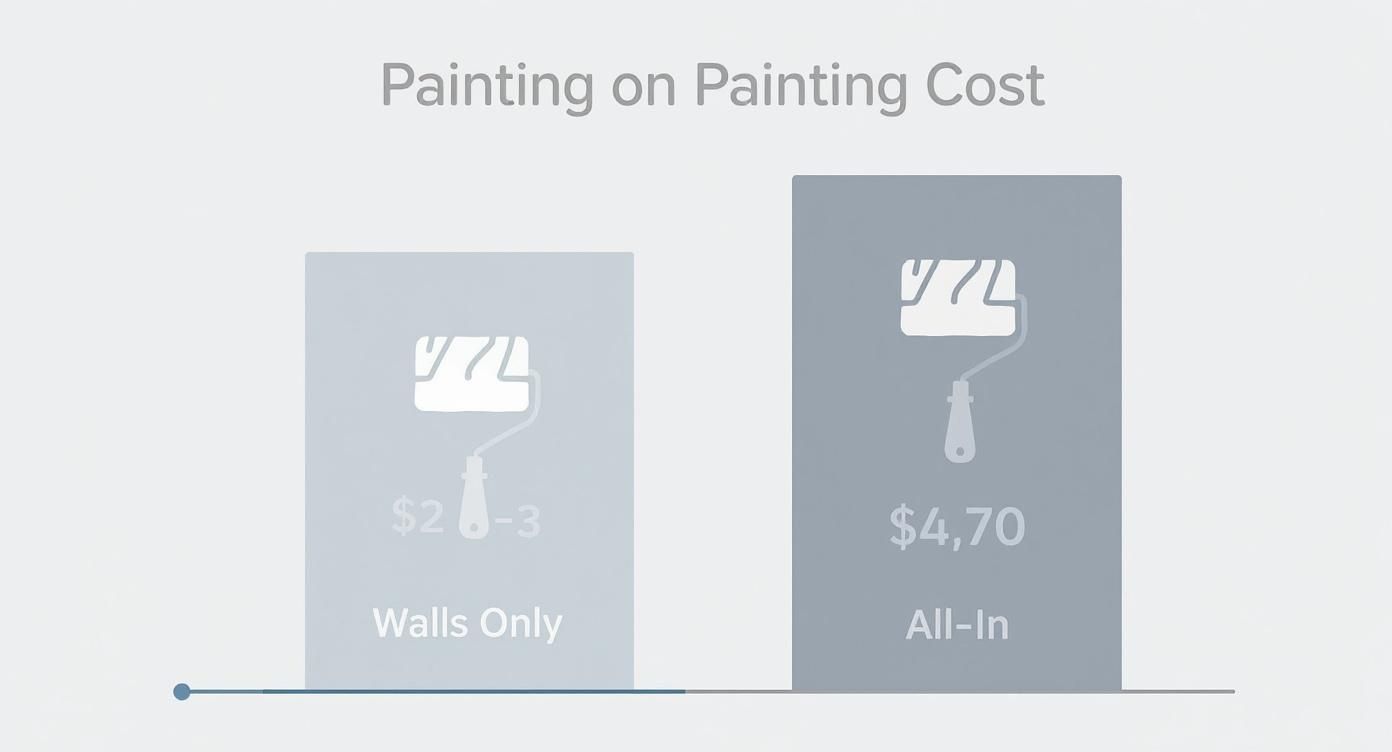
As the chart shows, the price can nearly double when you factor in every surface. This jump reflects the extra time, skill, and attention to detail needed for the trim and ceiling work.
Understanding the Numbers
For homeowners in major Canadian cities like Toronto or Mississauga, interior painting costs typically land between $2.00 and $3.00 CAD per square foot for walls, before tax. This can easily jump to $4.70 per square foot for a project that includes everything from the ceiling down to the baseboards.
It’s important to remember that labour is by far the biggest part of the bill, usually making up 70–80% of the total cost. The remaining percentage covers materials like paint, primer, and supplies. And if you're in Ontario, don't forget to factor in the 13% HST on top of your final quote.
A fresh coat of paint remains one of the most effective and affordable ways to completely update the look and feel of your home. It's a high-impact renovation that delivers immediate results without the need for major structural changes.
Getting a handle on these numbers from the get-go is the first step toward a smooth and successful project. After all, a fresh coat of paint is the easiest way to refresh any space, and having a clear budget helps you plan with confidence. A reputable painter will always provide a detailed quote that breaks down every cost, so you know exactly what you’re paying for—no surprises.
What Really Drives Your Final Painting Quote
The square footage of a room gives you a starting point, but it's the details below the surface that truly dictate your final painting quote. A professional painter looks at your space with a trained eye, spotting the subtle complexities that add time, require specific skills, and ultimately shape the cost. Getting a handle on these factors is the key to understanding your estimate and seeing the real value in a job done right.

Think of it this way: painting an empty, brand-new, perfectly smooth room is a straightforward sprint. A painter can move quickly and cover a lot of ground efficiently. Now, picture painting an older home with ornate trim, high ceilings, and walls that have seen years of life—that’s more like a marathon requiring patience and precision. Your home falls somewhere on that spectrum.
The Critical Role of Wall Condition
After the size of the room, the condition of your walls is the single most important variable. A professional quote isn't just for adding colour; it's for creating the perfect canvas before the painting even begins. Walls with a few minor scuffs and pinholes are easy, but surfaces riddled with cracks, dents, or old, peeling paint require serious prep work.
This is where a huge chunk of the labour cost comes from. Proper preparation is non-negotiable and includes:
- Patching: Filling every hole from nails, screws, and accidental dings with drywall compound.
- Sanding: Smoothing every patch and scuffing any glossy surfaces to ensure the new paint actually sticks.
- Cleaning: Washing the walls to get rid of dust, grime, and oils that can cause the paint to fail.
Skipping these steps is a recipe for a bad finish. To see what goes into getting a surface ready, you can check out our guide on how to prep walls for painting and understand the process professionals use. A flawless paint job is all in the prep.
Architectural Details and Complexity
Beyond the walls themselves, the character of your home plays a massive part. All those features that add charm and personality also add complexity and time to a painting project.
The difference between a simple room and a complex one lies in the details. High ceilings, crown moulding, and numerous windows all require methodical, time-consuming work that goes far beyond a simple roller application.
High or vaulted ceilings, for example, often mean bringing in scaffolding or special ladders, which naturally slows things down and adds a layer of safety planning. Intricate crown moulding, detailed window frames, and baseboards can’t be sprayed or rolled; they demand painstaking precision with a brush, a skill known as "cutting in." Every extra corner, edge, and surface adds to the total labour hours.
The Impact of Colour and Trim
Even your colour choice can nudge the final price up or down. Making a drastic change—like going from a deep, dark red to a light, airy beige—isn't a simple two-coat affair. This kind of transformation will absolutely require a high-hide primer to block the old colour, followed by multiple topcoats to get that smooth, even finish. That means more materials and more time.
Likewise, the amount and state of your trim can significantly affect the quote. Trim work—like baseboards, crown moulding, and window casings—is labour-intensive and can add $1–$3 CAD per square foot to the job on its own. If your walls also need extensive prep, you could easily see the total project cost increase by 20–30%. The best painters will always break these variables down for you to give you a transparent, accurate quote.
Comparing Painting Prices in Toronto and the GTA

Have you ever wondered why a painting quote for a house in downtown Toronto is so different from one for the exact same house just an hour away? It all comes down to basic economics. Where you live plays a massive role in the painting cost per square foot in Canada, and there’s no better example of this than the Greater Toronto Area (GTA).
Just like a cup of coffee or a dinner out, the cost of nearly every service climbs the closer you get to a major city centre—and professional painting is no exception. It isn’t that painters are simply charging more because they can; it’s a direct reflection of the much higher costs they face to run their business in a dense, expensive urban environment.
Why Urban Markets Command Higher Prices
Every professional painter is essentially running a mobile workshop, and their daily reality involves navigating the city's unique—and often expensive—challenges. These are the behind-the-scenes costs that are built into every quote you receive.
A few key factors drive up prices in a big city:
- Higher Labour Rates: To keep skilled, reliable painters on their team in a city with a high cost of living, companies have to pay competitive wages.
- Increased Overhead: The monthly rent for a workshop or storage space, business insurance, and even vehicle maintenance all cost more in a major metropolitan area.
- Logistical Hurdles: Fighting downtown traffic, hunting for parking (especially for a work van), and navigating strict condo board rules all add time, fuel, and frustration to a project. This time is money.
These factors create a higher baseline cost before a single brushstroke is made. A contractor based in a smaller town outside the GTA simply has lower overhead, and their pricing reflects that reality. When you search for painters near me in Toronto or Mississauga, you're tapping into a market with a completely different economic engine. To get a better feel for how these quotes are built, digging into a full breakdown of interior house painting prices can give you some much-needed context.
A Look at Regional Price Variations
This price gap between the big city and smaller towns isn't just a GTA phenomenon; it’s a pattern you’ll see right across Canada. A painting project in downtown Vancouver will almost always cost more than the same job in Kelowna. The same goes for Montreal versus a smaller city in Quebec.
This table provides a snapshot of how prices can vary from one major Canadian hub to another, giving you a clearer picture of what to expect.
Estimated Painting Cost Comparison Across Canadian Regions
| Region | Average Low-End Cost/Sq. Ft. (CAD) | Average High-End Cost/Sq. Ft. (CAD) | Key Influencing Factors |
|---|---|---|---|
| Greater Toronto Area (GTA) | $3.00 | $5.00+ | High cost of living, significant traffic/logistics, high demand for skilled labour. |
| Metro Vancouver | $3.25 | $5.50+ | Extremely high cost of living, demanding market, logistical challenges. |
| Calgary / Edmonton | $2.50 | $4.50 | Moderate cost of living, strong economy, competitive market. |
| Greater Montreal | $2.25 | $4.25 | Lower cost of living than Toronto/Vancouver, but still a major urban centre. |
| Smaller Towns / Rural Areas | $2.00 | $3.50 | Lower overhead, less traffic, lower wages, and reduced demand. |
As you can see, your postal code has a direct and measurable impact on your final painting quote. Knowing this is the first step to setting a realistic budget.
Ultimately, the best painter for you is usually a local one who knows the area inside and out. While a contractor from a smaller town might offer an attractive initial price, they could end up adding travel fees or run into delays from not knowing the local parking rules or condo restrictions. Finding a reputable local professional means you’re paying a price that’s fair for the market and reflects the true cost of getting the job done right in your neighbourhood.
Breaking Down Labour and Material Costs
When you get a quote for a painting job, it’s natural to think about the cost of the paint itself. But here's something that surprises a lot of homeowners: the cans of paint are actually a pretty small part of the final bill. The real investment—the thing that separates a quick touch-up from a flawless, long-lasting finish—is the skilled labour.
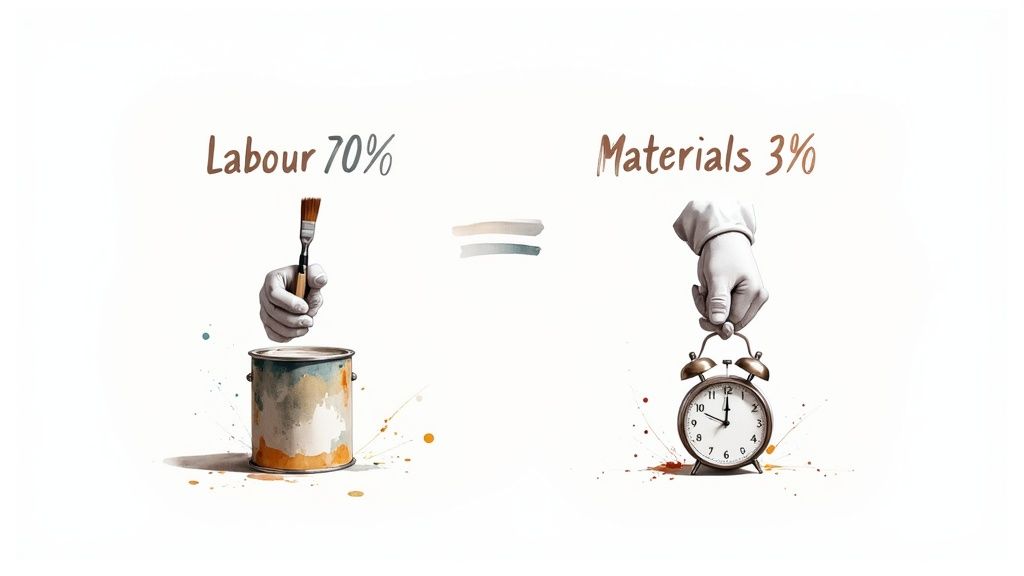
For most professional painting projects in Canada, the breakdown is fairly consistent. You can expect about 70-80% of your total cost to be for labour, with the other 20-30% covering materials like paint, primer, tape, and drop cloths. This ratio really tells the story. You’re not just paying someone to slap some paint on a wall; you're paying for their expertise, their time, and the meticulous process that goes into doing the job right.
Getting your head around this split is the first step to understanding what a professional painter really brings to the table and why it's worth the investment.
What Goes Into Professional Labour Costs?
Professional labour is so much more than just rolling a coat of paint. It covers every single thing that happens from the moment the crew walks in to the moment they leave your space looking spotless. It's the sum of all the small, careful steps that add up to a beautiful and durable result.
Think of it this way: you can give your car a quick spray with a hose, or you can get it professionally detailed. The first is fast and superficial. The second is a methodical process that cleans, perfects, and protects every surface. Professional painting is the detailing service for your home.
Here’s what that labour cost actually covers:
- Meticulous Prep Work: This is where most of the time is spent. It means moving and covering furniture, protecting floors, taking off outlet covers, and taping off all the trim and windows with absolute precision.
- Creating a Perfect Canvas: A pro painter will fill every nail hole, patch any cracks or dents in the drywall, and then sand those repairs until they are completely smooth and invisible. You can't get a perfect finish on an imperfect surface, and this step is non-negotiable.
- Skilled Application: This is the craft. It's about applying primer where it's needed, cutting in perfectly straight lines along ceilings and trim with a steady hand, and rolling on even coats without a single drip or streak. This takes years to master.
- The Final Cleanup: A professional crew doesn't just pack up and leave. They clean up everything at the end of each day and do a final, thorough cleanup when the project is done, leaving your home ready for you to enjoy.
The true cost of a painting job isn't in the paint; it's in the painstaking preparation and skilled application. This is where craftsmanship creates real value, turning a simple task into a long-term investment for your home.
Choosing Your Materials: The Paint Itself
While labour is the biggest chunk of the budget, the quality of the paint you choose still makes a huge difference in the final look and how long it lasts. When you’re looking at material costs, it helps to know that paints generally fall into three tiers: budget, mid-range, and premium.
- Budget Paints: These are the cheapest option, but you get what you pay for. They often require more coats to get decent coverage and won't stand up well to scuffs and stains.
- Mid-Range Paints: This is the sweet spot for many homeowners, offering a great balance between quality and cost. You’ll get better coverage and durability than the budget options.
- Premium Paints: These paints cost more upfront, but they can actually save you money down the road. They have incredible coverage (often needing fewer coats), are exceptionally durable, and are much easier to wash, which means your paint job stays fresh for longer.
Spending a bit more on a high-quality paint is often a smart move. It might add a few hundred dollars to the initial material cost, but because it lasts longer, you'll save on the much larger cost of labour by not having to repaint for years to come. For contractors, knowing how to balance these material choices and labour hours is key to creating a winning bid. If you're curious about the quoting process from a professional's point of view, our guide on how to bid on construction jobs offers some great insights.
How to Budget Your Project and Save Money
Knowing the average painting cost per square foot in Canada is one thing, but building a realistic budget is what actually gets the job done right. Think of your budget as a roadmap for your project. It helps you anticipate every cost and, more importantly, shows you where you can save a few dollars without compromising on a beautiful, lasting finish.
This isn’t just about plugging numbers into a calculator. It’s about taking an honest look at your project, understanding all the moving parts, and making smart decisions that line up with what you’re willing to spend.
Building Your Realistic Painting Budget
Putting together an accurate budget comes down to a few simple, but absolutely critical, steps. Taking the time to measure your space and think through the details will help you sidestep those frustrating surprise costs that can derail a project.
Follow these steps to build a budget you can count on:
- Measure Your Space Accurately: Grab a tape measure and get the length of each wall in the room. Add those numbers together, then multiply that total by the ceiling height. That gives you the total wall square footage. For a more precise figure, be sure to subtract the area of any large windows and doors.
- Account for All Surfaces: Are you just painting the walls? Or does the job include ceilings, trim, baseboards, and doors? Each of these extras adds to the total surface area and the time a crew will spend in your home, so they need to be factored in.
- Estimate Material Costs: Do a little research on the cost of the quality of paint you want. A standard can of paint covers about 400 square feet with one coat, but you'll almost always need two. Don't forget to add in the costs for primer, painter’s tape, drop cloths, and rollers, especially if you plan on tackling any part of the job yourself.
- Add a Contingency Fund: This is a big one. It’s always a good idea to add 10-15% to your total estimate as a buffer. This slush fund covers the unknowns, like finding a crack in the drywall that needs fixing or deciding you want a third coat for a really deep, rich colour.
- Don't Forget Taxes: If you’re hiring a pro, remember to factor in sales tax. In Ontario, for example, you'll need to add 13% HST to the final quote. It's a significant chunk of change that homeowners often forget to include in their initial math.
Smart Ways to Save Money on Your Painting Project
Even with a tight budget, there are plenty of clever ways to bring the total cost down. The trick is to find the sweet spot between saving money and getting a high-quality finish that will actually last. Often, the best way to save is by trading a little of your own time.
Consider these practical tips to lower your final bill:
- Do Some of the Prep Work Yourself: Labour is almost always the biggest line item on your invoice. You can trim those billable hours by handling some simple prep tasks. This means moving furniture to the centre of the room, taking down curtains and blinds, and removing all the outlet and light switch covers before the painters arrive.
- Schedule During the Off-Season: Painters are in high demand during the spring and summer. If your project isn't time-sensitive, think about booking it for the late fall or winter. Contractors are often more willing to offer competitive pricing during their slower periods to keep their crews working.
- Keep Your Colour Palette Simple: That multi-coloured accent wall might look stunning on Pinterest, but it will drive up your costs. Every new colour means new brushes, rollers, and trays, not to mention the extra time needed for meticulous taping and cutting in. Sticking to one or two colours is always the most budget-friendly choice.
Investing in a premium, durable paint might seem like a higher upfront cost, but it's one of the smartest financial decisions you can make. It extends the life of your paint job, resists scuffs and stains better, and ultimately saves you the much larger expense of repainting sooner.
Think of top-shelf paint not as an expense, but as an investment in your home. Its superior coverage can mean needing fewer coats, which saves on labour. More importantly, its durability means you won't be calling a painter again in just a few years to fix a finish that couldn't handle real life. That long-term value is the cornerstone of a truly savvy budget.
How to Find the Best Painting Contractor
Choosing the right painter is probably the single most important decision you'll make for your entire project. The best pro delivers a finish that looks incredible and lasts for years; the wrong one can mean headaches, unexpected costs, and a do-over down the road.
This isn't just about finding someone who knows how to hold a brush. It's about partnering with a responsible business that will protect you and your home. Let's walk through how to find the best painting contractors, whether you're searching near you in downtown Toronto or out in Mississauga.
The Non-Negotiables of a Professional Painter
Before you even start talking about paint colours or costs, there are three absolute must-haves for any contractor you consider. If a painter can't or won't provide proof of these, it's a massive red flag. Thank them for their time and move on.
Think of these documents as your safety net. They protect you from liability, financial trouble, and shoddy workmanship.
- Liability Insurance: This is crucial. If a painter accidentally drops a can of paint on your brand-new sofa or damages a light fixture, their insurance policy should cover the replacement or repair costs—not yours.
- WSIB Coverage: In Ontario, Workplace Safety and Insurance Board coverage is mandatory for most trades. This protects you if a painter gets injured while working in your home. Without it, you could find yourself on the hook for their medical bills and lost income.
- Business Licence: A valid business licence is simple proof that they're a legitimate company, registered to operate in your municipality and playing by the rules.
These aren't optional extras; they're the bare minimum. They show that a contractor is serious about their craft, their clients' homes, and their crew's safety.
How to Compare Quotes Like a Pro
Once you've found a few painters who are properly licensed and insured, it’s time to get quotes. The golden rule is to get at least three written estimates. But don't just scan for the lowest number—you need to dig into the details to understand what you're actually paying for.
A lowball bid might look great on paper, but it often signals that something is missing. It could be rushed prep work, cheap materials, or even the insurance we just talked about. The cheapest quote is rarely the best value.
A real professional provides a detailed, itemized estimate, not just a total scribbled on the back of a business card. For more expert tips on vetting your options, our guide on finding residential painting contractors in Toronto goes into even greater detail.
When you're comparing your quotes, make sure each one clearly breaks down:
- Labour and Materials: These two costs should always be listed separately.
- Scope of Work: The document needs to spell out exactly what's being painted (walls, ceilings, trim, doors, etc.) and what prep is included (like patching holes, sanding surfaces, and priming).
- Paint Specifications: The quote should name the brand, line, and finish of the paint and primer they plan to use.
- Timeline: It should give you a clear start date and a realistic estimate for when the job will be finished.
Red Flags to Watch Out For
As you meet with contractors, keep your radar on for any warning signs. A reputable painter will always be professional, clear, and patient. A shady operator, on the other hand, often relies on pressure tactics or vague promises.
It can also be insightful to see how they present themselves online. Some painters struggle with their digital presence, making common SEO mistakes painting contractors make, which can sometimes reflect a lack of professionalism in other areas of their business.
Be cautious of anyone who pushes for a large cash deposit upfront, can't provide references, or gives you a verbal-only quote. Your goal here is to find a trusted partner who will treat your home with respect and deliver a result you'll be proud of for years to come.
Frequently Asked Questions About Painting Costs
When you're getting ready to hire painters, a few questions always come up. Here are some straightforward answers to the most common queries we hear from homeowners across Toronto, Mississauga, and the rest of the GTA.
Does The Paint Finish Affect The Cost?
It can, but the impact is usually pretty small. The price difference between a can of matte, eggshell, or semi-gloss paint is often just a few dollars.
Where you might see a slight difference is in the labour. High-gloss finishes are notorious for showing every little bump and flaw on a wall. To get that perfect, smooth look, your painter might need to spend extra time on surface prep, which could add a bit to the final cost.
How Long Does A Typical Interior Painting Project Take?
The timeline really depends on the size and complexity of the job.
As a general rule, a standard 12×12 foot room usually takes about 1-2 days from start to finish. That includes all the prep work, applying two solid coats of paint, and a complete clean-up.
For a bigger project, like painting a whole 2,000 sq ft house, you should plan for it to take anywhere from 4 to 7 days. This can change based on the size of the painting crew and the details of the work.
Is It Cheaper To Supply My Own Paint?
You'd think so, but it's often not the case. One of the best ways to manage your painting cost per square foot in Canada is by letting your contractor handle the materials.
Professional painters get significant trade discounts on high-quality paints—prices you simply can't get at a retail store. While you always have the option to buy your own, it’s a smart move to ask what your painter would charge. Chances are, their price will be better, and they’ll be using a product they trust to give you a beautiful, long-lasting finish.
Ready to transform your space with a flawless, professional paint job? At Soca Services Painting, we combine expert craftsmanship with premium materials to deliver outstanding results for your home or business. Contact us today for a detailed, no-obligation quote!




2 Comments