


Tired of scrolling through endless search results for the best painters near me in Toronto or Mississauga? It's easy to feel swamped, but finding a truly reliable pro is less about a broad search and more about building a smart, curated list of local candidates with a proven track record in your community. Let's walk through an objective structure for how to find the best painters who genuinely understand the unique needs of properties across the Greater Toronto Area (GTA).
Step 1: Finding Trusted Local Painters in the GTA

Kicking off your search for painters in the GTA needs a bit more focus than just a quick online query. You're looking for professionals who are not only skilled craftspeople but are also part of your local community, whether you're in a downtown Toronto high-rise or a quiet Mississauga suburb. To get started on the right foot, it helps to apply the same principles you'd use with the top resources for finding local businesses to your painter search.
It all starts with defining what your project actually is. After all, painting the exterior of a century-old home in The Annex is a completely different ballgame than refreshing the interior of a modern condo near Square One in Mississauga.
Key Takeaway: A well-defined project scope is your most powerful tool. It helps you attract painters with the right expertise and ensures the quotes you receive are accurate and directly comparable, saving you time and confusion later on.
Moving Beyond Basic Search Results
Sure, a Google search for "painters near me" is a decent starting point, but the best painters are often found through word-of-mouth and community-driven sources. These hyper-local recommendations come with a layer of social proof that a paid ad just can't match.
Here’s where you can find the best painters in your specific Toronto or Mississauga neighbourhood:
- Local Hardware and Paint Stores: The staff at your neighbourhood Sherwin-Williams or Benjamin Moore see local contractors every single day. They know who buys quality materials, who’s busy with projects, and who has a reputation for doing great work. Just ask them!
- Neighbourhood Social Media Groups: Local Facebook or Nextdoor groups for areas like Leaside, Port Credit, or Vaughan are absolute goldmines for honest feedback. Post a simple question asking for painter recommendations, and you'll likely get dozens of replies from neighbours sharing their real, firsthand experiences.
- Trusted Trade Directories: Focus on directories that are specific to the GTA or Ontario. These platforms often vet their listings, giving you an extra layer of confidence that you’re dealing with legitimate, insured professionals.
By tapping into these resources, you shift from a generic, overwhelming search to a focused hunt for the best painters who are already trusted by people right in your community. This groundwork is absolutely crucial for building a solid shortlist.
Defining Your Project Scope for Accurate Quotes
Before you even think about picking up the phone, take a few minutes to outline the specifics of your job. The more detail you can provide upfront, the more precise their estimates will be. This is a non-negotiable step for any homeowner or property manager in the GTA. For a closer look at what separates a good contractor from a great one, this guide on finding the best painters in Toronto breaks down the key qualities to look for.
Make sure your project brief includes these details:
- Areas to be Painted: Be specific. List all rooms, ceilings, trim, closets, doors, and any exterior surfaces.
- Surface Conditions: Take note of any issues that will need prep work, like nail pops, cracks in the drywall, or old peeling paint.
- Desired Finish: Know which paint sheen you want for different surfaces (e.g., matte for walls, eggshell for hallways, semi-gloss for trim).
- Project Timeline: Have a rough idea of your ideal start and completion dates.
A clear, detailed brief doesn't just help you get accurate quotes; it shows contractors that you’re an organised and serious client. That level of preparation really sets the stage for a smooth and successful project right from the first conversation.
Step 2: How to Vet and Shortlist Painting Companies

You've got a list of potential painters. Now the real work begins. This is where you separate the true professionals from the rest, a crucial step that protects you, your property, and your wallet. A thoughtful vetting process is the difference between a nightmare project and getting the best value for your investment in Toronto or Mississauga.
The first thing to do is check for the non-negotiables. Any legitimate painting company in Ontario must carry specific coverage. Think of it less as red tape and more as your essential safeguard against things going wrong.
A Word of Caution: Hiring a painter without the proper insurance and WSIB coverage is a massive financial gamble. If a worker gets hurt on your property, you could find yourself personally liable for their medical bills and lost wages. It’s a devastating scenario that proper vetting completely avoids.
Confirming Essential Credentials
Before you even think about discussing paint colours or timelines, you need to verify two critical documents. Any pro worth their salt will have these ready to go. If a company hesitates or makes excuses, cross them off your list. It's that simple.
Your must-have checklist includes:
- WSIB Coverage: The Workplace Safety and Insurance Board (WSIB) is there to cover workers if they're injured on the job. Ask for a valid WSIB clearance certificate. This proves their account is in good standing and that you won't be on the hook for any job site injuries.
- Liability Insurance: This is what protects your home from accidental damage. A ladder slipping through a window, a paint can spilling on your new hardwood—accidents happen. Insist on seeing a certificate of insurance showing at least $2 million in liability coverage. This ensures their policy covers the cost, not yours.
This isn't being difficult; it's standard procedure in a highly professionalized industry. For context, the painting industry in California alone is projected to hit a market size of $6.1 billion in 2025. This scale highlights why professional standards are so important.
Analysing Online Reviews and Portfolios
With the paperwork out of the way, it's time to dig into their actual work. Online reviews and project portfolios are goldmines of information, but you have to know how to interpret them.
Look past the simple star rating. A company with a perfect 5.0 from ten reviews might not be as solid as one with a 4.8 from hundreds of satisfied clients. Real, detailed feedback is what you’re looking for.
Also, pay close attention to how they handle criticism. A professional, solution-oriented response to a negative review can be more telling than a history of nothing but flawless praise. When you browse their portfolio, look for projects that mirror your own. Seeing that they've successfully handled jobs similar in scope and style gives you confidence they can deliver on your vision, whether it's for a residential home or a commercial space in Toronto or Mississauga. You can get a better sense of what to look for by exploring the different types of painters and their specialities.
Asking the Right Questions on the Initial Call
That first phone call is more than just a formality—it’s a screening interview. You're trying to get a feel for their professionalism and expertise before you invite them into your home. Have a few key questions prepared so you can compare each company fairly.
Consider asking these essentials:
- Who will actually be doing the work? Find out if they use their own dedicated employees or if they subcontract jobs out. In-house teams generally offer better quality control and accountability.
- For a project like mine, what’s your typical timeline? This gives you a sense of their current workload and whether they can realistically meet your schedule. An experienced painter can give you a pretty accurate estimate right away.
- What brands of paint do you typically use? The best professionals have go-to brands like Benjamin Moore or Sherwin-Williams because they trust the quality and know how the products perform. Their answer tells you a lot about their commitment to a lasting finish.
After this process, your long list of "painters near me" should be whittled down to a solid shortlist of just three or four of the best, highly qualified, insured, and reputable companies in the GTA. Now, you’re ready to invite them over for an in-person quote.
Step 3: Decoding Painting Quotes and Understanding Costs
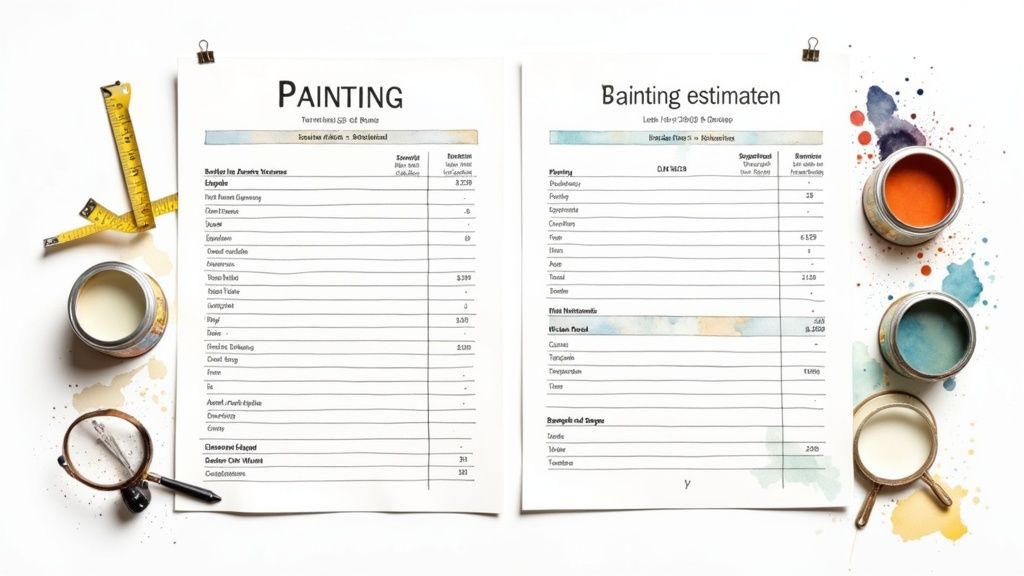
Alright, you've got a few quotes in hand from local painters. That's a great start, but now comes the tricky part: figuring out what they actually mean. A detailed, transparent quote is the mark of a true professional. A vague, one-line price? That's usually a red flag.
When you're hiring painters in Toronto or Mississauga, remember that the best value isn't just about the lowest price. It’s about finding the most thorough and fair proposal for your money. A good quote is essentially a project blueprint, telling you exactly where every dollar is going. Vague line items or suspiciously low bids often point to hidden costs, rushed prep work, or cheap materials down the line.
What Every Professional Quote Should Include
When you lay out the estimates from different GTA painters, they should all tell the same basic story, just with different numbers. If you spot a quote that's missing key details, don't be shy about asking for a more itemized version. Getting clarity now saves you from major headaches later.
Here’s what you should be able to find in every single quote:
-
A Detailed Scope of Work: The quote needs to be specific. It should list every single surface being painted—walls, ceilings, trim, doors, even the inside of closets—and clearly state the number of coats planned.
-
Surface Preparation Breakdown: Honestly, this is where a paint job succeeds or fails. A pro quote will detail the prep work, like patching nail holes, sanding rough spots, caulking gaps, and applying the right primer. "General prep" isn't good enough.
-
Materials List: The estimate must specify the brand and type of paint they plan to use (e.g., Benjamin Moore Regal Select in an eggshell finish) for each area. It should also account for other materials like primer, tape, and plastic sheeting.
-
Cleanup and Disposal: A professional’s job isn't done until your home is back to normal. The quote should confirm that daily cleanup and the final removal of all debris are part of the deal.
Expert Insight: An unusually low bid is almost always a warning. It might mean the painter is cutting corners on prep, using bottom-of-the-barrel paint, or, even worse, is uninsured—putting all the risk squarely on your shoulders. If a price seems too good to be true, it probably is.
Understanding the Key Cost Drivers in the GTA
Painting costs aren't pulled out of thin air. They’re a direct reflection of the time, skill, and materials needed for your specific project. Knowing what drives these costs helps you understand why one quote might be higher than another and lets you make a smarter choice.
For a closer look at the numbers, our guide on the painting cost per square foot in Canada provides some great benchmarks.
Labour is almost always the biggest chunk of any painting quote. The hourly rate for painters reflects their experience and the complexity of the job. For example, some union agreements stipulate higher pay for hazardous work like painting at heights, which makes sense given the increased risk and specialized skill. You can find more general insights into painter compensation rates on Payscale.com.
Comparing Quotes Effectively
With your detailed quotes in hand, it's time to compare them apple to apple. Don't just scan for the bottom-line number. I recommend creating a simple chart to see how each company stacks up.
Comparing Quotes From Local GTA Painting Contractors
Use a simple table like this to organize the information. It makes it incredibly easy to spot the differences in what you're actually getting for your money.
| Quote Component | Contractor A | Contractor B | Contractor C |
|---|---|---|---|
| Total Labour Cost | $3,200 | $3,500 | $2,800 |
| Material Costs (Paint, etc.) | $950 (Sherwin-Williams) | $1,100 (Benjamin Moore) | $800 (Unspecified) |
| Prep Work Details | Patching, sanding, priming | Extensive crack repair, sanding | "General Prep" |
| Project Timeline | 5 Days | 4 Days | 3 Days |
| Warranty Offered | 2 Years | 3 Years | None |
Laying it out like this makes things crystal clear. Contractor C is the cheapest, but that vague "General Prep" and the lack of a warranty are serious red flags. Contractor B costs the most, but they’ve specified a premium paint brand and offer the longest warranty, which signals a real commitment to quality.
This simple comparison helps you move beyond the price tag and choose the best overall value for your project.
Step 4: How to Check References and View Past Projects
You’ve done the hard work of vetting credentials and comparing detailed quotes. Now comes the moment of truth before you sign on the dotted line: seeing their actual work and talking to the people who’ve hired them before. A painter's track record is the single best predictor of your future satisfaction, so this is your chance to get an honest look at the quality you’re paying for.
Don't just ask for a list of references; get specific. You need recent and relevant ones. If you're planning a modern interior job for your Mississauga condo, a reference for a Victorian exterior they painted in Cabbagetown three years ago won't tell you much. You need to see work that closely matches the scope and style of your project.
Speaking with Former Clients
When you get a reference on the phone, go deeper than a simple, "Were you happy with the work?" That's a start, but the real gold is in the details of their experience. Any truly professional painter will have a roster of happy clients in the GTA who are more than willing to chat with you.
Jot down a few key questions beforehand so you can guide the conversation and get a full picture of what it’s really like to have their team in your home.
Try asking questions along these lines:
- Communication and Professionalism: How was the communication from start to finish? Did the crew arrive on time and act professionally?
- Sticking to the Budget: Did the final bill match the quote? If there were any extra costs, how did they handle them?
- Respect for Your Home: What was the daily cleanup like? Did they do a good job protecting your floors, furniture, and other belongings?
- Solving Problems: Did any issues or touch-ups come up after the job was supposedly finished? How quickly and professionally did the company sort them out?
These questions give you a window into their process, their reliability, and their customer service—things that are just as important as the final coat of paint.
Viewing Their Past Work In Person
Photos can be deceiving. Nothing beats seeing a finished project with your own two eyes. If you can, ask to do a quick drive-by of a recent exterior job or, if the reference is open to it, a quick walkthrough of an interior. This is where you can spot the small details that photos often miss.
Key Takeaway: When you’re looking at a past project, pay close attention. Look for sharp, clean lines where the walls meet the trim and ceilings. Check for an even, consistent colour and sheen. Most importantly, look at the prep work—are the surfaces smooth and free from bumps and blemishes? This is your best opportunity to judge their craftsmanship up close.
Seeing their work on a property similar to your own is invaluable. It’s one thing to hear they can handle a specific architectural style in Toronto; it’s another to see the proof. This is the ultimate confidence booster before you commit.
This final check is about more than just verifying quality; it’s about making sure their standards align with your expectations. When searching for residential painting contractors in Toronto, this due diligence separates a decent choice from the perfect one. For any homeowner, especially if you're undertaking a big project in Mississauga or elsewhere in the GTA, this step provides the peace of mind that you're making a smart investment.
Step 5: Finalizing the Contract and Preparing Your Home

You’ve sifted through the quotes, checked the references, and found the right painter for your GTA home. This is the moment where a great project is locked in. Before the first can of paint is opened, you need to nail down the agreement and get your space ready for the crew.
Think of a written contract as the essential blueprint for the entire job. It’s not just a formality; it’s your single best tool for ensuring there are no surprises down the line. A clear, comprehensive contract protects both you and your painter, making sure everyone is working toward the same goal.
What to Look For in the Painting Contract
A professional painter will always provide a detailed contract that leaves nothing to chance. If you read through it and find anything vague or missing, don’t hesitate to ask for clarification. It’s crucial to get every detail in writing before you sign on the dotted line.
The agreement needs to spell out the specifics. We're talking about everything from the exact brands and colours of paint to a realistic project timeline. This kind of professional documentation is standard practice. In fact, the demand for skilled painters is so steady that some regions expect to see around 28,000 new job openings in painting and related trades between 2023 and 2033. You can find more painting industry trends on workyard.com.
A rock-solid contract should always include:
- A Detailed Scope of Work: This means a full list of every surface being painted, the prep work involved (like patching, sanding, and priming), and how many coats will be applied.
- Materials Specification: It should name the exact brand, product line, sheen, and colour code for all paints and primers (e.g., Benjamin Moore Regal Select, Eggshell, Chantilly Lace OC-65).
- Project Timeline: You need firm start and estimated completion dates, along with the crew’s typical work hours.
- Payment Schedule: This breaks down the total cost, the required deposit (which is usually 10-25%), and when the other payments are due. The final payment should only be made once you're happy with the result.
- Insurance and WSIB: The contract must confirm the contractor has liability insurance and WSIB coverage. This protects you from any accidents on your property.
Expert Tip: Never agree to a deposit that’s more than 25% of the project total. Most importantly, hold that final payment until you’ve done a walkthrough with the project manager and have confirmed you are 100% satisfied with the finished job.
Getting Your Home Ready for the Painters
With the contract signed, it's time to prep your home. While the painters handle the major surface preparation, a bit of work on your end can make a huge difference. Clearing the space helps the project run smoothly, protects your belongings, and lets the crew focus on delivering that perfect finish.
For exterior projects, this phase is just as critical. The work done before any paint is applied is what truly makes the job last. You can dive deeper into why proper prep is the secret to long-lasting exterior paint in our other guide.
Here's a quick checklist to get your interior spaces ready:
- Clear the Walls: Take down all your pictures, artwork, mirrors, and shelves.
- Move Furniture: Push everything to the centre of the room and cover it, or better yet, move it out of the room completely. This gives the team plenty of space to work safely.
- Protect Valuables: Remove curtains, blinds, and fragile light fixtures. Put any small or breakable items in a safe spot away from the work zone.
- Plan for Pets and Kids: For everyone's safety and to keep the project on track, it's a good idea to arrange for children and pets to be out of the way while the team is working.
A Quick Chat About Daily Logistics
Before the first day, have a quick chat about the day-to-day details. It's a simple step that prevents misunderstandings and helps everything go off without a hitch.
A few practical points to cover are:
- Parking: Where should the crew park their vehicles?
- Bathroom Access: Which washroom is okay for the crew to use?
- Restricted Areas: Are any parts of your home off-limits?
- Daily Updates: How and when do you want to get progress updates? A quick text or a chat at the end of the day usually works well.
Taking these steps transforms the relationship from a simple transaction into a true partnership. This collaborative approach ensures your search for the best "painters near me" in Toronto or Mississauga ends with a beautiful, stress-free home transformation.
Final Questions Before You Hire a Painter in the GTA
You’ve done the research, reviewed the quotes, and you're just about ready to hire a painter for your home in Toronto or Mississauga. But before you sign on the dotted line, a few last-minute questions often pop up. Getting these details sorted out is the final step to ensuring you and your contractor are on the same page.
Think of this as your final due diligence. Nailing down these specifics will help guarantee a seamless project, from the moment the first drop cloth is laid to the final, satisfying walkthrough.
What’s the Best Time of Year to Paint My House Exterior in Toronto?
Anyone living in Southern Ontario knows our weather can be a bit unpredictable. This is why timing is everything for an exterior paint job. The sweet spot for exterior painting in the GTA usually falls between late spring and early autumn—we're talking from May right through to the end of September.
For paint to apply and cure properly, your painter needs a solid stretch of mild, stable weather.
- Surfaces must be bone-dry. Any trapped moisture is a recipe for disaster.
- Temperatures need to cooperate. Most professional-grade paints need the temperature to stay above 10°C (50°F), even overnight, to form a durable bond.
- Humidity has to be low. That classic sticky Toronto summer haze can wreak havoc on drying times and the quality of the finish.
Trying to squeeze in an exterior project during the freeze-thaw cycles of early spring or late fall is a huge gamble. It can easily lead to bubbling, cracking, or peeling paint within a year.
How Much Should I Expect to Pay for a Deposit?
Putting down a deposit is a standard industry practice. It secures your project in the painter's schedule and allows them to order the initial materials. But how much is too much?
For most residential painting jobs in the GTA, a reasonable deposit is somewhere between 10% and 25% of the total estimated cost.
A Word of Caution: If a contractor demands 50% or more of the project cost upfront, you should see that as a major red flag. It could signal cash flow problems or, in the worst-case scenario, that they aren't a legitimate business. Never pay the final balance until you've done a complete walkthrough and are 100% happy with the finished work.
What Kind of Warranty Should the Best Painter Provide?
A warranty is more than just a piece of paper; it’s a direct reflection of a painter's confidence in their own work. It’s their commitment to you that the job was done right with quality materials and expert skill. For any homeowner in the GTA, a solid warranty is essential.
At a minimum, you should look for a written warranty that covers both labour and materials for two years. The really top-notch painting companies, the ones who stand firmly behind their meticulous prep work and application techniques, will often offer warranties for three to five years.
Make sure the warranty clearly specifies:
- What’s covered (peeling, chipping, or blistering from faulty workmanship).
- What’s not covered (damage from things outside their control, like a leaky gutter or accidental impact).
- How to make a claim if something goes wrong.
A strong warranty gives you incredible peace of mind. It's one of the clearest signs you're dealing with a true professional who builds their business on quality and reputation.
Ready to transform your space without the stress? The team at Soca Services Painting has built a reputation across the GTA for exceptional quality, transparent communication, and stunning results. Let us show you the difference professional craftsmanship makes. Visit our website to get your free, no-obligation estimate today!


One Comment