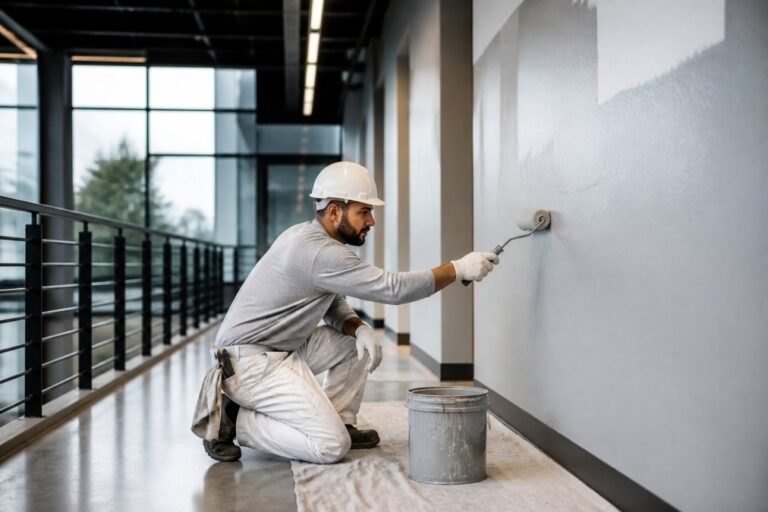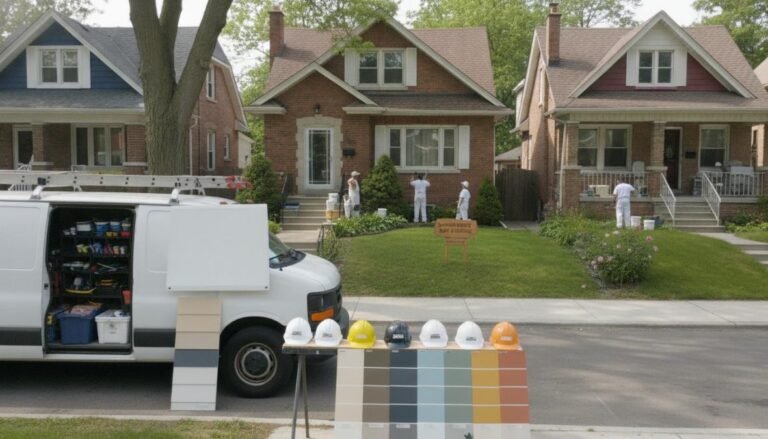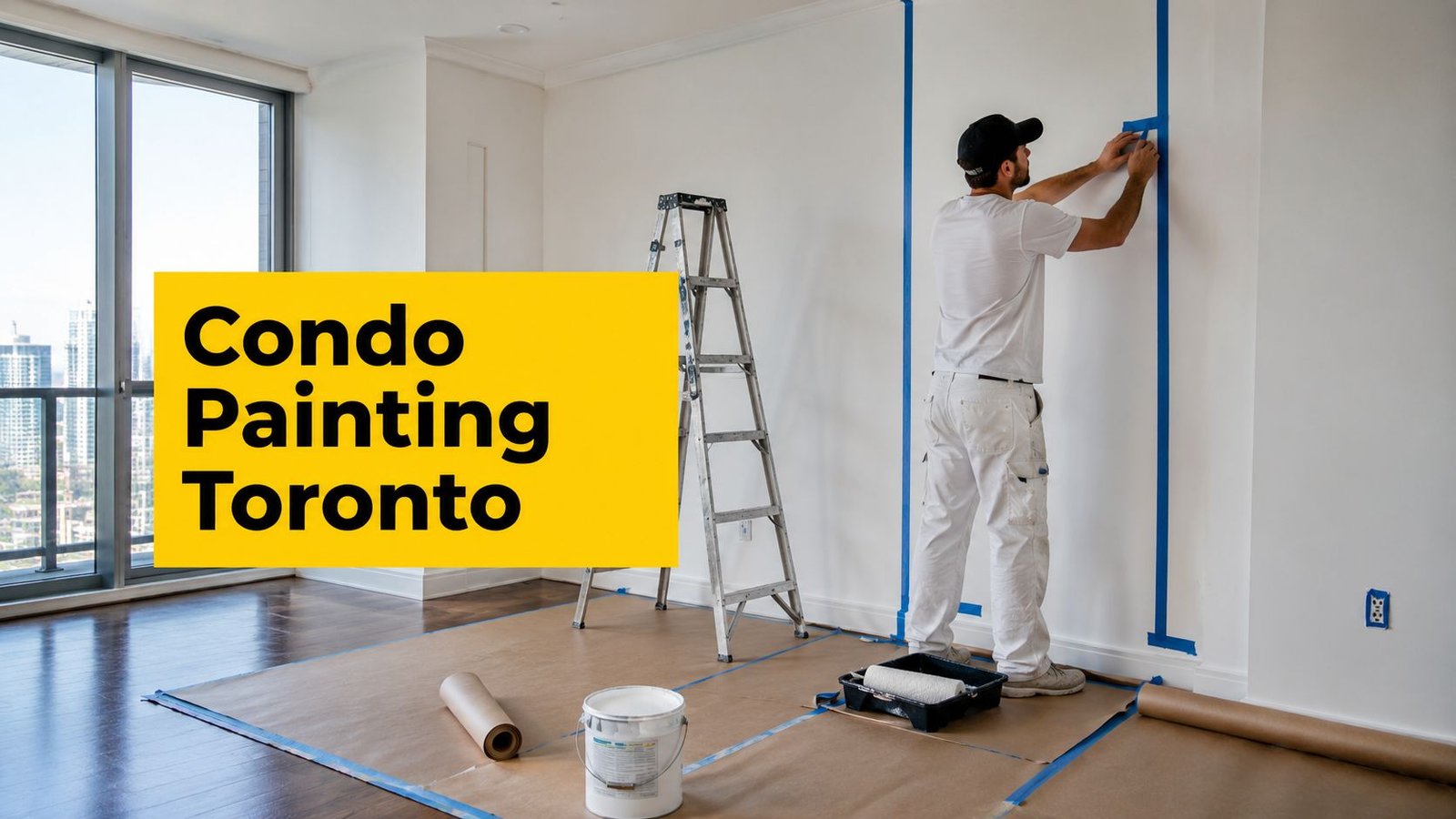
You're standing in the entryway of a Toronto condo, looking at scuffed corners, nail holes left by a previous tenant, and beige walls that make the suite feel older than it is. A simple refresh sounds easy until the building rules arrive, the elevator needs booking, and the property manager asks for product details, insurance documents, and approved work hours.
That's the reality of condo painting in Toronto. The colour choice matters, but the project succeeds or fails on coordination, ventilation, surface preparation, and respect for shared spaces. A professional repaint has to work inside a controlled building environment, not just produce clean walls.
Toronto's condo inventory makes this work a substantial maintenance market. Ontario reports more than 930,000 condominium units housing about 1.82 million people, while Toronto represented roughly 41% of Ontario's condo units as of July 2020, with about 367,629 units across 2,624 condo corporations according to the Ontario Auditor General's condo market findings. Owners, boards, property managers, and investors all face recurring needs across suites, corridors, amenity rooms, common elements, and turnover projects.
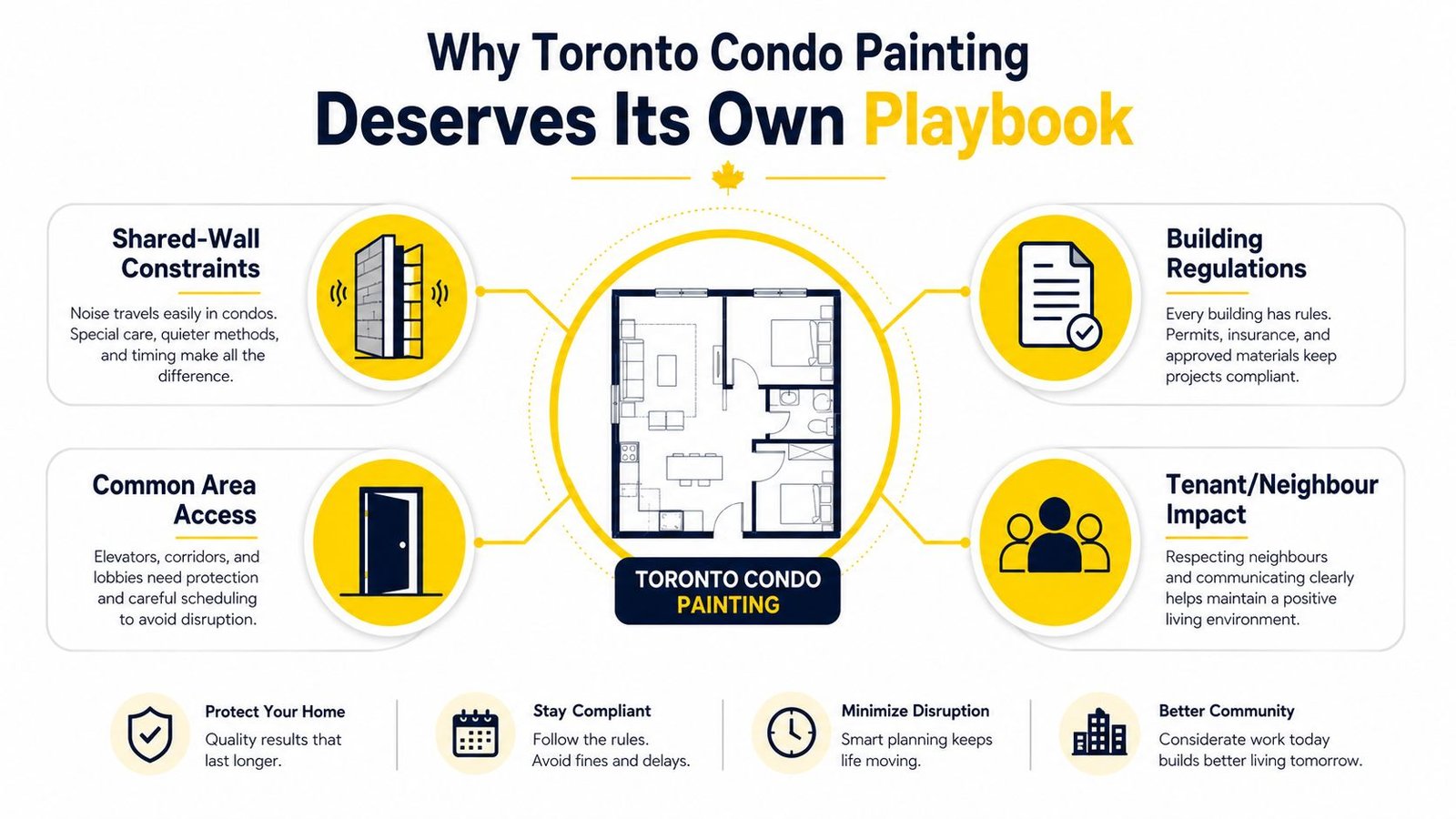
Why Toronto Condo Painting Deserves Its Own Playbook
A detached home gives a crew room to stage materials, open windows, park a van close to the entrance, and move freely between floors. A high-rise condo removes most of that flexibility. The painter works around neighbours, shared ventilation, security desks, loading areas, elevator schedules, and rules that may be stricter than the City of Toronto's requirements.
The first surprise usually comes after the owner contacts the management office. Cosmetic painting may not require a municipal building permit, but the corporation may still require written approval, a renovation agreement, proof of insurance, approved work hours, elevator protection, and a plan for disposing of materials. A board approval timeline can stretch for weeks, especially when the submission is incomplete or the proposed work touches trim, doors, cabinetry, or anything near a fire-rated assembly.
Practical rule: Treat the building's alteration package as part of the scope of work, not as paperwork that someone else will handle later.
Ventilation creates another constraint. A small condo suite can hold paint odour more noticeably than a detached home, particularly when windows don't open or the building's HVAC system recirculates air. Health Canada recommends increasing ventilation and using mechanical ventilation while applying paints, varnishes, or adhesives because these products can emit VOCs that affect indoor air quality. That means the crew needs a deliberate airflow plan, not a fan pointed at a wall.
Shared walls change the working method
Noise, odour, hallway traffic, and elevator use affect neighbours. Crews need to protect corridor flooring and wall corners, keep doors closed where possible, and avoid creating dust that travels through return-air grilles. A good painter also explains how fans will be positioned without interfering with smoke detector heads or creating a complaint from the suite next door.
Toronto's condo supply has been substantial for years. The City of Toronto reported 165,828 condominium units completed in the Toronto Census Metropolitan Area between 2010 and 2018, and identified a continued pipeline of registered, active, and under-review units in its condominium housing study. That density creates an ongoing need for repainting, not a one-time demand tied only to new construction.
For a practical overview of contractor expectations, homeowners can also review Toronto painters you can actually rely on, particularly before requesting estimates.
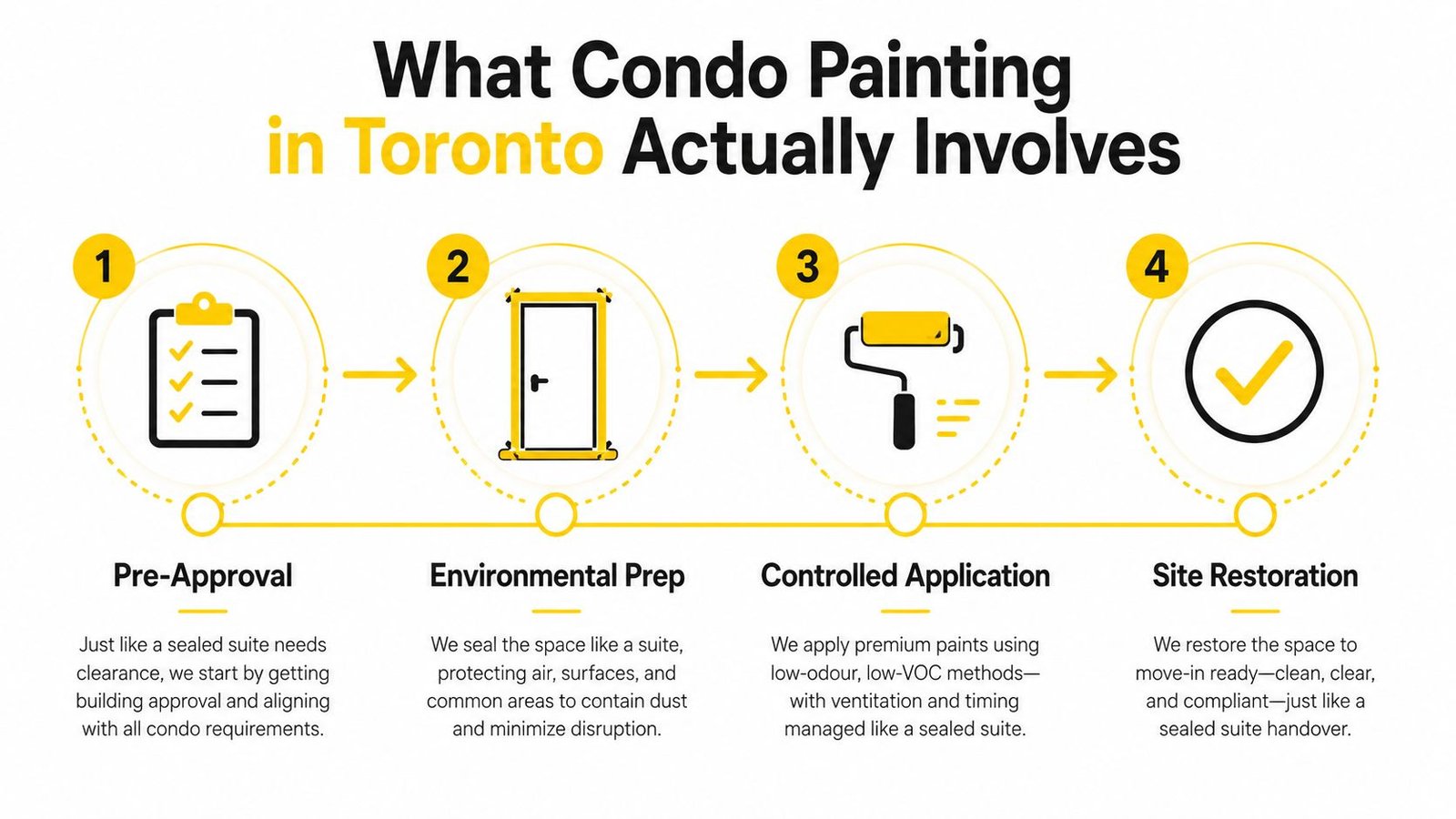
What Condo Painting in Toronto Actually Involves
A condo is closer to a sealed office suite than a detached house. Every part of the job, from material delivery to final cleanup, has to respect the building's shared infrastructure and limited airflow.
The service commonly includes walls and ceilings, with trim, doors, closets, and cabinet work priced or scheduled separately depending on the requested scope. A suite repaint might involve only the main living areas, or it might include bedrooms, bathrooms, entry doors, baseboards, door casings, and built-in millwork. Kitchen cabinet refinishing is a different operation from wall painting because it requires degreasing, detailed sanding, bonding primer, and coatings designed for repeated handling.
The work starts before the roller touches the wall
Surface preparation determines whether the new finish looks professional. A Toronto condo often needs more repair than the owner expects because previous tenants may have left anchor holes, adhesive marks, furniture scuffs, and poorly patched damage. Nail pops, loose corner bead, cracked joints, and damaged drywall require light carpentry or patching before paint can hide anything.
A reliable sequence looks like this:
- Inspect every surface. Identify glossy areas, water staining, repairs, grease, loose caulking, and changes in texture.
- Repair the substrate. Fill holes, skim damaged drywall, reset loose corner bead, and sand patches smooth.
- Prime exposed areas. Bare drywall compound, stains, and repaired sections may need acrylic or shellac-based primer selected for the condition.
- Protect the suite and common areas. Crews tape shared hallways, cover floors with rosin paper or appropriate floor protection, and protect cabinetry, appliances, fixtures, and elevator interiors.
- Control airborne dust and odour. HVAC returns may need temporary sealing during dusty preparation, while ventilation is managed during application.
- Apply the finish system. Cut-in work, rolling, and additional coats must match the lighting, sheen, and surface condition.
Scope clarity prevents awkward invoices
Owners should ask whether the estimate includes ceilings, closet interiors, doors, baseboards, caulking, minor drywall repairs, primer, furniture moving, and final touch-ups. “Paint the condo” can mean very different things to a landlord preparing a vacant turnover and a homeowner seeking a full suite transformation.
Professional preparation guidance, including how to evaluate and repair the substrate, is available in this Toronto surface preparation guide. The important point is simple: a thin coat over an unprepared patch is still a visible patch after the paint dries.
Toronto Condo Rules, Boards, and Approvals Explained
Municipal permits and condominium approval are separate systems. Cosmetic work such as painting is generally exempt from City of Toronto permit requirements, as outlined in the City's home renovation service information. That exemption doesn't give an owner permission to start work without the corporation's approval.
A condo board can regulate work inside a private unit when the project affects common elements, building access, noise, odour, waste, fire safety, or neighbouring residents. Many corporations use a renovation rule, sometimes identified as Rule 14 or an equivalent provision, along with an alteration agreement. The exact requirements vary, so the corporation's current rule sheet always takes priority over a general internet checklist.
What the approval package may contain
An owner or contractor may need to provide:
- A written scope: List rooms, surfaces, colours, finishes, cabinet work, and any repairs.
- Contractor documents: Management may request commercial general liability insurance and a WSIB clearance certificate.
- Work-hour confirmation: State the planned start and stop times and identify whether weekend work is permitted.
- Access arrangements: Reserve the freight elevator, confirm loading instructions, and arrange protective pads.
- Building protection: Explain how hallway floors, elevator walls, door thresholds, and lobby routes will be protected.
- Product information: Identify low-odour, low-VOC, or prohibited solvent-based products.
- Financial security: Some corporations request a damage deposit before approving the work.
For buildings with controlled entrances, the access process can resemble other multifamily environments that use gated community access control. The technology differs, but the operational lesson is similar. Management needs to know who is entering, when they're entering, and which route they'll use.
Permit versus board approval
| Requirement | Condo Board | City of Toronto |
|---|---|---|
| Interior wall painting | May require written approval under corporation rules | Cosmetic painting is generally permit-exempt |
| Elevator and hallway use | Booking and protective measures may be mandatory | Usually outside the building permit process |
| Contractor insurance | Often requested by management | Not normally part of a cosmetic painting permit |
| Plumbing or electrical changes | May require board review | May require permits depending on the work |
| Wall removal or HVAC modification | Board approval is likely | Permit requirements may apply |
| Fire-rated assembly changes | Corporation review is critical | Building-code review may apply |
Ontario renovation guidance distinguishes cosmetic work from invasive changes. Painting generally sits on the straightforward side, while plumbing changes, electrical alterations, wall removal, HVAC modifications, or work affecting fire-rated assemblies can trigger broader review, as explained in this Ontario condo renovation guidance.
The painter's real job begins with paperwork and coordination. Experienced contractors ask for the rule sheet before quoting because a building's restrictions can change labour, scheduling, products, and protection requirements.
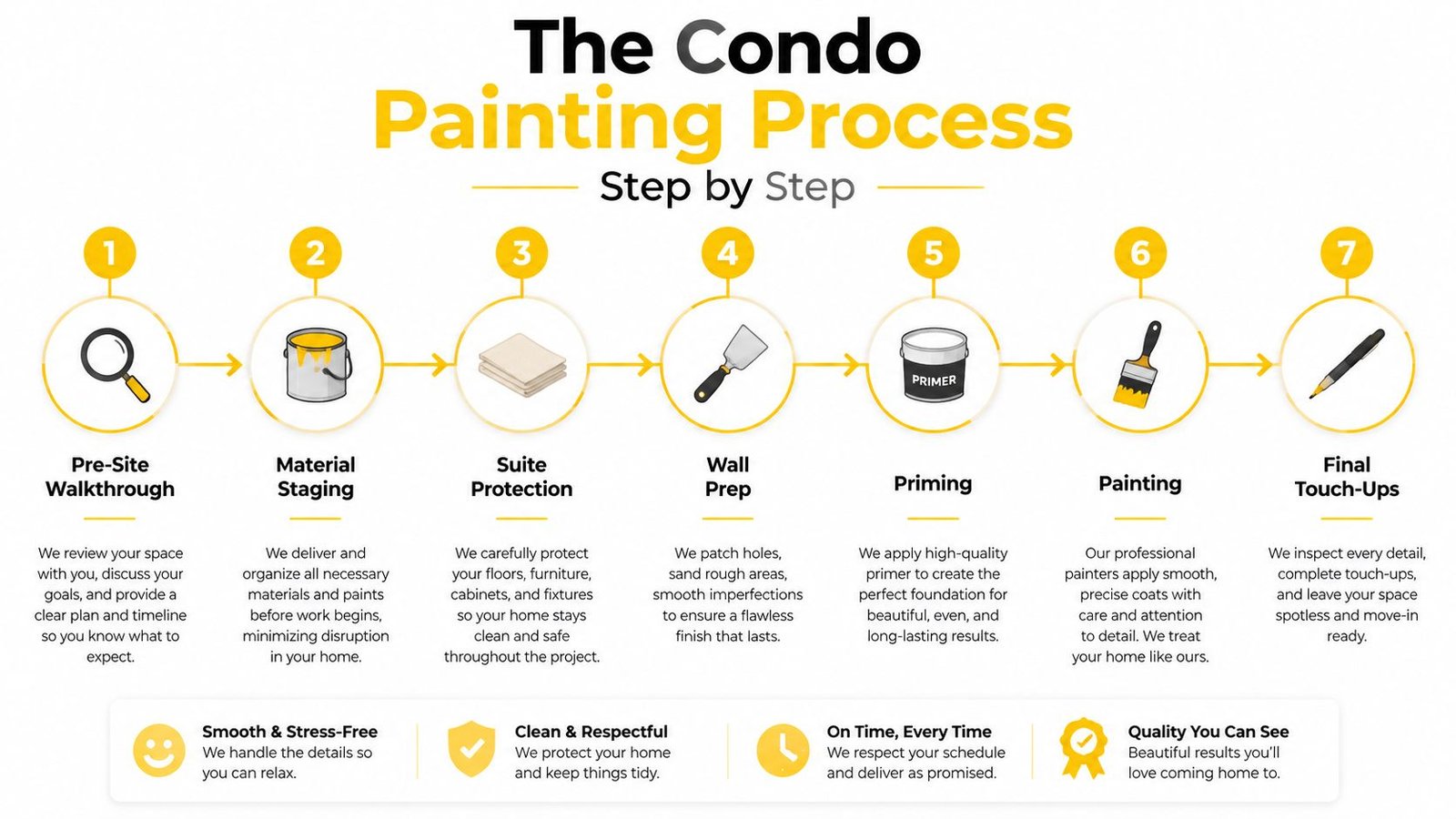
The Condo Painting Process Step by Step
A well-run repaint feels quiet and predictable to the homeowner. The crew arrives when the building expects them, materials move through the correct route, repairs disappear under a consistent finish, and the suite is left clean enough for the next trade or occupant.
1. Pre-site walkthrough
The contractor confirms the scope, existing wall condition, furniture, access route, parking or loading instructions, approved hours, and building contact. This is also the time to verify whether the project includes ceilings, closets, doors, trim, accent walls, or cabinet surfaces.
The crew should record colour selections and identify walls that receive direct sunlight, artificial lighting, or reflected light from windows. A colour that looks neutral in a showroom may read warmer, cooler, darker, or more saturated inside a high-rise suite.
2. Material staging and protection
The freight elevator gets booked before materials arrive. Paint, ladders, drop cloths, tools, and repair compounds should enter through the approved route, not through a resident elevator during a busy period.
Inside the suite, crews cover flooring and furniture, mask hardware and fixtures, and protect baseboards that won't be painted. In common areas, elevator pads and corridor protection stay in place for the duration of material movement. If furniture must leave the suite, owners can consider per-box storage for redecorating rather than forcing a crew to work around overloaded rooms.
3. Surface repair and priming
Typical condo repairs include anchor holes, dents, popped fasteners, cracked caulking, glossy touch-up areas, and uneven previous repairs. The crew sands, cleans, and primes according to the substrate. Acrylic primer suits many ordinary repairs, while shellac primer may be selected for stubborn stains or odour control when the surface allows it.
Before coating, the painter checks temperature and relative humidity. Many product data sheets advise against application when relative humidity exceeds 85% or when the dew point is less than 3°C above the surface temperature, because moisture can remain under the coating and contribute to premature failure, as described in this coatings ventilation and application guidance.
4. Ventilation and controlled application
Windows can help, but they aren't always available or safe to leave open. Crews may use box fans to move air toward an approved opening while keeping doors managed and avoiding direct interference with smoke detector heads. Recirculating HVAC alone isn't a substitute for planned ventilation.
The painter cuts in corners and edges, rolls broad wall sections, and maintains a wet edge to avoid flashing. Ceilings, walls, trim, and doors may require different products or sheen levels. Between coats, the crew checks the surface rather than relying only on the clock.
5. Final inspection and restoration
Touch-ups happen under the suite's actual lighting. The painter checks corners, cut lines, patched areas, roller texture, trim edges, and door faces. Furniture should return only after the coating has had adequate time to dry and begin curing. A surface can feel dry while remaining vulnerable to pressure, abrasion, and trapped moisture.
Use this wall preparation resource to understand why cleaning, patching, sanding, and priming affect the final result more than a rushed extra coat.
Choosing the Right Paint Brands and Finishes
Brand selection should follow the building's restrictions and the suite's use. A rental turnover needs a washable, repairable coating. A luxury owner may prioritise colour depth and a particular surface character. A pre-sale refresh usually benefits from a restrained palette, reliable coverage, and a finish that photographs consistently.
Benjamin Moore Regal Select and Ben are common choices for interior work because they offer practical application and broad colour availability. Sherwin-Williams Duration is often selected where durability matters, while Cashmere can suit owners who prioritise smooth application and a refined appearance. Low-VOC and zero-VOC categories, including Benjamin Moore Natura and Sherwin-Williams Harmony, can help with odour-sensitive projects, but product compliance doesn't eliminate the need for ventilation.
Canada's federal architectural-coatings rules set maximum VOC limits for 53 coating categories, with limits ranging from 100 g/L to 800 g/L depending on the product type, according to the federal VOC regulations. Those limits regulate product content, not the actual exposure inside a small condo during application. Product choice, airflow, application rate, and re-occupancy timing still matter.
Finish selection by room
- Flat: Useful for ceilings and low-contact areas, but it can be less forgiving in busy hallways.
- Eggshell: A practical wall finish for living rooms, bedrooms, and many rental suites.
- Pearl or satin: Helpful where owners want easier cleaning without a strongly reflective surface.
- Semi-gloss: Appropriate for trim, doors, and selected wet or high-contact areas.
Big-box paint can work for a straightforward refresh, but colour-matching, warranty handling, product consistency, and contractor support can differ from contractor-grade lines. A cheaper product isn't automatically poor, and a premium label isn't automatically the right solution. The finish must match the surface, traffic level, lighting, and building's odour requirements.
| Brand / Line | Durability | Odour Level | Recommended Finish | Best For |
|---|---|---|---|---|
| Benjamin Moore Regal Select | Strong general interior performance | Low to moderate, product dependent | Eggshell or pearl | Owner-occupied suites and rentals |
| Benjamin Moore Ben | Practical everyday performance | Low to moderate, product dependent | Eggshell | Budget-conscious refreshes |
| Benjamin Moore Natura | Designed for low-odour applications | Very low, product dependent | Eggshell or flat | Odour-sensitive occupied suites |
| Sherwin-Williams Duration | High durability for demanding areas | Low to moderate, product dependent | Eggshell or satin | Hallways, kitchens, and rentals |
| Sherwin-Williams Cashmere | Smooth application and appearance | Low to moderate, product dependent | Eggshell | Living areas and bedrooms |
| Sherwin-Williams Harmony | Low-odour and indoor-air-quality-focused option | Very low, product dependent | Flat or eggshell | Fast re-occupancy planning |
For a broader Canadian product discussion, see this comparison of the best interior paint brands in Canada. Soca Services Painting lists condo painting among its Toronto-area services and can work from a selected product schedule rather than treating every suite as the same.
How Much Condo Painting Costs in Toronto in 2026
A precise Toronto condo painting price requires a walkthrough. Suite size alone doesn't tell a contractor how many doors need coating, whether the walls are damaged, whether furniture needs moving, or how difficult the building makes access.
The requested 2026 market ranges cannot be stated responsibly from the verified information available here, because no verified labour-only or full-service dollar figures were provided for bachelor, one-bedroom, or two-bedroom Toronto condos. A contractor who publishes exact prices without measuring the suite risks misleading owners, especially when one building allows easy staging and another requires limited elevator bookings, additional protection, and more return visits.
What moves the estimate
The main cost variables are practical:
- Ceiling height: Standard ceilings require less ladder movement than 9 or 10-foot loft-style spaces.
- Trim and doors: Every door slab, casing, baseboard, and closet interior adds preparation and coating time.
- Cabinet refinishing: Kitchen cabinets require a separate preparation and finish system, not ordinary wall paint.
- Drywall repairs: Deep dents, failed patches, water marks, and corner damage can turn a quick repaint into a repair project.
- Colour changes: Strong transitions may require additional coverage or more careful priming.
- Access restrictions: Freight elevator windows, security procedures, hallway protection, and return trips affect labour.
- Occupancy: An empty suite is faster to protect and coat than a furnished home where each room needs staged movement.
What a useful quote includes
Ask for an itemised scope rather than a single total. It should identify the rooms and surfaces, preparation allowance, primer requirements, number of finish coats, product line, sheen, furniture handling, protection, cleanup, touch-up policy, and any building-related coordination.
| Suite Type | Estimated Cost Range (2026) | What Drives the Price |
|---|---|---|
| Bachelor | Request a measured estimate | Wall condition, furniture density, doors, ceiling, and access |
| One-bedroom | Request a measured estimate | Room count, trim scope, repairs, product selection, and elevator rules |
| Two-bedroom | Request a measured estimate | Larger surface area, bedrooms, doors, furniture movement, and scheduling |
| Multi-room or luxury suite | Request a written project scope | Ceiling height, designer finishes, cabinetry, millwork, repairs, and building logistics |
A builder-grade refresh may focus on clean coverage and easy future touch-ups. Designer-grade work may include more extensive repairs, carefully selected sheen, premium coatings, and detailed millwork. The right choice depends on whether the suite is being prepared for a tenant, a listing, an owner move-in, or long-term use.
For room-by-room budgeting principles, review this guide to interior painting costs in Toronto. Then ask the contractor to price your actual suite, not an imaginary average.
Realistic Timelines for a Toronto Condo Repaint
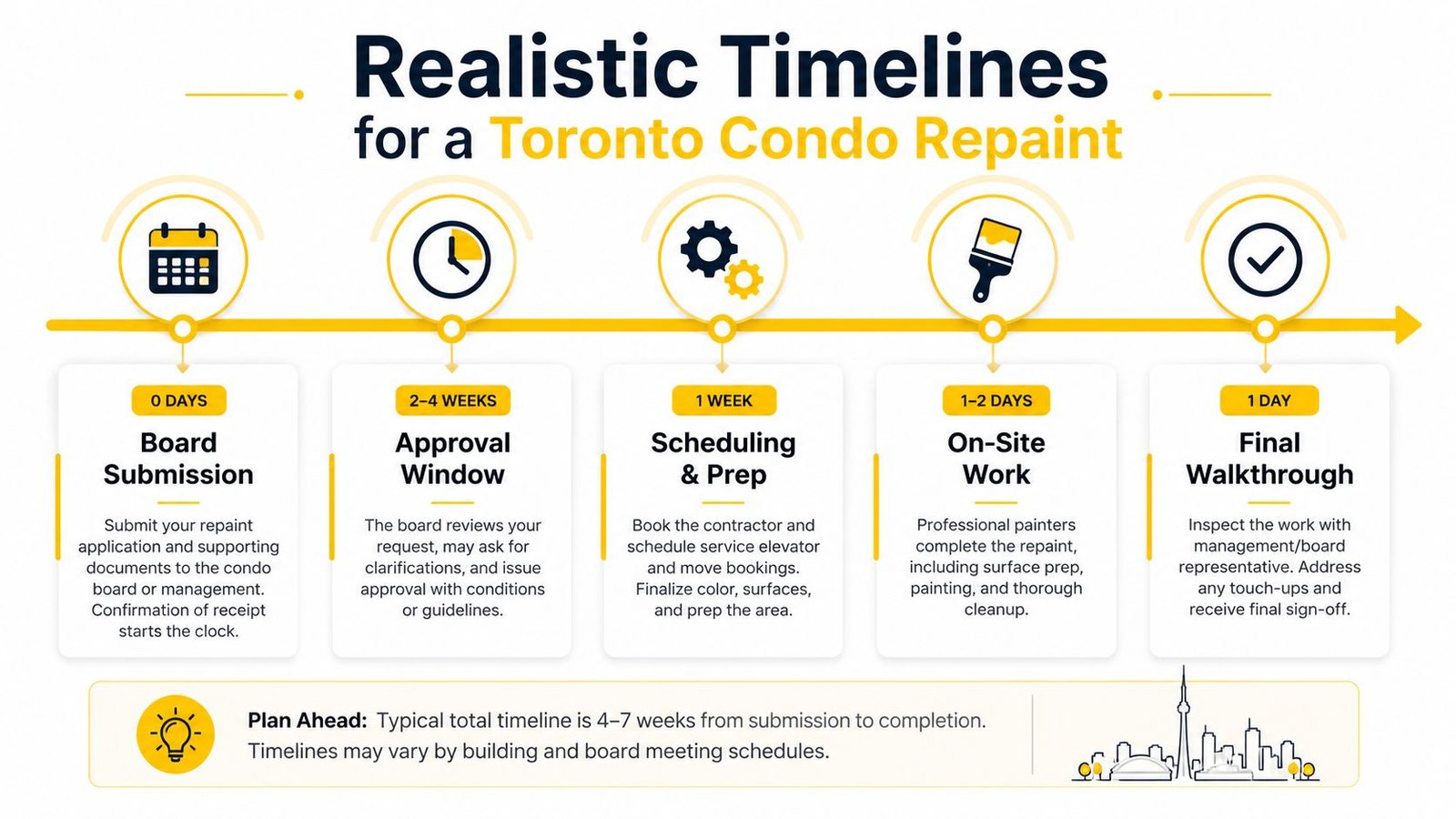
The timeline begins when the corporation receives a complete submission, not when the owner first calls a painter. Allowing for a 2 to 4 week approval window is a practical planning assumption for buildings that require board or management review, but the actual schedule depends on the corporation's process and the quality of the submission.
Once approval is in place, material staging and suite preparation may require 1 to 2 days, particularly when the freight elevator, hallway protection, and loading route need coordination. The painting itself can take 2 to 4 days for a standard 800 to 1,000 square foot unit, depending on scope, repairs, occupancy, and drying conditions. Those time ranges are project-planning guidance, not guaranteed durations.
A working schedule
- Board submission: Provide the scope, contractor documents, product information, and requested dates.
- Approval and booking: Confirm approved hours, elevator access, protection requirements, and building contacts.
- Site preparation: Move or cover furniture, protect floors, mask fixtures, repair surfaces, and stage materials.
- Painting: Apply primer where needed, complete ceilings and walls, then finish trim and doors according to the agreed scope.
- Inspection: Review the work under the suite's lighting, complete touch-ups, remove protection, and restore the space.
A cure period deserves more attention than it usually gets. The coating may be dry to the touch before it reaches full resistance to pressure, abrasion, and trapped moisture. Plan a 2 to 4 week cure window before placing furniture tightly against walls or hanging heavy art, particularly where the building has cooler exterior walls, higher humidity, or limited airflow.
Empty suites versus occupied homes
An empty turnover suite usually moves faster because crews can access every wall, protect less furniture, and work without coordinating around residents. An occupied refresh takes longer when rooms need to be cleared in stages, residents need access to washrooms or bedrooms, or pets and children require separate planning.
Rejected colour schemes, unbooked elevators, high humidity in fall or winter, and low-VOC products with longer re-coat intervals can all extend the schedule. Owners preparing listing photos or lease renewals should build in buffer time so the suite is clean, cured, and fully restored before marketing begins.
Planning Your Next Condo Painting Project
A successful project starts with the building, not the paint fan deck. Pull the corporation's current rules and alteration agreement, then ask management which requirements apply to interior painting, contractor access, elevator use, hallway protection, waste, work hours, and product odour.
Use this kickoff checklist
- Confirm the trigger: A pre-listing refresh needs a different finish strategy from post-tenant turnover, a leak-related insurance repair, or a colour update connected to a larger renovation.
- Review building rules: Identify approval forms, insurance documents, WSIB requirements, deposits, elevator bookings, and prohibited products.
- Check air and moisture conditions: Confirm ventilation options and ask how the painter will manage humidity in bathrooms, kitchens, and enclosed rooms.
- Request written walkthroughs: Compare two or three contractors using the same room and surface scope.
- Choose the finish for the use: Prioritise washable durability for rentals and busy areas, low odour for occupied suites, and colour presentation for resale.
- Protect the schedule: Reserve access before materials arrive and leave room for drying, curing, inspection, and touch-ups.
A property manager preparing several suites should standardise approved products and finish schedules where possible. A luxury homeowner may prefer custom colour sampling and premium coatings. A contractor or renovation company should coordinate painting with drywall, electrical, flooring, cabinetry, and final cleaning so one trade doesn't damage another trade's finished work.
Property owners can also review property management advice on raising property value when deciding whether a repaint should focus on immediate presentation, long-term durability, or a broader improvement plan.
For Toronto, North York, Vaughan, and King City owners, the most useful next step is a professional walkthrough that considers the corporation's rules, the suite's condition, the selected colours, and the actual access route. Contact Soca Services, request a written scope, and get a free estimate before booking your elevator or setting a listing date.
Soca Services Painting offers condo-focused interior painting with surface preparation, product selection, building coordination, and professional site restoration for Toronto-area suites. Visit Soca Services Painting to arrange a walkthrough, request a free estimate, and plan a durable, low-disruption repaint.