You've searched “painting services near me Vaughan”, opened a dozen websites, and now you're comparing quotes that seem impossible to reconcile. One painter promises a quick refresh, another recommends premium paint, and a third gives a low price without explaining what preparation is included. The main difference usually isn't the colour on the wall. It's what happens before the roller touches it.
Vaughan homes range from large-lot detached properties to condos, rental units, offices, and newer high-density developments. A sound project needs the right coating, a dry and properly prepared surface, controlled application conditions, and a clear scope of work. Soca Services Painting works with residential and commercial clients across Vaughan, Toronto, North York, and King City, with an emphasis on durable finishes and organised job sites.
Why Choosing the Right Painter in Vaughan Matters
A Vaughan homeowner might start with a simple goal, such as repainting a living room before listing a home or refreshing a basement after a renovation. The first quote looks attractive, but the scope only says “paint walls.” Another contractor charges more and specifies repairs, primer, two finish coats where required, trim protection, and cleanup. Without knowing what those terms mean, it's easy to choose the cheaper quote and discover later that the price excluded the work that makes paint last.
Vaughan's housing profile makes this decision especially important. Single-detached homes accounted for 63% of the city's dwellings, with 64,995 single-detached units counted in 2021 after a 6% increase since 2016, according to the City of Vaughan's housing and dwelling census insights. At the same time, apartments in buildings higher than five storeys grew 40%, reaching 13,750 dwellings and representing 13% of occupied dwellings, as reported by the same municipal source. Detached homes, condos, and newer units create different painting problems, from exterior maintenance and stairwell access to turnover scheduling and post-construction touch-ups.

The cheapest quote can become the expensive one
Cut-rate work often shows up later as peeling around bathrooms, visible roller marks, flashing over patched areas, paint on hardware, or colour differences between rooms. Those failures usually trace back to skipped cleaning, insufficient sanding, poor priming, damp substrates, or a coating chosen for appearance instead of use.
A professional contractor should be able to explain the work in plain language. Ask what gets repaired, what gets protected, which products are proposed, and how the crew will handle ventilation, moisture, trim, and cleanup. If a painter can't answer those questions before starting, the quote isn't complete.
Practical rule: Compare the preparation plan first, the paint brand second, and the total price third.
For homeowners learning how to assess local providers, a practical guide to home services local SEO strategies can also help explain why online visibility alone isn't proof of workmanship. A strong search presence may help you find options, but local references, detailed estimates, and direct communication should decide who enters your home. You can also review the benefits of hiring local painting companies before making a final choice.
How to Evaluate and Hire a Professional Painter
Start with evidence, not slogans. Read recent reviews for details about punctuality, surface preparation, cleanliness, communication, and how the contractor handled corrections. A useful portfolio should show more than attractive finished rooms. Look for close views of trim, doors, ceilings, repaired drywall, stairwells, exterior siding, and difficult colour changes.
A local presence matters because a contractor familiar with Vaughan understands condo access rules, occupied homes, renovation schedules, and the practical differences between a detached property in King City and a multi-unit project near Toronto. Ask where the business operates, whether the crew works directly for the company, and who will supervise the site.
Questions that reveal how the work will be managed
During the consultation, ask:
- Who will do the painting: Find out whether the company uses its own employees, regular subcontractors, or changing crews. You should know who is responsible for the finished work.
- How will the surfaces be assessed: Ask whether the estimator will inspect cracks, stains, glossy areas, loose paint, drywall repairs, and moisture concerns before pricing the project.
- What happens if the scope changes: A written process for additional repairs prevents arguments when the crew discovers damaged drywall or failed caulking.
- How will the property be protected: Confirm the plan for floors, cabinets, fixtures, appliances, landscaping, and occupied areas.
- What does completion mean: A final walkthrough should identify touch-ups, remove masking, and confirm that the space is clean.
Verify insurance before work begins. Ask for current proof of liability coverage and confirm whether the business carries WSIB coverage where applicable. Request references for projects similar to yours, not just a general list of satisfied customers. A painter who works mainly on empty new builds may not be the right fit for a furnished home or an occupied rental.

Compare estimates line by line
A proper estimate should identify rooms or elevations, surface repairs, primer, finish coats, paint products, sheen, trim work, protection, daily cleanup, final cleanup, and exclusions. “Paint walls” doesn't tell you whether the contractor will fill nail holes, sand repairs, seal stains, or move fixtures.
Look at the product specification carefully. Sherwin-Williams and Benjamin Moore each offer product lines intended for different levels of wear, moisture exposure, and appearance. Premium paint won't correct poor preparation, but the right grade can support better washability and touch-up performance when matched to the room.
Pressure to sign immediately, a vague one-line scope, or a request for a large upfront deposit should make you slow down. A reliable painter can explain the schedule and terms without creating artificial urgency. For another practical framework, review how to choose the right painting contractor before accepting a bid.
Understanding Painting Costs and Pricing Factors
Painting quotes in Vaughan vary because contractors aren't always pricing the same job. A small room with clean, previously painted walls requires a different amount of labour than a full interior with high ceilings, damaged drywall, dark-to-light colour changes, detailed trim, and furniture that must stay in place.
The main cost drivers are surface condition, access, area, product selection, and finish complexity. Square footage matters, but it doesn't tell the whole story. A room with extensive patching may require more labour than a larger room with sound walls. Ceilings, stairwells, crown moulding, built-ins, doors, and accent walls also increase cutting-in and protection time.
Paint quality affects both material cost and application strategy. Builder-grade products may suit a basic refresh, while Sherwin-Williams or Benjamin Moore lines can provide different performance characteristics for high-use rooms, bathrooms, trim, or premium residences. Ask the contractor to identify the exact product and sheen rather than accepting “premium paint” as a description.
The table below is a qualitative comparison, not a fabricated price list. A responsible Vaughan contractor should inspect the property before giving a binding estimate.
| Project Type | Estimated Range | Key Cost Factors |
|---|---|---|
| Single room | Varies by room size and condition | Wall repairs, ceiling height, furniture, colour change, trim |
| Full interior | Varies substantially by home and scope | Number of rooms, ceilings, doors, stairwells, preparation, product |
| Exterior | Varies by building and access | Siding or masonry condition, height, weather exposure, repairs, masking |
| Commercial space | Varies by occupancy and schedule | Floor area, business hours, access, coatings, partitions, downtime |
A very low bid often leaves out preparation, protection, primer, or final touch-ups. That doesn't make the quote cheaper. It transfers the cost into premature repairs or a second repaint. Ontario's renovation market is mature and cost-sensitive. Statistics Canada reported average homeowner repair and renovation spending of $3,480 in Ontario in 2002, the highest among provinces in that survey, with 69% of renovation budgets allocated to contract work. More recent survey reporting placed Ontario homeowners' average renovation spending at $11,560, above the national average of $10,860. These figures appear in Statistics Canada renovation data, and they reinforce a practical point: homeowners already expect to compare professional work against a broader renovation budget.
Renovation costs also move over time. Statistics Canada's Residential Renovation Price Index recorded a 0.3% increase in the first quarter of 2025, while Ontario recorded a 0.3% quarterly decline in that period, as shown in the renovation price index release. For a project-specific explanation of labour, materials, and scope, see Soca Services' guide to house painting costs in Toronto and the GTA.
Preparing Your Space for a Flawless Paint Job
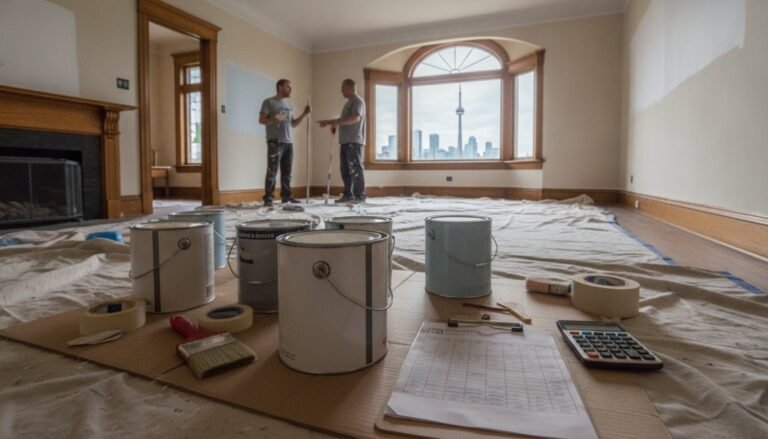
The best preparation starts before the crew arrives. Move small furniture and personal items out of the work area, take down wall hangings, clear hallways, and leave access to every wall, door, window, and electrical fixture. If large furniture can't leave the room, move it to the centre so the crew can protect it and reach the perimeter.
Secure pets in a separate room and tell the crew about delicate flooring, alarm sensors, fragile fixtures, freshly installed cabinetry, or surfaces that must not receive tape. Property managers should provide access instructions, elevator rules, parking information, tenant notices, and a contact person who can approve minor decisions without delaying the work.

What the crew should handle
Professional preparation should include more than covering the floor. Depending on the surface, the crew may:
- Protect the property: Cover floors, fixed furniture, counters, cabinetry, and nearby fixtures with suitable materials.
- Clean the substrate: Remove dust, grease, residue, and surface contamination that can interfere with adhesion.
- Repair visible defects: Fill nail holes, cracks, dents, and minor drywall damage, then sand repairs smooth.
- Prime where needed: Seal new drywall, stains, porous repairs, glossy surfaces, or significant colour changes with the appropriate primer.
- Control the edges: Remove or protect hardware, tape carefully where needed, and cut cleanly around trim and fittings.
Don't patch moisture damage and paint over it as if the problem has disappeared. Basements and bathrooms need particular attention because dampness can cause blistering, poor adhesion, staining, and recurring mould-related damage. The crew should identify the source, confirm the surface is sound, and recommend the right repair before applying a finish.
You can help by removing switch plates and wall-mounted hardware if you're comfortable doing so, but leave electrical fixtures and complicated fittings to someone qualified. A clear conversation about what the painter will remove, what stays in place, and what the client must handle prevents avoidable delays. Soca Services' guide to preparing walls for painting provides useful preparation direction for homeowners planning the visit.
Technical Details That Separate Professional Results
A professional painting job depends on technical checks that rarely appear in short service pages. VOC compliance, moisture control, and durability classification affect odour, re-occupancy, adhesion, cleaning, and the lifespan of the finish.
Canada's VOC Concentration Limits for Architectural Coatings Regulations cover 53 coating categories, with allowable limits ranging from 100 g/L to 800 g/L, depending on the category. The regulations were made under CEPA 1999 and came into force on September 9, 2009, as outlined by Environment and Climate Change Canada. Common residential categories include flat coatings capped at 100 g/L, non-flat coatings at 150 g/L, and high-gloss coatings at 250 g/L, according to the federal architectural coatings guidance.
That doesn't mean every compliant coating performs identically. Ask which product category applies, what ventilation the space needs, and how soon occupants can return. Low-emission selection is especially useful for condos, rentals, offices, nurseries, and any project where a long vacancy isn't practical.

Moisture decides whether paint stays put
In humid Ontario conditions, a painter should check suspicious surfaces with a moisture meter rather than relying on touch. A plastic-wrap condensation test can help identify moisture movement on suspect walls, but it isn't a substitute for investigating leaks, condensation, or groundwater intrusion.
Some coatings set application and curing limits around 85% relative humidity, while practical interior guidance often targets roughly 30% to 50% relative humidity for smoother application and curing. These ranges and testing methods are discussed in Canadian VOC and coating guidance for homeowners and contractors. Painting onto a damp substrate can trap problems beneath the film, leading to blistering, bleed-through, or adhesion failure.
Durability should also match the room. Independent interior paint classifications measure washing cycles and abrasion. Class 1 permits 200 washing cycles with abrasion under 5 μm, while Class 2 permits 200 cycles with abrasion from 5 μm to under 20 μm. Class 3 permits 200 cycles with abrasion from 20 μm to under 70 μm. Class 4 permits 40 cycles with abrasion under 70 μm, and Class 5 permits 40 cycles with abrasion of 70 μm or more, according to Paints for Life durability classifications.
For a related project involving aluminium frames, prep and paint for faded window frames offers useful background on cleaning, preparation, and coating choices before repainting metal surfaces.
Soca Services Portfolio and Local Project Highlights
Soca Services Painting is relevant for clients who need more than a quick wall refresh. Its service focus covers residential and commercial painting work in Vaughan, Toronto, North York, and King City, including interiors, exteriors, renovated spaces, and projects where the final details matter.
A luxury custom home may need carefully controlled colour transitions, smooth ceilings, detailed trim, doors, built-ins, and protection for finished flooring. A condo turnover requires a different rhythm, with coordinated access, efficient preparation, clean edges, and finishes selected for future maintenance. Commercial offices often require organised staging around staff, furniture, equipment, and business operations.
Heritage properties demand restraint. The crew must respect existing trim profiles, masonry, plaster, older surfaces, and the visual character of the building instead of treating every wall like new drywall. On the other hand, a modern renovation may need thorough sealing of porous surfaces, crisp transitions between materials, and a coating system that handles regular cleaning.
Materials and finish decisions
Sherwin-Williams and Benjamin Moore provide product options across interior and exterior applications. The right choice depends on the substrate, sheen, traffic, moisture exposure, desired colour, and maintenance expectations. Soca Services' approach should include discussing those conditions rather than choosing a product solely from a colour card.
Surface preparation remains the foundation. Trim should be cleaned, sanded, caulked where appropriate, and coated with a product suited to the existing finish. Walls need repairs blended into the surrounding surface so light doesn't expose every patch after painting. These details matter more than a fashionable label on the can.
Homeowners researching how painting businesses present their services can also review these home service lead generation tips, but marketing should never replace a written scope and a direct site assessment. For service details specific to the area, visit Soca Services' interior and exterior painting services in Vaughan.
Ask for references and project photos that resemble your property. If a contractor promises a warranty or follow-up service, request the terms in writing, including what preparation, product failure, peeling, or client-caused damage the coverage includes. That clarity protects both sides and gives you a fair basis for comparing providers.
Common Questions About Hiring Painters in Vaughan
Does painting require a building permit in Ontario?
Cosmetic painting itself generally doesn't require a building permit. A permit becomes relevant when the project includes structural or building-system changes, such as wall removal, a new suite, plumbing, or HVAC work. Ontario renovation guidance distinguishes cosmetic work from those regulated scopes, so ask your contractor to separate painting from any adjacent renovation activity.
How long will the project take?
The schedule depends on the number of rooms, surface repairs, drying conditions, furniture, access, colour changes, and whether the property is occupied. Ask for a written schedule with preparation, application, drying, touch-ups, and final cleanup identified. A contractor who inspects the site can give a more useful answer than one who promises a fixed turnaround from a phone call.
Will painters move my furniture?
Many crews will move manageable furniture within the room and protect it, but clients should remove valuables, electronics, artwork, and fragile items. Confirm the limits before signing. Large, heavy, or delicate pieces may require a separate mover.
Should I choose warm neutrals, white, or a bold accent?
Recent Canadian design coverage describes a move away from cool whites and greys toward warmer, creamier neutrals, while deep plum, jewel tones, warm neutrals, and nature-inspired greens are also appearing in regional colour discussions, including Vaughan-area home refresh guidance. Choose warm neutrals for flexible resale and rental appeal, durable mid-tone colours for high-use family spaces, and bold accents only where the room and future maintenance plan support them.
What should I expect after the work is complete?
Expect a final walkthrough, touch-up discussion, removal of coverings and masking, and a clean handover. Confirm any warranty or follow-up terms in writing before work begins. For exterior painting, schedule around suitable Ontario weather conditions and ask how the contractor will handle rain, humidity, temperature changes, and curing time.
Contact Soca Services Painting for a free estimate on residential or commercial painting in Vaughan, Toronto, North York, or King City. Ask for a clear preparation plan, product recommendation, schedule, and finish specification so your next repaint looks sharp and stays that way.