
When it comes to choosing the best interior paint for walls, it's all about finding that sweet spot between durability and the perfect finish. For most homes across the GTA—whether it's a busy family house in Mississauga or a chic condo in downtown Toronto—a premium acrylic latex paint in an eggshell or satin finish is usually the winning combination. It offers great washability with just a touch of elegant sheen.
Your Guide to Choosing the Best Interior Wall Paint
Starting a painting project is one of the quickest ways to completely refresh a room, but walking into the paint aisle can be intimidating. This guide provides an objective structure to help you make a smart decision, whether you're just touching up a single room or going for a full-home makeover.
The idea is to look past the paint chip and really think about the practical side of things. After all, you want your walls to look fantastic for years. For anyone living in the Greater Toronto Area, this means picking a paint that can stand up to daily life, from scuff marks in the hallway to the way the afternoon sun hits your living room wall.
Core Factors to Consider
Before you even start comparing brands, it's helpful to get a handle on the key things that make a paint great. Following an objective structure for your decision will make the whole process simpler and ensure you get the most out of your investment.
Here's what you really need to look at:
- Finish and Sheen: This is all about how much light the paint reflects, from a completely flat matte to a shiny high-gloss. Each finish has its own look and feel, but also practical pros and cons.
- Durability and Washability: Let's face it, life happens. High-traffic zones like kitchens, hallways, and kids' rooms need a paint that you can scrub without ruining the finish.
- VOC Content: Volatile Organic Compounds can affect your home's air quality. Looking for Low-VOC or Zero-VOC paints is a smart move for creating a healthier living space.
- Coverage and Application: A top-tier paint usually covers better, meaning you might get the job done in fewer coats. That saves you time, effort, and money. A paint that goes on smoothly without a fuss is always a bonus.
Matching Paint to Your Space
The "best" paint is really the one that's best for a specific room. A formal dining room in an older Toronto home has very different requirements than a playroom in a new build out in Mississauga. Always think about how the room is used, how much natural light it gets, and even the current condition of your walls.
Of course, picking the right can of paint is only half the battle. Knowing how to prep the surface and apply it correctly is what delivers those professional-looking results. For a step-by-step tutorial, have a look at our guide on how to paint interior walls. The demand for quality painting, both DIY and professional, is huge. To put it in perspective, California's professional painters industry alone is expected to hit a market size of $6.1 billion in 2025. You can dig into more stats on the professional painting market over at IbisWorld.com.
How to Select the Right Paint Finish
Picking the right paint finish is every bit as crucial as landing on the perfect colour. The finish, often called the sheen, doesn't just shape the final look—it dictates how your walls will stand up to daily life, from scuffs and fingerprints to outright spills. For anyone in the GTA, whether you're in a busy Mississauga family home or a chic downtown Toronto condo, getting the finish right is the key to a beautiful paint job that lasts.
Think of the finish as the paint's personality. A higher sheen reflects more light and is tougher against wear and tear, but it will also highlight every little imperfection on your wall. On the flip side, lower sheens are fantastic at hiding flaws but are generally less forgiving when it comes to cleaning. This objective framework will help you strike the right balance between the look you want and what the room demands.
Matte and Flat Finishes: The Experts in Hiding Flaws
A matte finish offers a gorgeous, velvety look with almost no sheen. This non-reflective quality makes it a pro at concealing minor bumps, old repairs, or uneven textures on a wall. It’s an ideal choice for the character-filled plaster walls in older Toronto homes or in spaces where you want a soft, sophisticated atmosphere, like a formal dining room or master bedroom.
But there’s a trade-off. That beautiful surface is more porous, meaning it can scuff easily and is tough to clean. Trying to scrub a spot on a matte wall often results in "burnishing"—a shiny patch that's arguably worse than the original mark. Because of this, it's best reserved for low-traffic areas where the walls are unlikely to be touched.
Eggshell and Satin: The Go-To Finishes for Most Rooms
Eggshell is the crowd-pleaser for a reason. It has just a hint of a soft glow, giving it more durability and washability than a flat or matte finish without being shiny. This makes it a fantastic, practical choice for most rooms in the house, including living rooms, hallways, and bedrooms where you need to wipe down the occasional mark.
Moving up a step in sheen, a satin finish delivers even more durability. It has a smooth, lustrous appearance that’s perfect for active spaces that see a lot of life—think of a busy mudroom or a kids' playroom. Its ability to withstand more frequent and rigorous cleaning makes it one of the best choices for high-traffic zones, including many kitchens and bathrooms.
To help you choose, the following chart breaks down some of the key trade-offs you'll encounter when selecting a paint, from coverage and durability to VOCs.
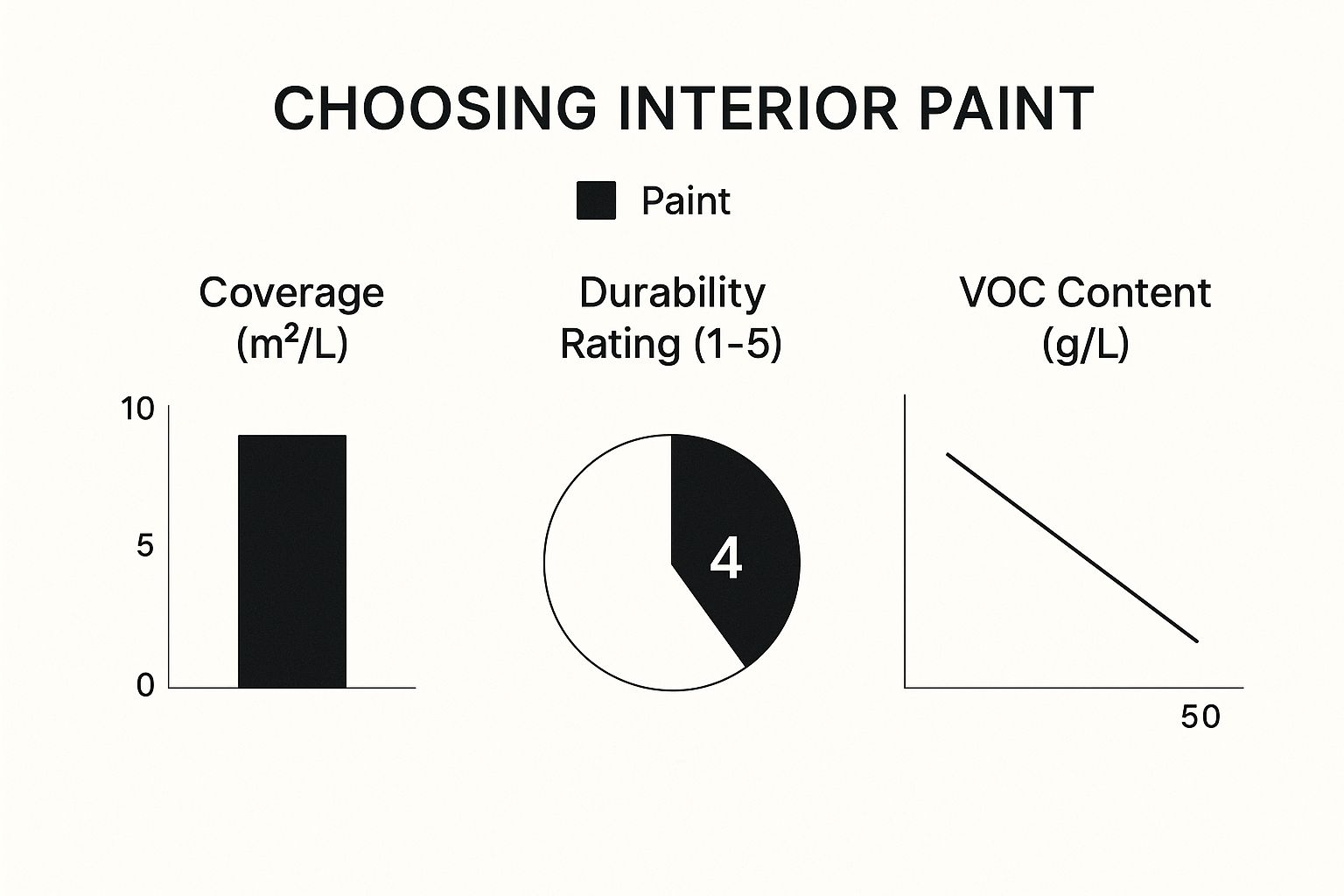
As you can see, there's often a direct relationship between a paint's durability and other factors, which helps you make a more informed decision based on your specific needs.
Semi-Gloss and High-Gloss: Maximum Durability
When you need paint that can take a beating, semi-gloss is your champion. Its noticeable shine creates an extremely tough, moisture-resistant surface, which is why it has long been the standard for trim, doors, and cabinetry. In kitchens and bathrooms, its slick finish is a lifesaver, making it easy to wipe away splashes, grease, and grime without a second thought.
While it’s an option for walls, be warned: that high reflectivity will put every single bump, divot, and flaw on full display.
Expert Insight: For busy areas like hallways or family rooms, don't feel locked into a semi-gloss. Many of today's premium eggshell and satin paints are formulated to be incredibly scrubbable, offering the durability you need with a much more subtle and elegant look. You really can get the best of both worlds.
Choosing the right finish isn't just about what looks good; it's a practical decision. Here's a quick guide to help you sort through your options.
Interior Paint Finish Comparison Guide
This table breaks down the most common paint finishes, outlining where they work best, how they look, and how they perform. Use it to match the right sheen to each room in your home.
| Finish Type | Best For | Sheen Level | Durability & Washability | Hides Imperfections |
|---|---|---|---|---|
| Flat/Matte | Ceilings, formal living rooms, adult bedrooms, and other low-traffic areas. | None to very low | Low – difficult to clean without burnishing. | Excellent |
| Eggshell | Living rooms, hallways, and most moderately-used residential spaces. | Low lustre, soft glow | Good – can handle occasional light wiping. | Very Good |
| Satin | High-traffic areas like family rooms, kids' rooms, kitchens, and bathrooms. | Medium lustre, smooth feel | Very Good – scrubbable and easy to clean. | Good |
| Semi-Gloss | Trim, doors, cabinets, and moisture-prone areas like kitchens and bathrooms. | Noticeable shine | Excellent – highly durable and moisture-resistant. | Fair to Poor |
| High-Gloss | Architectural details, furniture, and front doors for a dramatic, durable look. | High-shine, glass-like | Maximum – the toughest and most washable finish. | Poor |
Ultimately, the best finish is the one that fits the function of the room. By thinking through how you use each space, you'll land on a choice that not only looks fantastic on day one but continues to perform for years to come.
Comparing Top Interior Paint Brands in the GTA
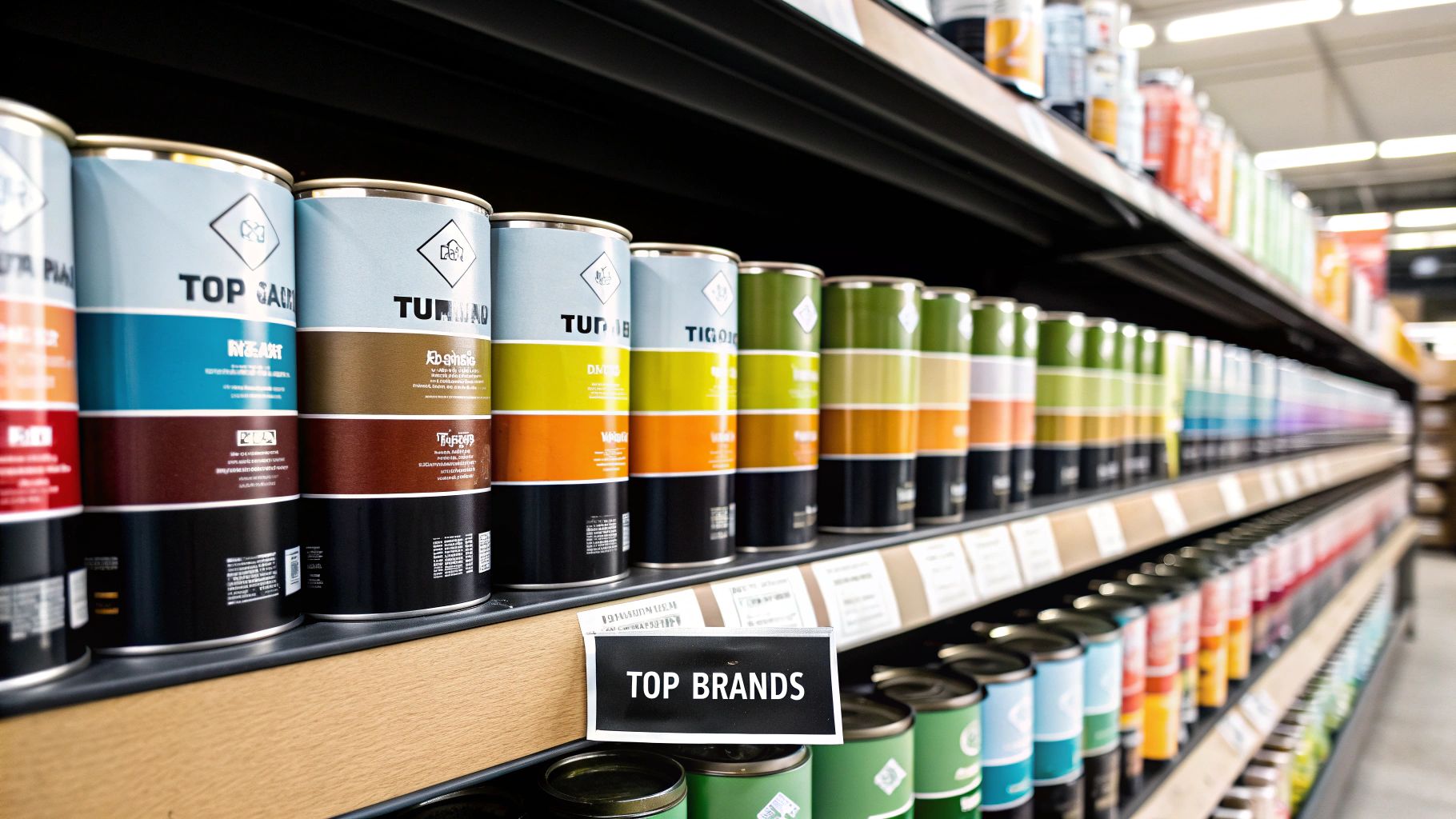
Walking into the paint aisle can be overwhelming. With so many trusted brands available across the GTA, making the right choice feels like a high-stakes decision. While most big names produce quality paint, the real difference is in how their top-tier products actually perform on the wall.
To find the best interior paint for walls, you have to look past the marketing noise. We're going to put three of the biggest players—Benjamin Moore, Sherwin-Williams, and Behr—head-to-head to see how they stack up. This isn't about crowning one brand the absolute winner. It's about giving you a clear, objective look at their flagship interior lines so you can match the right paint to your project, your home, and your budget.
Benjamin Moore: The Gold Standard for Colour and Quality
For decades, Benjamin Moore has been the brand designers and professional painters swear by, and for good reason. They've built a rock-solid reputation on creating rich, long-lasting paints with unparalleled colour accuracy. Their flagship product, Regal Select, is widely considered the benchmark for premium interior paint.
One of its biggest claims to fame is its incredible coverage. Regal Select is a thick, high-solids paint that lays down beautifully, often covering old colours in fewer coats. That’s a massive time-saver, especially if you're making a dramatic change, like going from a deep red to a light grey. Its self-levelling properties are also fantastic, helping to smooth out brush and roller marks for a finish that looks genuinely professional, even for a seasoned DIYer.
Key Differentiator: Benjamin Moore’s secret weapon is their proprietary Gennex® Colour Technology. Because they create their own colourants, their hues are not only incredibly vibrant but also exceptionally fade-resistant. The colour you fall in love with is the colour that will stay on your walls for years.
Of course, this level of quality comes at a premium price. The upfront cost per tin is higher than most, but because the coverage is so good, you might end up needing less paint overall. To really understand the investment, it helps to look at a full breakdown of current interior home painting prices.
Sherwin-Williams: The Professional's Pick for Durability
Sherwin-Williams is another giant in the paint world, and you’ll find it’s a huge favourite among contractors who value consistency and performance. Their most popular high-end interior paint, Duration Home, is an absolute workhorse, celebrated for its incredible durability and washability.
If you have kids, pets, or just a busy household, Duration is your best friend. It’s formulated with technology that actively resists stains and makes cleaning a breeze. Think of it as the perfect paint for a chaotic hallway in a Mississauga family home or a kitchen that sees its fair share of splatters. It creates a tough, resilient film that you can scrub repeatedly without it burnishing or fading.
When it comes to application, Sherwin-Williams paints are known for being forgiving and user-friendly. They flow smoothly off the roller and provide excellent hide. While it might not always deliver the same one-coat magic as its top competitor, its performance is incredibly reliable across different surfaces.
Behr: Unbeatable Value and DIY-Friendliness
Sold exclusively at The Home Depot, Behr has become a powerhouse by offering high-quality paint at a much more accessible price point. Their premium line, Behr Marquee, is famously marketed as a "one-coat" paint, and for many colours in its collection, it actually delivers on that promise.
This makes Marquee a fantastic choice for homeowners who want maximum results with minimum fuss. Being able to finish a room in a single coat over a weekend is a game-changer. Beyond its impressive coverage, Marquee also offers excellent stain resistance and a scrubbable finish that truly holds its own against pricier brands. The demand for great value is fuelling a massive market; for instance, the paint stores industry in California alone is projected to hit $2.0 billion in 2025, driven by strong consumer interest. You can read more about home improvement market dynamics at IBISWorld.
So, what's the trade-off? Some pros find Behr's consistency a bit thick, making it slightly more challenging to work with than the professional-grade lines. For the vast majority of DIY projects, however, it provides outstanding results that are tough to argue with for the price.
Head-to-Head: A Comparison for GTA Homeowners
To make the decision easier, let's break down how these brands compare on the factors that matter most when you're painting a home here in the Toronto area.
Brand Comparison at a Glance
| Feature | Benjamin Moore Regal Select | Sherwin-Williams Duration | Behr Marquee |
|---|---|---|---|
| Best For | Unmatched colour depth and a luxurious, professional-grade finish. | Extreme durability and washability in high-traffic households. | Excellent value, one-coat potential, and accessibility for DIYers. |
| Price Point | Premium | High-End | Mid-Range to High-End |
| Key Strength | Superior coverage and colour fidelity thanks to Gennex® technology. | Outstanding scuff and stain resistance for easy cleaning. | Time-saving one-coat guarantee with a curated colour palette. |
| Keep in Mind | The highest cost per tin, though you may need fewer coats. | Often requires two coats for significant colour changes. | Can feel thicker to apply; sold exclusively at The Home Depot. |
Ultimately, the best interior paint for walls in your home comes down to your priorities. If you’re after the richest colour and a flawless, elegant finish (and have the budget for it), Benjamin Moore is an exceptional choice. If your top priority is bulletproof walls that can handle the chaos of family life, Sherwin-Williams is a smart investment. And if you’re looking for the best performance you can get for a great price, Behr delivers incredible value every time.
Understanding VOCs and Eco-Friendly Paint Options
A beautiful home needs to be a healthy one, too. For many of us, that means paying close attention to indoor air quality. This is where the search for the best interior paint for walls goes beyond just colour and finish and gets into its chemical makeup—specifically, its level of Volatile Organic Compounds (VOCs).
VOCs are chemicals that get released into the air from various products, and traditional solvent-based paints are a classic example. As the paint dries, these compounds "off-gas" for weeks, sometimes months, creating that "new paint smell" that can affect air quality. Thankfully, a combination of Canadian regulations and consumer demand has pushed the industry forward, giving us a new wave of high-performance, eco-friendly paints.
Low-VOC vs. Zero-VOC: What’s the Difference?
Flipping over a paint tin and reading the labels can be confusing, but the difference between "low-VOC" and "zero-VOC" is pretty simple once you know what to look for.
- Low-VOC Paints: These paints have a much lower concentration of volatile organic compounds than their older counterparts, usually under 50 grams per litre (g/L). Most premium latex paints you'll find today fit this description, striking a great balance between performance and lower emissions.
- Zero-VOC Paints: This label means the paint has less than 5 g/L of VOCs. It's the best choice for creating the healthiest indoor environment possible. Just keep in mind that while the base paint is virtually VOC-free, adding a colour tint can introduce a tiny amount of VOCs back into the mix.
So, which one do you choose? It really comes down to the room you're painting. A zero-VOC paint is the clear winner for nurseries, kids' rooms, and bedrooms—places where you spend a lot of time and air quality is most critical. For general living areas like hallways or living rooms, a quality low-VOC paint is a perfectly responsible and excellent choice.
The Rise of Natural and Sustainable Paints
The conversation around healthy homes now goes beyond just VOC content, with a growing interest in fully sustainable options. Natural paints, made from things like citrus oils and clay, are finding their place on the market for the most eco-conscious homeowners. While still a niche segment, their presence signals a bigger shift in the industry toward healthier living.
This trend is even shaping the colours we choose. For example, California Paints named Ocean Melody 0499 its 2025 Color of the Year—a calm blue that’s all about creating balance. It’s part of a wider movement toward nature-inspired palettes, like earthy terracottas and muted greens, meant to make our homes feel more serene. You can read more about these emerging colour trends on pcimag.com.
Practical Takeaway: When you're shopping for an eco-friendly paint, look for third-party certifications like Green Seal. These labels act as a stamp of approval, verifying that the product meets strict standards for low chemical emissions. It’s the easiest way to know you’re getting a genuinely healthier paint, not just a product with clever marketing.
Managing Paint Odours for a Healthier Home
Even with low- and zero-VOC paints, some people might still notice a faint smell during application. This is usually from other ingredients in the paint, not the VOCs. The best way to deal with this is good old-fashioned ventilation.
Keeping windows open while you paint and for a while after lets fresh air circulate and helps any smells clear out quickly. For homeowners in the GTA, this just means timing your project for a mild spring day in Mississauga or a crisp autumn afternoon in Toronto. If odours are a major concern for you, there are other tricks you can use. You can explore our complete guide on how to get rid of paint odours effectively. By picking the right paint and ensuring good airflow, you can enjoy your freshly painted space without worry.
Paint Recommendations For Common GTA Homes
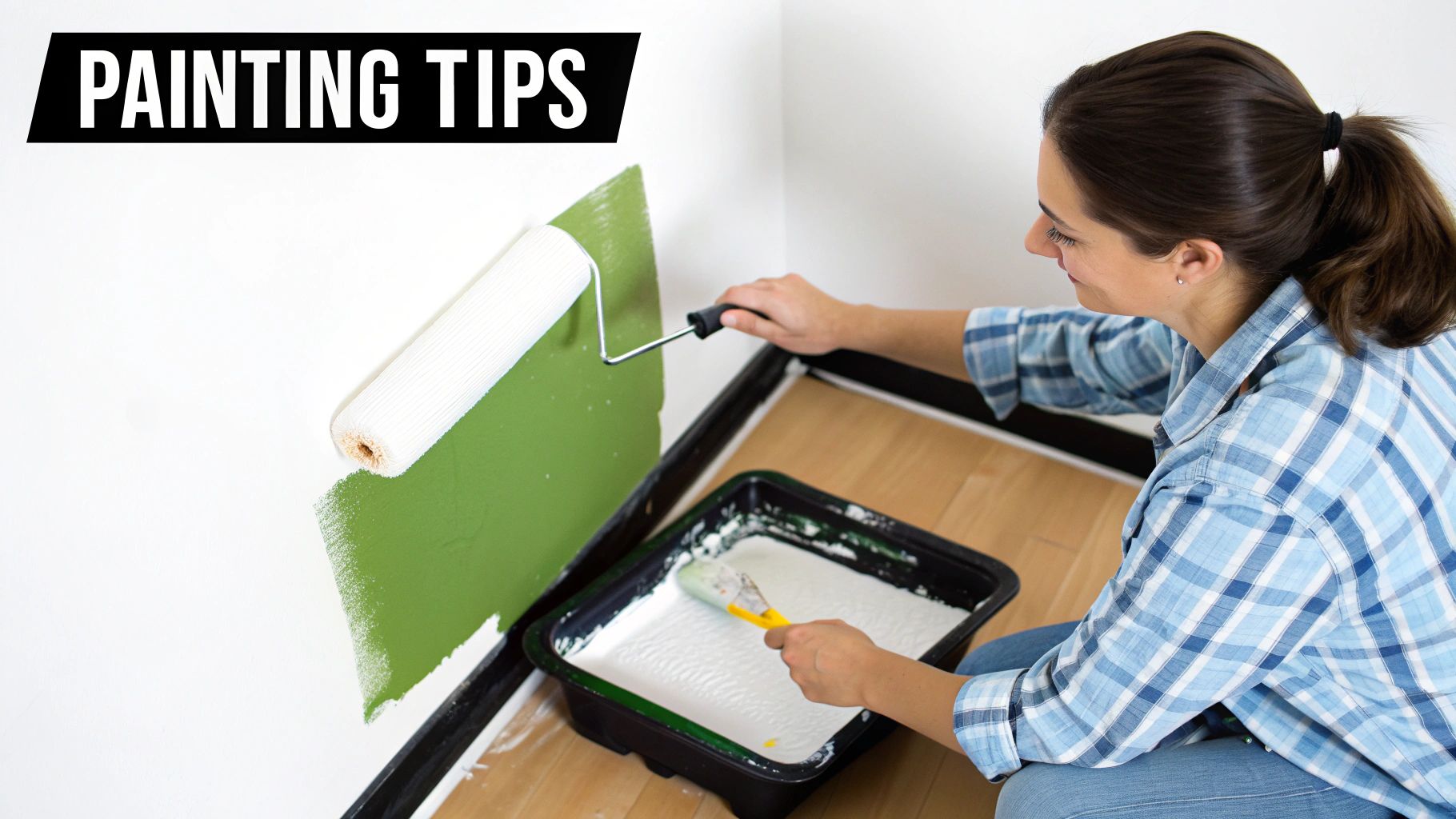
Alright, we’ve covered the technical details of finishes, the big-name brands, and the value of eco-friendly paints. Now it’s time for the practical part: putting it all together. Choosing the best interior paint for walls isn’t a one-size-fits-all decision. The perfect paint for a spacious family home in Mississauga is completely different from what you'd want for a slick condo in downtown Toronto.
Let's walk through some real-world situations that homeowners across the GTA deal with every day. I'll break down the ideal paint and finish for each scenario and explain exactly why it’s the right call.
High-Moisture Bathroom in an Older Toronto Home
Bathrooms in older Toronto houses present a unique challenge. You're dealing with a ton of moisture from showers and baths, plus potential imperfections in the original plaster walls. You need a paint that can handle constant steam without peeling or growing mildew, but you also don't want a high-gloss finish that highlights every tiny flaw.
- Recommended Paint: Benjamin Moore AURA Bath & Spa
- Finish: Matte
- Reasoning: This is where a specialty paint really proves its worth. AURA Bath & Spa is specifically engineered for high-humidity environments, but its secret weapon is the stunning matte finish. It gives you that soft, sophisticated look of a non-reflective surface while still delivering the hardcore durability and mildew resistance you’d normally only find in a semi-gloss. It’s the best of both worlds.
The High-Traffic Hallway in a Mississauga Suburb
If you live in a busy suburban home in a place like Mississauga, you know the hallway is a war zone. It's the dumping ground for backpacks, the raceway for kids, and the first line of defence against scuffs from shoes and hockey bags. Durability and washability aren't just nice to have; they're essential.
- Recommended Paint: Sherwin-Williams Duration Home
- Finish: Satin
- Reasoning: Duration Home was practically made for this kind of daily abuse. Its formula creates an incredibly tough, scrubbable film that can take a beating. A satin finish is the perfect partner here—it has just enough sheen to make wiping off grime easy, but it won't look overly shiny. It’s the ideal middle ground between a flat look and rugged performance.
Pro Tip: For high-traffic areas, your prep work is just as crucial as the paint itself. Make sure you give the walls a good cleaning to get rid of any oils or dirt. A quick scuff-sand of the old finish will also give the new paint a much better grip, ensuring it lasts for years.
Of course, planning a project like this involves more than just picking colours. To get a handle on the budget, take a look at our guide on the cost to paint the interior of a house, which is full of useful info for GTA homeowners.
A Rich, Modern Look in a Downtown Condo Living Room
In a downtown Toronto condo, the focus is often on clean lines and maximizing natural light. You want a paint that delivers a deep, immersive colour experience—something that feels luxurious and intentional. This is where the quality of the pigments and the smoothness of the finish make all the difference.
- Recommended Paint: Benjamin Moore Regal Select
- Finish: Eggshell or Matte
- Reasoning: Regal Select is famous for its incredible colour richness. Thanks to its proprietary Gennex® Colour Technology, the hue you see on the chip is exactly what you get on the wall—vibrant and true. An eggshell finish offers a beautiful, soft glow and is still quite washable. A matte finish, on the other hand, provides a velvety, high-end look that’s perfect for a more controlled, adult-oriented space.
Painting a Nursery or Child's Bedroom Near a Busy Street
When you're painting a room for a child, air quality is the number one priority. This is even more critical if your home is near a major GTA roadway where pollutants are a concern. The goal is to find a paint that's tough enough for kids but won't release any harmful chemicals into their environment.
- Recommended Paint: Behr Premium Plus (Zero-VOC)
- Finish: Eggshell
- Reasoning: Behr's Premium Plus line is an excellent Zero-VOC choice that is also Greenguard Gold Certified, meaning it has been tested for low chemical emissions. This makes it one of the safest paints you can buy for a nursery or bedroom. The eggshell finish provides the durability you need to scrub off fingerprints and crayon marks, all without compromising on air quality.
Paint Recommendations for Specific Scenarios
To make things even easier, here's a quick-reference table matching common household situations with the right paint and finish.
| Situation / Room | Recommended Paint Type | Recommended Finish | Key Feature to Look For |
|---|---|---|---|
| Older Toronto Bathroom | Specialized Bath & Spa Paint | Matte | Extreme moisture and mildew resistance |
| Mississauga Hallway | High-Durability Acrylic Latex | Satin | Superior scrubbability and scuff resistance |
| Downtown Condo Living Room | Premium Acrylic with Advanced Colourants | Eggshell or Matte | Exceptional colour depth and smooth application |
| Child's Bedroom / Nursery | Zero-VOC, Greenguard Gold Certified | Eggshell | No harmful emissions and good washability |
By thinking through your specific needs and the demands of your GTA home, you can confidently choose a paint that will not only look fantastic but will also perform perfectly for years to come.
Frequently Asked Questions About Interior Paint
Choosing the right paint for your walls often brings up a few last-minute questions. Even after you’ve compared brands and narrowed down your finishes, some nagging uncertainties can stop you from getting started. Here, we tackle the most common questions we hear from homeowners across Toronto and the GTA, giving you straight, clear answers to help you get painting.
We’ll cover everything from the real deal on multiple coats to what’s actually behind those paint prices, ensuring your project turns out just right.
How Many Coats of Interior Paint Do I Really Need?
Honestly, for the best result, two coats of paint are almost always the way to go. This is non-negotiable if you’re painting over a dark colour or a wall with lots of patches and repairs.
Sure, some high-end paint-and-primer combos claim one-coat coverage, and they can sometimes pull it off for minor colour shifts. But that second coat is what delivers that truly uniform, professional-looking finish. It also builds a much tougher, more resilient surface that can handle the bumps and scuffs of daily life. Just remember to let that first coat dry completely before you even think about starting the second.
What Is the Difference Between Cheap and Expensive Paint?
When it comes to paint, the price tag is a direct reflection of what’s inside the can. It’s a classic case of getting exactly what you pay for.
- Expensive paints are packed with high-quality pigments that give you richer, more accurate colour. They also have superior binders for better adhesion and durability, with far fewer cheap fillers.
- Cheaper paints often skimp on the good stuff, using lower-grade pigments and bulking up the formula with water or fillers. The result? Poor coverage and a finish that just doesn't last.
This means that while a budget paint might seem like a good deal upfront, you'll likely need more of it to get decent coverage. The finish won’t hold up nearly as long either, costing you more in time, effort, and money down the road.
The bottom line is that investing in a premium paint usually saves you money in the long run. Better coverage means fewer coats, and superior durability means you won't have to repaint nearly as soon.
Do I Always Need to Use a Primer Before Painting Walls?
Skipping primer is a gamble that rarely pays off, especially in certain situations. Think of it as the foundation for a flawless paint job—without it, the whole thing can be compromised.
You absolutely need to use a primer when you're:
- Painting fresh, unpainted drywall or plaster.
- Making a drastic colour change, like covering a dark red with a light beige.
- Painting over a glossy, semi-gloss, or old oil-based surface.
- Trying to cover stubborn stains from water damage, smoke, or a child's marker masterpiece.
Primer seals the surface so the paint absorbs evenly, helps the topcoat stick properly, and blocks old stains from bleeding through. For a simple repaint where the old paint is in good shape and the colour change is subtle, a quality paint-and-primer-in-one is often enough. Planning for primer and other supplies is a key part of your budget, and you can get a better sense of the numbers by checking out our guide on how much interior painting costs.
Ready to transform your space with a fresh coat of paint but want to ensure a flawless, professional finish? The experts at Soca Services Painting have the experience and skill to bring your vision to life across the GTA. Contact us today for a consultation. https://www.socaservicespainting.com