

So, you're probably asking yourself, "How long will this new paint job actually last?" It's one of the most common questions homeowners have, and the answer isn't always straightforward. The objective isn't just a new colour, but a durable finish that protects your investment.
Generally speaking, a well-done exterior paint job in the Toronto area should hold up for 5 to 10 years. Inside your home, you can expect a fresh coat to last anywhere from 5 to 15 years. But as you can see, that’s a pretty wide range. The real lifespan comes down to the quality of the paint, how well the surface was prepped, and our unique Canadian climate.
Understanding Paint Lifespans in the GTA
Think of a paint job's durability less like a fixed expiry date and more like a spectrum. Imagine two nearly identical homes in Mississauga, painted on the same sunny week. One starts showing its age in just four years, while the other looks fantastic for over a decade. What gives? The difference almost always lies in the details.
For any homeowner in the Greater Toronto Area (GTA), getting a handle on these variables is the key to making a smart investment in your property. The biggest distinction, of course, is whether we're talking about interior or exterior paint, since each one is up against a completely different set of challenges.
The Three Pillars of Durability
No matter if you're painting a living room or your home's exterior, three things truly dictate how long the finish will last. Nailing these fundamentals is the secret sauce behind a paint job that endures and delivers the best results.
- Proper Surface Preparation: This is, without a doubt, the most important step. Paint needs a clean, smooth, and properly primed surface to grab onto. If you skip the prep work, you're setting yourself up for peeling, bubbling, and cracking down the road.
- High-Quality Paint and Primer: It’s tempting to save a few dollars here, but investing in top-tier materials pays for itself. Premium paints are formulated with better binders and pigments, which means better coverage, tougher durability, and more resistance to fading and stains. To dive deeper, you can explore our guide on the best interior paint for walls.
- Skilled Application: The "how" is just as important as the "what." An experienced painter knows how to apply even, consistent coats at the right thickness. This attention to detail creates a seamless protective shield that really stands the test of time.
A professional paint job is so much more than a new colour. It’s a protective layer for your biggest asset. Putting a bit more into quality materials and skilled labour upfront almost always saves you from bigger headaches and more frequent repainting later on.
To make things a bit clearer, here’s a quick breakdown of what you can realistically expect from different paint applications right here in the GTA.
Paint Lifespan At a Glance for GTA Homes
This table gives you a snapshot of typical lifespans for paint inside and outside your home, along with the key factors that can shorten or extend them.
| Paint Type/Location | Average Lifespan | Key Influencing Factors |
|---|---|---|
| Interior Walls (Low-Traffic) | 10 – 15 Years | Sunlight exposure (fading), quality of paint finish |
| Interior Walls (High-Traffic) | 5 – 7 Years | Scuffs, marks, cleaning frequency, humidity (e.g., kitchens) |
| Exterior Siding (Wood/Fibre Cement) | 5 – 10 Years | GTA weather extremes (ice, sun), surface prep, paint quality |
| Exterior Trim and Doors | 4 – 7 Years | Higher wear and tear, direct exposure to elements, frequency of use |
As you can see, a bedroom that gets little direct sun will hold its colour far longer than the siding on the south side of your house, which gets baked by the sun in summer and pelted with ice in the winter.
How Exterior Paint Withstands Canadian Weather
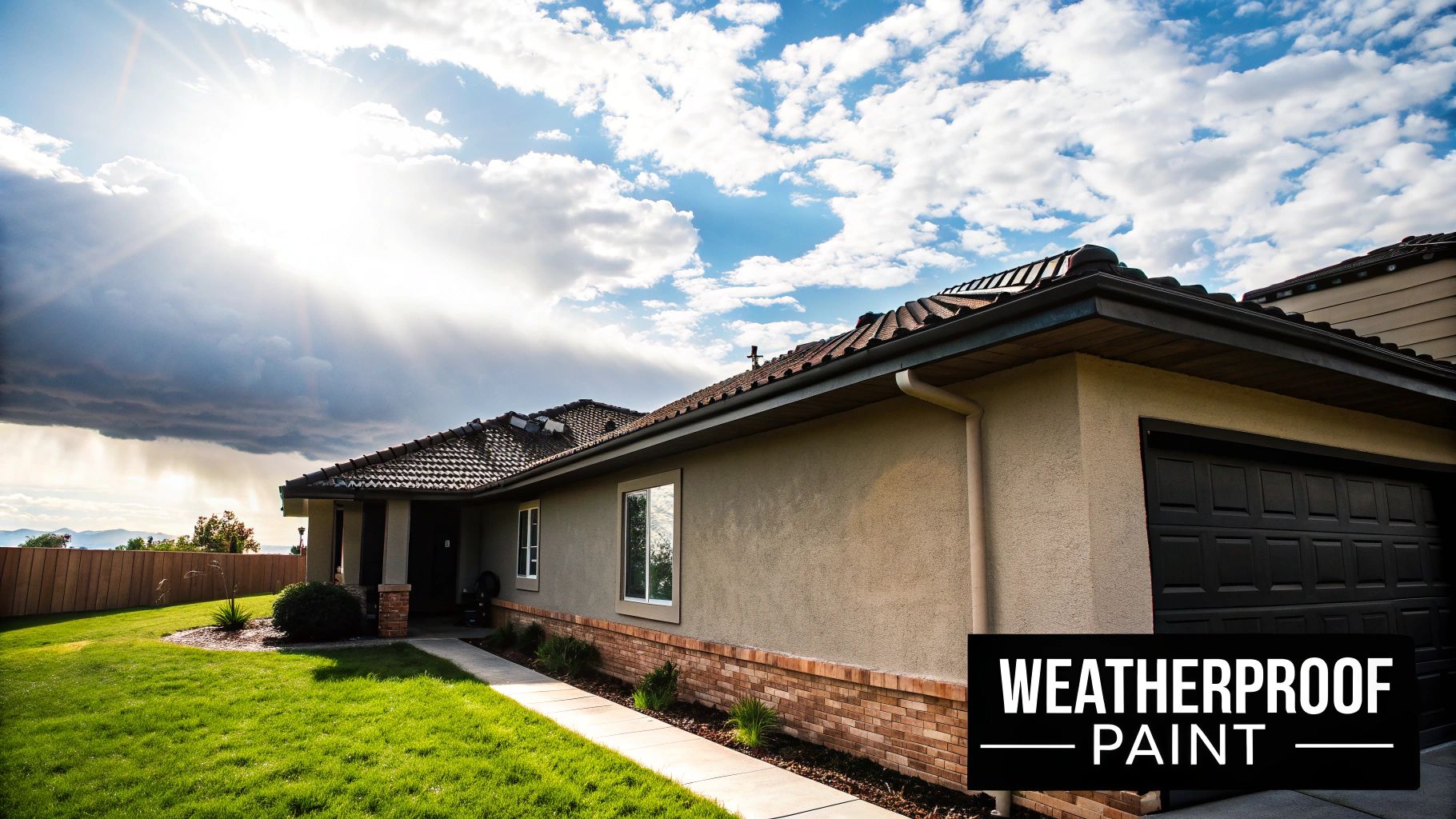
Your home’s exterior paint does a lot more than just provide colour. Think of it as a frontline shield, tirelessly defending your home against the tough, unpredictable weather we get across the GTA. From sweltering summer humidity to brutal, ice-cold winters, that thin layer of paint is under constant attack.
To really grasp how long your paint will last, you first have to understand what it’s up against. Imagine your home's siding as a living thing. In the summer, it soaks up moisture from the humid air and expands just a tiny bit. Come winter, the frigid, dry air makes it contract. This endless cycle of expansion and contraction puts incredible stress on the paint film clinging to it.
This is precisely why the type of paint you choose matters so much. Old-school, oil-based paints are quite rigid. When the surface underneath them starts to shift with the seasons, they can't keep up. They become brittle and are far more likely to crack and peel, not unlike an old piece of stiff plastic.
The Advantage of Modern Acrylic Latex
This is where modern acrylic latex paints really shine. They're specifically engineered to handle this exact challenge. Their formula is designed for superior flexibility, which allows the paint to stretch and shrink right along with your siding. For a climate like ours in Toronto, that elasticity is a total game-changer, dramatically cutting down the risk of premature paint failure.
But it doesn't stop there. A top-quality acrylic formula also provides a much better defence against the other two big threats to your exterior paint:
- UV Radiation: The sun’s ultraviolet rays are incredibly destructive. They work to break down the chemical binders that hold paint pigments together, which causes that chalky residue and noticeable fading, especially on south- and west-facing walls.
- Moisture: Rain, snow, and ice will find a way into any tiny crack or imperfection. Once moisture gets trapped behind the paint film, it causes all sorts of problems, from bubbling and blistering to large-scale peeling.
The best exterior paint for homes in places like Mississauga and the broader GTA has to be one that can handle a relentless freeze-thaw cycle without giving up. That’s why 100% acrylic latex formulas are the go-to standard for any professional painter aiming for a durable, protective finish.
Climate and Paint Longevity
You really can't underestimate the role climate plays in how long a paint job lasts. Toronto's four distinct seasons bring a unique set of challenges, but other regions have their own battles. For example, in a place like California, the lifespan of exterior paint is usually between 5 to 10 years, but their biggest enemy is the intense summer sun, not freezing winters. There, high-quality, UV-resistant latex paints are the clear winner over oil-based options because they resist fading and stay flexible under constant sun exposure.
At the end of the day, a successful paint job that truly lasts comes down to choosing the right products and applying them with skill. To dive deeper into best practices, take a look at our complete guide to the exterior painting of a house. Making the right paint choice for our unique Canadian climate is a critical investment in protecting your home and keeping its curb appeal strong for years to come.
Keeping Your Interior Paint Looking Fresh
Inside your home, the forces working against your paint are entirely different. You’re not fighting off blizzards and scorching sun, but the daily realities of life—think scuffs in the hallway, grease from the kitchen, and the inevitable little fingerprints in a playroom. So, how long does interior paint really last? It's not a single number; it all comes down to the room and how you use it.
A formal dining room or a spare guest bedroom might look perfect for a solid 10 to 15 years. But high-traffic zones tell a completely different story. Hallways, kitchens, and kids' rooms are in constant contact with people, pets, and everything else, meaning you could be looking at a refresh in as little as 3 to 5 years.
Matching Paint Sheen to Room Function
One of the smartest things you can do to get more life out of your paint is to pick the right finish, or sheen. I like to think of paint sheen as its built-in armour. The glossier the finish, the more resins it has, which creates a tougher, more durable surface that stands up to cleaning.
For homeowners here in Mississauga and across the GTA, this is a game-changer for a long-lasting interior. Finding a painting service "near me" that understands this is key.
- Matte or Flat Finish: This gives you that beautiful, non-reflective look that’s ideal for ceilings or low-traffic spaces like a master bedroom. The trade-off? It’s the least durable and scuffs easily, so it's a terrible choice for busy areas.
- Eggshell or Satin Finish: These are the go-to choices for most of the house. They have a subtle glow and are much easier to scrub than matte paints. This makes them perfect for living rooms, hallways, and family rooms where life actually happens.
- Semi-Gloss or Gloss Finish: With their high durability, these sheens are champions in tough environments. They’re fantastic for moisture-heavy rooms like bathrooms and kitchens, and also for high-touch surfaces like trim, doors, and window sills.
The best interior paint job is one where the finish is tailored to the room's activity level. Using a scrubbable satin finish in a high-traffic hallway can easily add years to its life compared to a standard matte paint.
Simple Steps to Preserve Your Paint
Once the paint is on the wall, a few good habits can go a long way in keeping it looking fresh. Gentle, regular cleaning with a soft sponge and some mild soap can lift away grime before it has a chance to settle. This prevents the need for harsh scrubbing later, which can wear down the finish.
Touching up scuffs and chips as soon as you spot them also makes a huge difference. A quick dab of leftover paint stops a small blemish from turning into an obvious flaw.
Of course, the foundation of a long-lasting paint job is set long before you even open a can of paint. That flawless, durable finish is only possible with excellent wall preparation. If you’re getting ready for a new project, learning how to prep walls for painting is the most important step you can take. It’s what ensures the paint sticks properly, preventing peeling and bubbling down the road.
The Three Pillars of a Long-Lasting Paint Job
Ever wonder why some paint jobs look fantastic for a decade while others start to peel and fade after just a couple of years? The secret isn't in a single can of paint. It's a three-part formula where each step is just as crucial as the last. A solid structure for your project is everything.
Think of it like baking a cake. You can have the most expensive, high-quality ingredients, but if you don't grease the pan or you bake it at the wrong temperature, you're not going to get a great result. For homeowners in Toronto, getting these pillars right is the key to a beautiful finish that truly lasts.
This hierarchy shows how each element builds on the one before it to create a tough, durable coat.
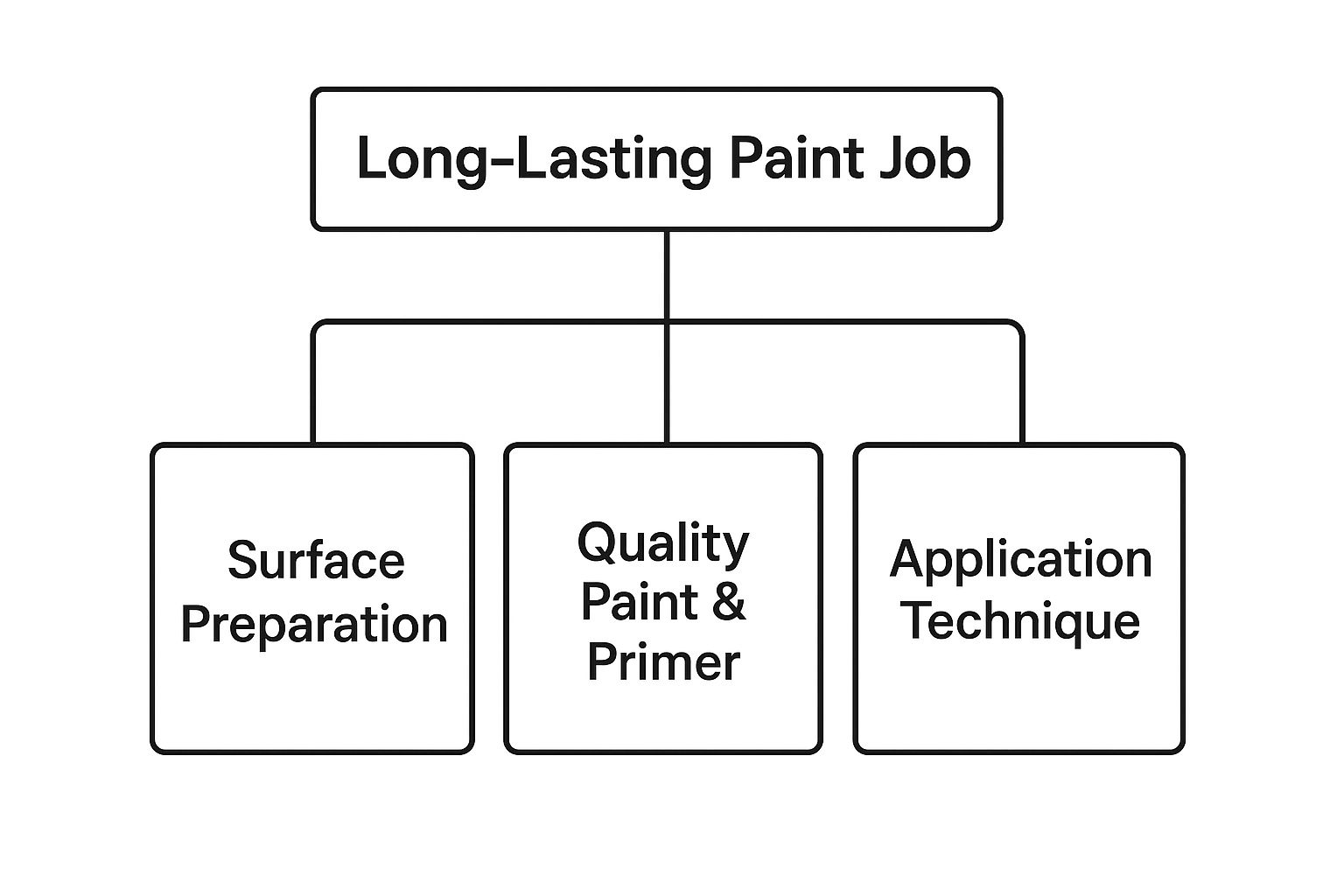
As you can see, exceptional paint longevity starts with a solid foundation of preparation and is capped off by skilled, professional execution.
Pillar 1: Surface Preparation
This is the non-negotiable first step, and honestly, it’s where most of the real work is. Paint is only as good as the surface it's clinging to. If you skip this, even the most expensive paint in the GTA will fail long before it should.
Proper prep always involves a few key actions:
- Thorough Cleaning: You have to get rid of all the dirt, grime, and mildew that's built up over time.
- Scraping and Sanding: Any loose, flaking, or peeling paint has to go. This creates a smooth, sound base for the new coat.
- Repairs: Filling cracks, holes, or gaps is a must. It creates a seamless surface and stops moisture from sneaking in behind the paint film.
A paint job is only as strong as the surface it’s applied to. Experts estimate that proper preparation accounts for up to 80% of a paint job's success and ultimate lifespan.
Pillar 2: Quality Paint and Primer
Once the surface is clean, smooth, and ready, the materials you choose take centre stage. It’s always tempting to save a few dollars on a cheaper can of paint, but this is a classic case of "you get what you pay for."
Premium paints have better quality binders—the "glue" that holds the pigment together and makes it stick to the wall—and a higher concentration of pigments. This translates to better coverage, richer colour, and a tougher film that can stand up to stains and fading.
Just as critical is the primer. It acts as the perfect handshake between the surface and the paint, ensuring a strong bond. To get a better handle on this foundational coat, you can explore what primer paint is used for in our detailed guide.
Pillar 3: Skilled Application Technique
The final piece of the puzzle is the application itself. How the paint is applied ensures a uniform thickness, creating a consistent protective barrier. A skilled professional knows exactly how to avoid common pitfalls like drips, roller marks, or applying the paint too thinly, all of which create weak spots that break down over time.
Climate plays a huge role in how these pillars are applied. For example, in a high-UV area like Southern California, proper prep and top-tier acrylic latex paint are the difference between a job lasting 3-5 years and one that looks great for over 7-10 years, especially on walls that get blasted by the sun all day.
To give you a clearer picture, here’s a quick breakdown of how these factors impact your paint’s lifespan.
Durability Factor Breakdown
| Factor | Best Practice (Extends Life) | Poor Practice (Shortens Life) |
|---|---|---|
| Surface Prep | Thoroughly cleaned, sanded, and repaired surface. | Painting over dirt, loose paint, or unresolved moisture issues. |
| Primer | Using a high-quality primer matched to the surface and paint. | Skipping the primer or using a cheap, low-adhesion product. |
| Paint Quality | Investing in premium paint with quality binders and pigments. | Opting for budget paint with poor coverage and durability. |
| Application | Two even, consistent coats applied with professional technique. | A single, thin coat with drips, roller marks, and uneven coverage. |
Following best practices turns your paint into a long-term investment, while cutting corners almost guarantees you'll be painting again much sooner than you'd like.
Of course, the job doesn't end when the paint dries. Ongoing care is vital. Knowing some simple tips for maintaining a clean exterior can go a long way in preserving the paint's integrity for years to come.
Warning Signs That It’s Time to Repaint
Knowing when your paint is on its last legs is about more than just looks—it’s a critical part of protecting your home’s structure. Think of your home's paint job as its armour; once it starts to crack, it leaves the underlying material vulnerable to moisture, rot, and much more serious damage. Spotting the early warning signs can save you a lot of headaches and money on repairs down the line.
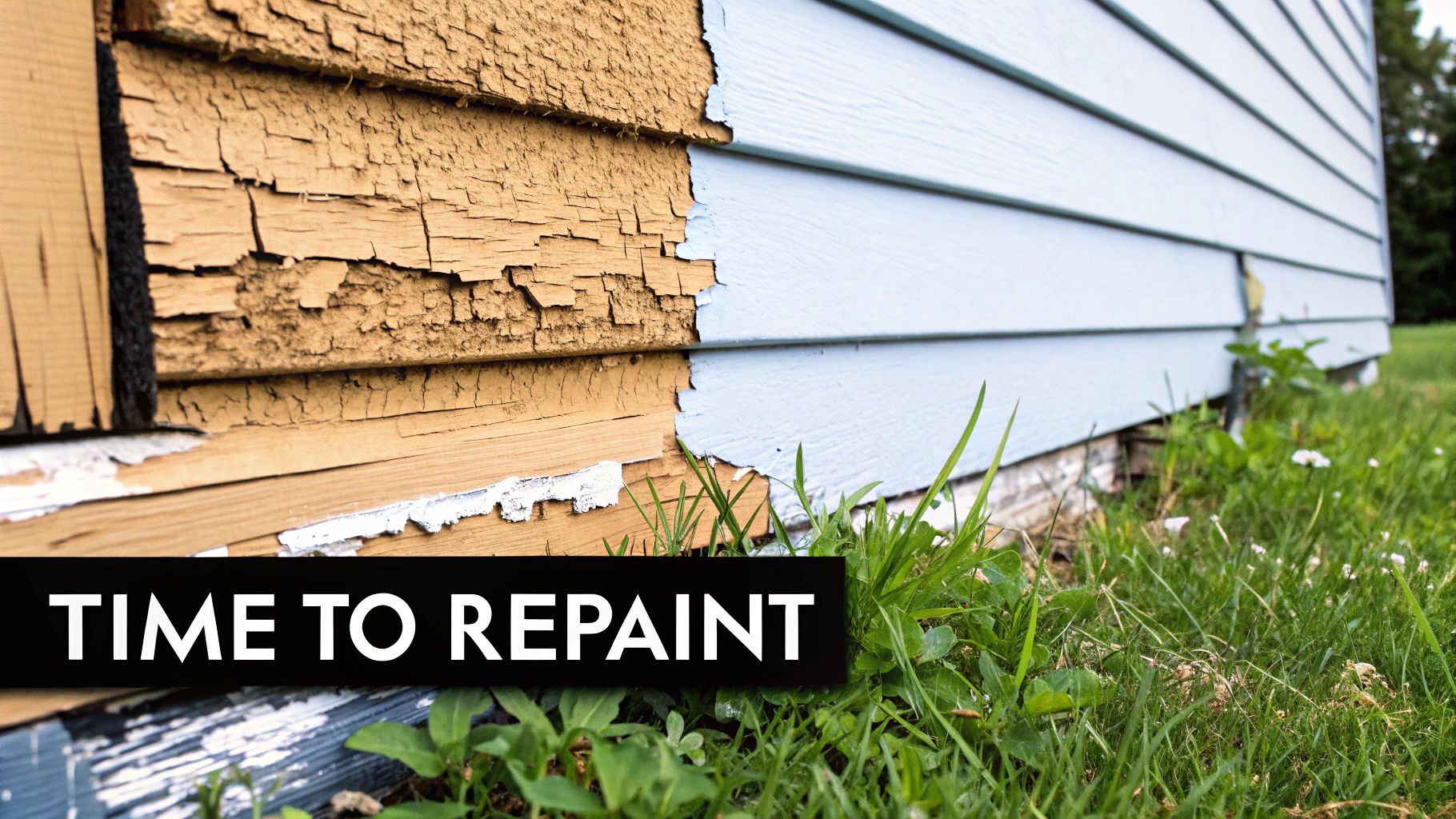
Too many homeowners across the GTA wait until the damage is impossible to ignore. The smarter approach is to act on the very first signals. Just doing a quick visual walk-around of your home’s exterior and interior a couple of times a year can make all the difference.
Exterior Red Flags
Your home's exterior paint is its first line of defence against the elements. When you start seeing these issues, it’s a clear sign that protective barrier has been breached.
- Cracking and Flaking: Look for fine, spiderweb-like cracks or larger patterns that resemble alligator skin. This is a dead giveaway that the paint has gone brittle and lost its elasticity, usually from years of sun exposure.
- Bubbling or Blistering: See those little bubbles or blisters? They’re pockets of moisture or air trapped right under the paint film. This is a serious red flag because it means water has gotten underneath, and the paint is no longer stuck to the surface.
- Peeling: This is what happens when you ignore the cracking and bubbling. Large sheets of paint begin to lift right off the wall, exposing your home’s siding directly to rain and snow—a major problem, especially for wood.
- Chalking: Try this: run your hand over a painted surface. If you get a white, chalky powder on your fingers, it means the paint's binders are breaking down from UV radiation. A little bit of chalking is normal as paint ages, but a heavy residue tells you the paint has stopped doing its job.
Ignoring these signs is like ignoring a small leak in your roof—it will only get worse. Proactive maintenance is always less expensive than reactive repairs, especially when you're trying to keep water from damaging your home’s structure.
Interior Warning Signs
Inside, the clues that your paint is getting old are usually tied to daily life—wear, tear, and moisture. Catching them early keeps your home looking and feeling fresh.
- Fading Colour: Walls in sunny rooms, which we have plenty of in Toronto, will inevitably fade. Not only does this look dated, but it can also be a sign that the paint’s protective qualities are wearing thin.
- Stains and Scuffs: High-traffic zones like hallways, kitchens, and entryways are magnets for marks that just won't wash off. When a good cleaning doesn't bring the finish back to life, it’s time for a fresh coat.
- Mould or Mildew: Any dark, speckled spots in bathrooms, basements, or laundry rooms scream "moisture problem." You absolutely need to fix the source of the dampness, but repainting with a high-quality, moisture-resistant paint is a vital part of the solution.
Once you spot these signs, repainting should move up your to-do list. If you're trying to figure out where this fits in with other jobs, a good guide on prioritizing home improvement projects can help you plan your next moves. And if you're already dealing with peeling, our detailed guide on how to fix peeling paint walks you through the proper steps to prep the surface for a new coat that will actually last.
Common Questions About Paint Durability
Even after getting the basics down, most homeowners in Toronto and the GTA still have a few lingering questions. It’s completely normal. Getting these sorted out is the key to making smart decisions for your next painting project and making sure your investment really lasts.
Let's dive into some of the questions we hear all the time and give you some straightforward answers.
Does Paint Colour Affect How Long It Lasts?
Absolutely. The colour you pick plays a surprisingly big role in how long your exterior paint will hold up, especially under the sun. Dark, rich colours are beautiful, but they act like a sponge for UV radiation and heat. All that extra stress causes the paint's binders—the glue that holds everything together—to break down much faster, leading to noticeable fading and chalking.
You'll see this most dramatically on south- and west-facing walls in places like Mississauga, which get hammered by the intense afternoon sun. Lighter shades, on the other hand, reflect a lot more of that energy and tend to look fresh for longer. If you’re truly set on a deep, dramatic hue, your best bet is to invest in a premium, UV-resistant paint to give it a fighting chance.
How Long Does Leftover Paint Last in the Can?
Believe it or not, leftover paint can last for years if you store it properly. The whole game is about creating an airtight seal so air can't sneak in and dry it out.
- Latex (water-based) paint: Can stay good for up to 10 years.
- Oil-based paint: Can last even longer, up to 15 years.
The trick is in the technique. First, wipe the rim and groove of the can completely clean. Then, lay a piece of plastic wrap over the opening before you hammer the lid on tight. For the ultimate seal, store the can upside down in a cool, dry spot where it won’t freeze. This little flip prevents that gross skin from forming on top, keeping your paint smooth and ready for touch-ups down the road.
“Investing in premium paint is one of the smartest decisions a homeowner can make. While the initial cost is higher, its superior pigments and binders mean better coverage, enhanced durability, and a finish that lasts years longer. Over the life of your home, this saves significant money and labour on repainting.”
Can I Just Paint Over Old Cracking Paint?
I know it's tempting to take a shortcut, but painting directly over cracking or peeling paint is a recipe for disaster. Think of it this way: new paint needs a stable foundation to grab onto. If the surface underneath is already falling apart, your fresh coat will just peel right off with it.
You have to do the prep work. That means getting in there with a scraper and sandpaper to remove every last bit of loose, flaky paint until you’re down to a solid surface. Once it's clean, a good primer is non-negotiable. It creates the perfect base for the new paint to bond to. This step is what makes the difference between a pro finish that lasts and a job that fails in less than a year.
Ready to make sure your next paint job stands the test of time with professional quality and expert application? Contact Soca Services Painting for a consultation and see how our team can protect and beautify your Toronto-area home.


5 Comments