Table of Contents
- Why Does Exterior Paint Bubble in Humid Weather?
- How to Repair Paint Blisters on Your Exterior
- Checking Moisture Content in Wood Before Painting
- Frequently Asked Questions
Last Updated: September 7, 2026
Why Does Exterior Paint Bubble in Humid Weather?
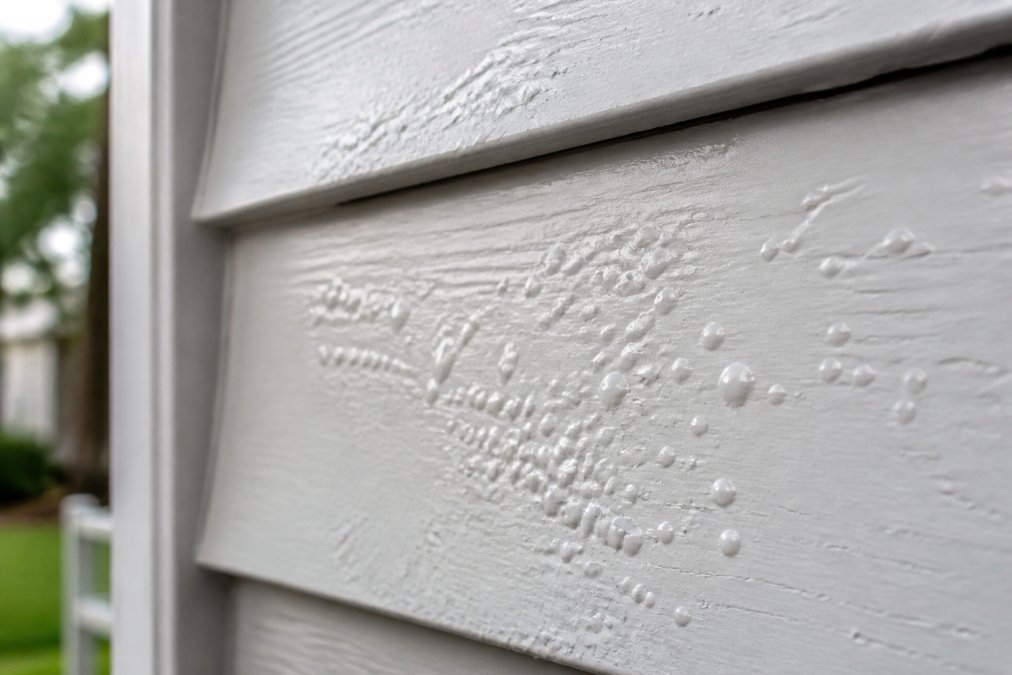
Exterior paint bubbles, often called blistering, happen when moisture gets trapped beneath the paint film and pushes it away from the surface. In humid weather, water vapor inside your siding cannot escape, and pressure builds until the paint lifts into bubbles that crack and peel. This is a common issue for homes after wet springs.
The real culprit is rarely the paint itself, but a combination of moisture vapor transmission and surface contamination that prevented proper adhesion. Repainting without fixing the moisture source guarantees the bubbles will return.
How to Repair Paint Blisters on Your Exterior
Start by identifying what kind of paint bubbles you have. Small, liquid-filled blisters point to moisture intrusion; larger, dry bubbles come from solvent entrapment when paint is applied in direct sun or over a warm surface.
For moisture-related blistering, scrape away all loose paint with a stiff putty knife, then sand the edges smooth. Remove every trace of the old coating, as loose paint compromises the new layer, and wipe the surface clean before priming.
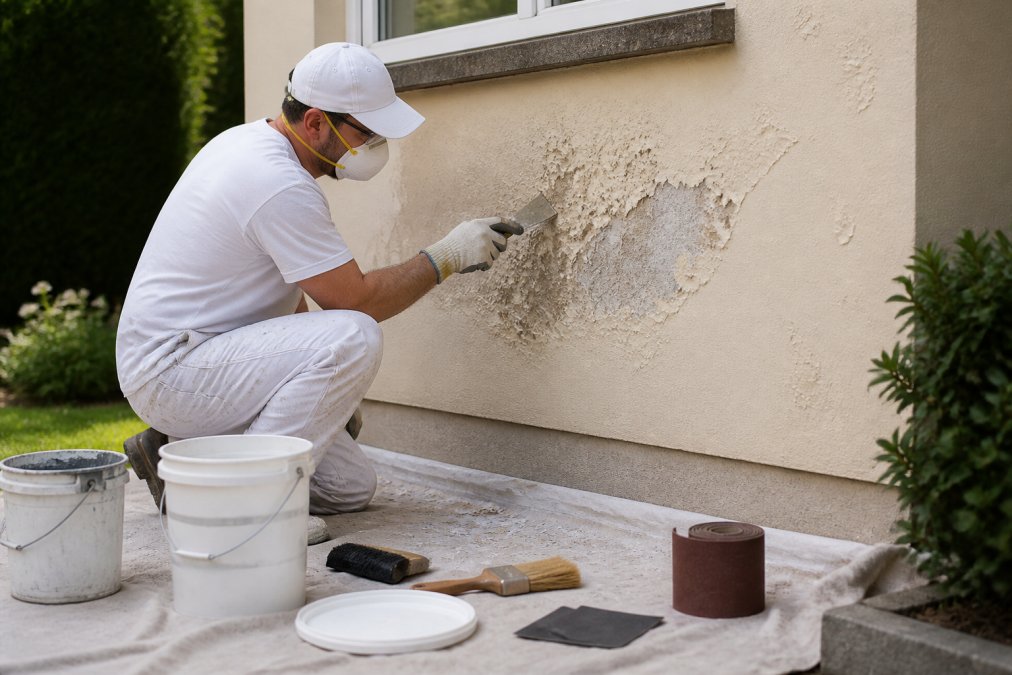
Once clean and dry, apply a high-quality oil-based primer to seal the substrate, let it cure fully, then apply your topcoat. Rushing this step can result in recurring paint failure within a season.
Checking Moisture Content in Wood Before Painting
Checking moisture content in wood before painting is the single most important step to prevent paint bubbles. A moisture meter tells you how much water is trapped in the substrate; if too high, no surface preparation will stop the blistering.
The ideal moisture content for exterior wood is below 15 percent (woodworks.org). Above that, the wood is still releasing vapor, so wait for dry weather and test again, as wood can take days to dry out in humid conditions.
Painting over wood with a moisture content above 15 percent is the most common cause of paint blistering in humid climates. The moisture will migrate through the wood and lift your new paint film within weeks, no matter how well you prepared the surface.
Timing matters as much as the moisture reading. Exterior paint drying time in humidity is longer because water cannot evaporate into saturated air (sherwin-williams.com). Plan for days with low humidity and temperatures between 15 and 25 degrees Celsius, avoiding morning dew and evening humidity.
| Step | What to Check | Why It Matters |
|---|---|---|
| Test moisture content | Below 15% on a moisture meter | Prevents moisture from pushing paint off |
| Scrape and sand | All loose paint removed, edges feathered | Creates a sound surface for adhesion |
| Clean the surface | No dust, dirt, or chalky residue | Removes contamination that blocks bonding |
| Prime bare wood | Oil-based primer, fully cured | Seals the substrate and blocks moisture |
| Check the forecast | Low humidity, 15-25°C, no rain for 48 hours | Allows proper curing and drying |
Professionals watch the dew point, the temperature at which moisture condenses on surfaces. Do not paint when the surface temperature is within 3 degrees of the dew point, or condensation will ruin the finish (paint.org).
Humidity affects paint bonding chemically. Latex relies on water evaporation to form a film, which slows in high humidity, leaving it soft for days. Oil-based paints are less sensitive but cure slower in cool, damp conditions. exterior property maintenance.
Surface preparation is where most failures begin. Contamination like dirt, mildew, or chalky oxidation prevents adhesion. Power wash, let the surface dry completely, and kill mildew with a bleach solution, as spores will grow through new paint.
Get Your Free Estimate Today! →
Test your paint adhesion after priming by pressing a piece of duct tape firmly onto the primed surface and pulling it off quickly. If paint comes away with the tape, your surface was not ready, and you will get blistering later.
The age of your coating matters. Fresh paint that blisters within weeks points to application errors or moisture; older paint bubbling after years indicates the coating has reached its lifespan. Either way, remove the failed paint, address the moisture source, and repaint.
For Toronto homeowners, the moisture source is often inside the house. Bathroom fans, kitchen vents, and dryer exhaust venting into wall cavities push humid air into the structure. Proper ventilation and vapor barriers are sometimes the real solution.
Thermal expansion also plays a role. Wood expands and contracts with temperature swings, creating microscopic cracks where moisture enters. Choose a flexible paint and apply it at the correct film thickness to reduce this stress.
Choose products for your specific conditions. Acrylic latex paints offer flexibility and breathability for exterior wood, while alkyd paints are harder but less forgiving of moisture. Sherwin-Williams and Benjamin Moore offer exterior lines for humid climates.
Professional painters manage these variables. A professional crew has the equipment to prepare properly, which is the foundation of any durable finish.
Contact Soca Services for a free estimate on your exterior painting project in Toronto, Vaughan, North York, or King City. Our team handles moisture testing, surface preparation, and application with high-quality paints so your finish lasts through Ontario’s humid summers. Get a free estimate today and learn more on our website.
Frequently Asked Questions
How do I fix bubbling outside house paint?
To fix paint bubbles, start by scraping away all loose and blistered paint with a putty knife or scraper. Sand the edges smooth and address the source of moisture, such as leaking gutters or poor ventilation. Prime any bare wood with an oil-based primer to seal in tannins and moisture, then apply a high-quality exterior paint. If the blistering is widespread or you’re unsure about the moisture source, a professional assessment can save time.
Does bubbling paint always mean moisture?
No, moisture is the most common culprit, but it’s not the only one. Paint bubbles can also result from painting a hot surface in direct sunlight, which traps solvent vapor, or from applying paint over a contaminated surface like dirt or grease. Poor surface preparation and using the wrong primer can also cause adhesion loss. Identifying the type of bubble helps determine the cause.
How long does it take exterior paint to dry in humid weather?
In humid conditions, exterior paint can take two to three times longer to dry. While standard latex paint may feel dry to the touch in a few hours, high humidity slows water evaporation. Check the manufacturer’s specifications for drying time and recoat time. As a rule, avoid painting when the relative humidity is above 70% or when rain is expected within 24 hours.
How does Toronto’s climate impact exterior paint durability?
Toronto’s humid summers and cold, freezing winters create a tough environment for exterior paint. High summer humidity can cause moisture to migrate through the wood and push paint off the surface. Frequent freeze-thaw cycles also stress the paint film. Using a high-quality acrylic paint and ensuring proper surface preparation with a suitable primer can help protect your home.