Table of Contents
- Why Professional Spray Painting Delivers Superior Results
- Spray Painting vs Brush Painting: Key Differences
- Best Surfaces for Spray Painting Applications
- Cost of Professional Spray Painting: Value vs Investment
Last Updated: June 25, 2026
The difference between a DIY paint job and a professionally sprayed finish is visible the moment you walk into a room. Professional spray painting delivers faster application, superior surface adhesion, and uniform coating that brushes and rollers cannot replicate. At Soca Services Painting, we’ve spent over a decade delivering these results for homeowners and commercial clients across Toronto, Vaughan, North York, and King City.
According to the Painting and Decorating Contractors of America’s industry guidance, proper surface preparation and application technique are the two factors that most directly determine paint finish longevity. Professional spray painting addresses both systematically.
Why Professional Spray Painting Delivers Superior Results
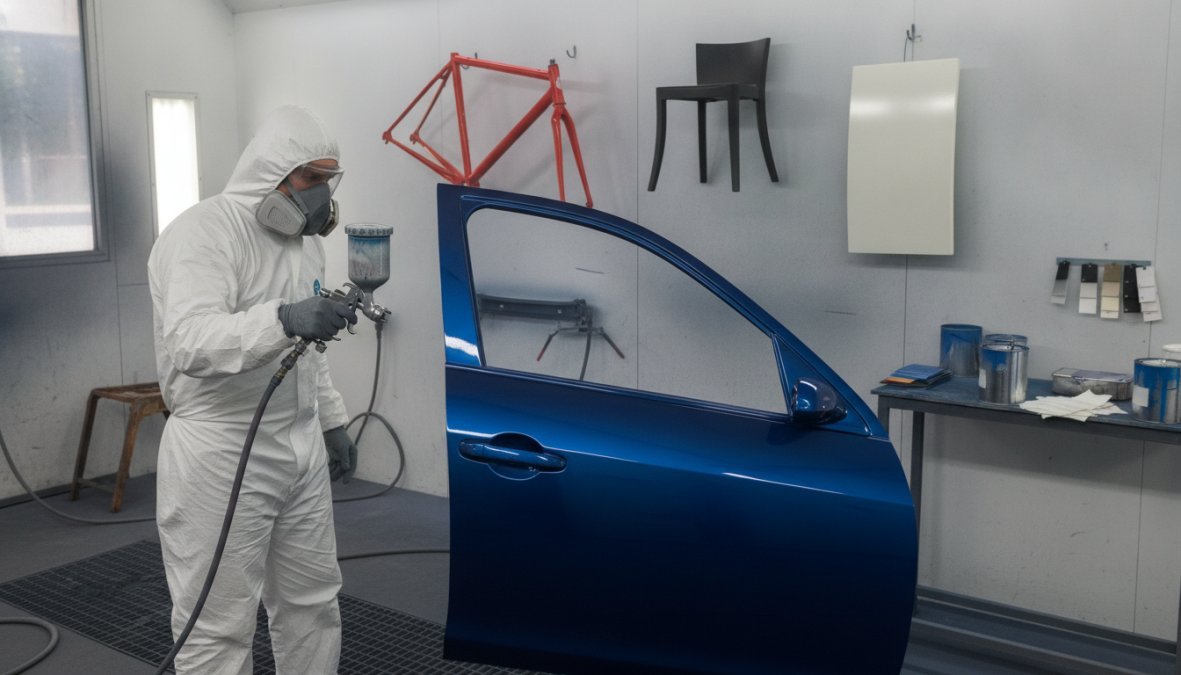
Professional spray painting applies paint in a fine, atomized mist that settles into an even, brush-mark-free layer. The finish is measurably smoother than brush or roller application and maintains uniformity over time without peeling or uneven wear.
Atomization breaks paint into microscopic particles before contact with the surface. Whether using an HVLP (High Volume Low Pressure) system for trim work or an airless sprayer for large walls, the result is consistent coating thickness across every square inch. No roller stipple. No brush marks.
For Toronto homeowners, this means:
- Textured surfaces like popcorn ceilings or stucco get full, even coverage without pooling
- Complex geometry such as crown moulding and cabinetry is coated in a fraction of manual application time
- Paint adhesion is stronger because atomized particles penetrate surface pores more effectively
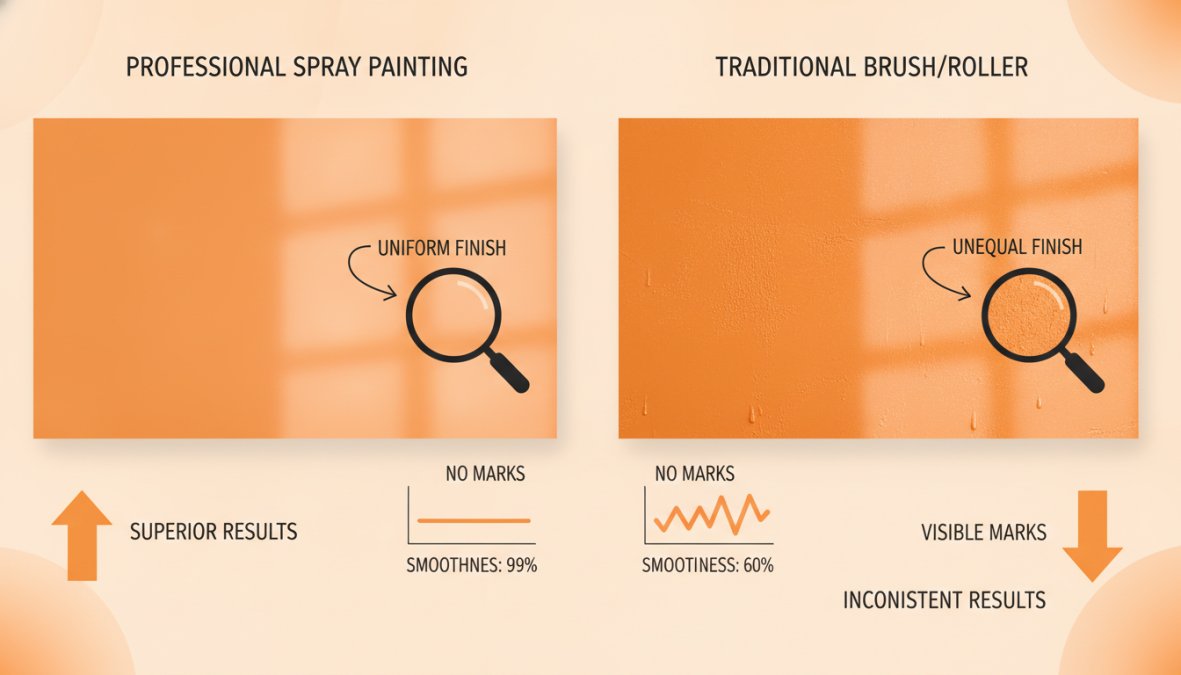
The difference is especially clear on ceilings, where DIY attempts often leave visible lap marks that professional spraying eliminates entirely.
For [popcorn ceiling removal projects](/popcorn-celing-removal-calculator/), ask your contractor about combining ceiling removal with an immediate spray-painted finish. The transition from textured to smooth is far cleaner when both steps happen in the same visit.
Spray Painting vs Brush Painting: Key Differences
Brush and roller application leaves behind texture. Roller stipple, the faint bumpy pattern left by roller nap, becomes obvious under raking light. For high-end interior painting in Toronto properties, that inconsistency is a problem.
| Application Method | Finish Quality | Speed | Best For |
|---|---|---|---|
| Airless Sprayer | Smooth, uniform | Fastest | Large walls, ceilings, exteriors |
| HVLP Sprayer | Fine, precise | Moderate | Trim, cabinets, detail work |
| Roller | Slightly textured | Moderate | Budget-friendly wall painting |
| Brush | Variable | Slowest | Cut-in edges, small areas |
The spray versus brush debate comes down to project scope and finish standard. For a rental unit repaint, a roller may suffice. For a custom home where clients want furniture-quality finishes on built-in shelving, only professional spray delivers.
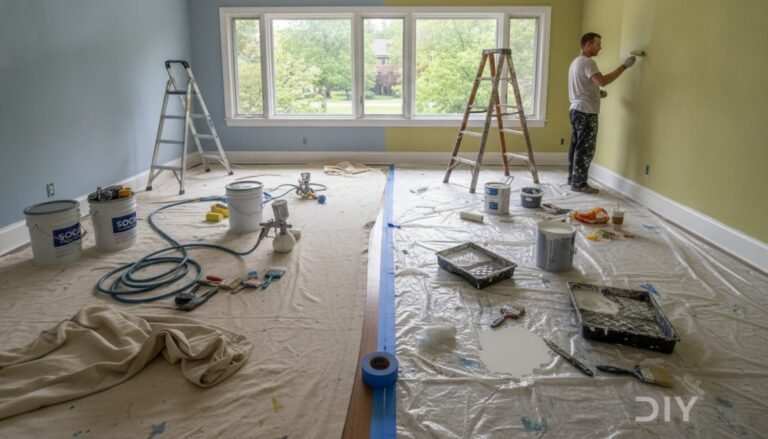
Spray painting requires significantly more preparation time than brush work. Masking windows, floors, and fixtures properly adds time upfront. That preparation is where amateur spray attempts fail. Overspray on unmasked surfaces is one of the most common and costly mistakes in DIY spray projects.
Skipping proper masking before spray application is the single most expensive mistake homeowners make. Overspray on hardwood floors, glass, or stainless steel appliances can require professional remediation that costs more than the original paint job.
According to Health Canada’s guidance on VOC exposure during interior painting, adequate ventilation is essential during spray painting. Professional contractors manage this with PPE and controlled airflow.
Best Surfaces for Spray Painting Applications
Not every surface benefits equally from spray application. Understanding which materials respond best helps homeowners set realistic expectations.
Spray painting performs best on:
- uPVC windows and doors: Professional spray application restores uPVC to factory-fresh appearance and extends frame life by years without replacement costs.
- Metal surfaces: Fencing, railings, and steel doors accept spray coatings with excellent adhesion when properly primed, with more consistent coating thickness than brush application.
- Wood trim and cabinetry: HVLP systems produce finishes on wood that rival factory-applied coatings. Kitchen cabinet repaints are one of our most requested services.
- Textured ceilings: Popcorn and stucco textures are nearly impossible to coat evenly with a roller. Spray application follows contours without over-loading peaks or missing valleys.
- Large exterior surfaces: Siding, fences, and decks cover faster and more evenly under spray, with durable finishes that hold up against Ontario’s freeze-thaw cycles.
Paint type matters too. Acrylic is water-based, low VOC, and fast-drying, excellent for interior walls. Enamel provides a hard, durable finish best for trim and high-traffic surfaces. Polyurethane offers maximum durability for floors and heavy-wear areas. Choosing the wrong paint type for a surface is a common DIY mistake.
Cost of Professional Spray Painting: Value vs Investment
The real question isn’t whether professional spray painting costs more than DIY. It’s whether the outcome justifies the investment.
A professionally sprayed interior painting job in a Toronto home increases perceived property value, reduces repainting frequency, and eliminates costly mistakes like overspray damage or uneven coverage requiring a second coat.
Professional-grade equipment is another factor. Airless sprayers with HEA (High Efficiency Airless) technology reduce overspray while maintaining coverage speed. Consumer-grade sprayers lack the pressure consistency and spray pattern control of commercial units. The finish quality gap is significant and visible.
A professionally applied spray finish with proper primer application lasts considerably longer than a rushed DIY coat. Touch-up protocols are simpler on smooth, uniformly sprayed surfaces than textured roller finishes.
According to the Canada Mortgage and Housing Corporation’s home improvement guidance, quality finishes applied during renovation directly contribute to maintaining and improving residential property value.
For commercial clients, the cost-benefit analysis shifts further toward professional spray services. Application speed on large spaces reduces downtime, and uniform coverage across expansive surfaces is only achievable at scale with professional equipment.
The benefits of professional spray painting compound over time: better initial finish quality means longer intervals between repaints, lower maintenance costs, and higher property appeal. The upfront investment pays back across the life of the finish.
Professional contractors also manage VOC emissions through proper ventilation and increasingly use low-VOC formulations. Spray systems calibrated by experienced operators apply closer to optimal coating thickness, reducing excess product use compared to over-loaded rollers.
Get an instant interior painting quote or use the popcorn ceiling removal calculator on our website to understand your project scope before reaching out.
Frequently Asked Questions
What are the main benefits of professional spray painting services?
Professional spray painting delivers superior finish quality, uniform coverage, and faster application compared to brush or roller methods. Professionals use HVLP and airless sprayers to achieve consistent results on complex surfaces. Key benefits include durability, a flawless professional finish, reduced application time, and proper surface preparation that ensures long-lasting results. Soca Services in Toronto specializes in these precision finishes for both residential and commercial projects.
Is spray painting vs brush painting worth the investment?
Spray painting typically costs more upfront but delivers superior finish quality and uniformity, especially on textured or complex surfaces. Brush painting leaves visible brush marks and takes significantly longer. For interior and exterior projects where appearance matters, professional spray painting provides better ROI through durability and aesthetic appeal. Professionals eliminate overspray waste and ensure proper atomization for a flawless result that hand painting cannot match.
How long does spray paint take to dry after professional application?
Drying time depends on paint type and environmental conditions. Most professional spray-applied coatings dry to the touch within 1-4 hours, but full curing may take 24-48 hours. Professional-grade equipment applies thinner, more uniform coats that dry faster than brush or roller applications. Professionals understand curing times for different paint types and can advise on when surfaces are ready for use, ensuring your project timeline stays on track.
What surfaces are best for professional spray painting?
Spray painting works excellently on textured surfaces, cabinetry, trim, complex geometry, metal, uPVC, and exterior materials. It's ideal for achieving uniform coverage on intricate areas where brushes leave stipple marks. Interior walls, doors, and detailed architectural features benefit from spray application. Professionals assess each surface and select appropriate equipment, HVLP for fine finishes, airless for speed, ensuring optimal results for your specific project needs.
Choosing the right painting contractor in Toronto means looking past the price and asking about process, equipment, and finish standards. Soca Services Painting brings over a decade of experience, specialization in professional spray painting and precise finishes, and a straightforward 4-step process that keeps every project on track from first consultation to final walkthrough. Get your free estimate today and see what a properly sprayed finish looks like in your home.
This article was written using GrandRanker