Table of Contents
- What Is Brick Staining and Why Homeowners Choose It
- Masonry Stain vs Paint: Key Differences
- The Brick Staining Process: Step-by-Step
- Understanding Brick Staining Cost and Value
Last Updated: August 11, 2026
What Is Brick Staining and Why Homeowners Choose It
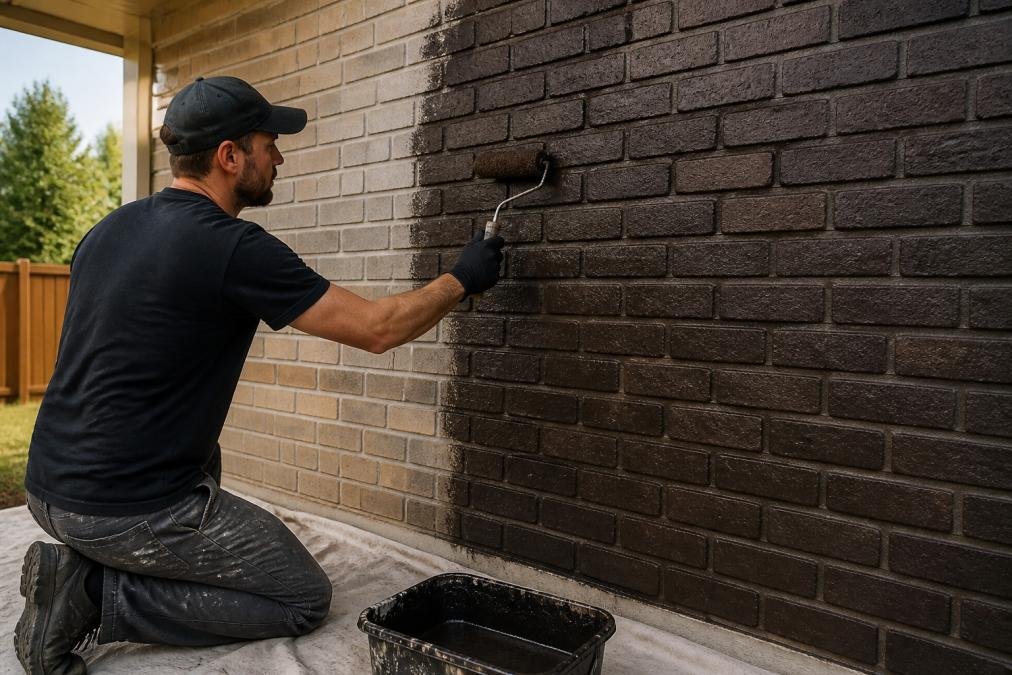
Brick staining is the process of applying a semi-transparent, penetrating color to masonry surfaces that enhances natural texture while providing protection against weathering. Unlike paint, which sits on the surface and can peel, brick staining absorbs into the pores of the masonry, creating a durable finish that breathes with the material.
Homeowners across Toronto, Vaughan, North York, and the Greater Toronto Area choose brick staining to refresh aging or discolored brick without the commitment of a full paint job. The semi-transparent nature allows the brick’s natural texture to show through, maintaining the authentic aesthetic that makes masonry appealing. At Soca Services Painting, we’ve worked with homeowners who wanted to restore their brick facades to their original beauty while adding modern color dimension.
Brick staining is ideal for heritage properties in the GTA. Since it doesn’t seal the brick entirely, the masonry can continue to breathe naturally, which is critical for older homes where moisture management is essential.
Masonry Stain vs Paint: Key Differences
Understanding the distinction between masonry stain and paint is essential before committing to either approach.
Paint forms a solid film on top of the brick surface, providing excellent color coverage. However, it creates a barrier that prevents the brick from breathing. Over time, moisture trapped behind the paint can cause it to peel, bubble, or fail, especially in cold climates where freeze-thaw cycles stress the masonry.
Masonry stain penetrates into the pores of the brick rather than sitting on top. The brick remains breathable, allowing moisture to move through naturally. Stain won’t peel because there’s no film to separate from the substrate. The color is subtle and lets the texture show through. Stain typically lasts longer than paint because it doesn’t rely on surface adhesion.
For Toronto’s climate, where temperature swings and moisture are common challenges, brick staining often outperforms paint over the long term.
| Characteristic | Masonry Stain | Paint |
|---|---|---|
| Application Method | Penetrates into brick pores | Forms surface film |
| Breathability | Allows moisture to pass through | Seals the brick |
| Durability | Longer-lasting, no peeling | Requires periodic repainting |
| Color Appearance | Semi-transparent, texture visible | Solid coverage, uniform color |
| Maintenance | Minimal upkeep needed | Regular touch-ups required |
| Climate Performance | Excellent in freeze-thaw cycles | Can fail in extreme weather |
For most Toronto homeowners, brick staining is the smarter choice. It respects the natural properties of masonry while delivering a professional, lasting color transformation.
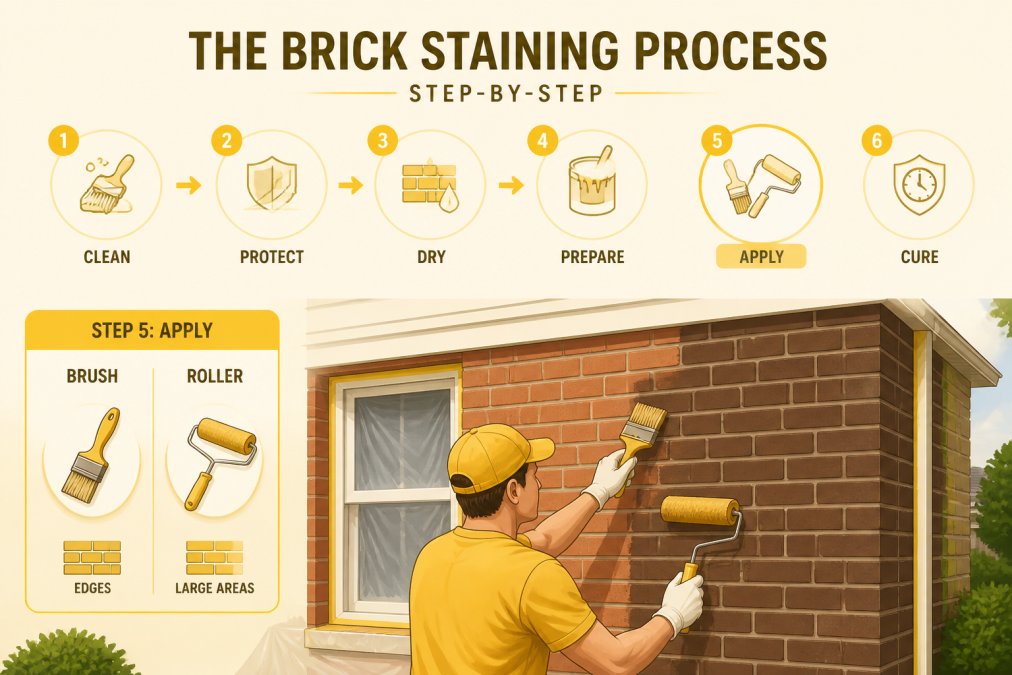
The Brick Staining Process: Step-by-Step
The brick staining process requires careful preparation and precise application to achieve professional results.
Step 1: Surface Inspection and Cleaning
The surface must be thoroughly assessed and cleaned. This means removing dirt, algae, efflorescence (white mineral deposits), and any loose mortar. We use pressure washing at controlled settings to avoid damaging the brick. In Toronto’s humid climate, brick often develops mold or mildew, which must be eliminated before staining.
Step 2: Repair and Mortar Work
Any damaged mortar joints, cracks, or deteriorated brick should be addressed before staining begins. Repointing mortar joints ensures water won’t penetrate behind the brick.
Step 3: Masking and Protection
Windows, trim, hardware, and any surfaces that shouldn’t receive stain are carefully masked with tape and plastic sheeting. Stain is difficult to remove once it dries, so thorough masking prevents costly cleanup work.
Step 4: Primer Application (if needed)
Some brick, particularly very porous or new masonry, benefits from a primer coat to ensure even stain penetration and consistent color.
Step 5: Stain Application
The stain is applied using brushes, rollers, or spray equipment depending on the surface area. Multiple thin coats are better than one thick coat, allowing for even color development and better adhesion.
Step 6: Curing and Drying
After application, the stain needs time to cure fully. Most masonry stains require 24-48 hours of dry conditions before exposure to rain or heavy moisture.
Full hardness can take up to a week. Exposing the brick to heavy rain or pressure washing during this period can compromise the finish and create uneven coloring.
Understanding Brick Staining Cost and Value
Brick staining is an investment in your home’s curb appeal and long-term protection. A well-executed staining project can last 10-15 years or longer with minimal maintenance, far exceeding the lifespan of most paint finishes on masonry.
Several factors influence the overall cost of a brick staining project: the size of the surface area, surface condition, and design complexity. Heavily soiled or damaged brick requires more intensive preparation work. Professional brick staining protects the masonry from further weather damage, UV exposure, and moisture intrusion, extending the life of the brick itself and preventing costly repairs down the road.
Soca Services Painting provides detailed project proposals that break down exactly what’s included in the work: surface preparation, primer application, stain coats, curing time, and cleanup. Contact Soca Services for a free estimate and learn how brick staining can transform your property.
Homeowners who want a lasting, low-maintenance update to their brick exterior. Brick staining is ideal for those who appreciate the natural texture of masonry and want to preserve it while adding color depth and protection.
Why Professional Brick Staining Delivers Better Results
The difference between professional brick staining and amateur attempts comes down to preparation, technique, and material selection.

Quality masonry stains from manufacturers like Sherwin-Williams or Benjamin Moore are formulated to penetrate properly and cure to full hardness. Professional painters have access to premium materials and know which products work best for specific brick types and environmental conditions.
Finally, professionals carry liability insurance and provide warranties on their work. This accountability drives higher standards throughout the project.
Get a free estimate from Soca Services Painting today. Learn more on our website about how professional brick staining can enhance your Toronto, Vaughan, North York, or King City property.
Frequently Asked Questions
Is brick staining better than painting?
Brick staining offers distinct advantages over paint. Stain penetrates the masonry surface, enhancing the natural brick texture while allowing it to breathe. Unlike paint, stain won't peel or chip, and it provides superior longevity on brick surfaces. Paint sits on top of the brick and can trap moisture, leading to deterioration over time. Stain also maintains the brick's authentic appearance while transforming its color. For homeowners seeking durability and aesthetic appeal, brick staining is the preferred choice for long-lasting results.
How long does professional brick staining last?
Professional brick staining typically lasts 10-15 years or longer, depending on climate, sun exposure, and maintenance. The stain penetrates deep into the masonry, creating a durable finish that resists fading and weathering better than surface coatings. Regular maintenance, such as gentle cleaning and occasional resealing, can extend the life of your stained brick. Soca Services applies high-quality masonry stains that withstand Toronto's weather patterns, ensuring your brick maintains its rich color and finish for years to come.
What is the difference between brick stain and masonry paint?
Brick stain penetrates into the porous masonry surface, allowing the brick to breathe and showcase its natural texture. Masonry paint creates a protective coating that sits on top of the brick. Stain offers better adhesion, won't peel, and maintains the brick's authentic look while changing its color. Paint provides more uniform coverage but can trap moisture and eventually chip or peel. Stain is ideal for preserving brick character; paint works better for dramatic color changes or covering significant damage. Both have their place, but stain is often preferred for heritage homes and properties where preserving brick integrity matters.
Can you change the color of brick with stain?
Yes, brick staining allows you to transform your brick's color while maintaining its natural texture and character. Stain comes in a wide range of hues, from warm earth tones to modern grays and deep browns. The final color depends on the brick's original shade, porosity, and the stain formulation applied. Professional applicators like Soca Services understand how different brick types absorb stain and can recommend colors that complement your home's architecture. Unlike paint, stain enhances rather than masks the brick, creating a sophisticated, authentic finish that adds curb appeal and property value.
Brick staining transforms the appearance of masonry while respecting its natural properties. If you’re considering refreshing your brick exterior in Toronto or the surrounding areas, professional brick staining is a durable, attractive solution. Contact Soca Services Painting for a free estimate and learn how we can restore your brick to its best appearance. Our team specializes in precision finishes and detailed surface work that delivers results homeowners trust.
This article was written using GrandRanker