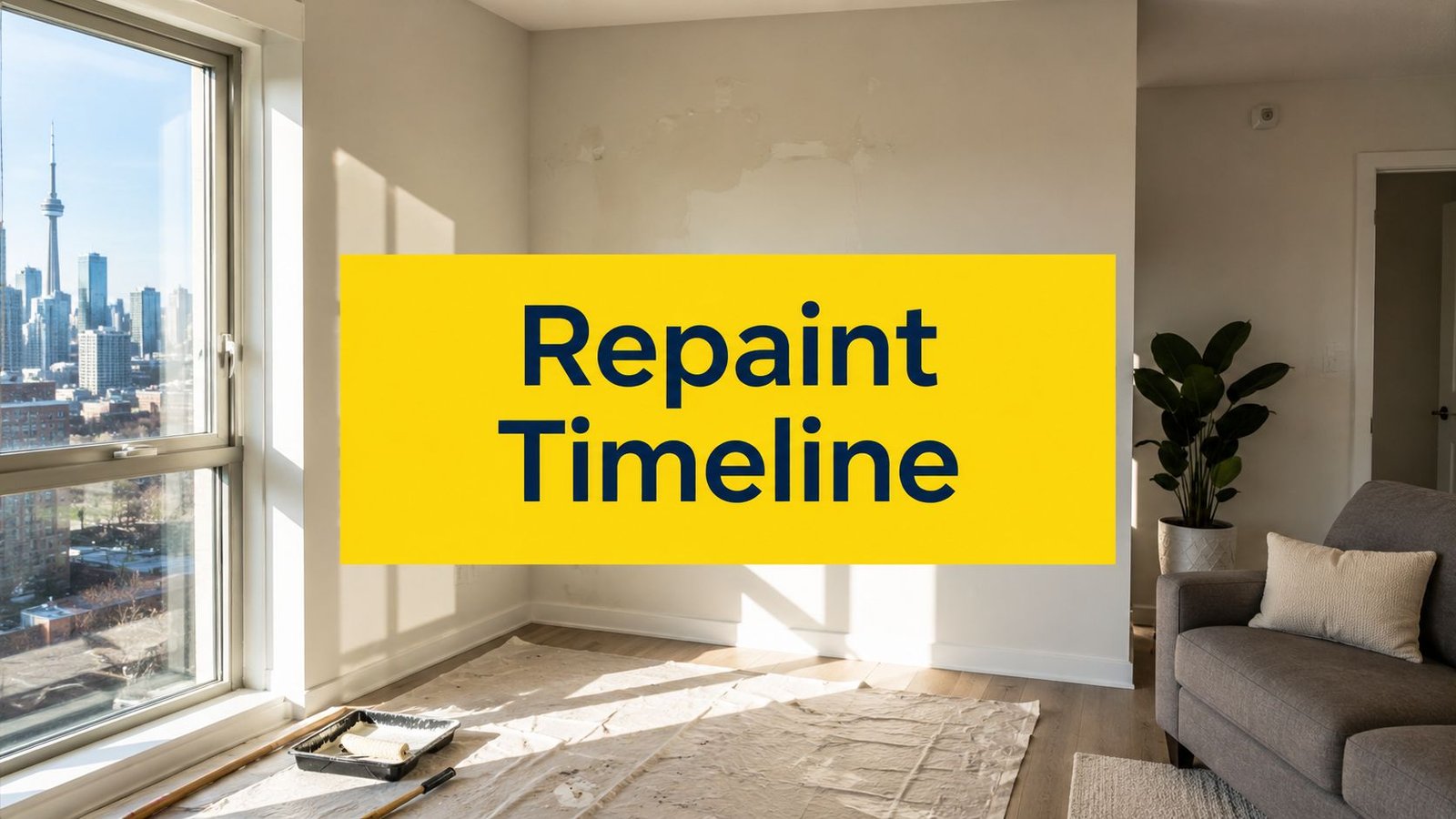
You've probably got one room in the house that keeps telling on itself. A hallway picked up winter boots, a kitchen wall has the marks that never quite wash off, or a bedroom still looks fine until the afternoon sun hits it and the colour looks tired. In Toronto, that decision to repaint usually comes up sooner than people expect, because rooms age at different speeds and the city's mix of long winters, bright summer light, and heavy day-to-day use shows up on walls fast.
The practical answer to how often to repaint house interior starts with the room, not the calendar. Industry guidance commonly places high-traffic interior areas such as hallways, entryways, kitchens, and bathrooms at about every 2 to 5 years, while low-traffic rooms such as adult bedrooms and some living rooms are often repainted every 5 to 10 years. You can use that range as a baseline, then adjust for how your home lives.
For Toronto homeowners, property managers, and commercial clients, that matters because repainting is rarely just about colour. It's about keeping surfaces cleanable, reducing the look of wear, and making sure a space still feels cared for when guests, tenants, buyers, or staff walk through the door. If you want a broader sense of paint lifespan before you plan the next project, see how long interior paint typically lasts.
Why Toronto Homeowners Ask About Repaint Timing
A lot of repaint decisions start in a very ordinary moment. You're standing in the kitchen with a mug in your hand, looking at the wall beside the fridge, and the paint no longer looks fresh even though nothing is “wrong” with it. Or you're heading up the stairs and the hallway has a line of scuffs from backpacks, pets, and winter gear, which is when people start asking whether the whole interior needs attention or just a few touch-ups.
Toronto homes make that question feel different from a brand-new build in a milder market. Older houses across the GTA tend to show wear sooner because the surfaces have already lived through more seasons, more cleaning, and more patchwork repairs. In the city, that adds up to more repaints that are driven by maintenance, turnover, and everyday wear than by a desire to chase a new wall colour.
Practical rule: if a room is hit daily, cleaned often, or exposed to strong daylight, plan on the shorter end of the repaint range.
That's why the same paint job can age well in one room and look dated in another. A front hall can feel tired after a few years, while a guest room with little use may still look fine much longer. The right schedule depends on which surfaces carry the most traffic and which ones sit there.
For a Toronto homeowner weighing sale prep, family life, or a refresh before guests arrive, that's the useful question. Not “Is the paint ruined?” but “Is this room still doing its job?” If the answer is no, repainting becomes a smart maintenance decision, not a cosmetic indulgence.
Standard Room-by-Room Repaint Timelines
A good repaint schedule starts with the room itself. That's the fastest way to avoid overpainting low-use spaces and underpainting the rooms that get hit every day. Adult bedrooms can last about 7 to 10 years, while children's bedrooms usually need repainting every 2 to 3 years, and hallways and entry areas often need repainting every 2 to 3 years as well because scuffs and handprints build up faster there than in quieter rooms.
Typical Interior Repaint Frequency by Room
| Room | Typical Repaint Interval | Why It Wears Faster |
|---|---|---|
| Kitchen | Every 2 to 5 years | Grease, steam, and frequent wiping |
| Bathroom | Every 2 to 5 years | Moisture, steam, and cleaning load |
| Hallway | Every 2 to 3 years | Scuffs, hand contact, and movement |
| Entryway | Every 2 to 3 years | Shoes, bags, and winter grit |
| Living room | Every 5 to 10 years | Moderate use, often lower contact |
| Adult bedroom | About 7 to 10 years | Lower traffic and less cleaning |
| Children's bedroom | Every 2 to 3 years | Activity, marks, and changing needs |
| Dining room | Every 5 to 7 years | Moderate use, occasional wear |
| Home office | Every 5 to 7 years | Chair rub, screen glow, and desk use |
| Ceilings in low-moisture rooms | 10+ years | Minimal contact and less staining |
These are starting points, not hard rules. Industry guidance still treats repaint timing as room-by-room maintenance, which is why a whole-house calendar never works as well as a practical walkthrough. A nursery with toys and sticky fingers ages faster than a formal dining room, and a front hall with salted boots can look older long before the paint technically fails.
If you're planning a broader refresh, it also helps to know how long the work usually takes in real life. See how long interior painting takes so you can match the repaint plan to your schedule instead of forcing the other way around.
Useful shorthand: the more a room gets touched, cleaned, steamed, or exposed to daylight, the sooner it belongs on your repaint list.
Toronto homeowners often get the best results by prioritising the rooms that are seen first and used hardest. That means the hallway, entry, kitchen, and bathrooms usually deserve attention before the spare bedroom or ceiling in a dry room.
Factors That Shorten or Extend Paint Life
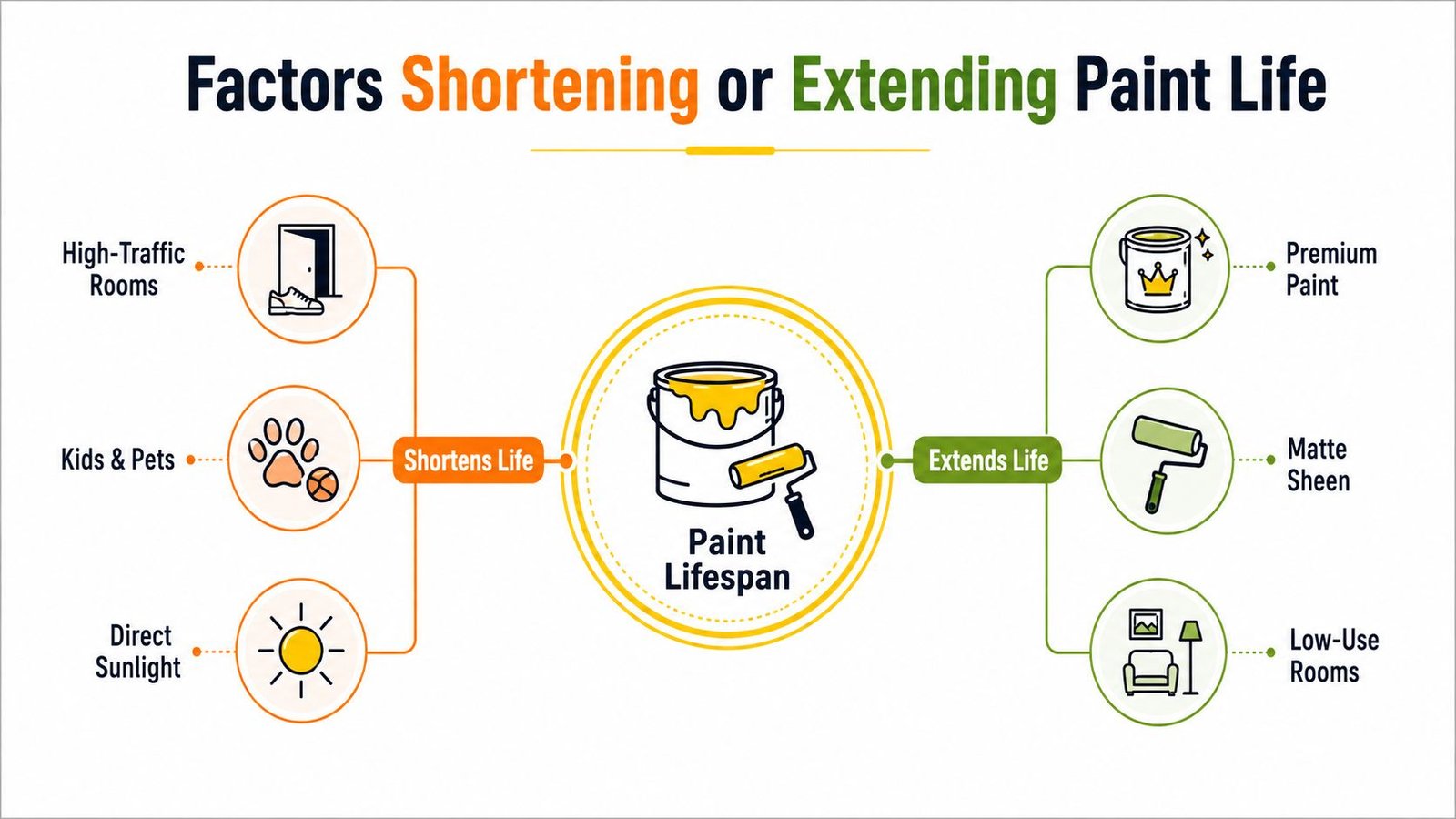
Paint doesn't age evenly. Two rooms painted with the same product can look very different a few years later because the load on the wall is different. The biggest variables are traffic, moisture, cleaning habits, daylight, and who lives in the home.
What pushes a repaint earlier
High-use spaces wear faster because people touch them constantly. Hallways, stair landings, and entryways collect scuffs, dings, and hand contact long before the coating breaks down. In kitchens, bathrooms, and laundry areas, humidity and cleaning load matter just as much, since steam and moisture can push repaint cycles towards 3 to 4 years in those rooms, while corridors and entries often need repainting every 2 to 4 years because visible wear shows up early.
Sunlight is another quiet offender. In a Toronto home with strong southern exposure, a living room may hold up physically while still looking flat or faded by the time you notice it. That's one reason some rooms “feel old” even when the wall surface hasn't peeled or cracked.
What helps paint last longer
Choosing the right finish matters. Washable products in high-touch areas usually hold up better than softer finishes that can mark easily, especially around switches, doors, and chair rails. Lower-use rooms last longer too, as they don't get rubbed, scrubbed, or hit with constant daylight.
Practical rule: if a room gets cleaned often, painted trim nearby matters as much as the wall colour itself.
Household composition matters just as much as room type. Kids, pets, and tenants all increase the rate of visible wear, while a low-occupancy space tends to stay cleaner and calmer. For that reason, a rental property often follows a different repaint rhythm than an owner-occupied home, even when the layout is the same.
If you're trying to choose a finish for busy rooms, see the best interior paint finish for high-traffic spaces for a practical way to match durability to use.
Clear Signs Your Interior Needs a Repaint

A calendar gets you in the right neighbourhood, but the walls tell you when it's time. If the paint still looks healthy, you can wait. If the room is showing the same complaints in several places, the repaint is probably overdue.
The signs to check first
- Fading and dullness: Colour looks washed out, especially near windows or on walls that get strong daylight.
- Yellowing: Whites and light neutrals start to look older, often in rooms with lower air circulation or more household residue.
- Chalking: The paint leaves a powdery residue when touched, which usually means the finish is breaking down.
- Peeling or cracking: The surface no longer holds together cleanly, so water, age, or poor prep may be part of the problem.
- Mildew or stains: Marks that keep returning after cleaning are a sign the room needs more than a wipe-down.
A wall that wipes clean easily still has some life left. A wall that stays blotchy, grabs dirt, or keeps showing stains after cleaning is telling you the finish has lost its usefulness. That's especially relevant in bathrooms, basements, and laundry rooms, where moisture can leave a lingering smell or leave the room feeling closed in even when it looks okay at first glance.
If the room smells damp, looks patchy, and doesn't clean up well, don't wait for the paint to peel before acting.
Outdated colour is a separate issue, but it still matters. A room can be physically sound and still feel ready for repainting because the finish no longer suits the space or the rest of the home. That's where a refresh becomes both a maintenance move and a design reset.
Homeowners who are unsure often start by checking the hallway, kitchen, and the rooms that get the most daylight. Those are the places where fading and wear show up first, and they usually give the clearest answer.
Touch-Up, Single Room, or Full Repaint
A lot of repainting mistakes start with choosing too much or too little scope. Small marks don't always justify a full-home project, but patching forever can leave a home looking uneven. The right choice depends on whether you're fixing isolated damage, refreshing one space, or resetting the whole interior.
How to choose the scope
- Spot touch-up: Best for small scuffs, nail holes, and isolated marks that match the existing colour well.
- Single-room refresh: Best when one room looks tired, needs a new colour, or has wear that's noticeable throughout the space.
- Multi-room phased repaint: Best when the home is occupied and you need to spread the work out without taking over the entire house at once.
- Full repaint: Best when several rooms are worn, the colour plan feels disconnected, or you're preparing the home for sale or a major tenancy change.
Designers often recommend repainting every 3 to 5 years to stay current with trends, while also noting that paint protects surfaces, fixes chips and fading, and can help preserve home value, which is why repainting is often a protective choice as much as an aesthetic one. That matters in Toronto, where a clean interior can change how quickly a listing feels ready and how professionally a rental presents.
For a good example of why the smallest repair can go wrong, see paint pen mistakes to avoid. Quick fixes are tempting, but a mismatched sheen or sloppy patch often stands out more than the original scuff.
Rule of thumb: patch only when the repair will disappear into the wall. If it won't blend, repaint the section.
If you're comparing a single-room update with a broader project, the cost side matters too. A useful starting point is this Toronto house interior pricing guide, especially if you're deciding between refreshing one floor or tackling the whole interior at once.
Building a Personalised Repaint Schedule
A useful repaint schedule starts with the room, then adds the way the home is used. A young family in Vaughan usually needs a faster cycle in hallways, kids' rooms, and entry areas than a downsizing couple in North York, because the traffic pattern is different. A landlord in King City has another layer to think about, since turnover and tenant expectations can make a clean reset more valuable than squeezing every last year out of the existing finish.
A simple way to build the schedule
Start with the baseline for each room. Then ask three questions. How many people use it every day? How much daylight hits it? How often does it get cleaned?
If the answer is “a lot” to any of those, plan on the shorter end of the repaint range. If the room is calmer, stays out of direct light, and doesn't get scrubbed often, it can usually wait longer.
Matching product choices to the room
Washable finishes belong in the places that get touched. Softer, lower-gloss looks can work in quieter rooms where durability matters less than appearance. For kitchens, baths, and front halls, the better investment is usually a finish that gives you more cleanability and fewer visible marks over time.
Examples from real household patterns
A family home with kids, pets, and heavy use in the main entry often needs the hall and stair zone earlier than the bedrooms. A downsizing couple with a tidy, low-traffic interior may be able to stretch repainting in bedrooms and living spaces, while still refreshing the kitchen and bath on a quicker cycle. A rental property should be judged by occupancy change as much as wall condition, because a fresh interior can make a unit feel move-in ready much faster.
That's why the smartest schedule is not one number for the whole house. It's a room map, a lifestyle check, and a finish choice working together.
What a Professional Repaint Actually Involves
A proper repaint starts long before the first coat goes on. On Toronto jobs, the best results usually come from prep work you never notice, surface cleaning, patching, sanding, masking, and checking for damage that needs more than paint alone. If you're wondering whether drywall repair is included in standard painting services, see our guide on what professional prep actually covers.
For a homeowner, the process usually begins with a walk-through, a colour conversation, and a close look at what needs attention before the job can move ahead.
The usual sequence
First comes the consultation and colour selection, often with product guidance on Sherwin-Williams or Benjamin Moore depending on the room and finish. Then the surfaces get prepped, which can mean cleaning, filling minor defects, sanding rough areas, and masking trim, floors, and fixtures. After that, primer goes on where needed, then the finish coats, and finally a walkthrough to catch missed spots or small touch-ups.
That prep takes real time, especially in older Toronto homes where past repairs, humidity movement, and winter dryness can leave joints, corners, and patched areas uneven. A room with old repairs or surface damage usually needs more attention before paint can cover cleanly.
For a useful parallel on surface prep, from The Sofa Cover Crafter gives a clear reminder that careful prep is what keeps the finish looking intentional instead of patched together.
What affects price and timing
Room count, ceiling height, surface condition, access, and product choice all affect the quote. Homes that need drywall repair, stain blocking, or extra trim work take more labour than a simple repaint on clean walls. In Toronto, that difference shows up quickly in houses near the lake where humidity shifts, salt air, and recurring condensation can leave more surface wear, and in commercial spaces where access and scheduling add their own constraints.
For property managers, turnover timing matters as much as wall condition. For commercial clients, the scope often has to work around business hours, tenant movement, and the need to keep spaces presentable while the repaint is underway. Homeowners usually feel the biggest cost difference when a room looks fine from across the room but still needs patching, caulking, and careful masking up close.
A full professional repaint should feel orderly, not rushed. If the job is being priced fairly, the contractor should be able to explain what's included, what's excluded, and where the finish quality comes from.
Putting It All Together for Your Next Repaint
The cleanest way to judge repaint timing is still room by room. High-traffic areas like hallways, entryways, kitchens, and bathrooms usually need attention sooner, while quieter rooms can stay in good shape much longer. Once you add Toronto's real-life wear, like winter grit, humidity swings, long winter light gaps, and strong daylight in brighter exposures, the shorter end of the range starts to make more sense.
For homeowners, that means watching the rooms you use most. For property managers, it means planning around turnover and presentation. For commercial clients, it means choosing repaint cycles that keep spaces looking professional without waiting for visible failure.
The walls will tell you when the schedule is off. Fading, staining, scuffs, and difficult cleaning are the clues that matter most. If more than one room is showing those signs, it's probably time to stop patching around the problem and plan the next repaint properly.
If your interior is starting to look tired, Soca Services Painting can help you plan the right scope, finish, and timing for a lasting result. Visit Soca Services Painting to book a free estimate and get a professional repaint plan for your Toronto, Vaughan, North York, or King City property.