

When you're starting to budget for a fresh coat of paint, it's helpful to have a ballpark figure in mind. For most house painting projects in Toronto, you can expect to see prices ranging from $5,000 to $12,000 for interior work. If you're tackling the outside, that figure is typically a bit higher, landing somewhere between $6,000 and $15,000 for exterior painting.
These numbers are a solid starting point, but remember, the final quote will always depend on the specifics of your home—its size, current condition, and exactly what you need done.
Your Quick Guide to Toronto Painting Costs
Getting a handle on house painting prices is the first real step in any home transformation. Whether you're just looking to freshen up a single room or planning a complete exterior overhaul, understanding the potential costs helps you build a realistic budget and, just as importantly, find the right professionals for the job.
The price tag for a painting project here in the Greater Toronto Area (GTA) is about much more than just the paint itself. It’s a complete package that includes labour, materials, and all the crucial preparation work that makes a finish last.
Think of it like a financial snapshot. Just as a home in a modern Mississauga suburb has a different profile from a historic property in a dense Toronto neighbourhood, the painting costs will vary, too.
Setting a Realistic Budget in the GTA
To give you a clearer picture, let's look at how these costs typically break down. This visual offers a straightforward comparison of what you might expect for interior versus exterior painting jobs in the Toronto market.
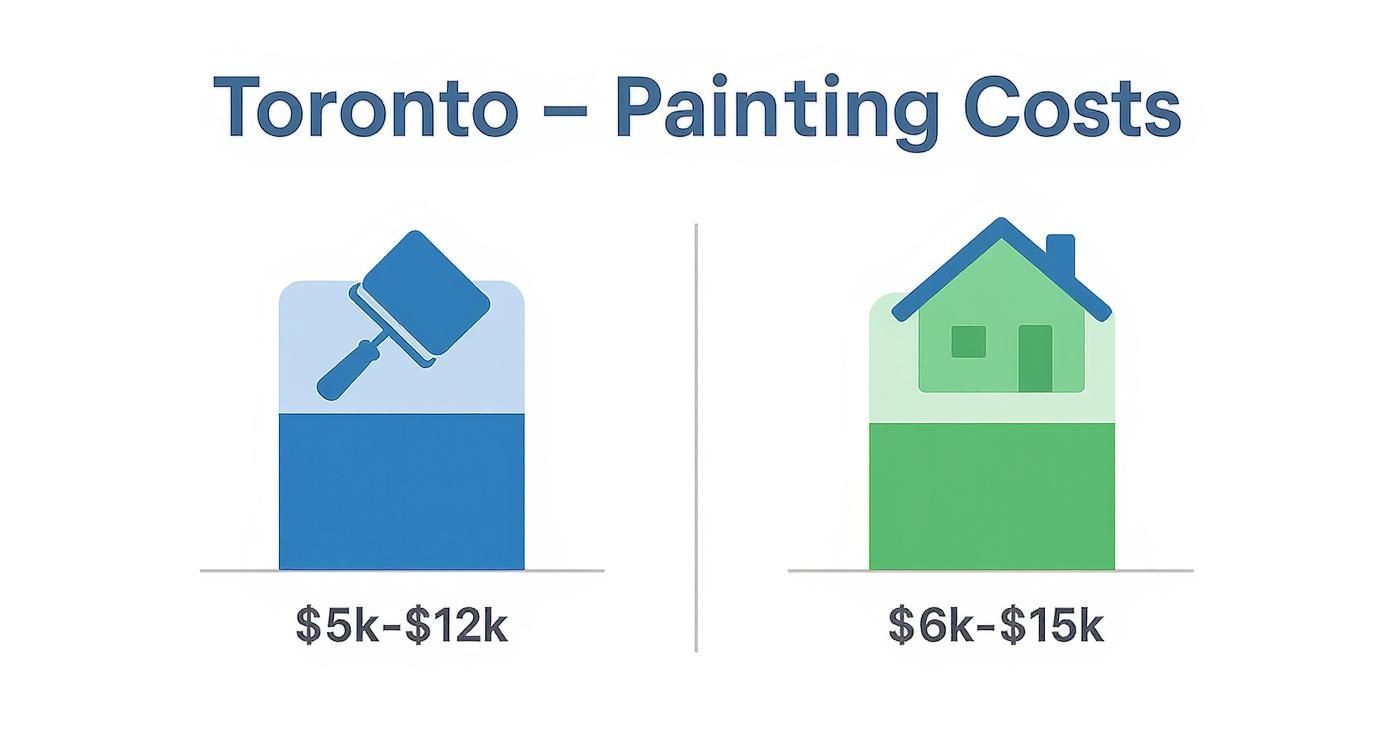
As you can see, exterior projects often come with a higher price tag. This is usually because they require specialized equipment like scaffolding or lifts, more durable weather-resistant paints, and significantly more intensive prep work to deal with the elements.
To get even more granular, you can explore the typical painting rate per sq ft to help fine-tune your own project estimate.
A great way to visualize these costs is with a simple table that lays out average price ranges based on common home sizes in our area.
GTA House Painting Cost Estimates at a Glance
| Home Size (sq. ft.) | Average Interior Cost Range (CAD) | Average Exterior Cost Range (CAD) |
|---|---|---|
| 1,500 sq. ft. | $4,500 – $7,000 | $5,500 – $9,000 |
| 2,000 sq. ft. | $5,500 – $9,000 | $7,000 – $12,000 |
| 2,500 sq. ft. | $7,000 – $11,000 | $8,500 – $14,000 |
| 3,000+ sq. ft. | $8,500 – $12,000+ | $10,000 – $15,000+ |
These figures should give you a more concrete idea of what to expect, helping you align your budget with your home's specific needs.
How Regional Prices Compare
These kinds of price fluctuations aren't unique to the GTA. Take another high-value market like the San Francisco Bay Area, for example. Costs there can vary dramatically based on a home's architectural complexity. While a simple modern home might cost around $5,000 to paint, an intricate Victorian-style house could command prices anywhere from $60,000 to $80,000 simply due to the sheer amount of prep and detailed work required.
This really highlights how a home's style and location are two of the biggest drivers behind the final quote you'll receive. This overview should serve as your starting point, giving you a clear financial picture before we dive into the other specific factors that influence painting prices across Toronto.
What Really Drives Your Painting Quote
Ever gotten two painting quotes for the same house that seemed to be from different planets? One quote looks suspiciously low, while the other feels a bit steep. That gap isn't random—it's a direct reflection of what goes into a professional paint job. An objective look at these core components is the key to understanding your quotes and making a smart choice.
Think of it like this: a professional painter is a lot like a chef. The price of a great meal isn't just the cost of the groceries. It’s a mix of their skill and time (labour), the quality of the ingredients (materials), and all the meticulous prep work that happens long before anything hits the pan.
The structure of a professional quote is built on three pillars—labour, materials, and prep work—which determine the quality, durability, and, ultimately, the final price tag on your project.
The Skill Behind the Brush: Labour Costs
When you hire a professional painting crew in the GTA, you're getting so much more than just someone to slap paint on a wall. Labour is almost always the biggest chunk of your quote, typically making up 70-85% of the total cost, and for very good reason. It’s the expertise, precision, and efficiency that separates a weekend DIY job from a flawless, professional finish.
Skilled labour covers all the painstaking tasks that demand a steady hand and years of practice. We're talking about razor-sharp cut-in lines along ceilings and trim, a perfectly smooth finish with no drips or roller marks, and the know-how to tackle tricky architectural details. An experienced painter from Toronto or Mississauga works efficiently and safely, especially when dealing with multiple storeys or complex exteriors.
A lowball labour cost might look good on paper, but it can be a red flag for inexperience or a crew that cuts corners. True craftsmanship is an investment that not only looks better but lasts far longer.
At the end of the day, you're paying for the peace of mind that comes from knowing the job will be done right the first time, protecting your home and boosting its value.
More Than Just Colour: The Impact of Materials
Just like a chef insists on fresh, high-quality ingredients, a great painter knows that the materials they choose will make or break the final result. The kind of paint and primer used can definitely move the needle on your quote, but going for the cheapest can is almost always a mistake.
Bargain-bin paints often need extra coats just to get decent coverage, which ironically drives up the labour time and the overall cost. Worse yet, they just don't have the staying power of premium products, leading to premature fading, chipping, and the hassle of repainting much sooner than you'd planned.
High-quality paints, on the other hand, are engineered with superior binders and pigments. This gives them a serious edge:
- Superior Coverage: They cover better in fewer coats, which can actually save on labour hours.
- Enhanced Durability: They stand up to scuffs, stains, and the tough weather we get here in the GTA.
- Long-Term Value: A premium paint job can last for years, saving you a bundle on future repainting.
Investing a little more upfront on the best materials is the smartest financial move, ensuring your home's new look stands the test of time.
The Foundation of a Flawless Finish: Prep Work
This is it. The single most important—and most frequently underestimated—part of any painting project. Proper preparation is the absolute, non-negotiable foundation for a beautiful, long-lasting finish. If a contractor skimps here, the paint job is doomed to fail, no matter how much you spent on the paint itself.
Imagine trying to cook a gourmet meal in a dirty kitchen—it would be a disaster. It's the same idea with painting. Applying a fresh coat over dirty, damaged, or glossy surfaces just traps all those problems underneath, leading to inevitable peeling, blistering, and cracking.
Great prep work is a detailed, multi-step process that can't be rushed:
- Surface Cleaning: Power washing an exterior or thoroughly washing interior walls to get rid of dirt, grime, and mildew.
- Surface Repair: Filling cracks and holes in drywall, fixing any damaged wood or siding, and making sure the surface is sound.
- Sanding: Smoothing out all the repaired spots and scuff-sanding glossy areas so the new paint has something to grab onto.
- Caulking: Sealing all the gaps around windows, doors, and trim to block out moisture and create clean, seamless lines.
- Priming: Applying the right primer to cover stains, ensure the final colour is rich and even, and promote rock-solid adhesion.
This meticulous effort is labour-intensive and adds to the cost, but it's what guarantees your investment is protected for years to come. To see just how vital this stage is, check out our guide on why proper prep is the secret to long-lasting exterior paint. When you're comparing quotes, make sure the scope of prep work is spelled out in detail.
Comparing Exterior and Interior Painting Costs
It’s a common question: which costs more, painting the outside of a house or the inside? While both projects can totally transform your home, the house painting prices are rarely the same. Exterior painting is almost always the more expensive job, and understanding why is key to planning your budget.
Think of it like this: painting a room is a straightforward project in a controlled environment. But taking on your home's exterior, especially with the GTA's distinct seasons, is like going into battle with the elements. That fundamental difference is what drives up the costs for labour, materials, and equipment.
The Unique Demands of Exterior Painting
The moment the job moves outside, everything gets more complex. We’re not just applying a new colour; we're creating a durable shield to protect your home from everything nature throws at it. This requires specialized gear, tougher materials, and a crew that knows how to handle the job safely and effectively.
Several things make an exterior project more expensive:
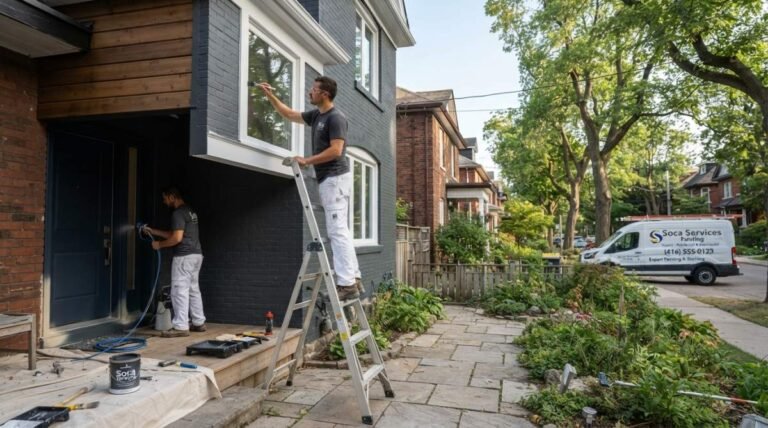
- Specialized Equipment: You can't paint a two-storey home in Toronto or Mississauga with just a step-ladder. Pros need scaffolding, extension ladders, and sometimes aerial lifts to do the job right, and that equipment adds to the quote.
- Weather Dependency: Here in the GTA, the weather calls the shots. Paint needs specific temperature and humidity levels to cure properly. A sudden rainstorm or a humid heatwave can delay the project, extending timelines and labour.
- Intensive Preparation: Your home's exterior takes a beating from the sun, rain, and snow. Prep work is a huge part of the job and often includes power washing, scraping away old, flaking paint, and repairing weather-damaged wood or siding.
- Robust Materials: Exterior paints are engineered for toughness. They have to resist UV fading, block moisture, and withstand extreme temperature swings, which makes them pricier than your standard interior paints.
When it comes to the best exterior paint job, longevity is the name of the game. You're investing in a finish that can survive a harsh Canadian winter and protect your home for years. Skimping here just means you'll be paying to do it all over again sooner.
For a closer look at the numbers, we break it all down in our guide to the cost to paint an exterior house.
Breaking Down Interior Painting Costs
While it's usually the more affordable option, interior painting has its own cost factors. The biggest drivers are the scope of the project and the complexity of the space. A quick refresh of a couple of bedrooms will obviously cost less than a full top-to-bottom repaint with detailed trim work.
Here’s what shapes an interior quote:
- Number of Rooms: Simply put, more square footage to cover means a higher cost.
- Ceiling Height: Soaring ceilings look great, but they require more paint, time, and specialized ladders or even scaffolding, pushing labour costs up.
- Condition of Walls: If your walls have their share of dings, cracks, or old nail holes, they'll need patching, sanding, and priming before a drop of paint is applied.
- Intricate Details: The finishing touches—like trim, baseboards, crown moulding, and doors—require a steady hand and a lot of time, which is reflected in the labour costs.
Even though local markets differ, looking at other major cities can give us some context. In Los Angeles, for example, exterior painting often runs between $4 and $6 per square foot, whereas interior jobs are a bit lower at $3 to $5 per square foot. Labour is always the biggest chunk of the budget. At the end of the day, whether inside or out, the more prep and detail work a job requires, the more you can expect to invest.
How Location Impacts Painting Prices Across the GTA
When you start budgeting for a new paint job, it’s natural to think that house painting prices are pretty much the same everywhere. But in reality, where you live in the Greater Toronto Area (GTA) can make a huge difference in the final quote. A project in the heart of downtown Toronto is going to have a different price tag than the exact same job in a quiet Mississauga suburb.
This isn't random. It all comes down to the on-the-ground costs and logistics of each specific municipality. Think of it like buying a cup of coffee—the price can change from one neighbourhood to the next based on things like rent and overhead. For a painting contractor, factors like travel time, parking costs, and local demand all get baked into the price they give you.
Getting a handle on these local differences is the key to finding the best painters and setting a budget that makes sense for a project "near me."
Downtown Toronto vs. The Suburbs
The most dramatic price gap is usually between Toronto's dense urban core and the surrounding suburbs like Mississauga. Each area comes with its own set of challenges, and those challenges directly affect a painter's costs—and, by extension, your bill.
In downtown Toronto, logistics are everything. A contractor might burn a good chunk of time every day just looking for a place to park their van, and that cost gets passed along in the labour rate. On top of that, many of the classic Victorian homes in central neighbourhoods require more intensive prep work and are often crammed so close together that it makes the job more complicated.
On the other hand, painting a house in a newer Mississauga subdivision is often a smoother process. You’ve got easier access, plenty of parking, and more uniform surfaces to work with, which can help keep the price more competitive.
Your postal code does more than just direct your mail; it influences local market dynamics. Higher operational costs in dense urban areas are almost always reflected in the quotes you receive from local contractors.
Local Market Dynamics and Contractor Demand
Beyond the practical stuff like parking, simple supply and demand has a massive impact on painting costs across the GTA. Some neighbourhoods have a higher concentration of homeowners doing major renovations, which naturally drives up demand for the best and most reputable painting crews.
When demand spikes in a specific area, the top-tier contractors can afford to be choosier and charge more for their expertise. That’s why a quote in a hot real estate market might come in noticeably higher than in a more settled, established neighbourhood.
A few key factors are always at play:
- Contractor Availability: In high-demand zones, the best painters are often booked solid for months, which means they have little reason to lower their prices.
- Property Values: In areas with higher property values, homeowners tend to invest more in premium paints and finishes. This creates a market that can support higher average project costs.
- Travel and Overhead: It’s just common sense. A contractor based in Mississauga will have to account for their travel time and fuel costs when quoting a job in Scarborough, which will nudge the price up.
At the end of the day, being an informed homeowner is your best tool. Once you understand that house painting prices aren't a flat rate across the GTA, you can evaluate quotes with a much sharper eye. This local knowledge helps you see the real value behind the price and choose the right pro for your home with confidence.
How to Hire the Best Toronto Painters

Getting a handle on house painting prices is a great first step, but it’s only half the story. Now comes the most important part: finding the right professional to turn that estimate into a beautiful, lasting finish for your home. Hiring the best painter in Toronto isn't just about chasing the lowest price—it's about finding a true partner for your project.
This means going beyond a quick search for "painters near me." You need a solid game plan for gathering quotes, asking the right questions, and learning how to spot the difference between a good deal and a deal that's just too good to be true. A rock-bottom price can often be a red flag, hinting at corners cut on prep work or low-quality materials that will fail you down the road.
To make the right call, you need to compare your options methodically. It’s the only way to ensure you're looking at the full picture—the scope of work, the quality of materials, and the painter's reputation—not just the final number.
Getting Accurate and Comparable Quotes
The cornerstone of any smart hiring decision is getting at least three detailed, written quotes from reputable painters in the GTA. This simple step helps you gauge the average market rate and quickly spot any bids that seem way out of line.
But a price tag alone is useless. To make sure you’re comparing apples to apples, give every single contractor the exact same project details. Be clear about what rooms or exterior surfaces need painting, the colours you have in mind, and any existing problems you’ve noticed, like peeling paint or cracked drywall.
A professional quote should be a detailed blueprint for your project, not just a number on a business card. It needs to break down every step, from the prep work and repairs to the specific brand and line of paint they plan to use.
Insisting on this level of detail is your best protection. It prevents surprise costs later and makes sure everyone is on the same page before a single can of paint is opened.
Critical Questions to Ask Every Contractor
Once you have a few quotes, it's time to dig a little deeper. A true professional will be happy to answer your questions and will have clear, confident responses. No matter what kind of trade you're hiring for, knowing the right questions to ask any potential contractor is key to making a smart investment in your home.
Here are the non-negotiables to ask every painter:
- Are you fully insured? Always ask to see proof of liability insurance and WSIB coverage. This is what protects you if an accident or damage happens on your property.
- Can I speak to some recent clients? A painter who is proud of their work will have a list of happy clients in the GTA ready for you.
- What is your process for preparation? Ask them to walk you through it. A detailed, thorough answer is the mark of a pro who doesn't cut corners.
- What specific brand and type of paint will you use? They should be able to explain exactly why they've chosen a particular product for your home's needs.
- Who will actually be doing the work? Find out if it’s the owner, their in-house crew, or if they use subcontractors. You have a right to know who will be in your home.
- What kind of warranty do you offer? Make sure you understand what it covers (like peeling or chipping) and for how long.
The answers you get will tell you far more about a painter's quality and professionalism than their price ever will.
Comparing Bids Beyond the Bottom Line
A structured comparison is your best tool for hiring with confidence. Using a simple checklist ensures you’re evaluating the total value each painter offers, not just the cost.
Contractor Quote Comparison Checklist
| Checklist Item | Contractor A | Contractor B | Contractor C |
|---|---|---|---|
| Detailed scope of prep work included? | ☐ | ☐ | ☐ |
| Paint brand and specific line named? | ☐ | ☐ | ☐ |
| Number of coats specified? | ☐ | ☐ | ☐ |
| Proof of Liability Insurance provided? | ☐ | ☐ | ☐ |
| Proof of WSIB Coverage provided? | ☐ | ☐ | ☐ |
| Warranty terms clearly stated? | ☐ | ☐ | ☐ |
| Provided 3+ recent, local references? | ☐ | ☐ | ☐ |
| Detailed project timeline included? | ☐ | ☐ | ☐ |
| Clean-up process outlined? | ☐ | ☐ | ☐ |
| Final Price | $ | $ | $ |
Laying everything out like this makes it easy to see which quote truly offers the most comprehensive service and long-term value for your investment. After all, a great paint job is one that looks fantastic for years, not just for a few months.
Making a Smart Investment in Your Home
It’s easy to look at a professional paint job as just another bill to pay, but that's a common mistake. Think of it instead as one of the smartest investments you can make in your property. Beyond the obvious aesthetic refresh, a top-notch paint job is a strategic move that enhances curb appeal, shields your home from the harsh Canadian elements, and directly contributes to its market value.
Understanding what goes into house painting prices is the key to making a decision you feel good about. As we've seen, the final number on your quote isn't arbitrary. It’s a careful calculation of several moving parts that all lead to a lasting, beautiful finish—not just a new colour on the walls.
A professional paint job is more than a coat of paint; it's a protective shield for your home and a direct contribution to its long-term value. The return on this investment is measured in durability, beauty, and peace of mind.
Recapping the Core Cost Factors
So, how do you make the best choice for your home, whether you're in downtown Toronto, Mississauga, or anywhere across the GTA? It comes down to remembering what really shapes that final quote. These are the details that make the difference between a quick touch-up and a truly professional finish that stands up to our climate.
Here’s a quick rundown of the key investment drivers:
- Meticulous Preparation: This is the bedrock of a great paint job. All the cleaning, sanding, and repairs are genuinely the most critical factor for a long-lasting result.
- Labour and Expertise: You're not just paying for time; you're investing in the skill, efficiency, and steady hand of an experienced crew that knows how to handle the tricky spots.
- Quality of Materials: Sure, premium paints and primers cost more upfront. But they deliver far better durability and coverage, which absolutely saves you money in the long run.
- Your GTA Location: Local market conditions matter. The logistics of working in a dense Toronto neighbourhood are different from a spacious suburban home in Mississauga, and that can influence operational costs.
And while you're thinking about smart home upgrades, remember that other projects can complement your painting work. For instance, exploring the best vinyl wrap for kitchen cabinets can be a cost-effective way to refresh your kitchen without the expense of a full repaint, adding to your property's overall appeal.
Armed with this knowledge, you can now look beyond the bottom line on a quote. You have the insight to ask about the scope of work, question the quality of materials being used, and confidently choose a painter who values quality. This is how you move forward—not just buying a service, but making a sound, lasting investment in your home.
Common Questions About House Painting Costs
As you get closer to starting your painting project, a few questions are bound to pop up. That's completely normal. Getting solid answers is the best way to feel confident and ready for what's ahead. Here are some of the most common questions we get from homeowners right across the GTA.
Think of this as a quick-reference guide to clear up any lingering details about timing, materials, and getting the most for your money. We want you to have all the information you need to make smart decisions for your home, whether you're in Toronto, Mississauga, or the surrounding areas.
How Often Should I Paint My Exterior in Toronto's Climate?
Toronto's four-season climate is no joke—it puts your home's exterior through a serious workout. From sweltering summer humidity to the freeze-thaw cycles of winter, your siding is constantly expanding and contracting. This means paint here takes a bigger beating than it would in a milder climate.
As a general rule, a top-notch exterior paint job should hold up for about 7 to 10 years. But that's not a hard and fast number. Things like a wall getting blasted by direct sun all day or the quality of the last paint job can definitely shorten that lifespan. If you start seeing any cracking, peeling, or serious fading, that’s your cue to think about a repaint. It’s not just about looks; it's about protecting your home's structure. You can learn more about how long paint lasts on various surfaces to get a better handle on your maintenance schedule.
Does My Siding Material Affect the Painting Cost?
It absolutely does. The type of siding on your house is one of the biggest variables in a painting quote. Why? Because you can't just slap the same paint on every surface and expect it to work. Each material needs a different game plan.
- Wood Siding: This one usually needs the most prep. Think sanding, scraping off old paint, and priming. All that extra TLC means more labour time.
- Vinyl Siding: Requires a special kind of paint that’s safe for vinyl and won't cause warping. It still needs a good cleaning, but the prep work is often less intense than with wood.
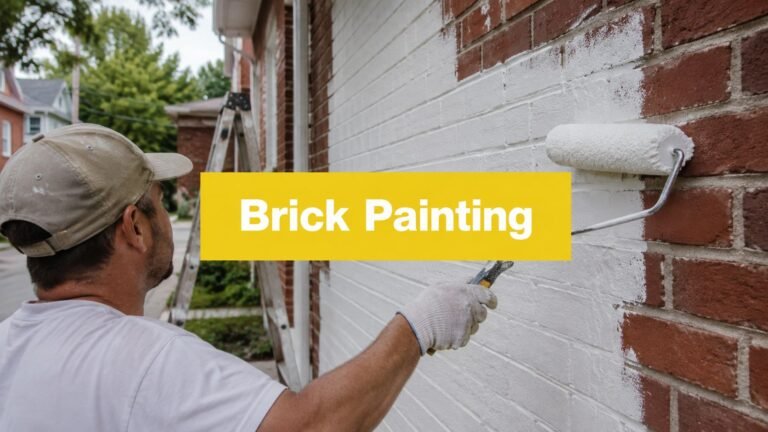
- Stucco or Brick: These materials are thirsty! They soak up a lot more paint, so your material costs will be higher. They also need specific primers to seal the surface so the topcoat goes on evenly and sticks properly.
Every material has its own set of rules, and following them is key to a lasting finish. This directly influences both the cost of materials and the hours needed to do the job right.
Is It Cheaper to Paint the House Myself?
On paper, doing it yourself looks like a money-saver. You're just buying some paint and brushes, right? While the upfront cost is definitely lower, that view doesn't always show the full picture.
Professionals bring more than just paint to the table. They have commercial-grade equipment, proper safety gear for high-up places, and the kind of experience that prevents common mistakes. A DIY project might save you cash today, but a small error—like using the wrong primer or painting in the wrong weather—could force you to call in a pro to fix it later, costing you even more. When you factor in your own time, the learning curve, and the professional-grade durability, hiring an expert often delivers far better value in the long run.
A professional paint job is an investment in quality and durability. While DIY can seem tempting, the expertise, efficiency, and lasting results from a seasoned crew often make it the more cost-effective choice over time.
What Is the Best Time of Year for Exterior Painting?
When it comes to painting outside in the GTA, timing is a huge deal. Paint is picky; it needs just the right weather to cure properly and create a protective shell. The sweet spot for exterior painting is almost always from late spring to early autumn.
During these months, you get moderate temperatures and lower humidity—the perfect recipe for paint to dry smoothly without bubbling or peeling. If you try to paint in the blistering heat of mid-July or the damp cold of early April, you're risking a poor finish that just won't last.
Ready to get a clear and accurate quote for your home? The team at Soca Services Painting has the expertise to deliver a flawless, long-lasting finish that protects your investment. Contact us today for your free, no-obligation estimate!

One Comment