When it comes to painting exterior wood in Toronto, the gold standard is almost always a high-quality, 100% acrylic latex paint. Think of it as the ultimate all-weather gear for your home—it offers the best mix of durability, flexibility, and moisture resistance needed to stand up to the tough climate cycles we see across Toronto and the GTA.
Objective: Choosing the Best Paint for Toronto Weather
Picking the right exterior wood paint in the Toronto area is about much more than just a new colour. It’s a crucial defensive strategy for your home. You wouldn't wear a light windbreaker in a January blizzard, and the same logic applies here. Your home’s wood siding, deck, and fences need a protective layer specifically designed to handle everything from humid summers to frigid, icy winters.
The wrong paint just won't cut it. It can quickly crack, start to peel, and let moisture seep in, which eventually leads to wood rot. A top-tier paint, on the other hand, acts like a flexible shield, expanding and contracting right along with the wood as temperatures swing wildly. That kind of elasticity is non-negotiable for any home in the GTA.
What to Prioritize for Lasting Protection
As you're weighing your options, zero in on the features that are built to handle our local weather challenges. The best exterior wood paints will always deliver on these key fronts:
- Superior Durability: The finish needs to be tough enough to resist scuffs, scrapes, and anything the wind throws at it.
- Moisture and Mildew Resistance: Our humid summers are a breeding ground for mould and mildew. A paint with a built-in mildewcide is a must.
- UV Resistance: Quality paints contain inhibitors that act like sunscreen for your house. They stop the colour from fading and prevent harsh UV rays from damaging the wood underneath.
- Temperature Flexibility: The paint’s formula must stay elastic, stretching when wood swells in the summer humidity and shrinking back in the dry winter cold without cracking.
A great paint job isn't an expense—it's an investment in your home's health and curb appeal. Spending a bit more upfront on a premium product almost always saves you money on frequent repainting and costly wood repairs down the road.
Before you start your project, it’s helpful to have a clear checklist of what to look for.
Quick Guide to Selecting the Best Exterior Wood Paint
This table summarizes the most important features to look for in an exterior wood paint, helping you quickly assess your project's needs.
| Feature | Why It Matters for Your Wood | Best For |
|---|---|---|
| 100% Acrylic Resin | Provides top-tier flexibility and adhesion, preventing cracking as wood expands and contracts. | All exterior wood, especially siding, trim, and fences in variable climates. |
| Built-in Mildewcide | Inhibits the growth of mould and mildew, which thrive in damp, shady areas. | Homes in humid regions or properties with lots of surrounding trees and shade. |
| UV Protection/Inhibitors | Shields the paint colour from fading and protects the wood fibres underneath from sun damage. | Surfaces with high sun exposure, like south-facing walls, decks, and pergolas. |
| Moisture Resistance | Creates a breathable barrier that keeps water out but allows trapped moisture from the wood to escape. | Decks, railings, window sills, and any wood close to the ground. |
Taking the time to choose the right product ensures the beautiful finish you create will last for years, not just a single season.
In the end, your goal is to create a durable shield that keeps your home’s wood looking great while protecting its structural integrity. For a more comprehensive look at the entire process, our guide on the exterior painting of a house offers detailed steps for achieving a professional, long-lasting finish.
Getting to Know Your Paint Options
Walking into a paint store "near me" can be a bit much. The shelves are lined with cans covered in technical jargon, making it hard to know where to start. But finding the right paint for your exterior wood project really boils down to understanding the two main formulas.
Think of it like choosing the right tires for your car. You wouldn't put summer tires on for a snowy Toronto winter, right? Paint works the same way. Each type is engineered for specific conditions and performance, and picking the right one is the single most important step for a beautiful, long-lasting finish.
At the heart of it all, you're choosing between oil-based (often called alkyd) and water-based (usually known as latex or acrylic) paints. For a long time, oil-based paints were the gold standard for toughness. But technology has come a long way, and today's water-based acrylic paints have really stepped up, now offering the best performance for most exterior wood jobs in Mississauga and the GTA.
The Great Debate: Oil vs. Water-Based Paints
Water-based acrylic paints are fantastic because of their flexibility. Here in the Mississauga area, wood is constantly expanding in our humid summers and shrinking back in the cold, dry winters. An acrylic paint is designed to move right along with the wood, which makes it far less likely to crack and peel compared to the harder, more rigid finish of an oil-based paint.
Another huge plus for water-based paint is that it's "breathable." This means any moisture that might get trapped inside the wood can actually escape through the paint film, which is key to preventing those ugly blisters and peeling. And let’s not forget the cleanup—it’s just soap and water. No need to mess with harsh chemicals like mineral spirits.
Now, that's not to say oil-based paints don't have their place. They form an incredibly hard, durable shell that sticks to surfaces like glue and is great at blocking stains. While you probably wouldn't use them for large areas like siding anymore, they can be a solid choice for high-traffic spots like porch floors or steps, where you need that extra scuff resistance. The trade-off is that they can get brittle with age, tend to yellow in the sun, and release more volatile organic compounds (VOCs).
The performance difference between a quality coating and a poor one is massive. This visual really drives home how much the best paint can extend the life of your wood and protect it from moisture.
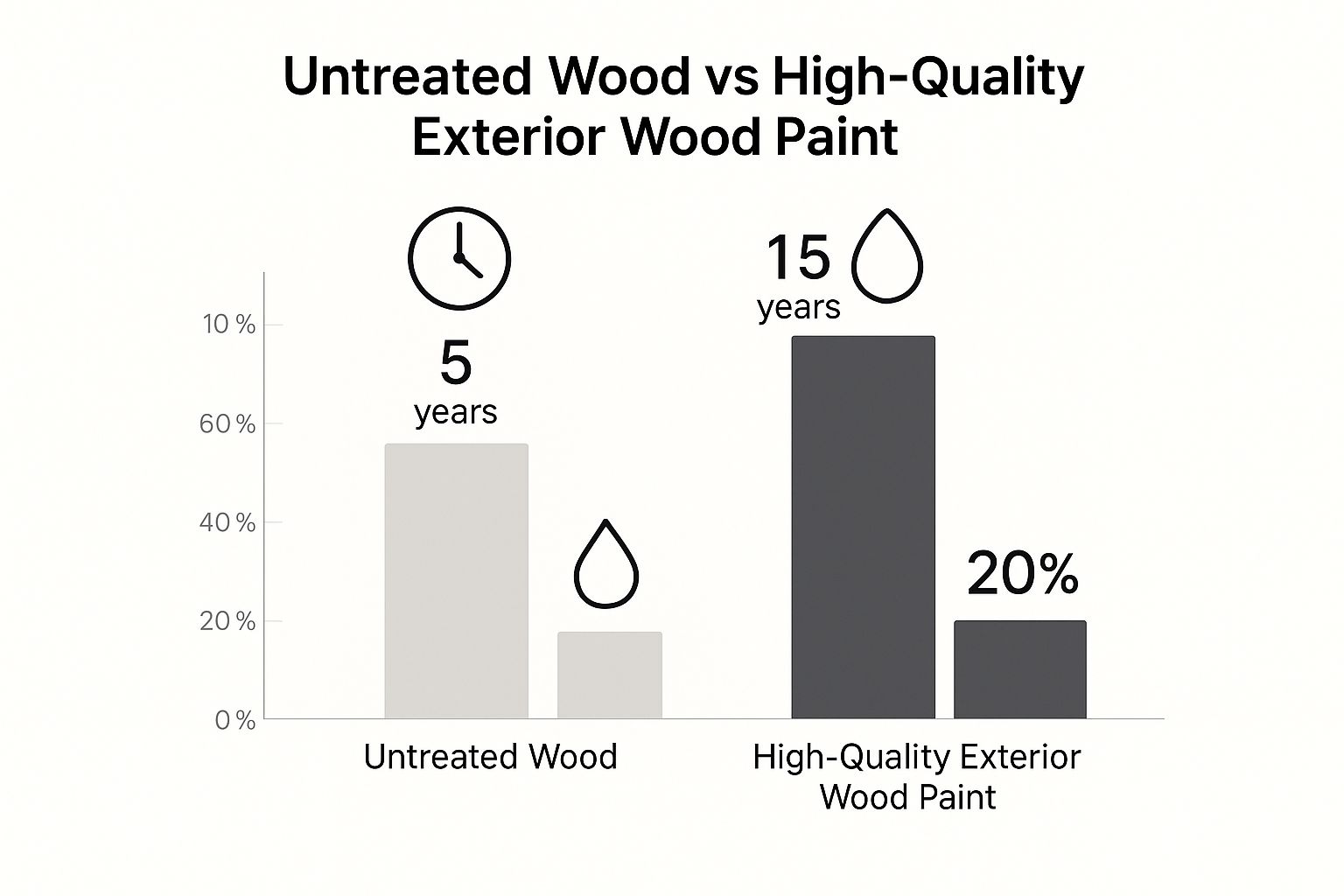
As you can see, the right coating can more than triple the wood's lifespan and slash moisture absorption by two-thirds, which is your best defence against rot.
To make the choice clearer, let's break down the key differences between these two paint types.
Oil-Based vs Water-Based Exterior Paint
| Feature | Oil-Based (Alkyd) | Water-Based (Latex/Acrylic) |
|---|---|---|
| Flexibility | Rigid and brittle; prone to cracking over time. | Highly flexible; expands and contracts with wood. |
| Durability | Creates a very hard, scuff-resistant shell. | Durable and resistant to peeling and flaking. |
| Drying Time | Slow-drying, often 8-24 hours before recoating. | Fast-drying, typically ready for a second coat in 2-4 hours. |
| Colour Retention | Tends to yellow and fade, especially in direct sunlight. | Excellent colour and gloss retention over many years. |
| Odour & VOCs | Strong chemical smell and higher VOC content. | Low odour and much lower VOC levels. |
| Cleanup | Requires mineral spirits or other chemical solvents. | Easy cleanup with just soap and water. |
| Best For… | High-traffic areas like porch floors, steps, metal railings. | Siding, fences, decks, trim, and most general wood surfaces. |
Ultimately, for most homeowners in our region, the flexibility and breathability of a water-based acrylic paint make it the clear winner for protecting wood through our dramatic seasons.
The Rise of Hybrid Formulas
Looking for the best of both worlds? Paint chemists have been busy. They’ve developed waterborne alkyd, or "hybrid," paints that are becoming quite popular. These formulas give you the smooth, hard finish you get from an oil-based paint but with the easy cleanup and flexibility of a water-based one. They're a fantastic choice for trim, doors, and any other spots where you want a flawless, resilient finish.
This kind of innovation is driving the entire industry forward. The Canadian wood coatings market is expected to grow at a CAGR of 5.3% from 2025 to 2030, expanding from an estimated USD 11.8 billion market in 2024. These advanced coatings are what protect our wooden exteriors from harsh sunlight, moisture, and big temperature swings—all things our decks and fences know too well. You can dive deeper into these trends in this comprehensive wood coatings market report.
For most homeowners in the GTA, a 100% acrylic latex paint is the superior choice for exterior wood. Its combination of flexibility, durability, and moisture control provides the most reliable protection against our demanding four-season climate.
Of course, wood isn't the only material on the outside of your house. Surfaces like brick have their own specific needs when it comes to paint. To learn more, check out our guide on the best paint for a brick exterior and see how to properly protect every part of your home.
The Best Paint Structure: Decoding Key Properties
Alright, so you've landed on a high-quality acrylic paint. Smart move. But what really separates a good paint from the best one for your exterior wood? The secret is in the fine print—the specific properties that make up the paint's structure. Think of these as the paint's unique superpowers, each one engineered to protect your home.
Getting familiar with these features is the key to a lasting finish. They aren’t just marketing fluff; they’re real performance metrics that dictate how your paint job will hold up, especially in a demanding climate like ours in the Greater Toronto Area.
Sunscreen for Your Siding: UV Resistance
One of the most critical properties to look for is UV resistance. Honestly, it’s like a powerful sunscreen for your house. The sun's UV rays are relentless, breaking down the chemical bonds in paint just like they damage skin. This leads to faded colours and a paint film that becomes brittle and weak over time.
A paint with excellent UV resistance has special additives that absorb or reflect these harmful rays. This built-in protection not only keeps your chosen colour looking rich and vibrant for years but, more importantly, shields the wood underneath from sun damage that causes drying and cracking. For any surface in the GTA that gets blasted by the sun, this is an absolute must-have.
The Non-Negotiable Trait: Flexibility
Wood is a living, breathing material. It’s always moving, swelling in the humid Mississauga summers and shrinking back in the dry cold of winter. If your paint can't move right along with it, you're setting yourself up for failure. That's where flexibility comes in.
The best exterior wood paints are designed to stay elastic long after they’ve cured. This elasticity allows the paint film to stretch and contract in perfect sync with the wood's natural cycles. A rigid, inflexible paint, on the other hand, will quickly develop tiny cracks at the first major temperature swing, opening the door for moisture to seep in and cause peeling and rot.
A paint's ability to remain flexible over its entire lifespan is the single greatest predictor of its durability. Without it, even the thickest coating will fail under the stress of seasonal expansion and contraction.
Fighting Back Against Moisture and Growth
For those damp or shady spots around your home, wood surfaces can become a perfect breeding ground for mould, mildew, and algae. That’s why any top-tier exterior paint worth its salt will include a mildewcide. This active ingredient stops these unwanted organisms from growing, keeping your siding, fence, or deck looking clean and fresh.
This feature goes hand-in-hand with moisture resistance. A quality paint creates a breathable barrier—it locks rain out, preventing it from soaking into the wood, but it also allows any trapped water vapour to escape. This is crucial for preventing the blistering and peeling that happens when moisture gets stuck behind the paint film.
Of course, the durability of any paint job is also linked to how well it cures, and you can learn more about how long paint takes to dry to guarantee the best possible results. The demand for these high-performance coatings is booming; the U.S. wood coatings market is projected to grow to USD 15.18 billion by 2030, all thanks to homeowners wanting durable, sustainable options that stand up to the weather.
The Critical First Step: Surface Preparation
You can pick up the most expensive, top-of-the-line exterior paint money can buy, but if you slap it onto a poorly prepared surface, it's destined to fail. It’s like a world-class chef trying to cook a gourmet meal with unwashed, spoiled ingredients—the result will be a disaster no matter how skilled they are. The same rule applies to getting a durable, professional-looking finish on your home's exterior wood.
Proper prep work isn't just about ticking boxes; it's the very foundation of the entire paint job. It's what allows the new paint to form a tenacious bond with the wood, which is the secret to stopping peeling, chipping, and cracking later on. Honestly, skipping these steps is the single biggest mistake people make.
Cleaning Away Years of Grime
First things first, you have to give the wood a deep clean. Over time, exterior surfaces collect a surprising amount of dirt, pollen, chalky old paint residue, and other pollutants you can't even see. Painting directly over this layer of grime is like trying to put a sticky note on a dusty wall—it’s just not going to hold.
For most jobs around the Greater Toronto Area, a good old-fashioned scrub with a stiff brush and a cleaning solution will do the trick. A mix of trisodium phosphate (TSP) or a TSP-substitute and water is perfect for cutting through the buildup. If you're tackling a large area like siding, a pressure washer on a low setting can be a huge time-saver, but be careful. Too much pressure can easily chew up and damage the wood fibres.
Dealing with Old, Failing Paint
Next up, you have to tackle any old paint that's already giving up the ghost—peeling, flaking, or blistering. New paint needs a stable, solid surface to stick to. If you just paint over a failing layer, the new coat will simply peel right off along with the old one underneath.
Grab a paint scraper, putty knife, or wire brush and carefully work away all the loose and unstable paint. The goal is to get down to a solid, well-adhered layer of old paint or, in some places, all the way down to bare wood. For those really stubborn patches, you might need something with a bit more muscle. Our guide on using a paint remover on wood walks you through the steps for dealing with even the toughest old finishes.
Sanding for a Superior Grip
With the surface clean and free of loose paint, it's time for a light sanding. You're not trying to strip the whole thing down. The idea is to scuff up the surface and feather the edges where the old paint meets the bare wood. This creates a slightly rougher texture, giving the new primer and paint something to really grab onto.
A medium-grit sandpaper, something around 120-grit, is usually perfect for this. Once you’re done sanding, make sure you wipe away every last bit of dust with a damp cloth. You want a perfectly clean canvas for what comes next.
Prepping wood for paint is 90% of the work, but it's also 100% of the reason a paint job either lasts for a decade or fails within a year. Don't rush this stage.
The Essential Role of Primer
Finally, we get to priming. This is a non-negotiable step, especially for any bare wood spots or areas you’ve scraped down. Primer is the unsung hero of a paint job, doing three critical things:
- It seals the wood. This prevents natural wood stains, called tannins, from bleeding through and discolouring your beautiful new topcoat.
- It provides a powerful bond. Think of it as the ultimate double-sided tape, connecting the wood to the paint.
- It creates a uniform base. This ensures your final colour looks smooth, even, and vibrant across the entire surface.
For homeowners in Toronto and Mississauga, it's also smart to look for any signs of mildew before you prime, especially on the shaded or damp sides of your house. A quick treatment with a bleach-and-water solution will kill it off for good before you seal it all up under a fresh coat of paint.
Achieving a Professional Finish
Alright, your surface is prepped and ready to go. Now for the fun part: laying down that beautiful new colour. This is where all that prep work really shines, and mastering the application is what will make your home look like it was painted by a pro.
The secret is choosing the right tools for the job and being methodical. It’s all about getting that smooth, even, and durable coating that will last for years. For homeowners in Toronto, Mississauga, or anywhere in the GTA, the best method really comes down to the specific surface you're working on.
Choosing Your Application Tools
You've basically got three choices when it comes to applying exterior wood paint: brushes, rollers, and sprayers. Each has its place, and a true pro knows when to use which.
- Brushes: You absolutely need a good brush for the detailed stuff. A high-quality angled brush is indispensable for cutting in around windows, doors, and all that intricate trim. It’s all about control and getting those sharp, clean lines.
- Rollers: When you’ve got big, flat areas to cover—like siding or a fence—a roller is your best bet for getting it done efficiently. Just make sure you pick a roller with the right nap (that's the thickness of the fuzzy part) to get a consistent coat without leaving behind pesky brush marks.
- Paint Sprayers: For sheer speed and the smoothest finish imaginable on large surfaces, nothing beats a sprayer. This is what the pros often use for big siding jobs, but be warned: they demand a lot of careful masking to prevent overspray from getting everywhere it shouldn't.
For most people tackling their own exterior painting, a combination of a great brush for the details and a solid roller for the main walls is the most effective way to go.
Techniques for a Flawless Finish
Got your tools? Good. Now, let’s talk technique. The single most important skill to learn here is how to maintain a 'wet edge'.
What does that mean? It's simple: you always want to paint from a dry area back into the section you just painted while it's still wet. This little trick is the key to preventing "lap marks"—those ugly, visible lines where your strokes overlap. It helps everything blend together into one seamless finish.
Think of it like mowing your lawn. You always overlap each pass slightly to get an even cut with no stray strips of grass. Painting is the exact same principle.
The secret to a professional paint job isn't speed; it's consistency. Applying thin, even coats and maintaining a wet edge will always produce better results than rushing and applying the paint too thickly.
Finally, let's talk coats and drying times. Don't even think about doing just one coat. Nearly every exterior project needs two full coats of paint. The first coat primes and seals, while the second delivers the rich, final colour and the bulk of the protection.
Given Ontario's unpredictable weather, paying attention to the manufacturer's recommended drying times is critical. You have to let that first coat cure properly before starting the second. Rushing it will only give you a soft finish that can easily get damaged and won't stand up to our seasons.
Keeping Your Painted Wood Looking Great for the Long Haul
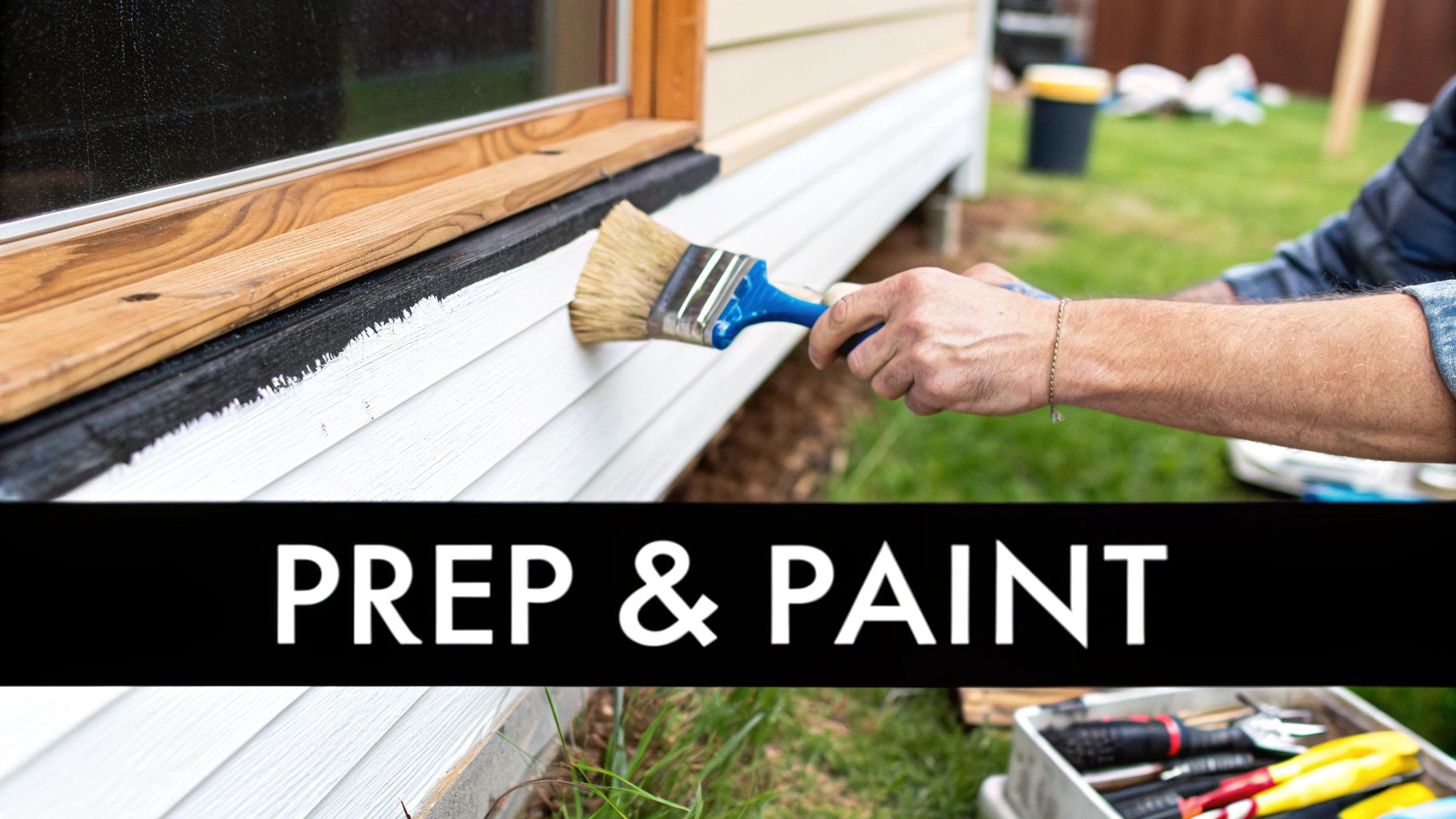
So, the last coat of paint is finally dry. That means the job is done, right? Not quite. To get the most out of your hard work and protect your investment, a little bit of upkeep goes a very long way.
Think of it as the secret to making that beautiful finish last, pushing the need for a full repaint years down the road. It all starts with a simple yearly check-up. Each spring, take a walk around your home and give your painted wood a close look. You're searching for any early signs of trouble—small chips, hairline cracks, or the first hints of mildew. Nipping these issues in the bud is the single best way to stop them from turning into big, costly headaches.
Your Simple Maintenance Schedule
For homeowners in Toronto and Mississauga, a straightforward annual routine can make all the difference. Following a simple schedule ensures your exterior paint keeps doing its job, season after season.
- Annual Inspection (Spring): Look for any peeling, blistering, or cracking. Pay extra attention to areas that get hammered by direct sun or persistent moisture.
- Gentle Cleaning (Late Spring/Early Summer): Wash away the year's dirt and grime with a soft brush or cloth and a simple solution of mild soap and water. This prevents buildup that can slowly break down the paint.
- Quick Touch-Ups (As Needed): Found a chip? Gently sand the edges, apply a spot of primer, and dab on a bit of your original paint. This tiny step is critical for preventing moisture from creeping in. You can learn more about effective painted wood waterproofing to keep these vulnerable spots sealed tight.
Don’t think of maintenance as a chore. It’s the most powerful tool you have for extending the life of your paint job and, more importantly, protecting the wood underneath. A few hours once a year can save you from a major overhaul later on.
This focus on long-term protection is a big deal. The market for exterior wood stains in the U.S. alone was valued at around US$ 2 billion in 2023, with more and more people choosing eco-friendly, low-VOC products. You can read more about the growth in the wood stain industry on FactMr.com. This shift shows just how much homeowners value durable, sustainable protection for their homes.
Your Top Questions Answered
When it comes to painting exterior wood, a lot of questions can pop up. Whether you're in Toronto, Mississauga, or anywhere in the GTA, getting the right answers is key to a project you'll be proud of for years. Let's tackle some of the most common ones we hear from homeowners.
How Often Should I Repaint My Exterior Wood Siding in the GTA?
The honest answer? It depends. The longevity of your paint job is a mix of the paint quality, how well the surface was prepared, and how much sun, wind, and snow your house faces. A top-tier paint job can last anywhere from 5 to 10 years.
But let's be realistic—the GTA's climate is tough. Between our harsh winters and the strong summer sun, you'll probably land closer to the 5- to 7-year mark. Your best bet is to give your siding a quick look-over each year. If you spot any cracking, peeling, or major fading, it's time to start planning.
Is Primer Really Necessary for Exterior Wood?
In a word, yes. Skipping the primer is one of the biggest mistakes you can make. Think of it as the essential foundation for a paint job that lasts. A good exterior primer does three crucial jobs:
- Blocks Stains: It stops tannins, the natural oils in wood, from seeping through and creating yellowish or brownish stains on your beautiful new paint.
- Boosts Adhesion: Primer literally grips the wood surface, giving the topcoat something to hang on to. This is your best defence against peeling and blistering down the road.
- Creates a Flawless Canvas: It evens out the surface porosity, so your final colour looks smooth and uniform, not blotchy or uneven.
You might see "paint and primer in one" products on the shelf. While they've improved, for any bare or patched wood, we always recommend a separate, dedicated primer. It’s the single best thing you can do for maximum durability.
What’s the Best Time of Year to Paint Outside in Toronto?
Timing is everything. The sweet spot for exterior painting in the Toronto and Mississauga area is usually from late spring to early autumn—think May through September. You're looking for a string of mild, dry days.
Try to avoid painting in the blazing midday sun or when the temperature is expected to dip below 10°C in the next 24 hours. High humidity and rain are also off the table. Any of these can mess with how the paint dries and cures, which can ruin the finish. The paint can itself is your best guide, so always check the manufacturer’s instructions for their specific temperature and weather advice before you start.
Choosing the best exterior wood paints is a great start, but it's the professional application that ensures a beautiful, long-lasting finish. To protect your home for years to come, trust the experts at Soca Services Painting. You can find out more about our high-quality exterior painting services at https://www.socaservicespainting.com.